Downloaded 1,507 times

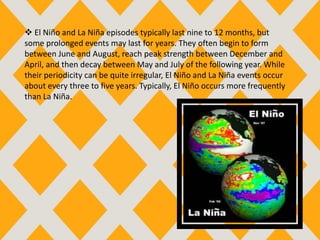
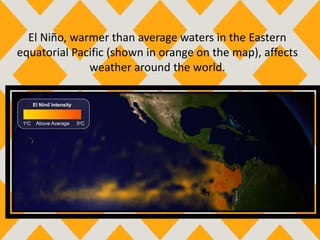
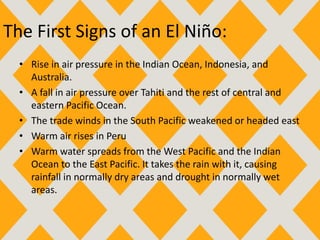
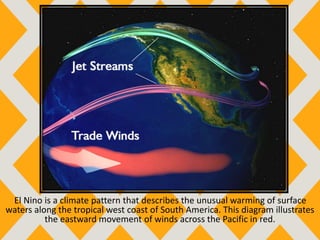
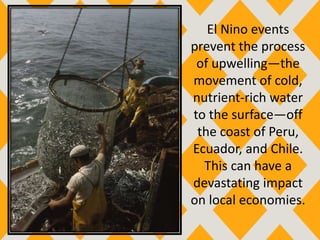
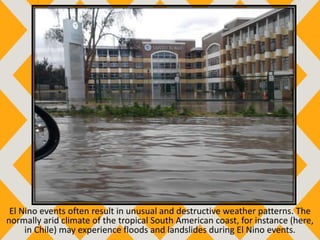
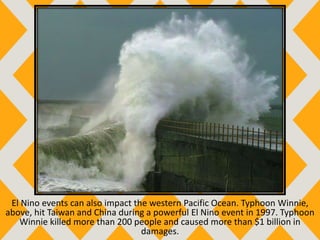
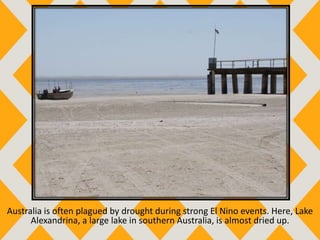

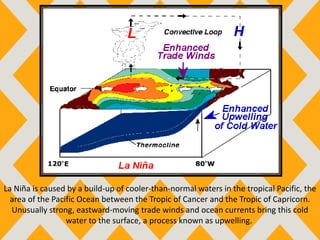
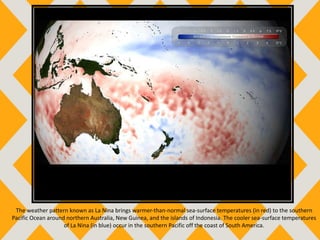
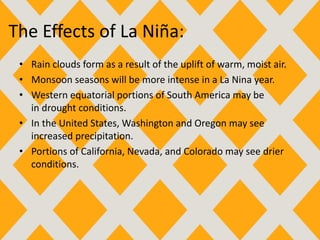



El Niño and La Niña are opposite phases of the El Niño-Southern Oscillation (ENSO) cycle. El Niño involves unusually warm waters in the eastern Pacific, while La Niña features unusually cold waters. These phenomena impact weather worldwide by affecting wind and rain patterns. During El Niño, the western U.S. tends to be wetter and cooler, while Australia and Indonesia experience drought. La Niña has opposite effects, with wetter conditions in Australia and Indonesia and drier weather in the western U.S. Scientists monitor these cycles using ocean buoys and satellites to improve predictions of their development and impacts.


