Lecture  15
Thunderstorm
Tornado
1
2
3
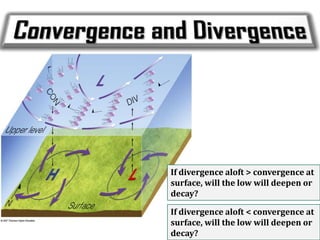
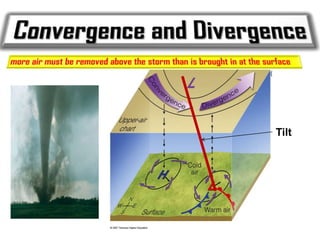
If divergence aloft > convergence at
surface, will the low will deepen or
decay?
If divergence aloft < convergence at
surface, will the low will deepen or
decay?
Hurricane Sandy in three cosmic-ray neutron records
1000

P re s s u re

U n c o rre c te d n e u tro n s

800

980

700
960
600

P re ssu re , m b

N e u tro n co u n ts p e r h o u r

C O S M O S p ro b e , S h a le H ills , P A
900

Shale Hills
Newark

Beltsville

940

P re s s u re -c o rre c te d n e u tro n s
500
24 O ct

26 O ct

28 O ct

30 O ct

1 Nov

3 Nov

5 Nov

P re s s u re

1020

U n c o rre c te d n e u tro n s

900
1000
800
980
700

P re s s u re -c o rre c te d n e u tro n s
600
24 O ct

26 O ct

28 O ct

30 O ct

1 Nov

N e u tro n M o n ito r, N e w a rk , D E

3 Nov

5 Nov

P re s s u re , m b

N e u tro n c o u n ts p e r h o u r

C O S M O S p ro b e , B e lts ville , M D
1000

960

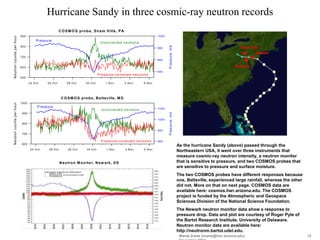
As the hurricane Sandy (above) passed through the
Northeastern USA, it went over three instruments that
measure cosmic-ray neutron intensity, a neutron monitor
that is sensitive to pressure, and two COSMOS probes that
are sensitive to pressure and surface moisture.
The two COSMOS probes have different responses because
one, Beltsville, experienced large rainfall, whereas the other
did not. More on that on next page. COSMOS data are
available here: cosmos.hwr.arizona.edu. The COSMOS
project is funded by the Atmospheric and Geospace
Sciences Division of the National Science Foundation.
The Newark neutron monitor data show a response to
pressure drop. Data and plot are courtesy of Roger Pyle of
the Bartol Research Institute, University of Delaware.
Neutron monitor data are available here:
http://neutronm.bartol.udel.edu.
Marek Zreda (marek@hwr.arizona.edu)

12
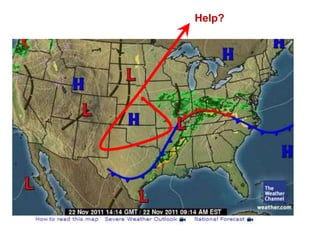
Help?
Tilt
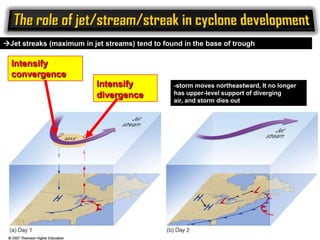
Jet streaks (maximum in jet streams) tend to found in the base of trough

Intensify
convergence

Intensify
divergence

-storm moves northeastward, It no longer
has upper-level support of diverging
air, and storm dies out
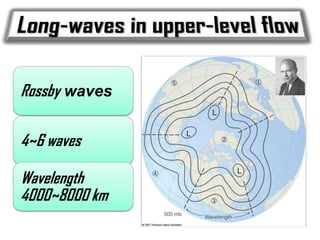
Rossby waves

4~6 waves
Wavelength
4000~8000 km
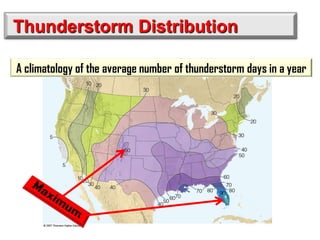
Thunderstorm Distribution
A climatology of the average number of thunderstorm days in a year

10
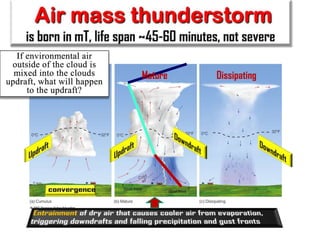
Thunderstorm
Cumulus

Mature

12

Dissipating
Fig. 11-10, p. 320
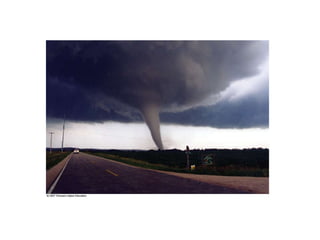
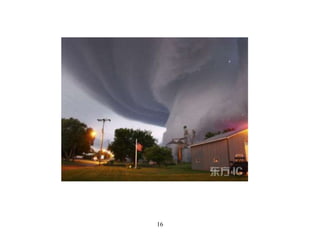
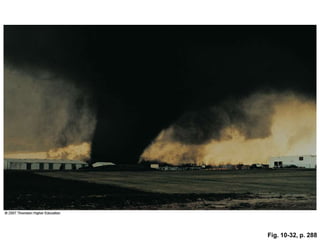
Tornado
16
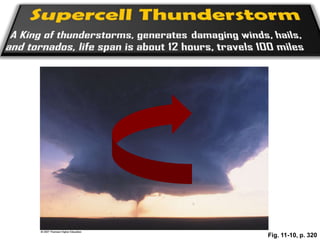
Fig. 10-32, p. 288
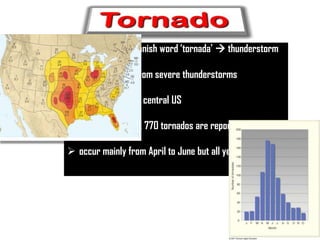
 derived from Spanish word ‘tornada’  thunderstorm
 tornados arise from severe thunderstorms
 most tornados in central US
 on average about 770 tornados are reported annually
 occur mainly from April to June but all year round
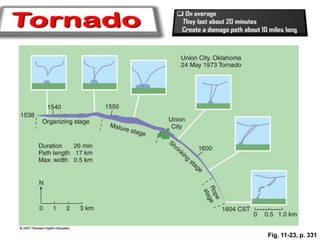
Fig. 11-23, p. 331
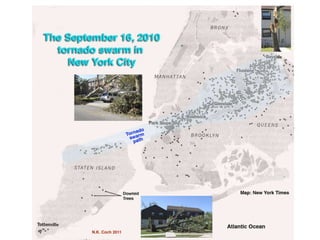
Tornados visited NYC on September 16, 2010
The National Weather Service (NWS) said one of the tornadoes touched
down near Park Slope in Brooklyn with maximum wind speeds around 80
miles (129 kilometers) per hour. The second tornado touched down about
2.5 miles (4 kilometers) south of Flushing in Queens and lifted about one
mile (1.6 kilometer) northeast of Bayside. This tornado was slightly
stronger with maximum wind speeds of around 100 miles (161 kilometers)
per hour.
Tornadoes are extremely rare in New York City, and Thursday's tornadoes
were the first time one record that a tornado caused a fatality in the city.
The last time a tornado hit New York City was in July, when a weak tornado
swirled through the Bronx.
Prior to that, two tornadoes touched down in Staten Island and Brooklyn on
August 8, 2007. Other tornadoes touched down in 2003, 1995, 1990, 1985
and 1974. No other tornadoes were recorded since records began in 1950.
http://data.giss.nasa.gov/gistemp/graphs/
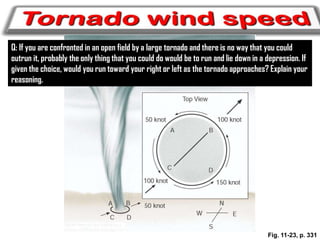
Q: If you are confronted in an open field by a large tornado and there is no way that you could
outrun it, probably the only thing that you could do would be to run and lie down in a depression. If
given the choice, would you run toward your right or left as the tornado approaches? Explain your
reasoning.

Fig. 11-23, p. 331
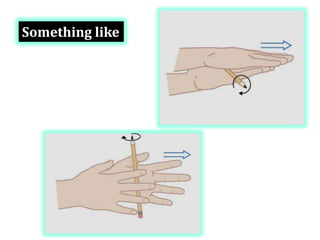
Something like
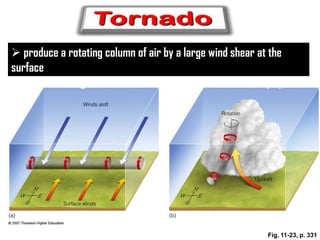
 produce a rotating column of air by a large wind shear at the
surface
lift the rotating column of air from horizontal to vertical by updraft

Fig. 11-23, p. 331
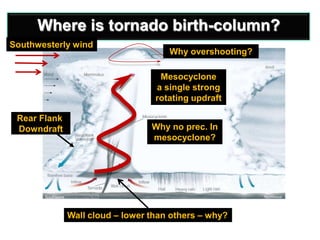
Where is tornado birth-column?
Southwesterly wind

Why overshooting?
Mesocyclone
a single strong
rotating updraft

Rear Flank
Downdraft

Why no prec. In
mesocyclone?

Wall cloud – lower than others – why?
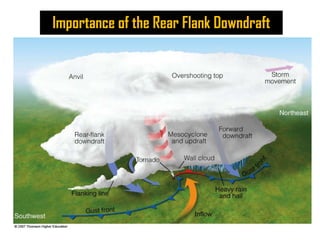
Importance of the Rear Flank Downdraft
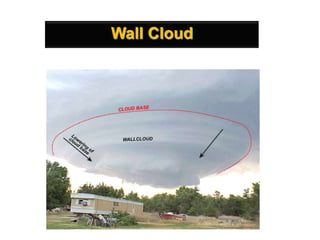
Wall Cloud
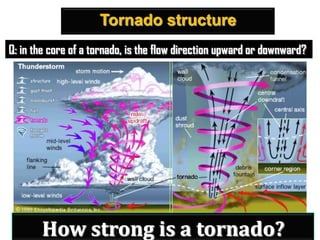
Tornado structure
Q: in the core of a tornado, is the flow direction upward or downward?

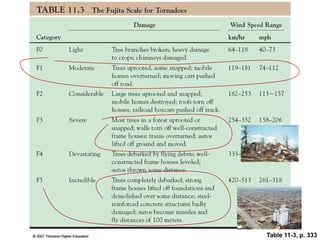
How strong is a tornado?
Table 11-3, p. 333

Lecture15 oct30-bb

  • 1.
  • 2.
  • 3.
  • 4.
    If divergence aloft> convergence at surface, will the low will deepen or decay? If divergence aloft < convergence at surface, will the low will deepen or decay?
  • 5.
    Hurricane Sandy inthree cosmic-ray neutron records 1000 P re s s u re U n c o rre c te d n e u tro n s 800 980 700 960 600 P re ssu re , m b N e u tro n co u n ts p e r h o u r C O S M O S p ro b e , S h a le H ills , P A 900 Shale Hills Newark Beltsville 940 P re s s u re -c o rre c te d n e u tro n s 500 24 O ct 26 O ct 28 O ct 30 O ct 1 Nov 3 Nov 5 Nov P re s s u re 1020 U n c o rre c te d n e u tro n s 900 1000 800 980 700 P re s s u re -c o rre c te d n e u tro n s 600 24 O ct 26 O ct 28 O ct 30 O ct 1 Nov N e u tro n M o n ito r, N e w a rk , D E 3 Nov 5 Nov P re s s u re , m b N e u tro n c o u n ts p e r h o u r C O S M O S p ro b e , B e lts ville , M D 1000 960 As the hurricane Sandy (above) passed through the Northeastern USA, it went over three instruments that measure cosmic-ray neutron intensity, a neutron monitor that is sensitive to pressure, and two COSMOS probes that are sensitive to pressure and surface moisture. The two COSMOS probes have different responses because one, Beltsville, experienced large rainfall, whereas the other did not. More on that on next page. COSMOS data are available here: cosmos.hwr.arizona.edu. The COSMOS project is funded by the Atmospheric and Geospace Sciences Division of the National Science Foundation. The Newark neutron monitor data show a response to pressure drop. Data and plot are courtesy of Roger Pyle of the Bartol Research Institute, University of Delaware. Neutron monitor data are available here: http://neutronm.bartol.udel.edu. Marek Zreda (marek@hwr.arizona.edu) 12
  • 6.
  • 7.
  • 8.
    Jet streaks (maximumin jet streams) tend to found in the base of trough Intensify convergence Intensify divergence -storm moves northeastward, It no longer has upper-level support of diverging air, and storm dies out
  • 9.
  • 10.
    Thunderstorm Distribution A climatologyof the average number of thunderstorm days in a year 10
  • 11.
  • 12.
  • 13.
  • 14.
  • 16.
  • 17.
  • 18.
     derived fromSpanish word ‘tornada’  thunderstorm  tornados arise from severe thunderstorms  most tornados in central US  on average about 770 tornados are reported annually  occur mainly from April to June but all year round
  • 19.
  • 20.
    Tornados visited NYCon September 16, 2010 The National Weather Service (NWS) said one of the tornadoes touched down near Park Slope in Brooklyn with maximum wind speeds around 80 miles (129 kilometers) per hour. The second tornado touched down about 2.5 miles (4 kilometers) south of Flushing in Queens and lifted about one mile (1.6 kilometer) northeast of Bayside. This tornado was slightly stronger with maximum wind speeds of around 100 miles (161 kilometers) per hour. Tornadoes are extremely rare in New York City, and Thursday's tornadoes were the first time one record that a tornado caused a fatality in the city. The last time a tornado hit New York City was in July, when a weak tornado swirled through the Bronx. Prior to that, two tornadoes touched down in Staten Island and Brooklyn on August 8, 2007. Other tornadoes touched down in 2003, 1995, 1990, 1985 and 1974. No other tornadoes were recorded since records began in 1950. http://data.giss.nasa.gov/gistemp/graphs/
  • 22.
    Q: If youare confronted in an open field by a large tornado and there is no way that you could outrun it, probably the only thing that you could do would be to run and lie down in a depression. If given the choice, would you run toward your right or left as the tornado approaches? Explain your reasoning. Fig. 11-23, p. 331
  • 24.
  • 25.
     produce arotating column of air by a large wind shear at the surface lift the rotating column of air from horizontal to vertical by updraft Fig. 11-23, p. 331
  • 26.
    Where is tornadobirth-column? Southwesterly wind Why overshooting? Mesocyclone a single strong rotating updraft Rear Flank Downdraft Why no prec. In mesocyclone? Wall cloud – lower than others – why?
  • 27.
    Importance of theRear Flank Downdraft
  • 28.
  • 29.
    Tornado structure Q: inthe core of a tornado, is the flow direction upward or downward? How strong is a tornado?
  • 31.