Chapter 7: Alarming
Typhoons
Weather
• It is the day to day condition of the
atmosphere at a particular time and
place.
• It changes from day to day because the
air in the atmosphere is continuously in
motion.
Storms
•Also called cyclones, originate
over warm waters and are
classified according to their
geographical location.
Typhoon, Cyclone, and
Hurricane
• A “typhoon” is the term used to describe the same
weather feature as a “cyclone” or a “hurricane”:
• the term Typhoon is used for intense low pressure
weather systems in the northwest Pacific;
• the term Cyclone is used when referring to an
intense low pressure weather system over the Indian
Ocean and the South Pacific; and,
• the term Hurricane is used when referring to an
intense low pressure weather system over the
Atlantic Ocean and northeast Pacific.
Nephology
•It is the study of clouds in the
field of meteorology.
Types of Clouds
Cirrus clouds
•Thin, feathery clouds
•Fair weather (few clouds),
approaching weather front
(many clouds)
Cumulus clouds
•Gray at the base and white
on top (Fair weather)
Cirrocumulus clouds
•Most likely to bring
afternoon shower
No clouds
•Clear sky (fair weather)
Stratocumulus clouds
•Low-lying lumpy clouds (no
rain likely within 20-24
hours)
Nimbus clouds
•Dark, heavy clouds (expect rain)
Weather Watch
The different instruments meteorologists
use to monitor weather.
Anemometer
•Measures the speed of the
wind
Wind Vane
•Shows the direction of the
wind.
Thermometer
•Measures air temperature.
Rain gauge (Precipitation gauge)
•Measures amount or level of
rain collected over a period of
time.
Barometer
•Measures air pressure.
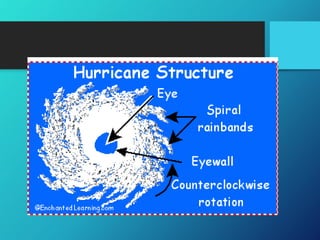
Typhoon
Development
Typhoons develop in stages and need the right
combination of conditions to form.
1
• Evaporation of water at ocean
surface temperature of 26.5°C or
higher.
2
• Warm, moist air rises upwards
from ocean surface, leaving a low
pressure area near the ocean
surface.
3
• Air from surrounding high pressure areas
rushes towards the low pressure area.
This air is initially dry and cooler, but
near the ocean surface, the air is
heated and carries more water vapor
from continuous evaporation.
4
• As the warm air rises towards the
cooler parts of the upper
atmosphere, it cools off and the
water vapor begins to condense to
form clouds.
5
• More clouds form and wind speed picks
up as the Coriolis effect causes the air
to spiral as it rises. As the winds rotate
faster, the low pressure area near the
ocean surface becomes a tropical
depression, and may eventually turn
into a typhoon
Coriolis effect: The Coriolis Effect describes the
turn of the wind to the right in the Northern
Hemisphere caused by earth's rotation
What is the difference between a
tropical storm and a tropical
depression?
• A tropical depression forms when a low
pressure area is accompanied by
thunderstorms that produce a circular wind
flow with maximum sustained winds below 39
mph. An upgrade to a tropical storm occurs
when cyclonic circulation becomes more
organized and maximum sustained winds gust
between 39 mph and 73 mph.
Source:https://pmm.nasa.gov/education/content/what-difference-between-tropical-storm-and-tropical-
depression
Conditions for Typhoon
Formation
1. Continuous evaporation and water
cycles
2. Differences in air pressure
3. Convergent winds
Continuous evaporation and water
cycles
Air Pressure
• Meteorologists always monitor
barometer readings for extreme
changes in air pressure. If air pressure
drops too low, a strong storm will surely
form, with strong winds and heavy
rains.
Convergent Winds
•It is the accumulation of high-
speed winds moving towards a
particular area.
Quiz
1. It is the day to day condition of the
atmosphere at a particular time.
2. It originates over warm waters and are
classified according to their geographical
location.
3. It is the study of clouds.
4. A type of cloud that is gray at the base and
white on top.
5. A type of cloud that is dark and heavy
6. It measures the speed of wind.
7. It measures air pressure.
8. It shows the direction of the wind.
9. The accumulation of high speed winds
moving towards a particular area.
10.Give one condition for typhoon formation.
ANSWER KEY
1. Weather
2. Cyclones
3. Nephology
4. Cumulus
5. Nimbus
6. Anemometer
7. Barometer
8. Wind vane
9. Convergent winds
10.Continuous evaporation and water cycles/ differences
in air pressure/ convergent winds

Alarming Typhoons

  • 1.
  • 2.
    Weather • It isthe day to day condition of the atmosphere at a particular time and place. • It changes from day to day because the air in the atmosphere is continuously in motion.
  • 3.
    Storms •Also called cyclones,originate over warm waters and are classified according to their geographical location.
  • 4.
    Typhoon, Cyclone, and Hurricane •A “typhoon” is the term used to describe the same weather feature as a “cyclone” or a “hurricane”: • the term Typhoon is used for intense low pressure weather systems in the northwest Pacific; • the term Cyclone is used when referring to an intense low pressure weather system over the Indian Ocean and the South Pacific; and, • the term Hurricane is used when referring to an intense low pressure weather system over the Atlantic Ocean and northeast Pacific.
  • 5.
    Nephology •It is thestudy of clouds in the field of meteorology.
  • 6.
  • 7.
    Cirrus clouds •Thin, featheryclouds •Fair weather (few clouds), approaching weather front (many clouds)
  • 8.
    Cumulus clouds •Gray atthe base and white on top (Fair weather)
  • 9.
    Cirrocumulus clouds •Most likelyto bring afternoon shower
  • 10.
    No clouds •Clear sky(fair weather)
  • 11.
    Stratocumulus clouds •Low-lying lumpyclouds (no rain likely within 20-24 hours)
  • 12.
    Nimbus clouds •Dark, heavyclouds (expect rain)
  • 13.
    Weather Watch The differentinstruments meteorologists use to monitor weather.
  • 14.
  • 15.
    Wind Vane •Shows thedirection of the wind.
  • 16.
  • 17.
    Rain gauge (Precipitationgauge) •Measures amount or level of rain collected over a period of time.
  • 18.
  • 19.
    Typhoon Development Typhoons develop instages and need the right combination of conditions to form.
  • 20.
    1 • Evaporation ofwater at ocean surface temperature of 26.5°C or higher.
  • 21.
    2 • Warm, moistair rises upwards from ocean surface, leaving a low pressure area near the ocean surface.
  • 22.
    3 • Air fromsurrounding high pressure areas rushes towards the low pressure area. This air is initially dry and cooler, but near the ocean surface, the air is heated and carries more water vapor from continuous evaporation.
  • 23.
    4 • As thewarm air rises towards the cooler parts of the upper atmosphere, it cools off and the water vapor begins to condense to form clouds.
  • 24.
    5 • More cloudsform and wind speed picks up as the Coriolis effect causes the air to spiral as it rises. As the winds rotate faster, the low pressure area near the ocean surface becomes a tropical depression, and may eventually turn into a typhoon Coriolis effect: The Coriolis Effect describes the turn of the wind to the right in the Northern Hemisphere caused by earth's rotation
  • 25.
    What is thedifference between a tropical storm and a tropical depression? • A tropical depression forms when a low pressure area is accompanied by thunderstorms that produce a circular wind flow with maximum sustained winds below 39 mph. An upgrade to a tropical storm occurs when cyclonic circulation becomes more organized and maximum sustained winds gust between 39 mph and 73 mph. Source:https://pmm.nasa.gov/education/content/what-difference-between-tropical-storm-and-tropical- depression
  • 26.
    Conditions for Typhoon Formation 1.Continuous evaporation and water cycles 2. Differences in air pressure 3. Convergent winds
  • 27.
  • 28.
    Air Pressure • Meteorologistsalways monitor barometer readings for extreme changes in air pressure. If air pressure drops too low, a strong storm will surely form, with strong winds and heavy rains.
  • 30.
    Convergent Winds •It isthe accumulation of high- speed winds moving towards a particular area.
  • 31.
  • 32.
    1. It isthe day to day condition of the atmosphere at a particular time. 2. It originates over warm waters and are classified according to their geographical location. 3. It is the study of clouds. 4. A type of cloud that is gray at the base and white on top. 5. A type of cloud that is dark and heavy 6. It measures the speed of wind. 7. It measures air pressure. 8. It shows the direction of the wind. 9. The accumulation of high speed winds moving towards a particular area. 10.Give one condition for typhoon formation.
  • 33.
    ANSWER KEY 1. Weather 2.Cyclones 3. Nephology 4. Cumulus 5. Nimbus 6. Anemometer 7. Barometer 8. Wind vane 9. Convergent winds 10.Continuous evaporation and water cycles/ differences in air pressure/ convergent winds