Assist. Prof. Dr. Majed H. Mohammed
Ph.D. Virology and Molecular Cell Biology
Scientific Research Center
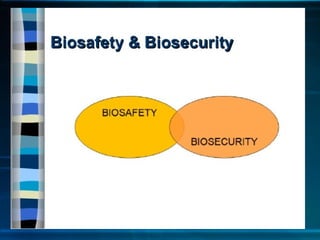
What is biosafety and
biosecurity
Why we need
Levels of biosafety
Biosafety cabinet types
• Bacteria
• Viruses
• Fungi
• Human blood,
unfixed tissue
• Human cell lines
• Recombinant
DNA
BIOSAFETY: Preventing
lab-acquired infections
Biosafety is the application of safety
precautions that reduce a
laboratorians risk of exposure to a
potentially infectious material and
limit contamination of the work
environment and ultimately the
community { CDC }
Why we need
biosafety ????
1. Lab has hazards of
processing infectious
agents
2. Accidental threat to
workers and
environment
3. To have adherence with
safety regulations while
dealing with highly
infectious agents
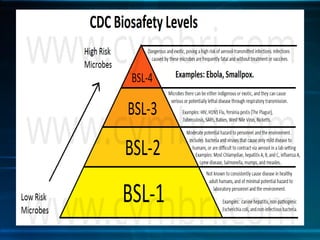
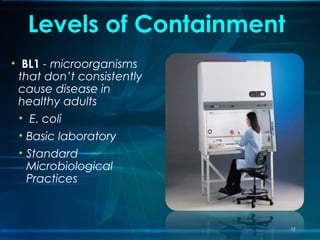
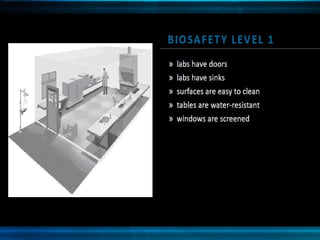
• BL1 - microorganisms
that don’t consistently
cause disease in
healthy adults
• E. coli
• Basic laboratory
• Standard
Microbiological
Practices
Levels of Containment
12
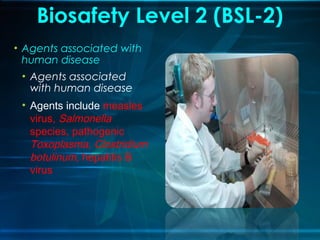
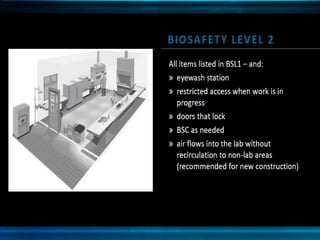
• Agents associated with
human disease
• Agents associated
with human disease
• Agents include measles
virus, Salmonella
species, pathogenic
Toxoplasma, Clostridium
botulinum, hepatitis B
virus
Biosafety Level 2 (BSL-2)
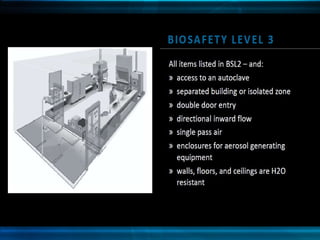
• BL3 - microorganisms
that cause serious
disease, transmitted
by inhalation
• M. tuberculosis,
yellow fever virus,
hantavirus,
Levels of Containment
16
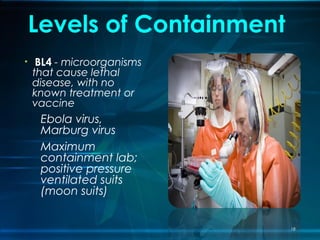
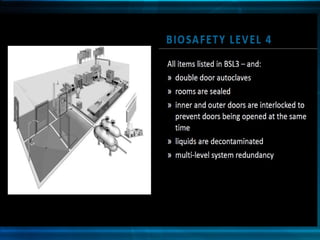
• BL4 - microorganisms
that cause lethal
disease, with no
known treatment or
vaccine
Ebola virus,
Marburg virus
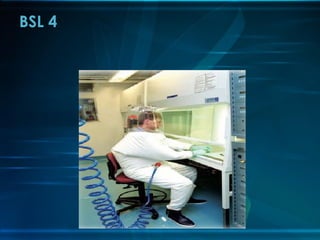
Maximum
containment lab;
positive pressure
ventilated suits
(moon suits)
Levels of Containment
18
BSL 4
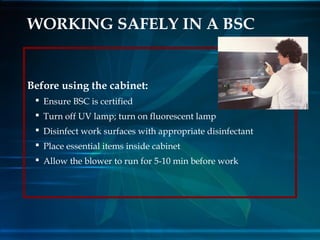
WORKING SAFELY IN A BSC
Before using the cabinet:
 Ensure BSC is certified
 Turn off UV lamp; turn on fluorescent lamp
 Disinfect work surfaces with appropriate disinfectant
 Place essential items inside cabinet
 Allow the blower to run for 5-10 min before work
After using the cabinet:
 Leave blower on at least 5 minutes to purge cabinet
 Remove and decontaminate equipment and materials
 Disinfect cabinet surfaces
 Turn off blower and fluorescent lamp, turn on UV lamp
WORKING SAFELY IN A BSC
Introduction
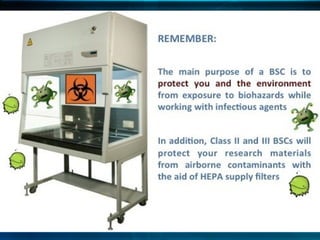
• Biosafety cabinets (BSCs) are primary means of
containment, developed for working safely with
infectious micro-organisms
• HEPA – High efficiency particulate air filter
• It removes the most penetrating particle size
(MPPS) of 0.3 μm with an efficiency of at
least 99.97 %
http://en.wikipedia.org/wiki/HEPA
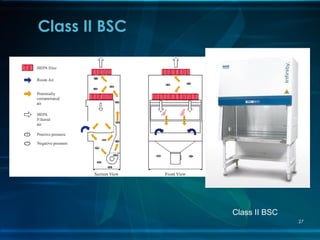
Class II BSC
• Class II Type A1
Class II BSC
27
THANK YOU!
ANY QUESTIONS?

Lab biosafety and biosecurity

  • 1.
    Assist. Prof. Dr.Majed H. Mohammed Ph.D. Virology and Molecular Cell Biology Scientific Research Center
  • 2.
    What is biosafetyand biosecurity Why we need Levels of biosafety Biosafety cabinet types
  • 4.
    • Bacteria • Viruses •Fungi • Human blood, unfixed tissue • Human cell lines • Recombinant DNA BIOSAFETY: Preventing lab-acquired infections
  • 5.
    Biosafety is theapplication of safety precautions that reduce a laboratorians risk of exposure to a potentially infectious material and limit contamination of the work environment and ultimately the community { CDC }
  • 6.
    Why we need biosafety???? 1. Lab has hazards of processing infectious agents 2. Accidental threat to workers and environment 3. To have adherence with safety regulations while dealing with highly infectious agents
  • 12.
    • BL1 -microorganisms that don’t consistently cause disease in healthy adults • E. coli • Basic laboratory • Standard Microbiological Practices Levels of Containment 12
  • 14.
    • Agents associatedwith human disease • Agents associated with human disease • Agents include measles virus, Salmonella species, pathogenic Toxoplasma, Clostridium botulinum, hepatitis B virus Biosafety Level 2 (BSL-2)
  • 16.
    • BL3 -microorganisms that cause serious disease, transmitted by inhalation • M. tuberculosis, yellow fever virus, hantavirus, Levels of Containment 16
  • 18.
    • BL4 -microorganisms that cause lethal disease, with no known treatment or vaccine Ebola virus, Marburg virus Maximum containment lab; positive pressure ventilated suits (moon suits) Levels of Containment 18
  • 20.
  • 22.
    WORKING SAFELY INA BSC Before using the cabinet:  Ensure BSC is certified  Turn off UV lamp; turn on fluorescent lamp  Disinfect work surfaces with appropriate disinfectant  Place essential items inside cabinet  Allow the blower to run for 5-10 min before work
  • 23.
    After using thecabinet:  Leave blower on at least 5 minutes to purge cabinet  Remove and decontaminate equipment and materials  Disinfect cabinet surfaces  Turn off blower and fluorescent lamp, turn on UV lamp WORKING SAFELY IN A BSC
  • 24.
    Introduction • Biosafety cabinets(BSCs) are primary means of containment, developed for working safely with infectious micro-organisms
  • 25.
    • HEPA –High efficiency particulate air filter • It removes the most penetrating particle size (MPPS) of 0.3 μm with an efficiency of at least 99.97 %
  • 26.
  • 27.
    Class II BSC •Class II Type A1 Class II BSC 27
  • 29.