Kingdom Protista
General Characteristics
 Protists  are very diverse and have few
  traits in common
 Most are single-celled organisms, but
  some are many cells, and others live in
  colonies
 Some produce own food, others eat other
  organisms or decaying matter
 Some can control own movement, others
  cannot
 Characteristics   that protists DO share:
   Eukaryotic(have a nucleus), but are less
    complex than other eukaryotic organisms
   Do not have specialized tissues


 Members  of the kingdom Protista are
 related more by how they differ from
 members of other kingdoms than by how
 they are similar to other protists
zooflagellates


                   Protists have many
                    different shapes
Pretzel slime


                   Most scientists
    mold


                                          ulva
                    agree that fungi,
                    plants, and animals
                    evolved from early
                    protists


                      Paramecium
Protists and Food
 Protists   can get food many ways:
   Can  make own food
   Can eat other organisms
   Can eat parts or products of other organisms
   Can eat remains of other organisms
   Some use more than one way to get food
   Some produce food—they use chloroplasts
    to produce food through photosynthesis
 Finding
        Food
  Heterotroph: organism that cannot
   make own food
    Some are decomposers—they get
     energy by breaking down dead
     organic matter
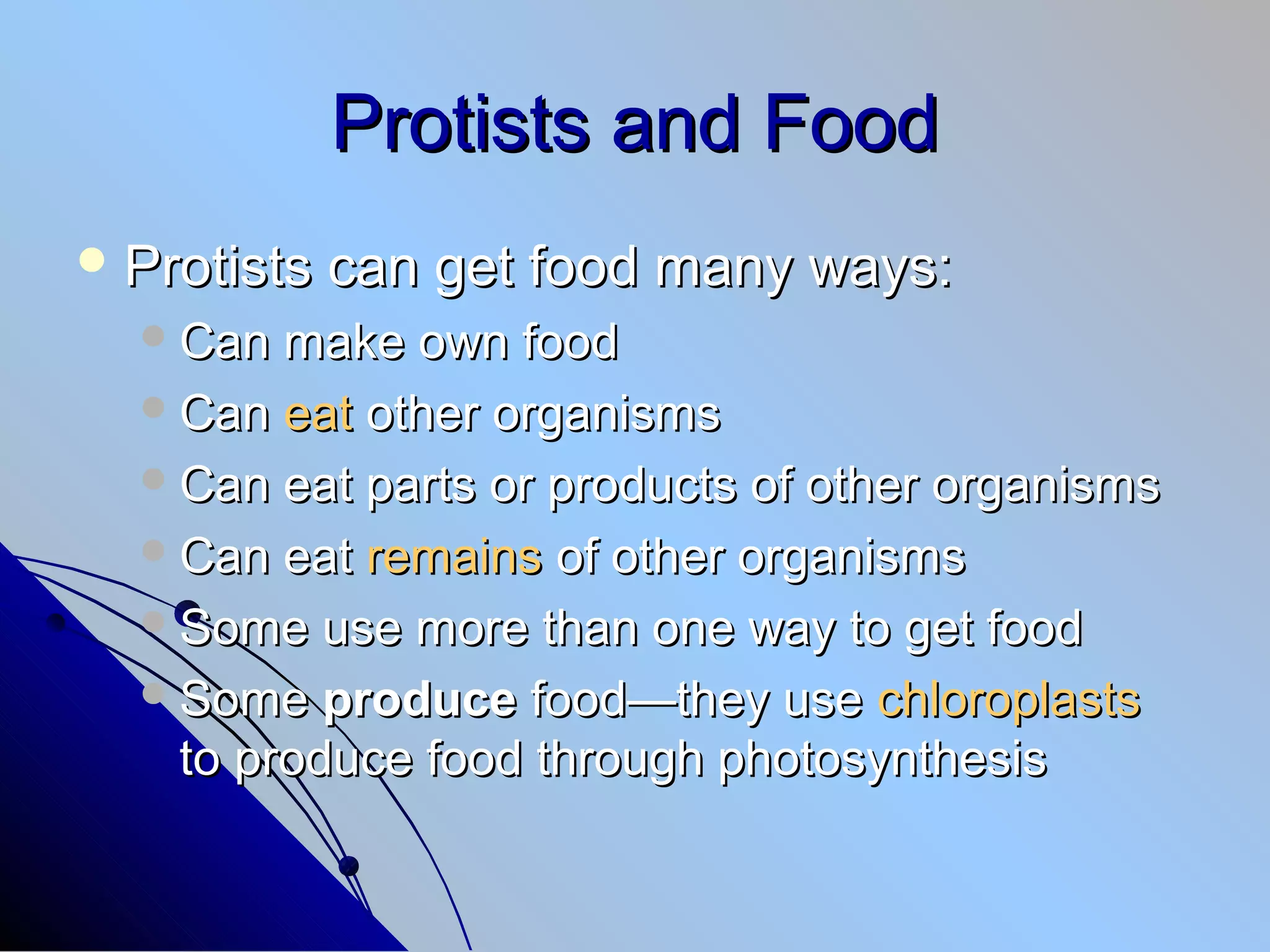
Asexual Reproduction
 Most  protists
  reproduce asexually
 Offspring come from
  just one parent
 Binary fission: a
  single-celled protist
  divides into two cells
 Each new cell is a
  single-celled protist
Sexual Reproduction
 Requires  two parents
 Paramecium
  sometimes reproduce
  sexually by a process
  called conjugation
 Algae
          Kinds of Protists
   Allalgae have the
    green pigment
    chlorophyll, which is
    used to make food
    through
    photosynthesis
   Almost all algae live in
    water
   Free-floating, single-
    celled algae are called
    phytoplankton, which
    produce much of the
    world’s oxygen
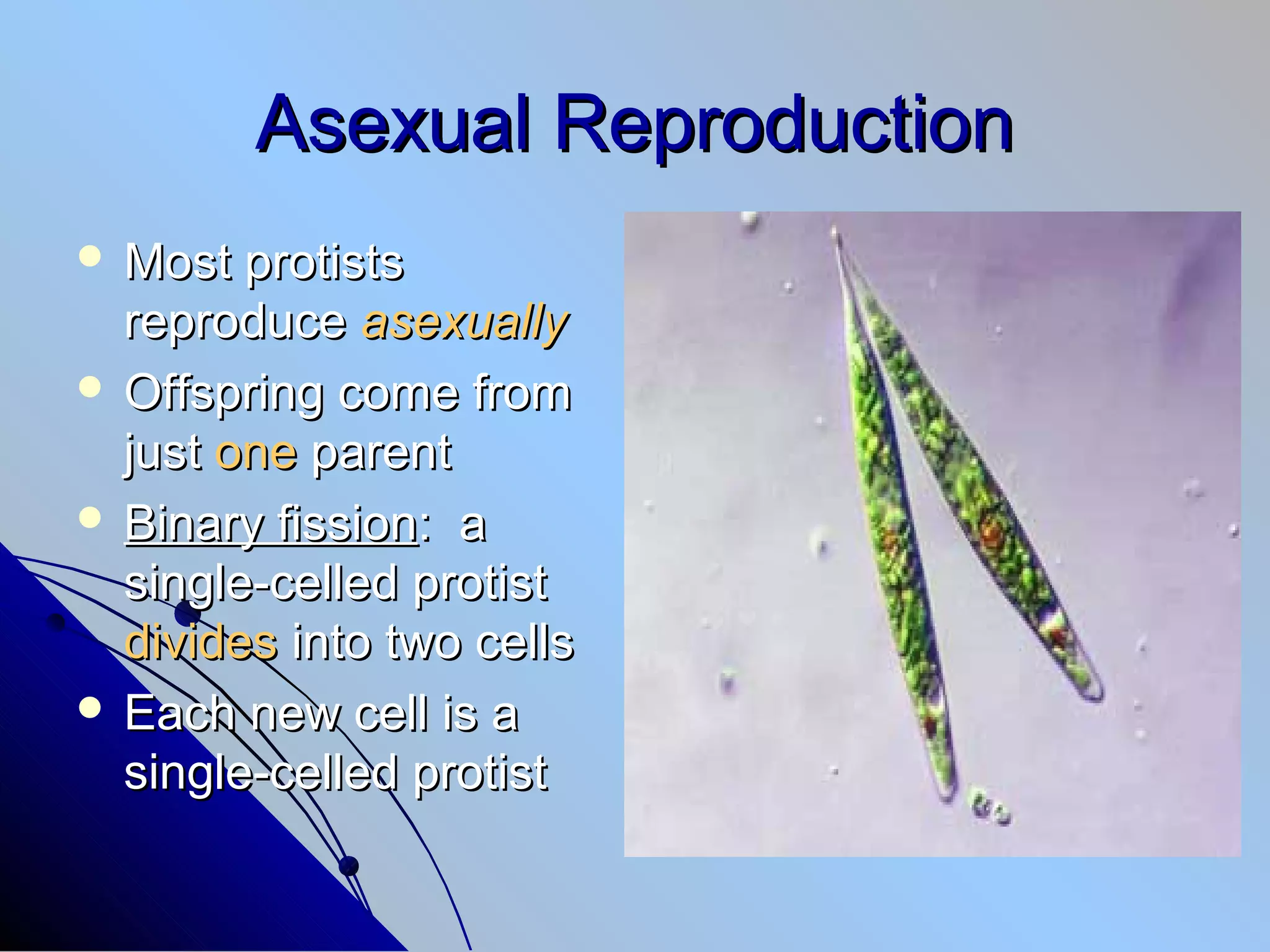
 Amoebas
   Soft,jellylike
    protozoans
   Found in fresh and salt
    water, soil, and in
    parasites
   Move with
    pseudopodia, which
    means “false feet”
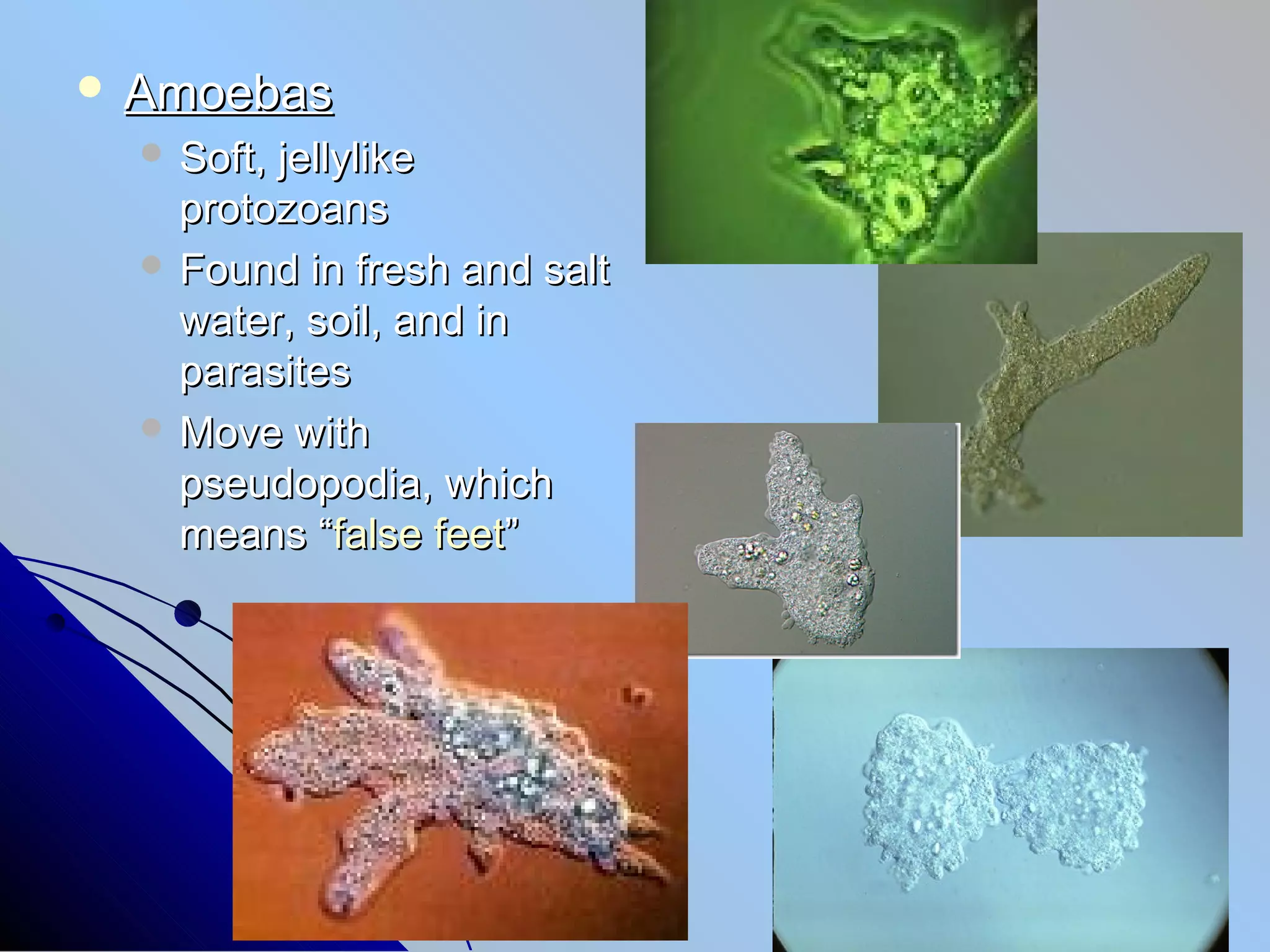
 Ciliates
    Have   hundreds of cilia—
     tiny, hairlike structures
    Cilia move the protist
     forward by beating back
     and forth—sometimes up
     to 60 times a second!
    Cilia are also used for
     feeding—they move the
     food towards the protist’s
     food passageway
    Best known of ciliates is
     the Paramecium
 Spore-Forming    Protists
   Many   spore-forming
    protists are parasites
   They absorb nutrients from
    their hosts
   No cilia or flagella, cannot
    move on their own
   Have complicated life
    cycles that usually
    includes two or more hosts
   Example: protist that
    causes malaria uses both
    mosquitoes and humans
    as hosts
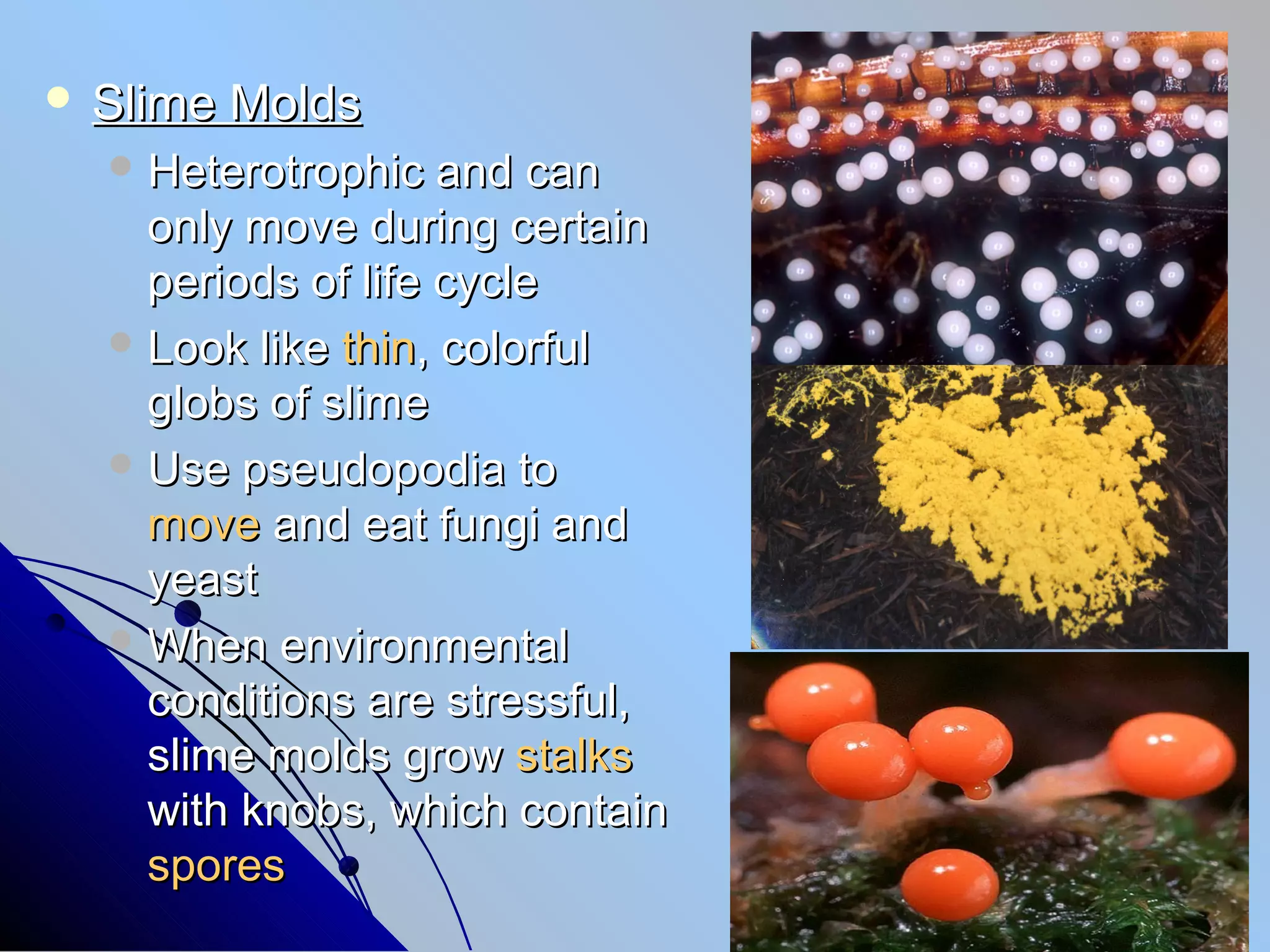
 Slime   Molds
   Heterotrophic   and can
    only move during certain
    periods of life cycle
   Look like thin, colorful
    globs of slime
   Use pseudopodia to
    move and eat fungi and
    yeast
   When environmental
    conditions are stressful,
    slime molds grow stalks
    with knobs, which contain
    spores
 Red   Algae
   Most   of world’s
    seaweed is red algae
   Most live in tropical
    oceans
   Usually less than 1 m
    in length
   Contain chlorophyll,
    but have red pigment
   Red pigment allows
    them to absorb light
    that filters deep into
    ocean
 Brown  algae
   Most seaweed in cool
    climates are brown
    algae
   Attach to rocks or form
    large floating beds in
    ocean waters
   Have chlorophyll and
    yellow-brown pigment
   Many are very large—up
    to 60 meters
 Green    algae
   Most  diverse of protist producers
   Green because chlorophyll is main pigment
   Most live in water or moist soil
   Others live in melting snow, on tree trunks, and
    inside other organisms
 Diatoms
   Single-celled
   Found  in salt and fresh water
   Get energy from photosynthesis
   Make up a large percentage of phytoplankton
   Cell walls contain a glasslike substance called silica

Kingdom protista

  • 1.
  • 2.
    General Characteristics  Protists are very diverse and have few traits in common  Most are single-celled organisms, but some are many cells, and others live in colonies  Some produce own food, others eat other organisms or decaying matter  Some can control own movement, others cannot
  • 3.
     Characteristics that protists DO share:  Eukaryotic(have a nucleus), but are less complex than other eukaryotic organisms  Do not have specialized tissues  Members of the kingdom Protista are related more by how they differ from members of other kingdoms than by how they are similar to other protists
  • 4.
    zooflagellates  Protists have many different shapes Pretzel slime  Most scientists mold ulva agree that fungi, plants, and animals evolved from early protists Paramecium
  • 5.
    Protists and Food Protists can get food many ways:  Can make own food  Can eat other organisms  Can eat parts or products of other organisms  Can eat remains of other organisms  Some use more than one way to get food  Some produce food—they use chloroplasts to produce food through photosynthesis
  • 6.
     Finding Food Heterotroph: organism that cannot make own food Some are decomposers—they get energy by breaking down dead organic matter
  • 7.
    Asexual Reproduction  Most protists reproduce asexually  Offspring come from just one parent  Binary fission: a single-celled protist divides into two cells  Each new cell is a single-celled protist
  • 8.
    Sexual Reproduction  Requires two parents  Paramecium sometimes reproduce sexually by a process called conjugation
  • 9.
     Algae Kinds of Protists  Allalgae have the green pigment chlorophyll, which is used to make food through photosynthesis  Almost all algae live in water  Free-floating, single- celled algae are called phytoplankton, which produce much of the world’s oxygen
  • 10.
     Amoebas  Soft,jellylike protozoans  Found in fresh and salt water, soil, and in parasites  Move with pseudopodia, which means “false feet”
  • 11.
     Ciliates  Have hundreds of cilia— tiny, hairlike structures  Cilia move the protist forward by beating back and forth—sometimes up to 60 times a second!  Cilia are also used for feeding—they move the food towards the protist’s food passageway  Best known of ciliates is the Paramecium
  • 12.
     Spore-Forming Protists  Many spore-forming protists are parasites  They absorb nutrients from their hosts  No cilia or flagella, cannot move on their own  Have complicated life cycles that usually includes two or more hosts  Example: protist that causes malaria uses both mosquitoes and humans as hosts
  • 13.
     Slime Molds  Heterotrophic and can only move during certain periods of life cycle  Look like thin, colorful globs of slime  Use pseudopodia to move and eat fungi and yeast  When environmental conditions are stressful, slime molds grow stalks with knobs, which contain spores
  • 14.
     Red Algae  Most of world’s seaweed is red algae  Most live in tropical oceans  Usually less than 1 m in length  Contain chlorophyll, but have red pigment  Red pigment allows them to absorb light that filters deep into ocean
  • 15.
     Brown algae  Most seaweed in cool climates are brown algae  Attach to rocks or form large floating beds in ocean waters  Have chlorophyll and yellow-brown pigment  Many are very large—up to 60 meters
  • 16.
     Green algae  Most diverse of protist producers  Green because chlorophyll is main pigment  Most live in water or moist soil  Others live in melting snow, on tree trunks, and inside other organisms
  • 17.
     Diatoms  Single-celled  Found in salt and fresh water  Get energy from photosynthesis  Make up a large percentage of phytoplankton  Cell walls contain a glasslike substance called silica