The document discusses the kingdom Protista, which includes mostly unicellular eukaryotic organisms that can reproduce sexually or asexually and exhibit various modes of nutrition including photosynthesis, ingestion, and absorption. Protists display diverse and complex life cycles and forms, and include photosynthetic algae, protozoa, and many parasites of plants and animals. They are classified into major groups based on their structures and genetic relationships.
Protista includes mostly unicellular eukaryotic cells with diverse nutrition, either asexual or sexual reproduction.
Protists utilize various nutrition methods: ingestion, absorption, and photosynthesis; classified as predators (protozoa) or algae.
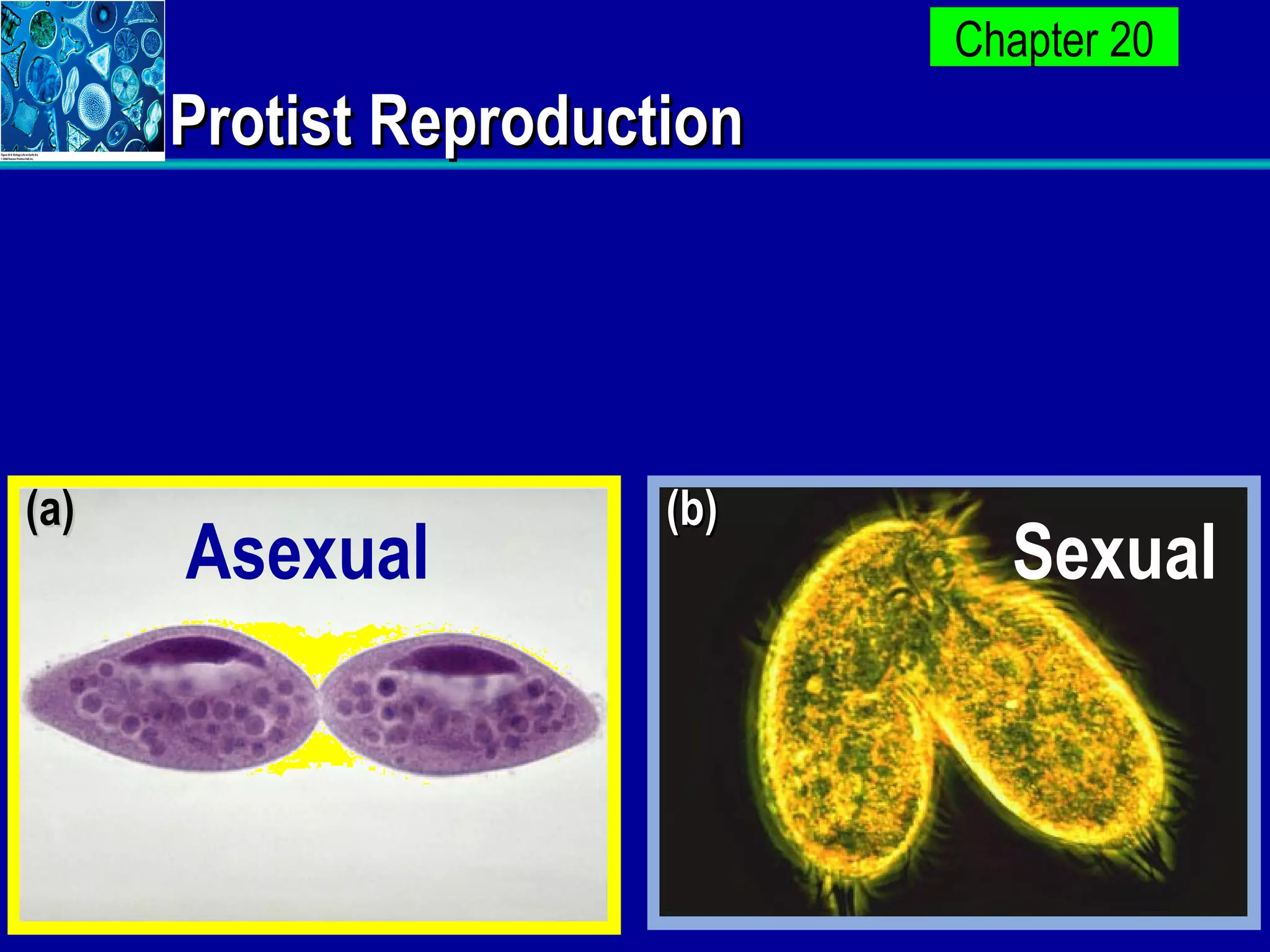
Most protists reproduce asexually via mitosis, with some exhibiting sexual reproduction under certain conditions.
Protists have ecological roles, with positive impacts (oxygen production) and negative impacts (diseases caused by parasites).
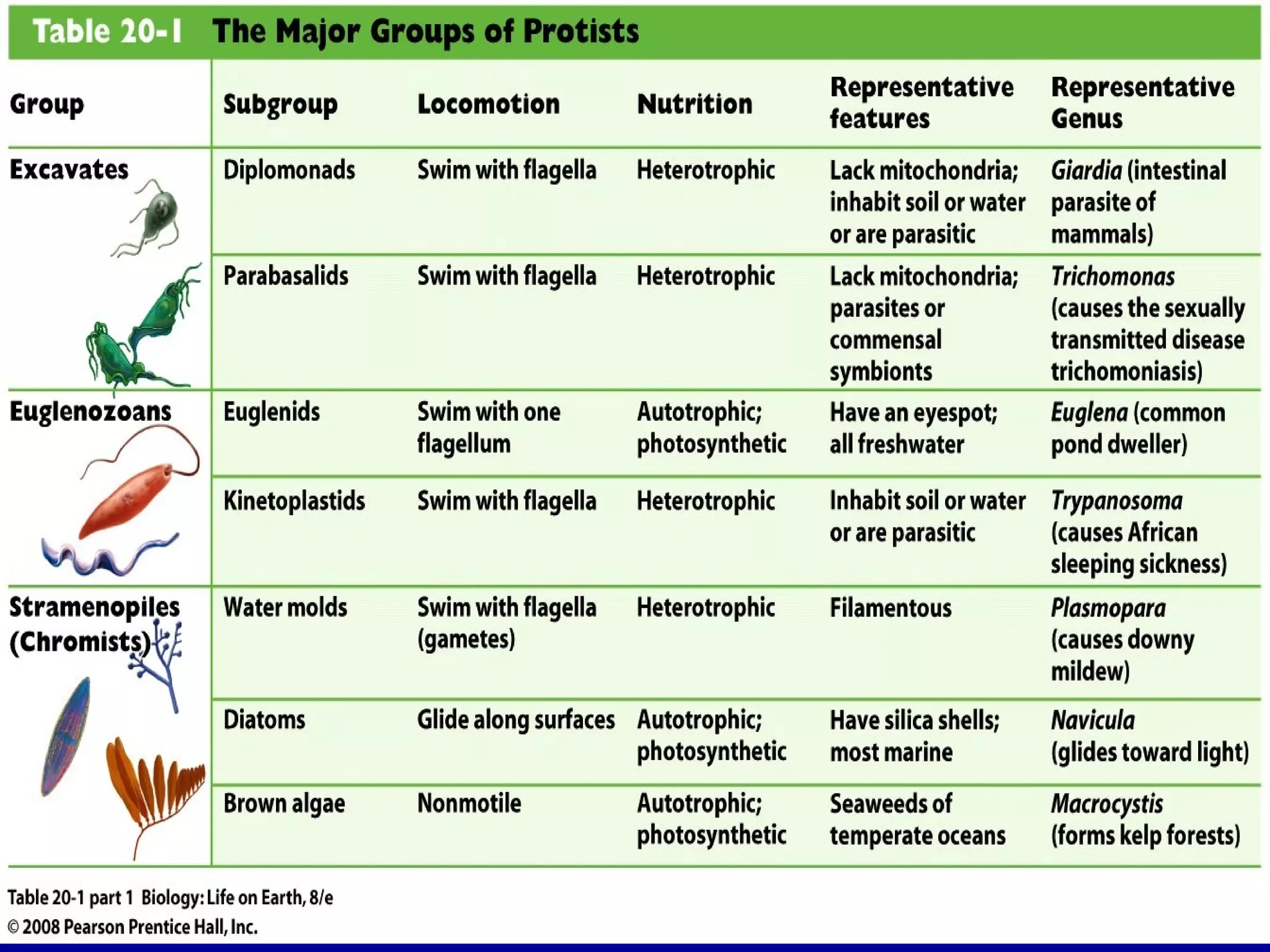
Protist classification is evolving, prioritizing genetic features over physical ones; includes Excovates and Parabasalids.
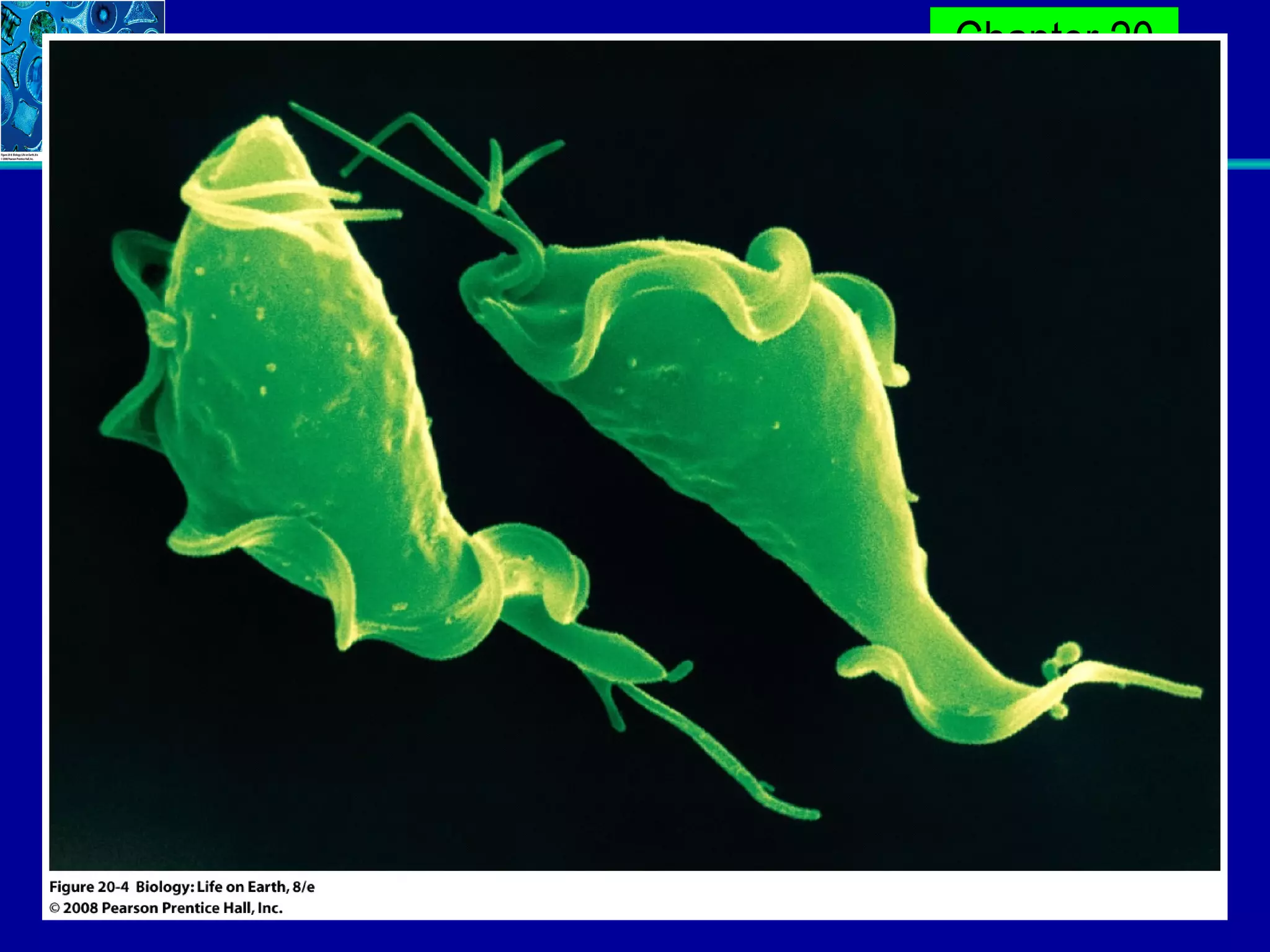
Euglenozoans feature unique mitochondria; include Euglenids and Kinetoplastids, with varying habitats and diseases.
Stramenophiles, with fine projections, include water molds and diatoms, important to ecosystems and economy.
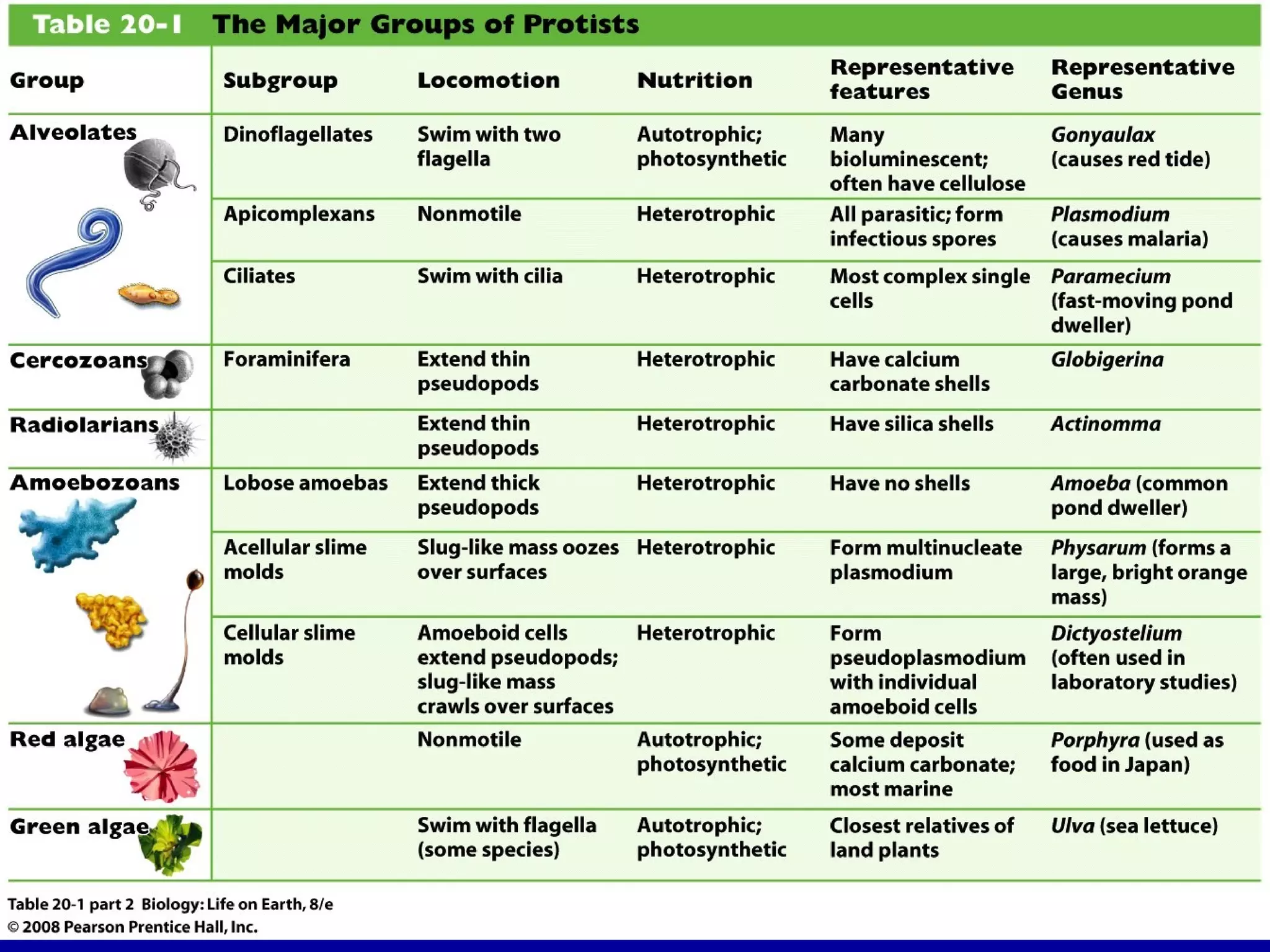
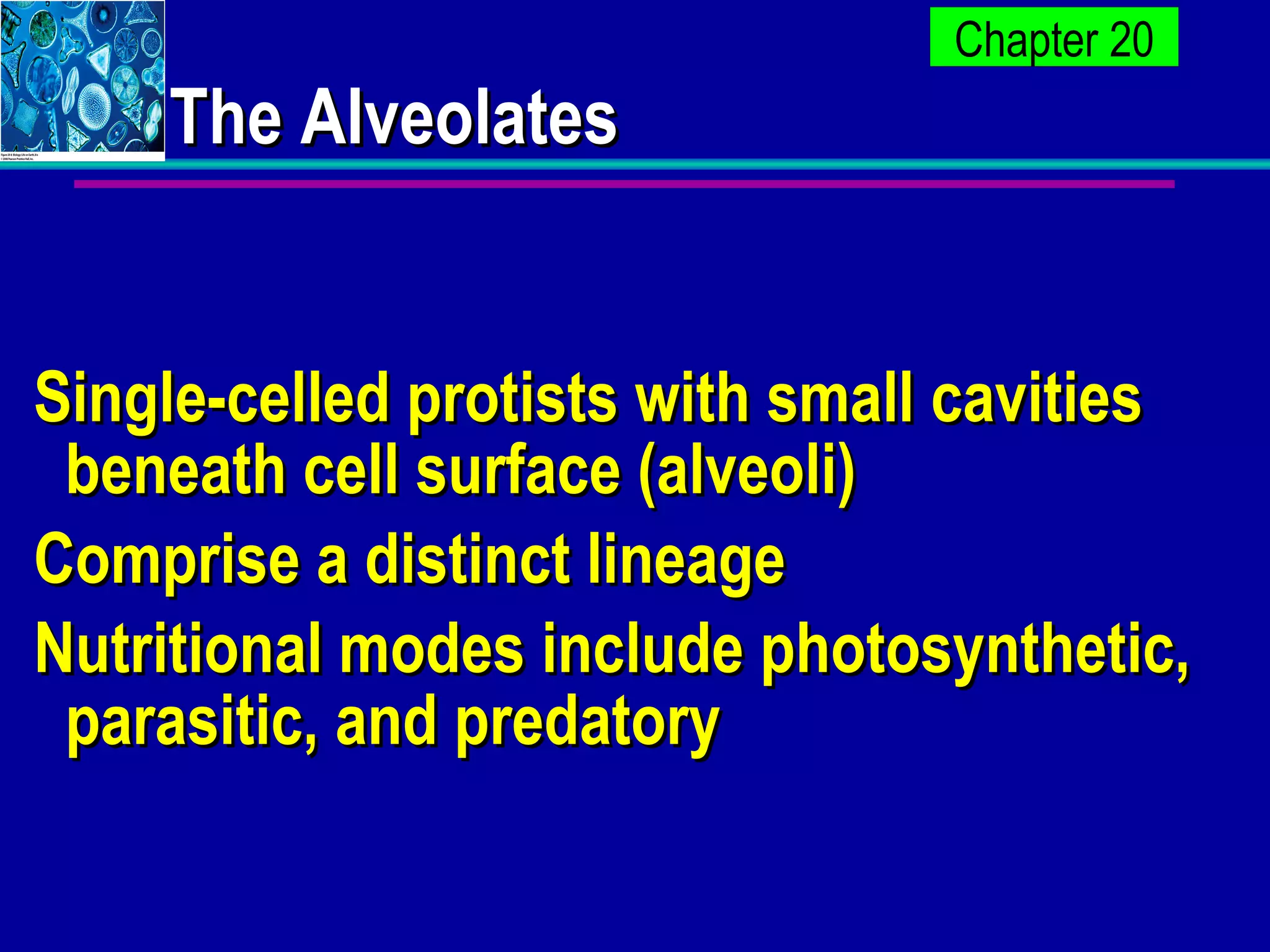
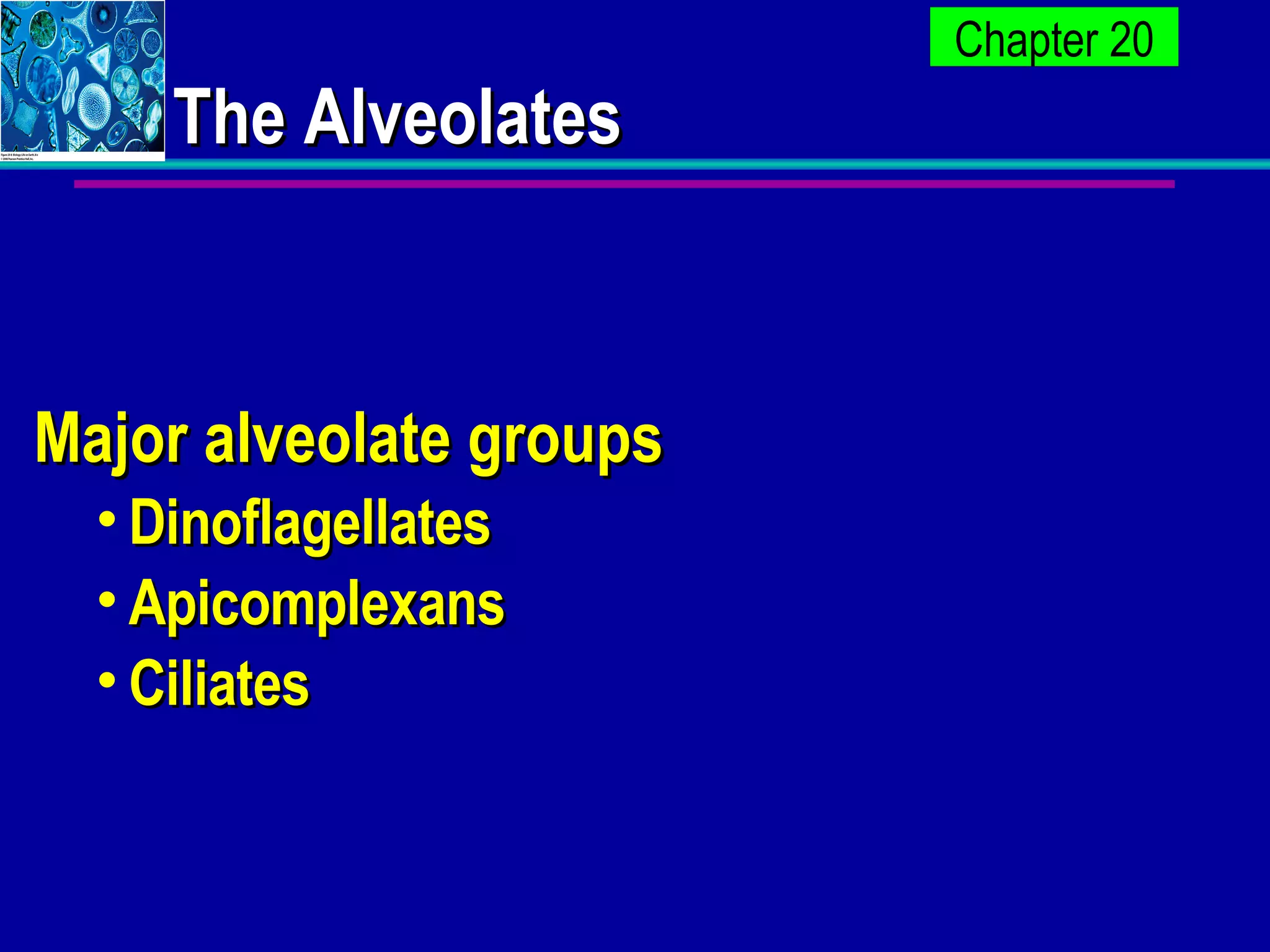
Single-celled Alveolates encompass dinoflagellates, apicomplexans, and ciliates, with diverse ecological roles.
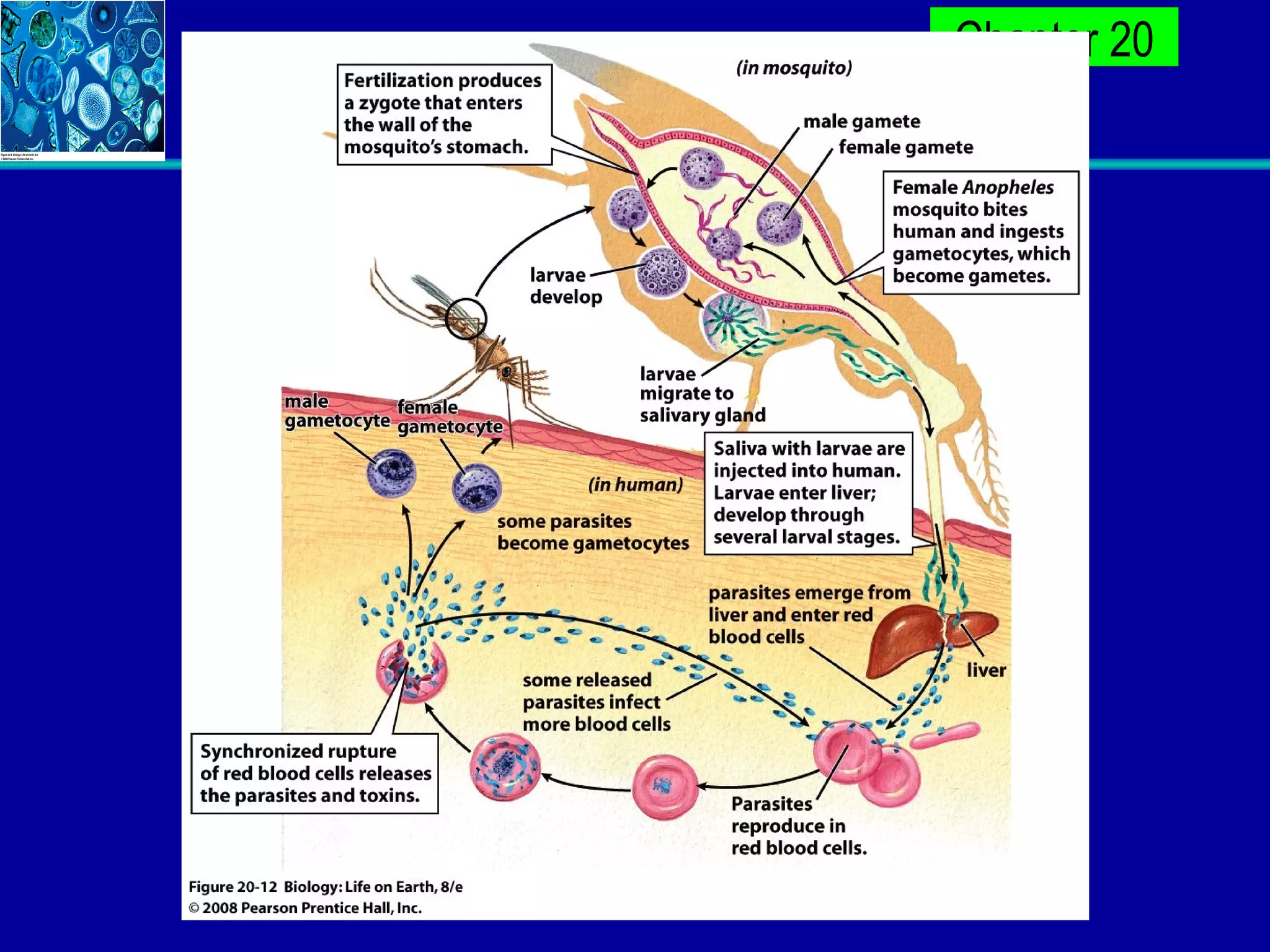
Apicomplexans are parasitic, forming spores and undergoing complex life cycles, notably malaria caused by Plasmodium.
Ciliates are complex unicellular organisms with specialized structures like cilia; examples include Paramecium.
Cercozoans possess thin pseudopods; include Foraminifera and Radiolarians with distinct shells.
Amoebozoans, moving via pseudopods, include amoebas and slime molds, exhibiting unique life cycles and feeding.
Red Algae are multicellular, vital in deep waters, contributing to reefs and used for food and industry.
Green algae are all photosynthetic, found in various habitats, and are closely related to early plants, illustrating diversity.Protists significantly contribute to ecosystems, impacting photosynthesis, food webs, and causing diseases.
Kingdom Protista: CharacteristicsMostly unicellular, eukaryotic cells Reproduce asexually or sexually by conjugation Exhibit all three modes of nutrition Photosynthesis Ingestion Absorption Ultimately spawned all multicellular kingdoms Very diverse kingdom Difficult for taxonomists to agree on classification
3.
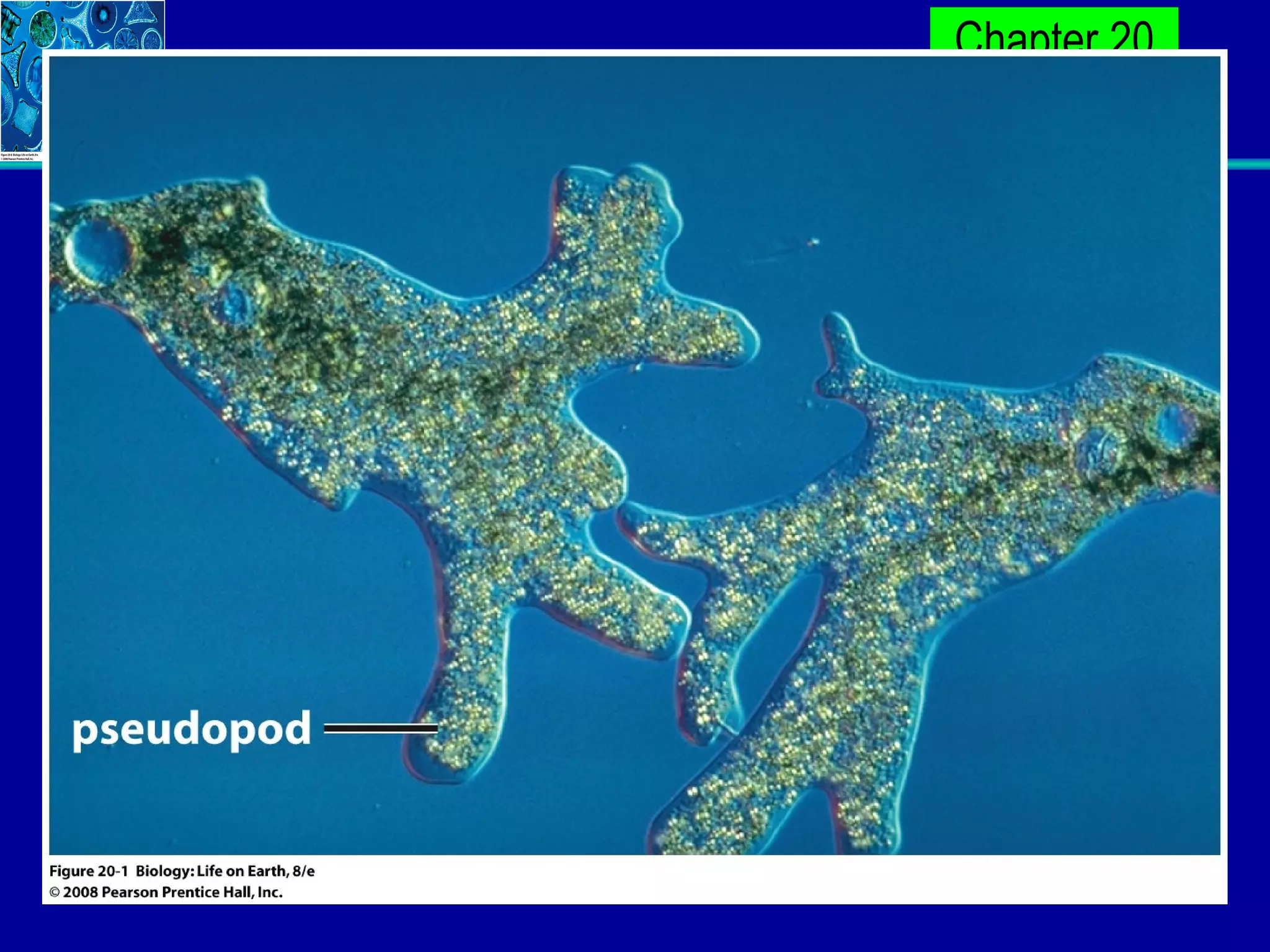
Diverse Modes ofNutrition Use diverse modes of nutrition Ingest food Absorb nutrients from surroundings Photosynthesis Protists that ingest food are typically predators Use extensions of cell membrane called psuedopods to surround and engulf prey item
4.
5.
Diverse Modes ofNutrition Protists that absorb nutrients directly from the surrounding environment can be Free-living types in the soil that decompose organic dead matter Parasites that live inside the bodies of other organisms, sometimes harming the host
6.
Diverse Modes ofNutrition Some protists have photosynthetic organelles called chloroplasts Photosynthetic protists are abundant in oceans, lakes, and ponds Free floating Mutually beneficial associations with other organisms: solar energy captured by the protist is used by host, which shelters and protects the protist
7.
Diverse Modes ofNutrition Photosynthetic protists are collectively known as algae Single-celled, non-photosynthetic protists are collectively known as protozoa
8.
Diverse Modes ofReproduction Most protists reproduce asexually by mitotic cell division Some also reproduce sexually Two individuals contribute genetic material to an offspring that is genetically different from either parent Occurs during certain time of year or circumstances (e.g. a crowded environment or a food shortage)
Effects on HumansPositive impact - ecological role of photosynthetic marine protists (algae) capture solar energy and make it available to the other organisms in the ecosystem release oxygen gas Negative impact - many human and plant diseases are caused by parasitic protists
11.
Major Groups ofProtists Protist classification is in transition Genetic comparison reveals evolutionary history of organisms Genetic, instead of physical features now separate protist species into different lineages Some physically dissimilar species are now placed in a common lineage
12.
13.
14.
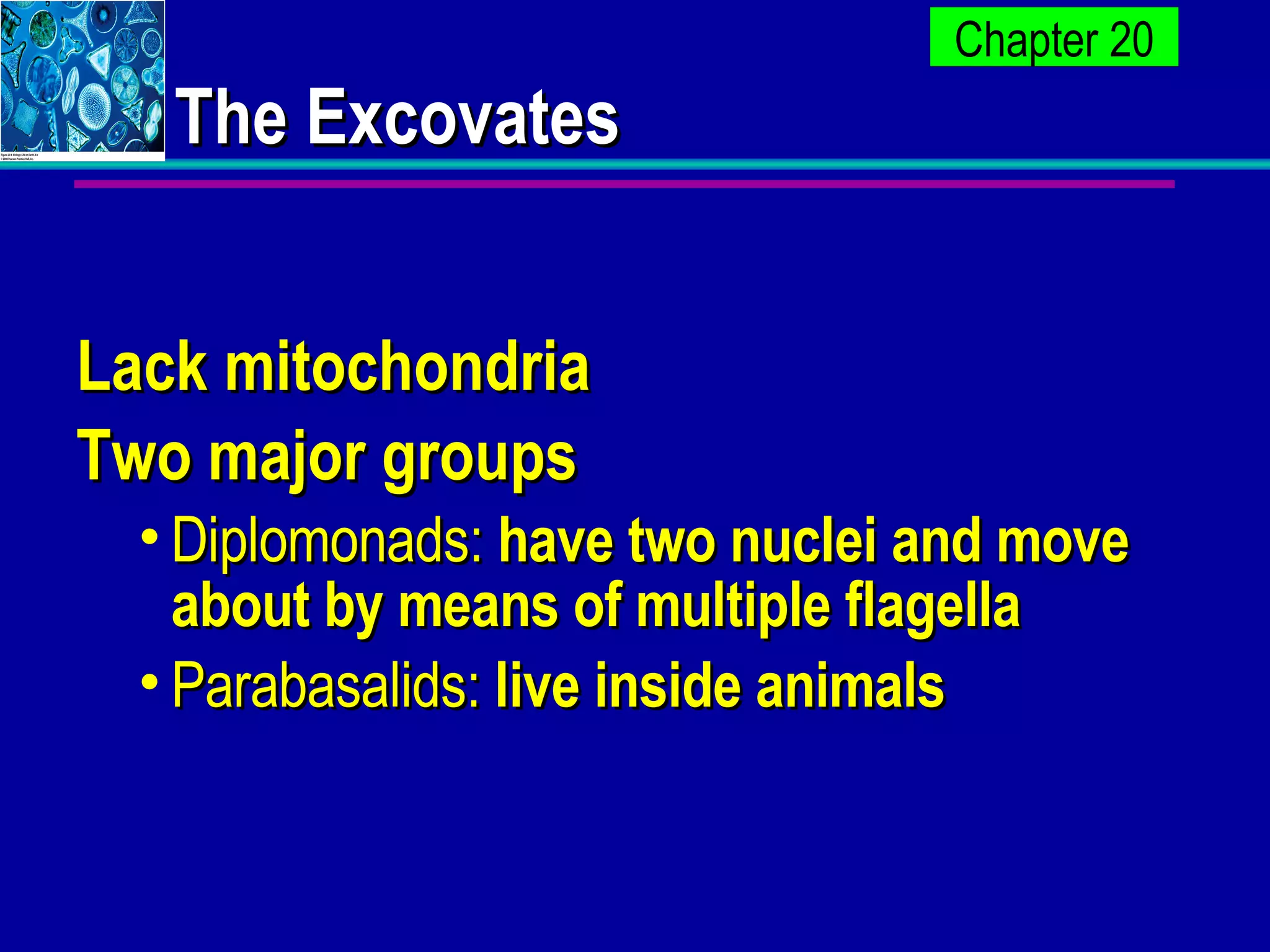
The Excovates Lackmitochondria Two major groups Diplomonads: have two nuclei and move about by means of multiple flagella Parabasalids: live inside animals
15.
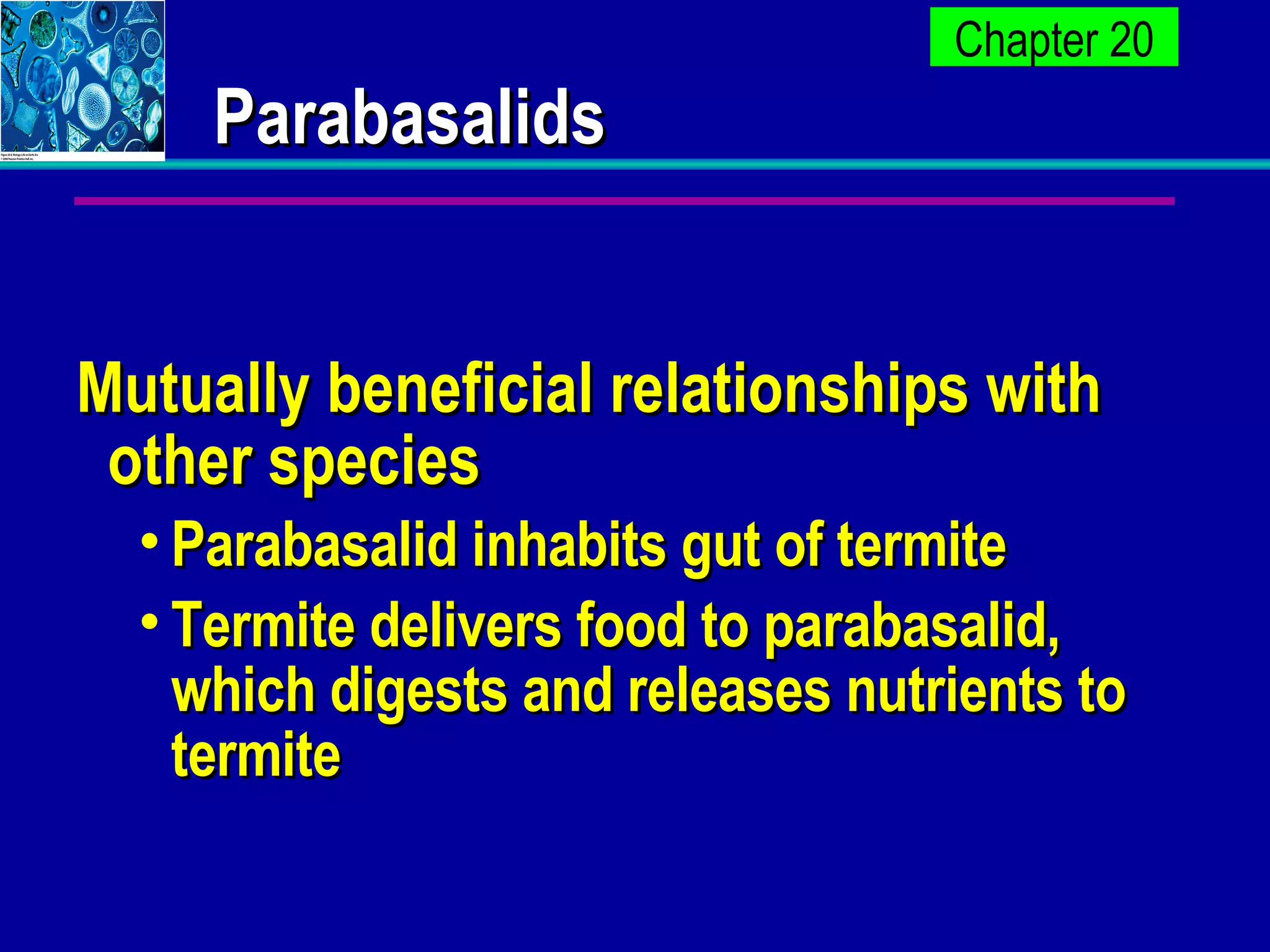
Parabasalids Mutually beneficialrelationships with other species Parabasalid inhabits gut of termite Termite delivers food to parabasalid, which digests and releases nutrients to termite
16.
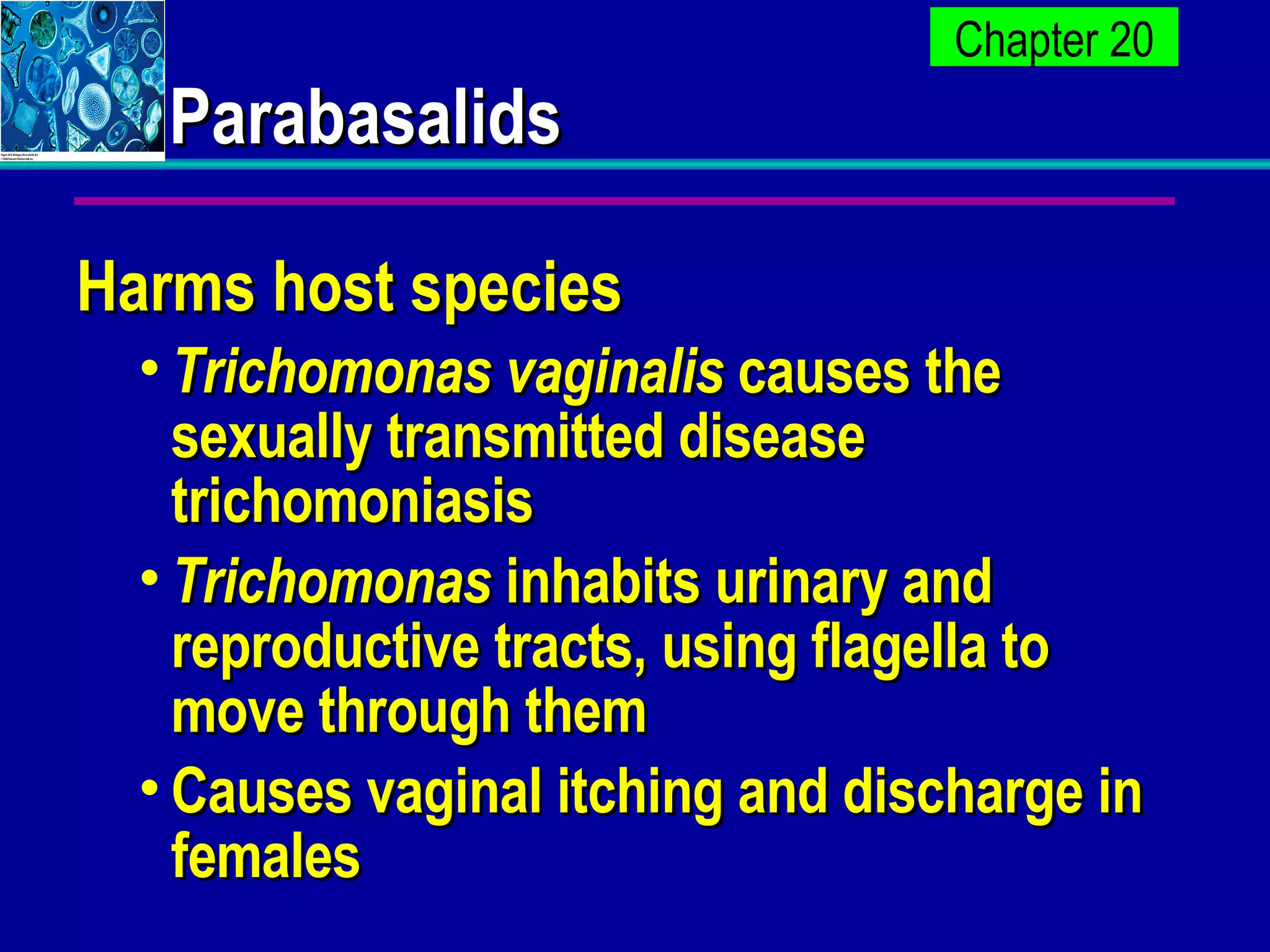
Parabasalids Harms hostspecies Trichomonas vaginalis causes the sexually transmitted disease trichomoniasis Trichomonas inhabits urinary and reproductive tracts, using flagella to move through them Causes vaginal itching and discharge in females
17.
18.
The Euglenozoans Havedistinctive mitochondria Two major groups Euglenids Kinetoplastids
19.
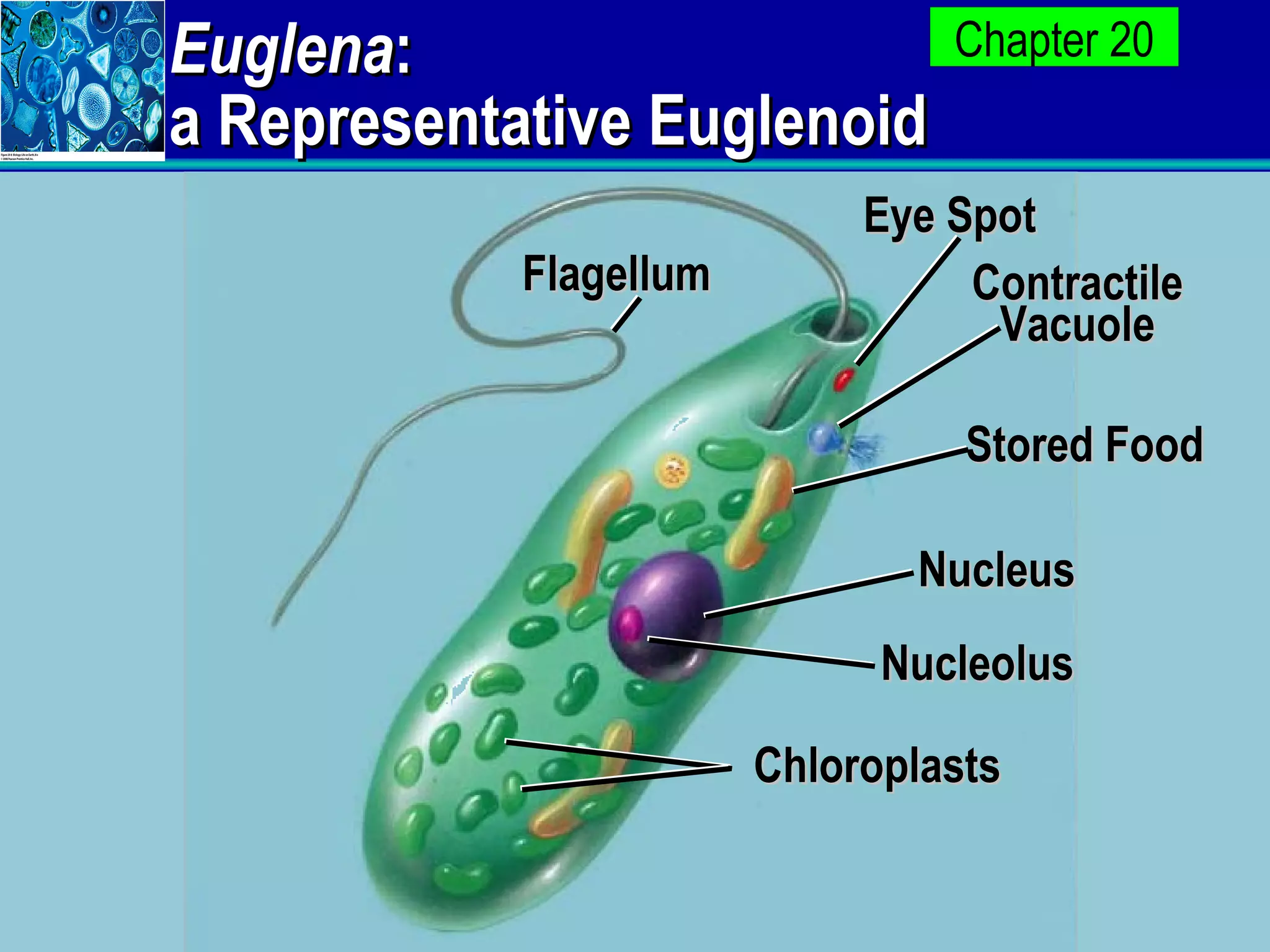
Euglenids Single-celled, fresh-waterprotists Lack a rigid outer covering Best known example is Euglena Moves by whipping single flagellum Photosynthetic Some euglenids photosynthetic, others absorb/engulf food
20.
Euglenids Photoreceptor (eyespot)found in some euglenoids Provides for a way to sense location of light source Useful for photosynthetic euglenoids in maximizing photosynthesis
Kinetoplastids All specieshave one or more flagella Can be used for propulsion, sensing, or food gathering Many are free-living in soil and water
23.
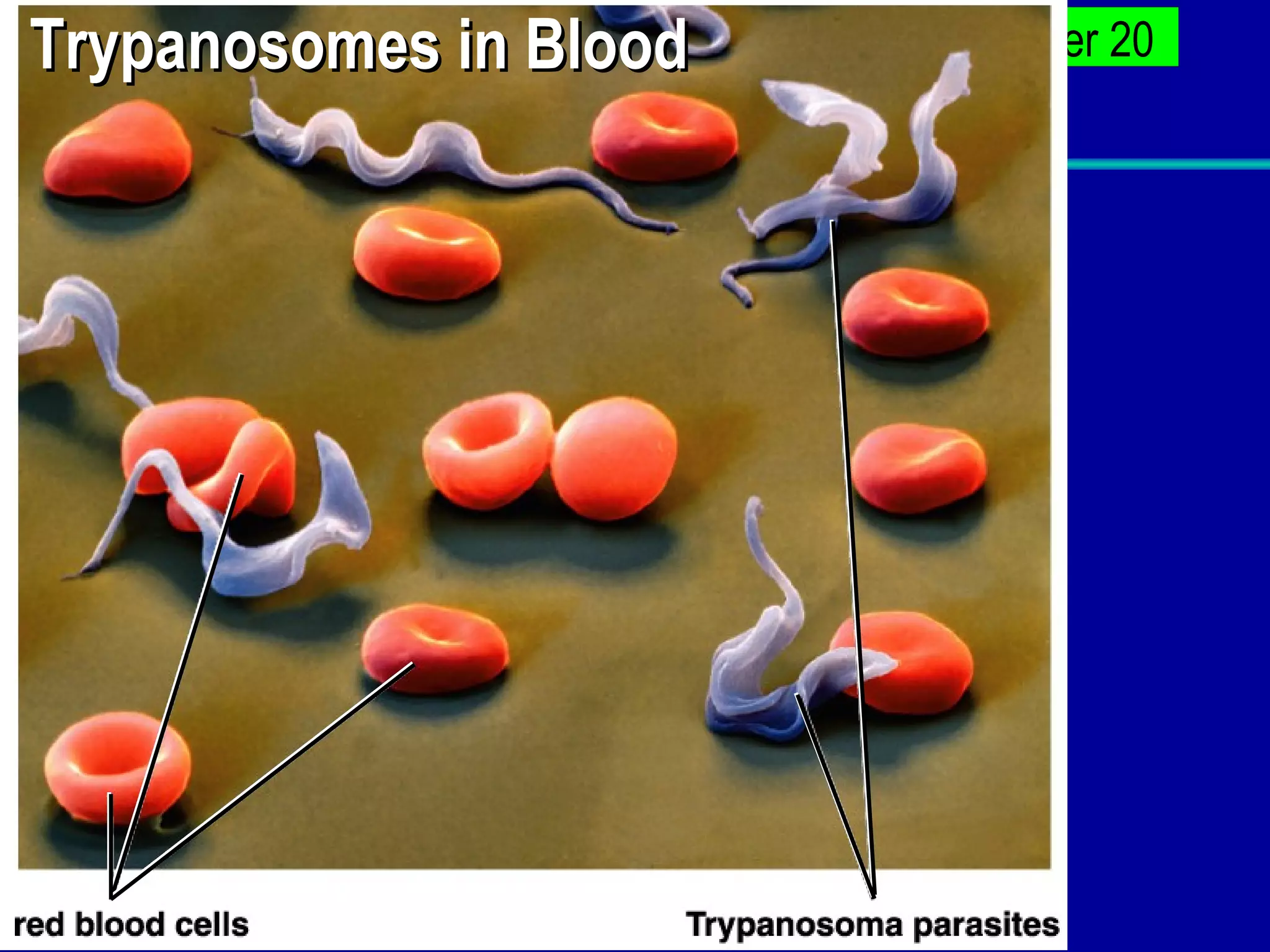
Kinetoplastids Some specieslive in a symbiotic mutualistic association within another organism Some species digest cellulose in termite guts Trypanosomes live within tsetse flies and cause African sleeping sickness in fly-bitten mammals Trypanosomes infect the blood causing African sleeping sickness
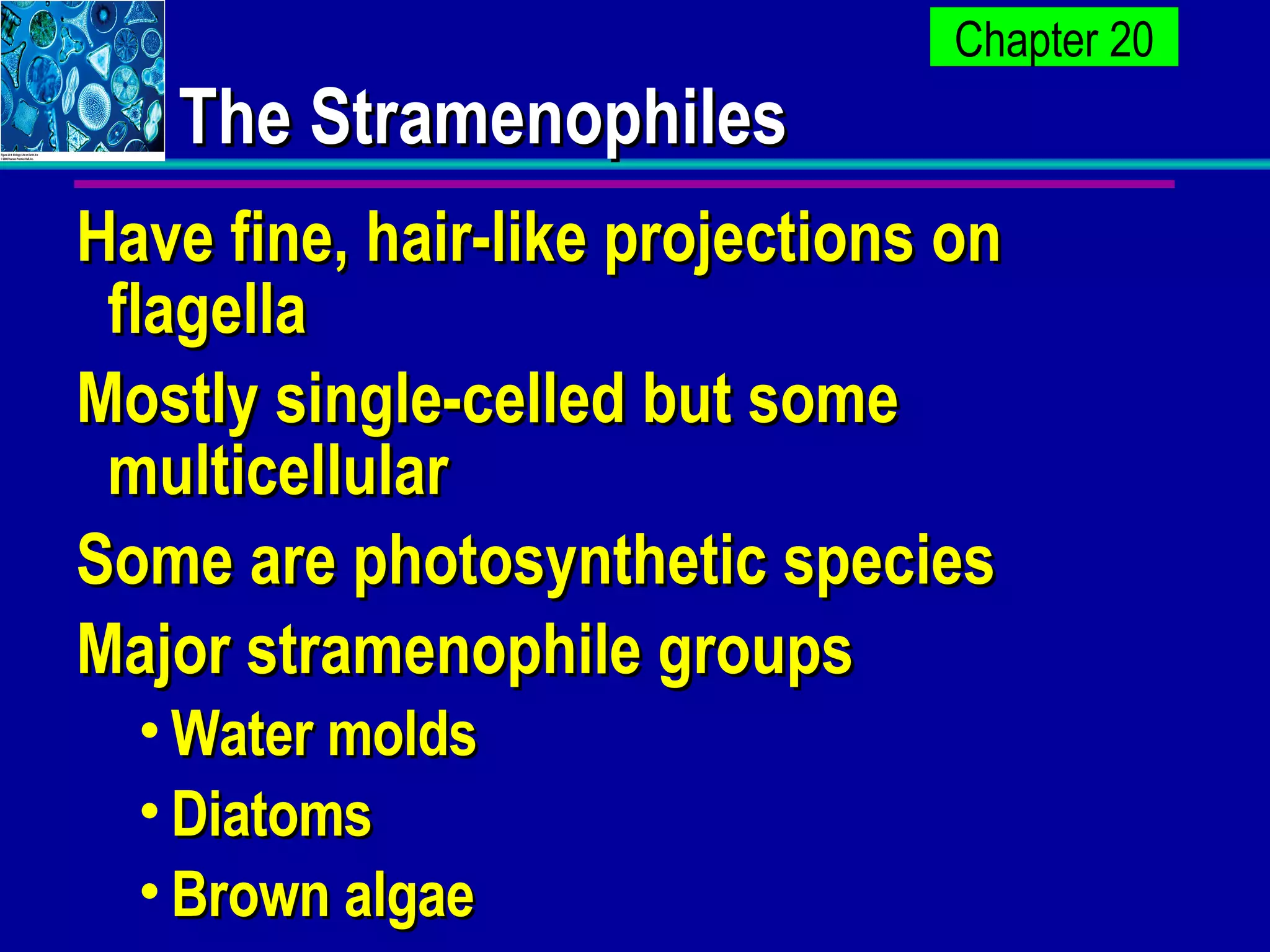
The Stramenophiles Havefine, hair-like projections on flagella Mostly single-celled but some multicellular Some are photosynthetic species Major stramenophile groups Water molds Diatoms Brown algae
26.
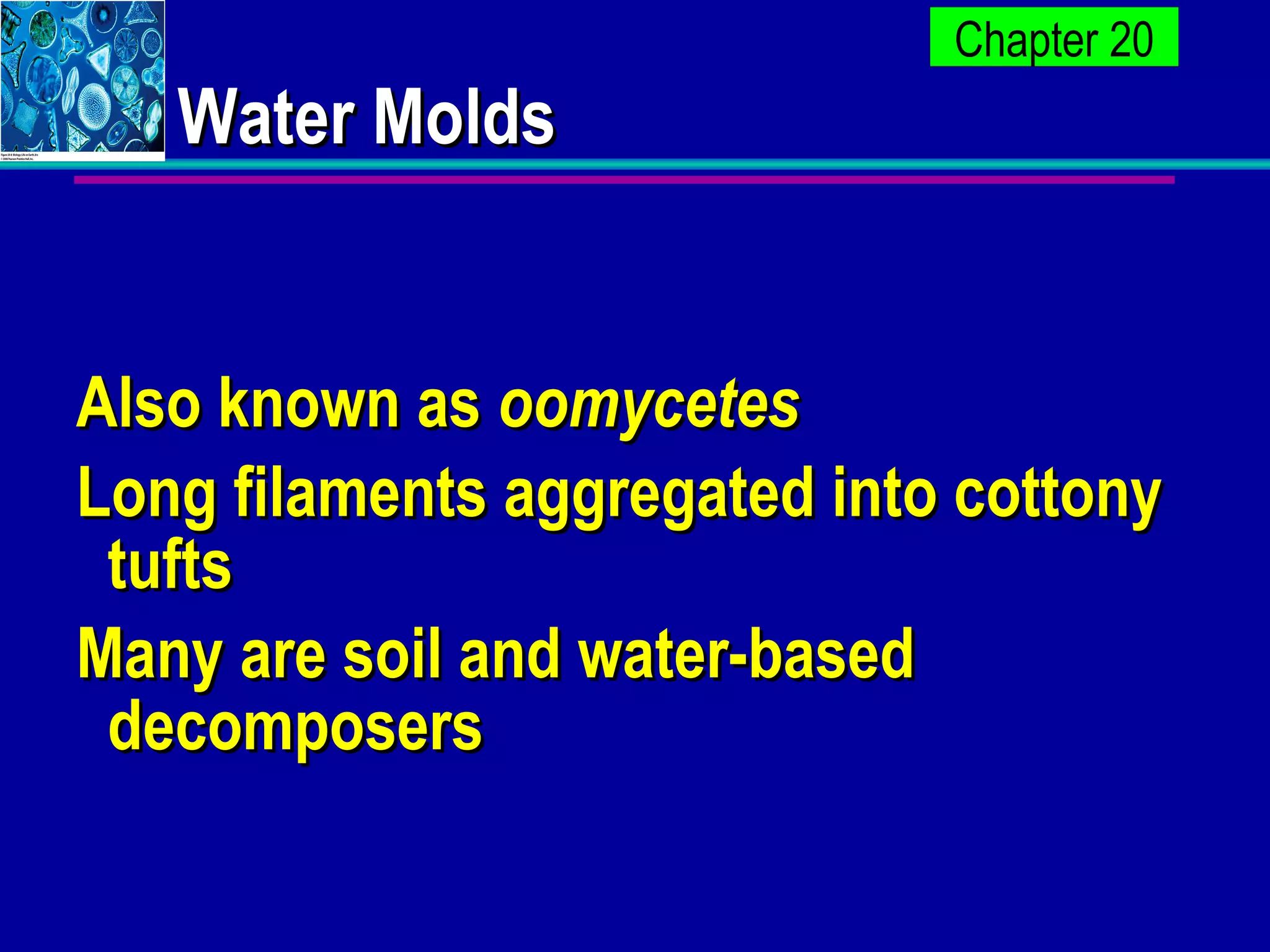
Water Molds Alsoknown as oomycetes Long filaments aggregated into cottony tufts Many are soil and water-based decomposers
27.
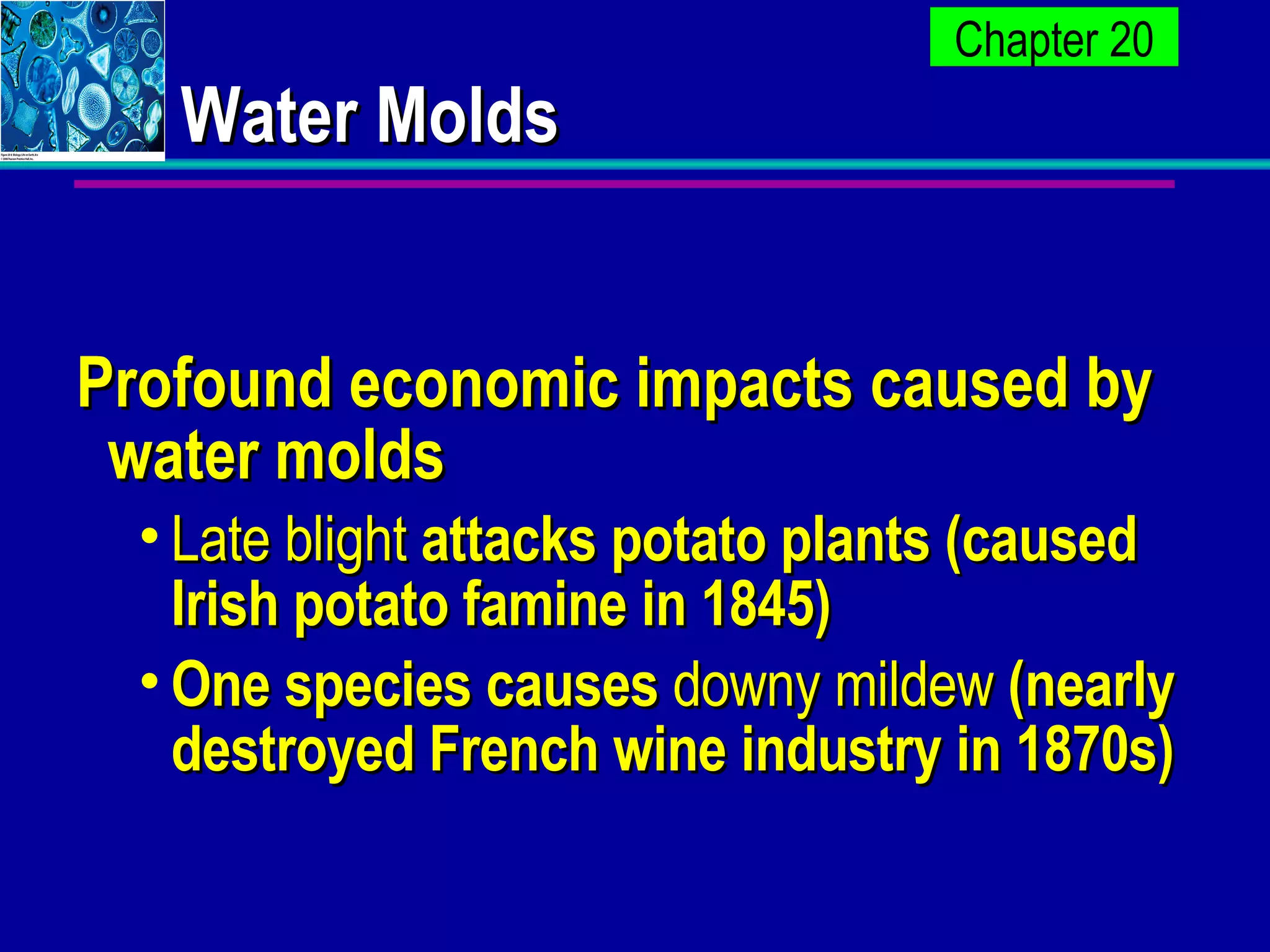
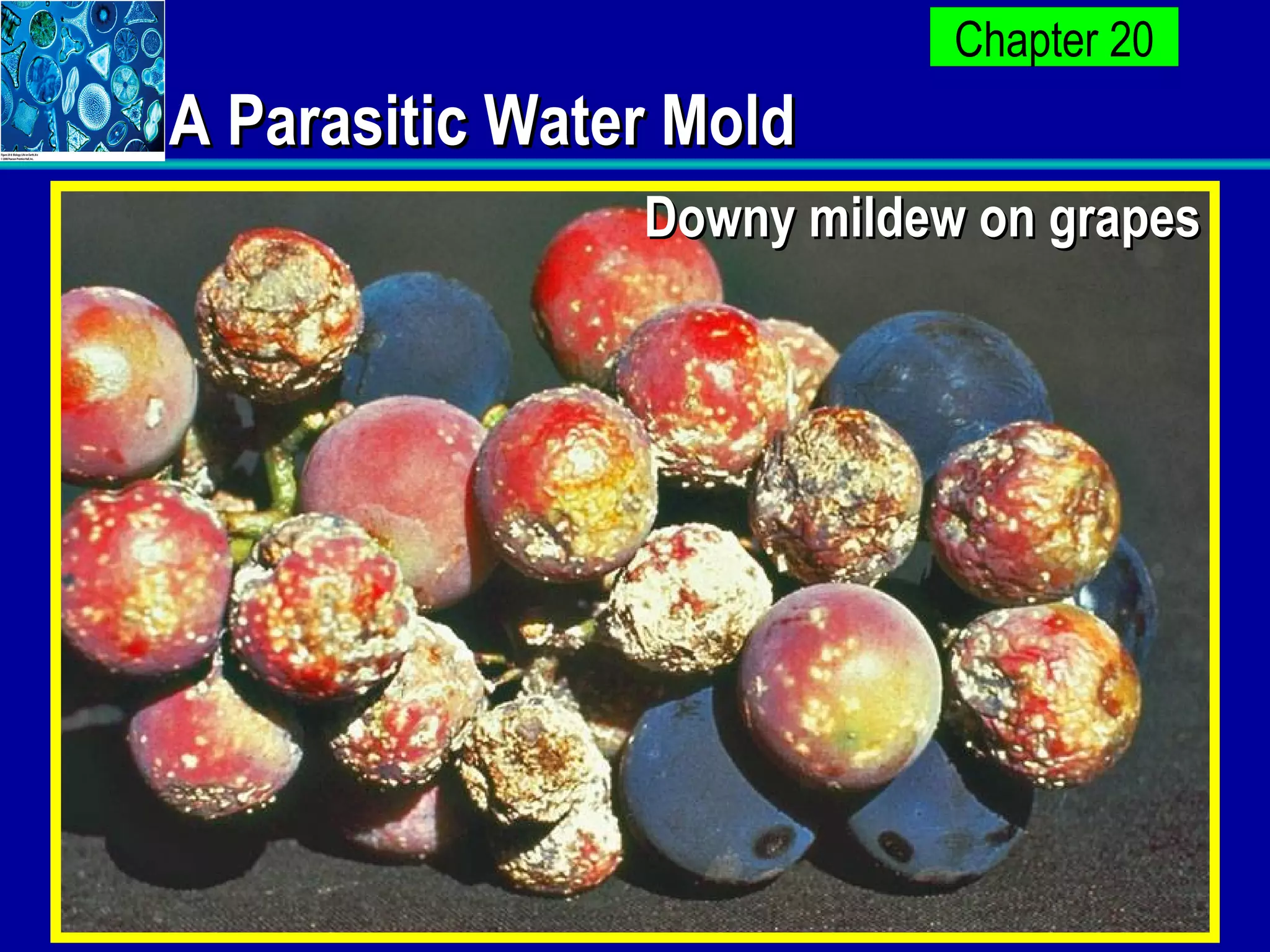
Water Molds Profoundeconomic impacts caused by water molds Late blight attacks potato plants (caused Irish potato famine in 1845) One species causes downy mildew (nearly destroyed French wine industry in 1870s)
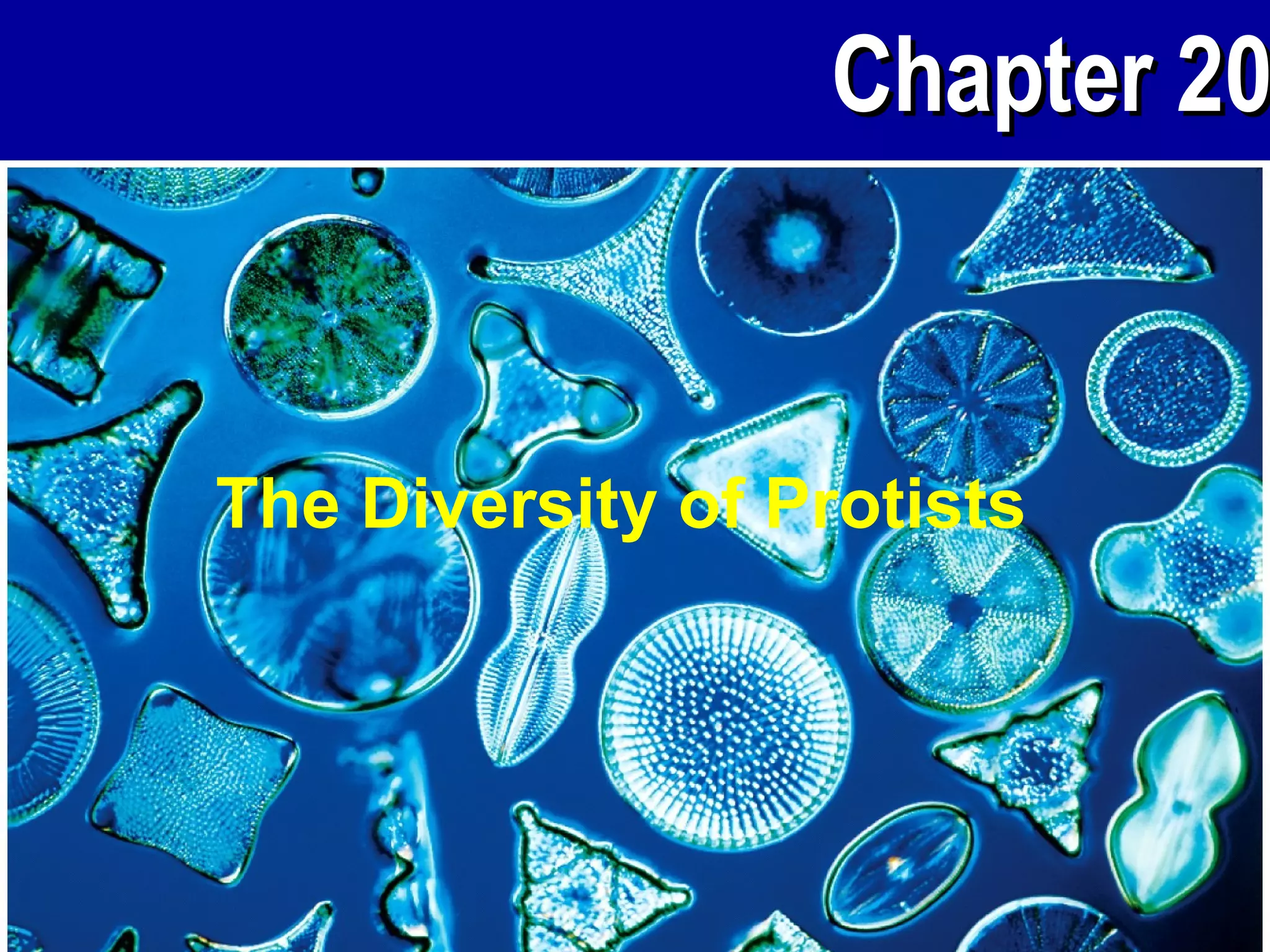
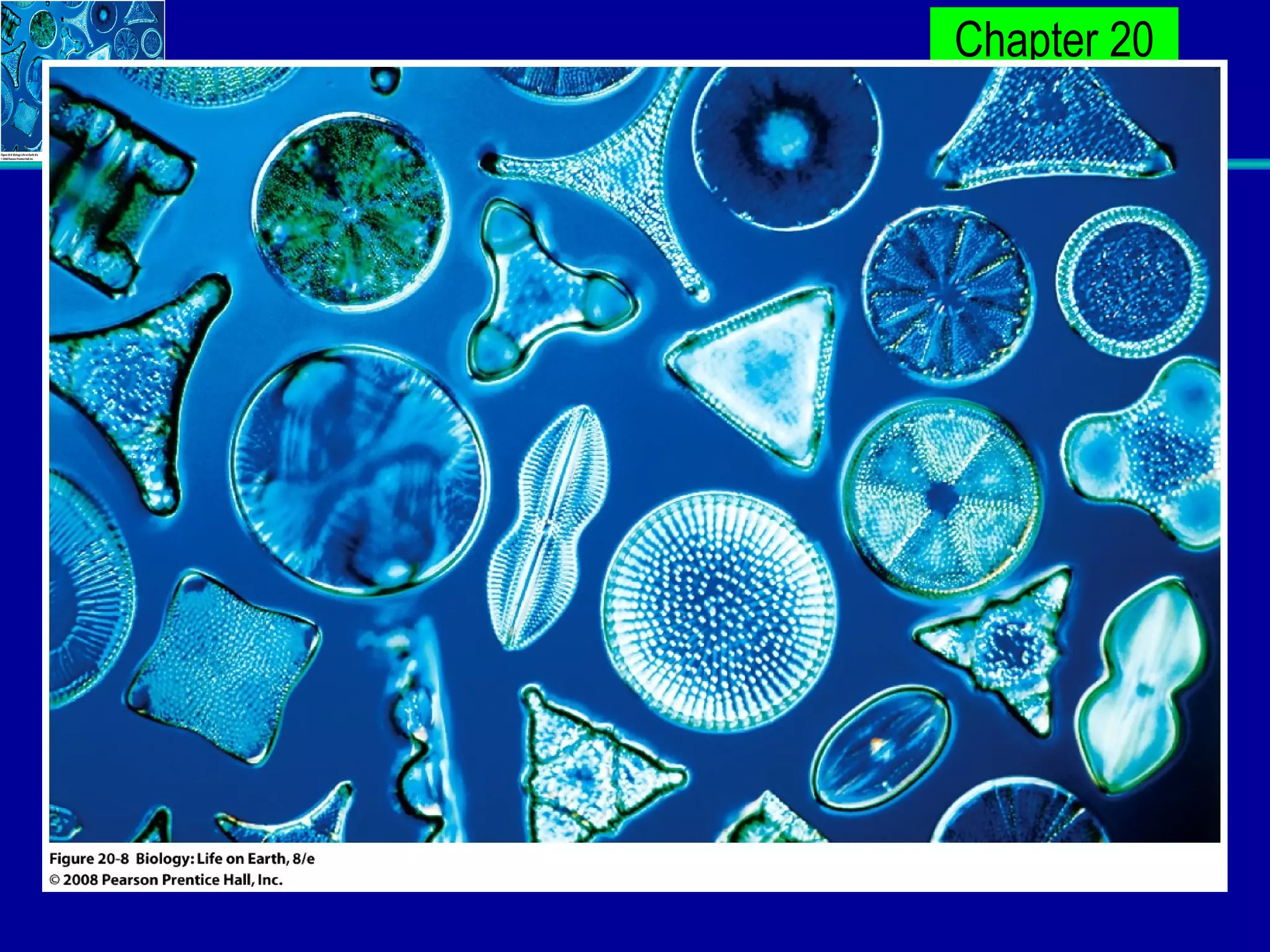
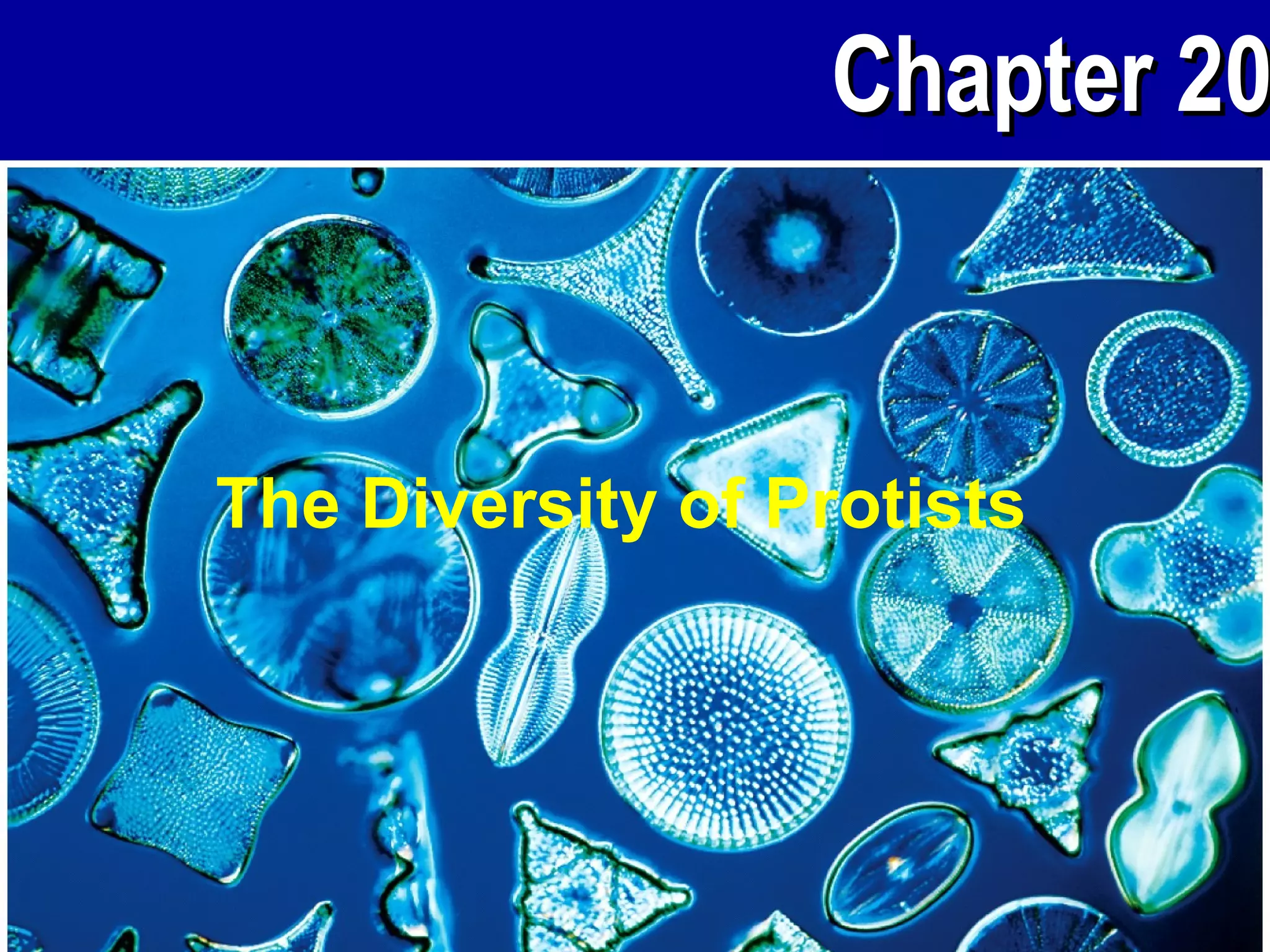
Diatoms Found inboth fresh and salt water Photosynthetic Produce shells of silica that fit together Diatomaceous earth is deposits of diatom shells (mined and used as an abrasive)
30.
31.
Diatoms Part offloating phytoplankton community Important in absorbing CO 2 and producing O 2 Phytoplankton perform 70% of all photosynthesis Diatoms are important as food in marine food webs Herbivorous organisms “graze” on these “pastures of the sea”
32.
Brown Algae Formmulticellular aggregates (seaweeds) Superficially similar but not closely related to plants Contain brownish-yellow and green (chlorophyll) pigments producing brown/olive appearance
33.
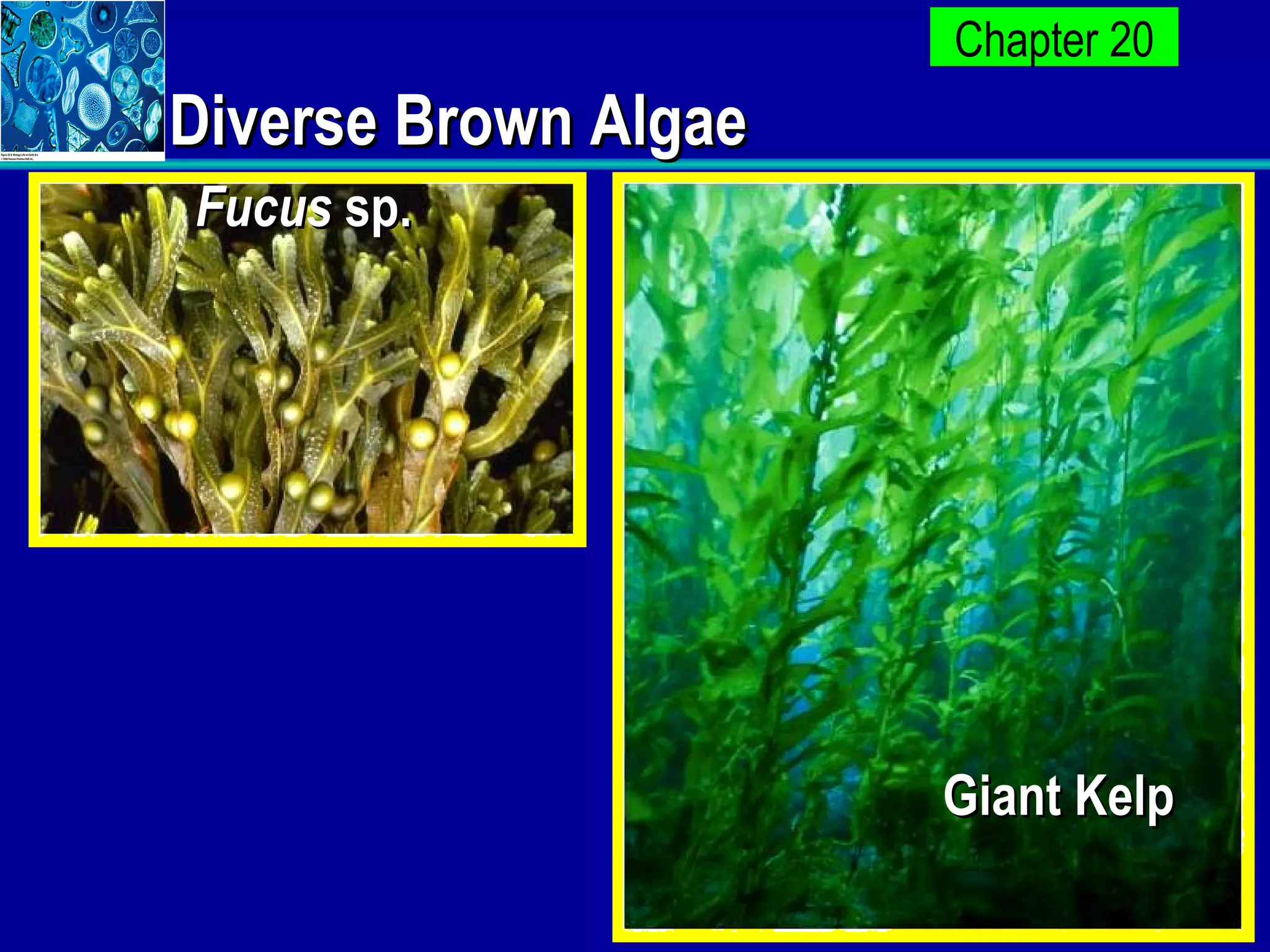
Brown Algae Nearlyall marine Found along rocky shores of temperature oceans Includes giant kelp Several species use gas-filled floats to support body Giant kelp forests provide food and shelter for sea animals
The Alveolates Single-celledprotists with small cavities beneath cell surface (alveoli) Comprise a distinct lineage Nutritional modes include photosynthetic, parasitic, and predatory
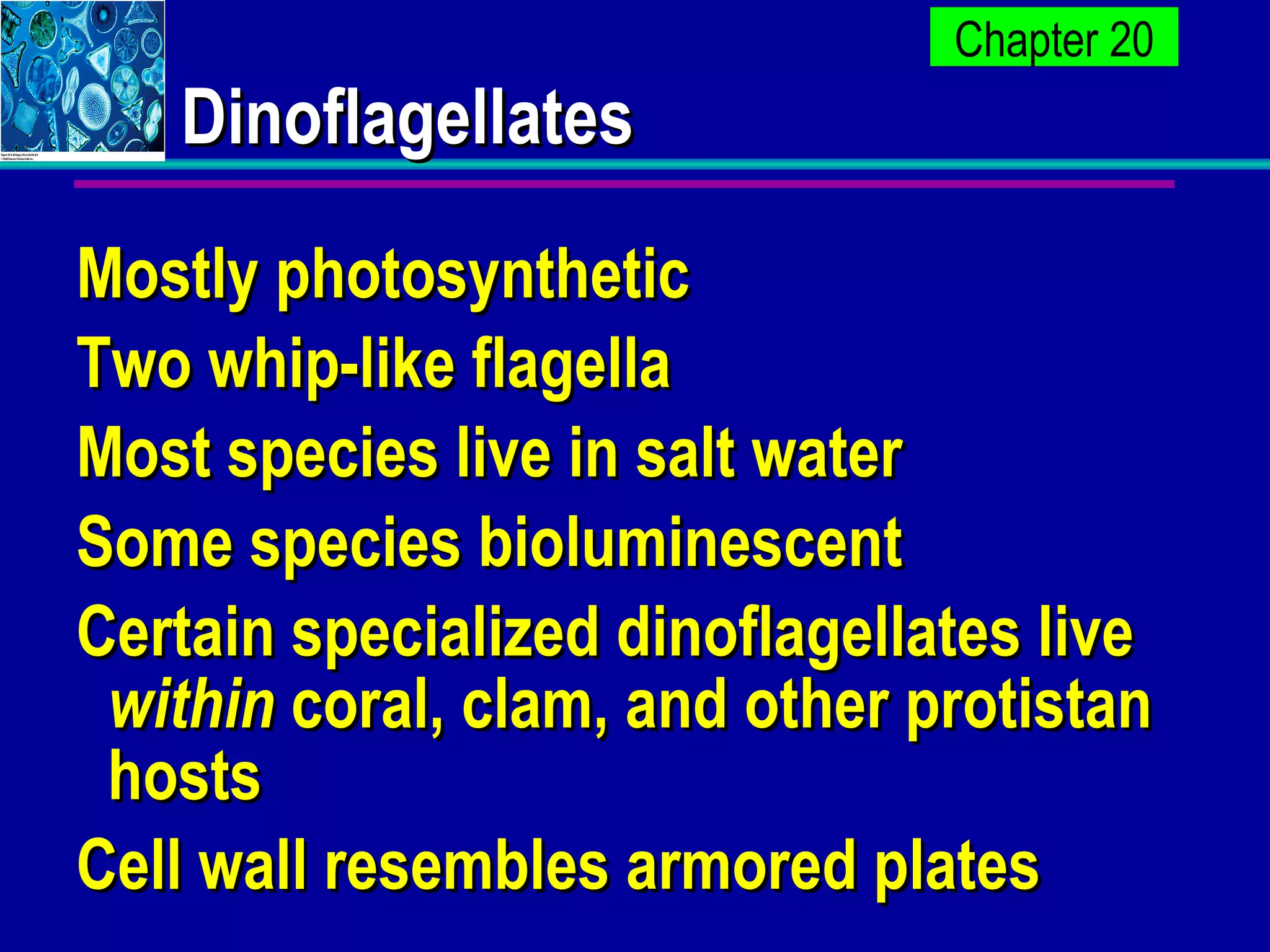
Dinoflagellates Mostly photosyntheticTwo whip-like flagella Most species live in salt water Some species bioluminescent Certain specialized dinoflagellates live within coral, clam, and other protistan hosts Cell wall resembles armored plates
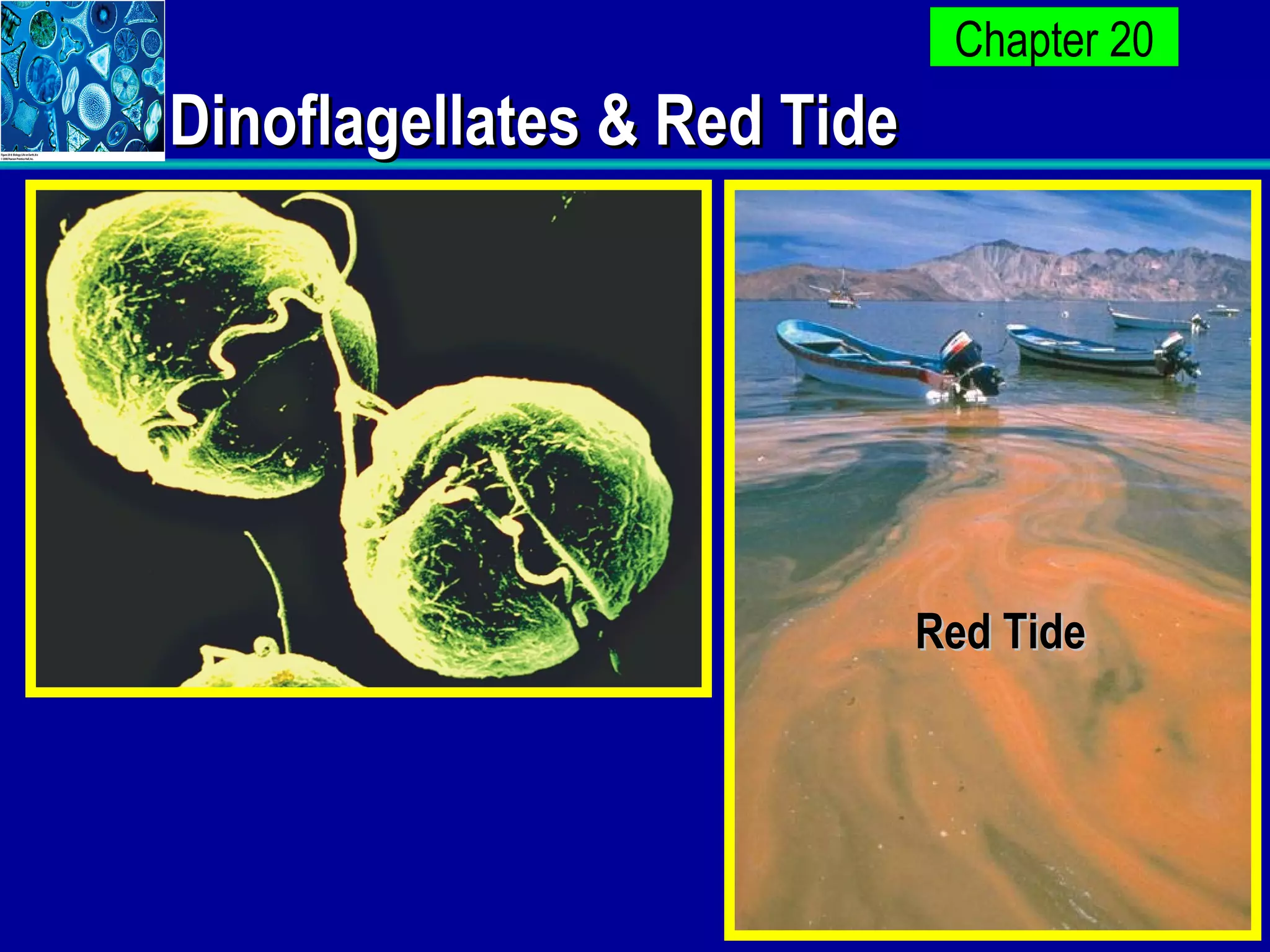
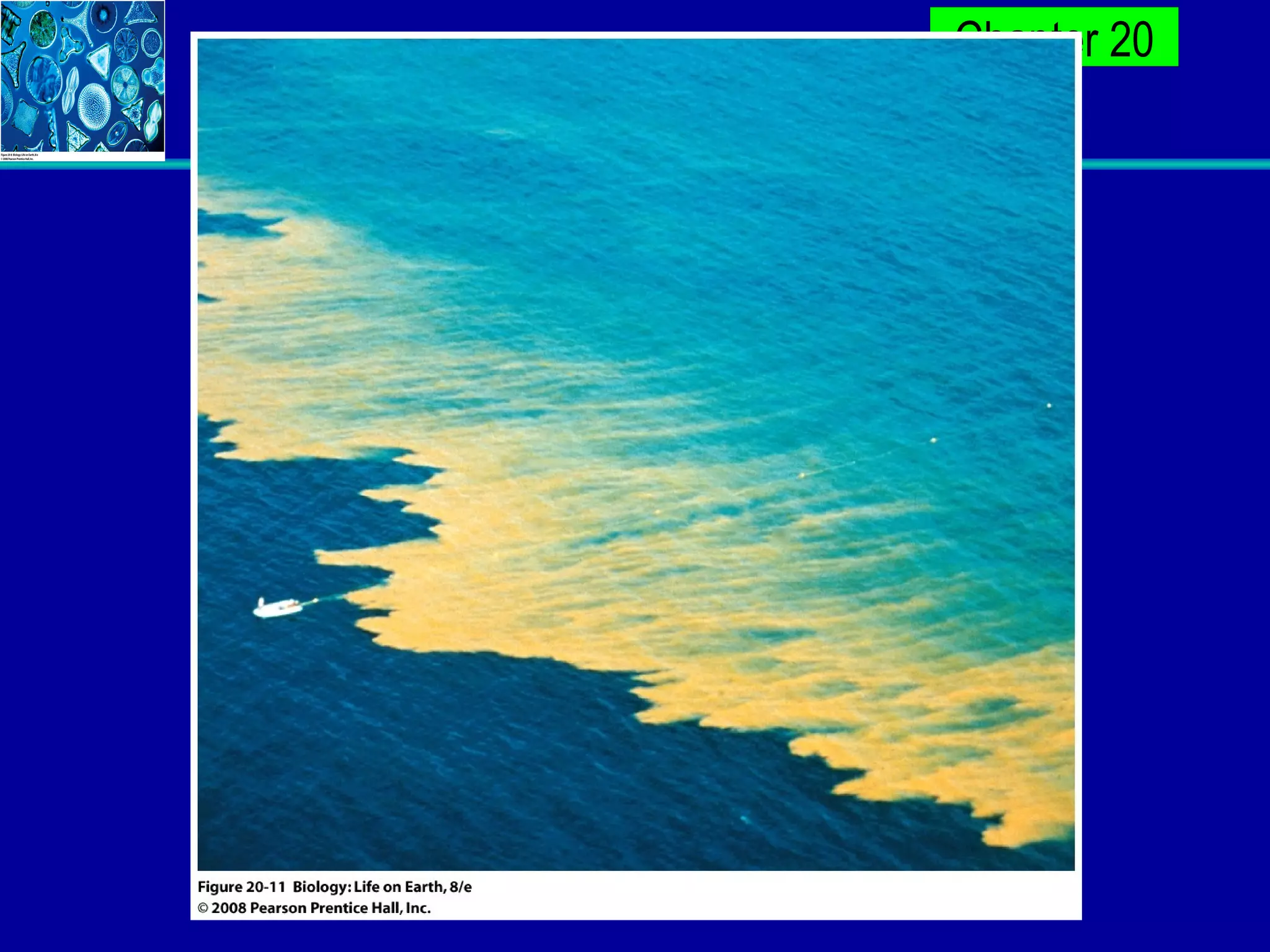
Dinoflagellates Nutrient-rich watercauses population explosion called “red tides” Substantial fish kills result from oxygen depletion and clogged gills Oysters, mussels, and clams benefit from large food supply but may accumulate nerve poison Lethal paralytic shellfish poisoning in humans may result from eating these shellfish
40.
41.
Apicomplexans Also knownas sporozoans All members are parasitic Form infectious spores Spores transmitted between hosts by food, water, or insect bites
42.
Apicomplexans Complex lifecycle (e.g. Plasmodium- malarial parasite) Parasite passed to human by Anopheles mosquito Plasmodium develops in liver, makes spores in red blood cells (causing fever upon release) New mosquitoes acquire parasite while feeding on blood Plasmodium quickly evolves resistance to drugs
43.
44.
Ciliates Inhabits bothfresh and salt water Highly complex unicellular organization Specialized organelles Cilia that propel cells through water at 1 mm/s
45.
Ciliates Examples ofciliate complexity Paramecium (contractile vacuoles, nervous system) Didinium (predator of other microbes) Paramecium has vacuoles and cilia
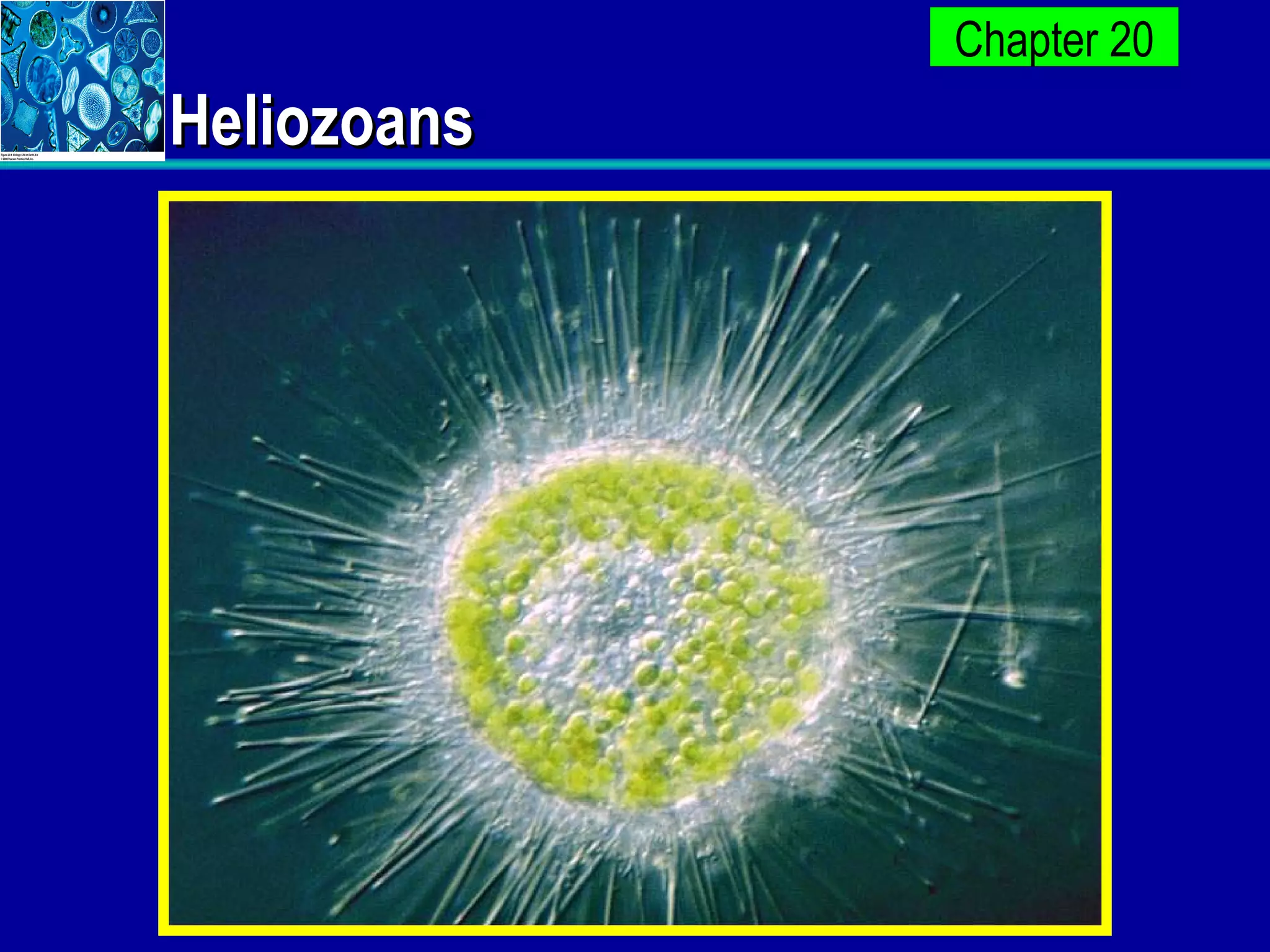
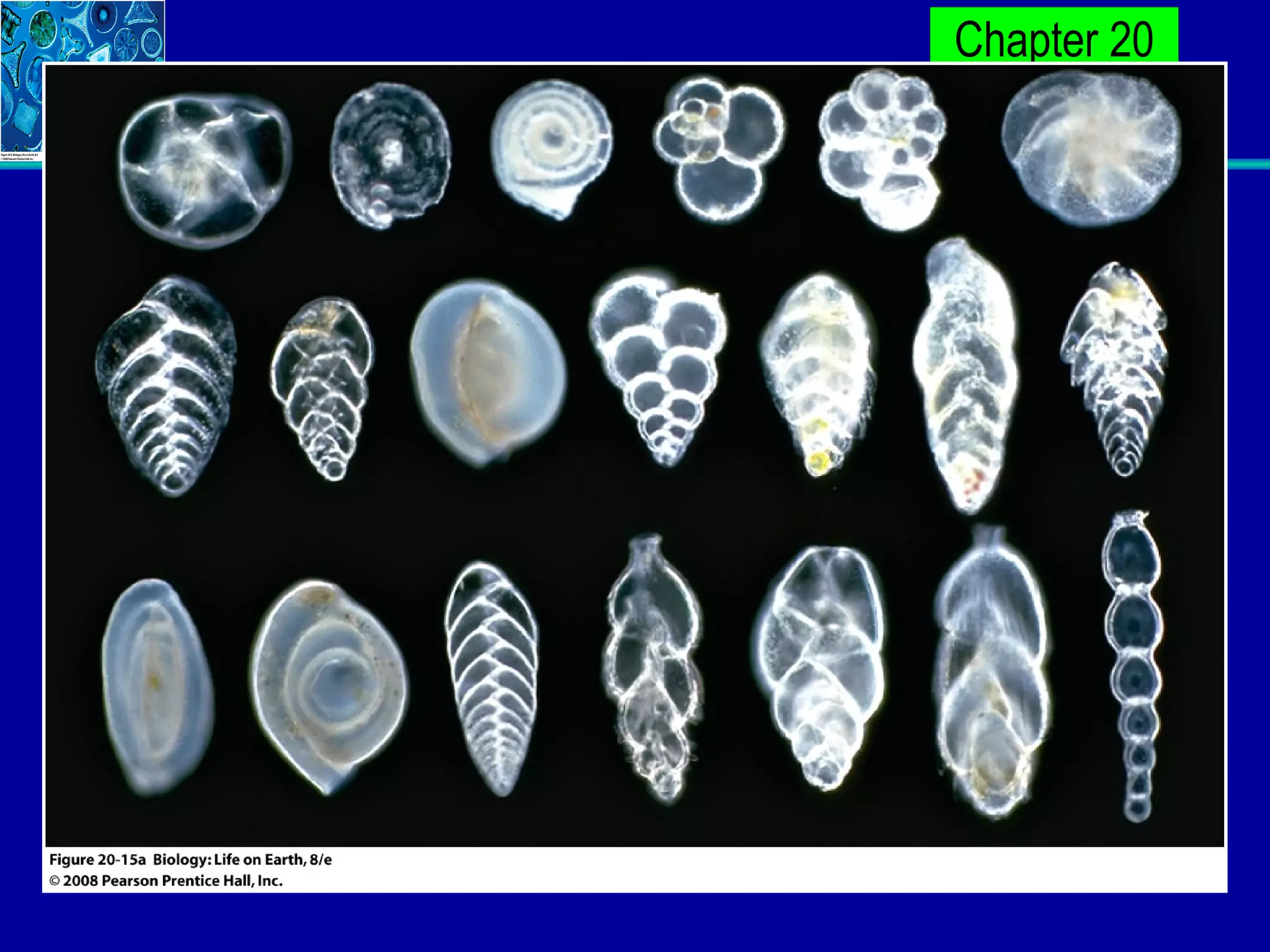
The Cercozoans Cercozoans have thin, threadlike psuedopods, which extend through hard shells in some species Cercozoans include Foraminifera Radiolarians
48.
The Cercozoans Foraminiferansproduce elaborate calcium carbonate shells with holes Deposits of fossilized foraminiferans form chalk Radiolarians have silica shells
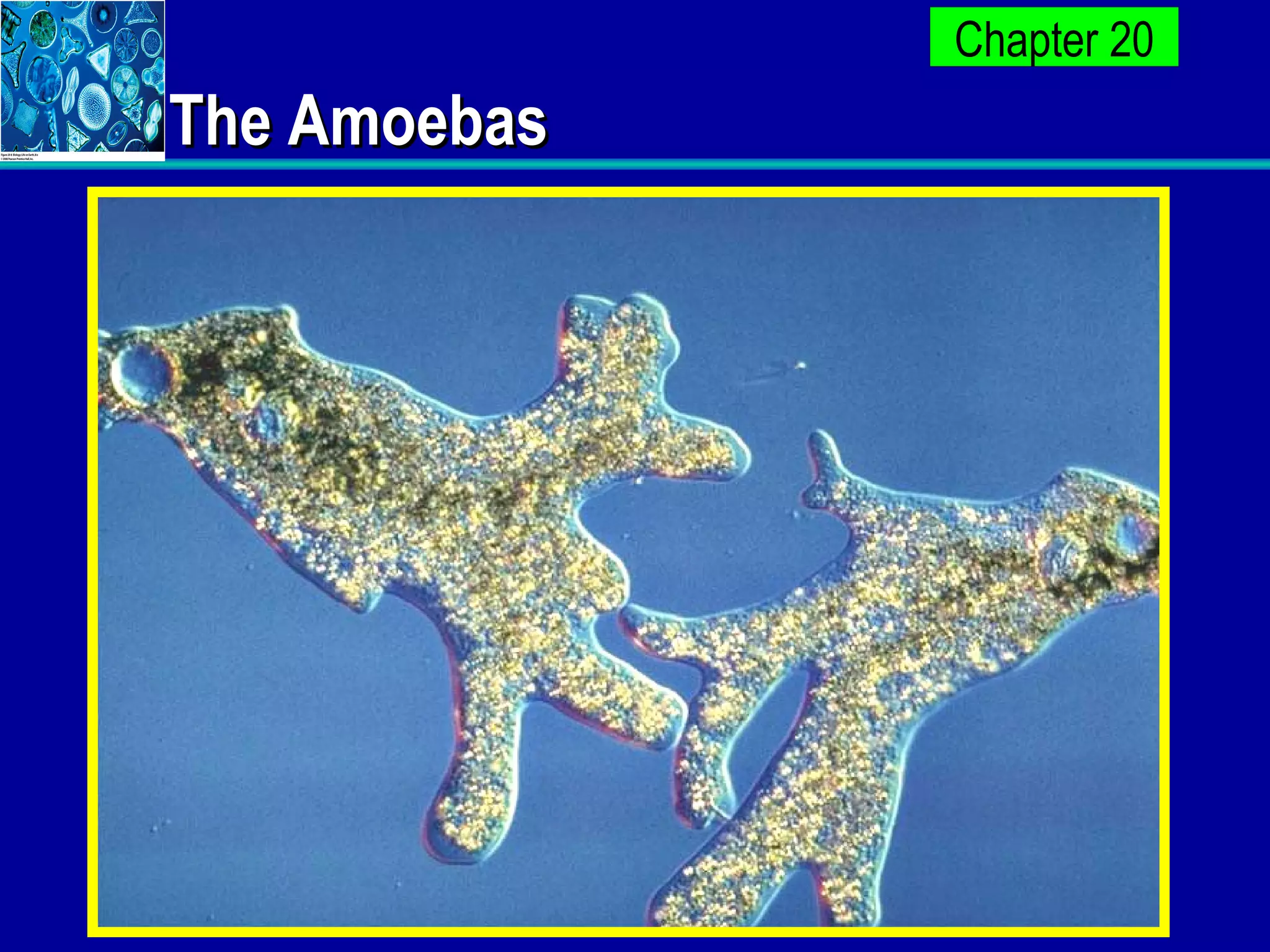
The Amoebozoans Amoebozoans move by extending finger-shaped pseudopods, also used for feeding Inhabit aquatic and terrestrial environments Generally do not have shells The major groups of amoebozoans are Amoebas Slime molds
52.
The Amoebozoans AmoebasFound in freshwater lakes and ponds Predators that stalk and engulf prey One species causes amoebic dysentery
The Slime MoldsDistinctly unique lineage among protists Physical form blurs distinction between a colony versus an individual
55.
The Slime MoldsTwo-phase life cycle Mobile feeding stage Stationary, reproductive stage forming a fruiting body Two main types Acellular Cellular
56.
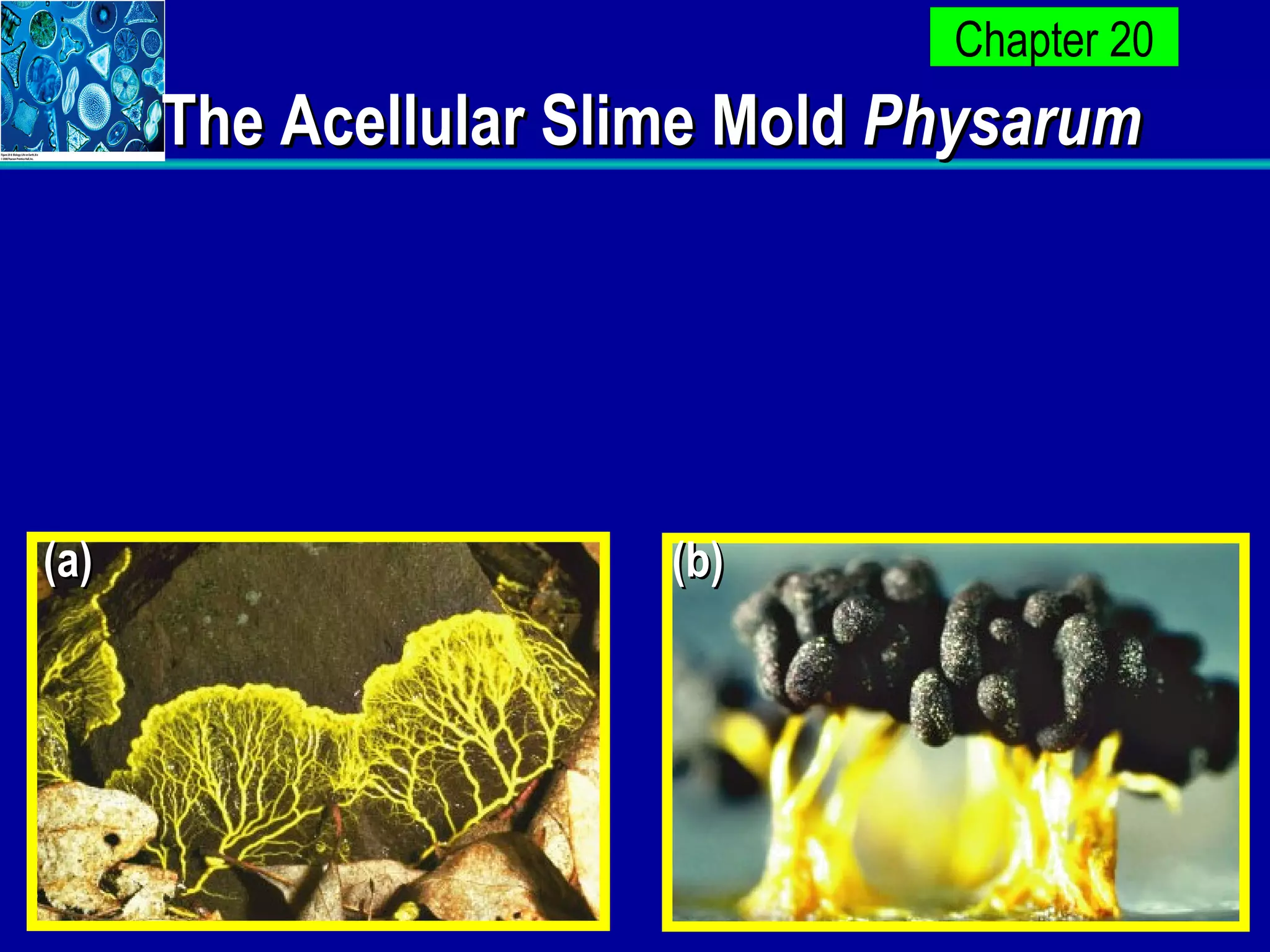
Acellular Slime MoldsAlso known as plasmodial slime molds Composed of a thinly spread cytoplasm with multiple diploid nuclei Plasmodial mass feeds on bacteria and organic matter by engulfing them
57.
Acellular Slime MoldsCan form bright yellow or orange masses Dry conditions or starvation stimulate fruiting body formation Haploid spores produced Spores disperse and germinate into a new plasmodium
Cellular Slime MoldsLive in soil as independent haploid cells Pseudopodia surround and engulf food (like bacteria)
60.
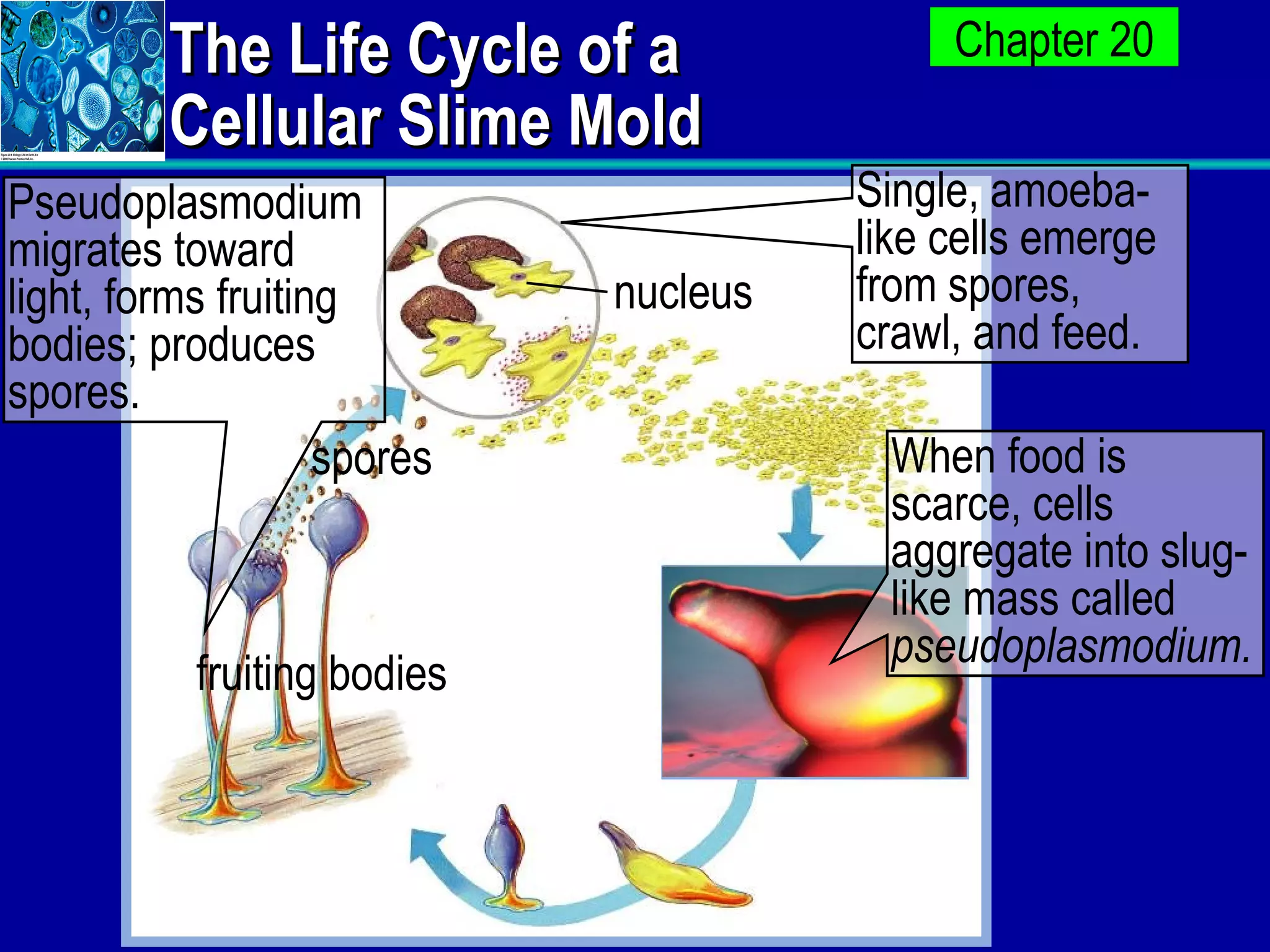
Cellular Slime MoldsFood scarcity creates a pseudoplasmodium Individual cells release chemical signal if food is scarce Dense, slug-like aggregation of cells forms “ Slug” crawls towards light, forms a fruiting body Haploid spores produced are dispersed to form new single-celled individuals
61.
The Life Cycleof a Cellular Slime Mold Single, amoeba-like cells emerge from spores, crawl, and feed. When food is scarce, cells aggregate into slug-like mass called pseudoplasmodium. Pseudoplasmodium migrates toward light, forms fruiting bodies; produces spores. fruiting bodies spores nucleus
62.
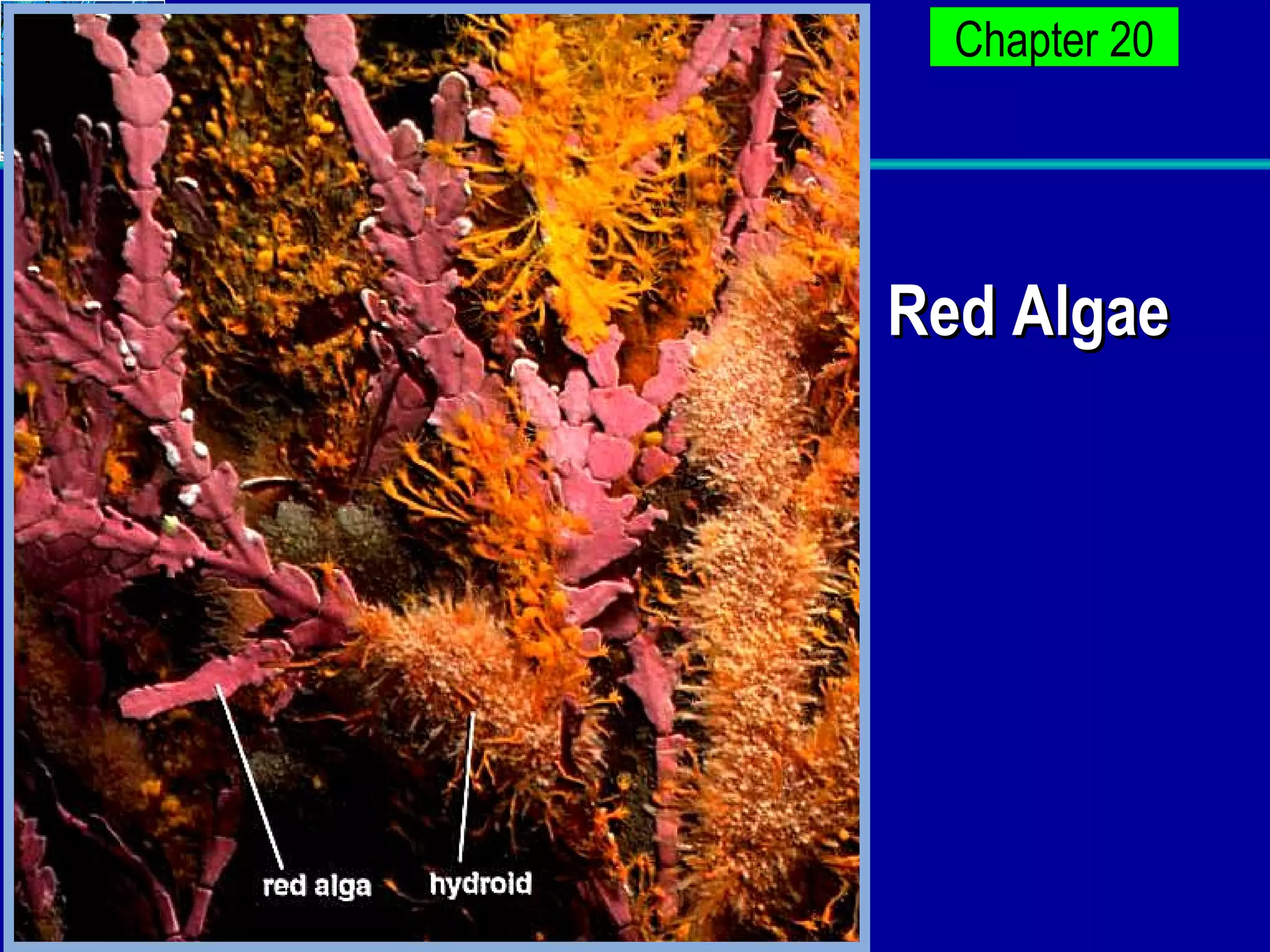
The Red AlgaeMulticellular, photosynthetic seaweeds Pigments combined with chlorophyll produce bright red to black appearances Found exclusively in marine environments
63.
The Red AlgaeVery common in deep, clear tropical waters Red pigments absorb deeply penetrating blue-green light Can therefore live deeper than other seaweeds
64.
The Red AlgaeDiversity of forms and uses Some species deposit calcium carbonate Some species harvested for food Energy captured by red algae important in food chains Products extracted from red algae include: Carrageenan (stabilizing agent) Agar (substrate for bacteria in petri dishes)
65.
The Red AlgaeMulticellular, photosynthetic seaweeds, ranging in color from bright red to nearly black Live in clear tropical oceans Some species deposit calcium carbonate, which contributes to the formation of reefs
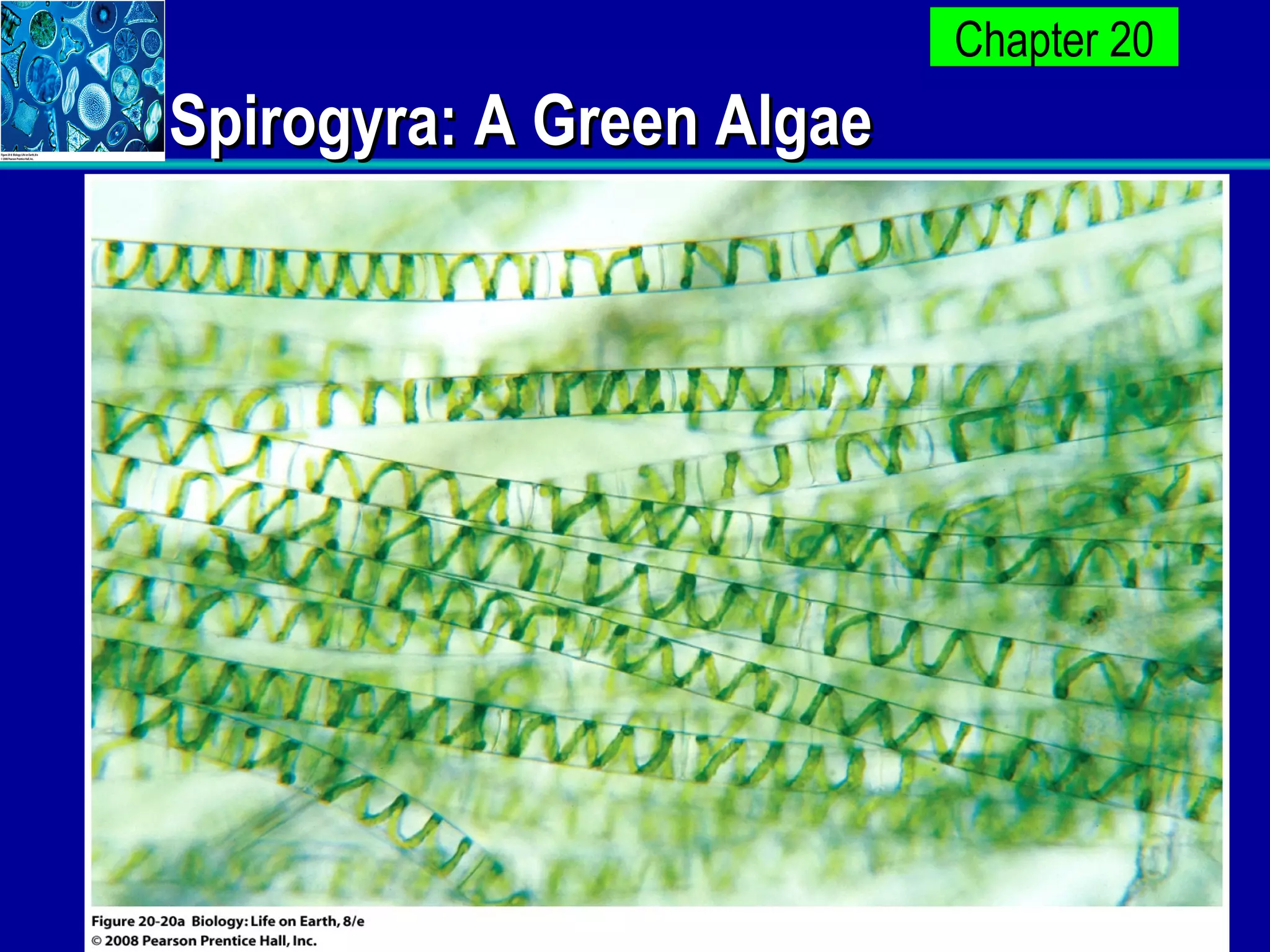
The Green AlgaeAll species photosynthetic Both multicellular and unicellular species Found in both freshwater and marine environments Some form long filamentous chains of cells (e.g. Spirogyra )
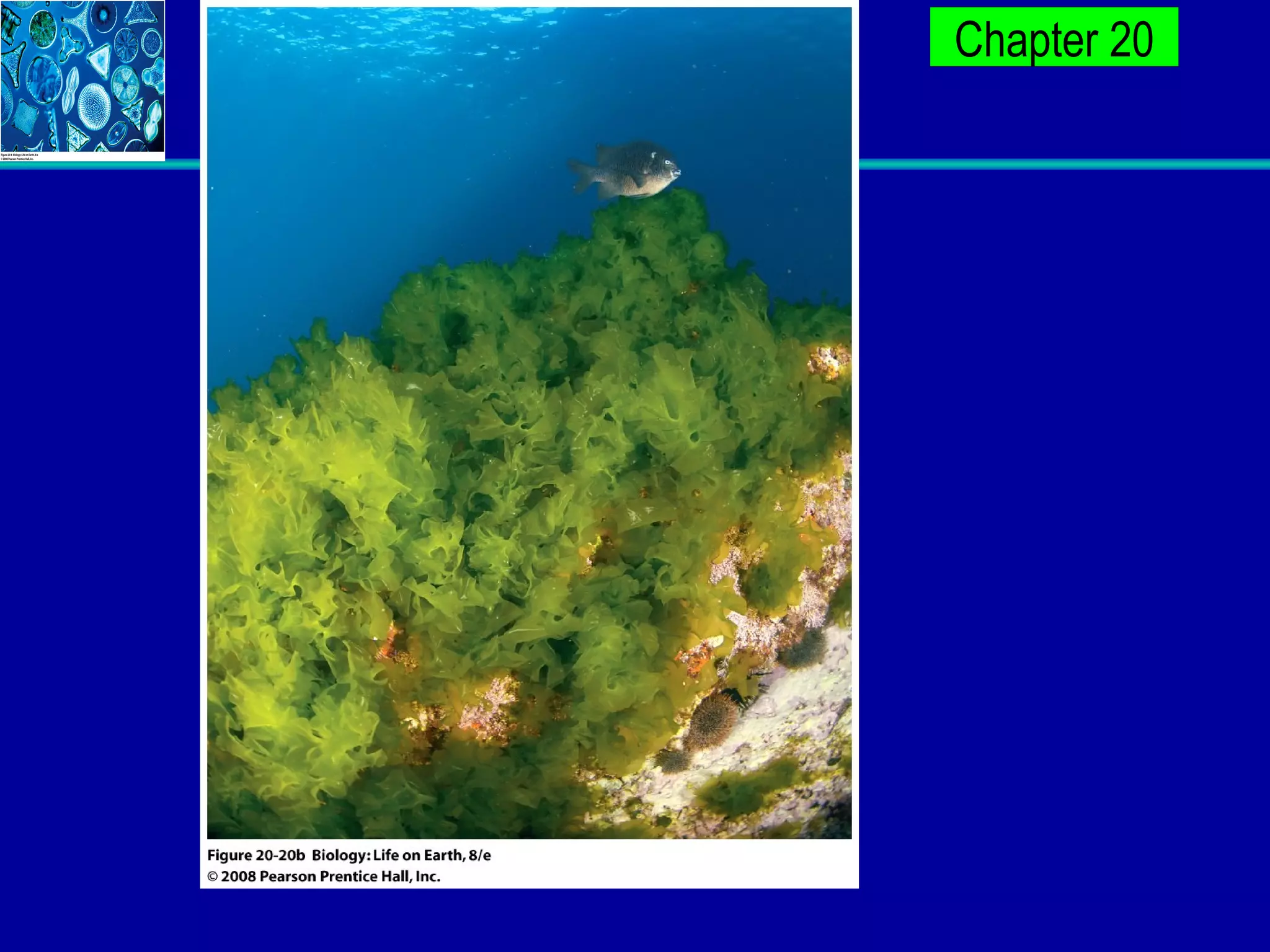
The Green AlgaeSome form colonies of clustered cells (e.g. Volvox ) Mostly microscopic forms but Ulva (sea lettuce) is a multicellular leaf-sized green algal seaweed
70.
71.
The Green AlgaeGreen algae are closely related to plants The earliest plants may have been similar to today’s multicellular green algae
72.
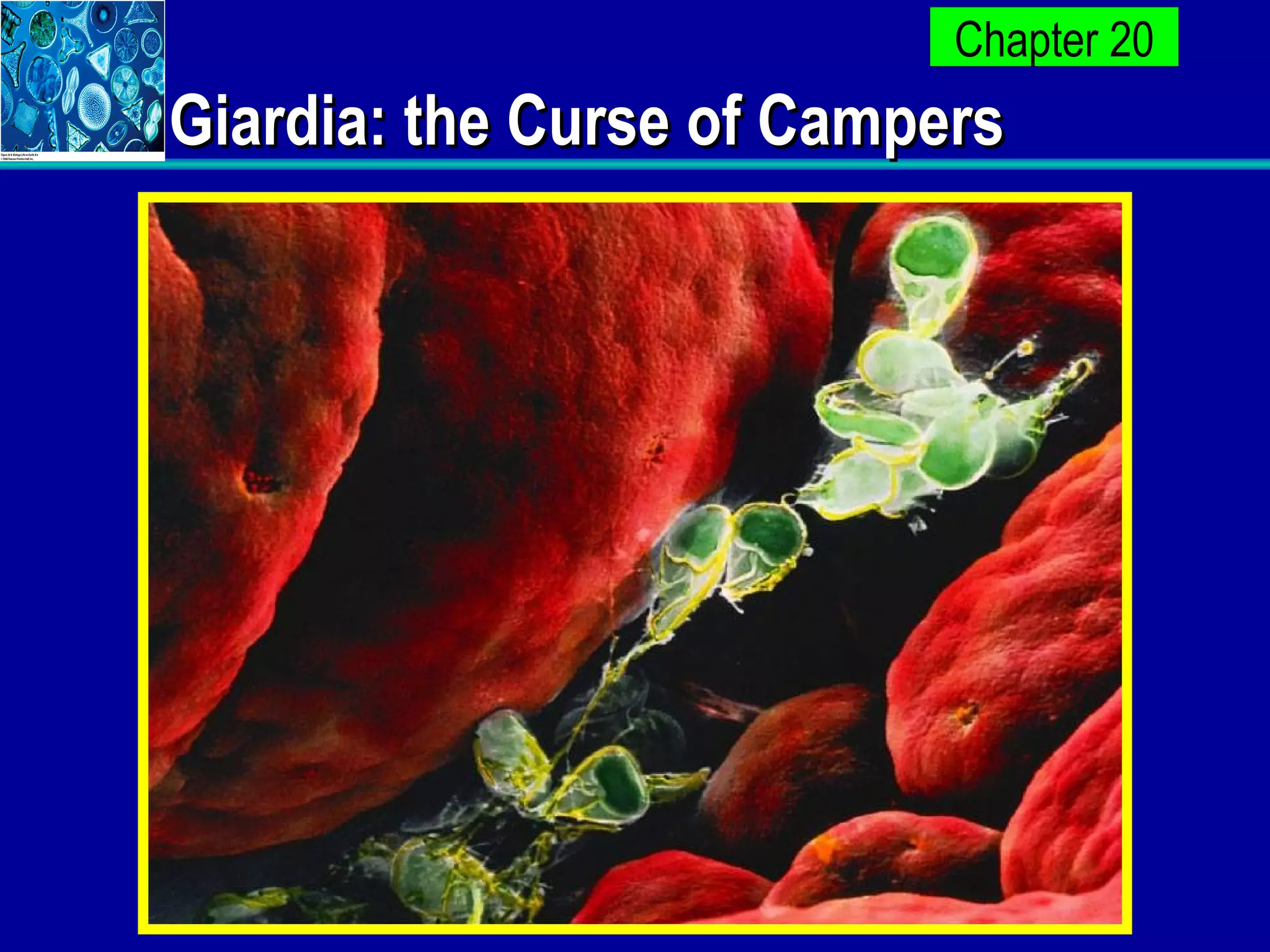
Protists and LifeMarine phytoplankton: 70% of all photosynthesis Diatoms - abrasive products and oil reserves Sarcodines and limestone deposits Protists and disease Water molds - downy mildew, late blight of potato Dinoflagellates and "red tide," shellfish poisoning Zooflagellates - African sleeping sickness, Giardia Sarcodines - amoebic dysentery Sporozoans - Plasmodium and malaria








![Kingdom protista[1]](https://cdn.slidesharecdn.com/ss_thumbnails/kingdomprotista1-121031071438-phpapp02-thumbnail.jpg?width=640&height=640&fit=bounds)


