Kingdom Protista
 Contains the most diverse
organisms of all of the
kingdoms
 Mostly unicellular
 Autotrophic/heterotrophic
 Cell walls sometimes present
 Composed of cellulose
 Eukaryotic
 Because the Protist Kingdom tends to be a “dumping”
ground for organisms that don’t quite fit anywhere
else, the organisms in this kingdom tend to closely
resemble organisms of the other kingdoms.
 This is why we group protists as being
plant-like, animal-like, and fungus-like.
Plant-like Protists
 Use sunlight to make
their food
(photosynthetic)
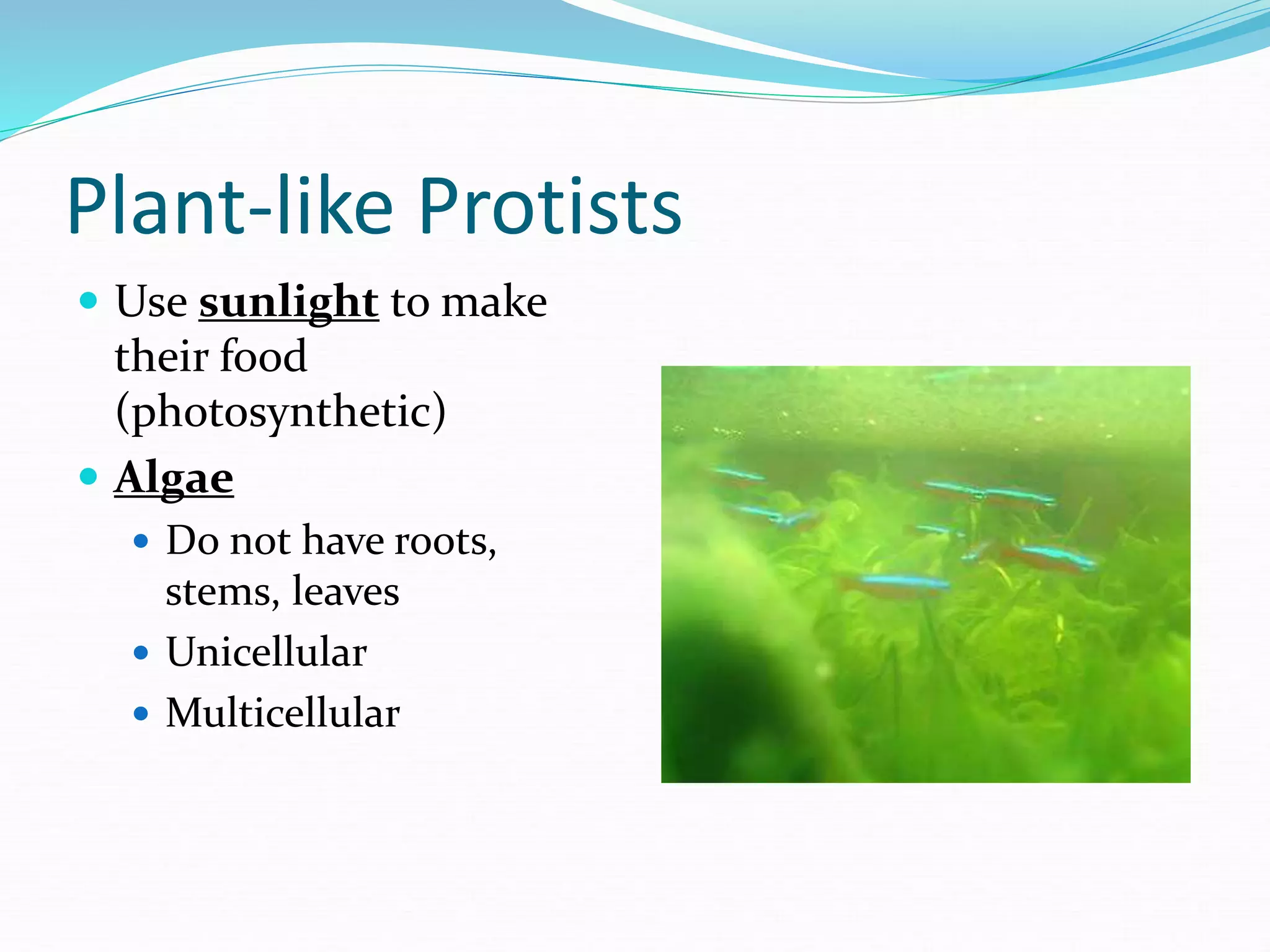
 Algae
 Do not have roots,
stems, leaves
 Unicellular
 Multicellular
Major Phyla of Algae:
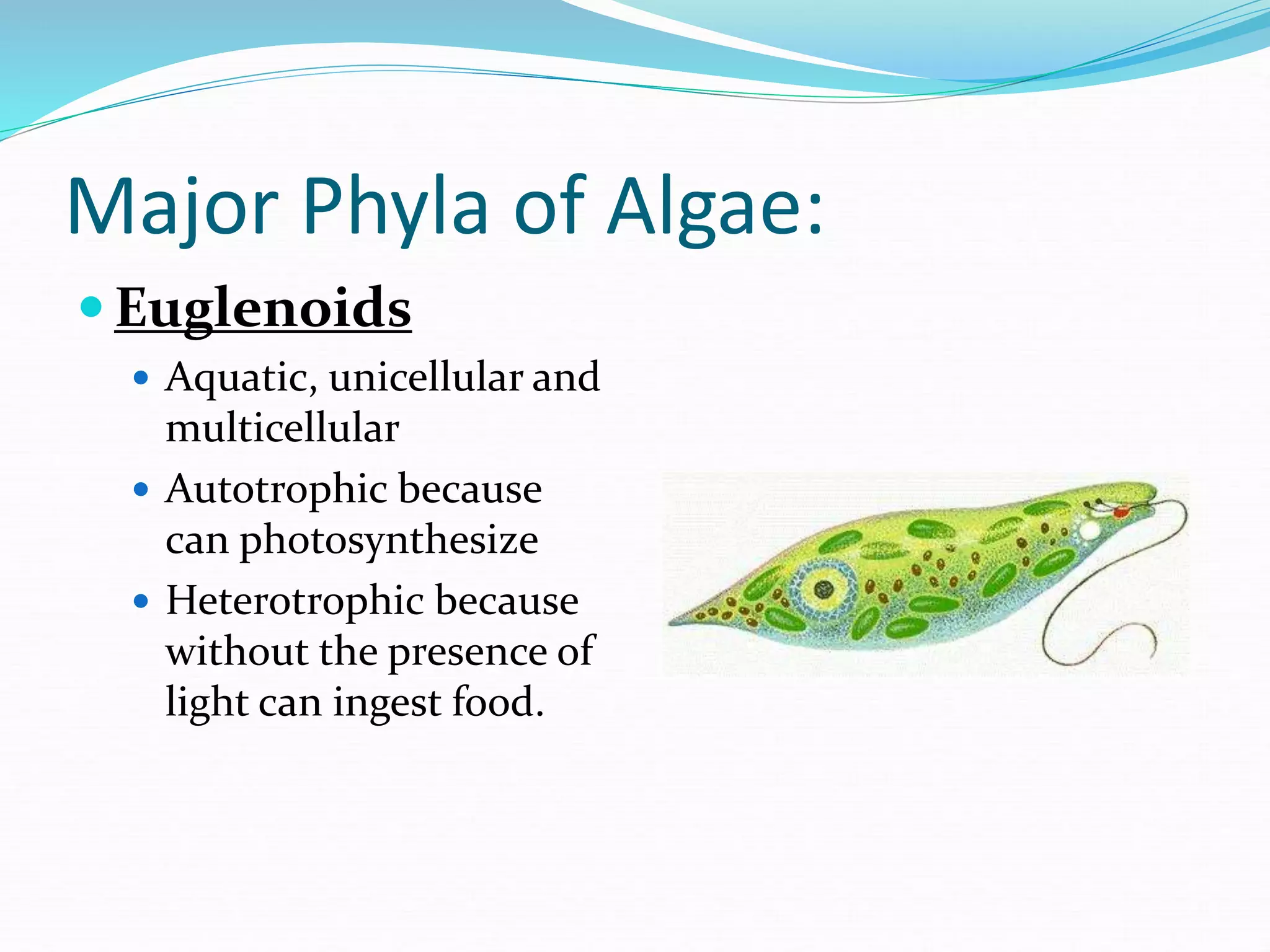
 Euglenoids
 Aquatic, unicellular and
multicellular
 Autotrophic because
can photosynthesize
 Heterotrophic because
without the presence of
light can ingest food.
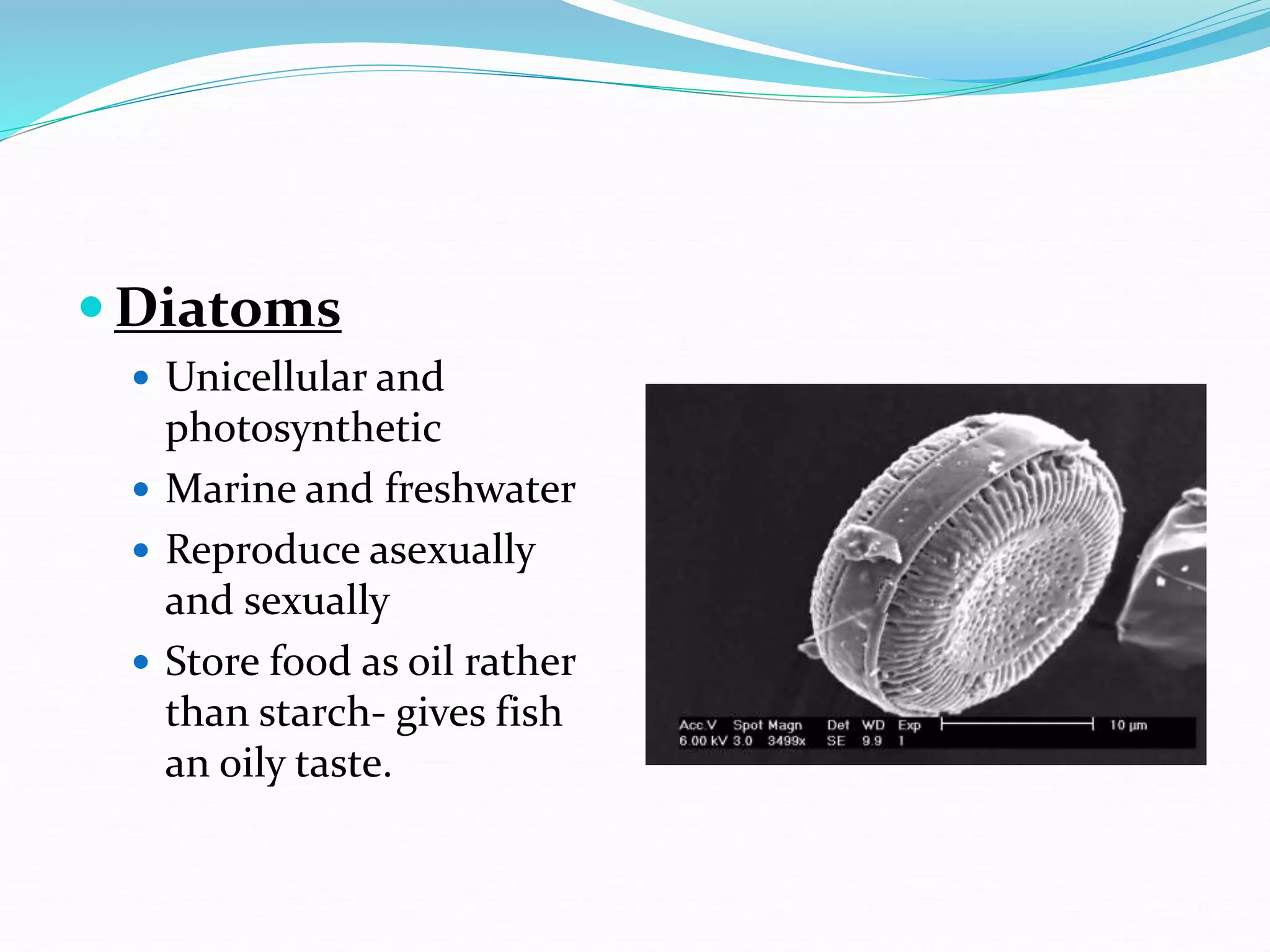
 Diatoms
 Unicellular and
photosynthetic
 Marine and freshwater
 Reproduce asexually
and sexually
 Store food as oil rather
than starch- gives fish
an oily taste.
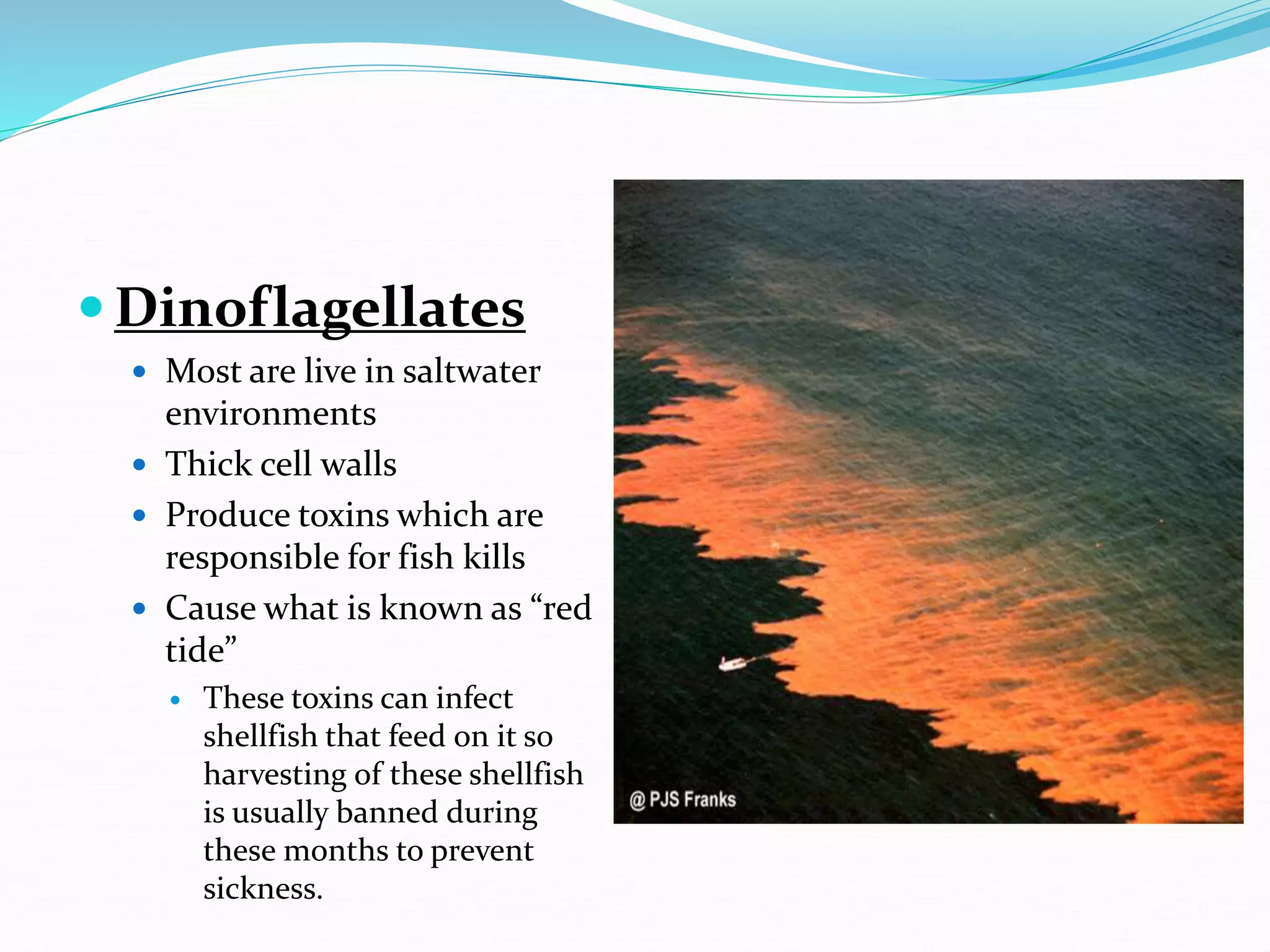
 Dinoflagellates
 Most are live in saltwater
environments
 Thick cell walls
 Produce toxins which are
responsible for fish kills
 Cause what is known as “red
tide”
 These toxins can infect
shellfish that feed on it so
harvesting of these shellfish
is usually banned during
these months to prevent
sickness.
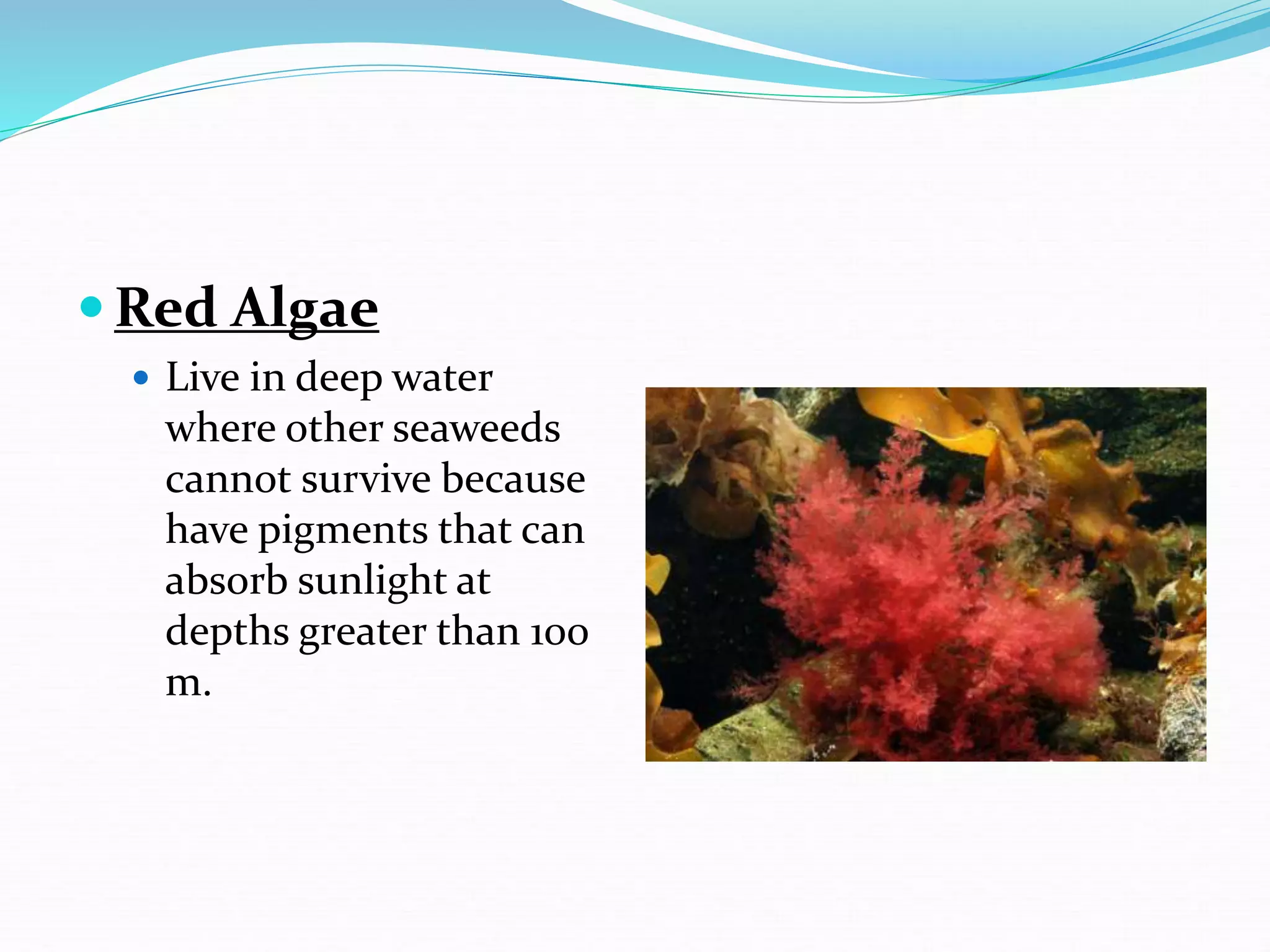
 Red Algae
 Live in deep water
where other seaweeds
cannot survive because
have pigments that can
absorb sunlight at
depths greater than 100
m.
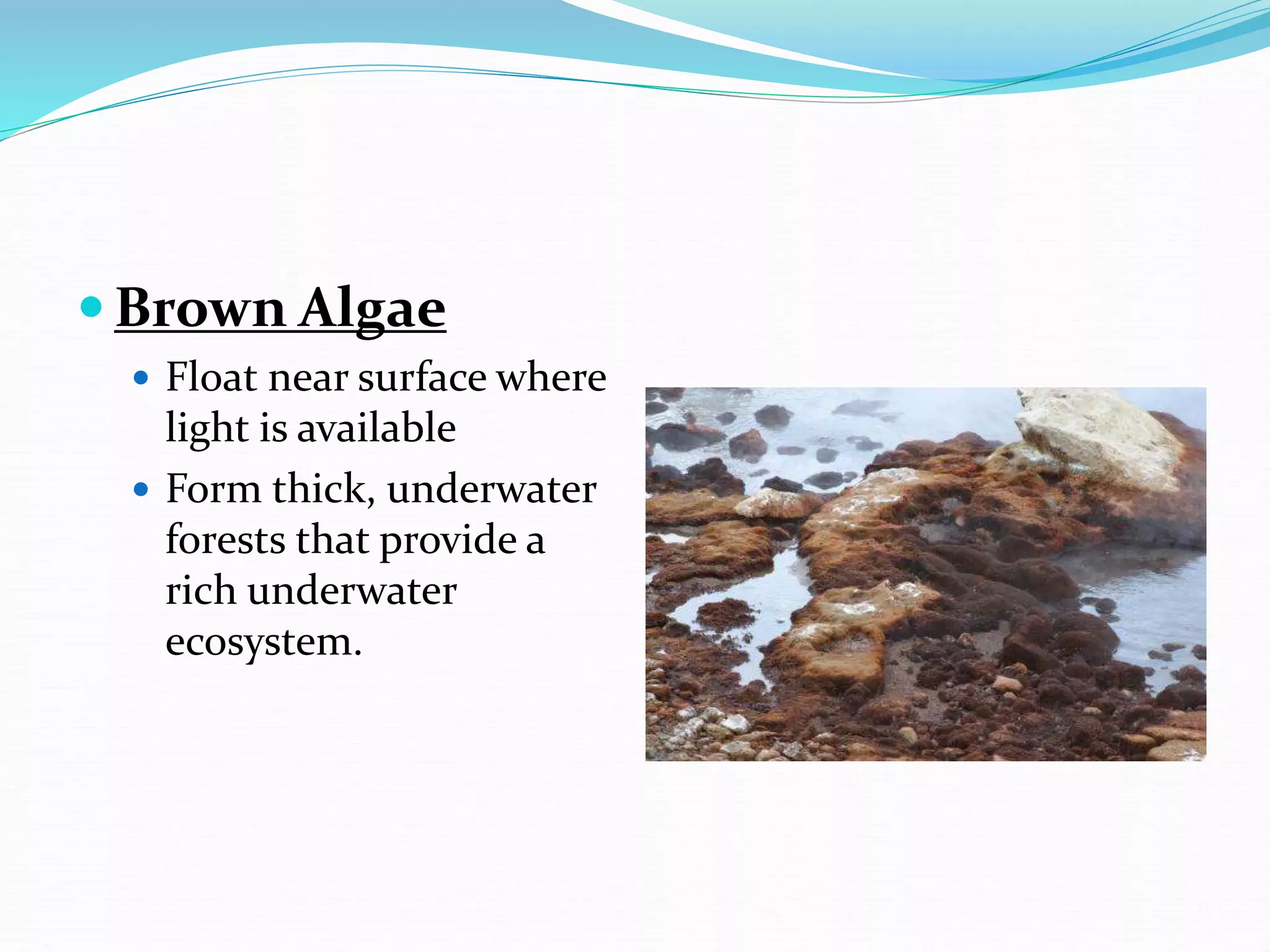
 Brown Algae
 Float near surface where
light is available
 Form thick, underwater
forests that provide a
rich underwater
ecosystem.
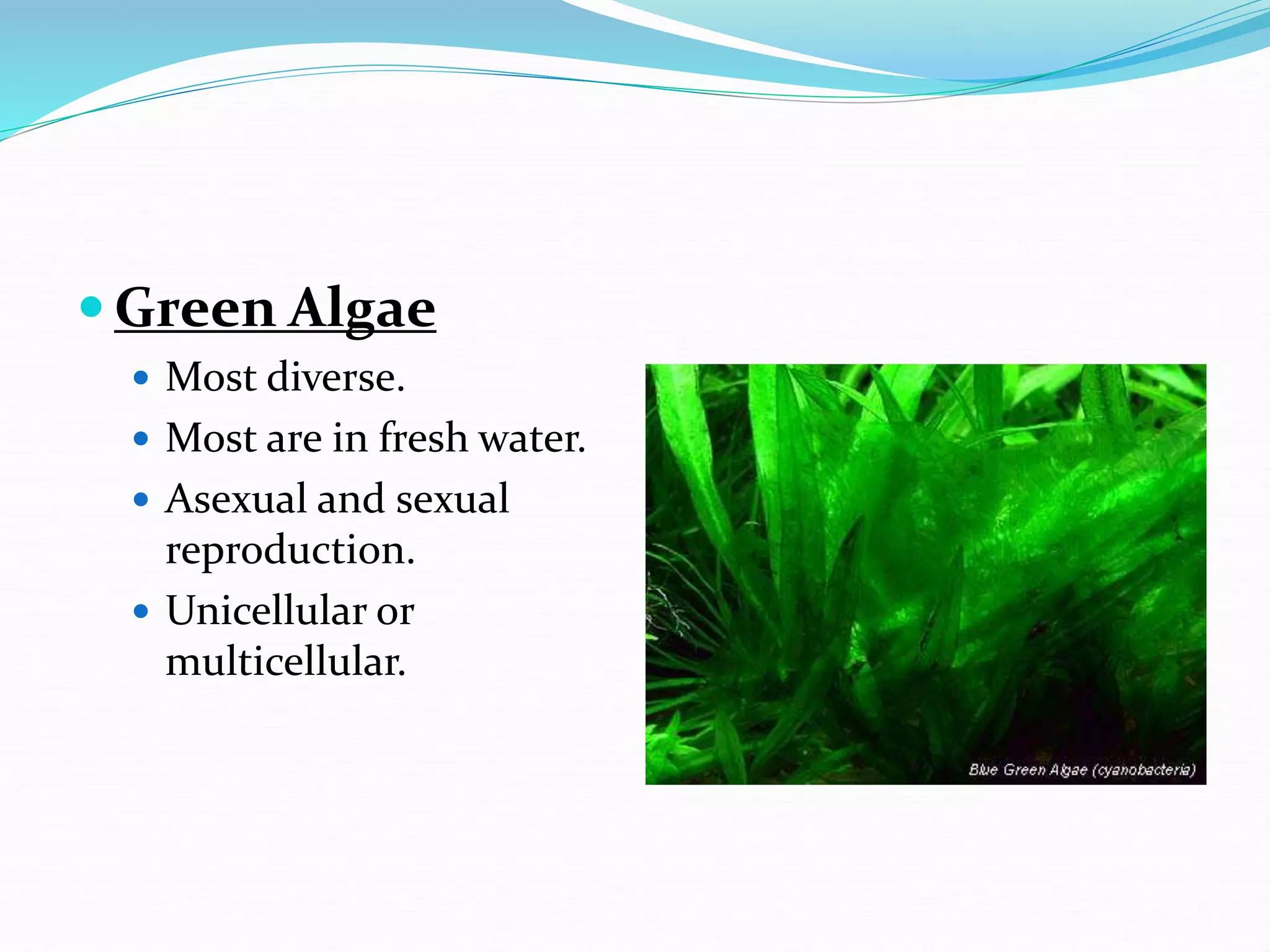
 Green Algae
 Most diverse.
 Most are in fresh water.
 Asexual and sexual
reproduction.
 Unicellular or
multicellular.
Animal-like Protists
 Unicellular heterotrophs
 Protazoa
 Grouped according to how they move.
Four main groups of protozoans
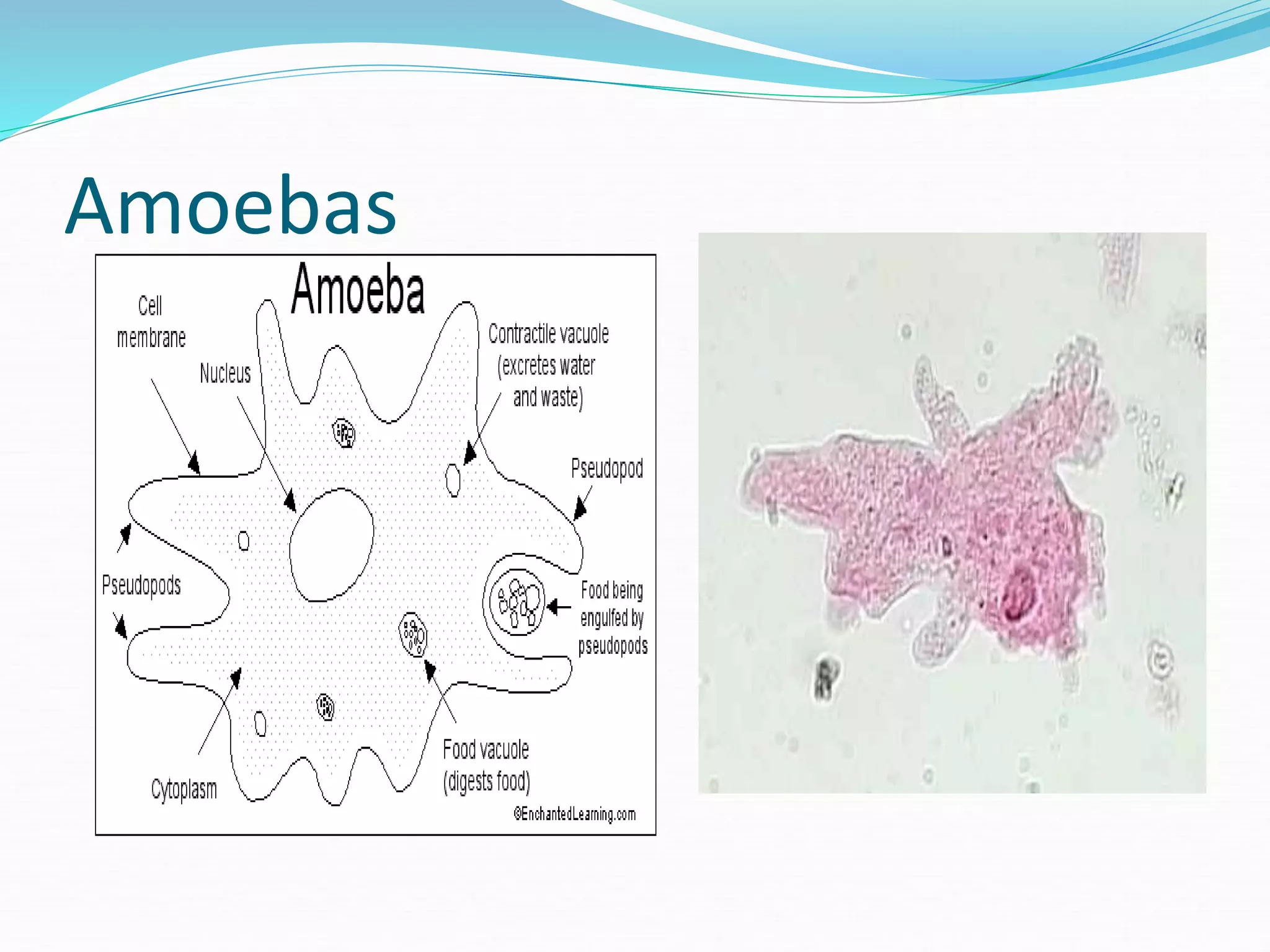
1. Amoebas (also known as Sarcodines)
 Form pseudopodia to engulf food particles
(endocytosis) as well as for movement.
 Pseudopodia: cytoplasm extensions that act like
“arms”
 Reproduce through asexual reproduction
Amoebas
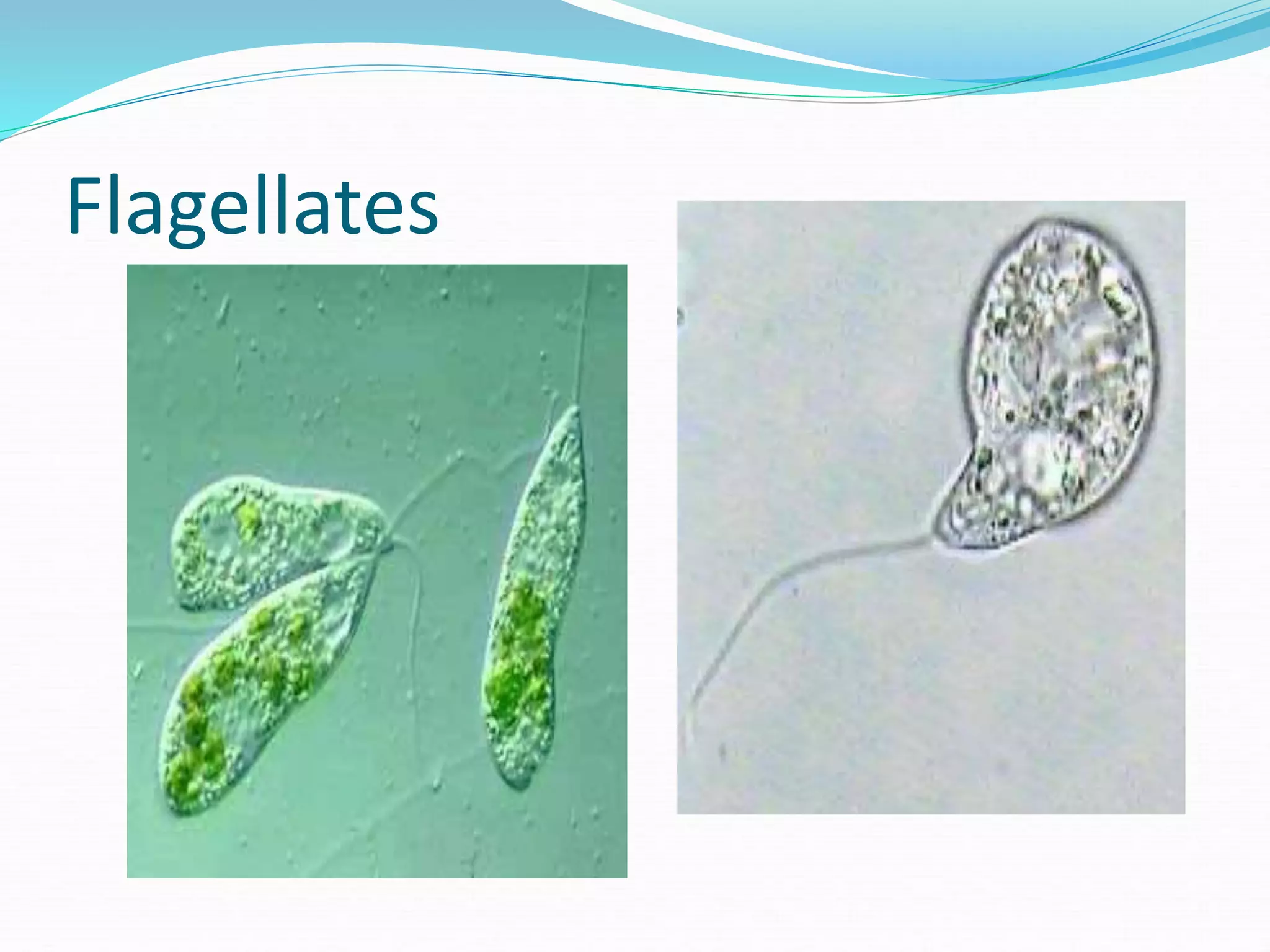
2. Flagellates
 Move through use of flagella
 Flagella: whip-like tails that help a cell move
 Some act as parasites while some are beneficial
Flagellates
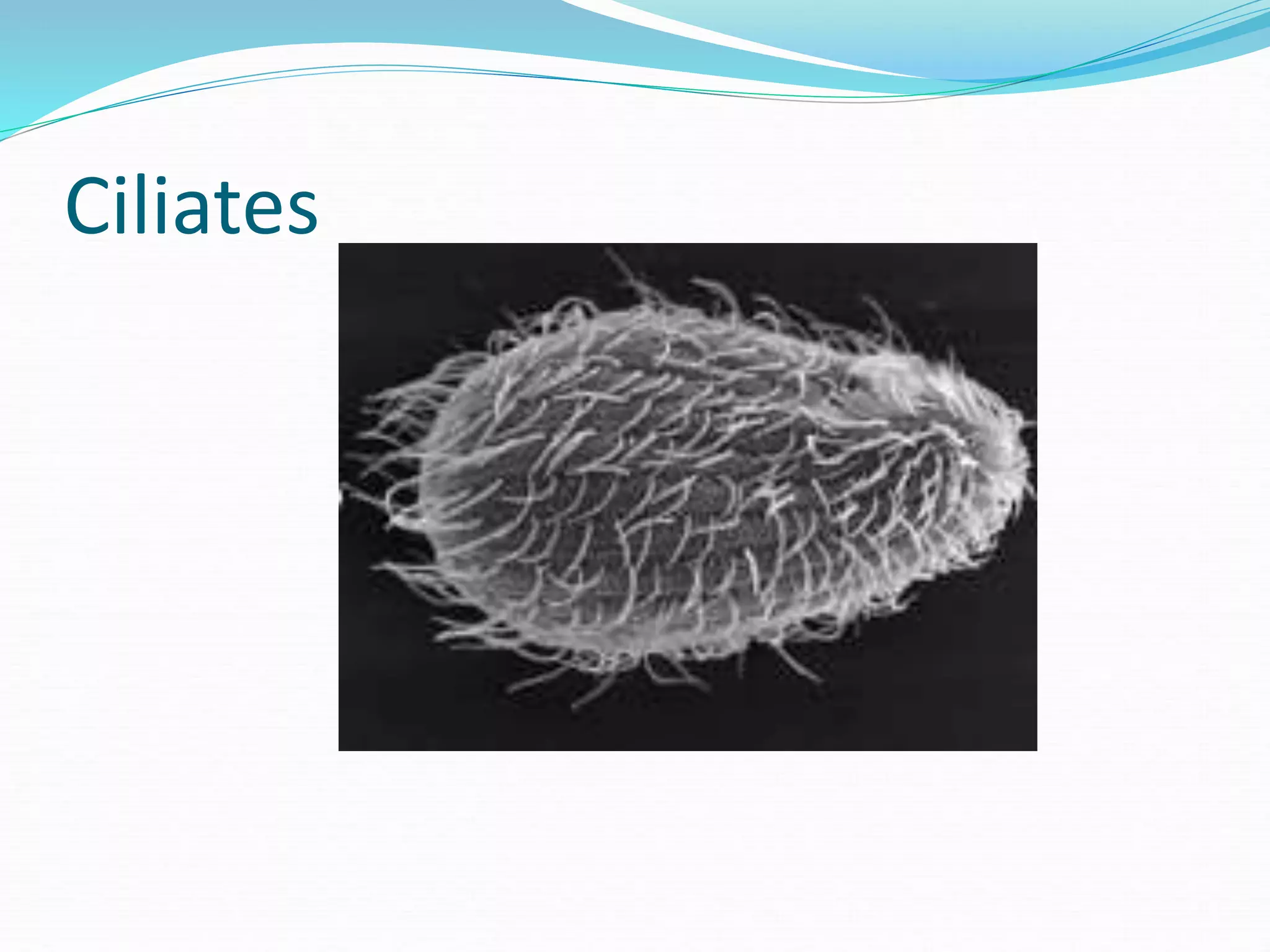
3. Ciliates
 Use cilia for movement
 Cilia: short thread-like hair that help a cell move.
 Diverse aquatic habitats
Ciliates
4. Sporozoans
 Produce spores which is a reproductive cell that forms
without fertilization and produced a new organism.
 Internal parasites (ex. Animal blood or intestines)
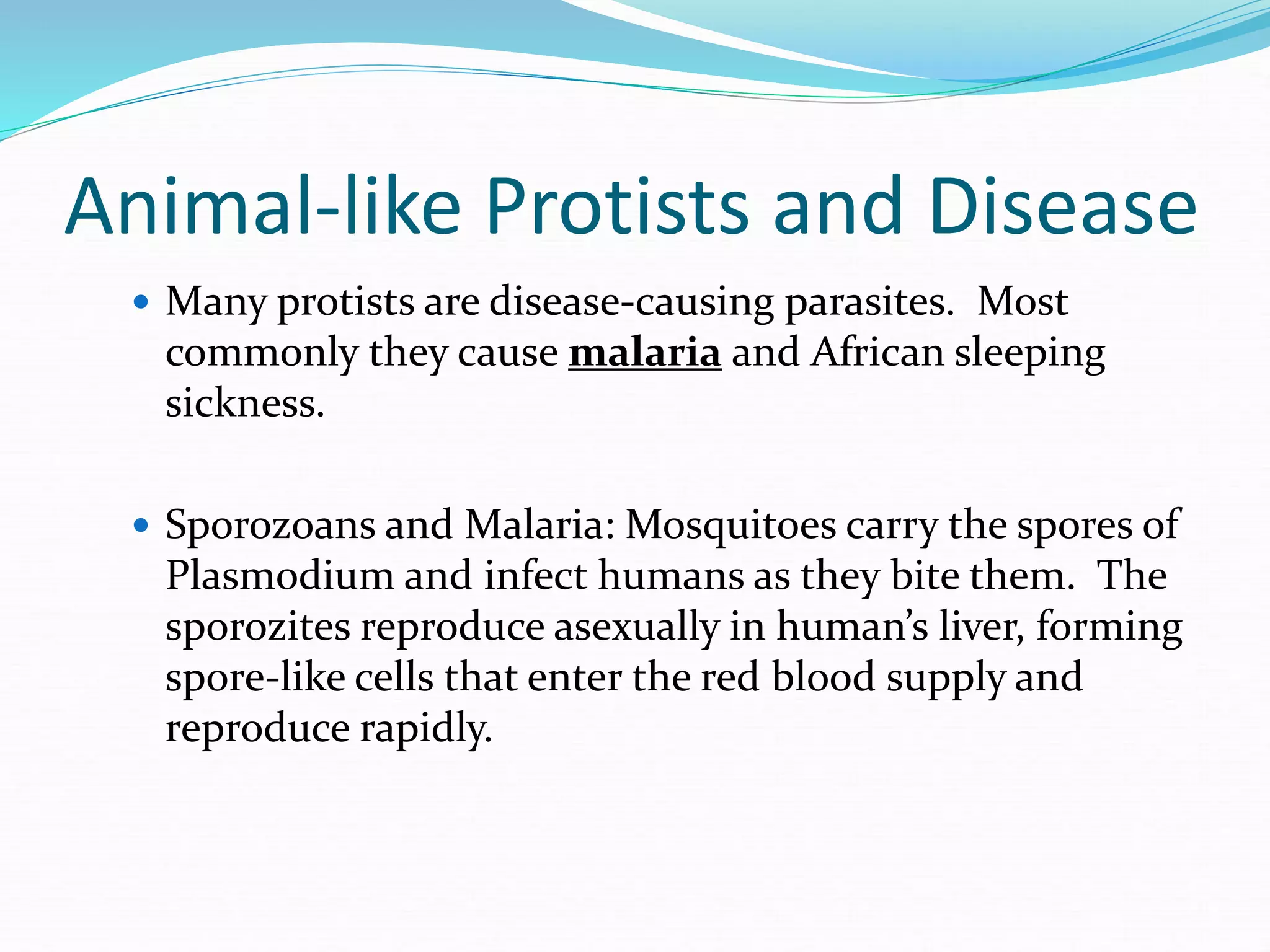
Animal-like Protists and Disease
 Many protists are disease-causing parasites. Most
commonly they cause malaria and African sleeping
sickness.
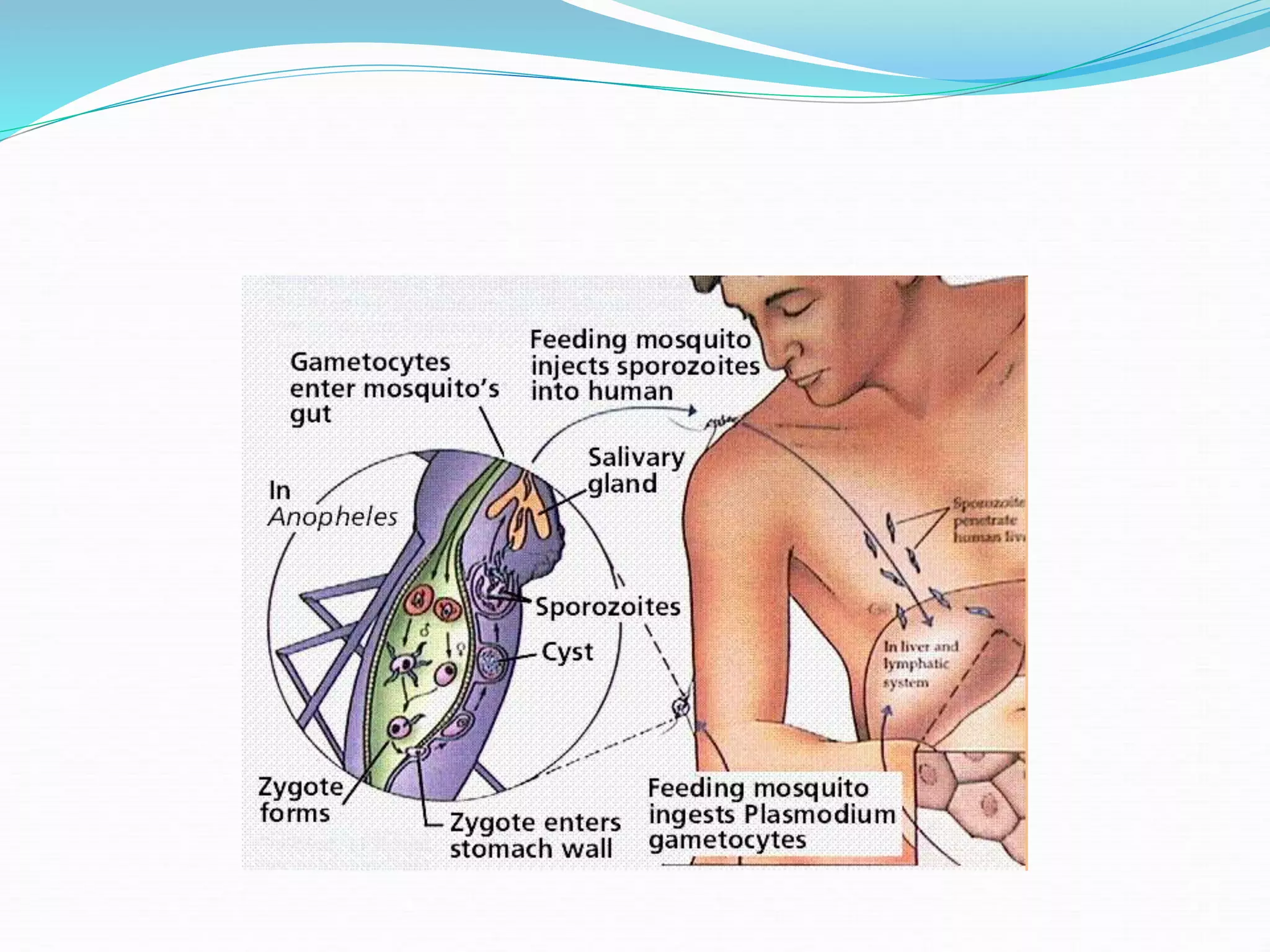
 Sporozoans and Malaria: Mosquitoes carry the spores of
Plasmodium and infect humans as they bite them. The
sporozites reproduce asexually in human’s liver, forming
spore-like cells that enter the red blood supply and
reproduce rapidly.
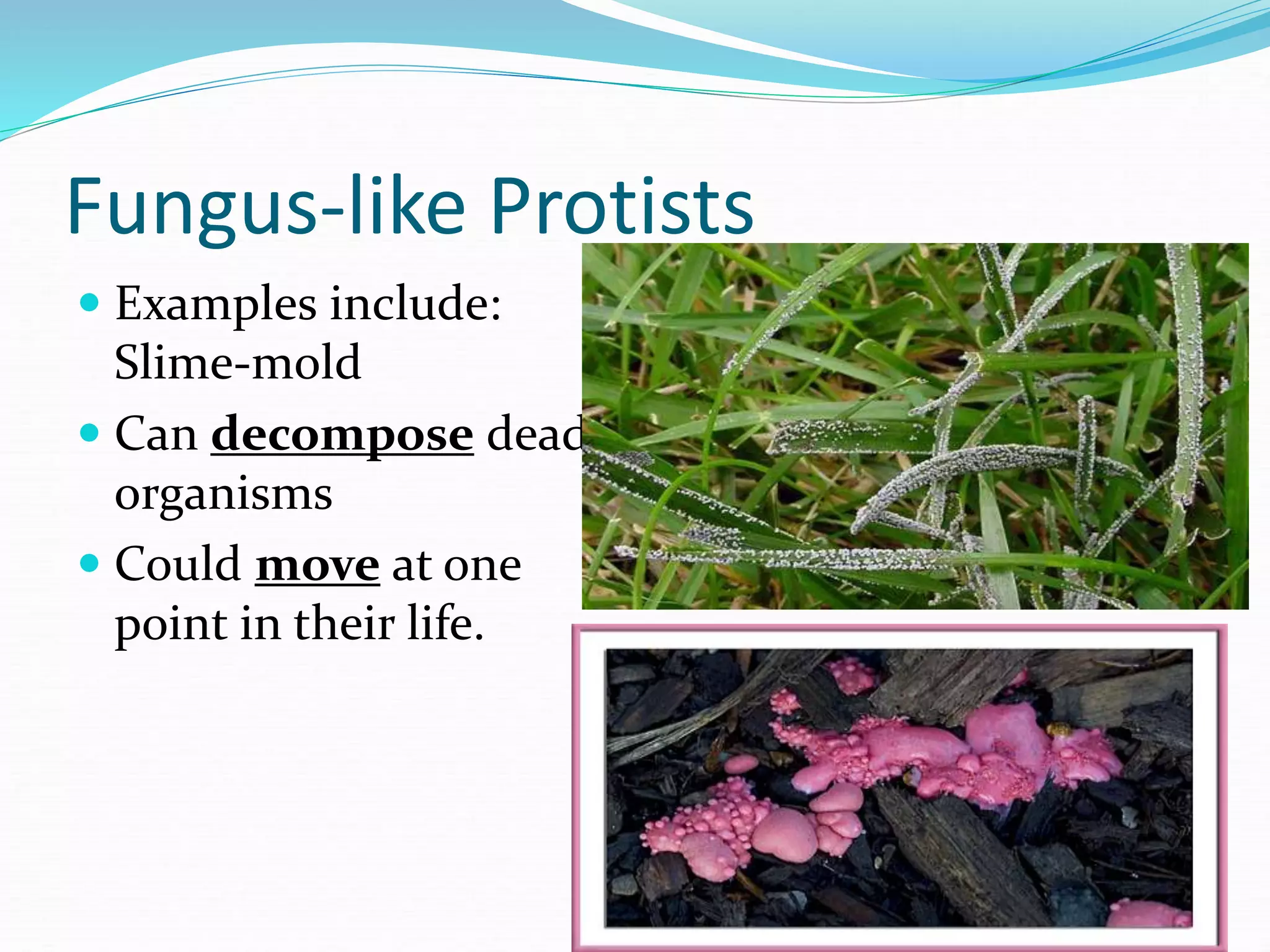
Fungus-like Protists
 Examples include:
Slime-mold
 Can decompose dead
organisms
 Could move at one
point in their life.
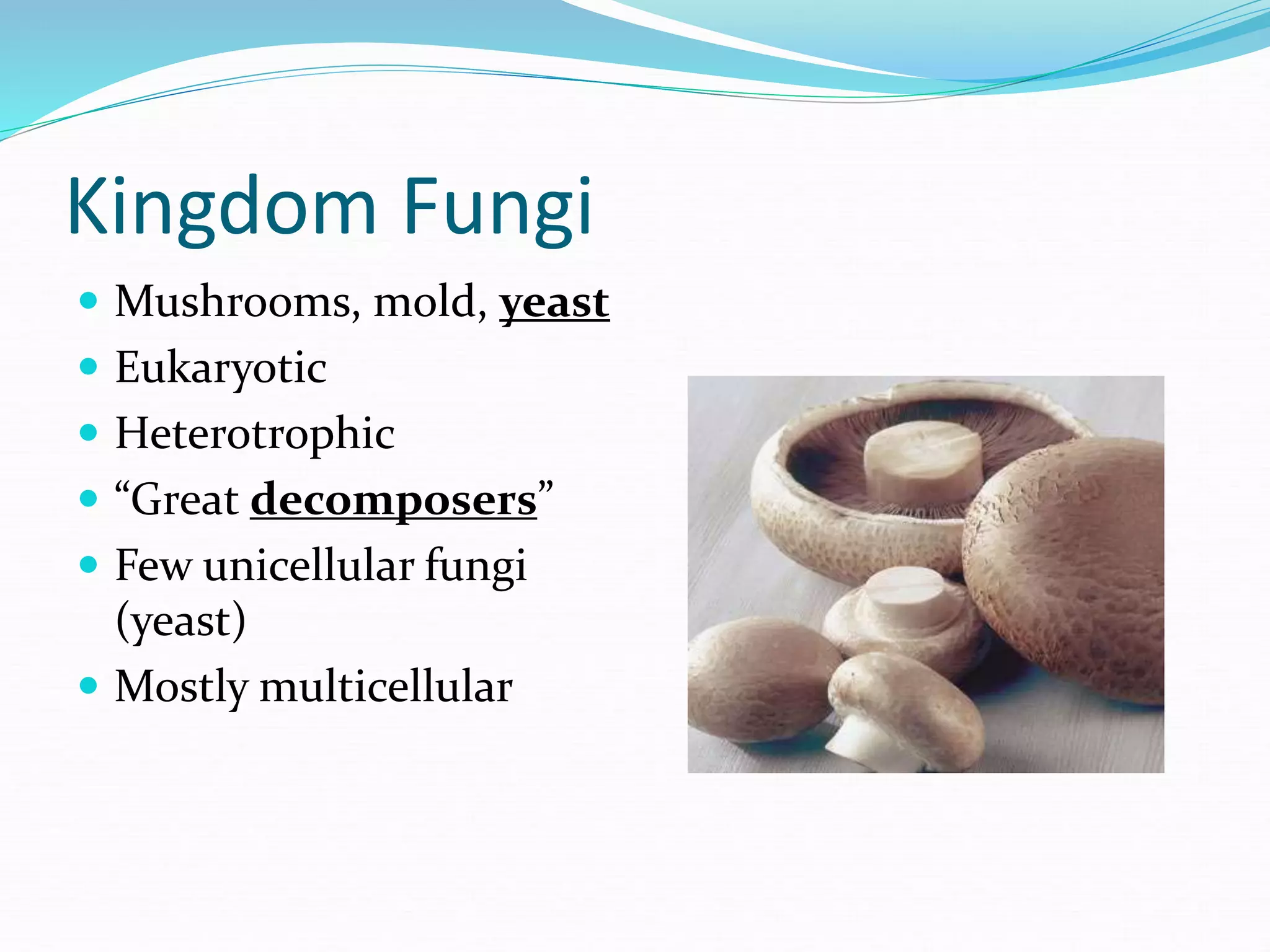
Kingdom Fungi
 Mushrooms, mold, yeast
 Eukaryotic
 Heterotrophic
 “Great decomposers”
 Few unicellular fungi
(yeast)
 Mostly multicellular
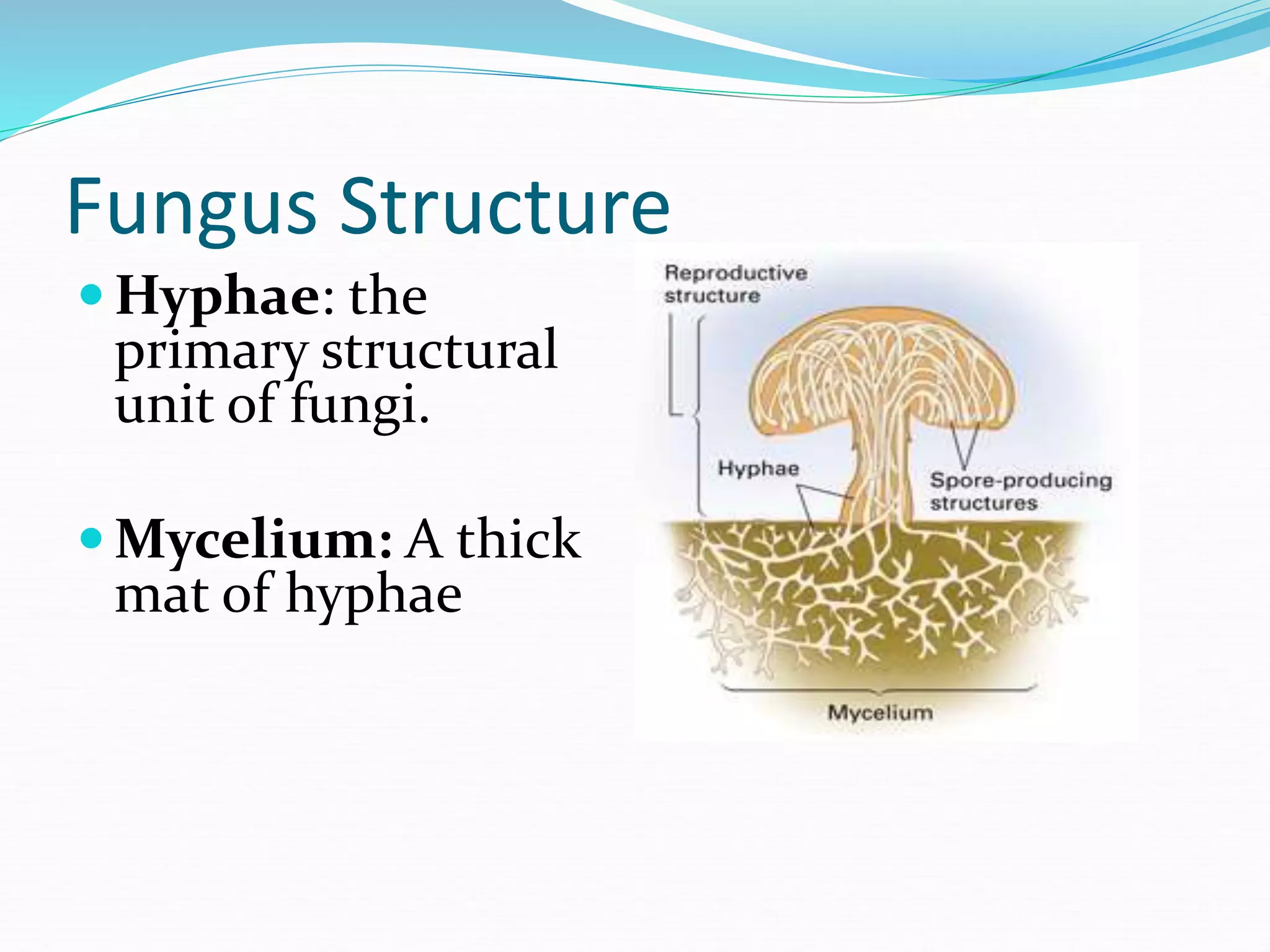
Fungus Structure
 Hyphae: the
primary structural
unit of fungi.
 Mycelium: A thick
mat of hyphae
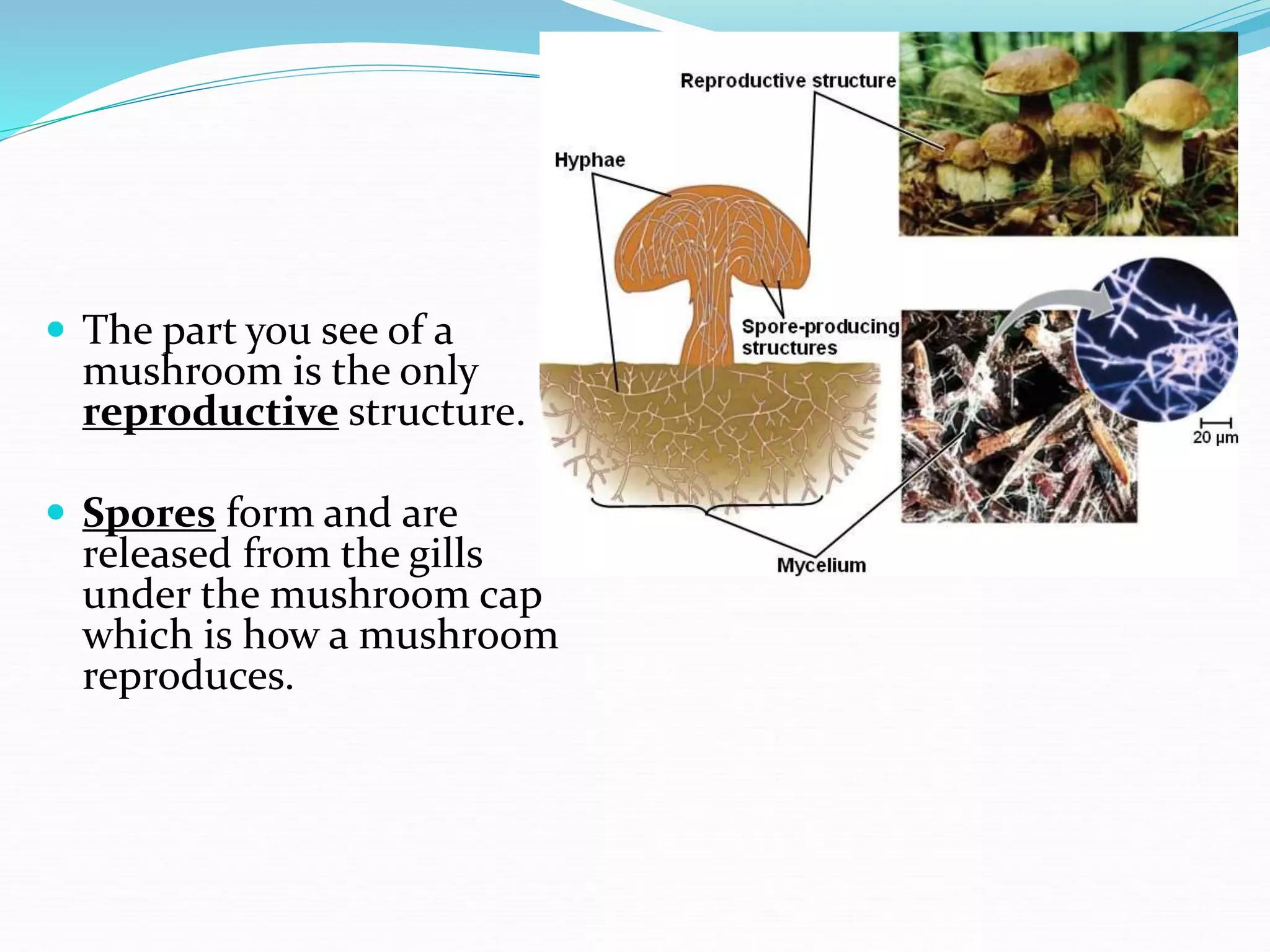
 The part you see of a
mushroom is the only
reproductive structure.
 Spores form and are
released from the gills
under the mushroom cap
which is how a mushroom
reproduces.
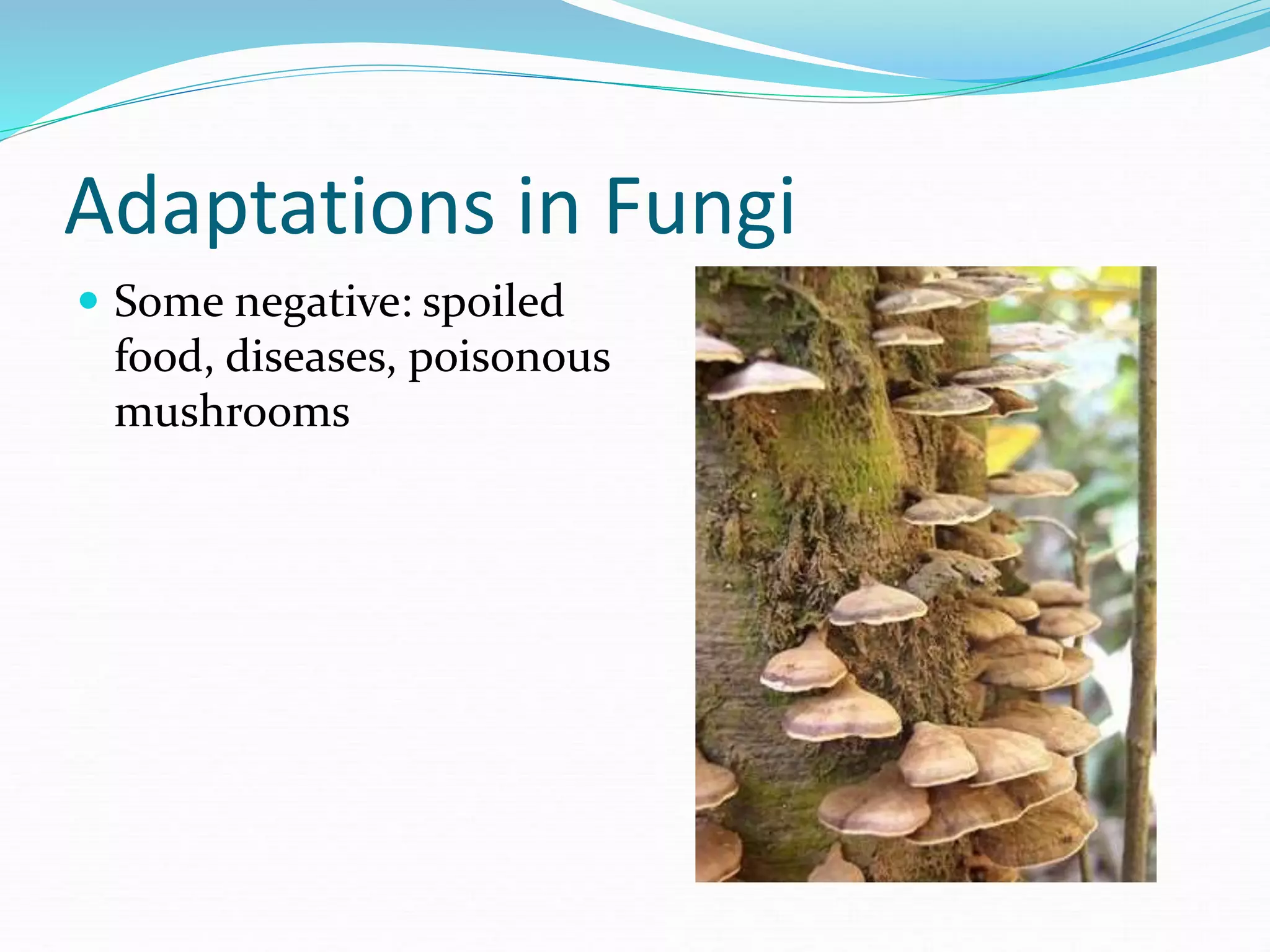
Adaptations in Fungi
 Some negative: spoiled
food, diseases, poisonous
mushrooms
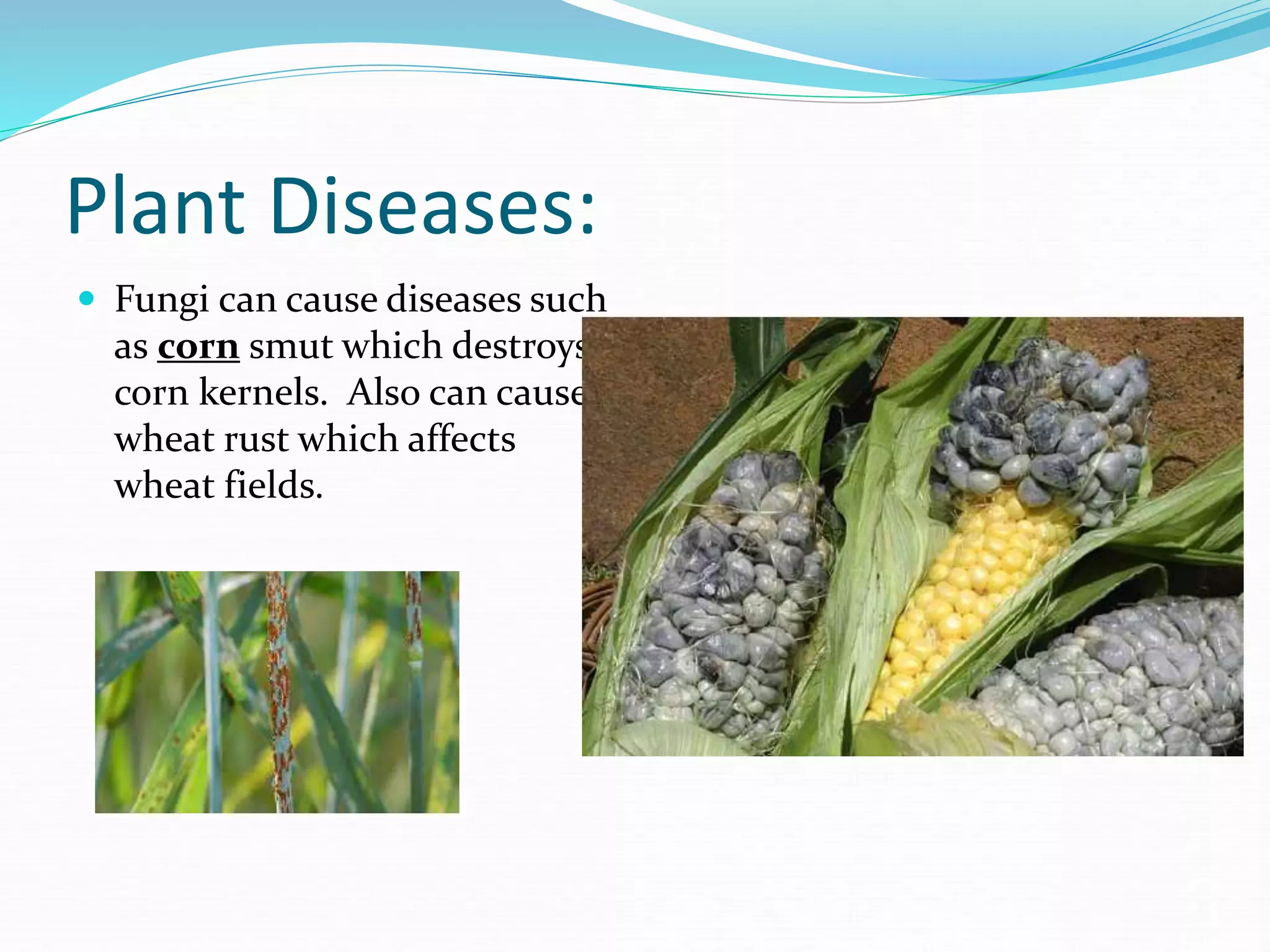
Plant Diseases:
 Fungi can cause diseases such
as corn smut which destroys
corn kernels. Also can cause
wheat rust which affects
wheat fields.
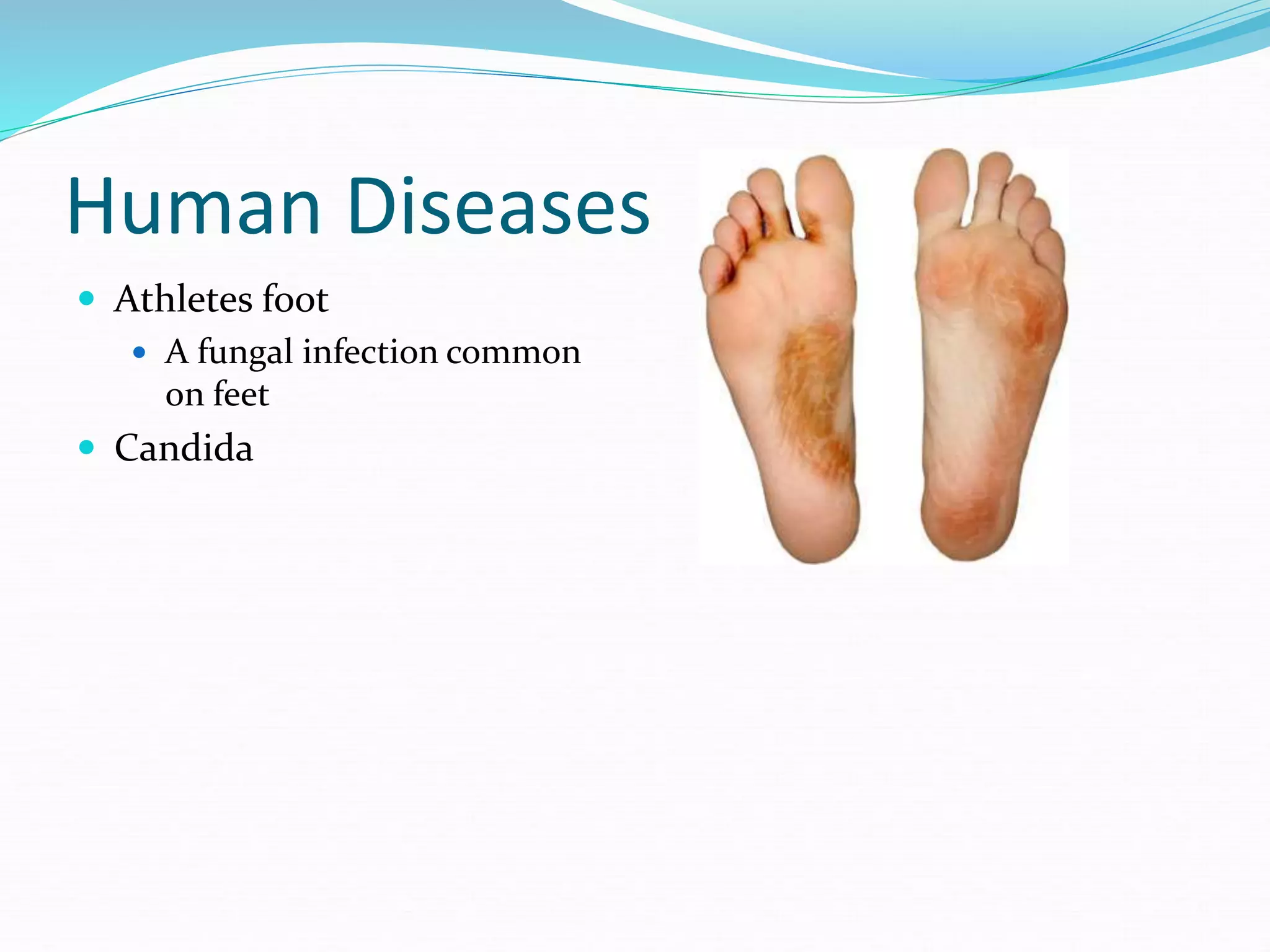
Human Diseases
 Athletes foot
 A fungal infection common
on feet
 Candida
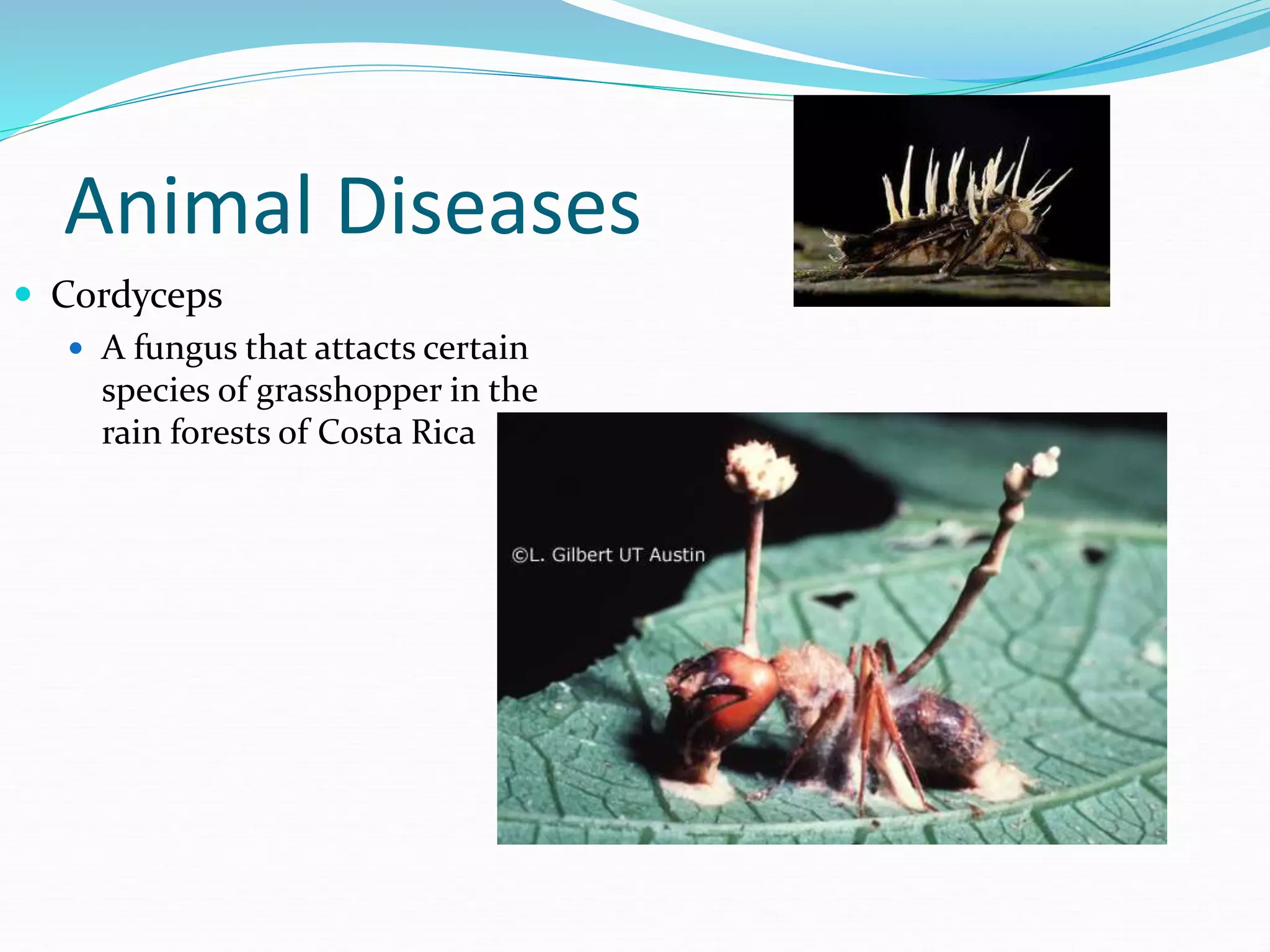
Animal Diseases
 Cordyceps
 A fungus that attacts certain
species of grasshopper in the
rain forests of Costa Rica
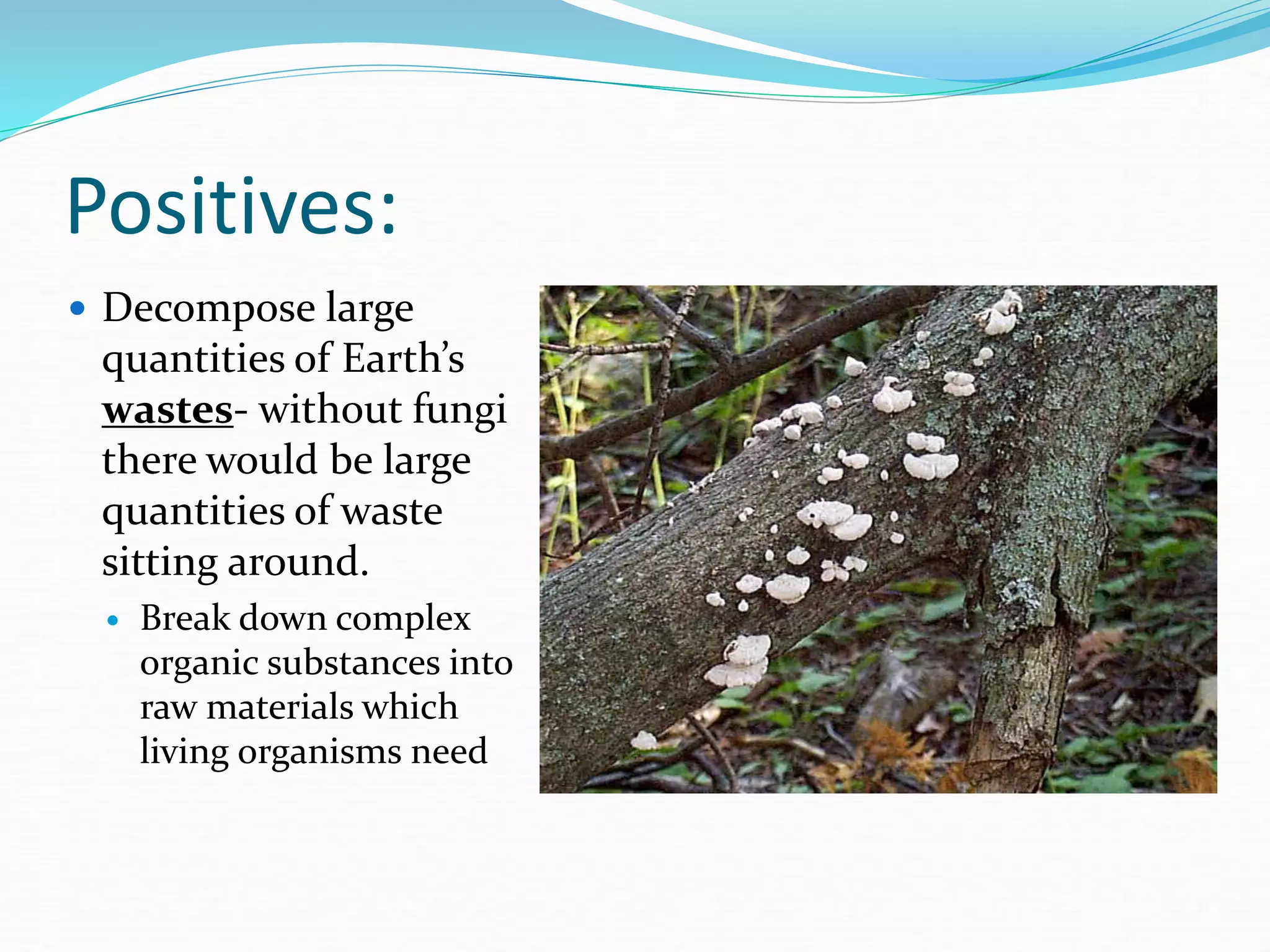
Positives:
 Decompose large
quantities of Earth’s
wastes- without fungi
there would be large
quantities of waste
sitting around.
 Break down complex
organic substances into
raw materials which
living organisms need
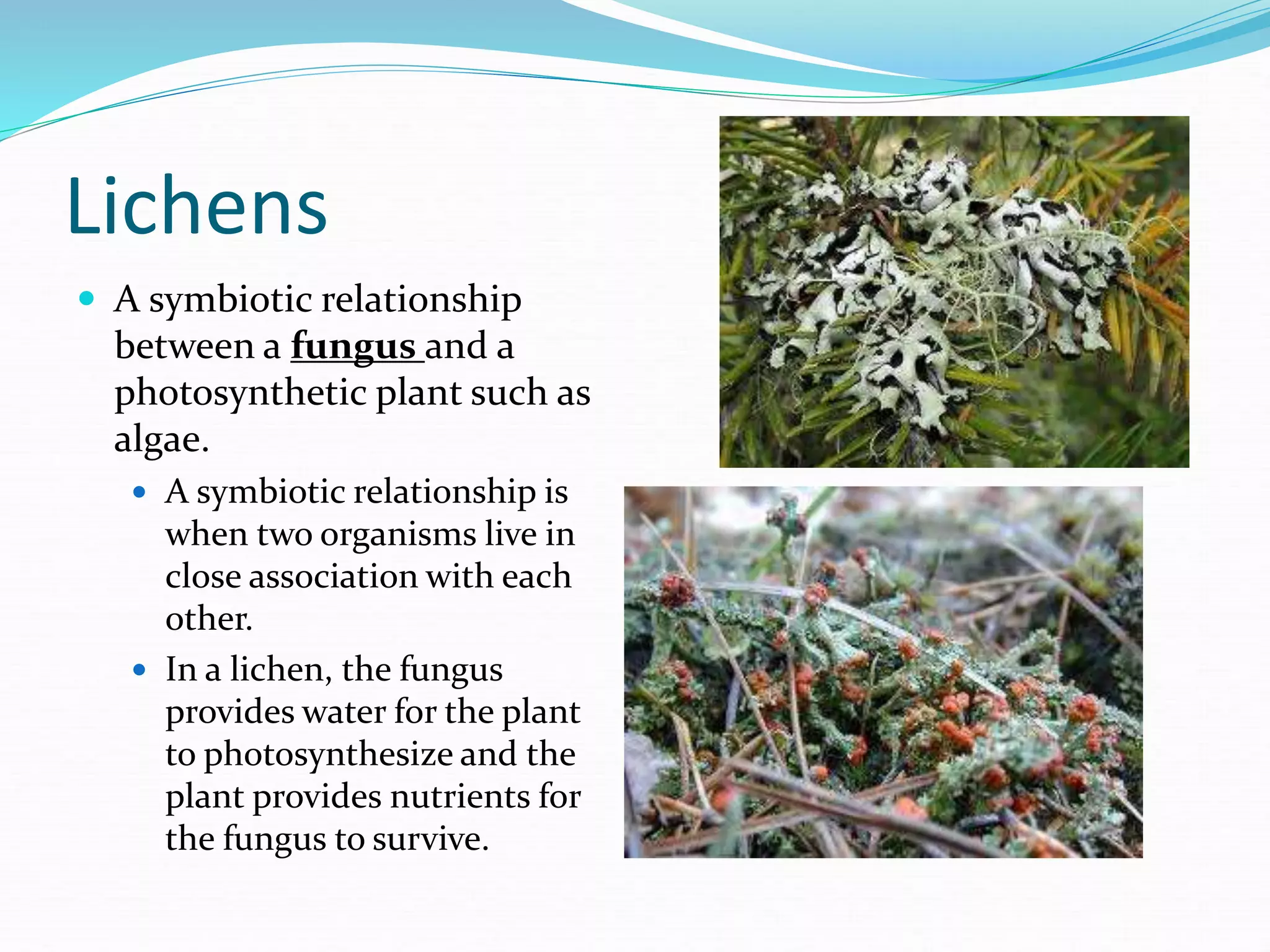
Lichens
 A symbiotic relationship
between a fungus and a
photosynthetic plant such as
algae.
 A symbiotic relationship is
when two organisms live in
close association with each
other.
 In a lichen, the fungus
provides water for the plant
to photosynthesize and the
plant provides nutrients for
the fungus to survive.
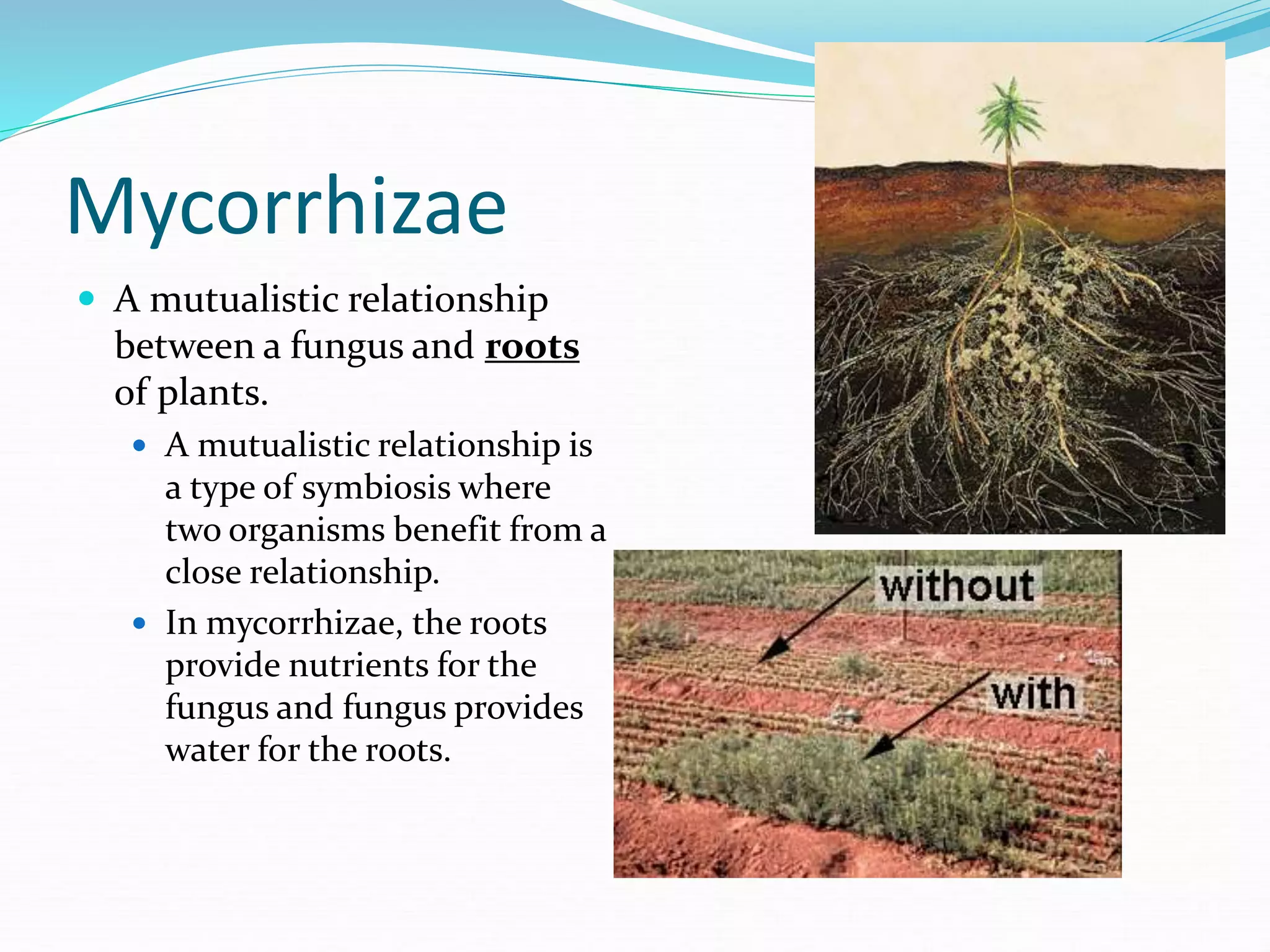
Mycorrhizae
 A mutualistic relationship
between a fungus and roots
of plants.
 A mutualistic relationship is
a type of symbiosis where
two organisms benefit from a
close relationship.
 In mycorrhizae, the roots
provide nutrients for the
fungus and fungus provides
water for the roots.

notes-protistfungi2012.ppt

  • 1.
    Kingdom Protista  Containsthe most diverse organisms of all of the kingdoms  Mostly unicellular  Autotrophic/heterotrophic  Cell walls sometimes present  Composed of cellulose  Eukaryotic
  • 2.
     Because theProtist Kingdom tends to be a “dumping” ground for organisms that don’t quite fit anywhere else, the organisms in this kingdom tend to closely resemble organisms of the other kingdoms.  This is why we group protists as being plant-like, animal-like, and fungus-like.
  • 3.
    Plant-like Protists  Usesunlight to make their food (photosynthetic)  Algae  Do not have roots, stems, leaves  Unicellular  Multicellular
  • 4.
    Major Phyla ofAlgae:  Euglenoids  Aquatic, unicellular and multicellular  Autotrophic because can photosynthesize  Heterotrophic because without the presence of light can ingest food.
  • 5.
     Diatoms  Unicellularand photosynthetic  Marine and freshwater  Reproduce asexually and sexually  Store food as oil rather than starch- gives fish an oily taste.
  • 6.
     Dinoflagellates  Mostare live in saltwater environments  Thick cell walls  Produce toxins which are responsible for fish kills  Cause what is known as “red tide”  These toxins can infect shellfish that feed on it so harvesting of these shellfish is usually banned during these months to prevent sickness.
  • 7.
     Red Algae Live in deep water where other seaweeds cannot survive because have pigments that can absorb sunlight at depths greater than 100 m.
  • 8.
     Brown Algae Float near surface where light is available  Form thick, underwater forests that provide a rich underwater ecosystem.
  • 9.
     Green Algae Most diverse.  Most are in fresh water.  Asexual and sexual reproduction.  Unicellular or multicellular.
  • 10.
    Animal-like Protists  Unicellularheterotrophs  Protazoa  Grouped according to how they move.
  • 11.
    Four main groupsof protozoans 1. Amoebas (also known as Sarcodines)  Form pseudopodia to engulf food particles (endocytosis) as well as for movement.  Pseudopodia: cytoplasm extensions that act like “arms”  Reproduce through asexual reproduction
  • 12.
  • 13.
    2. Flagellates  Movethrough use of flagella  Flagella: whip-like tails that help a cell move  Some act as parasites while some are beneficial
  • 14.
  • 15.
    3. Ciliates  Usecilia for movement  Cilia: short thread-like hair that help a cell move.  Diverse aquatic habitats
  • 16.
  • 17.
    4. Sporozoans  Producespores which is a reproductive cell that forms without fertilization and produced a new organism.  Internal parasites (ex. Animal blood or intestines)
  • 18.
    Animal-like Protists andDisease  Many protists are disease-causing parasites. Most commonly they cause malaria and African sleeping sickness.  Sporozoans and Malaria: Mosquitoes carry the spores of Plasmodium and infect humans as they bite them. The sporozites reproduce asexually in human’s liver, forming spore-like cells that enter the red blood supply and reproduce rapidly.
  • 20.
    Fungus-like Protists  Examplesinclude: Slime-mold  Can decompose dead organisms  Could move at one point in their life.
  • 21.
    Kingdom Fungi  Mushrooms,mold, yeast  Eukaryotic  Heterotrophic  “Great decomposers”  Few unicellular fungi (yeast)  Mostly multicellular
  • 22.
    Fungus Structure  Hyphae:the primary structural unit of fungi.  Mycelium: A thick mat of hyphae
  • 23.
     The partyou see of a mushroom is the only reproductive structure.  Spores form and are released from the gills under the mushroom cap which is how a mushroom reproduces.
  • 24.
    Adaptations in Fungi Some negative: spoiled food, diseases, poisonous mushrooms
  • 25.
    Plant Diseases:  Fungican cause diseases such as corn smut which destroys corn kernels. Also can cause wheat rust which affects wheat fields.
  • 26.
    Human Diseases  Athletesfoot  A fungal infection common on feet  Candida
  • 27.
    Animal Diseases  Cordyceps A fungus that attacts certain species of grasshopper in the rain forests of Costa Rica
  • 28.
    Positives:  Decompose large quantitiesof Earth’s wastes- without fungi there would be large quantities of waste sitting around.  Break down complex organic substances into raw materials which living organisms need
  • 29.
    Lichens  A symbioticrelationship between a fungus and a photosynthetic plant such as algae.  A symbiotic relationship is when two organisms live in close association with each other.  In a lichen, the fungus provides water for the plant to photosynthesize and the plant provides nutrients for the fungus to survive.
  • 30.
    Mycorrhizae  A mutualisticrelationship between a fungus and roots of plants.  A mutualistic relationship is a type of symbiosis where two organisms benefit from a close relationship.  In mycorrhizae, the roots provide nutrients for the fungus and fungus provides water for the roots.