ARCHAEBACTERIA
CONTENTS   Introduction Archaeal cell walls Archaeal lipids & membranes Genetics & molecular biology Metabolism Archaeal taxonomy Significance of Archaebacteria References
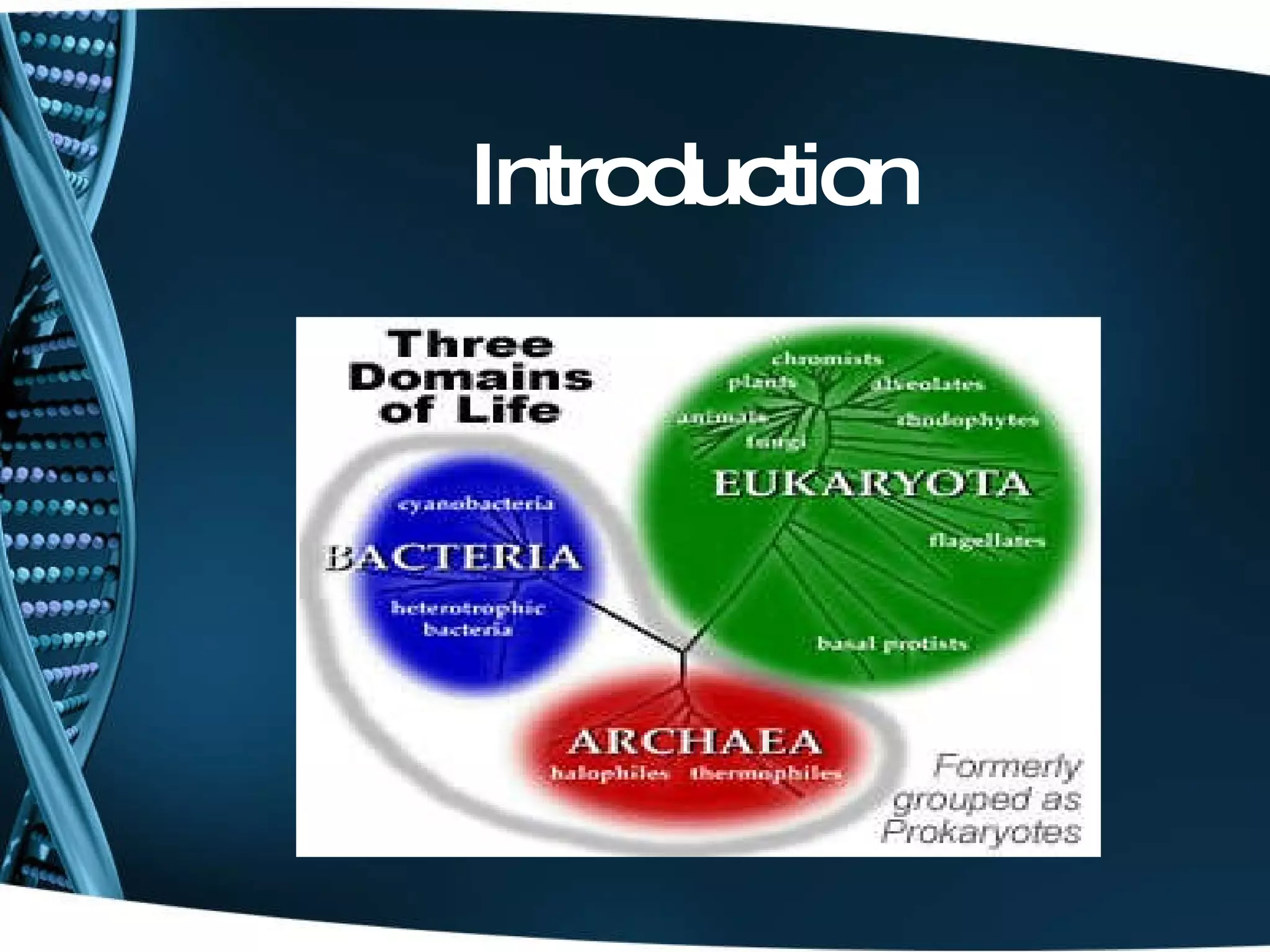
Introduction
Introduction to the Archaea Morphology Stain either Gram +ve or Gram –ve Shapes – Spherical, rod, spiral, lobed, irregularly shaped or pleomorphic Single cells or filaments or aggregates, diameter from 0.1 to over 15  μ m Multiplication – binary fission, budding, fragmentation or other mechanisms   Contd…
Physiology Aerobic, facultative and strictly anaerobic Range from chemolithotrophs to organotrophs Mesophilic & hyperthermophiles Found in extreme environments Few are symbionts in animal digestive system Contd…
Archaeal cell walls
Structure Gram +ve Archaea Single thick homogenous layer as in Gram +ve bacteria Gram +ve Archaea lack outer membrane & complex peptidoglycan network have a surface layer of proteins or glycoproteins  Contd…
Chemistry Gram +ve Archaea Variety of complex polymers Methanobacterium –  pseudomurein Methanosarcina & Halococcus –  complex polysaccharides similar to chondroitin sulphate of animal connective tissue Other heteropolysaccharides are also found Contd…
Gram -ve Archaea Layer of protein or glycoprotein outside their PM (20 to 40 nm thick) Methanolobus, Halobacterium  & several extreme thermophiles ( Sulfolobus,   Thermoproteus  &  Pyrodictium ) consist of glycoprotein units Methanococcus, Metahnomicrobium, Methanogenium  &  Desulfurococcus  consist of protein units Contd…
Archaeal Lipids & Membranes
Branched chain hydrocarbon attached to glycerol by ether links rather than fatty acids joined by ester links Sometimes two glycerol groups – form an extremely long tetraether (40C) Length is adjusted by cyclizing the chain to form pentacyclic rings  Polar lipids like phospholipids, sulfolipids & glycolipids are present 7 to 30% are non polar lipids Contd…
lipids can be combined in various ways – membranes of different rigidity C20 diethers – regular bilayer membrane C40 tetraether – much more rigid monolayer membrane Contd…
Genetics & Molecular Biology
Circular DNA – like bacteria Genomes are significantly smaller than bacteria. E. coli  – 2.5 x 10 9  Daltons T. acidophilum  – 0.8 x 10 9  Daltons G + C content varies from 21 - 68 mol %  mRNA – similar to bacterial mRNA T ψ C arm of tRNA – pseudouridine / 1-methyl pseudouridine Contd…
Sensitive to anisomycin & insensitive to chloramphenicol & kanamycin EF-2 reacts with diphtheria toxin Many methanogens - nucleosomes  DNA dependent polymerases resemble eukaryotic enzymes rather than prokaryotic polymerases Contd…
Metabolism
CH metabolism is best understood 6- phosphofructokinase is absent & E-M p/w is not followed  Extreme halophiles & thermophiles – modified form of E-D p/w wherein initial intermediates are not phosphorylated  Methanogens do not catabolise glucose  Gluconeogenesis – reversal of E-M p/w All oxidize pyruvate – acetyl coA using pyruvate oxidoreductase Contd…
Biosynthetic p/w – similar to those in other organisms Some methanogens can fix atmospheric N 2 Few employ glycogen as the main reserve material Autotrophy is widespread among methanogens & extreme thermophiles Thermoproteus  &  Sulfolobus  – fix CO 2  by reductive TCA cycle  Methanogens & extreme thermophiles –fix CO 2  by reductive acetyl coA p/w Contd…
Reductive TCA cycle Contd…
Archaeal Taxonomy
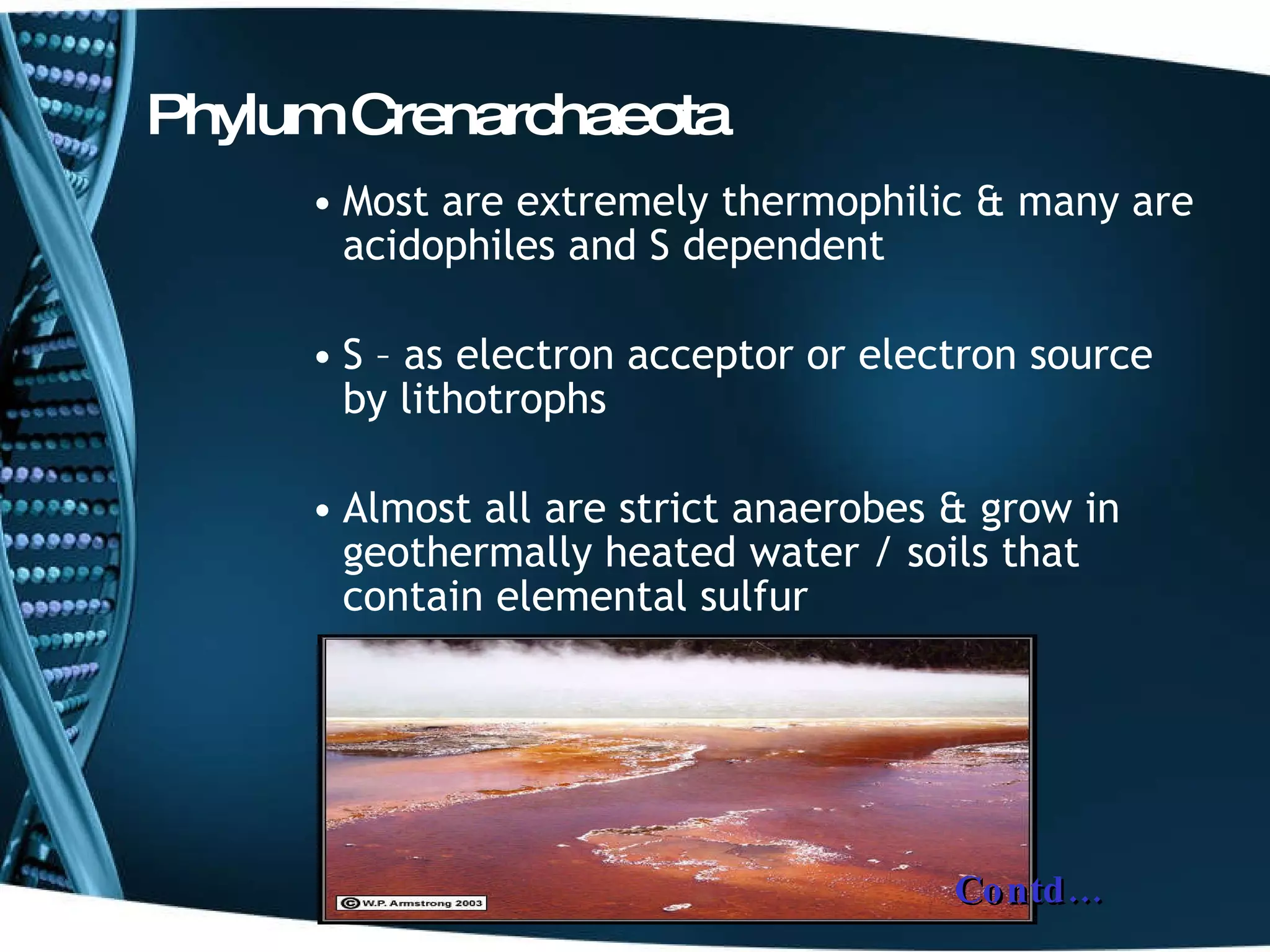
Phylum Crenarchaeota Most are extremely thermophilic & many are acidophiles and S dependent S – as electron acceptor or electron source by lithotrophs  Almost all are strict anaerobes & grow in geothermally heated water / soils that contain elemental sulfur  Contd…
Divided into one class –  Thermoprotrei  & three orders :  Thermoproteales Sulfolobales Desulfurococcales Contain 69 genera – two of the better studied genera are  Thermoproteus  &  Sulfolobus Contd…
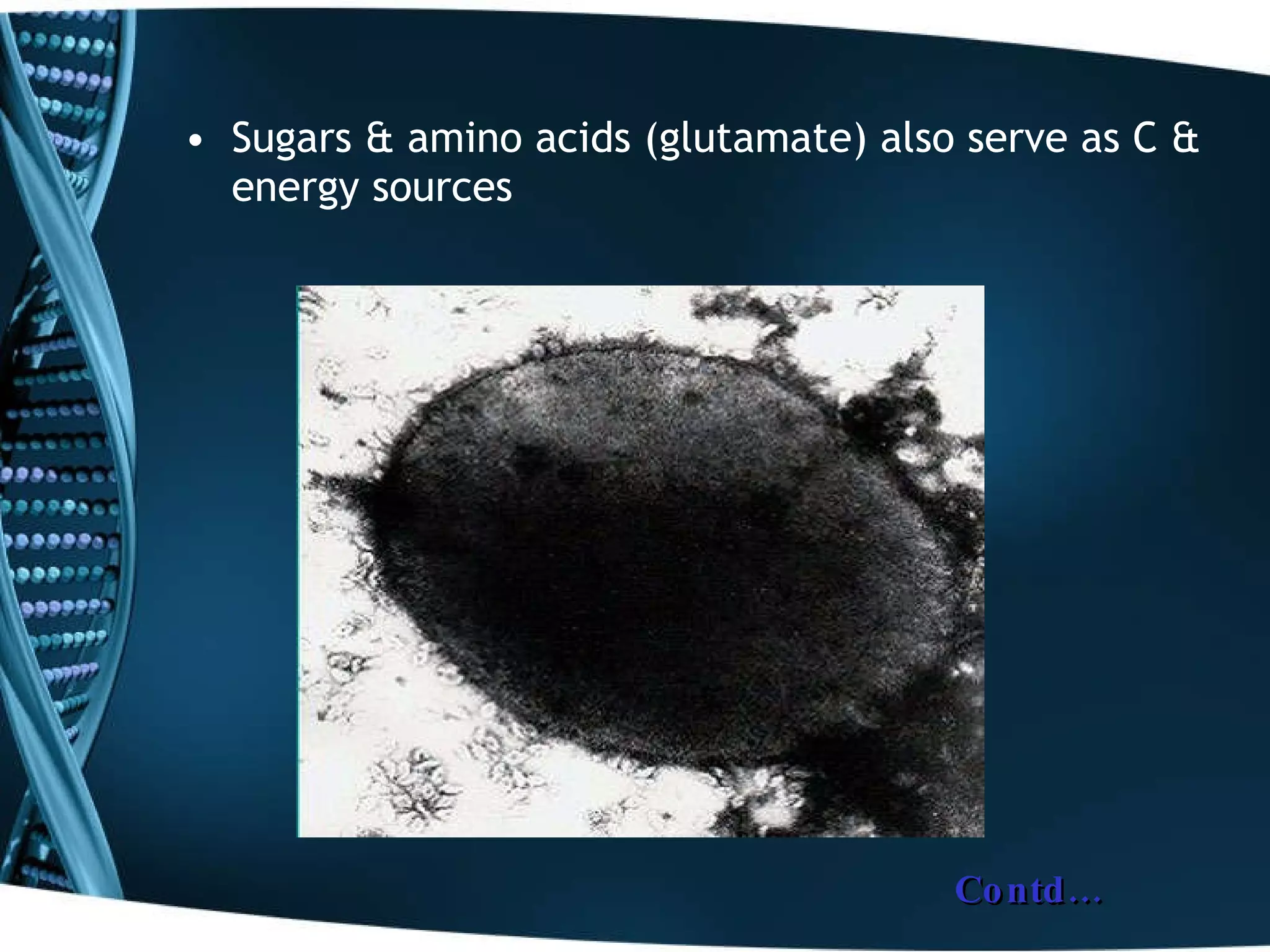
Sulfolobus Gram –ve, aerobic, irregularly lobed spherical archaeons Optimum temp.– 70 to 80  0 C & optimum pH 2 - 3 hence also referred to as thermoacidophiles Cell wall – lipoprotein & CH, lacks peptidoglycan Grow lithotrophically on S granules in hot S springs oxidizing S to Sulfuric acid Oxygen Is the normal electron acceptor, Fe +3  may be used Contd…
Sugars & amino acids (glutamate) also serve as C & energy sources Contd…
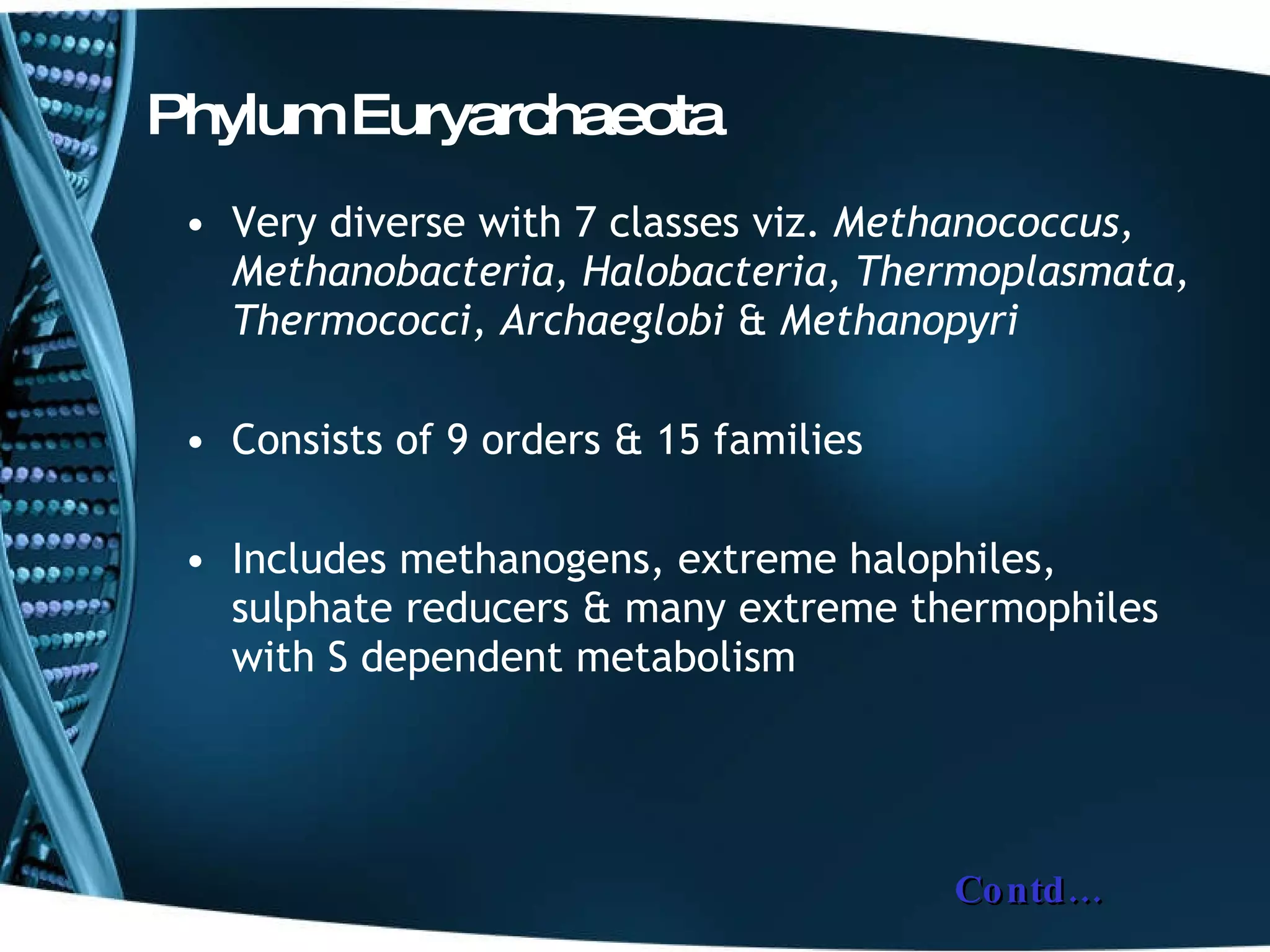
Thermoproteus Gram –ve, strictly anaerobic, hyperthermophilic long thin rod, can be bent or branched Cell wall consists of glycoprotein Grows at temp. from 70 - 97  0 C & pH 2.5 – 6.5 Found in hot springs & other hot aquatic habitats rich in sulfur Can grow organotrophically & oxidize glucose, amino acids, alcohols & organic acids with S as TEA Contd…
An aquatic spring in Japan with  Thermoproteus  growth Grows chemolithtrophically using Hydrogen & S 0 CO &   CO 2  can serve as the sole C source Thermoproteus   Contd…
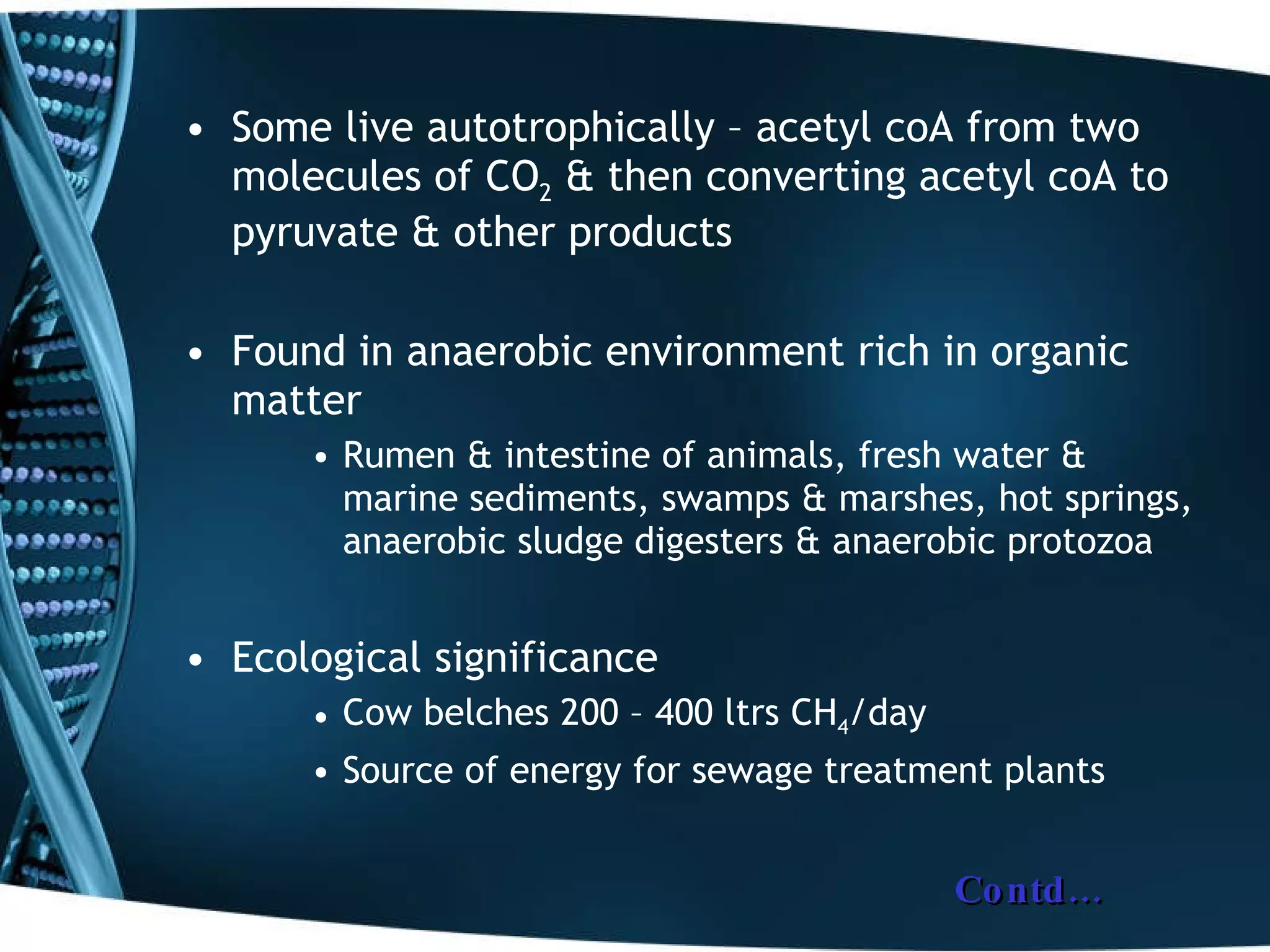
Phylum Euryarchaeota Very diverse with 7 classes viz.  Methanococcus, Methanobacteria, Halobacteria, Thermoplasmata, Thermococci, Archaeglobi  &  Methanopyri Consists of 9 orders & 15 families Includes methanogens, extreme halophiles, sulphate reducers & many extreme thermophiles with S dependent metabolism  Contd…
The Methanogens Strict anaerobes that obtain energy by converting CO 2 , H 2 , formate, methanol, acetate & other compounds to either CH 4  or CH 4  & CO 2 Autotrophic when growing on CO 2  & H 2 5 orders ( Methanobacteriales, Methanococcales, Methanomicrobiales, Methanosarcinales  & Methanopyrales) & 26 genera  Metabolism is unusual Unique cofactors like H 4 MPT, MFR, Coenzyme M Coenzyme F 420 , Coenzyme F 430 Coenzyme F 420  carries electrons and Hydrogen Coenzyme F 430  cofactor for methyl co-M methyl reductase Contd…
Methane synthesis from CO 2  by  Methanobacterium thermoautotrophicum Contd…
Some live autotrophically – acetyl coA from two molecules of CO 2  & then converting acetyl coA to pyruvate & other products Found in anaerobic environment rich in organic matter Rumen & intestine of animals, fresh water & marine sediments, swamps & marshes, hot springs, anaerobic sludge digesters & anaerobic protozoa  Ecological significance Cow belches 200 – 400 ltrs CH 4 /day Source of energy for sewage treatment plants Contd…
E.g.  Halobacterium salinarium Unusual type of photosynthesis On exposure to sunlight – purple membrane – bacteriorhodopsin Four types of rhodopsins Bacteriorhodopsin – proton transport for ATP synthesis Halorhodopsin – uses light energy to transport chloride ions into the cell & maintains KCl conc. Remaining two – photoreceptors, one for red light & one for blue Contd…
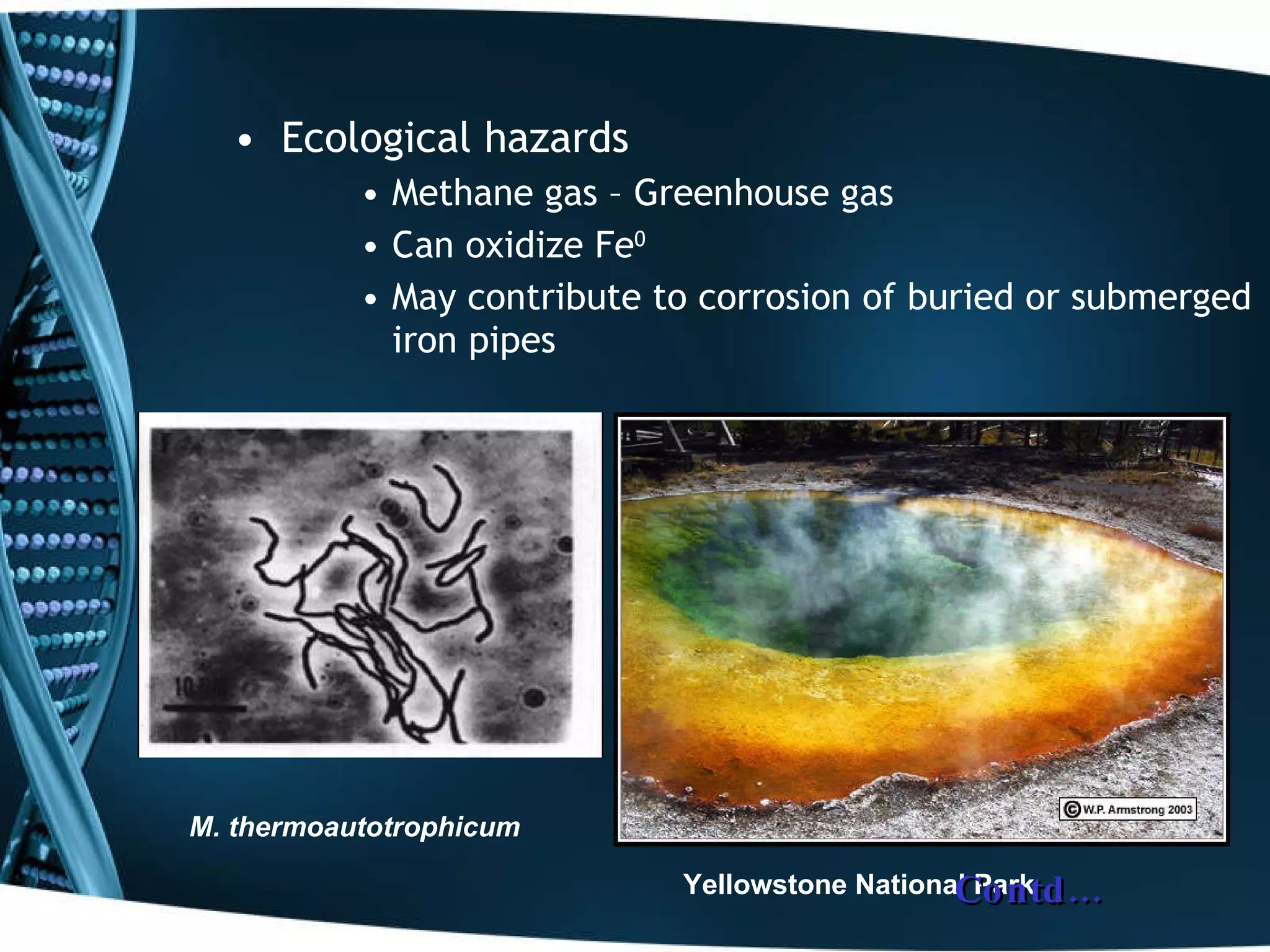
Ecological hazards Methane gas – Greenhouse gas Can oxidize Fe 0 May contribute to corrosion of buried or submerged iron pipes Yellowstone National Park M. thermoautotrophicum Contd…
The  Halobacteria Class  Halobacteria  – 15 genera in one family, the  Halobacteriaceae Aerobic chemoheterotrophs with respiratory metabolism Non motile or motile by lophotrichous flagella Absolutely dependent on high NaCl conc. At least 1.5 M NaCl, growth optimum at 3 – 4 M  Cell wall disintegrates below 1.5 M conc. Grow only in high salinity habitats Cause spoilage of salted fish  Contd…
Purple lake in Australia H. salinarium Contd…
The Thermoplasms Class  Thermoplasmata Thermoacidophiles that lack cell wall Two genera,  Thermoplasma & Pichrophilus  Thermoplasma Grows in refuse piles of coal mines Temperatures from 55 – 59 0 C & pH 1-2 Plasma membrane is strengthened by large quantities of diglycerol, tetraethers, lipopolysaccharides & glycolipids DNA stabilized by nucleosomes Contd…
At 59 0 C - irregularly shaped & at lower temperatures – spherical May be motile by flagella Contd…
Picrophilus Lacks cell wall , has S layer outside PM Aerobic, irregularly shaped cocci, 1 – 1.5  μ m in diameter Temp. range 47 – 65 0 C, optimum temp. 60 0 C pH below 3.5, optimum pH 0.7 Can grow at pH 0 Contd…
Extremely Thermophilic S 0   Metabolizers Class  Thermococci, order Thermococcales Strictly anaerobic  Reduce sulfur to sulfide Motile by flagella Optimum growth temp. 88 –100 0 C Two genera,  Thermococcus & Pyrococcus Contd…
Sulfate Reducing Archaea Class  Archaeglobi,  order  Archaeoglobales Gram –ve, irregular coccoid cells Cell wall – glycoprotein subunits Electron sources – hydrogen, lactate & glucose, reduce sulfate, sulfite or thiosulfate to sulfide S is not used as electron acceptor Extremely thermophilic, optimum temp. around 83 0 C, occur in hydrothermal vents  Contd…
Significance of Archaea
Methanogens are used for the production of methane which is a rich source of energy Preparation of glycoproteins & proteins from archaeal cultures are used to  increase body’s defense against infection Halophilic archaea are used to prescreen antitumor drugs active on eukaryotic proteins Thermophilic archaea are used in PCR
References Prescott, Lansing M.; Harley, John P. and Klein, Donald A.,2003.  Microbiology,  5 th  edition. McGraw – Hill  www.euarch.blogspot.com www.filebox.vt.edu www.nature.com/ntmicro/journal/v5/n4 www.fib_tab/nrmicro1619_F3.html www.microbewiki.kenyon.edu/

Archaebacteria

  • 1.
  • 2.
    CONTENTS Introduction Archaeal cell walls Archaeal lipids & membranes Genetics & molecular biology Metabolism Archaeal taxonomy Significance of Archaebacteria References
  • 3.
  • 4.
    Introduction to theArchaea Morphology Stain either Gram +ve or Gram –ve Shapes – Spherical, rod, spiral, lobed, irregularly shaped or pleomorphic Single cells or filaments or aggregates, diameter from 0.1 to over 15 μ m Multiplication – binary fission, budding, fragmentation or other mechanisms Contd…
  • 5.
    Physiology Aerobic, facultativeand strictly anaerobic Range from chemolithotrophs to organotrophs Mesophilic & hyperthermophiles Found in extreme environments Few are symbionts in animal digestive system Contd…
  • 6.
  • 7.
    Structure Gram +veArchaea Single thick homogenous layer as in Gram +ve bacteria Gram +ve Archaea lack outer membrane & complex peptidoglycan network have a surface layer of proteins or glycoproteins Contd…
  • 8.
    Chemistry Gram +veArchaea Variety of complex polymers Methanobacterium – pseudomurein Methanosarcina & Halococcus – complex polysaccharides similar to chondroitin sulphate of animal connective tissue Other heteropolysaccharides are also found Contd…
  • 9.
    Gram -ve ArchaeaLayer of protein or glycoprotein outside their PM (20 to 40 nm thick) Methanolobus, Halobacterium & several extreme thermophiles ( Sulfolobus, Thermoproteus & Pyrodictium ) consist of glycoprotein units Methanococcus, Metahnomicrobium, Methanogenium & Desulfurococcus consist of protein units Contd…
  • 10.
  • 11.
    Branched chain hydrocarbonattached to glycerol by ether links rather than fatty acids joined by ester links Sometimes two glycerol groups – form an extremely long tetraether (40C) Length is adjusted by cyclizing the chain to form pentacyclic rings Polar lipids like phospholipids, sulfolipids & glycolipids are present 7 to 30% are non polar lipids Contd…
  • 12.
    lipids can becombined in various ways – membranes of different rigidity C20 diethers – regular bilayer membrane C40 tetraether – much more rigid monolayer membrane Contd…
  • 13.
  • 14.
    Circular DNA –like bacteria Genomes are significantly smaller than bacteria. E. coli – 2.5 x 10 9 Daltons T. acidophilum – 0.8 x 10 9 Daltons G + C content varies from 21 - 68 mol % mRNA – similar to bacterial mRNA T ψ C arm of tRNA – pseudouridine / 1-methyl pseudouridine Contd…
  • 15.
    Sensitive to anisomycin& insensitive to chloramphenicol & kanamycin EF-2 reacts with diphtheria toxin Many methanogens - nucleosomes DNA dependent polymerases resemble eukaryotic enzymes rather than prokaryotic polymerases Contd…
  • 16.
  • 17.
    CH metabolism isbest understood 6- phosphofructokinase is absent & E-M p/w is not followed Extreme halophiles & thermophiles – modified form of E-D p/w wherein initial intermediates are not phosphorylated Methanogens do not catabolise glucose Gluconeogenesis – reversal of E-M p/w All oxidize pyruvate – acetyl coA using pyruvate oxidoreductase Contd…
  • 18.
    Biosynthetic p/w –similar to those in other organisms Some methanogens can fix atmospheric N 2 Few employ glycogen as the main reserve material Autotrophy is widespread among methanogens & extreme thermophiles Thermoproteus & Sulfolobus – fix CO 2 by reductive TCA cycle Methanogens & extreme thermophiles –fix CO 2 by reductive acetyl coA p/w Contd…
  • 19.
  • 20.
  • 21.
    Phylum Crenarchaeota Mostare extremely thermophilic & many are acidophiles and S dependent S – as electron acceptor or electron source by lithotrophs Almost all are strict anaerobes & grow in geothermally heated water / soils that contain elemental sulfur Contd…
  • 22.
    Divided into oneclass – Thermoprotrei & three orders : Thermoproteales Sulfolobales Desulfurococcales Contain 69 genera – two of the better studied genera are Thermoproteus & Sulfolobus Contd…
  • 23.
    Sulfolobus Gram –ve,aerobic, irregularly lobed spherical archaeons Optimum temp.– 70 to 80 0 C & optimum pH 2 - 3 hence also referred to as thermoacidophiles Cell wall – lipoprotein & CH, lacks peptidoglycan Grow lithotrophically on S granules in hot S springs oxidizing S to Sulfuric acid Oxygen Is the normal electron acceptor, Fe +3 may be used Contd…
  • 24.
    Sugars & aminoacids (glutamate) also serve as C & energy sources Contd…
  • 25.
    Thermoproteus Gram –ve,strictly anaerobic, hyperthermophilic long thin rod, can be bent or branched Cell wall consists of glycoprotein Grows at temp. from 70 - 97 0 C & pH 2.5 – 6.5 Found in hot springs & other hot aquatic habitats rich in sulfur Can grow organotrophically & oxidize glucose, amino acids, alcohols & organic acids with S as TEA Contd…
  • 26.
    An aquatic springin Japan with Thermoproteus growth Grows chemolithtrophically using Hydrogen & S 0 CO & CO 2 can serve as the sole C source Thermoproteus Contd…
  • 27.
    Phylum Euryarchaeota Verydiverse with 7 classes viz. Methanococcus, Methanobacteria, Halobacteria, Thermoplasmata, Thermococci, Archaeglobi & Methanopyri Consists of 9 orders & 15 families Includes methanogens, extreme halophiles, sulphate reducers & many extreme thermophiles with S dependent metabolism Contd…
  • 28.
    The Methanogens Strictanaerobes that obtain energy by converting CO 2 , H 2 , formate, methanol, acetate & other compounds to either CH 4 or CH 4 & CO 2 Autotrophic when growing on CO 2 & H 2 5 orders ( Methanobacteriales, Methanococcales, Methanomicrobiales, Methanosarcinales & Methanopyrales) & 26 genera Metabolism is unusual Unique cofactors like H 4 MPT, MFR, Coenzyme M Coenzyme F 420 , Coenzyme F 430 Coenzyme F 420 carries electrons and Hydrogen Coenzyme F 430 cofactor for methyl co-M methyl reductase Contd…
  • 29.
    Methane synthesis fromCO 2 by Methanobacterium thermoautotrophicum Contd…
  • 30.
    Some live autotrophically– acetyl coA from two molecules of CO 2 & then converting acetyl coA to pyruvate & other products Found in anaerobic environment rich in organic matter Rumen & intestine of animals, fresh water & marine sediments, swamps & marshes, hot springs, anaerobic sludge digesters & anaerobic protozoa Ecological significance Cow belches 200 – 400 ltrs CH 4 /day Source of energy for sewage treatment plants Contd…
  • 31.
    E.g. Halobacteriumsalinarium Unusual type of photosynthesis On exposure to sunlight – purple membrane – bacteriorhodopsin Four types of rhodopsins Bacteriorhodopsin – proton transport for ATP synthesis Halorhodopsin – uses light energy to transport chloride ions into the cell & maintains KCl conc. Remaining two – photoreceptors, one for red light & one for blue Contd…
  • 32.
    Ecological hazards Methanegas – Greenhouse gas Can oxidize Fe 0 May contribute to corrosion of buried or submerged iron pipes Yellowstone National Park M. thermoautotrophicum Contd…
  • 33.
    The HalobacteriaClass Halobacteria – 15 genera in one family, the Halobacteriaceae Aerobic chemoheterotrophs with respiratory metabolism Non motile or motile by lophotrichous flagella Absolutely dependent on high NaCl conc. At least 1.5 M NaCl, growth optimum at 3 – 4 M Cell wall disintegrates below 1.5 M conc. Grow only in high salinity habitats Cause spoilage of salted fish Contd…
  • 34.
    Purple lake inAustralia H. salinarium Contd…
  • 35.
    The Thermoplasms Class Thermoplasmata Thermoacidophiles that lack cell wall Two genera, Thermoplasma & Pichrophilus Thermoplasma Grows in refuse piles of coal mines Temperatures from 55 – 59 0 C & pH 1-2 Plasma membrane is strengthened by large quantities of diglycerol, tetraethers, lipopolysaccharides & glycolipids DNA stabilized by nucleosomes Contd…
  • 36.
    At 59 0C - irregularly shaped & at lower temperatures – spherical May be motile by flagella Contd…
  • 37.
    Picrophilus Lacks cellwall , has S layer outside PM Aerobic, irregularly shaped cocci, 1 – 1.5 μ m in diameter Temp. range 47 – 65 0 C, optimum temp. 60 0 C pH below 3.5, optimum pH 0.7 Can grow at pH 0 Contd…
  • 38.
    Extremely Thermophilic S0 Metabolizers Class Thermococci, order Thermococcales Strictly anaerobic Reduce sulfur to sulfide Motile by flagella Optimum growth temp. 88 –100 0 C Two genera, Thermococcus & Pyrococcus Contd…
  • 39.
    Sulfate Reducing ArchaeaClass Archaeglobi, order Archaeoglobales Gram –ve, irregular coccoid cells Cell wall – glycoprotein subunits Electron sources – hydrogen, lactate & glucose, reduce sulfate, sulfite or thiosulfate to sulfide S is not used as electron acceptor Extremely thermophilic, optimum temp. around 83 0 C, occur in hydrothermal vents Contd…
  • 40.
  • 41.
    Methanogens are usedfor the production of methane which is a rich source of energy Preparation of glycoproteins & proteins from archaeal cultures are used to increase body’s defense against infection Halophilic archaea are used to prescreen antitumor drugs active on eukaryotic proteins Thermophilic archaea are used in PCR
  • 42.
    References Prescott, LansingM.; Harley, John P. and Klein, Donald A.,2003. Microbiology, 5 th edition. McGraw – Hill www.euarch.blogspot.com www.filebox.vt.edu www.nature.com/ntmicro/journal/v5/n4 www.fib_tab/nrmicro1619_F3.html www.microbewiki.kenyon.edu/