Kingdom Plantae 
Kingdom Plantae 
The Plants, Kingdom also called plantae green can plants be defined (Viridiplantae as multicellular, 
in latin), 
are autotrophic multicellular eukaryotes, eukaryotes of which the conduct kingdom Plantae. photosynthesis. 
They form 
a clade that includes the flowering plants, conifers and 
All member of this family comprises of true nucleus and 
other gymnosperms, ferns, clubmosses, hornworts, liverworts, mosses and 
advanced the green algae. membrane Plants exclude bound the organelles. red and brown They algae, are animals, 
quite 
different the fungi, archaea from and animals. bacteria. 
The Kingdom Plantae contains 
about 300,000 different species of plants. Among the 
five kingdoms, Kingdom plantae is a very important, as 
they are the source of food for all other living creatures 
present on planet earth, which depends on plants to 
survive.
Characteristics of The Kingdom Plantae 
•Most of the plants are eukaryotic and chlorophyll 
containing organisms. 
•Cell walls of plant cells are comprised of cellulose. 
•They have an ability to grow by cell division. 
•In life cycle of plant cells, the interchanges occur from the 
embryos and are supported by other tissues and self 
produce. 
•Plants have both organs and organ systems. 
•They obtain their energy from sun through photosynthesis. 
•Plants reproduce both by sexual and asexual. 
•Plants develop a self defense mechanism to protect them 
from being destroyed by animals, fungi and other plants. 
•Organisms within Kingdom Plantae are multicellular, 
eukaryotic and autotrophic. 
•They lack motility.
Examples of Kingdom Plantae 
This kingdom includes all types plants like herbs, shrubs, 
trees, creepers, climbers,aquatic plants, desert plants, 
mountain plants,flowering and non flowering plants, 
etc
Importance of Plants 
Food: Everything we eat comes directly or indirectly from plants. Throughout 
human history, approximately 7,000 different plant species have been used as 


food by people. 
Water: Plants regulate the water cycle: they help distribute and purify the planet's 
water. They also help move water from the soil to the atmosphere through a 
process called transpiration. 
Medicine: One-quarter of all prescription drugs come directly from or are 
derivatives of plants. Additionally, four out of five people around the world today 
rely on plants for primary health care. 
Air: Oxygen is brought to you by plants, as a byproduct of photosynthesis. 
Habitat: Of course, aside from humans' myriad uses, plants make up the 
backbone of all habitats. Other species of fish and wildlife also depend on plants 
for food and shelter. 
Climate: Plants store carbon, and have helped keep much of the carbon dioxide 
produced from the burning of fossil fuels out of the atmosphere.
ALTERATION OF GENERATION 
Gametophyte 
Generation 
Reporter: Tanael, Danna Marie C.
ALTERATION OF GENERATION 
Alternation of 
generations (also known 
as alternation of phases 
or metagenesis) is a term 
primarily used to describe 
the life cycle of plants.
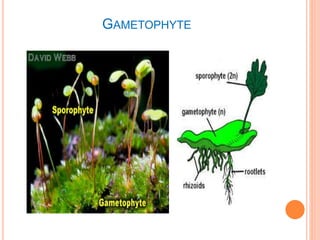
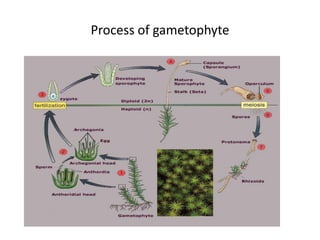
GAMETOPHYTE 
 A gametophyte is the 
haploid, multicellular phase of 
plants and algae that undergo 
alternation of generations, with 
each of its cells containing only 
a single set of chromosomes.
GAMETOPHYTE
Process of gametophyte
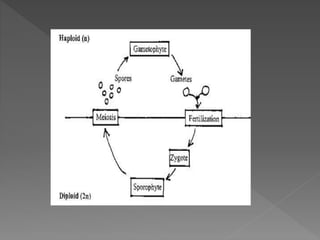
 Sporophyte 
› The diploid multicellular stage in the life 
cycle of a plant or alga. 
• Diploid – (of a cell or nucleus) containing 
two complete sets of chromosomes, one 
from each parent.
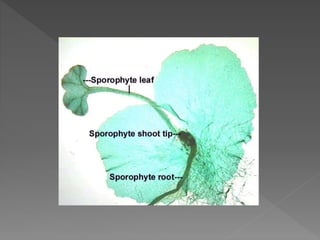
 A sporophyte develops from a zygote 
produced when a haploid egg cell is 
fertilized by a haploid sperm. 
 Haploid - (of a cell or nucleus) having a single 
set of unpaired chromosomes 
 Sporophyte cell has a double set of Chromosomes.
 Sporophyte produces spores by meiosis. 
 Spores - typically one-celled, reproductive 
unit capable of giving rise to a new individual 
without sexual fusion 
 Meiosis - a type of cell division that results in 
four daughter cells each with half the number 
of chromosomes of the parent cell.
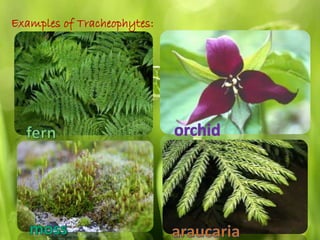
Examples of Tracheophytes:
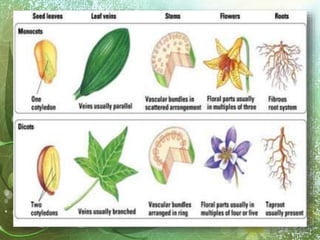
Monocots and 
Dicots
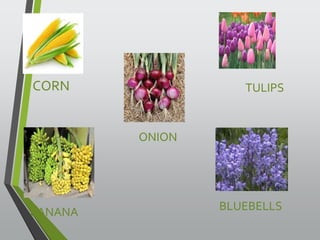
Monocots 
•Monocots are one of the two major 
types of flowering plants, and are 
characterized by having a single 
cotyledon, or seed leaf.
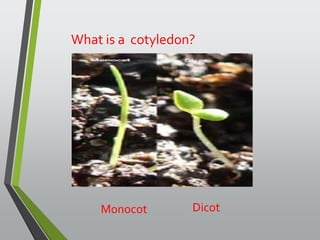
What is a cotyledon? 
Monocot Dicot
CORN TULIPS 
ONION 
BANANA BLUEBELLS
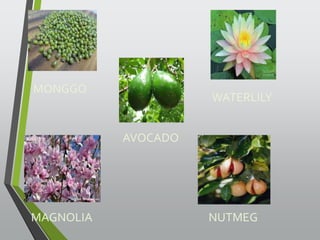
DICOTS 
Dicots are one of the two major types 
of flowering plants (the other being 
monocots), and are characterized by 
having two seed leaves, or cotyledons.
MONGGO 
AVOCADO 
WATERLILY 
MAGNOLIA NUTMEG
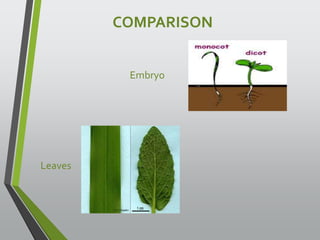
COMPARISON 
Embryo 
Leaves
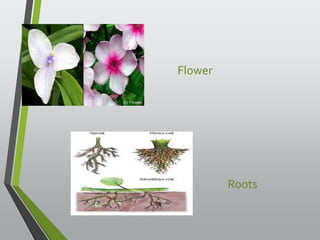
Flower 
Roots
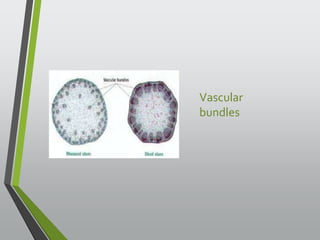
Vascular 
bundles
Bryophytes
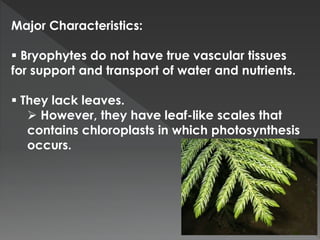
Major Characteristics: 
 Bryophytes do not have true vascular tissues 
for support and transport of water and nutrients. 
 They lack leaves. 
 However, they have leaf-like scales that 
contains chloroplasts in which photosynthesis 
occurs.
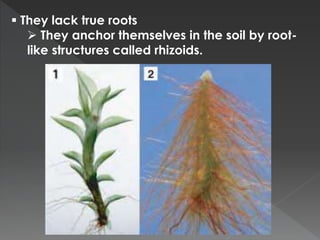
 They lack true roots 
 They anchor themselves in the soil by root-like 
structures called rhizoids.
 Lack of true stems 
 Usually small and 
ground-hugging. Most 
measure between 2 to 4 
inches.
Classifications
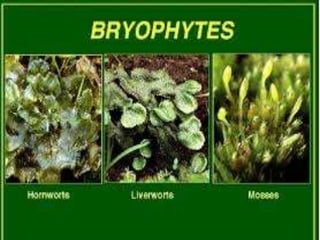
There are 3 classes of bryophytes: 
1. Class Musci (Mosses) 
2. Class Hepaticae (Liverworts) 
3. Class Anthocerotae (Hornworts)
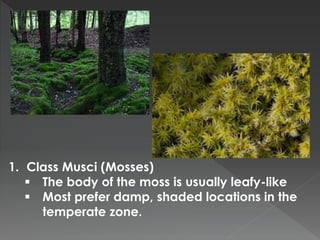
1. Class Musci (Mosses) 
 The body of the moss is usually leafy-like 
 Most prefer damp, shaded locations in the 
temperate zone.
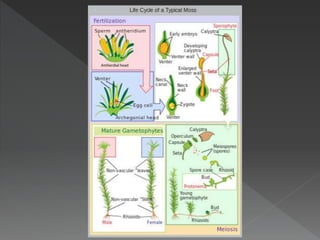
 Mosses may also 
asexually reproduce by 
budding
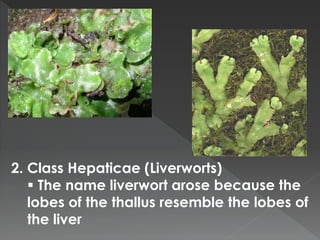
2. Class Hepaticae (Liverworts) 
 The name liverwort arose because the 
lobes of the thallus resemble the lobes of 
the liver
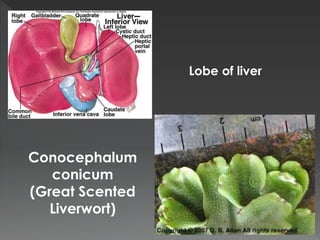
Lobe of liver 
Conocephalum 
conicum 
(Great Scented 
Liverwort)
 Many have a flattened body called 
thallus, but some have a leafy 
appearance 
 Some liverworts are capable 
of asexual reproduction; in bryophytes 
in general "it would almost be true to 
say that vegetative reproduction is the 
rule and not the exception.“ For 
example in Riccia, when the older parts 
of the forked thalli die, the younger tips 
become separate individuals.
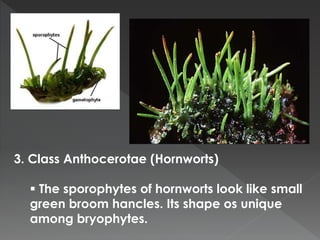
3. Class Anthocerotae (Hornworts) 
 The sporophytes of hornworts look like small 
green broom hancles. Its shape os unique 
among bryophytes.
 Unlike bryophytes and higher 
plants most species of hornworts 
have cells that contain only single 
chloroplast
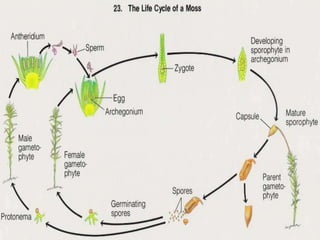
Life cycle
Presented by : 
Janina May C. Salvador
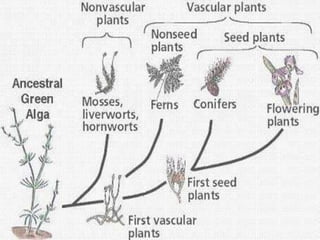
Phylogeny 
- The study of the 
evolutionary 
relatedness between 
and among species.
LIVERWORTS 
(Hepatopsidae) 
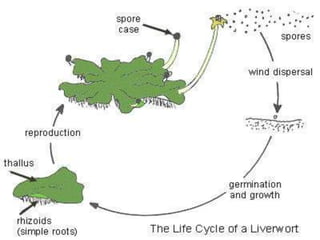
A liverwort is a flowerless, 
spore-producing plant - 
with the spores produced in 
small capsules
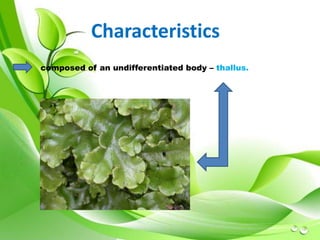
Characteristics 
composed of an undifferentiated body – thallus.
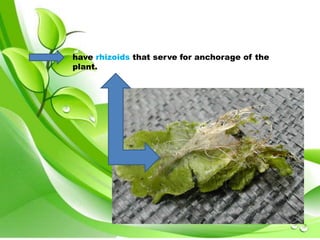
have rhizoids that serve for anchorage of the 
plant.
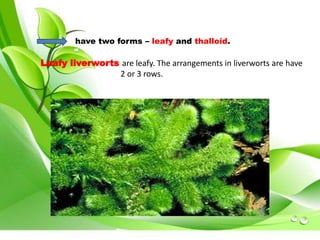
have two forms – leafy and thalloid. 
Leafy liverworts are leafy. The arrangements in liverworts are have 
2 or 3 rows.
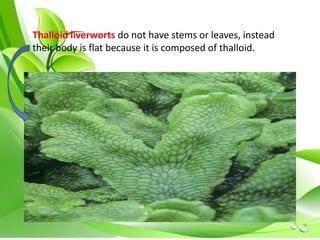
Thalloid liverworts do not have stems or leaves, instead 
their body is flat because it is composed of thalloid.
Mosses 
(Musci) 
Are small flowerless plants that are 
usually composed of simple, one-cell 
thick leaves, covering a 
thin stem that supports them but 
does not conduct water and 
nutrients .
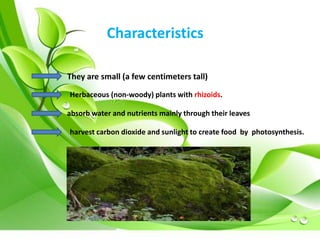
Characteristics 
They are small (a few centimeters tall) 
Herbaceous (non-woody) plants with rhizoids. 
absorb water and nutrients mainly through their leaves 
harvest carbon dioxide and sunlight to create food by photosynthesis.
Hornworts 
(Anthocerotopsida) 
Hornworts are small, short, 
nonflowering, nonvascular 
plants which live both on 
land and in water.
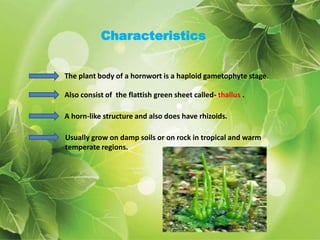
Characteristics 
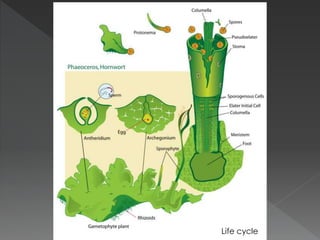
The plant body of a hornwort is a haploid gametophyte stage. 
Also consist of the flattish green sheet called- thallus . 
A horn-like structure and also does have rhizoids. 
Usually grow on damp soils or on rock in tropical and warm 
temperate regions.
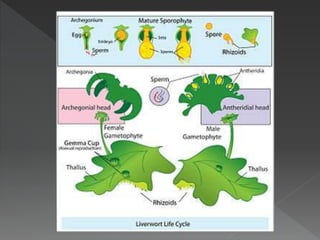
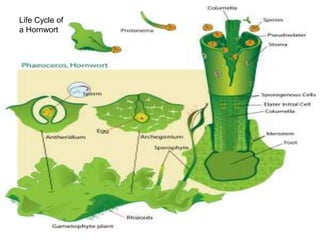
Life Cycle of 
a Hornwort
These Bryophytes are thought to 
be the first plants. 
They grow in shaded, moist 
places, like the rainforests. 
Mosses , Liverworts and 
Hornworts reproduce by means 
of sexual and asexual 
reproduction.

Kingdom Plantae

  • 1.
    Kingdom Plantae KingdomPlantae The Plants, Kingdom also called plantae green can plants be defined (Viridiplantae as multicellular, in latin), are autotrophic multicellular eukaryotes, eukaryotes of which the conduct kingdom Plantae. photosynthesis. They form a clade that includes the flowering plants, conifers and All member of this family comprises of true nucleus and other gymnosperms, ferns, clubmosses, hornworts, liverworts, mosses and advanced the green algae. membrane Plants exclude bound the organelles. red and brown They algae, are animals, quite different the fungi, archaea from and animals. bacteria. The Kingdom Plantae contains about 300,000 different species of plants. Among the five kingdoms, Kingdom plantae is a very important, as they are the source of food for all other living creatures present on planet earth, which depends on plants to survive.
  • 2.
    Characteristics of TheKingdom Plantae •Most of the plants are eukaryotic and chlorophyll containing organisms. •Cell walls of plant cells are comprised of cellulose. •They have an ability to grow by cell division. •In life cycle of plant cells, the interchanges occur from the embryos and are supported by other tissues and self produce. •Plants have both organs and organ systems. •They obtain their energy from sun through photosynthesis. •Plants reproduce both by sexual and asexual. •Plants develop a self defense mechanism to protect them from being destroyed by animals, fungi and other plants. •Organisms within Kingdom Plantae are multicellular, eukaryotic and autotrophic. •They lack motility.
  • 3.
    Examples of KingdomPlantae This kingdom includes all types plants like herbs, shrubs, trees, creepers, climbers,aquatic plants, desert plants, mountain plants,flowering and non flowering plants, etc
  • 4.
    Importance of Plants Food: Everything we eat comes directly or indirectly from plants. Throughout human history, approximately 7,000 different plant species have been used as food by people. Water: Plants regulate the water cycle: they help distribute and purify the planet's water. They also help move water from the soil to the atmosphere through a process called transpiration. Medicine: One-quarter of all prescription drugs come directly from or are derivatives of plants. Additionally, four out of five people around the world today rely on plants for primary health care. Air: Oxygen is brought to you by plants, as a byproduct of photosynthesis. Habitat: Of course, aside from humans' myriad uses, plants make up the backbone of all habitats. Other species of fish and wildlife also depend on plants for food and shelter. Climate: Plants store carbon, and have helped keep much of the carbon dioxide produced from the burning of fossil fuels out of the atmosphere.
  • 5.
    ALTERATION OF GENERATION Gametophyte Generation Reporter: Tanael, Danna Marie C.
  • 6.
    ALTERATION OF GENERATION Alternation of generations (also known as alternation of phases or metagenesis) is a term primarily used to describe the life cycle of plants.
  • 7.
    GAMETOPHYTE  Agametophyte is the haploid, multicellular phase of plants and algae that undergo alternation of generations, with each of its cells containing only a single set of chromosomes.
  • 8.
  • 9.
  • 12.
     Sporophyte ›The diploid multicellular stage in the life cycle of a plant or alga. • Diploid – (of a cell or nucleus) containing two complete sets of chromosomes, one from each parent.
  • 14.
     A sporophytedevelops from a zygote produced when a haploid egg cell is fertilized by a haploid sperm.  Haploid - (of a cell or nucleus) having a single set of unpaired chromosomes  Sporophyte cell has a double set of Chromosomes.
  • 15.
     Sporophyte producesspores by meiosis.  Spores - typically one-celled, reproductive unit capable of giving rise to a new individual without sexual fusion  Meiosis - a type of cell division that results in four daughter cells each with half the number of chromosomes of the parent cell.
  • 21.
  • 25.
  • 26.
    Monocots •Monocots areone of the two major types of flowering plants, and are characterized by having a single cotyledon, or seed leaf.
  • 27.
    What is acotyledon? Monocot Dicot
  • 28.
    CORN TULIPS ONION BANANA BLUEBELLS
  • 29.
    DICOTS Dicots areone of the two major types of flowering plants (the other being monocots), and are characterized by having two seed leaves, or cotyledons.
  • 30.
    MONGGO AVOCADO WATERLILY MAGNOLIA NUTMEG
  • 31.
  • 32.
  • 33.
  • 34.
  • 35.
    Major Characteristics: Bryophytes do not have true vascular tissues for support and transport of water and nutrients.  They lack leaves.  However, they have leaf-like scales that contains chloroplasts in which photosynthesis occurs.
  • 36.
     They lacktrue roots  They anchor themselves in the soil by root-like structures called rhizoids.
  • 37.
     Lack oftrue stems  Usually small and ground-hugging. Most measure between 2 to 4 inches.
  • 38.
  • 39.
    There are 3classes of bryophytes: 1. Class Musci (Mosses) 2. Class Hepaticae (Liverworts) 3. Class Anthocerotae (Hornworts)
  • 40.
    1. Class Musci(Mosses)  The body of the moss is usually leafy-like  Most prefer damp, shaded locations in the temperate zone.
  • 42.
     Mosses mayalso asexually reproduce by budding
  • 43.
    2. Class Hepaticae(Liverworts)  The name liverwort arose because the lobes of the thallus resemble the lobes of the liver
  • 44.
    Lobe of liver Conocephalum conicum (Great Scented Liverwort)
  • 45.
     Many havea flattened body called thallus, but some have a leafy appearance  Some liverworts are capable of asexual reproduction; in bryophytes in general "it would almost be true to say that vegetative reproduction is the rule and not the exception.“ For example in Riccia, when the older parts of the forked thalli die, the younger tips become separate individuals.
  • 47.
    3. Class Anthocerotae(Hornworts)  The sporophytes of hornworts look like small green broom hancles. Its shape os unique among bryophytes.
  • 48.
     Unlike bryophytesand higher plants most species of hornworts have cells that contain only single chloroplast
  • 49.
  • 50.
    Presented by : Janina May C. Salvador
  • 51.
    Phylogeny - Thestudy of the evolutionary relatedness between and among species.
  • 54.
    LIVERWORTS (Hepatopsidae) Aliverwort is a flowerless, spore-producing plant - with the spores produced in small capsules
  • 55.
    Characteristics composed ofan undifferentiated body – thallus.
  • 56.
    have rhizoids thatserve for anchorage of the plant.
  • 57.
    have two forms– leafy and thalloid. Leafy liverworts are leafy. The arrangements in liverworts are have 2 or 3 rows.
  • 58.
    Thalloid liverworts donot have stems or leaves, instead their body is flat because it is composed of thalloid.
  • 60.
    Mosses (Musci) Aresmall flowerless plants that are usually composed of simple, one-cell thick leaves, covering a thin stem that supports them but does not conduct water and nutrients .
  • 61.
    Characteristics They aresmall (a few centimeters tall) Herbaceous (non-woody) plants with rhizoids. absorb water and nutrients mainly through their leaves harvest carbon dioxide and sunlight to create food by photosynthesis.
  • 63.
    Hornworts (Anthocerotopsida) Hornwortsare small, short, nonflowering, nonvascular plants which live both on land and in water.
  • 64.
    Characteristics The plantbody of a hornwort is a haploid gametophyte stage. Also consist of the flattish green sheet called- thallus . A horn-like structure and also does have rhizoids. Usually grow on damp soils or on rock in tropical and warm temperate regions.
  • 65.
    Life Cycle of a Hornwort
  • 66.
    These Bryophytes arethought to be the first plants. They grow in shaded, moist places, like the rainforests. Mosses , Liverworts and Hornworts reproduce by means of sexual and asexual reproduction.