A tree, botanically, is defined as a woody plant
with numerous secondary branches supported
clearly off the ground on a main stem (called
trunk) and with conspicuous apical dominance.
Trees are immortal, some living almost up to
several thousand years; for example, the Great
Basin Bristlecone Pine is the oldest tree in the
world, and is 4844 years old! I'm sure it would
have an interesting tale to tell, if it could speak!
Most of the fruits we eat are borne on trees.
Trees
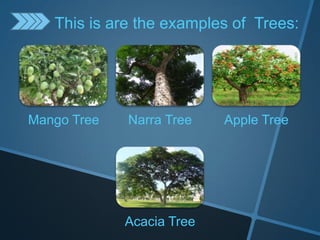
Mango Tree Narra Tree Apple Tree
Acacia Tree
This is are the examples of Trees:
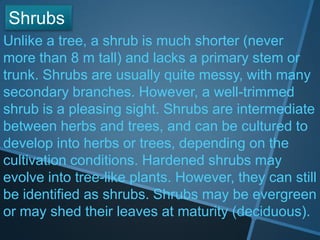
Unlike a tree, a shrub is much shorter (never
more than 8 m tall) and lacks a primary stem or
trunk. Shrubs are usually quite messy, with many
secondary branches. However, a well-trimmed
shrub is a pleasing sight. Shrubs are intermediate
between herbs and trees, and can be cultured to
develop into herbs or trees, depending on the
cultivation conditions. Hardened shrubs may
evolve into tree-like plants. However, they can still
be identified as shrubs. Shrubs may be evergreen
or may shed their leaves at maturity (deciduous).
Shrubs
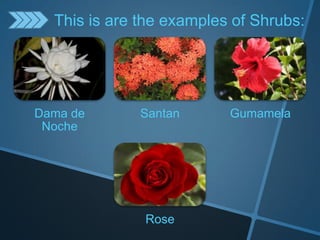
Dama de
Noche
Santan Gumamela
Rose
This is are the examples of Shrubs:
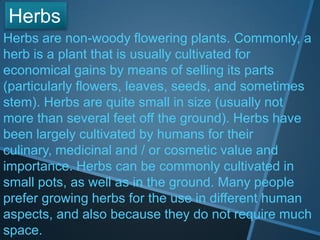
Herbs are non-woody flowering plants. Commonly, a
herb is a plant that is usually cultivated for
economical gains by means of selling its parts
(particularly flowers, leaves, seeds, and sometimes
stem). Herbs are quite small in size (usually not
more than several feet off the ground). Herbs have
been largely cultivated by humans for their
culinary, medicinal and / or cosmetic value and
importance. Herbs can be commonly cultivated in
small pots, as well as in the ground. Many people
prefer growing herbs for the use in different human
aspects, and also because they do not require much
space.
Herbs
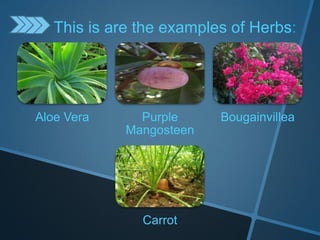
Aloe Vera Purple
Mangosteen
Bougainvillea
Carrot
This is are the examples of Herbs:
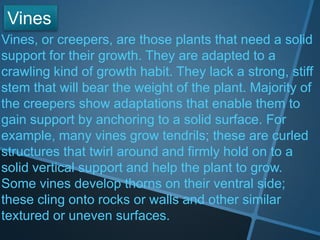
Vines, or creepers, are those plants that need a solid
support for their growth. They are adapted to a
crawling kind of growth habit. They lack a strong, stiff
stem that will bear the weight of the plant. Majority of
the creepers show adaptations that enable them to
gain support by anchoring to a solid surface. For
example, many vines grow tendrils; these are curled
structures that twirl around and firmly hold on to a
solid vertical support and help the plant to grow.
Some vines develop thorns on their ventral side;
these cling onto rocks or walls and other similar
textured or uneven surfaces.
Vines
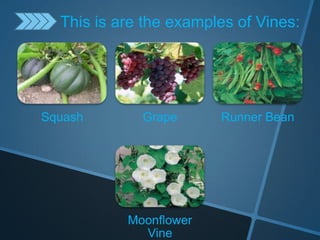
Squash Grape Runner Bean
Moonflower
Vine
This is are the examples of Vines:
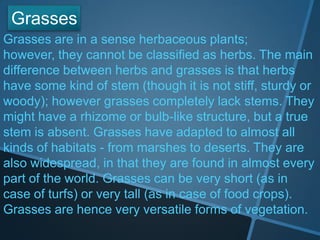
Grasses are in a sense herbaceous plants;
however, they cannot be classified as herbs. The main
difference between herbs and grasses is that herbs
have some kind of stem (though it is not stiff, sturdy or
woody); however grasses completely lack stems. They
might have a rhizome or bulb-like structure, but a true
stem is absent. Grasses have adapted to almost all
kinds of habitats - from marshes to deserts. They are
also widespread, in that they are found in almost every
part of the world. Grasses can be very short (as in
case of turfs) or very tall (as in case of food crops).
Grasses are hence very versatile forms of vegetation.
Grasses
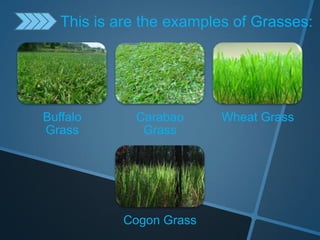
Buffalo
Grass
Carabao
Grass
Wheat Grass
Cogon Grass
This is are the examples of Grasses:
1.Desert Plants: These plants are adapted to
the arid and hostile environment of a desert.
These plants have the capability to store water.
They also have the ability to use water
efficiently. They usually have few or no
leaves, which greatly reduces transpiration.
Plant species like cacti and succulents, have
dense flesh which is capable of storing large
amounts of water. Several plants have
developed the typical spikes and spines to
prevent them from being eaten by animals.
Unusual Plants
2.Carnivorous Plants: Carnivorous plants
normally grow in marshlands, bogs and
areas of waterlogged, acidic and nitrogen
poor soil (as in case of Pitcher plant);
however, they may be found on grasslands
as well (as in case of Purple Pitcher plant).
carnivorous plants get their nitrogen intake
by eating insects. The insect traps of a
carnivorous plants use different attractants
to invite prey. Other examples of
carnivorous plants include Venus Flytrap
and Utricularia.
3.Epiphytes: They depend on other plants for
support growing on trunks and branches.
They are also dubbed 'air plants'. Mosses
and orchids are instances of epiphytic plants.
Though they are not parasitic, they can be
deleterious to their hosts. They have an
advantage over plants growing on the ground
as they have a relatively better access to
sunlight. They obtain nutrients from the air or
water around them. They use photosynthesis
for the process of nutrition.
4.Aquatic Plants: These plants grow in
presence of abundant water. Aquatic plants
have a lot of adaptations that enable the to
survive the persistent wet conditions that
they grow in. For example, the stems are
unusually supple and bend easily with the
flow of water, or the water current. The
leaves have a thick waxy coating to prevent
water from collecting. The plant is also quite
buoyant (especially floating plants). Example
of aquatic plants are hydra, water hyacinth
and water lily.
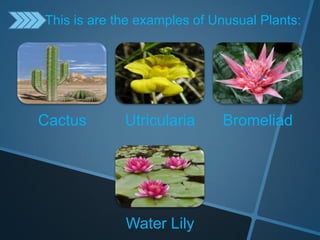
Cactus Utricularia Bromeliad
Water Lily
This is are the examples of Unusual Plants:
Classifying Plants According to Different Kinds

Classifying Plants According to Different Kinds

  • 2.
    A tree, botanically,is defined as a woody plant with numerous secondary branches supported clearly off the ground on a main stem (called trunk) and with conspicuous apical dominance. Trees are immortal, some living almost up to several thousand years; for example, the Great Basin Bristlecone Pine is the oldest tree in the world, and is 4844 years old! I'm sure it would have an interesting tale to tell, if it could speak! Most of the fruits we eat are borne on trees. Trees
  • 3.
    Mango Tree NarraTree Apple Tree Acacia Tree This is are the examples of Trees:
  • 4.
    Unlike a tree,a shrub is much shorter (never more than 8 m tall) and lacks a primary stem or trunk. Shrubs are usually quite messy, with many secondary branches. However, a well-trimmed shrub is a pleasing sight. Shrubs are intermediate between herbs and trees, and can be cultured to develop into herbs or trees, depending on the cultivation conditions. Hardened shrubs may evolve into tree-like plants. However, they can still be identified as shrubs. Shrubs may be evergreen or may shed their leaves at maturity (deciduous). Shrubs
  • 5.
    Dama de Noche Santan Gumamela Rose Thisis are the examples of Shrubs:
  • 6.
    Herbs are non-woodyflowering plants. Commonly, a herb is a plant that is usually cultivated for economical gains by means of selling its parts (particularly flowers, leaves, seeds, and sometimes stem). Herbs are quite small in size (usually not more than several feet off the ground). Herbs have been largely cultivated by humans for their culinary, medicinal and / or cosmetic value and importance. Herbs can be commonly cultivated in small pots, as well as in the ground. Many people prefer growing herbs for the use in different human aspects, and also because they do not require much space. Herbs
  • 7.
  • 8.
    Vines, or creepers,are those plants that need a solid support for their growth. They are adapted to a crawling kind of growth habit. They lack a strong, stiff stem that will bear the weight of the plant. Majority of the creepers show adaptations that enable them to gain support by anchoring to a solid surface. For example, many vines grow tendrils; these are curled structures that twirl around and firmly hold on to a solid vertical support and help the plant to grow. Some vines develop thorns on their ventral side; these cling onto rocks or walls and other similar textured or uneven surfaces. Vines
  • 9.
    Squash Grape RunnerBean Moonflower Vine This is are the examples of Vines:
  • 10.
    Grasses are ina sense herbaceous plants; however, they cannot be classified as herbs. The main difference between herbs and grasses is that herbs have some kind of stem (though it is not stiff, sturdy or woody); however grasses completely lack stems. They might have a rhizome or bulb-like structure, but a true stem is absent. Grasses have adapted to almost all kinds of habitats - from marshes to deserts. They are also widespread, in that they are found in almost every part of the world. Grasses can be very short (as in case of turfs) or very tall (as in case of food crops). Grasses are hence very versatile forms of vegetation. Grasses
  • 11.
  • 12.
    1.Desert Plants: Theseplants are adapted to the arid and hostile environment of a desert. These plants have the capability to store water. They also have the ability to use water efficiently. They usually have few or no leaves, which greatly reduces transpiration. Plant species like cacti and succulents, have dense flesh which is capable of storing large amounts of water. Several plants have developed the typical spikes and spines to prevent them from being eaten by animals. Unusual Plants
  • 13.
    2.Carnivorous Plants: Carnivorousplants normally grow in marshlands, bogs and areas of waterlogged, acidic and nitrogen poor soil (as in case of Pitcher plant); however, they may be found on grasslands as well (as in case of Purple Pitcher plant). carnivorous plants get their nitrogen intake by eating insects. The insect traps of a carnivorous plants use different attractants to invite prey. Other examples of carnivorous plants include Venus Flytrap and Utricularia.
  • 14.
    3.Epiphytes: They dependon other plants for support growing on trunks and branches. They are also dubbed 'air plants'. Mosses and orchids are instances of epiphytic plants. Though they are not parasitic, they can be deleterious to their hosts. They have an advantage over plants growing on the ground as they have a relatively better access to sunlight. They obtain nutrients from the air or water around them. They use photosynthesis for the process of nutrition.
  • 15.
    4.Aquatic Plants: Theseplants grow in presence of abundant water. Aquatic plants have a lot of adaptations that enable the to survive the persistent wet conditions that they grow in. For example, the stems are unusually supple and bend easily with the flow of water, or the water current. The leaves have a thick waxy coating to prevent water from collecting. The plant is also quite buoyant (especially floating plants). Example of aquatic plants are hydra, water hyacinth and water lily.
  • 16.
    Cactus Utricularia Bromeliad WaterLily This is are the examples of Unusual Plants: