Kidney – structure and function
Biological principles in action
Learning Outcomes
• 5.4.6 (a), (b) and (d).
• List main components of 3 body fluids
• Describe how to test for glucose, protein and
urea
• Describe how to find concentration of urea in a
solution
• Determine the urea concentration of a fluid
• Outline the roles of the kidney in excretion and
osmoregulation
Kidney – structure and function
• Where are they?
• What are they for?
Roles of the kidney
 Excretion
 homeostasis
 osmoregulation
 regulation of salts in the body
• regulation of pH
• production of a hormone (EPO)
Kidney dissection
Learning outcomes
• Describe the external features of the kidney
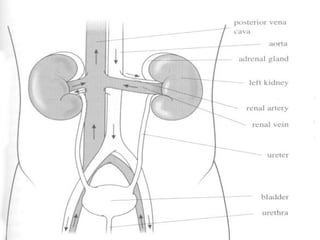
• Describe the position of the kidneys in the body
and relationships with blood supply and rest of
urinary system
• Draw and label LS kidney
• Recognise different parts of the kidney
• Make a drawing to scale
Kidney functions
 Ultrafiltration of blood
 selective reabsorption by
 active transport
 passive absorption
• secretion
Kidney - structure
Gross structure – what you can
see with the naked eye
Histology – what you can see
through the microscope
Kidney – gross structure
Position of kidneys in the body
External structure
Internal structure
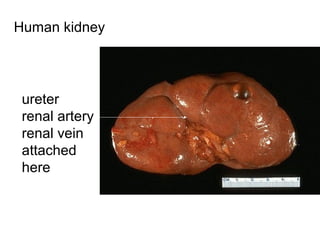
Human kidney
ureter
renal artery
renal vein
attached
here
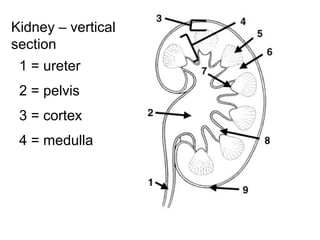
1 = ureter
2 = pelvis
3 = cortex
4 = medulla
Kidney – vertical
section
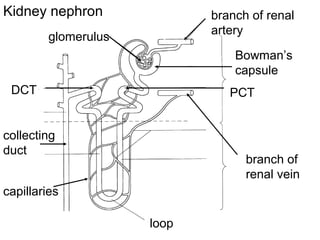
glomerulus
branch of renal
artery
Bowman’s
capsule
branch of
renal vein
loop
DCT PCT
collecting
duct
capillaries
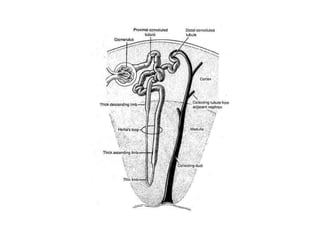
Kidney nephron
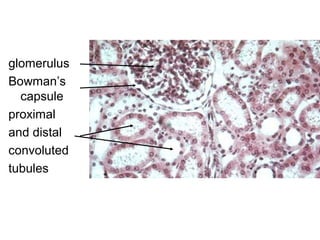
glomerulus
Bowman’s
capsule
proximal
and distal
convoluted
tubules
Kidney – cortex (LP)
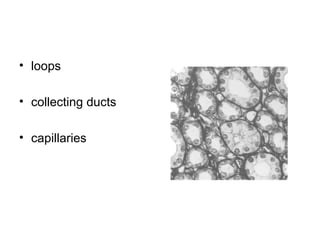
• loops
• collecting ducts
• capillaries
Kidney - medulla
Excretion and the kidneys
Learning outcomes
• State main excretory substances
• Describe production and transport of urea
• Explain why urea is produced
• Explain why [salts] are regulated
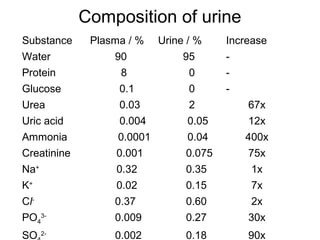
Composition of urine
Substance Plasma / % Urine / % Increase
Water 90 95 -
Protein 8 0 -
Glucose 0.1 0 -
Urea 0.03 2 67x
Uric acid 0.004 0.05 12x
Ammonia 0.0001 0.04 400x
Creatinine 0.001 0.075 75x
Na+
0.32 0.35 1x
K+
0.02 0.15 7x
Cl-
0.37 0.60 2x
PO4
3-
0.009 0.27 30x
SO 2-
0.002 0.18 90x
Sources
Where do these come from?
• Water
• Protein
• Glucose
• Urea
• Uric acid
• Creatinine
• Ammonia
Sources
• Water ingested drink and food / metabolic water
• Protein ingested food / tissue breakdown
• Glucose ingested food / glycogen / other compounds
• Urea deamination / urea cycle
• Uric acid metabolism of nucleotide bases
• Creatinine metabolism of creatine (creatine phosphate)
• Ammonia deamination
Urea formation
• Excess protein / excess amino acids
• Where from?
• Deamination
• Where?
• Urea formation
• Where?
• Transport and excretion
Deamination
• Oxidative deamination
• Aerobic!
• Liver (and other tissues)
• Amino acid (glutamic acid) + oxygen
• Keto acid + ammonia
• Coupled with reduction of NAD (co-enzyme)
• Ammonia!! Beware.
• Ammonia enters the urea cycle
• What happens to the keto acid?
Deamination
Deamination is part of protein metabolism
Catabolic reaction
Details are at:
http://www.elmhurst.edu/~chm/vchembook/632oxdeam.html
Urea/ornithine cycle
• Ammonia comes from
– deamination
– and from aspartic acid produced from
transamination
• Carbon dioxide comes from link reaction
and Krebs cycle
• Urea is excreted
• Requires ATP
Urea/ornithine cycle
• Linked to:
– deamination
– transamination
– Krebs cycle
– phosphorylation of ADP (because ATP is
required)
• Details are at:
http://www.elmhurst.edu/~chm/vchembook/633ureacycle.html
Protein metabolism
• Deamination and urea cycle are part of the
metabolism of proteins and amino acids in
the body.
More details of biochemistry (useful for
MPB) at:
http://www.elmhurst.edu/~chm/vchembook/index.html
The link is on my web site for you.
Functions of the nephron
Learning outcomes
• Explain how ultrafiltration occurs relating
structure to function
• Explain how selective reabsorption occurs
relating structure to function
• Explain how structure of medulla is related to
water potential gradients
• Explain how water is reabsorbed throughout the
nephron
Processes in the kidneys
Ultrafiltration
Selective reabsorption
• Secretion
• Osmoregulation
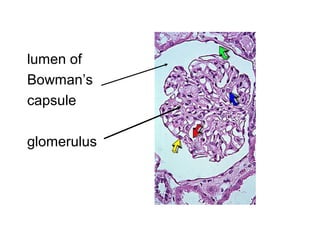
lumen of
Bowman’s
capsule
glomerulus
Selective reabsorption
• Proximal convoluted tubule
• Returning substances to the blood
• Active uptake
• Requires energy
• Co-transport
• Passive uptake
• Endocytosis
Movement across membranes
• Driven by ATP
• Driven by sodium pumps that create low
intracellular concentration of sodium ions
• Require specialised membrane proteins
• Occurs across two cell membranes – that have
different permeability/pumping properties
http://users.rcn.com/jkimball.ma.ultranet/BiologyPages/D/Diffusion.html#indirect
Kidney – structure and function

Kidney – structure and function

  • 1.
    Kidney – structureand function Biological principles in action
  • 2.
    Learning Outcomes • 5.4.6(a), (b) and (d). • List main components of 3 body fluids • Describe how to test for glucose, protein and urea • Describe how to find concentration of urea in a solution • Determine the urea concentration of a fluid • Outline the roles of the kidney in excretion and osmoregulation
  • 3.
    Kidney – structureand function • Where are they? • What are they for?
  • 4.
    Roles of thekidney  Excretion  homeostasis  osmoregulation  regulation of salts in the body • regulation of pH • production of a hormone (EPO)
  • 5.
    Kidney dissection Learning outcomes •Describe the external features of the kidney • Describe the position of the kidneys in the body and relationships with blood supply and rest of urinary system • Draw and label LS kidney • Recognise different parts of the kidney • Make a drawing to scale
  • 6.
    Kidney functions  Ultrafiltrationof blood  selective reabsorption by  active transport  passive absorption • secretion
  • 7.
    Kidney - structure Grossstructure – what you can see with the naked eye Histology – what you can see through the microscope
  • 8.
    Kidney – grossstructure Position of kidneys in the body External structure Internal structure
  • 10.
  • 11.
    1 = ureter 2= pelvis 3 = cortex 4 = medulla Kidney – vertical section
  • 12.
    glomerulus branch of renal artery Bowman’s capsule branchof renal vein loop DCT PCT collecting duct capillaries Kidney nephron
  • 13.
  • 14.
    • loops • collectingducts • capillaries Kidney - medulla
  • 15.
    Excretion and thekidneys Learning outcomes • State main excretory substances • Describe production and transport of urea • Explain why urea is produced • Explain why [salts] are regulated
  • 16.
    Composition of urine SubstancePlasma / % Urine / % Increase Water 90 95 - Protein 8 0 - Glucose 0.1 0 - Urea 0.03 2 67x Uric acid 0.004 0.05 12x Ammonia 0.0001 0.04 400x Creatinine 0.001 0.075 75x Na+ 0.32 0.35 1x K+ 0.02 0.15 7x Cl- 0.37 0.60 2x PO4 3- 0.009 0.27 30x SO 2- 0.002 0.18 90x
  • 17.
    Sources Where do thesecome from? • Water • Protein • Glucose • Urea • Uric acid • Creatinine • Ammonia
  • 18.
    Sources • Water ingesteddrink and food / metabolic water • Protein ingested food / tissue breakdown • Glucose ingested food / glycogen / other compounds • Urea deamination / urea cycle • Uric acid metabolism of nucleotide bases • Creatinine metabolism of creatine (creatine phosphate) • Ammonia deamination
  • 19.
    Urea formation • Excessprotein / excess amino acids • Where from? • Deamination • Where? • Urea formation • Where? • Transport and excretion
  • 20.
    Deamination • Oxidative deamination •Aerobic! • Liver (and other tissues) • Amino acid (glutamic acid) + oxygen • Keto acid + ammonia • Coupled with reduction of NAD (co-enzyme) • Ammonia!! Beware. • Ammonia enters the urea cycle • What happens to the keto acid?
  • 21.
    Deamination Deamination is partof protein metabolism Catabolic reaction Details are at: http://www.elmhurst.edu/~chm/vchembook/632oxdeam.html
  • 22.
    Urea/ornithine cycle • Ammoniacomes from – deamination – and from aspartic acid produced from transamination • Carbon dioxide comes from link reaction and Krebs cycle • Urea is excreted • Requires ATP
  • 23.
    Urea/ornithine cycle • Linkedto: – deamination – transamination – Krebs cycle – phosphorylation of ADP (because ATP is required) • Details are at: http://www.elmhurst.edu/~chm/vchembook/633ureacycle.html
  • 24.
    Protein metabolism • Deaminationand urea cycle are part of the metabolism of proteins and amino acids in the body. More details of biochemistry (useful for MPB) at: http://www.elmhurst.edu/~chm/vchembook/index.html The link is on my web site for you.
  • 25.
    Functions of thenephron Learning outcomes • Explain how ultrafiltration occurs relating structure to function • Explain how selective reabsorption occurs relating structure to function • Explain how structure of medulla is related to water potential gradients • Explain how water is reabsorbed throughout the nephron
  • 26.
    Processes in thekidneys Ultrafiltration Selective reabsorption • Secretion • Osmoregulation
  • 27.
  • 28.
    Selective reabsorption • Proximalconvoluted tubule • Returning substances to the blood • Active uptake • Requires energy • Co-transport • Passive uptake • Endocytosis
  • 29.
    Movement across membranes •Driven by ATP • Driven by sodium pumps that create low intracellular concentration of sodium ions • Require specialised membrane proteins • Occurs across two cell membranes – that have different permeability/pumping properties http://users.rcn.com/jkimball.ma.ultranet/BiologyPages/D/Diffusion.html#indirect