 How often do I need to save my work?
 How do I make time to work
technology into the curriculum?
 Why do I need to understand the
computer?
 What if I break the computer?
 How can I learn this application well
enough to help my students?
 Where did my file go?
Special Training
- it is vital to ensuring the
effective integration of
classroom technology.
Barrier to effective training/Issues
about Teacher Training:
1. Clashed between the traditional
methods of teaching and the current
school curriculum.
Skills that can be attained through the
incorporation and engagement of
technology:
students asked to work on teams
drawing on different sets of expertise
collaborating to solve problems
“ Technology is not the end goal of
education, but rather a means by
which it can be accomplished”.
2. Evolving nature of technology
- teachers may find themselves
acting as perpetual novices when
it comes to learning about
technology.
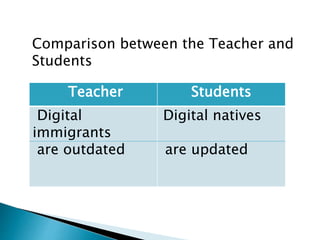
Comparison between the Teacher and
Students
Teacher Students
Digital
immigrants
are outdated
Digital natives
are updated
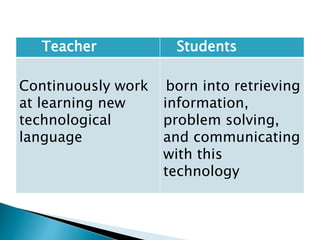
Teacher Students
Continuously work
at learning new
technological
language
born into retrieving
information,
problem solving,
and communicating
with this
technology
1. Your primary goal is to use
technology to supplement learning-
rather than teaching technology in
isolation.
2. Technology needs to become a tool
for learning, not another subject to
teach.
3. We currently preparing students for
jobs that don’t yet exist…using
technologies that haven’t been
invented…in order to solve problems
we don’t even know are problems
yet’’.
Learning- becomes and on- going
process, which takes time
and a strong commitment
among the community of
educators.
3. Generational Divide
- it is interpreted by Herrington
that people on one side of the gap,
including the youth, have more access
and a greater ability to use new
technologies than those on the other
side like adults who were born before
the advent of the INTERNET.
- might lead to generational bias,
because teachers do not feel the need
to change traditional education
system because it has been successful
in the past.
“ students often feel locked out of the
worlds described in their textbooks
through the depersonalized and
abstract prose used to describe them”.

Teacher training

  • 2.
     How oftendo I need to save my work?  How do I make time to work technology into the curriculum?  Why do I need to understand the computer?
  • 3.
     What ifI break the computer?  How can I learn this application well enough to help my students?  Where did my file go?
  • 4.
    Special Training - itis vital to ensuring the effective integration of classroom technology.
  • 5.
    Barrier to effectivetraining/Issues about Teacher Training: 1. Clashed between the traditional methods of teaching and the current school curriculum.
  • 6.
    Skills that canbe attained through the incorporation and engagement of technology: students asked to work on teams drawing on different sets of expertise collaborating to solve problems
  • 7.
    “ Technology isnot the end goal of education, but rather a means by which it can be accomplished”.
  • 8.
    2. Evolving natureof technology - teachers may find themselves acting as perpetual novices when it comes to learning about technology.
  • 9.
    Comparison between theTeacher and Students Teacher Students Digital immigrants are outdated Digital natives are updated
  • 10.
    Teacher Students Continuously work atlearning new technological language born into retrieving information, problem solving, and communicating with this technology
  • 11.
    1. Your primarygoal is to use technology to supplement learning- rather than teaching technology in isolation.
  • 12.
    2. Technology needsto become a tool for learning, not another subject to teach.
  • 13.
    3. We currentlypreparing students for jobs that don’t yet exist…using technologies that haven’t been invented…in order to solve problems we don’t even know are problems yet’’.
  • 14.
    Learning- becomes andon- going process, which takes time and a strong commitment among the community of educators.
  • 15.
    3. Generational Divide -it is interpreted by Herrington that people on one side of the gap, including the youth, have more access and a greater ability to use new technologies than those on the other side like adults who were born before the advent of the INTERNET.
  • 16.
    - might leadto generational bias, because teachers do not feel the need to change traditional education system because it has been successful in the past.
  • 17.
    “ students oftenfeel locked out of the worlds described in their textbooks through the depersonalized and abstract prose used to describe them”.