Introduction to
Organizational Behavior
Dr. Kiran Kakade
Assistant Professor (HR) ,TIMSR
Mumbai
About Me
• Ph.D. in Management Science
• Post graduation in MBA (HR) and MCA (Mgmt.) from University of
Pune.
• Diploma in Yoga & Meditation (D.Y.T) from YCMOU, Nashik.
• Academic Experience : 5 Years
• Industrial Experience : 7 Years
• Competencies: ERP Consultation, Training & Development,
Administration, Team Management, Yoga Instructor
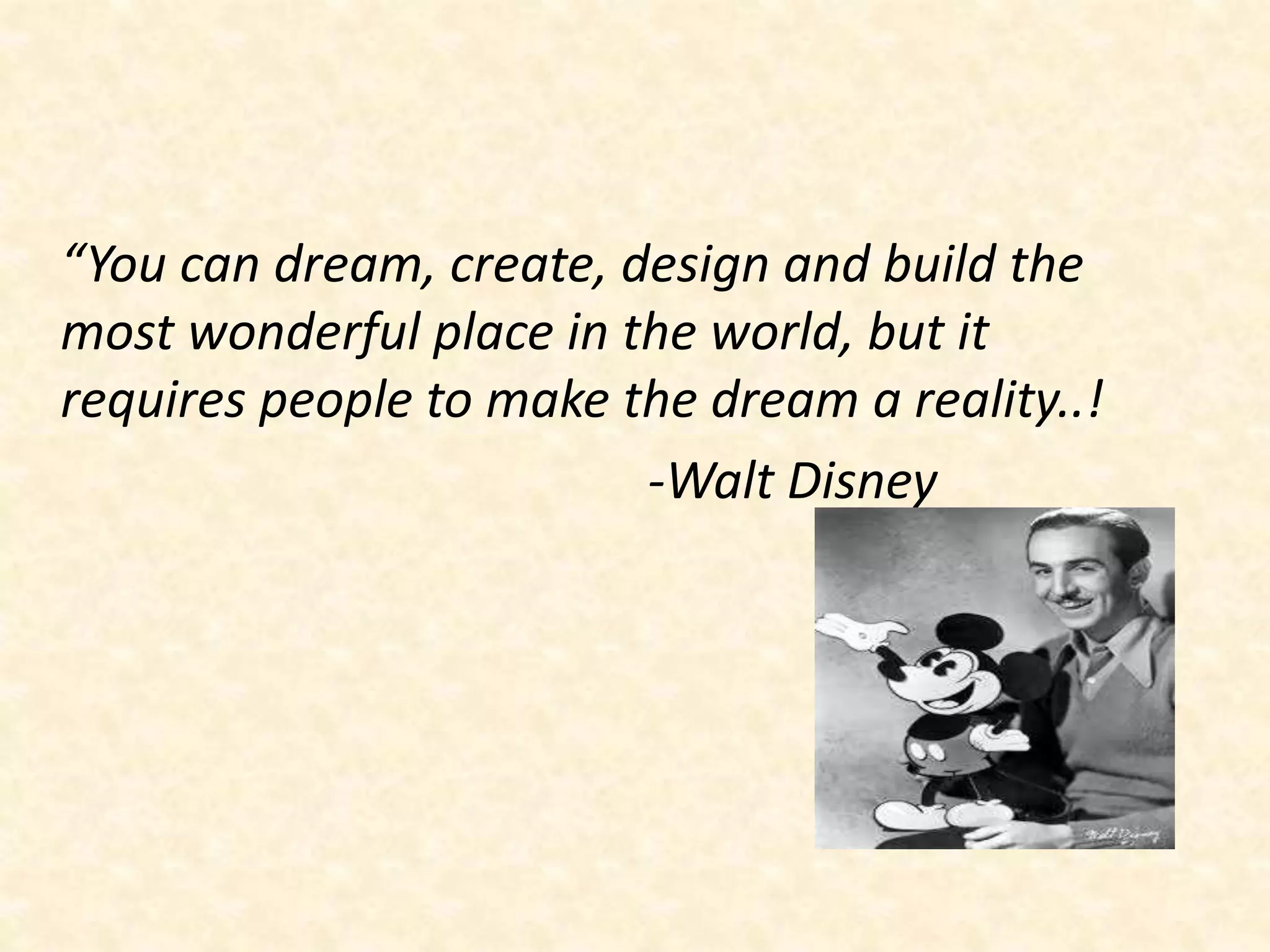
“You can dream, create, design and build the
most wonderful place in the world, but it
requires people to make the dream a reality..!
-Walt Disney
Organization Behavior
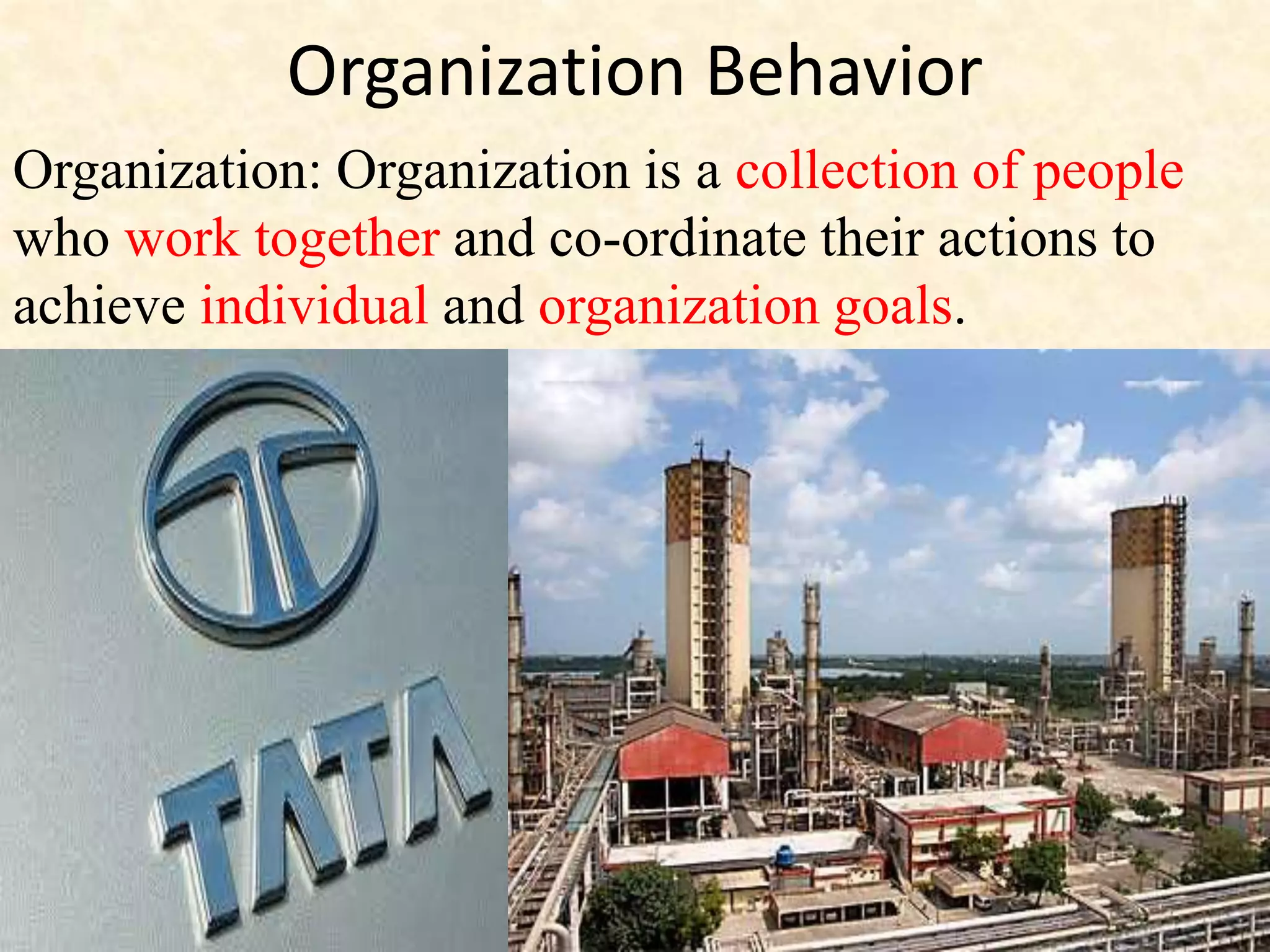
Organization: Organization is a collection of people
who work together and co-ordinate their actions to
achieve individual and organization goals.
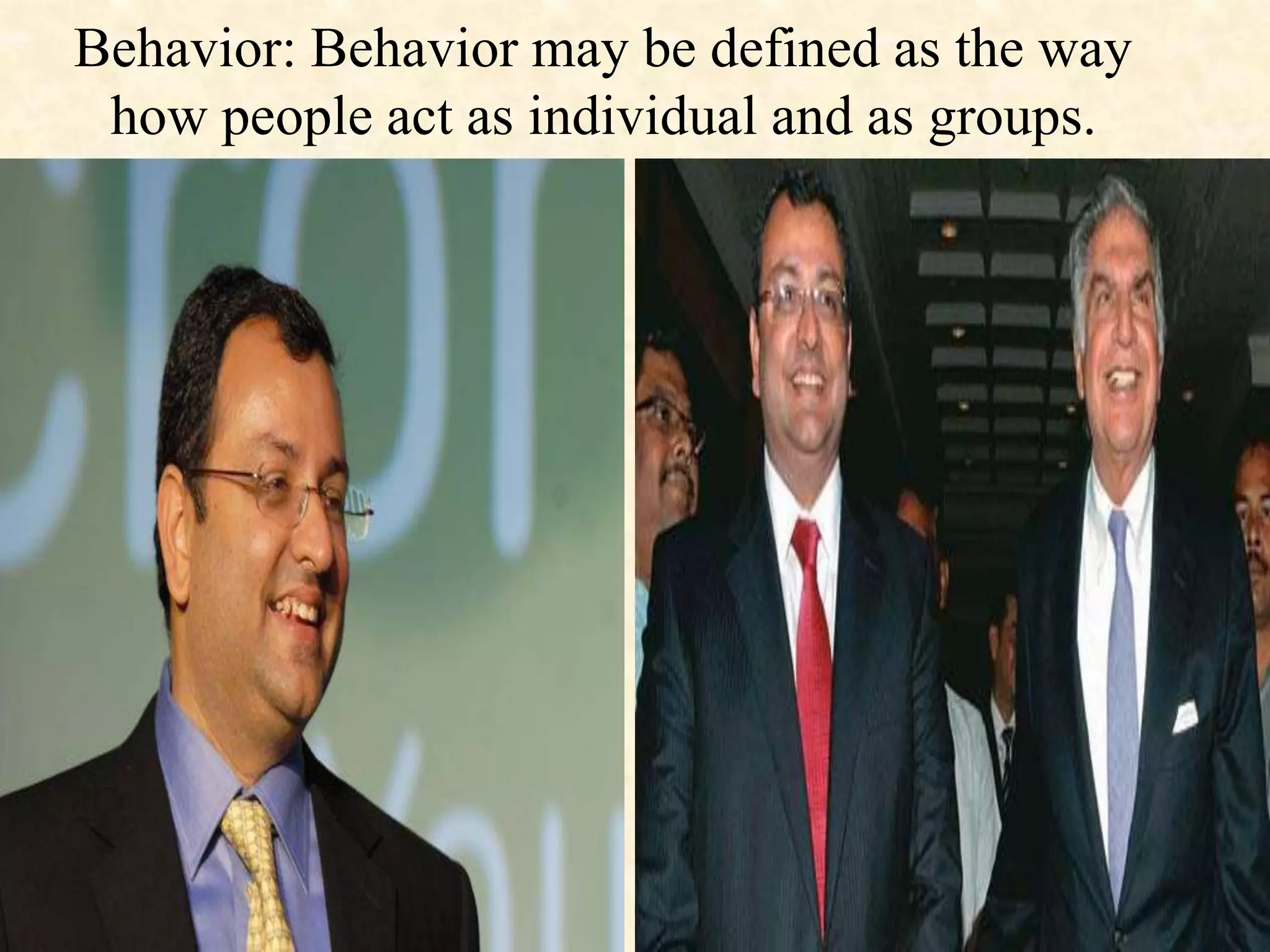
Behavior: Behavior may be defined as the way
how people act as individual and as groups.
Organization Behavior
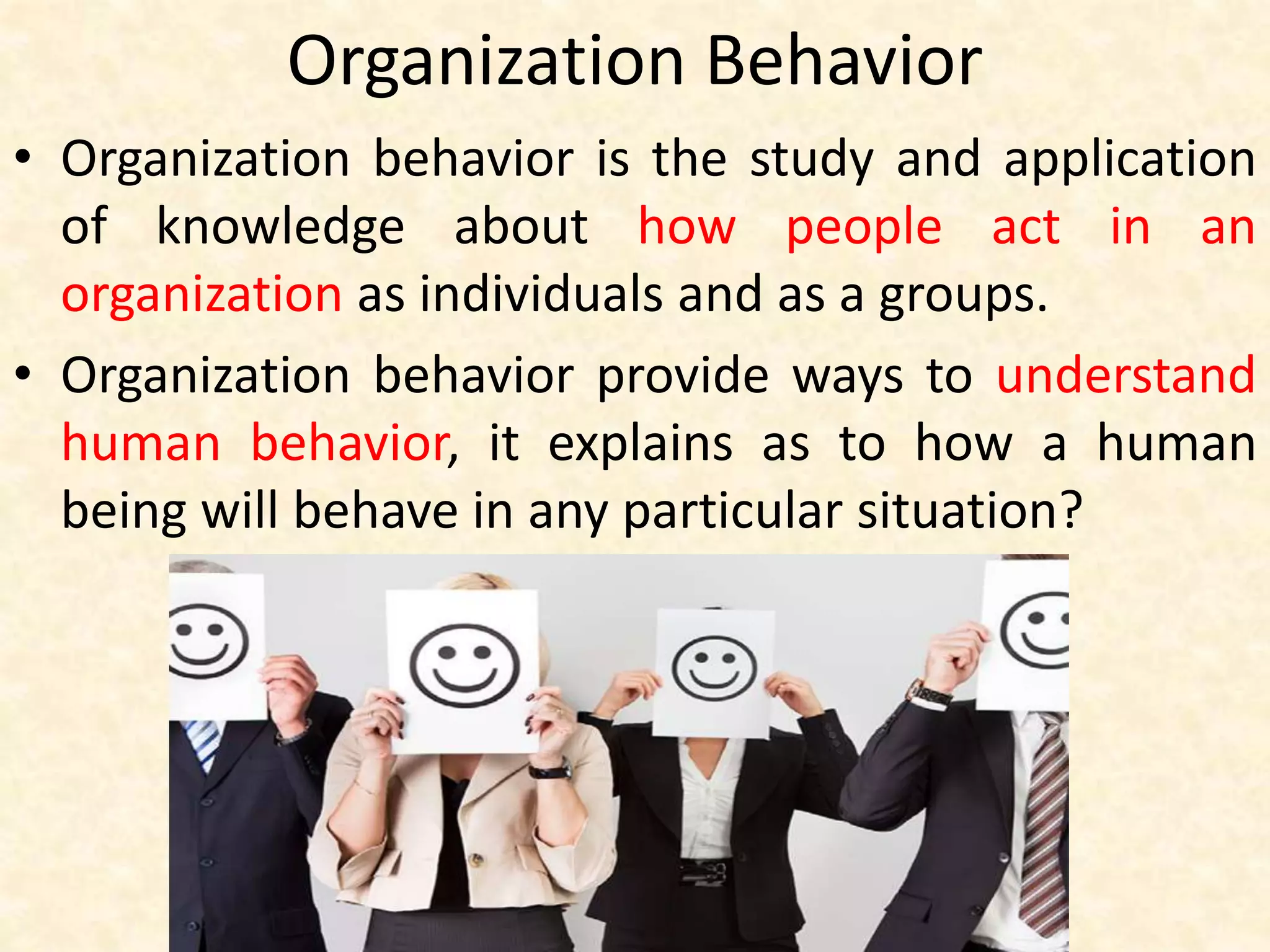
• Organization behavior is the study and application
of knowledge about how people act in an
organization as individuals and as a groups.
• Organization behavior provide ways to understand
human behavior, it explains as to how a human
being will behave in any particular situation?
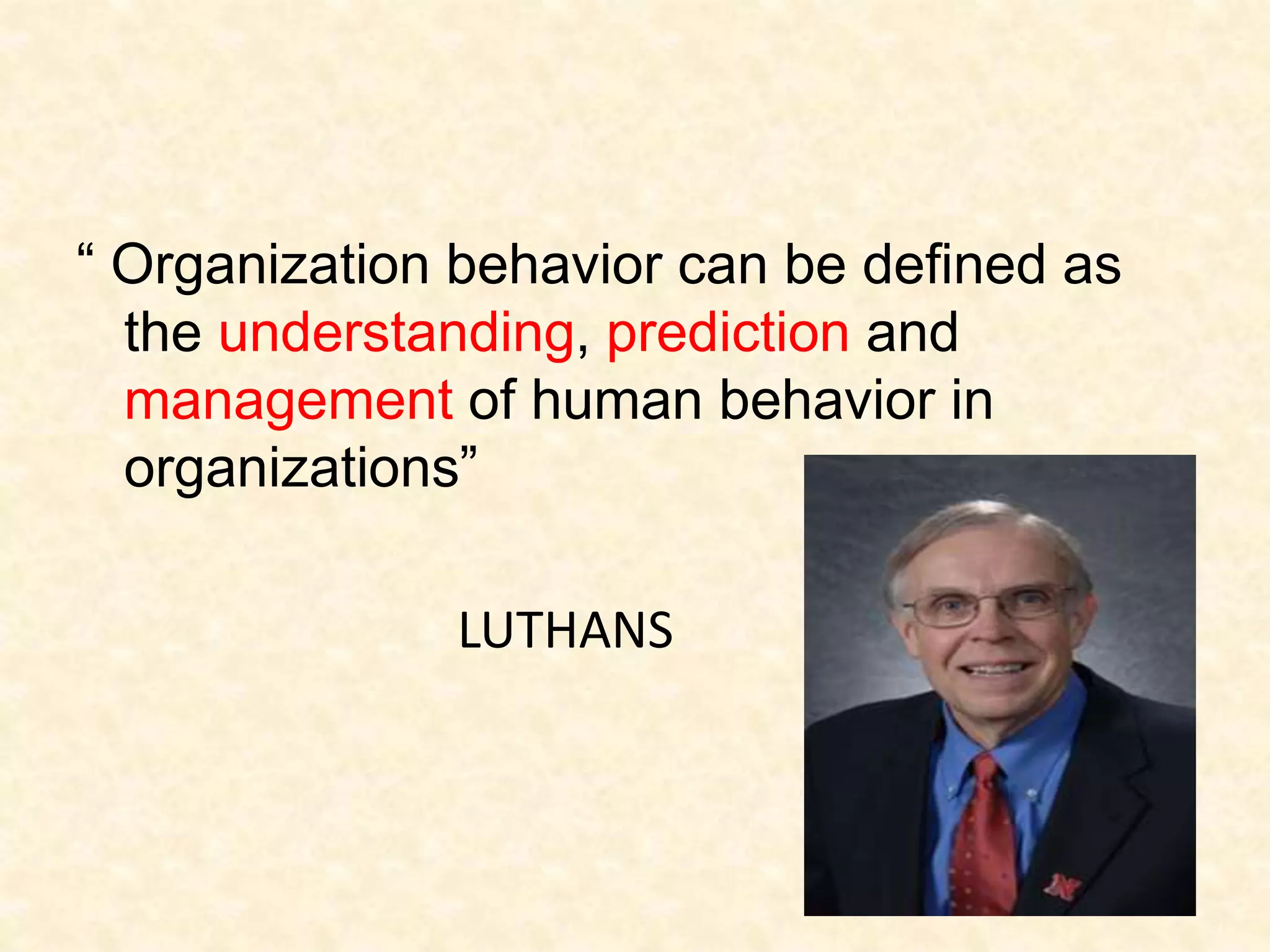
“ Organization behavior can be defined as
the understanding, prediction and
management of human behavior in
organizations”
LUTHANS
OB is .....
• What people do in an organization
• How their behavior effects the overall
performance of the organization.
• Behavior related to concerns: such as
absenteeism, turnover, productivity etc.
• Includes the core of all work determinants
(motivation, leadership, power, politics, conflict
etc..).
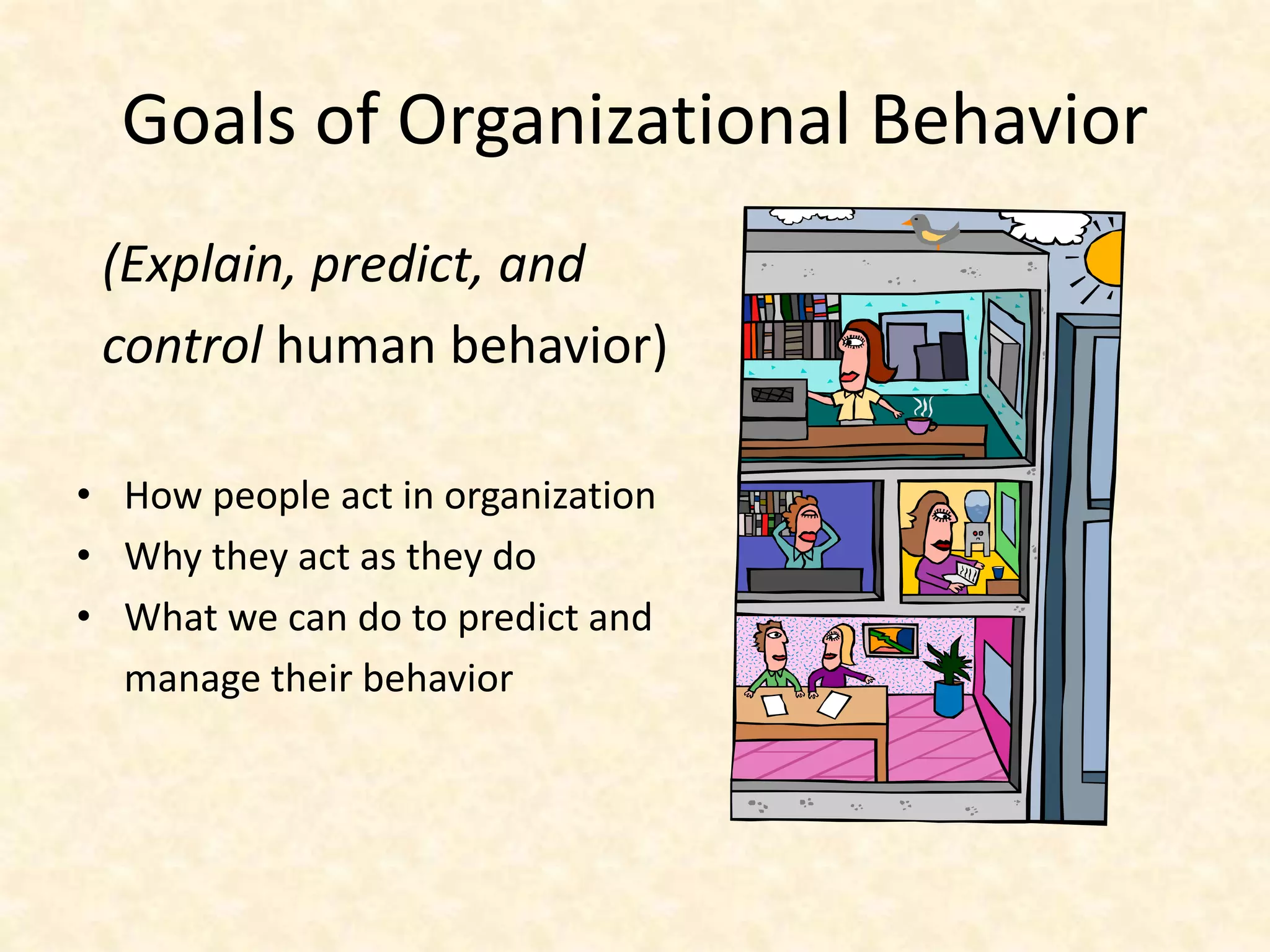
Goals of Organizational Behavior
(Explain, predict, and
control human behavior)
• How people act in organization
• Why they act as they do
• What we can do to predict and
manage their behavior
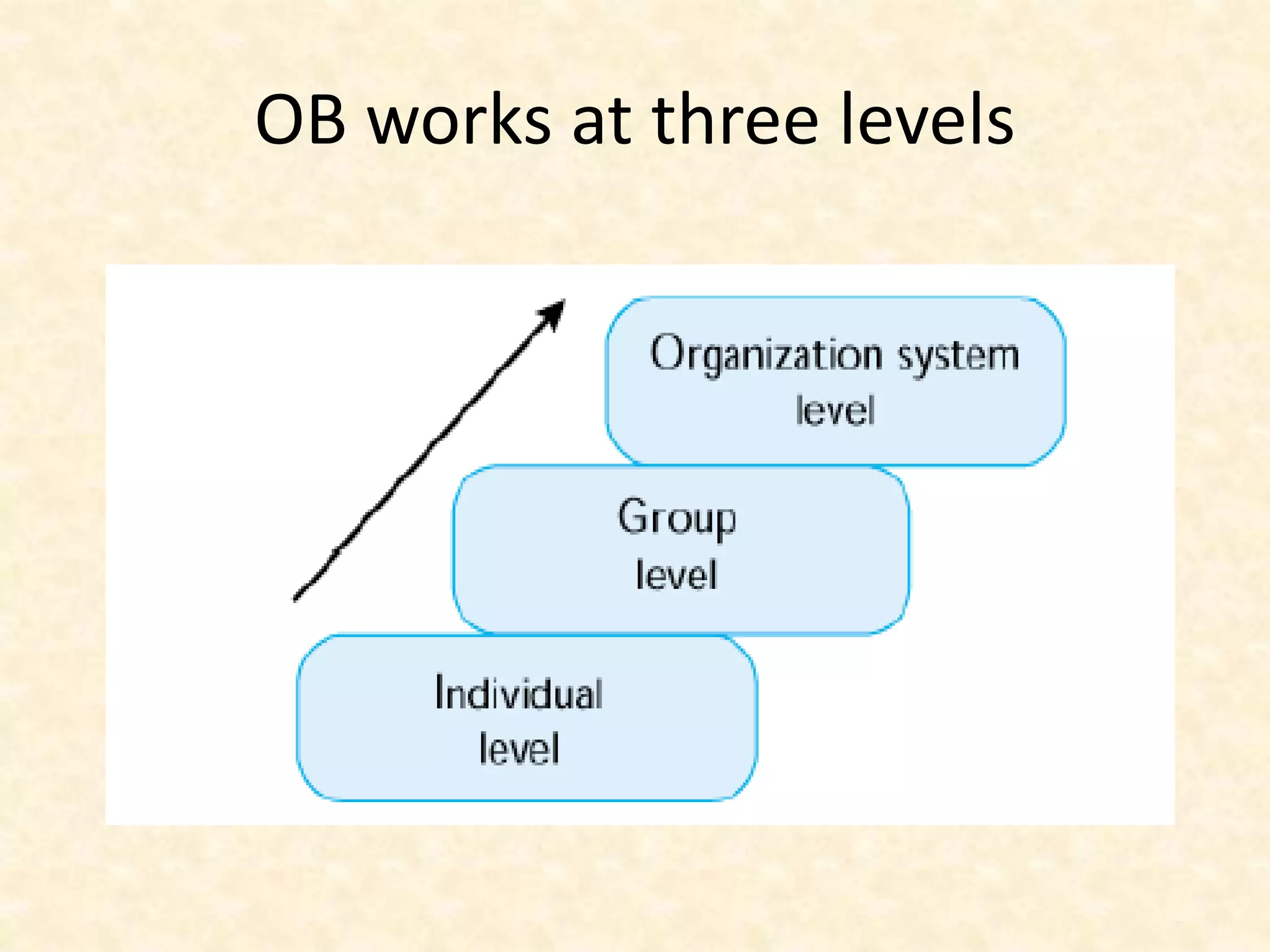
OB works at three levels
What is OB about?
• 3-D : individual, group & organizational
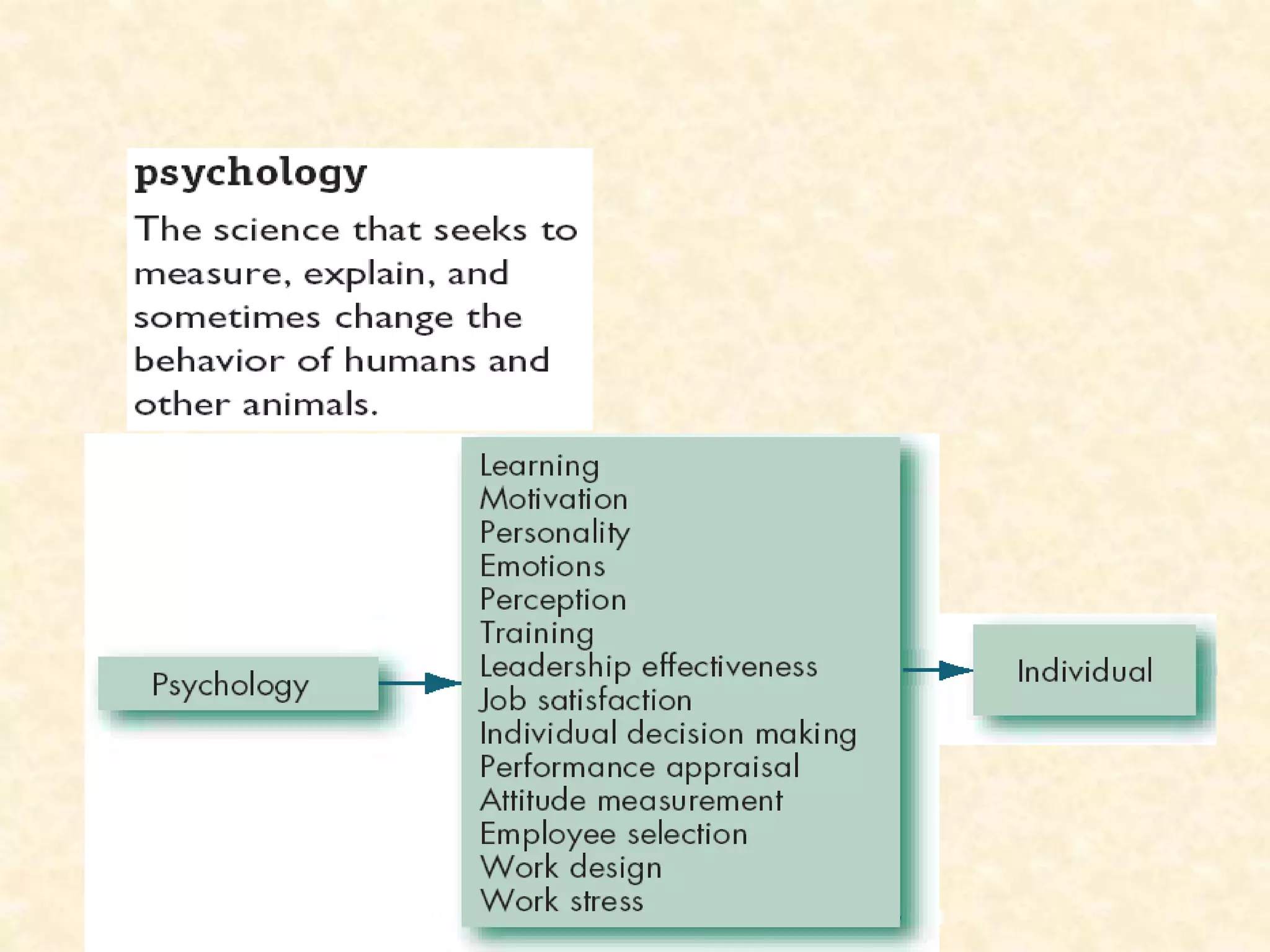
• At the individual level: learning, perception,
stress, personality, individual differences etc
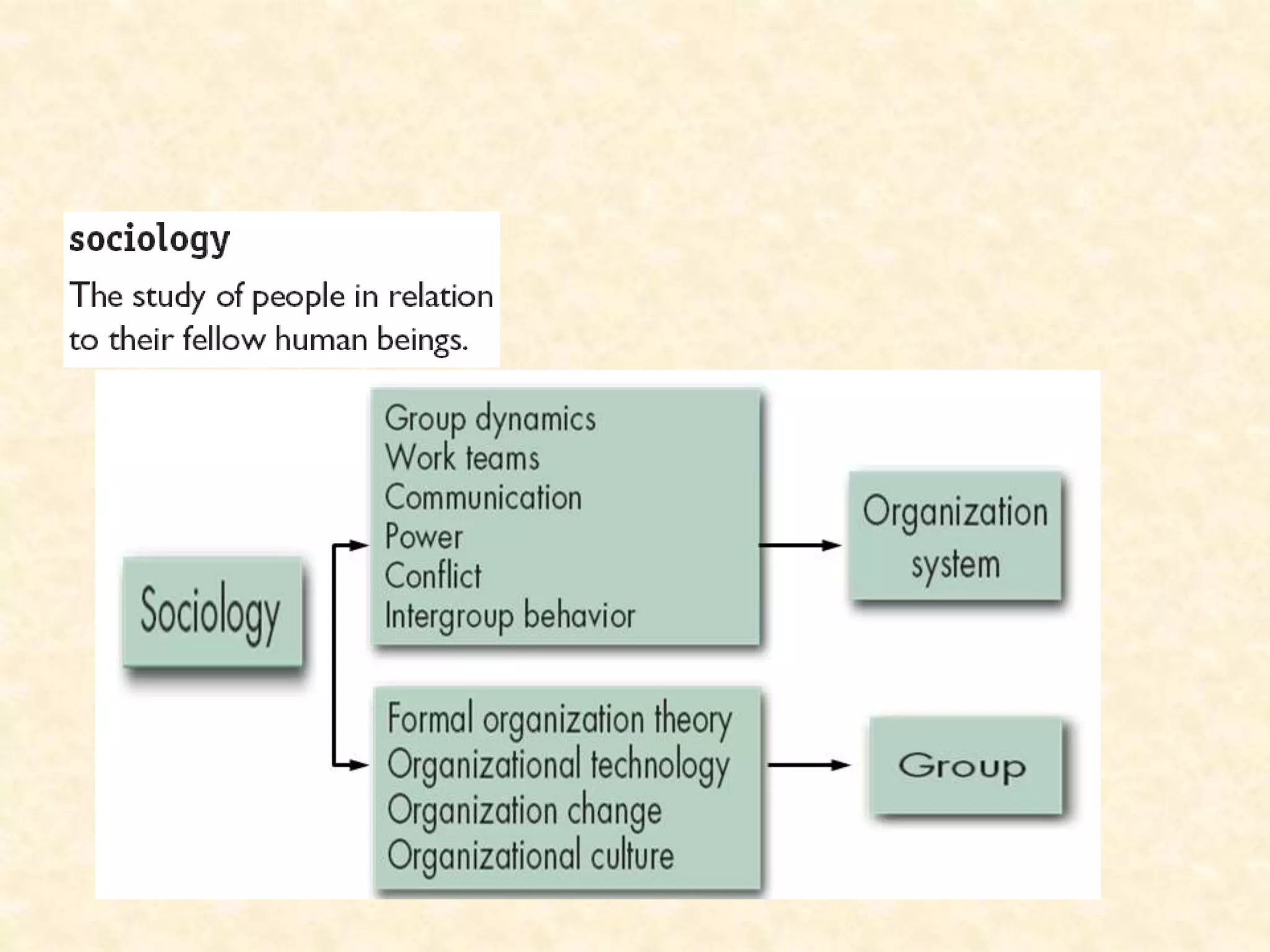
• At the group level: teamwork, power &
politics, interpersonal, decision making etc
• Organizational culture, change, structure &
design at organizational level
Historical Background
• The famous “Hawthorne Studies” (1924-30s)
• Undertaken at Western Electric Company, Illinois;
to study the effect of various illumination levels
on worker productivity.
• Findings were: illumination intensity was not
directly related to group productivity. Though
they couldn’t explain the behavior that they had
witnessed! Something more to the productivity
than mere physical variables!!
• Professor Elton Mayo started a series of
studies & numerous experiments covering
redesign of jobs, changes in the length of work
day, time, introduction of rest periods and
individual vs group pay plans.
• Hawthorne studies set the direction OB and
management practices!!
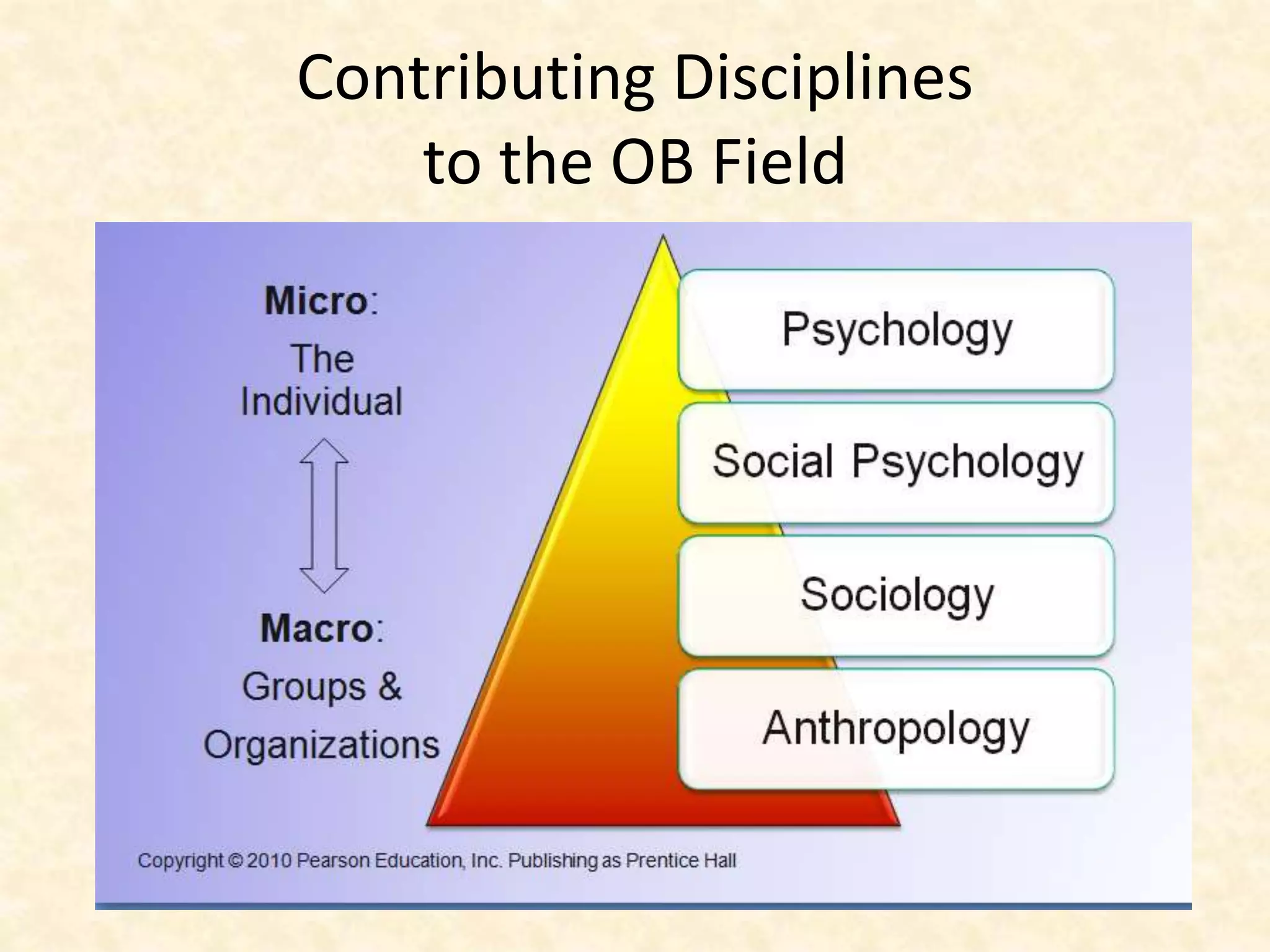
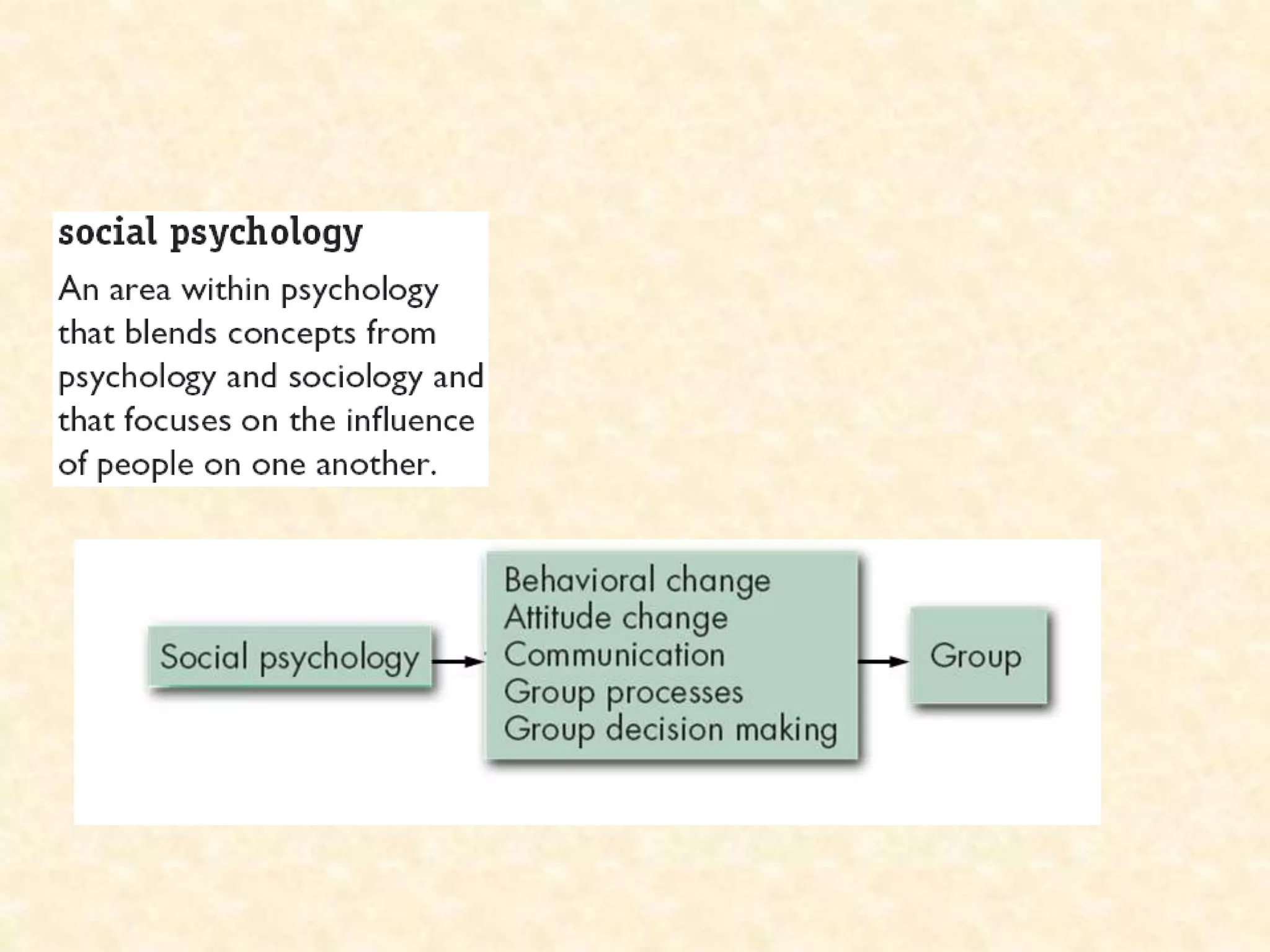
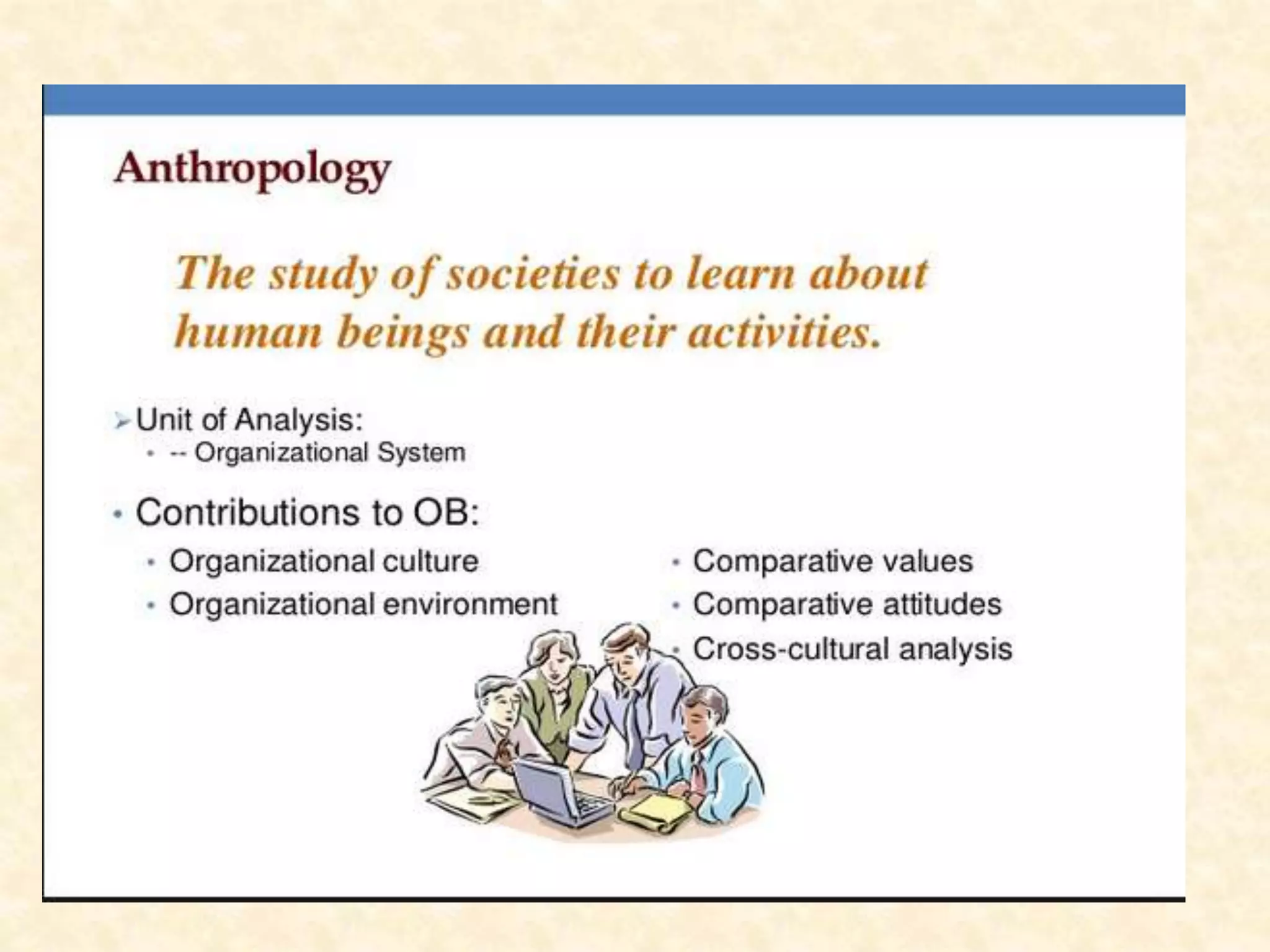
Contributing Disciplines
to the OB Field
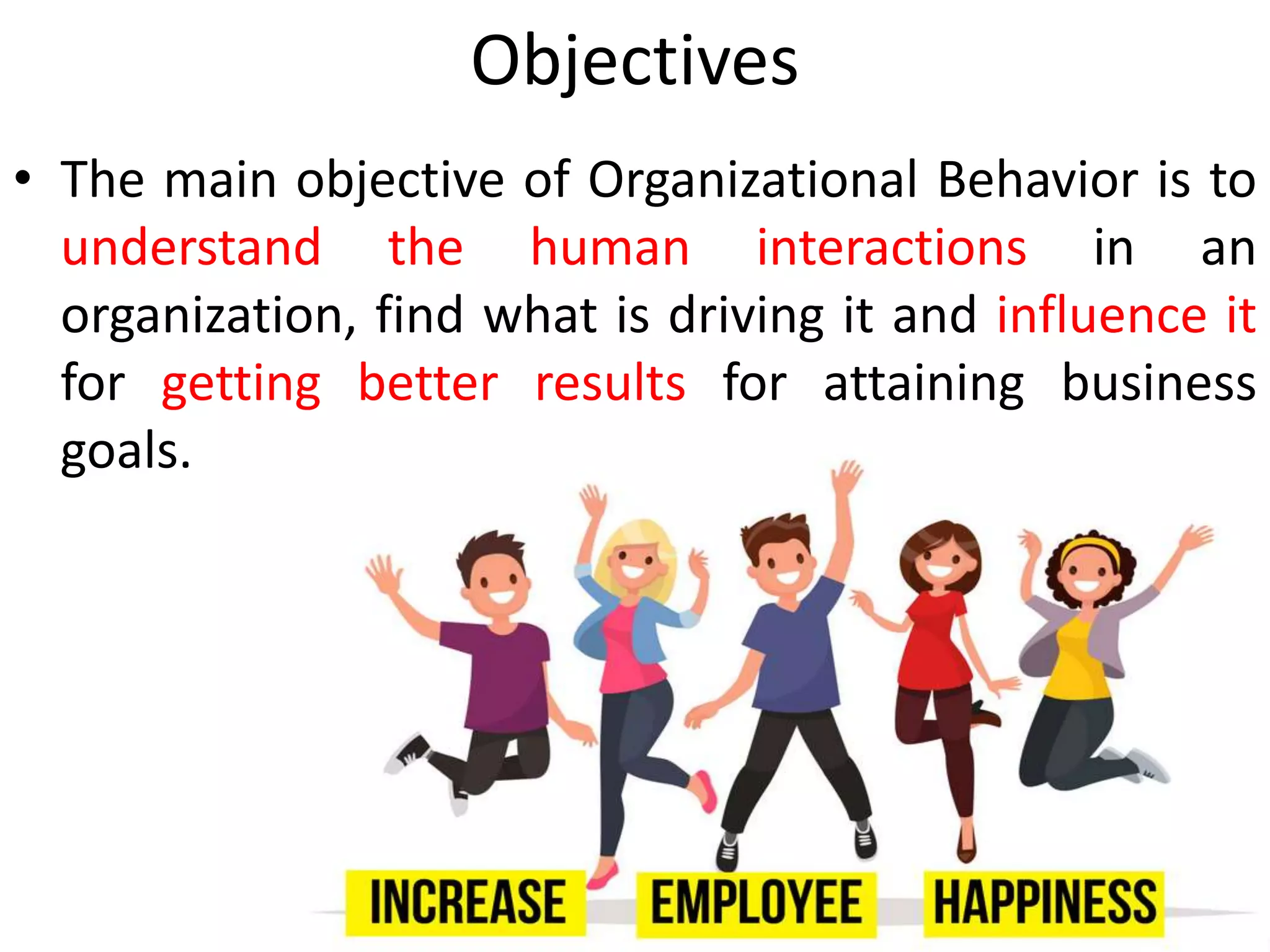
Objectives
• The main objective of Organizational Behavior is to
understand the human interactions in an
organization, find what is driving it and influence it
for getting better results for attaining business
goals.
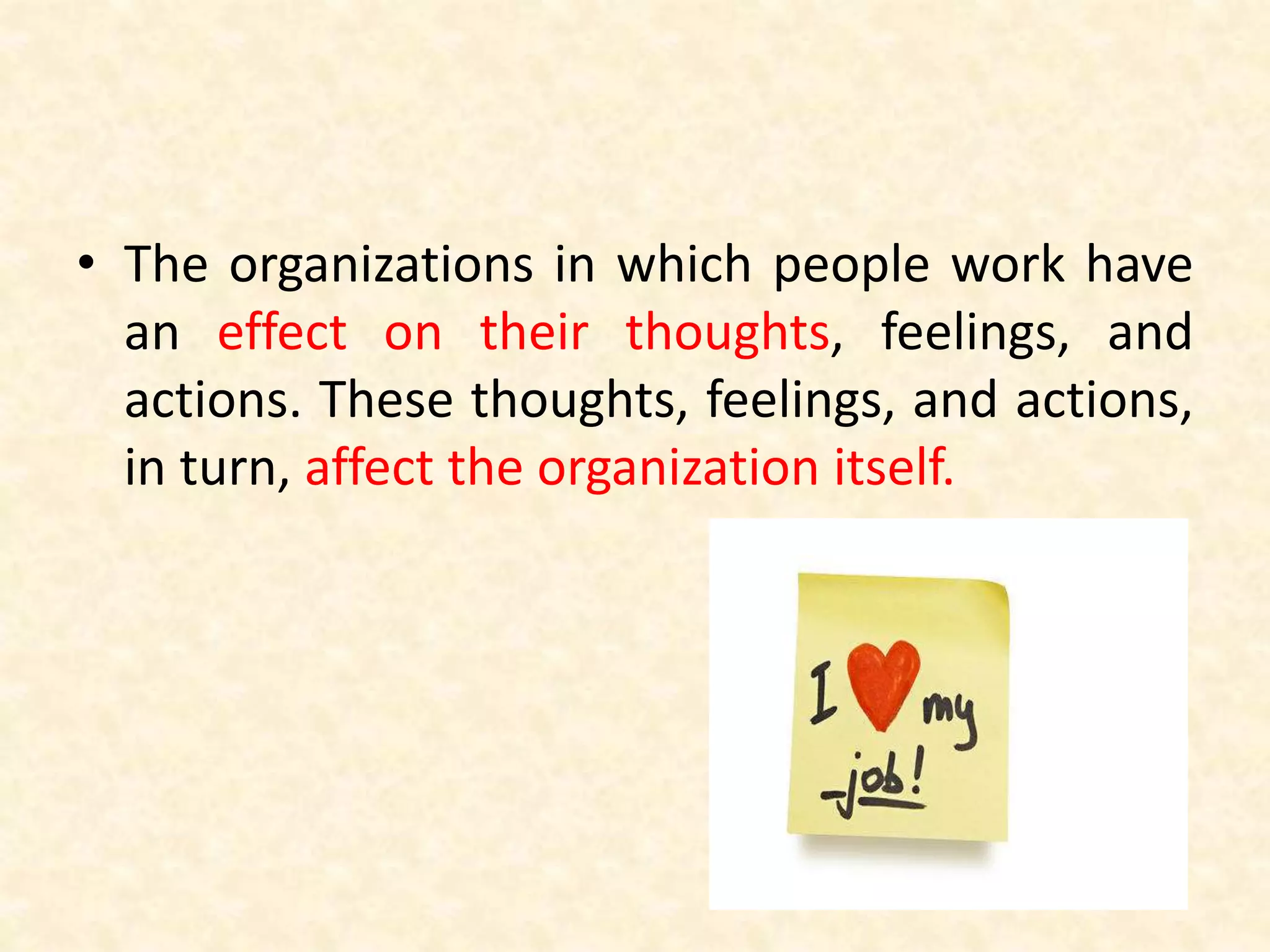
• The organizations in which people work have
an effect on their thoughts, feelings, and
actions. These thoughts, feelings, and actions,
in turn, affect the organization itself.
MAJOR OBJECTIVES
Know the level of Job Satisfaction.
Organizational rewards and punishments.
Job satisfaction, in turn, can foster higher
productivity and reduced turnover
WHO ARE MANAGERS ?
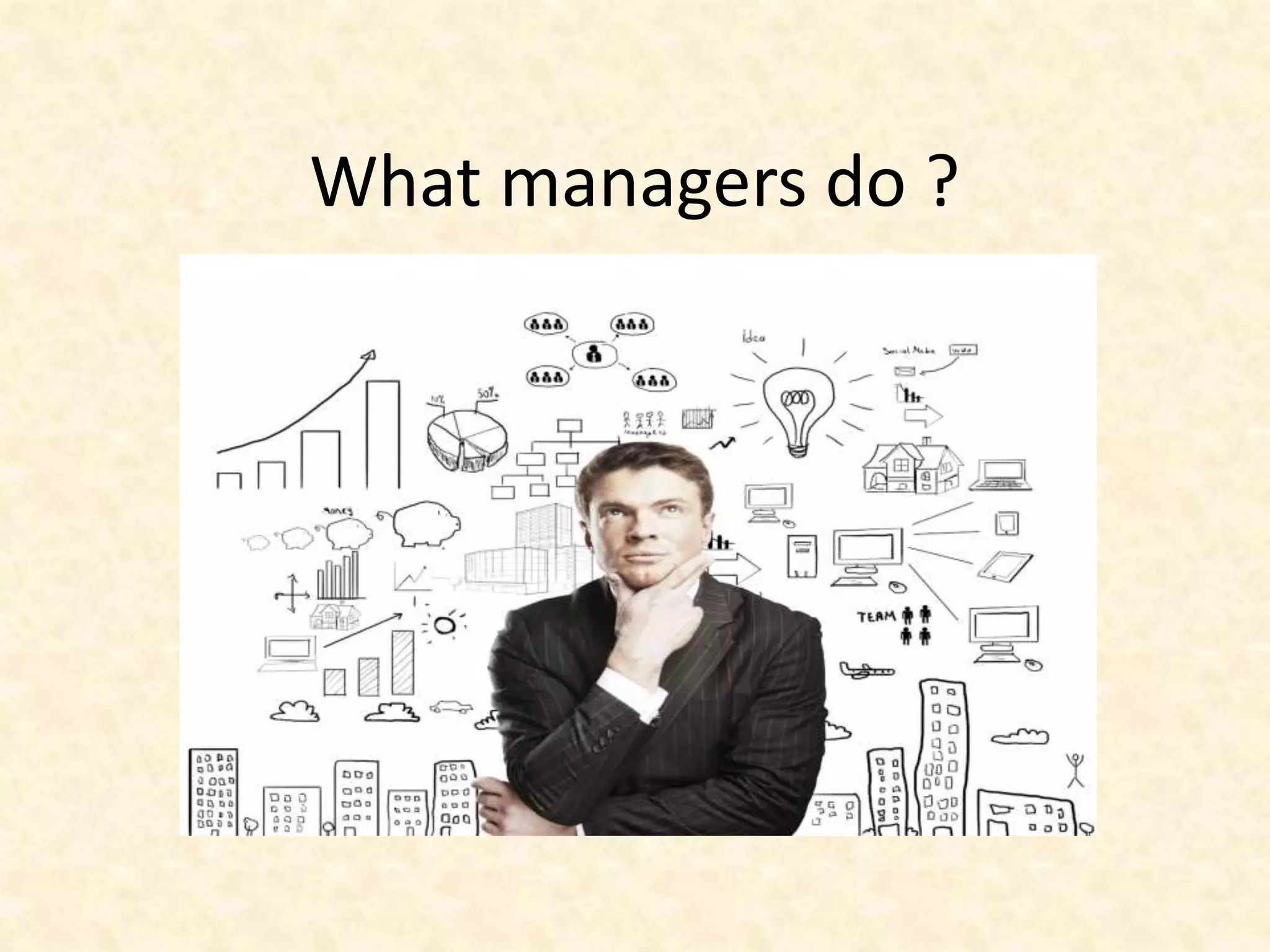
What managers do ?
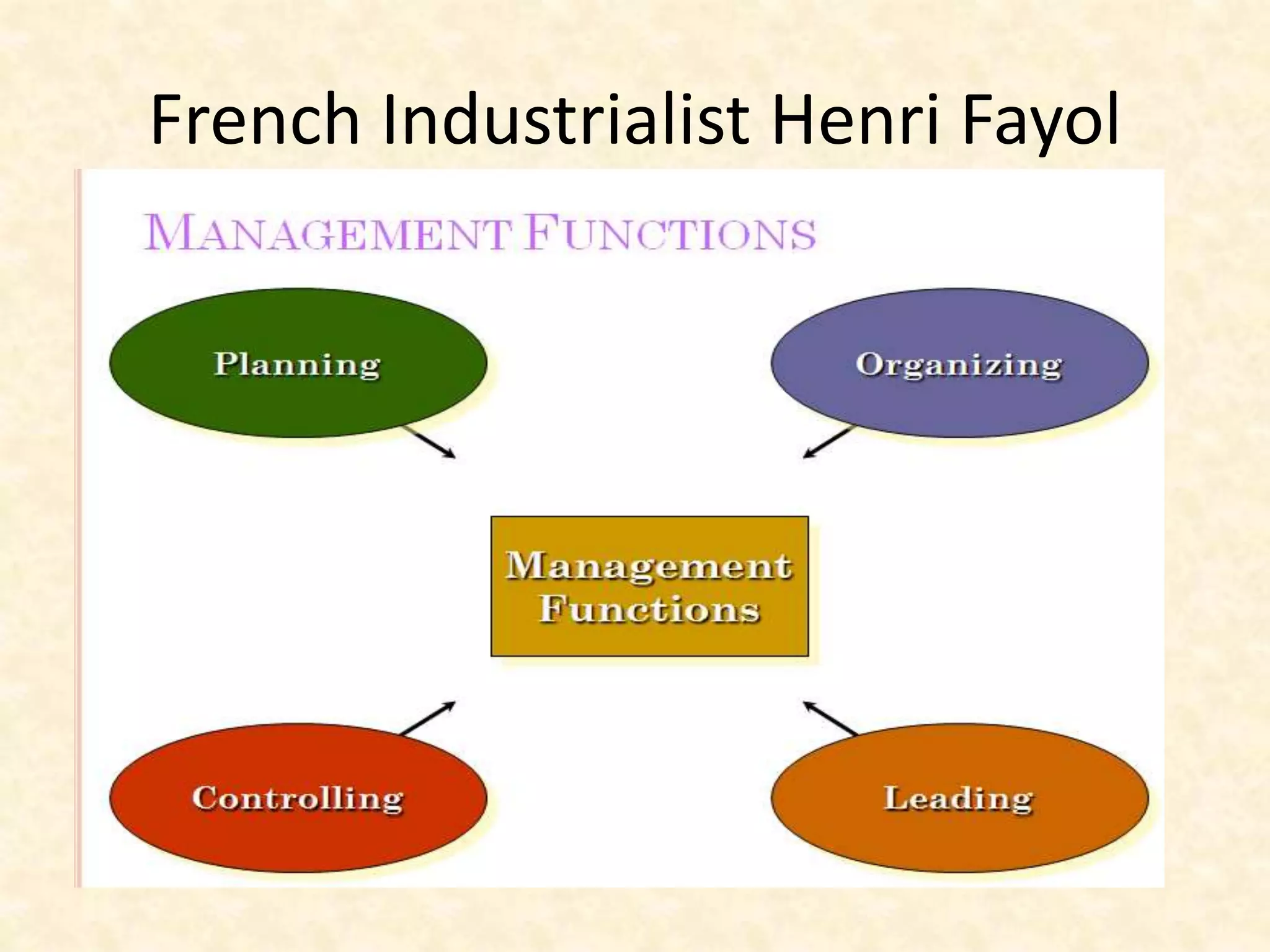
French Industrialist Henri Fayol
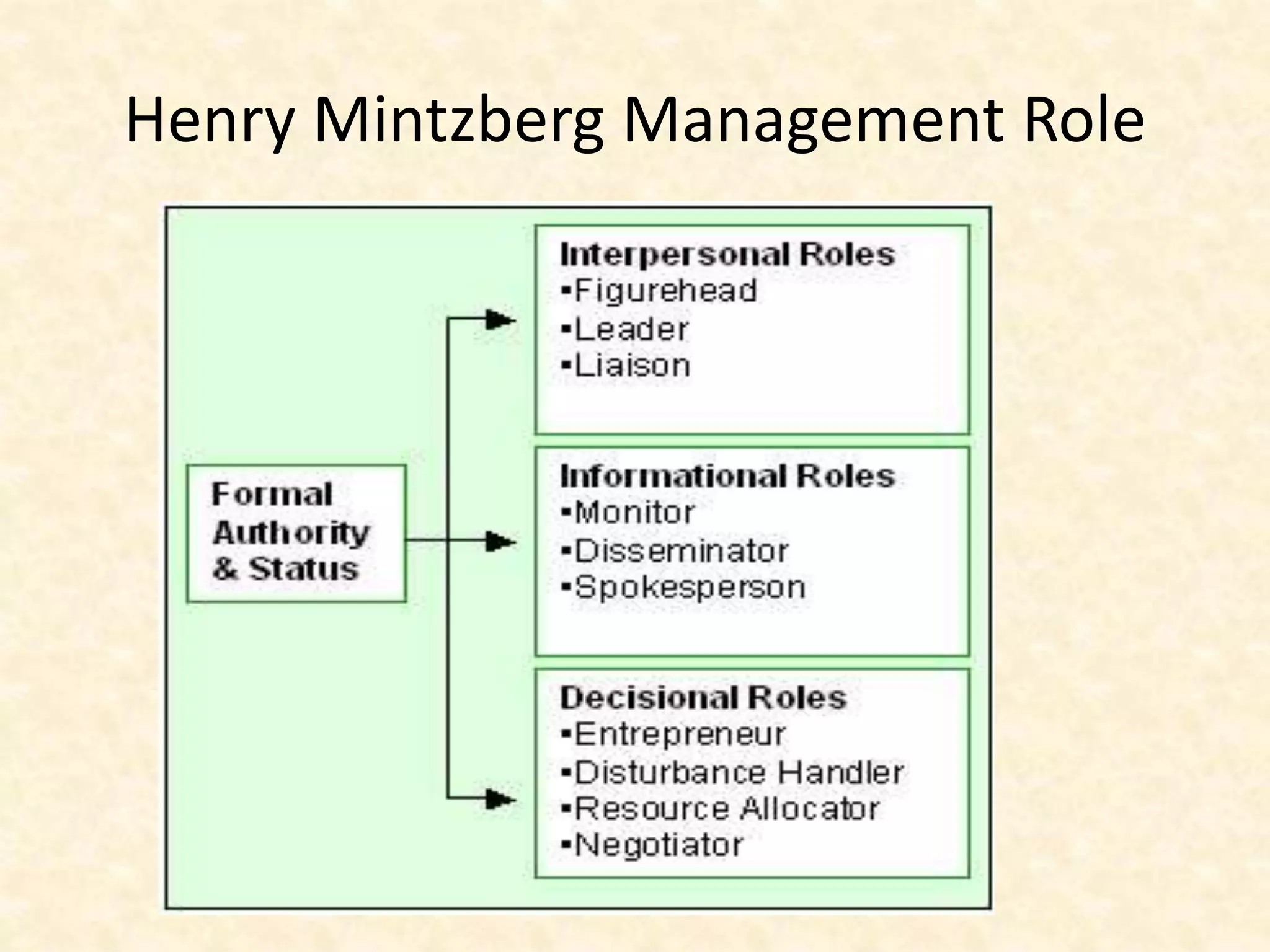
Henry Mintzberg Management Role
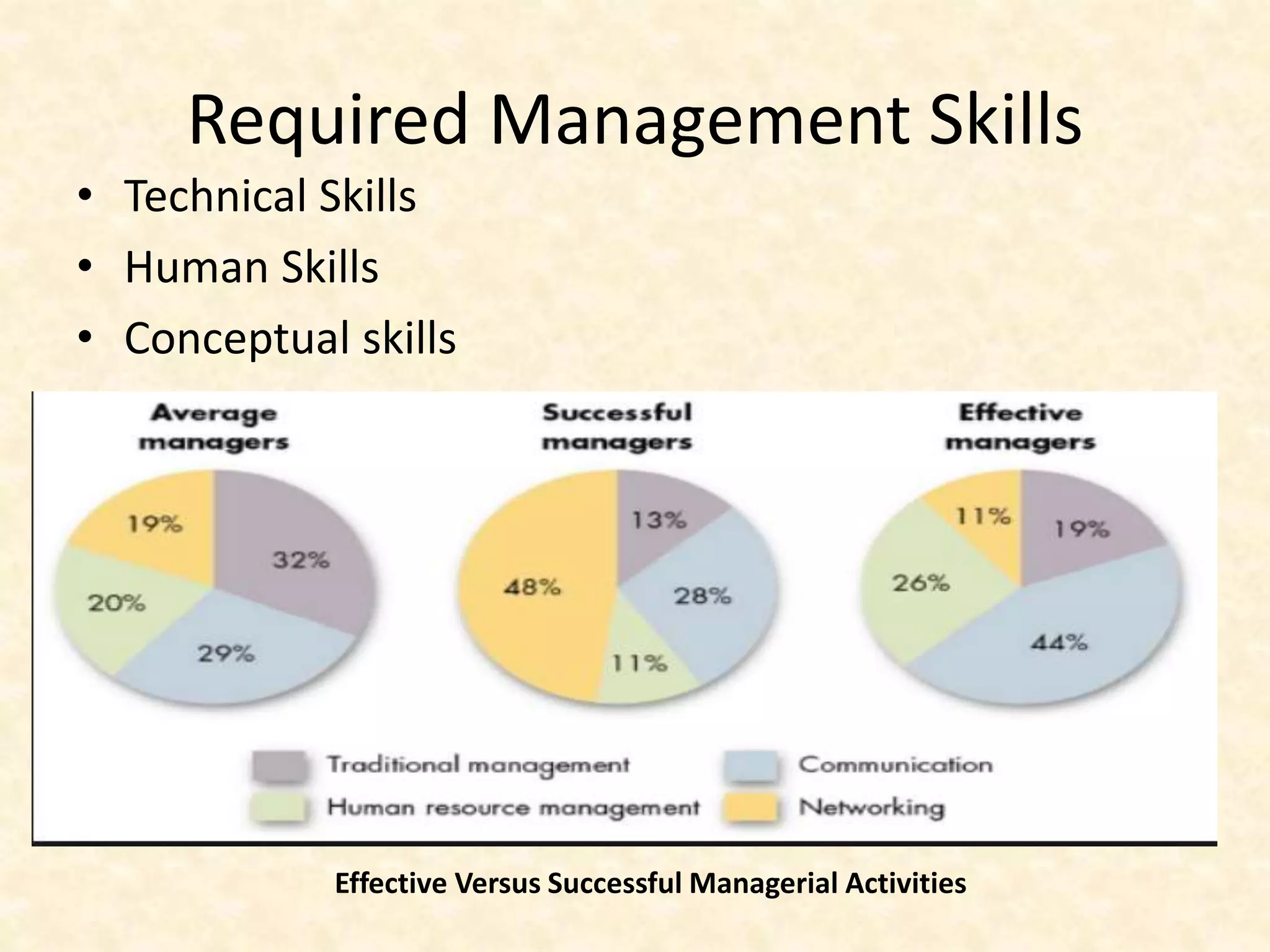
Required Management Skills
• Technical Skills
• Human Skills
• Conceptual skills
Effective Versus Successful Managerial Activities
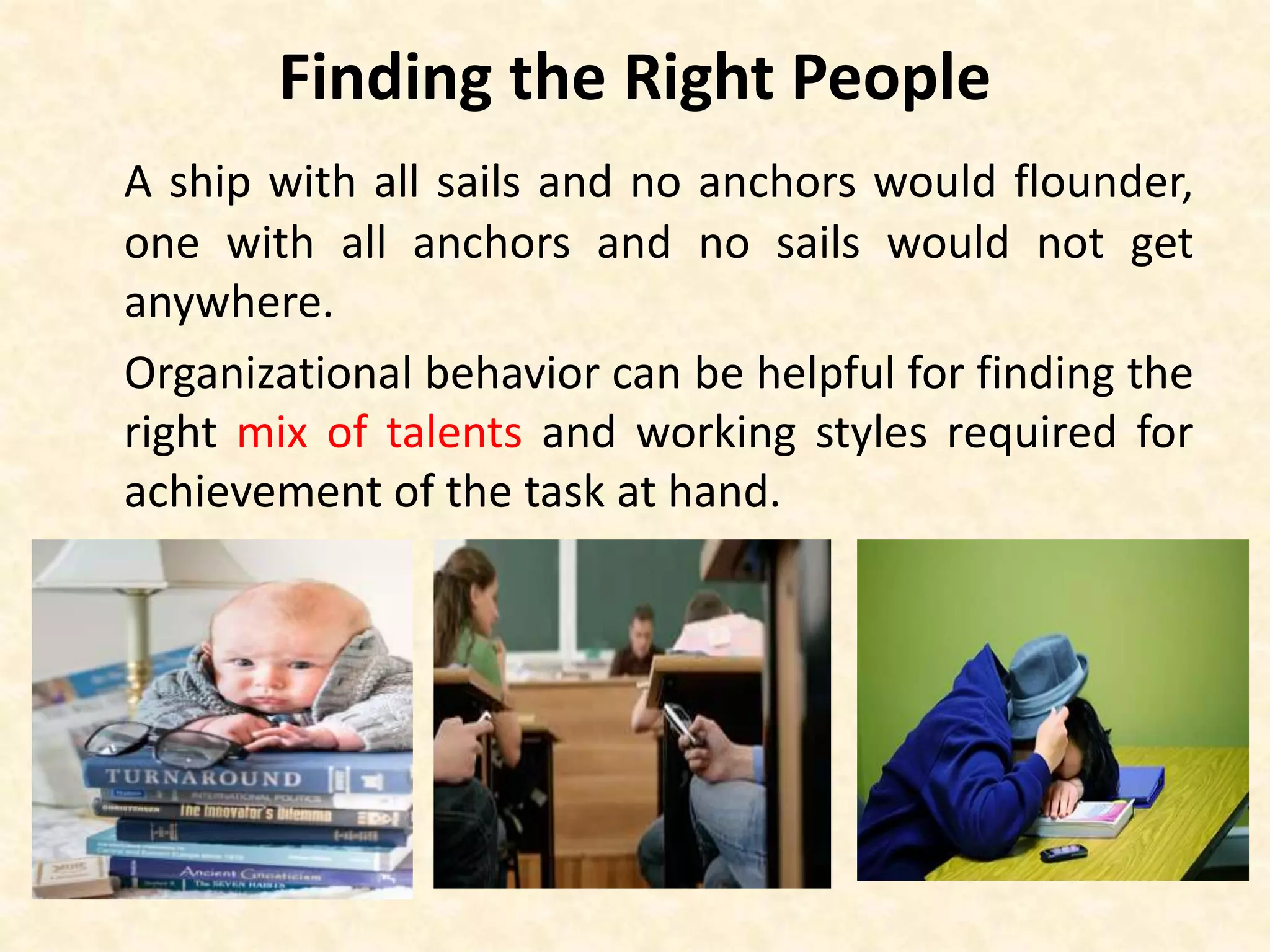
Finding the Right People
A ship with all sails and no anchors would flounder,
one with all anchors and no sails would not get
anywhere.
Organizational behavior can be helpful for finding the
right mix of talents and working styles required for
achievement of the task at hand.
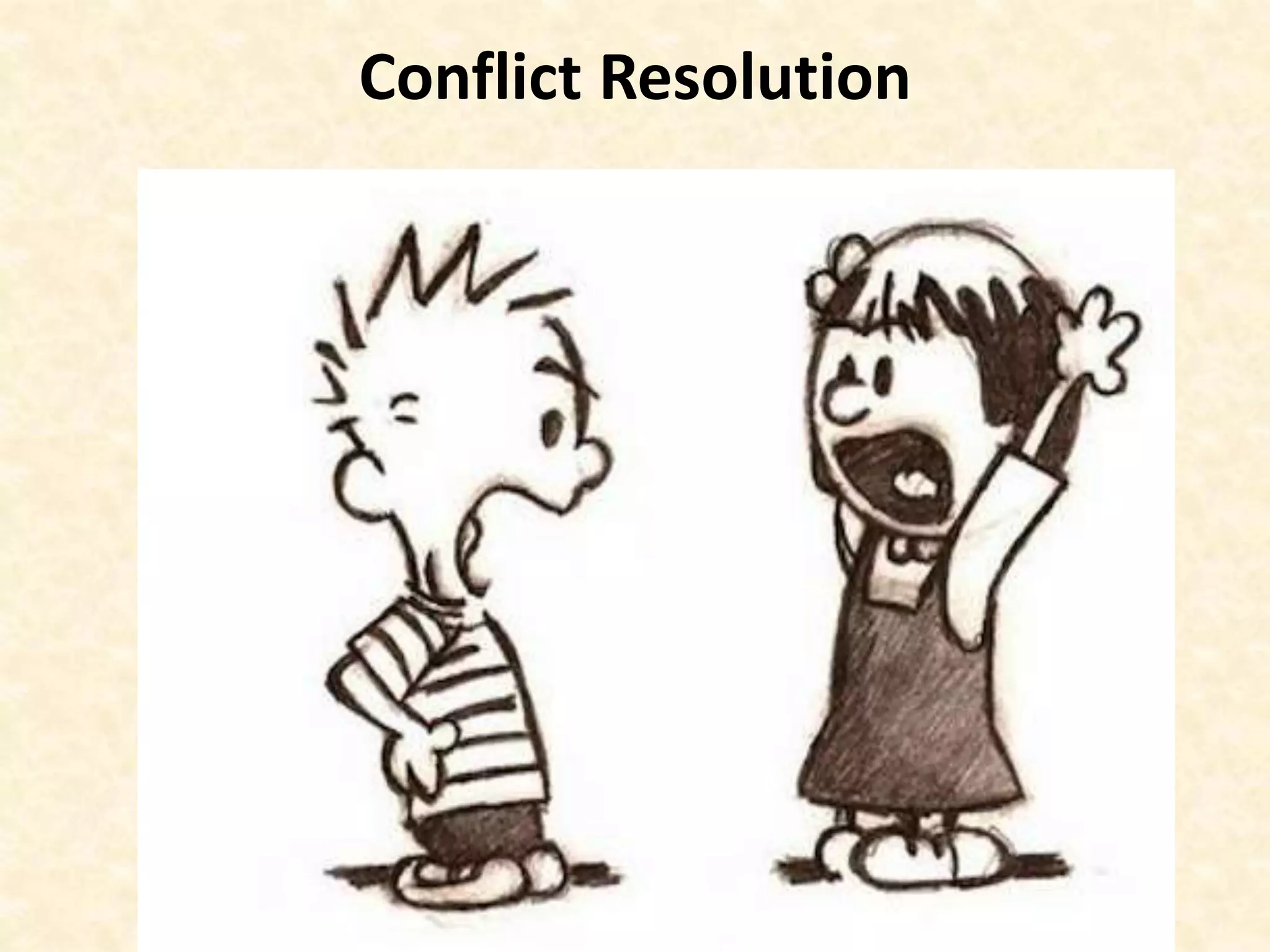
Conflict Resolution
Higher Productivity
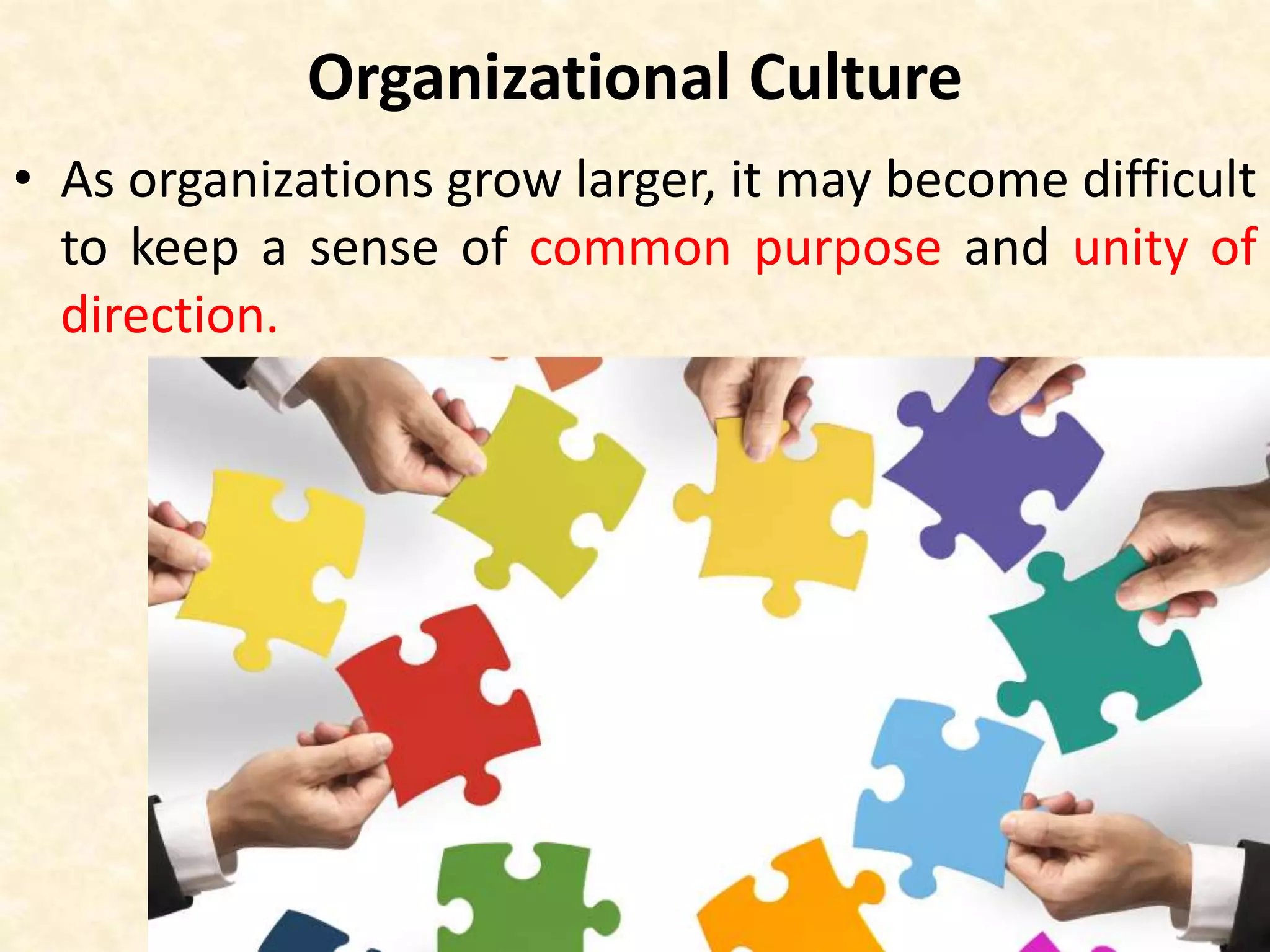
Organizational Culture
• As organizations grow larger, it may become difficult
to keep a sense of common purpose and unity of
direction.
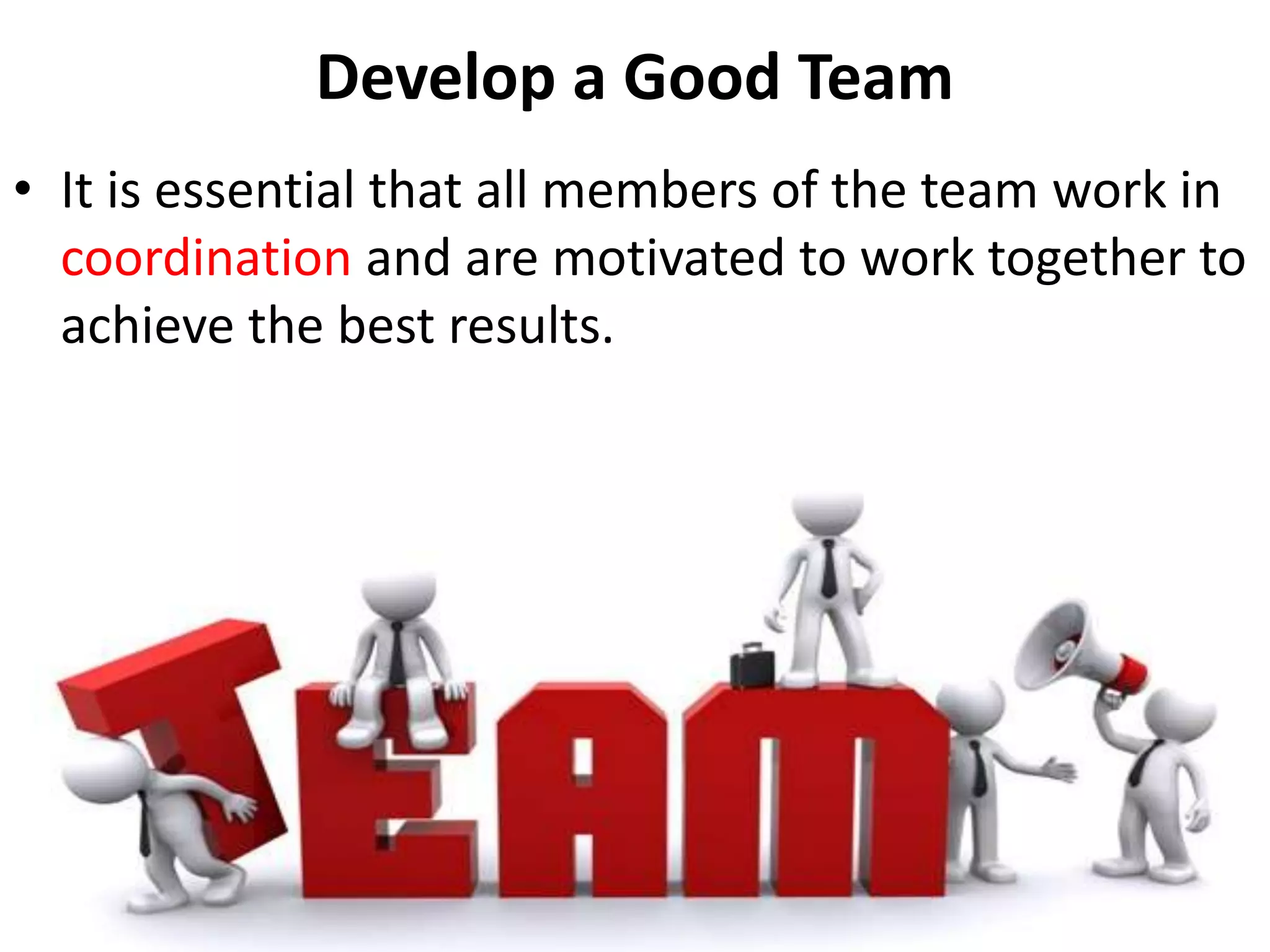
Develop a Good Team
• It is essential that all members of the team work in
coordination and are motivated to work together to
achieve the best results.
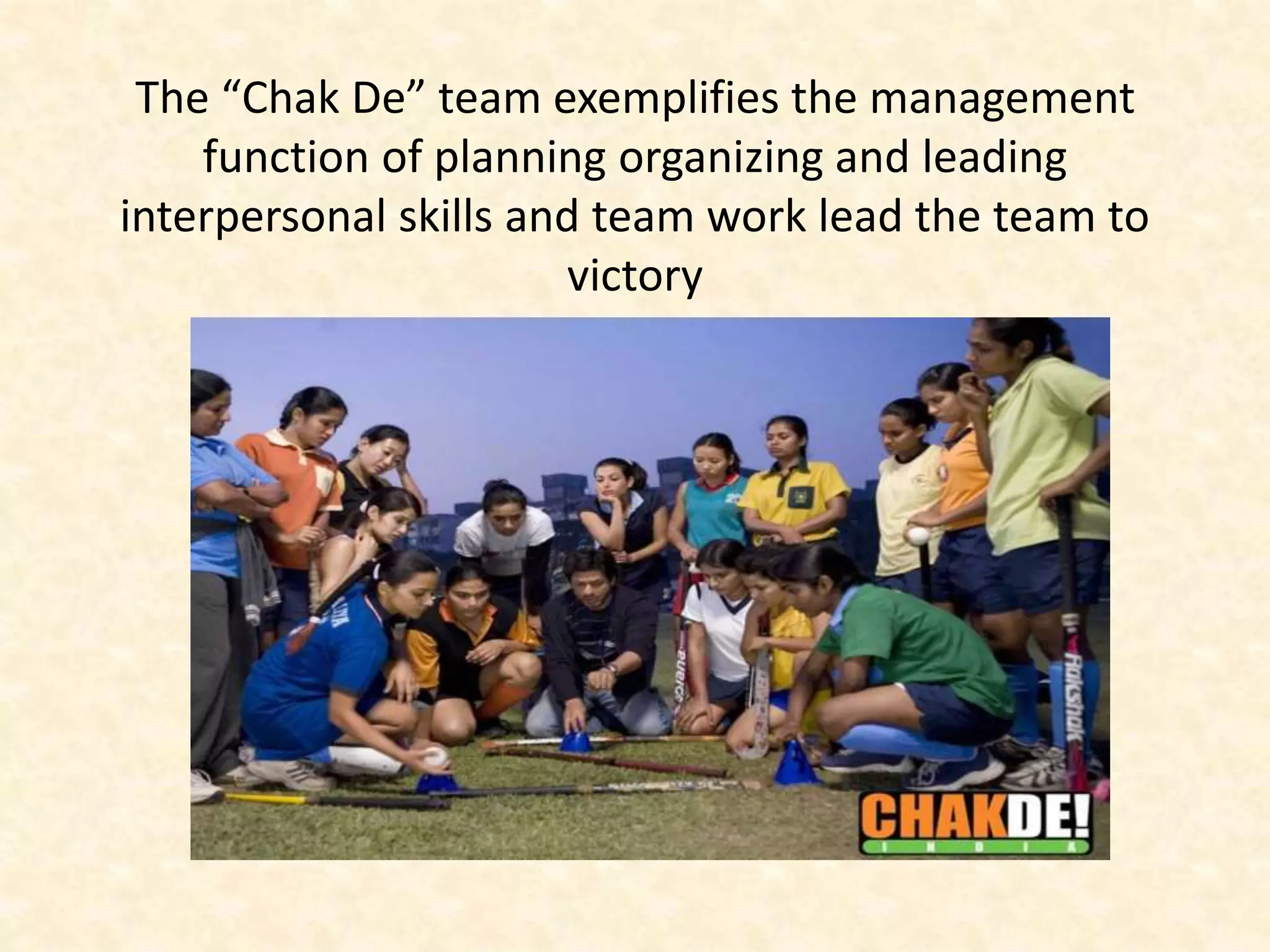
The “Chak De” team exemplifies the management
function of planning organizing and leading
interpersonal skills and team work lead the team to
victory
IMPORTANCE OF ORGANIZATION
BEHAVIOR
• It is very important to study organizational behavior because
it provided an understanding of why people behave as they do
in organization. OB helps us to study the complex nature of
human beings in organization by identifying causes and
effects of behavior.
• OB helps in understanding organization and employees in a
better way:
• When we can understand organization and employees, it
helps to develop friendly relationship between organization
and employees creating a proper working environment in
an organization.
• Studying OB helps to apply different strategies to control
the critical behavior which harms the organization.
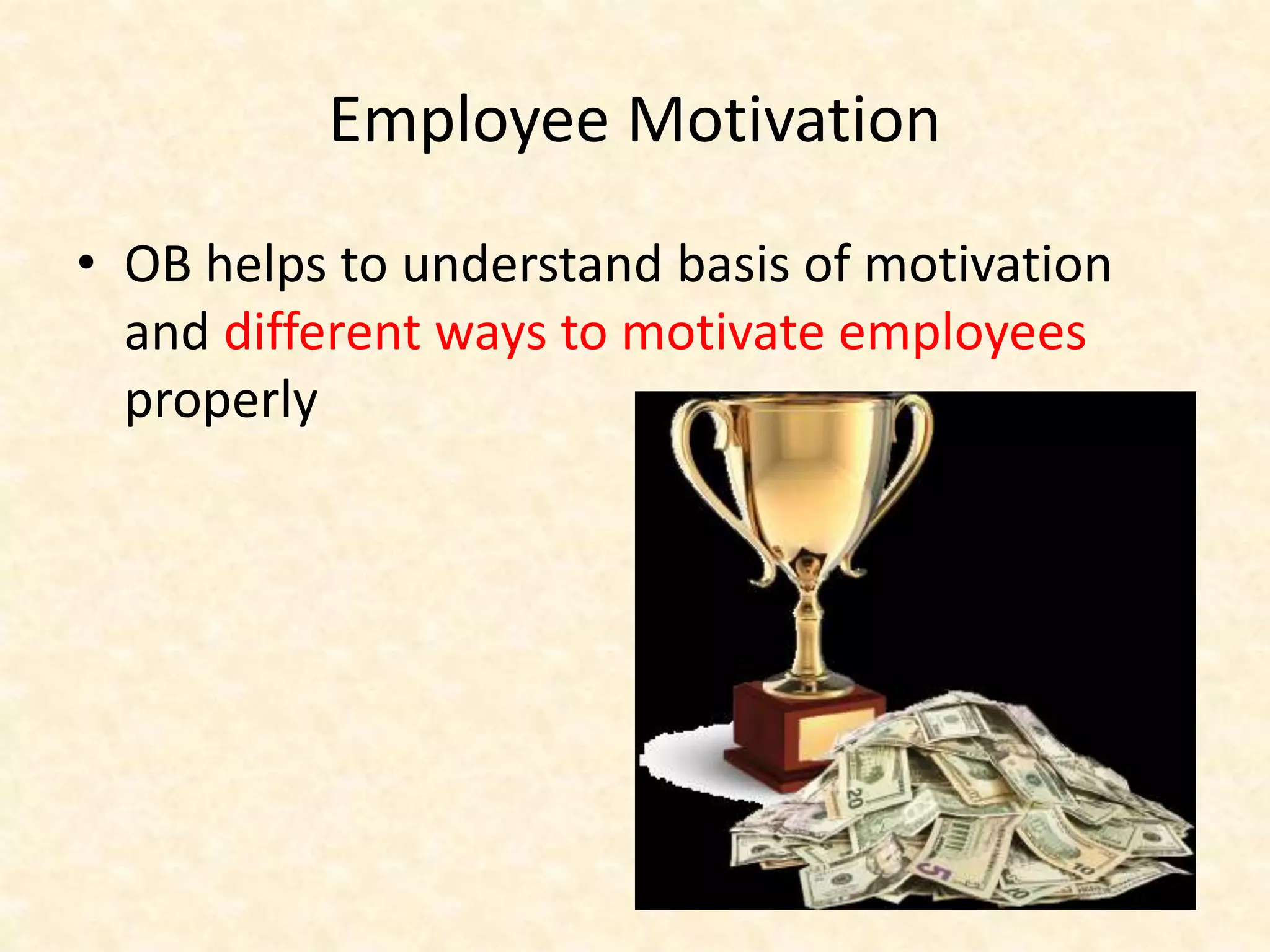
Employee Motivation
• OB helps to understand basis of motivation
and different ways to motivate employees
properly
OB Importance
• OB helps in predicting and controlling human behavior.
• OB helps in effective utilization of Human Resources.
• Knowledge of OB helps managers to manage people
effectively in the organization.
• It is one of the most important reason for studying OB.
Knowledge of OB is very important for the management
students who are going to have a career as a successful
manager. If OB studied properly then it helps to bring
organizational effectiveness.
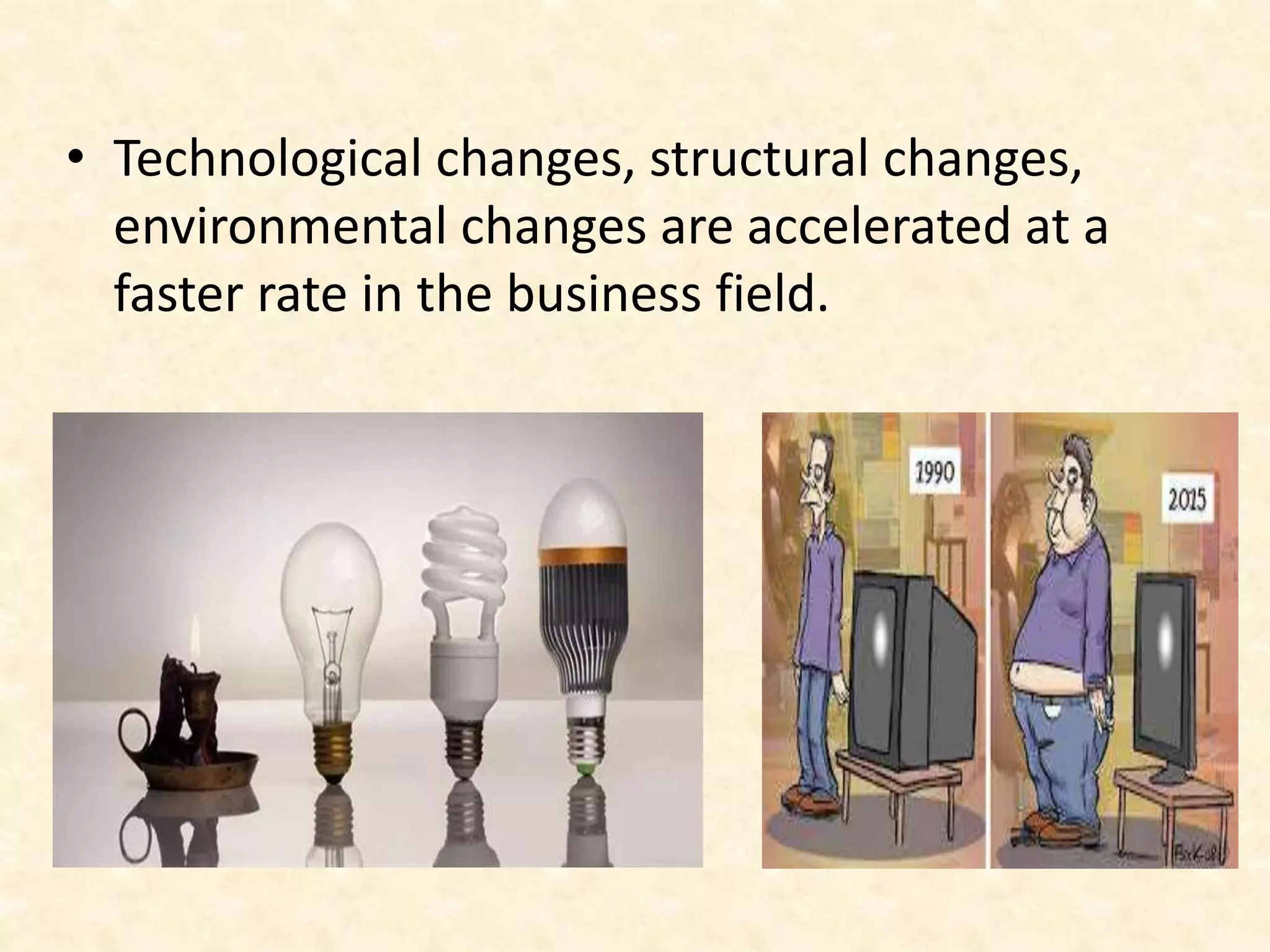
Emerging Challenges
• Technological changes, structural changes,
environmental changes are accelerated at a
faster rate in the business field.
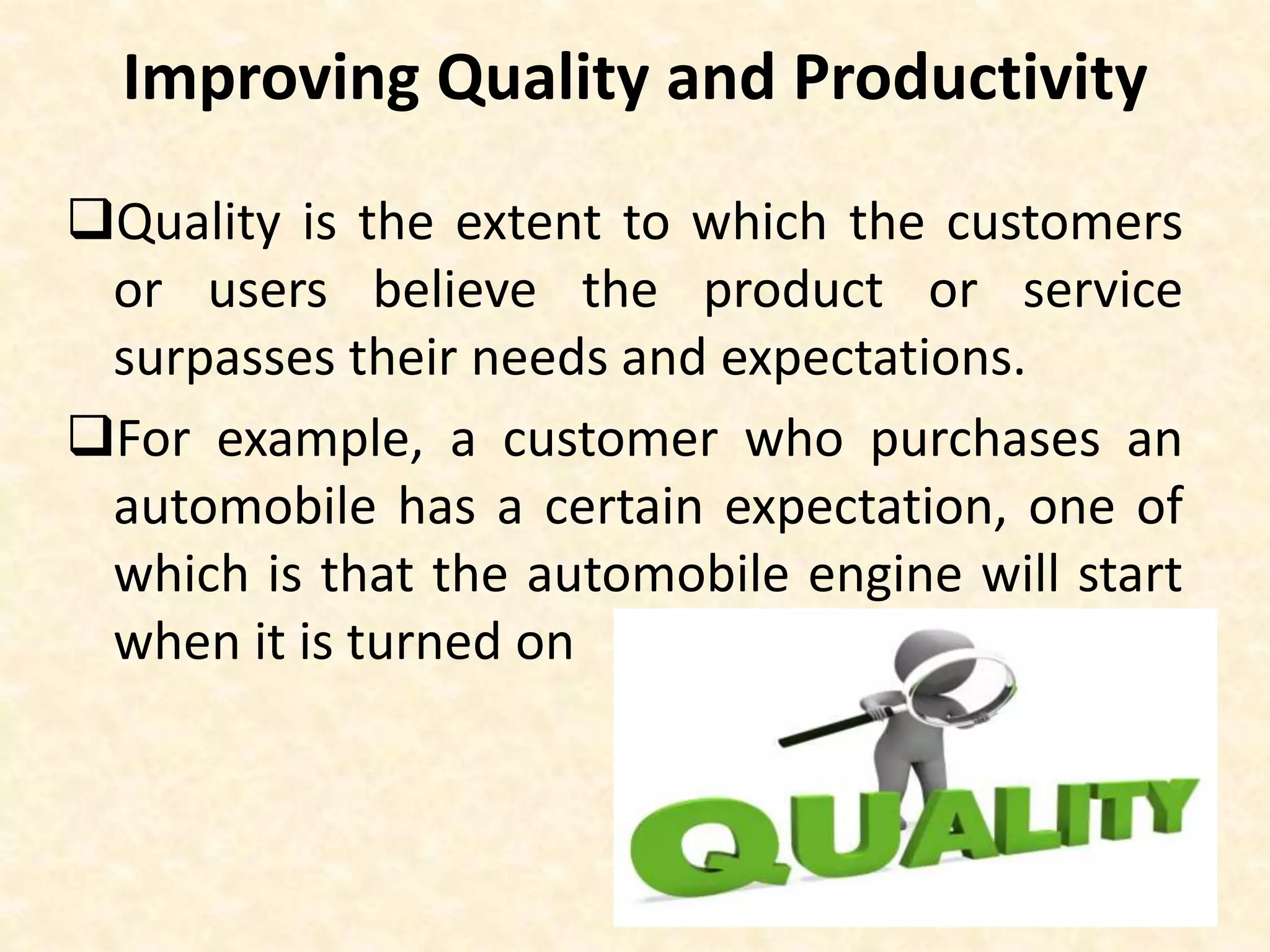
Improving Quality and Productivity
Quality is the extent to which the customers
or users believe the product or service
surpasses their needs and expectations.
For example, a customer who purchases an
automobile has a certain expectation, one of
which is that the automobile engine will start
when it is turned on
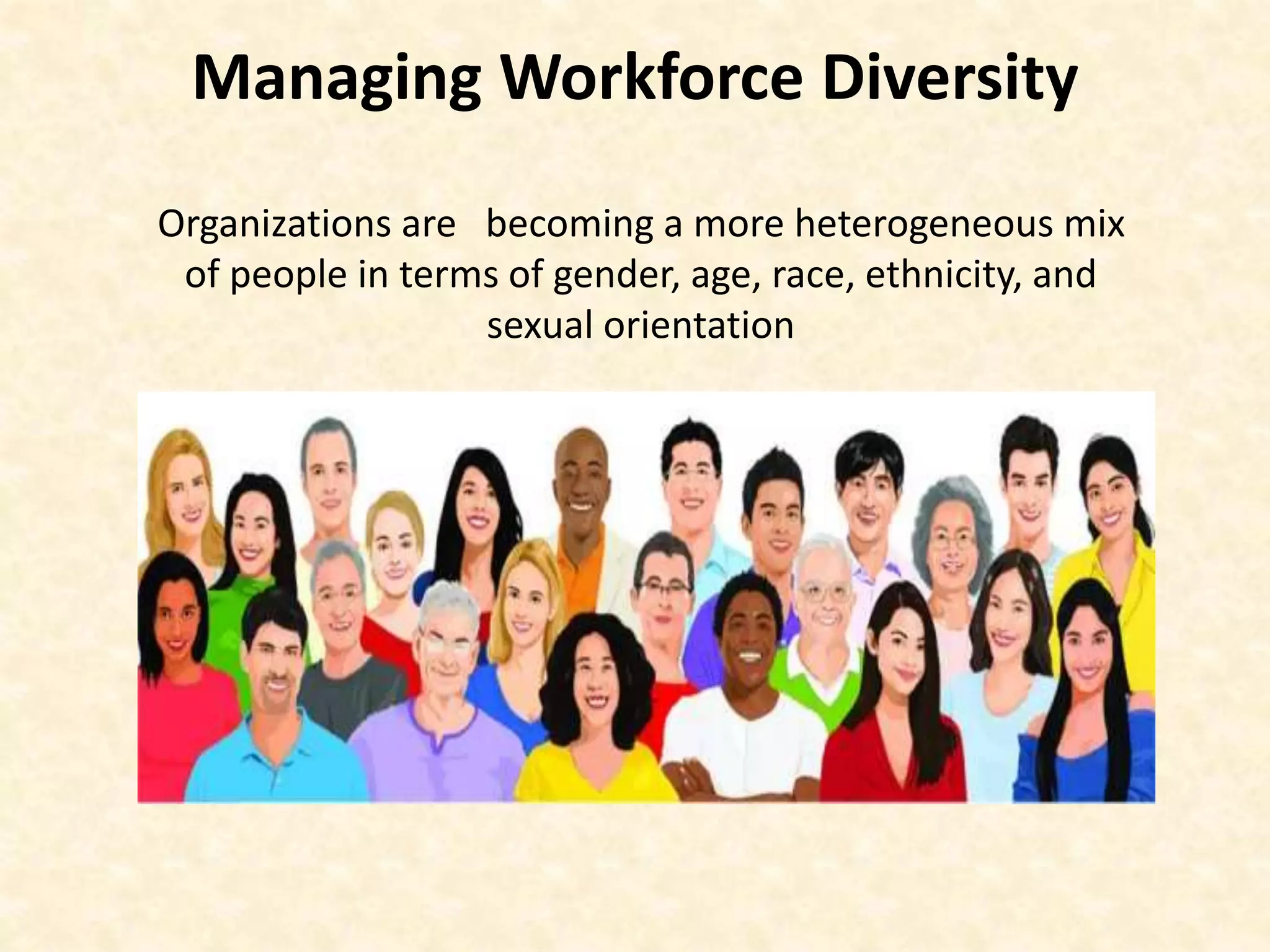
Managing Workforce Diversity
Organizations are becoming a more heterogeneous mix
of people in terms of gender, age, race, ethnicity, and
sexual orientation
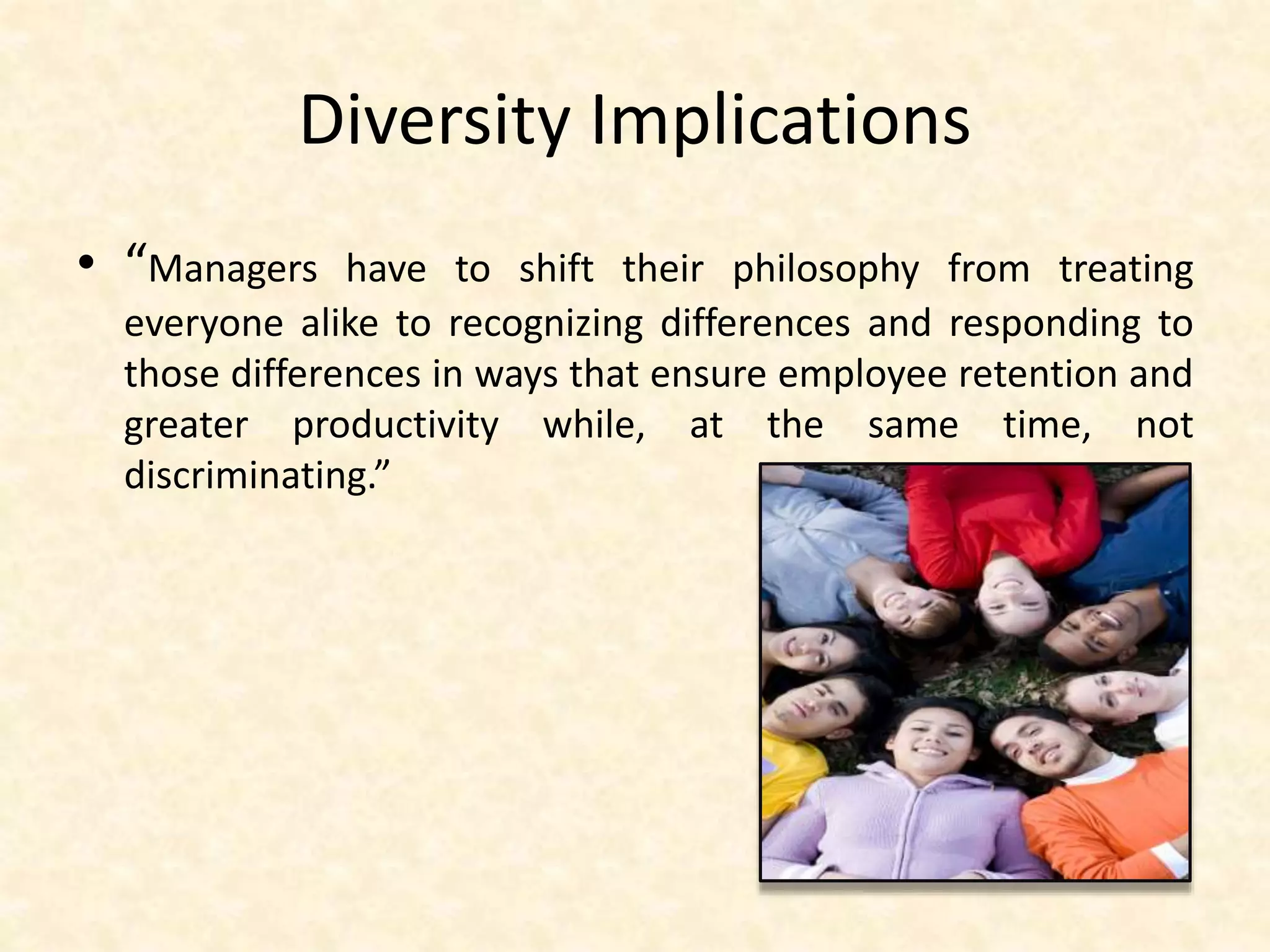
Diversity Implications
• “Managers have to shift their philosophy from treating
everyone alike to recognizing differences and responding to
those differences in ways that ensure employee retention and
greater productivity while, at the same time, not
discriminating.”
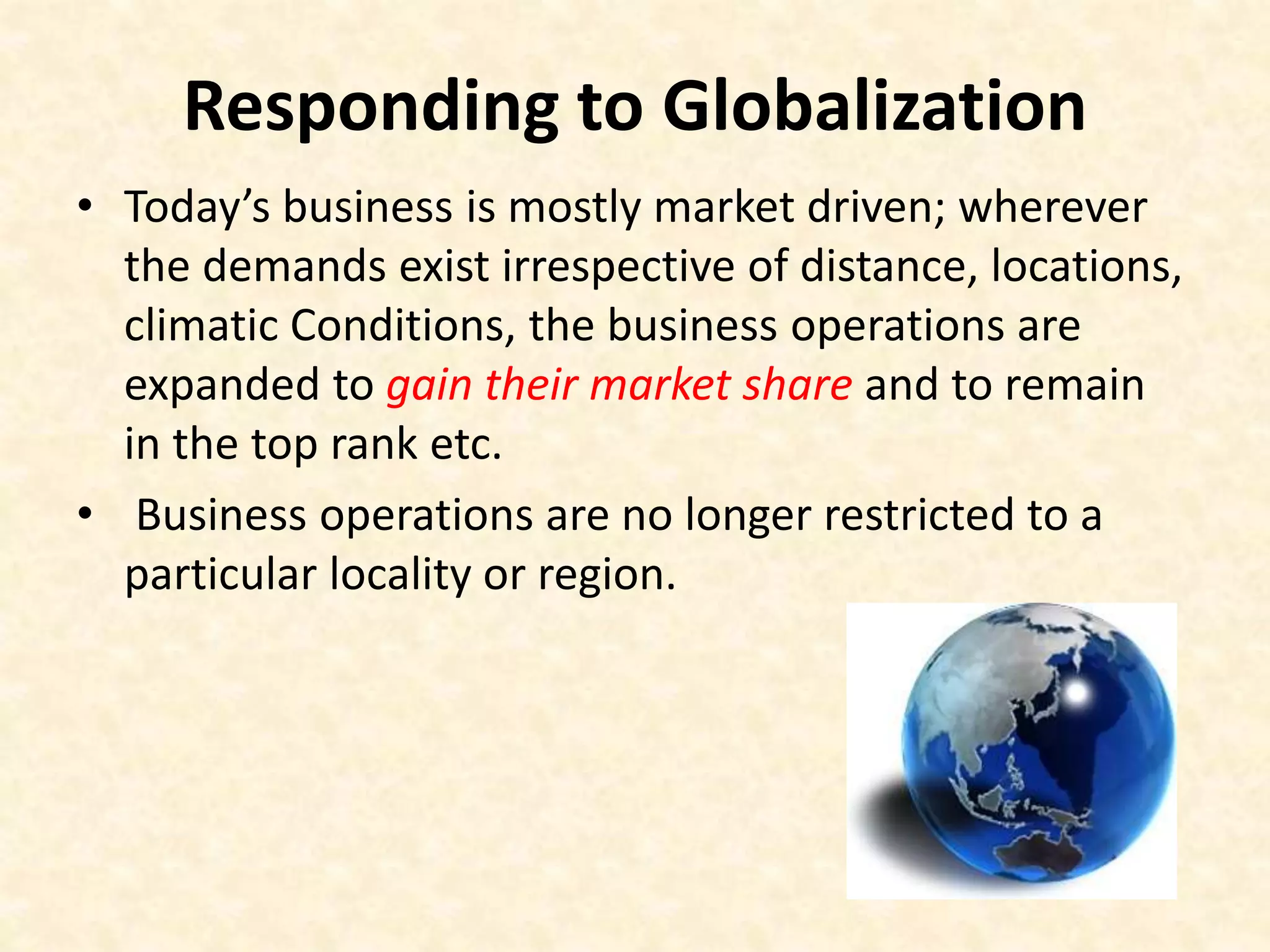
Responding to Globalization
• Today’s business is mostly market driven; wherever
the demands exist irrespective of distance, locations,
climatic Conditions, the business operations are
expanded to gain their market share and to remain
in the top rank etc.
• Business operations are no longer restricted to a
particular locality or region.
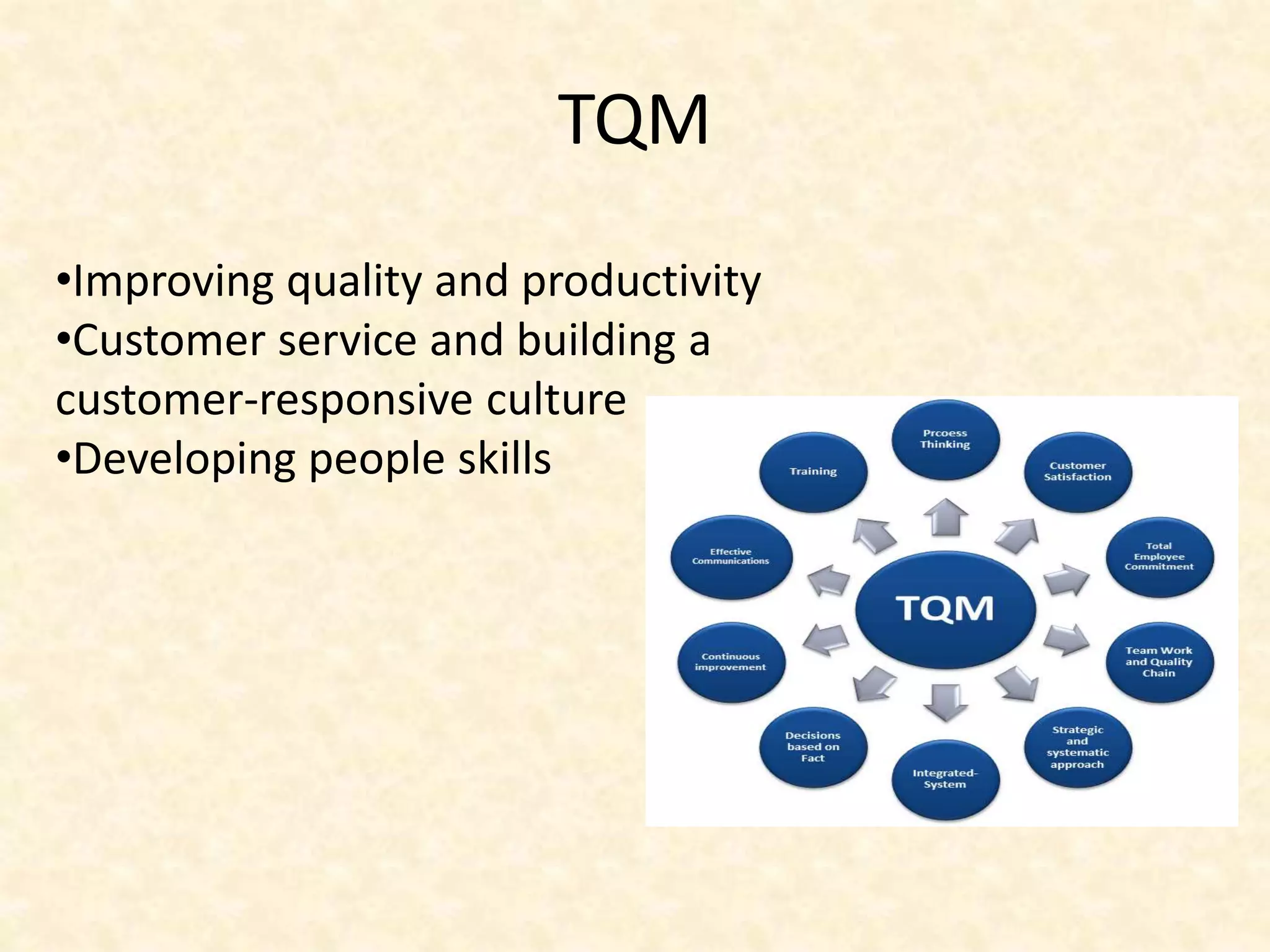
TQM
•Improving quality and productivity
•Customer service and building a
customer-responsive culture
•Developing people skills
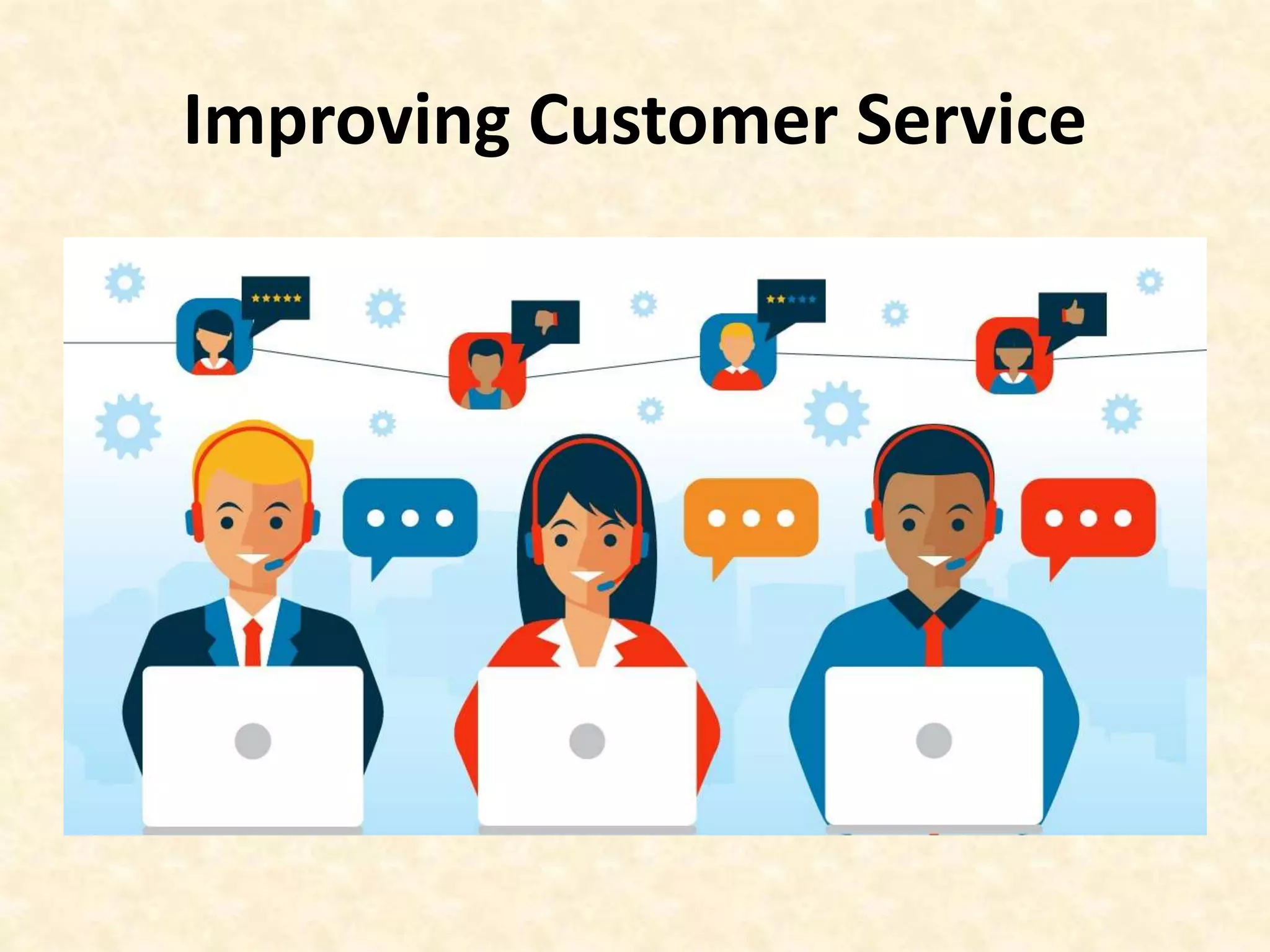
Improving Customer Service
''The Hotel Clerk''
" Don’t be afraid to reach and touch
someone’s life, you never know who’s heart
you may be touching."
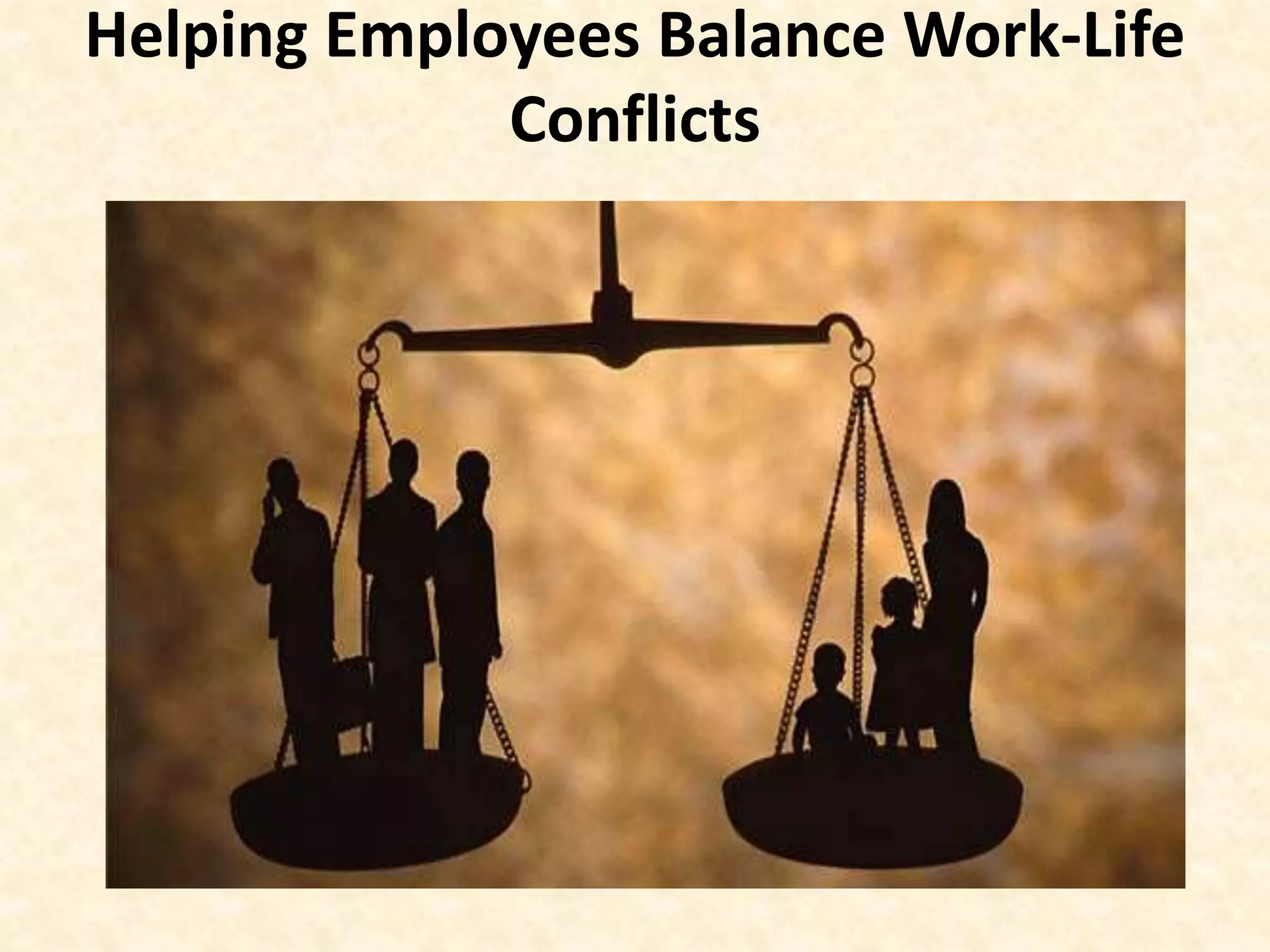
Helping Employees Balance Work-Life
Conflicts
Improving Ethical Behavior
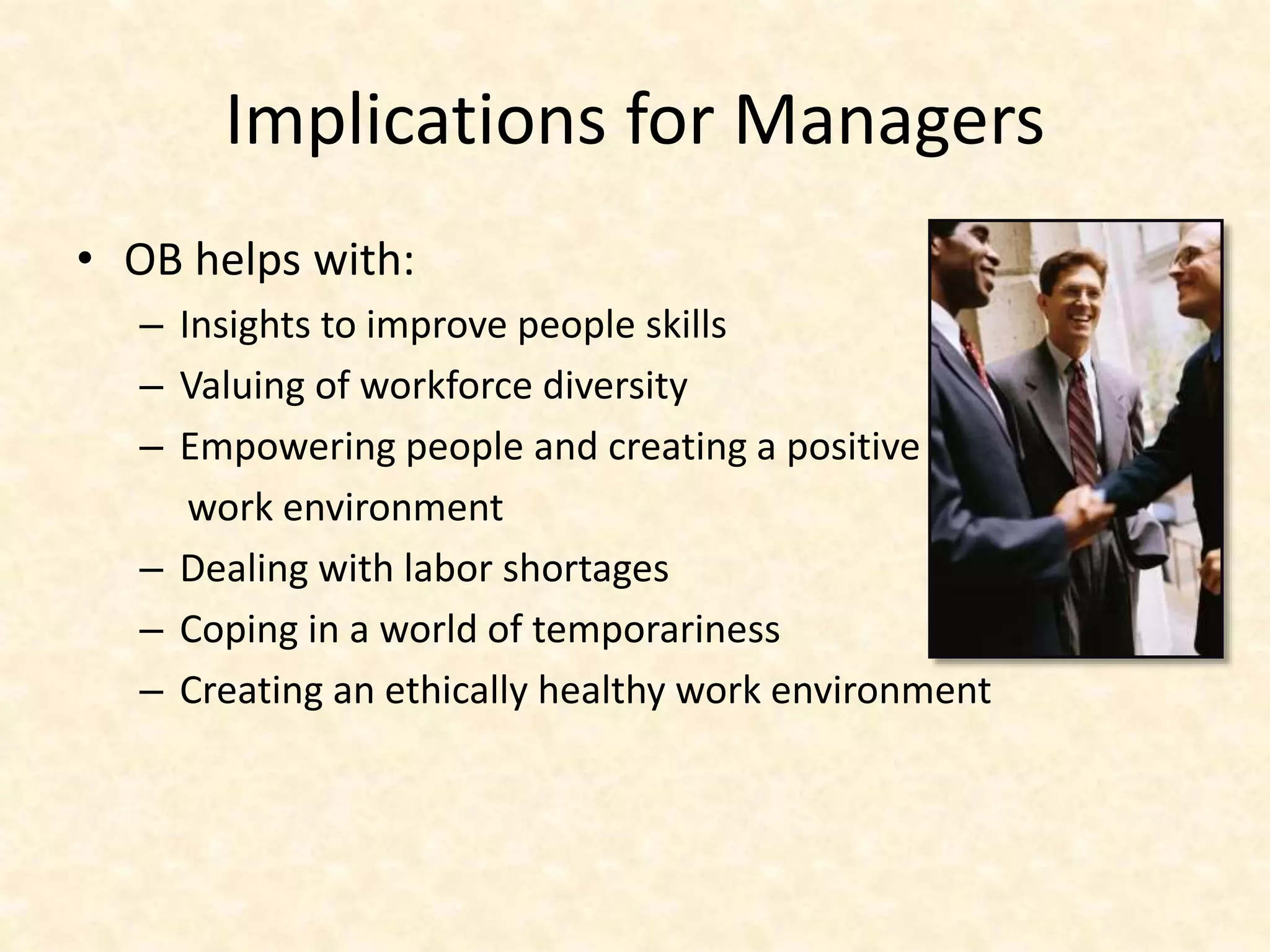
Implications for Managers
• OB helps with:
– Insights to improve people skills
– Valuing of workforce diversity
– Empowering people and creating a positive
work environment
– Dealing with labor shortages
– Coping in a world of temporariness
– Creating an ethically healthy work environment
Thanks

Introduction to Organizational Behavior

  • 1.
    Introduction to Organizational Behavior Dr.Kiran Kakade Assistant Professor (HR) ,TIMSR Mumbai
  • 2.
    About Me • Ph.D.in Management Science • Post graduation in MBA (HR) and MCA (Mgmt.) from University of Pune. • Diploma in Yoga & Meditation (D.Y.T) from YCMOU, Nashik. • Academic Experience : 5 Years • Industrial Experience : 7 Years • Competencies: ERP Consultation, Training & Development, Administration, Team Management, Yoga Instructor
  • 3.
    “You can dream,create, design and build the most wonderful place in the world, but it requires people to make the dream a reality..! -Walt Disney
  • 5.
    Organization Behavior Organization: Organizationis a collection of people who work together and co-ordinate their actions to achieve individual and organization goals.
  • 6.
    Behavior: Behavior maybe defined as the way how people act as individual and as groups.
  • 7.
    Organization Behavior • Organizationbehavior is the study and application of knowledge about how people act in an organization as individuals and as a groups. • Organization behavior provide ways to understand human behavior, it explains as to how a human being will behave in any particular situation?
  • 8.
    “ Organization behaviorcan be defined as the understanding, prediction and management of human behavior in organizations” LUTHANS
  • 9.
    OB is ..... •What people do in an organization • How their behavior effects the overall performance of the organization. • Behavior related to concerns: such as absenteeism, turnover, productivity etc. • Includes the core of all work determinants (motivation, leadership, power, politics, conflict etc..).
  • 10.
    Goals of OrganizationalBehavior (Explain, predict, and control human behavior) • How people act in organization • Why they act as they do • What we can do to predict and manage their behavior
  • 11.
    OB works atthree levels
  • 12.
    What is OBabout? • 3-D : individual, group & organizational • At the individual level: learning, perception, stress, personality, individual differences etc • At the group level: teamwork, power & politics, interpersonal, decision making etc • Organizational culture, change, structure & design at organizational level
  • 13.
    Historical Background • Thefamous “Hawthorne Studies” (1924-30s) • Undertaken at Western Electric Company, Illinois; to study the effect of various illumination levels on worker productivity. • Findings were: illumination intensity was not directly related to group productivity. Though they couldn’t explain the behavior that they had witnessed! Something more to the productivity than mere physical variables!!
  • 14.
    • Professor EltonMayo started a series of studies & numerous experiments covering redesign of jobs, changes in the length of work day, time, introduction of rest periods and individual vs group pay plans. • Hawthorne studies set the direction OB and management practices!!
  • 15.
  • 20.
    Objectives • The mainobjective of Organizational Behavior is to understand the human interactions in an organization, find what is driving it and influence it for getting better results for attaining business goals.
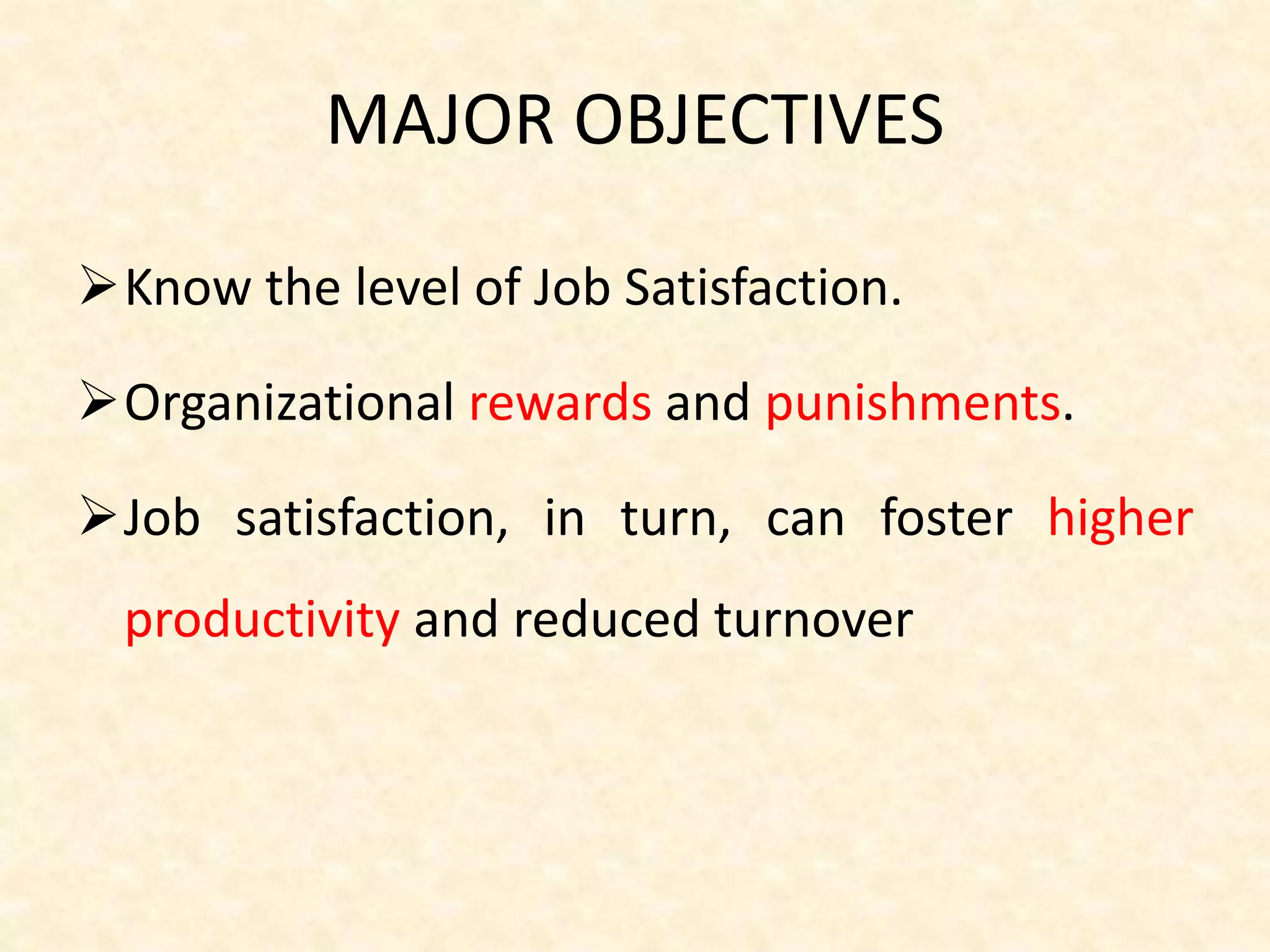
  • 21.
    • The organizationsin which people work have an effect on their thoughts, feelings, and actions. These thoughts, feelings, and actions, in turn, affect the organization itself.
  • 22.
    MAJOR OBJECTIVES Know thelevel of Job Satisfaction. Organizational rewards and punishments. Job satisfaction, in turn, can foster higher productivity and reduced turnover
  • 23.
  • 24.
  • 25.
  • 26.
  • 27.
    Required Management Skills •Technical Skills • Human Skills • Conceptual skills Effective Versus Successful Managerial Activities
  • 28.
    Finding the RightPeople A ship with all sails and no anchors would flounder, one with all anchors and no sails would not get anywhere. Organizational behavior can be helpful for finding the right mix of talents and working styles required for achievement of the task at hand.
  • 29.
  • 30.
  • 31.
    Organizational Culture • Asorganizations grow larger, it may become difficult to keep a sense of common purpose and unity of direction.
  • 32.
    Develop a GoodTeam • It is essential that all members of the team work in coordination and are motivated to work together to achieve the best results.
  • 33.
    The “Chak De”team exemplifies the management function of planning organizing and leading interpersonal skills and team work lead the team to victory
  • 35.
    IMPORTANCE OF ORGANIZATION BEHAVIOR •It is very important to study organizational behavior because it provided an understanding of why people behave as they do in organization. OB helps us to study the complex nature of human beings in organization by identifying causes and effects of behavior.
  • 36.
    • OB helpsin understanding organization and employees in a better way: • When we can understand organization and employees, it helps to develop friendly relationship between organization and employees creating a proper working environment in an organization. • Studying OB helps to apply different strategies to control the critical behavior which harms the organization.
  • 37.
    Employee Motivation • OBhelps to understand basis of motivation and different ways to motivate employees properly
  • 38.
    OB Importance • OBhelps in predicting and controlling human behavior. • OB helps in effective utilization of Human Resources. • Knowledge of OB helps managers to manage people effectively in the organization. • It is one of the most important reason for studying OB. Knowledge of OB is very important for the management students who are going to have a career as a successful manager. If OB studied properly then it helps to bring organizational effectiveness.
  • 39.
  • 40.
    • Technological changes,structural changes, environmental changes are accelerated at a faster rate in the business field.
  • 41.
    Improving Quality andProductivity Quality is the extent to which the customers or users believe the product or service surpasses their needs and expectations. For example, a customer who purchases an automobile has a certain expectation, one of which is that the automobile engine will start when it is turned on
  • 42.
    Managing Workforce Diversity Organizationsare becoming a more heterogeneous mix of people in terms of gender, age, race, ethnicity, and sexual orientation
  • 43.
    Diversity Implications • “Managershave to shift their philosophy from treating everyone alike to recognizing differences and responding to those differences in ways that ensure employee retention and greater productivity while, at the same time, not discriminating.”
  • 44.
    Responding to Globalization •Today’s business is mostly market driven; wherever the demands exist irrespective of distance, locations, climatic Conditions, the business operations are expanded to gain their market share and to remain in the top rank etc. • Business operations are no longer restricted to a particular locality or region.
  • 45.
    TQM •Improving quality andproductivity •Customer service and building a customer-responsive culture •Developing people skills
  • 46.
  • 47.
    ''The Hotel Clerk'' "Don’t be afraid to reach and touch someone’s life, you never know who’s heart you may be touching."
  • 48.
    Helping Employees BalanceWork-Life Conflicts
  • 49.
  • 51.
    Implications for Managers •OB helps with: – Insights to improve people skills – Valuing of workforce diversity – Empowering people and creating a positive work environment – Dealing with labor shortages – Coping in a world of temporariness – Creating an ethically healthy work environment
  • 52.