VALUES
Dr. Kiran Kakade
Assistant Professor (HR) ,TIMSR
Mumbai
“If you want to
understand a person’s
behavior, you must
understand his or her
values”
Values
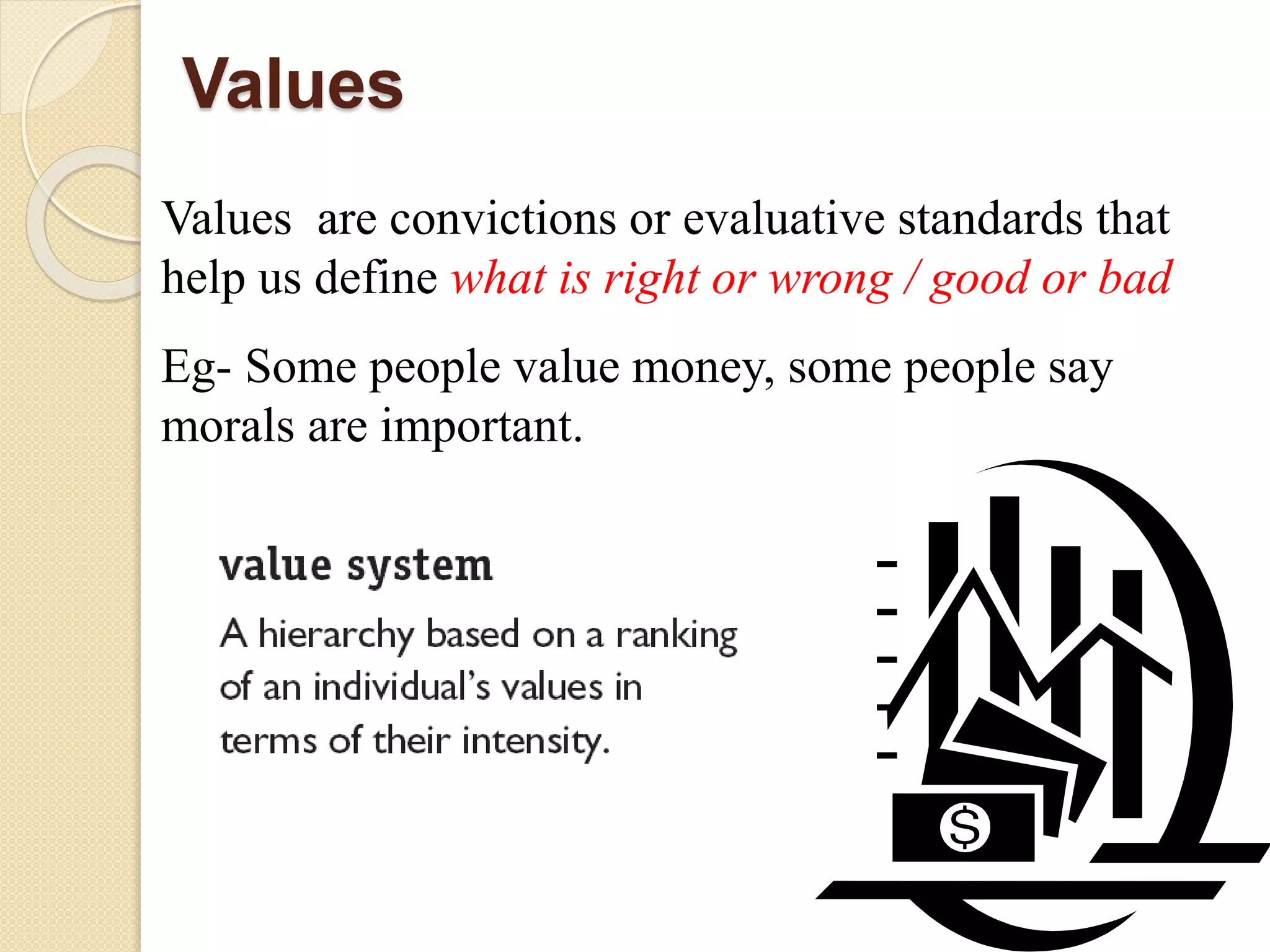
Values are convictions or evaluative standards that
help us define what is right or wrong / good or bad
Eg- Some people value money, some people say
morals are important.
 Values are general beliefs tinged with
moral flavor containing an individual’s
judgmental ideas about what is good or
bad.
 Where did value comes ?
 Parents, Friends, Teachers
 Right values-> Right decision
 What are values ?
 What you believe is right good or desirable
 Ex: Honesty, Integrity, Family, Friends,
Money, Business
 Values dictate how we look at the world
 i.e Dilemma->Values decide how we react
 Ex: Work Vs Family
 Value are stable and enduring
 That means we don’t typically change our
values day by day, it requires earthquake
to change it….
Frame work of Values
 Rokeach’s Values
• Milton Rokeach – A pioneer in studying
human values, conducted a research survey
on human values. He identified two basic
types of values:
 Terminal Value
 End-State of existence
(Confirmable life, Happiness, self respect)
 Instrumental Value
 Desired ways of behaving (being cheerful or
helpful)
Terminal Value
• The goals an individual would like to
achieve during his/her life time :
 World Peace, Equality, Inner Peace,
Self-Respect.
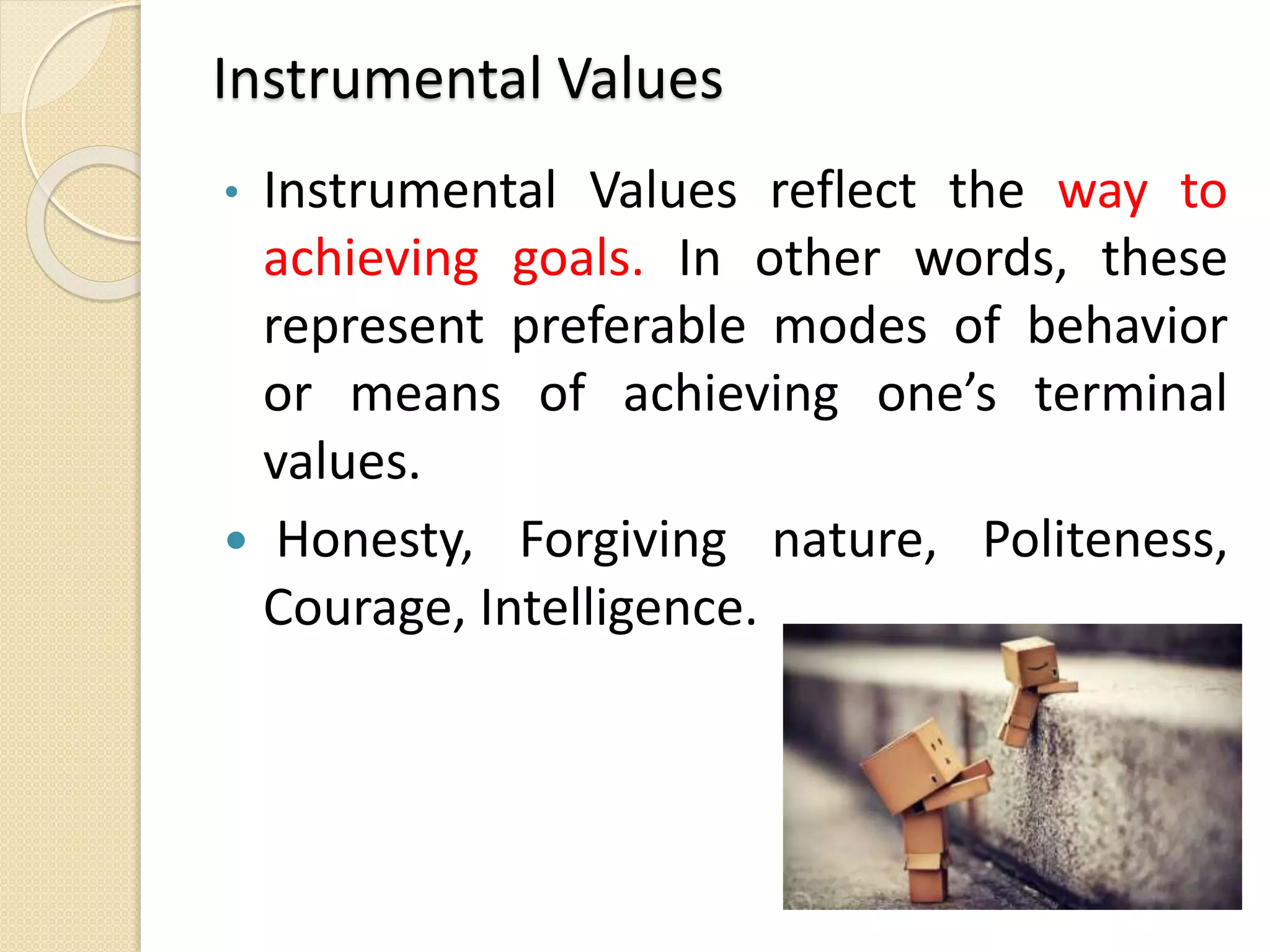
Instrumental Values
• Instrumental Values reflect the way to
achieving goals. In other words, these
represent preferable modes of behavior
or means of achieving one’s terminal
values.
 Honesty, Forgiving nature, Politeness,
Courage, Intelligence.
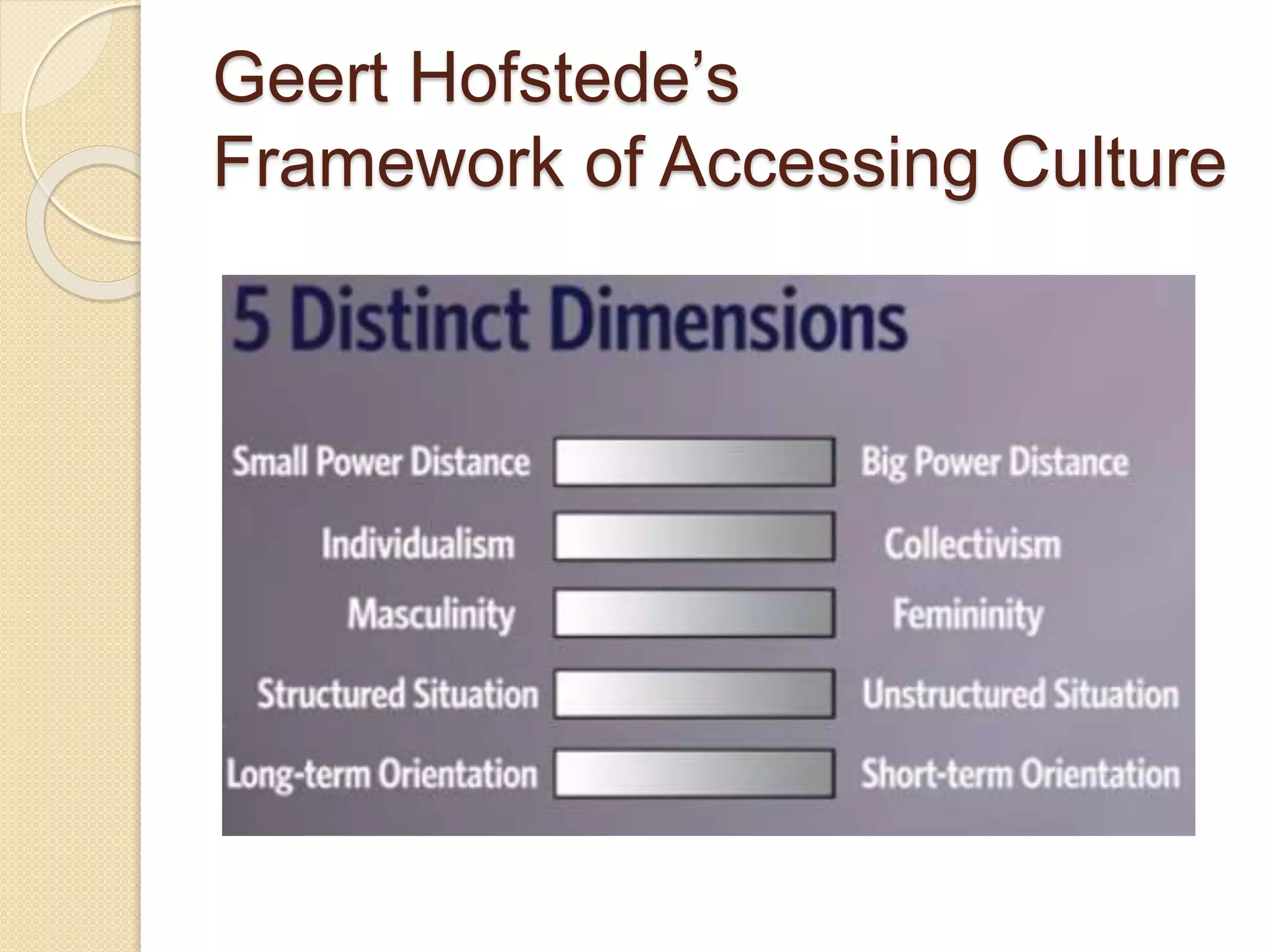
Geert Hofstede’s
Framework of Accessing Culture
Organizational Values
 Different generations have significantly
different values largely given the
environments that they grew up in.
 Culture can influence the values of
individuals.
 An increasingly globalized world requires
leaders of the future to understand and
embrace different cultural values
 Values in work place
 Two type of clashes
 Generation
 Culture
Generation Differences
Culture
 French Canadians = Collectivists
,Interpersonal
 English Canadians =Higher risk
tolerance, More concerned with task
competence
 Asians Canadians =Power Distance,
Collectivists
THANK YOU

Organizational Behavior : Values

  • 1.
    VALUES Dr. Kiran Kakade AssistantProfessor (HR) ,TIMSR Mumbai
  • 2.
    “If you wantto understand a person’s behavior, you must understand his or her values”
  • 3.
    Values Values are convictionsor evaluative standards that help us define what is right or wrong / good or bad Eg- Some people value money, some people say morals are important.
  • 4.
     Values aregeneral beliefs tinged with moral flavor containing an individual’s judgmental ideas about what is good or bad.  Where did value comes ?  Parents, Friends, Teachers  Right values-> Right decision
  • 5.
     What arevalues ?  What you believe is right good or desirable  Ex: Honesty, Integrity, Family, Friends, Money, Business  Values dictate how we look at the world  i.e Dilemma->Values decide how we react  Ex: Work Vs Family  Value are stable and enduring  That means we don’t typically change our values day by day, it requires earthquake to change it….
  • 6.
    Frame work ofValues  Rokeach’s Values • Milton Rokeach – A pioneer in studying human values, conducted a research survey on human values. He identified two basic types of values:  Terminal Value  End-State of existence (Confirmable life, Happiness, self respect)  Instrumental Value  Desired ways of behaving (being cheerful or helpful)
  • 7.
    Terminal Value • Thegoals an individual would like to achieve during his/her life time :  World Peace, Equality, Inner Peace, Self-Respect.
  • 8.
    Instrumental Values • InstrumentalValues reflect the way to achieving goals. In other words, these represent preferable modes of behavior or means of achieving one’s terminal values.  Honesty, Forgiving nature, Politeness, Courage, Intelligence.
  • 9.
  • 10.
    Organizational Values  Differentgenerations have significantly different values largely given the environments that they grew up in.  Culture can influence the values of individuals.  An increasingly globalized world requires leaders of the future to understand and embrace different cultural values  Values in work place  Two type of clashes  Generation  Culture
  • 11.
  • 12.
    Culture  French Canadians= Collectivists ,Interpersonal  English Canadians =Higher risk tolerance, More concerned with task competence  Asians Canadians =Power Distance, Collectivists
  • 15.