Rizwan Abbas Baho
BS-BT-13-F - 043
Production processesProduction processes
Bio manufacturing /Biosynthesis of product involves
two major processes
a. Upstream
b.Downstream. The various stages of processing that
occur after the completion of the fermentation or
bioconversion stage, including separation,
purification, and packaging of the product.
Downstream processing
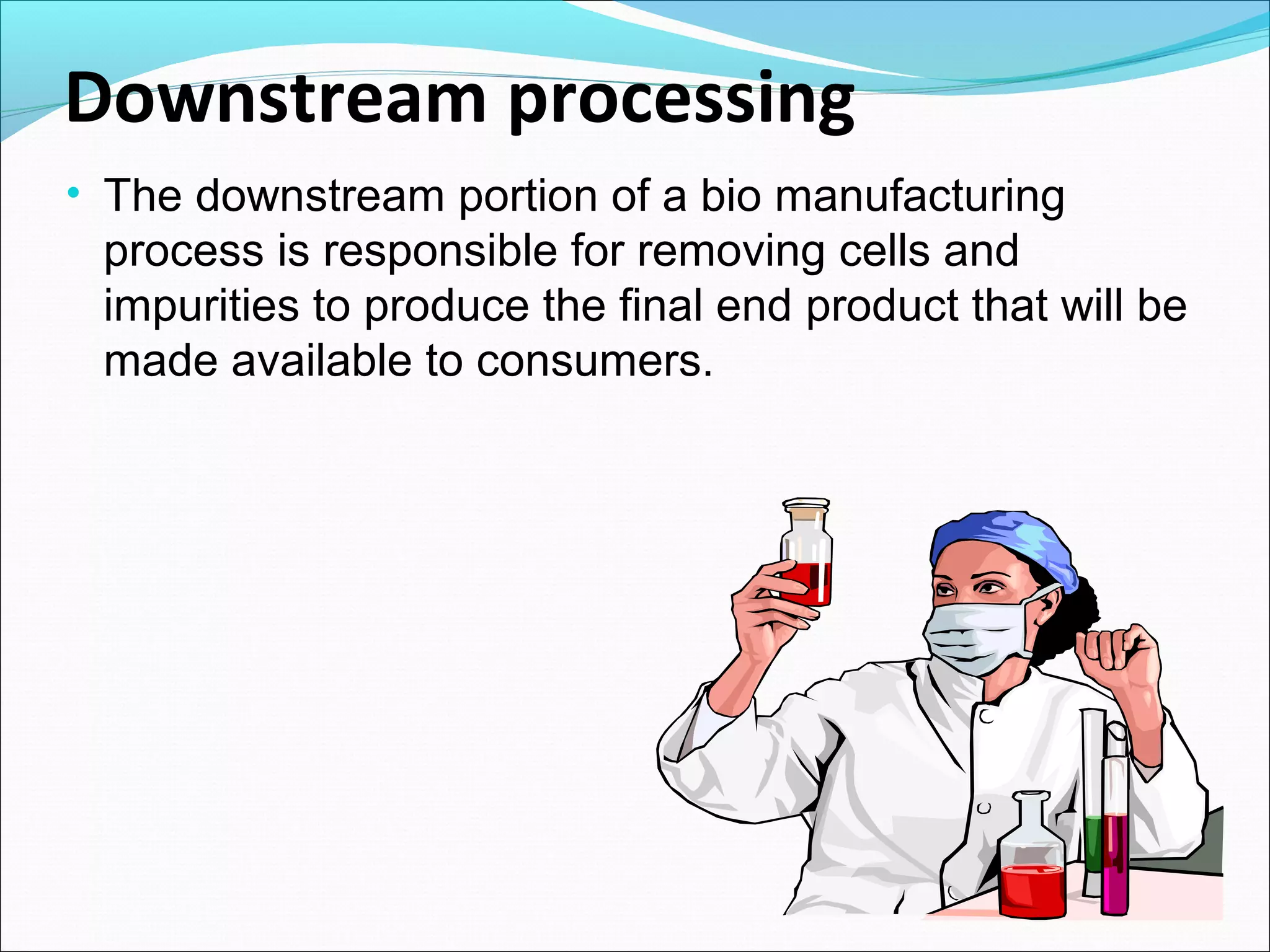
• The downstream portion of a bio manufacturing
process is responsible for removing cells and
impurities to produce the final end product that will be
made available to consumers.
Stages in Downstream Processing
• Removal of insoluble's
• Product Isolation
• Product Purification
• Product Polishing
Removal of insoluble's
• capture of the product as a solute in a particulate-free
liquid
• Example
separation of cells, cell debris or other particulate
matter from fermentation broth containing an
antibiotic.
Cell Separation
The stage of downstream processing where the
product is separated from the cells using a filter
or centrifuge.
Typical operations
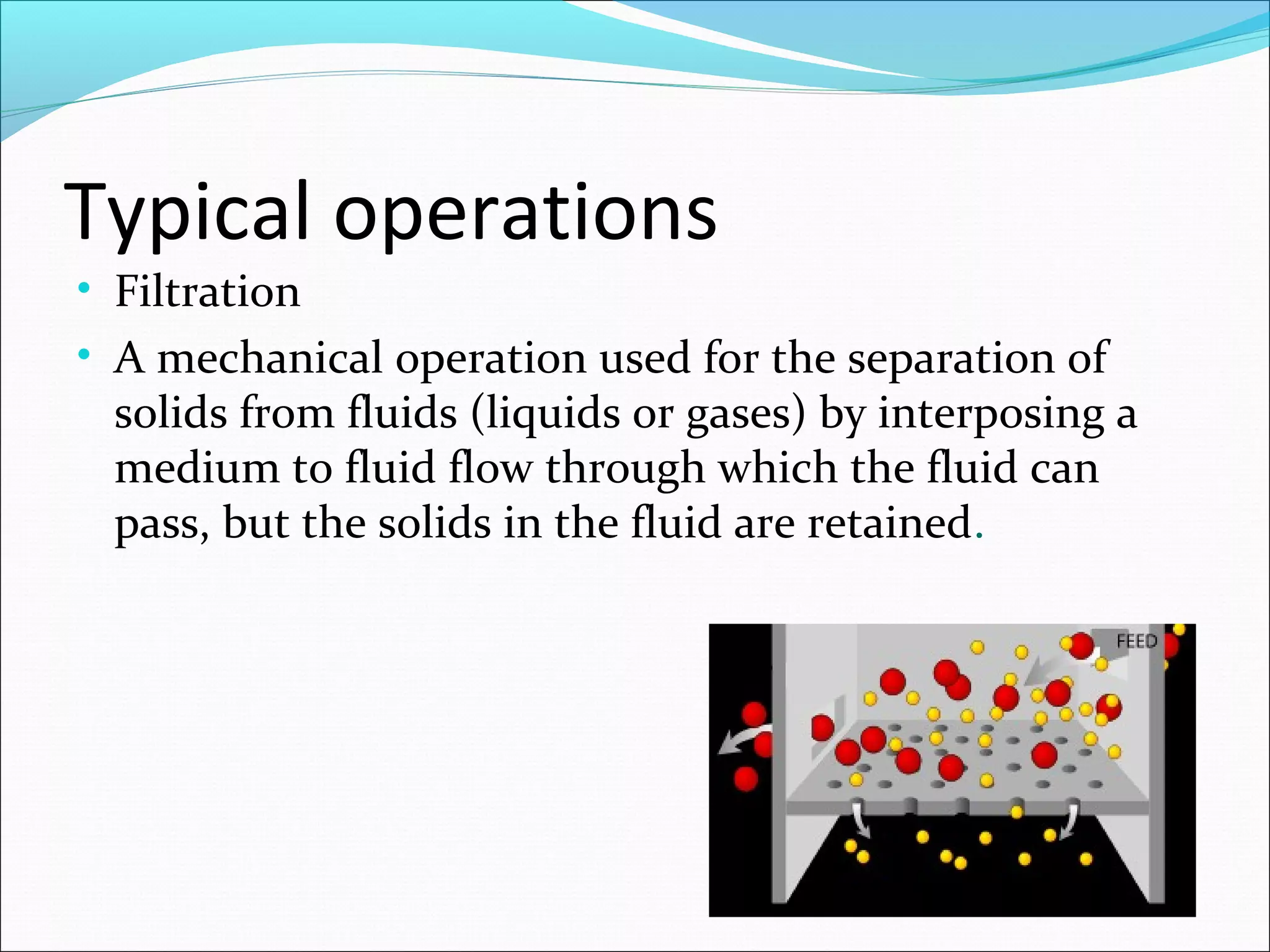
• Filtration
• A mechanical operation used for the separation of
solids from fluids (liquids or gases) by interposing a
medium to fluid flow through which the fluid can
pass, but the solids in the fluid are retained.
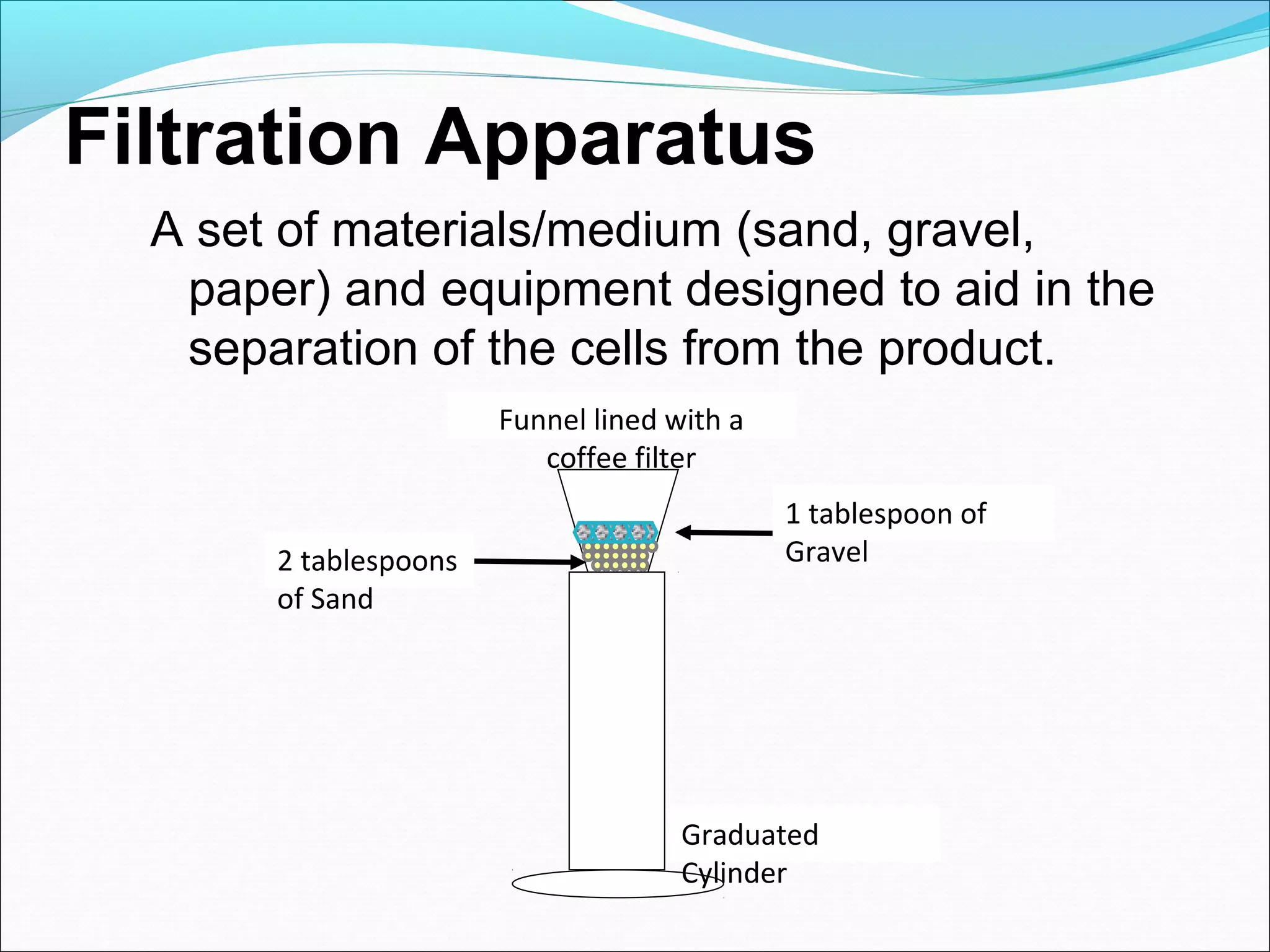
Filtration Apparatus
A set of materials/medium (sand, gravel,
paper) and equipment designed to aid in the
separation of the cells from the product.
Funnel lined with a
coffee filter
Graduated
Cylinder
1 tablespoon of
Gravel2 tablespoons
of Sand
Filter media
• two main types of filter media are
• solid sieve which
-traps the solid particles
• bed of granular materials
-retains the solid particles
Points to be considered while selecting the filter media:
• ability to build the solid.
• minimum resistance to flow the filtrate.
• resistance to chemical attack.
• minimum cost.
• long life
Product Isolation
• reducing the volume of material to be handled and
concentrating the product.
• the unit operations involved
-Solvent extraction
-ultra filtration
-precipitation
Product Purification
• To separate contaminants that resemble the product
very closely in physical and chemical properties.
• Expensive and require sensitive and sophisticated
equipment.
Principle of purification
Filtration
Chromatography
Distillation
Crystallization or Recrystallization
Product Polishing
• final processing steps which end with packaging of
the product in a form that is stable, easily
transportable and convenient.
• Crystallization, desiccation, lyophilization and spray
drying are typical unit operations
Centrifugation
• use of the centrifugal force for the separation of
mixtures
• More-dense components migrate away from the axis
of the centrifuge
• less-dense components migrate towards the axis.
Flocculation
• process where a solute comes out of solution in the
form of flocs or flakes.
• Particles finer than 0.1 µm in water remain
continuously in motion due to electrostatic charge
which causes them to repel each other
• Once their electrostatic charge is neutralized (use of
coagulant) the finer particles start to collide and
combine together .
• These larger and heavier particles are called flocs.
Precipitation
• formation of a solid in a solution during a chemical
reaction.
• solid formed is called the precipitate and the liquid
remaining above the solid is called the supernate.
Crystallization
• process of formation of solid crystals precipitating
from a solution, melt or more rarely deposited
directly from a gas.
• chemical solid-liquid separation technique, in which
mass transfer of a solute from the liquid solution to a
pure solid crystalline phase occurs.
lyophilization
• freezing the material
• reducing the surrounding pressure and adding
• enough heat to allow the frozen water in the material
to sublime directly from the solid phase to gas.
Thank youThank you

Introduction to downstream processes

  • 1.
  • 2.
    Production processesProduction processes Biomanufacturing /Biosynthesis of product involves two major processes a. Upstream b.Downstream. The various stages of processing that occur after the completion of the fermentation or bioconversion stage, including separation, purification, and packaging of the product.
  • 3.
    Downstream processing • Thedownstream portion of a bio manufacturing process is responsible for removing cells and impurities to produce the final end product that will be made available to consumers.
  • 4.
    Stages in DownstreamProcessing • Removal of insoluble's • Product Isolation • Product Purification • Product Polishing
  • 5.
    Removal of insoluble's •capture of the product as a solute in a particulate-free liquid • Example separation of cells, cell debris or other particulate matter from fermentation broth containing an antibiotic.
  • 6.
    Cell Separation The stageof downstream processing where the product is separated from the cells using a filter or centrifuge.
  • 7.
    Typical operations • Filtration •A mechanical operation used for the separation of solids from fluids (liquids or gases) by interposing a medium to fluid flow through which the fluid can pass, but the solids in the fluid are retained.
  • 8.
    Filtration Apparatus A setof materials/medium (sand, gravel, paper) and equipment designed to aid in the separation of the cells from the product. Funnel lined with a coffee filter Graduated Cylinder 1 tablespoon of Gravel2 tablespoons of Sand
  • 9.
    Filter media • twomain types of filter media are • solid sieve which -traps the solid particles • bed of granular materials -retains the solid particles
  • 10.
    Points to beconsidered while selecting the filter media: • ability to build the solid. • minimum resistance to flow the filtrate. • resistance to chemical attack. • minimum cost. • long life
  • 11.
    Product Isolation • reducingthe volume of material to be handled and concentrating the product. • the unit operations involved -Solvent extraction -ultra filtration -precipitation
  • 12.
    Product Purification • Toseparate contaminants that resemble the product very closely in physical and chemical properties. • Expensive and require sensitive and sophisticated equipment.
  • 13.
  • 14.
    Product Polishing • finalprocessing steps which end with packaging of the product in a form that is stable, easily transportable and convenient. • Crystallization, desiccation, lyophilization and spray drying are typical unit operations
  • 15.
    Centrifugation • use ofthe centrifugal force for the separation of mixtures • More-dense components migrate away from the axis of the centrifuge • less-dense components migrate towards the axis.
  • 16.
    Flocculation • process wherea solute comes out of solution in the form of flocs or flakes. • Particles finer than 0.1 µm in water remain continuously in motion due to electrostatic charge which causes them to repel each other • Once their electrostatic charge is neutralized (use of coagulant) the finer particles start to collide and combine together . • These larger and heavier particles are called flocs.
  • 17.
    Precipitation • formation ofa solid in a solution during a chemical reaction. • solid formed is called the precipitate and the liquid remaining above the solid is called the supernate.
  • 18.
    Crystallization • process offormation of solid crystals precipitating from a solution, melt or more rarely deposited directly from a gas. • chemical solid-liquid separation technique, in which mass transfer of a solute from the liquid solution to a pure solid crystalline phase occurs.
  • 19.
    lyophilization • freezing thematerial • reducing the surrounding pressure and adding • enough heat to allow the frozen water in the material to sublime directly from the solid phase to gas.
  • 21.