




Raw Materials In Fermentation
Renu NK Jaisinghani
Assistant Professor
Department of Microbiology
Smt.CHM College
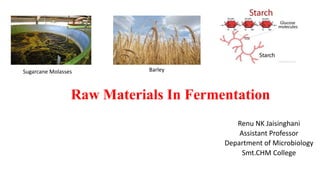
Sugarcane Molasses Barley
Media formulation
Introduction
• Fermentation media must satisfy all the nutritional
requirements of the microorganisms.
• All microorganisms require water, source of energy,
carbon, nitrogen, mineral elements for their growth.
• The nutrients should be formulated to promote the
synthesis of the target product, either cell biomass or
a specific metabolite.
Introduction
• In most industrial fermentation processes there are
several stages where media are required.
• These include inoculum (starter culture) propagation
steps, pilot scale fermentations and the main
production fermentation.
• The technical objectives of inoculum propagation and
the main fermentation are often very different, which
may be reflected in differences in their media
formulations.
Criteria for Ideal Fermentation Medium
• The constituents of a medium must satisfy elemental requirements
for cell biomass.
• Should produce maximum yield of product
• Should produce minimum undesirable product
• Nutrients of cheap cost right agriculture by products should be
utilised and readily available throughout the year with consistent
quality.
• Should provide required quantities of micronutrients like S, P,Mg, K
and trace elements like Fe, Zn, Cu, Mn, Co,Mo, B etc.
Criteria for Ideal Fermentation Medium
• Should not interfere with production process like aeration and
agitation, extraction, purification and waste treatment
• Should have buffering capacity
• Foam formation should be minimum
• Should inhibit growth of contaminants
• Should neutralize acid or alkaline metabolites
Criteria for Ideal Fermentation Medium
• Should not interfere with the recovery process
• During sterilization there should not be interaction between media
ingredients
• It should provide with precursors, steering agent, inducers, inhibitors
depending on type of fermentation process or product
Types and Composition of fermentation Media
• Simple Fermentation Media
• Complex Fermentation Media
• Synthetic Fermentation Media
• Crude fermentation Media
Types and Composition of fermentation
Media
• Simple Fermentation Media
Media consisting of few ingredients viz. inorganic salts
Eg. Allen and Chu Media for growing autotrophs
• Complex Fermentation Media
Media consisting of many different ingredients to fulfil growth
requirements of organisms.
Eg. De Man, Rogosa and Sharpe(MRS) media for growing Fastidious
organisms
Types and Composition of fermentation
Media
• Synthetic Fermentation Media
It is a media in which all of the constituents are specifically defined and known.
It is used for research purpose.
Eg. M9 Minimal media, Chu Media, Krainsky's glucose Media, Czapek’s Dox
Media, Eagel’s media without serum
• Crude Fermentation Media
It is a media in which all of the constituents are not specifically defined and known.
Crude media is generally used on an industrial scale for fermentation process.
Eg. Molasses, Corn Steep Liquor(CSL)
Raw materials for fermentation media
Carbon Sources
Carbon Sources
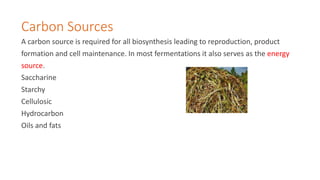
A carbon source is required for all biosynthesis leading to reproduction, product
formation and cell maintenance. In most fermentations it also serves as the energy
source.
Saccharine
Starchy
Cellulosic
Hydrocarbon
Oils and fats
Carbon Source
• Factors influencing the carbon source
- Cost of the product
- rate at which it is metabolized
- geographical locations
- government regulations
- cellular yield coefficient
SACCHARINE RAW MATERIAL
Molasses
• Molasses is a by-product of the cane and beet sugar industry.
It is recovered at any one of several stages in the sugar
refining process.
Cane Molasses are of two types
• Black Strap Molasses
• High Test Molasses/ Invert Molasses
Black Strap Molasses
• The juice from crushed sugar cane is concentrated to allow
crystallization to sucrose
• Crystallized sugar is then separated from Mother liquor and is
concentrated to allow recovery of additional crops of crystalline sugar
the mother liquor contain approximately 52% sugar (30% sucrose and
22% invert sugar)
• It is particularly rich in biotin, pantothenic acid, thiamine,
phosphorous and sulphur. The organic nitrogen content is less than
beet molasses, since it does not contain betaine.
High Test Molasses/ Invert Molasses
• The whole sugarcane juice is partially inverted to prevent sugar
crystallization, the sugar is partially hydrolyzed to monosaccharides
with heat and acid and then neutralized and concentrated without
removal of sugar.
• It contains approximately 70-75% sugar. Invert molasses contains
much of original sugar of cane juice. Although it has been partially
hydrolysed to glucose and fructose.
• High test molasses is produced only during years of sugarcane over
production.
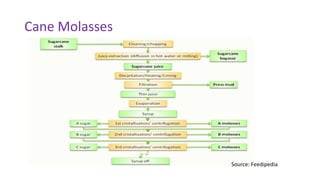
Cane Molasses
Source: Feedipedia
Beet Molasses
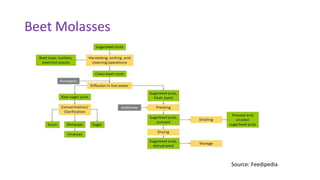
• Beet molasses are produced by the same process employed
for cane molasses.
• Vitamins such as biotin, pyridoxine, thiamine, pantothenic
acid and inositol are present in beet molasses also.
• Beet molasses have limited biotin. Therefore, in
fermentation involving yeast culture, a small amount of cane
black strap molasses. Because yeast require biotin for their
growth.
Beet Molasses
Source: Feedipedia
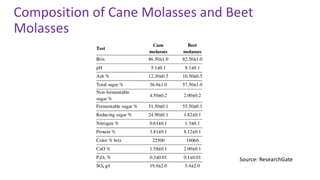
Composition of Cane Molasses and Beet
Molasses
Source: ResearchGate
Hydrol Molasses
• Hydrol is a molasses, resulting from manufacture of
crystalline dextrose from corn starch.
• It contains 60% sugar
• High salt concentration, that must be considered if used in
any fermentation process.
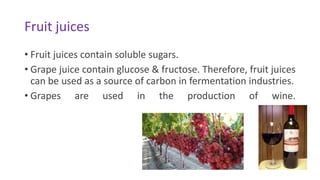
Fruit juices
• Fruit juices contain soluble sugars.
• Grape juice contain glucose & fructose. Therefore, fruit juices
can be used as a source of carbon in fermentation industries.
• Grapes are used in the production of wine.
Cheese Whey
• The straw coloured liquid produced as a by-product of cheese
making is called Cheese Whey.
• It is a major waste product of cheese industry.
• It cannot be disposed of without proper treatment. Therefore, it
is desirable to use it for useful products.
• It is also used as pig feed.
• For lactic acid production and SCP production it is served as raw
material because it contains lactose, nitrogenous substances
including vitamins (eg: vitamins) and inorganic salts.
STARCHY RAW MATERIAL
Types of Starchy Raw Material
• Cereals (Wheat, rice, barley)
• Roots & tubers (potatoes, tapioca e.t.c)
The moisture content of the grain is lower where and that of roots
and tubers are very high. Starch requires pre-treatment to bring
about the conversion to fermentable sugars. This is done either by
enzymatic or acid treatment.
CELLULOSIC RAW MATERIAL
Cellulosic Raw Material
• Cellulosic material are complex carbohydrate.
• Cellulosic materials require pretreatment.
• Cellulosic materials are Sulfite waste liquor, wood molasses(Acid
Wood hydrolysates) and Rice straw.
Sulphite Waste Liquor(SWL)
• In the manufacture of paper pulp, wood is subjected to
hydrolysis which is brought about with the help of Calcium
bisulfite under heat and pressure.
• This operation is called digestion process.
• At the end of this process, the spent liquid is left and it is referred
to as Sulfite waste liquor.
• It cannot be disposed of unless it is properly treated.
• Sulfite waste liquor contains 10 to 12 percent solids, of which
sugars make up about 20%.
Sulphite Waste Liquor(SWL)
• It contains sugars in the form of hexoses and pentoses.
• It is used in the industrial production of ethyl alcohol using
Saccharomyces cerevisiae and in the growth of Torula utilis cells
for animal feed.
• It contains free sulfurdioxide or sulfurous acid which is toxic to
microorganisms.
• These toxicants are removed by steam stripping or precipitation
with lime.
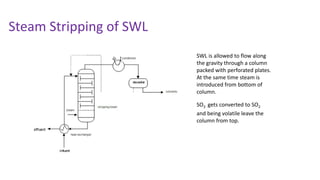
Steam Stripping of SWL
SWL is allowed to flow along
the gravity through a column
packed with perforated plates.
At the same time steam is
introduced from bottom of
column.
SO3 gets converted to SO2
and being volatile leave the
column from top.
Wood molasses (Acid Wood hydrolysates)
• It is produced by acid hydrolysis of wood cellulose itself.
• This may produce 65-85% fermentable sugars.
• Sulphuric acid of about 0.5% concentration is used at a
temperature range of 150 to 1850C. Using a continuous process a
syrup is obtained from saw dust.
• This syrup may contain 4 to 5% reducing sugars (a mixture of
glucose and pentoses) with an overall yield of 45 to 55%.
• It is subjected to concentration to give a kind of wood molasses.
Rice Straw
• Rice straw and related agricultural materials can serve as a good
source of cellulose.
• It is a poor quality animal feed in its natural state because of its
bulkiness, poor palatability, low protein content and low
digestibility.
• Numerous microorganisms are capable of using cellulose for
their growth.
• Rice straw has been used as a fermentation medium in the
production of silage and single cell protein (SCP), mushroom
cultivation etc.
VEGETABLE OILS AND
HYDROCARBON AS RAW
MATERIAL
VEGETABLE OILS
• Oils obtained by de-oiling of vegetable seeds are called vegetable
oils. On the basis of their degree of unsaturation, they may be
grouped into following three major classes:
• Oleic :These include olive and groundnut oils.
• Linoleic :These have a higher content of the double unsaturated
fatty acid found in maize, sunflower and cotton seed oils.
• Linolenic acid: These include linseed and soya bean oils
containing a fatty acid with three double bonds.
VEGETABLE OILS
• These oils may undergo drying if exposed to the atmosphere due to
the oxidation of the unsaturated components. Commercial vegetable
oils (e.g. maize oil) may be used in conjunction with surface active
agent as anti foams or alone as a nutrient source of carbon.
HYDROCARBONS
• Hydrocarbons used as fermentation substrates are usually
mixtures of various hydrocarbon components.
• These fermentation raw materials are relatively cheap. However,
purified hydrocarbon fractions or hydrocarbon compounds are
more expensive.
• Hydrocarbon substrates (e.g. gas oil and n-paraffins) are used to
produce single cell protein (SCP) products.
• In this way biomass of yeasts (e.g. Candida lipolytica, Candida
kofuensis, Candida tropicalis) can be produced on a significant
scale under aerobic conditions.
Nitrogen Sources
Nitrogen Sources
• Nitrogen is required for synthesis of protein, nucleic acid and co-
enzymes by microbial cells. Most industrial microbes can utilize
both inorganic and organic nitrogen sources.
• Inorganic Nitrogen Sources are
Ammonium Sulphate
Diammonium hydrogen phosphate
Ammonia
Urea
Nitrogen Sources
• Natural/ Organic Sources of Nitrogen are
Corn Steep Liquor
Potato Liquor
Fermented extract from bran and oil seeds
Yeast Extract
Soybean and peanut flour
CORN STEEP LIQUOR
• The used steep water results from the steeping of corn during the
manufacture of starch, gluten and other corn products.
• This by product is subjected to concentration to approximately 50%
solids and this concentrate is called corn steep liquor.
• Corn steep liquor was originally found to be useful for penicillin
production specifically. But, it is now recognized as valuable in many
fungal antibiotic fermentation media.
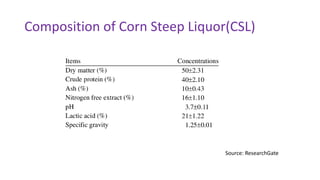
Composition of Corn Steep Liquor(CSL)
Source: ResearchGate
POTATO STEEP LIQUOR
• Corn steep liquor can be replaced by liquors from potato starch
production and by the fermented extract from bran and oil seeds.
• The liquid formed by pressing potato pulp in starch production is
subjected to sulphuration and lactic fermentation by culture of
Lactobacillus delbruckii.
Yeast Extract
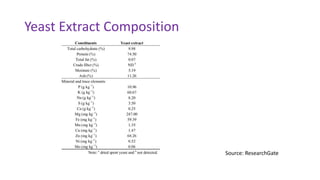
• Yeast extract is a mixture of aminoacids, peptides, water soluble
vitamins and carbohydrates.
• The extract is prepared by autolysis or plasmolysis of baker’s yeast.
Yeast Extract Composition
Source: ResearchGate
Soybean Flour/Meal
• The material left after removing oil from the soya bean seeds are
called as soya bean meal. Soya bean meal contains approximately 8%
w/w nitrogen.
• This differs from corn steep liquor, since soya bean meal is a much
more complex nitrogenous source than corn steep liquor, and
therefore not readily available to microbes.
• The most important constituents of soybean flour are protein, fat and
phosphorus.
• This is used as a ingredient for fermentation media in the production
of streptomycin.
Pharmamedia
• Pharmamedia is a clean, yellow, finely ground powder prepared from
the embryo of cotton seed.
• It contains 56% w/w protein, 24% carbohydrate, 5% oil, and 5% ash.
• Ash, in turn, contains calcium, iron, chloride, phosphorous and
sulfate.
• It is used as an ingredient for production media (Eg: Tetracycline
production).
Distillers Soluble
• In the manufacture of alcohol using grain or maize, alcohol is distilled from
fermented grain or maize, leaving the residue (containing 6 to 8% w/v total
solids).
• The suspended solids from the residue are eliminated by screening, leaving
the effluent.
• Thereafter effluent is subjected to concentration, until the solid content
reaches 35% w/v giving 'evaporator syrup’.
• This syrup is then drum dried to yield 'distillers solubles’.
• This may be used as a production medium component, since it supplies
nitrogen, together with many accessory food factors (e.g. vitamin B
complex).
Precursors, Inhibitors, Inducers,
Antifoam Agents,
Oxidation-Reduction Potential
Precursors
• Substances added prior to or simultaneously with the fermentation,
which are incorporated into the fermentation product, and which
generally serve to increase the yield or improve quality of the product
are known as Precursors
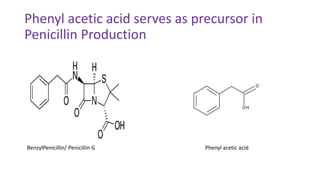
• Phenylacetic acid as side-chain precursors in penicillin production by
Penicillium chrysogenum
• D-threonine in L-isoleucine production by Serratia marcescens
• Cobalt chloride in Vitamin B12 production by Propionibacterium spp.
Phenyl acetic acid serves as precursor in
Penicillin Production
BenzylPenicillin/ Penicillin G Phenyl acetic acid
Inhibitors
• Inhibitors are those chemical compounds when added to certain
fermentations, more of a specific product may be produced, or a
metabolic intermediate which is normally metabolised is
accumulated.
• Sodium bisulphite in production of glycerol by S. cerevisiae.
• Di-ethyl barbiturate in production of Rifamycin B by Nocardia
mediterranei
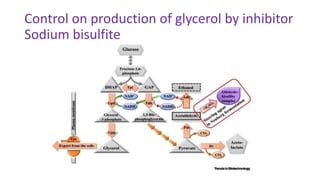
Control on production of glycerol by inhibitor
Sodium bisulfite
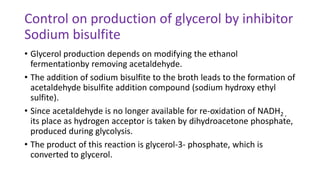
• Glycerol production depends on modifying the ethanol
fermentationby removing acetaldehyde.
• The addition of sodium bisulfite to the broth leads to the formation of
acetaldehyde bisulfite addition compound (sodium hydroxy ethyl
sulfite).
• Since acetaldehyde is no longer available for re-oxidation of NADH2 ,
its place as hydrogen acceptor is taken by dihydroacetone phosphate,
produced during glycolysis.
• The product of this reaction is glycerol-3- phosphate, which is
converted to glycerol.
Control on production of glycerol by inhibitor
Sodium bisulfite
Inducers
• Inducers are those specific chemical compounds included in media
which induce or provoke formation of desired industrial fermentation
products.
• For production of industrial important enzymes inducers are added in
the broth.
• Various Proteins for Proteases, Starch for alpha-amylases, Cellulose
for cellualse, Pectin for pectinase.
Antifoam Agents
• Antifoams are surface active agents, reducing the surface tension in
the foams and destabilizing protein films by hydrophobic bridges
between two surface, displacement of absorbed protein and rapid
spreading on the surface of the film.
• An ideal antifoam should have a fast action on the existing foam but
should not be metabolized by the microorganisms.
• It should be cheap, heat sterilizable, non toxic, long acting and active
at low concentrations.
Antifoam Agents
Examples: Stearyl alcohol and octyl decanol, esters, fatty acids, cotton
seed oil, linseed oil, castor oil, cod liver oil etc, silicones, sulphonates.
If the oxygen transfer rate is severely affected by antifoam addition,
then mechanical foam breakers may have to be considered as a
possible alternative.
Oxidation-Reduction Potential
• In anaerobic fermentation, presence of oxygen disrupts the
production of desired compound, hence substances that lower the
O/R potential is required.
• Amino acids such as L-cysteine, peptides such as glutathione and
organic acids such as thioglycolic.
• Also to get rid of dissolved oxygen in anaerobic fermentation,
medium is heated and cooled just before inoculation.
• Cooked corn mash due to its gel-like properties also helps in reducing
the O/R potential. This is used during acetone-butanol production by
Clostridia.
Water
Water
• A reliable source of large quantities of clean water, of consistent
composition, is essential.
• Before use, removal of suspended solids, colloids and microorganisms
is usually required.
• “Hard” water is treated to remove salts such as calcium carbonate.
• Iron and chlorine may also require removal.
• Water is becoming increasingly expensive / recycle /reuse wherever
possible / minimizes water costs and reduces the volume requiring
waste-water treatment.
References
• Food Biotechnology Course material by K V Anand Raj
• Textbook on Fermentation Technology (Vol.1) by H A Modi
• Textbook on Industrial Microbiology by A H Patel
• Textbook on Industrial Microbiology by L. E Casida
• Principles of Fermentation Technology by Stanbury and Whitaker, 2ed.
Thank You

Raw materials in fermentation

  • 1.
    Raw Materials InFermentation Renu NK Jaisinghani Assistant Professor Department of Microbiology Smt.CHM College Sugarcane Molasses Barley
  • 2.
    Media formulation Introduction • Fermentationmedia must satisfy all the nutritional requirements of the microorganisms. • All microorganisms require water, source of energy, carbon, nitrogen, mineral elements for their growth. • The nutrients should be formulated to promote the synthesis of the target product, either cell biomass or a specific metabolite.
  • 3.
    Introduction • In mostindustrial fermentation processes there are several stages where media are required. • These include inoculum (starter culture) propagation steps, pilot scale fermentations and the main production fermentation. • The technical objectives of inoculum propagation and the main fermentation are often very different, which may be reflected in differences in their media formulations.
  • 4.
    Criteria for IdealFermentation Medium • The constituents of a medium must satisfy elemental requirements for cell biomass. • Should produce maximum yield of product • Should produce minimum undesirable product • Nutrients of cheap cost right agriculture by products should be utilised and readily available throughout the year with consistent quality. • Should provide required quantities of micronutrients like S, P,Mg, K and trace elements like Fe, Zn, Cu, Mn, Co,Mo, B etc.
  • 5.
    Criteria for IdealFermentation Medium • Should not interfere with production process like aeration and agitation, extraction, purification and waste treatment • Should have buffering capacity • Foam formation should be minimum • Should inhibit growth of contaminants • Should neutralize acid or alkaline metabolites
  • 6.
    Criteria for IdealFermentation Medium • Should not interfere with the recovery process • During sterilization there should not be interaction between media ingredients • It should provide with precursors, steering agent, inducers, inhibitors depending on type of fermentation process or product
  • 7.
    Types and Compositionof fermentation Media • Simple Fermentation Media • Complex Fermentation Media • Synthetic Fermentation Media • Crude fermentation Media
  • 8.
    Types and Compositionof fermentation Media • Simple Fermentation Media Media consisting of few ingredients viz. inorganic salts Eg. Allen and Chu Media for growing autotrophs • Complex Fermentation Media Media consisting of many different ingredients to fulfil growth requirements of organisms. Eg. De Man, Rogosa and Sharpe(MRS) media for growing Fastidious organisms
  • 9.
    Types and Compositionof fermentation Media • Synthetic Fermentation Media It is a media in which all of the constituents are specifically defined and known. It is used for research purpose. Eg. M9 Minimal media, Chu Media, Krainsky's glucose Media, Czapek’s Dox Media, Eagel’s media without serum • Crude Fermentation Media It is a media in which all of the constituents are not specifically defined and known. Crude media is generally used on an industrial scale for fermentation process. Eg. Molasses, Corn Steep Liquor(CSL)
  • 10.
    Raw materials forfermentation media
  • 11.
  • 12.
    Carbon Sources A carbonsource is required for all biosynthesis leading to reproduction, product formation and cell maintenance. In most fermentations it also serves as the energy source. Saccharine Starchy Cellulosic Hydrocarbon Oils and fats
  • 13.
    Carbon Source • Factorsinfluencing the carbon source - Cost of the product - rate at which it is metabolized - geographical locations - government regulations - cellular yield coefficient
  • 14.
  • 15.
    Molasses • Molasses isa by-product of the cane and beet sugar industry. It is recovered at any one of several stages in the sugar refining process. Cane Molasses are of two types • Black Strap Molasses • High Test Molasses/ Invert Molasses
  • 16.
    Black Strap Molasses •The juice from crushed sugar cane is concentrated to allow crystallization to sucrose • Crystallized sugar is then separated from Mother liquor and is concentrated to allow recovery of additional crops of crystalline sugar the mother liquor contain approximately 52% sugar (30% sucrose and 22% invert sugar) • It is particularly rich in biotin, pantothenic acid, thiamine, phosphorous and sulphur. The organic nitrogen content is less than beet molasses, since it does not contain betaine.
  • 17.
    High Test Molasses/Invert Molasses • The whole sugarcane juice is partially inverted to prevent sugar crystallization, the sugar is partially hydrolyzed to monosaccharides with heat and acid and then neutralized and concentrated without removal of sugar. • It contains approximately 70-75% sugar. Invert molasses contains much of original sugar of cane juice. Although it has been partially hydrolysed to glucose and fructose. • High test molasses is produced only during years of sugarcane over production.
  • 18.
  • 19.
    Beet Molasses • Beetmolasses are produced by the same process employed for cane molasses. • Vitamins such as biotin, pyridoxine, thiamine, pantothenic acid and inositol are present in beet molasses also. • Beet molasses have limited biotin. Therefore, in fermentation involving yeast culture, a small amount of cane black strap molasses. Because yeast require biotin for their growth.
  • 20.
  • 21.
    Composition of CaneMolasses and Beet Molasses Source: ResearchGate
  • 22.
    Hydrol Molasses • Hydrolis a molasses, resulting from manufacture of crystalline dextrose from corn starch. • It contains 60% sugar • High salt concentration, that must be considered if used in any fermentation process.
  • 23.
    Fruit juices • Fruitjuices contain soluble sugars. • Grape juice contain glucose & fructose. Therefore, fruit juices can be used as a source of carbon in fermentation industries. • Grapes are used in the production of wine.
  • 24.
    Cheese Whey • Thestraw coloured liquid produced as a by-product of cheese making is called Cheese Whey. • It is a major waste product of cheese industry. • It cannot be disposed of without proper treatment. Therefore, it is desirable to use it for useful products. • It is also used as pig feed. • For lactic acid production and SCP production it is served as raw material because it contains lactose, nitrogenous substances including vitamins (eg: vitamins) and inorganic salts.
  • 25.
  • 26.
    Types of StarchyRaw Material • Cereals (Wheat, rice, barley) • Roots & tubers (potatoes, tapioca e.t.c) The moisture content of the grain is lower where and that of roots and tubers are very high. Starch requires pre-treatment to bring about the conversion to fermentable sugars. This is done either by enzymatic or acid treatment.
  • 27.
  • 28.
    Cellulosic Raw Material •Cellulosic material are complex carbohydrate. • Cellulosic materials require pretreatment. • Cellulosic materials are Sulfite waste liquor, wood molasses(Acid Wood hydrolysates) and Rice straw.
  • 29.
    Sulphite Waste Liquor(SWL) •In the manufacture of paper pulp, wood is subjected to hydrolysis which is brought about with the help of Calcium bisulfite under heat and pressure. • This operation is called digestion process. • At the end of this process, the spent liquid is left and it is referred to as Sulfite waste liquor. • It cannot be disposed of unless it is properly treated. • Sulfite waste liquor contains 10 to 12 percent solids, of which sugars make up about 20%.
  • 30.
    Sulphite Waste Liquor(SWL) •It contains sugars in the form of hexoses and pentoses. • It is used in the industrial production of ethyl alcohol using Saccharomyces cerevisiae and in the growth of Torula utilis cells for animal feed. • It contains free sulfurdioxide or sulfurous acid which is toxic to microorganisms. • These toxicants are removed by steam stripping or precipitation with lime.
  • 31.
    Steam Stripping ofSWL SWL is allowed to flow along the gravity through a column packed with perforated plates. At the same time steam is introduced from bottom of column. SO3 gets converted to SO2 and being volatile leave the column from top.
  • 32.
    Wood molasses (AcidWood hydrolysates) • It is produced by acid hydrolysis of wood cellulose itself. • This may produce 65-85% fermentable sugars. • Sulphuric acid of about 0.5% concentration is used at a temperature range of 150 to 1850C. Using a continuous process a syrup is obtained from saw dust. • This syrup may contain 4 to 5% reducing sugars (a mixture of glucose and pentoses) with an overall yield of 45 to 55%. • It is subjected to concentration to give a kind of wood molasses.
  • 33.
    Rice Straw • Ricestraw and related agricultural materials can serve as a good source of cellulose. • It is a poor quality animal feed in its natural state because of its bulkiness, poor palatability, low protein content and low digestibility. • Numerous microorganisms are capable of using cellulose for their growth. • Rice straw has been used as a fermentation medium in the production of silage and single cell protein (SCP), mushroom cultivation etc.
  • 34.
  • 35.
    VEGETABLE OILS • Oilsobtained by de-oiling of vegetable seeds are called vegetable oils. On the basis of their degree of unsaturation, they may be grouped into following three major classes: • Oleic :These include olive and groundnut oils. • Linoleic :These have a higher content of the double unsaturated fatty acid found in maize, sunflower and cotton seed oils. • Linolenic acid: These include linseed and soya bean oils containing a fatty acid with three double bonds.
  • 36.
    VEGETABLE OILS • Theseoils may undergo drying if exposed to the atmosphere due to the oxidation of the unsaturated components. Commercial vegetable oils (e.g. maize oil) may be used in conjunction with surface active agent as anti foams or alone as a nutrient source of carbon.
  • 37.
    HYDROCARBONS • Hydrocarbons usedas fermentation substrates are usually mixtures of various hydrocarbon components. • These fermentation raw materials are relatively cheap. However, purified hydrocarbon fractions or hydrocarbon compounds are more expensive. • Hydrocarbon substrates (e.g. gas oil and n-paraffins) are used to produce single cell protein (SCP) products. • In this way biomass of yeasts (e.g. Candida lipolytica, Candida kofuensis, Candida tropicalis) can be produced on a significant scale under aerobic conditions.
  • 38.
  • 39.
    Nitrogen Sources • Nitrogenis required for synthesis of protein, nucleic acid and co- enzymes by microbial cells. Most industrial microbes can utilize both inorganic and organic nitrogen sources. • Inorganic Nitrogen Sources are Ammonium Sulphate Diammonium hydrogen phosphate Ammonia Urea
  • 40.
    Nitrogen Sources • Natural/Organic Sources of Nitrogen are Corn Steep Liquor Potato Liquor Fermented extract from bran and oil seeds Yeast Extract Soybean and peanut flour
  • 41.
    CORN STEEP LIQUOR •The used steep water results from the steeping of corn during the manufacture of starch, gluten and other corn products. • This by product is subjected to concentration to approximately 50% solids and this concentrate is called corn steep liquor. • Corn steep liquor was originally found to be useful for penicillin production specifically. But, it is now recognized as valuable in many fungal antibiotic fermentation media.
  • 42.
    Composition of CornSteep Liquor(CSL) Source: ResearchGate
  • 43.
    POTATO STEEP LIQUOR •Corn steep liquor can be replaced by liquors from potato starch production and by the fermented extract from bran and oil seeds. • The liquid formed by pressing potato pulp in starch production is subjected to sulphuration and lactic fermentation by culture of Lactobacillus delbruckii.
  • 44.
    Yeast Extract • Yeastextract is a mixture of aminoacids, peptides, water soluble vitamins and carbohydrates. • The extract is prepared by autolysis or plasmolysis of baker’s yeast.
  • 45.
  • 46.
    Soybean Flour/Meal • Thematerial left after removing oil from the soya bean seeds are called as soya bean meal. Soya bean meal contains approximately 8% w/w nitrogen. • This differs from corn steep liquor, since soya bean meal is a much more complex nitrogenous source than corn steep liquor, and therefore not readily available to microbes. • The most important constituents of soybean flour are protein, fat and phosphorus. • This is used as a ingredient for fermentation media in the production of streptomycin.
  • 47.
    Pharmamedia • Pharmamedia isa clean, yellow, finely ground powder prepared from the embryo of cotton seed. • It contains 56% w/w protein, 24% carbohydrate, 5% oil, and 5% ash. • Ash, in turn, contains calcium, iron, chloride, phosphorous and sulfate. • It is used as an ingredient for production media (Eg: Tetracycline production).
  • 48.
    Distillers Soluble • Inthe manufacture of alcohol using grain or maize, alcohol is distilled from fermented grain or maize, leaving the residue (containing 6 to 8% w/v total solids). • The suspended solids from the residue are eliminated by screening, leaving the effluent. • Thereafter effluent is subjected to concentration, until the solid content reaches 35% w/v giving 'evaporator syrup’. • This syrup is then drum dried to yield 'distillers solubles’. • This may be used as a production medium component, since it supplies nitrogen, together with many accessory food factors (e.g. vitamin B complex).
  • 49.
    Precursors, Inhibitors, Inducers, AntifoamAgents, Oxidation-Reduction Potential
  • 50.
    Precursors • Substances addedprior to or simultaneously with the fermentation, which are incorporated into the fermentation product, and which generally serve to increase the yield or improve quality of the product are known as Precursors • Phenylacetic acid as side-chain precursors in penicillin production by Penicillium chrysogenum • D-threonine in L-isoleucine production by Serratia marcescens • Cobalt chloride in Vitamin B12 production by Propionibacterium spp.
  • 51.
    Phenyl acetic acidserves as precursor in Penicillin Production BenzylPenicillin/ Penicillin G Phenyl acetic acid
  • 52.
    Inhibitors • Inhibitors arethose chemical compounds when added to certain fermentations, more of a specific product may be produced, or a metabolic intermediate which is normally metabolised is accumulated. • Sodium bisulphite in production of glycerol by S. cerevisiae. • Di-ethyl barbiturate in production of Rifamycin B by Nocardia mediterranei
  • 53.
    Control on productionof glycerol by inhibitor Sodium bisulfite • Glycerol production depends on modifying the ethanol fermentationby removing acetaldehyde. • The addition of sodium bisulfite to the broth leads to the formation of acetaldehyde bisulfite addition compound (sodium hydroxy ethyl sulfite). • Since acetaldehyde is no longer available for re-oxidation of NADH2 , its place as hydrogen acceptor is taken by dihydroacetone phosphate, produced during glycolysis. • The product of this reaction is glycerol-3- phosphate, which is converted to glycerol.
  • 54.
    Control on productionof glycerol by inhibitor Sodium bisulfite
  • 55.
    Inducers • Inducers arethose specific chemical compounds included in media which induce or provoke formation of desired industrial fermentation products. • For production of industrial important enzymes inducers are added in the broth. • Various Proteins for Proteases, Starch for alpha-amylases, Cellulose for cellualse, Pectin for pectinase.
  • 56.
    Antifoam Agents • Antifoamsare surface active agents, reducing the surface tension in the foams and destabilizing protein films by hydrophobic bridges between two surface, displacement of absorbed protein and rapid spreading on the surface of the film. • An ideal antifoam should have a fast action on the existing foam but should not be metabolized by the microorganisms. • It should be cheap, heat sterilizable, non toxic, long acting and active at low concentrations.
  • 57.
    Antifoam Agents Examples: Stearylalcohol and octyl decanol, esters, fatty acids, cotton seed oil, linseed oil, castor oil, cod liver oil etc, silicones, sulphonates. If the oxygen transfer rate is severely affected by antifoam addition, then mechanical foam breakers may have to be considered as a possible alternative.
  • 58.
  • 59.
    Oxidation-Reduction Potential • Inanaerobic fermentation, presence of oxygen disrupts the production of desired compound, hence substances that lower the O/R potential is required. • Amino acids such as L-cysteine, peptides such as glutathione and organic acids such as thioglycolic. • Also to get rid of dissolved oxygen in anaerobic fermentation, medium is heated and cooled just before inoculation. • Cooked corn mash due to its gel-like properties also helps in reducing the O/R potential. This is used during acetone-butanol production by Clostridia.
  • 60.
  • 61.
    Water • A reliablesource of large quantities of clean water, of consistent composition, is essential. • Before use, removal of suspended solids, colloids and microorganisms is usually required. • “Hard” water is treated to remove salts such as calcium carbonate. • Iron and chlorine may also require removal. • Water is becoming increasingly expensive / recycle /reuse wherever possible / minimizes water costs and reduces the volume requiring waste-water treatment.
  • 62.
    References • Food BiotechnologyCourse material by K V Anand Raj • Textbook on Fermentation Technology (Vol.1) by H A Modi • Textbook on Industrial Microbiology by A H Patel • Textbook on Industrial Microbiology by L. E Casida • Principles of Fermentation Technology by Stanbury and Whitaker, 2ed.
  • 63.