Rizwan Abbas Baho

 Definitions
 History
 Characteristics
 Components
 Principles
 Types
 Applications
Contents

Introduction
 Biosensors. are devices
which are used to sense
or detect the biological
activity.
 E.g. Glucometer
 A device that utilizes
biological
components e.g.
enzymes to indicate the
amount of a biomaterial
or processes.

 IUPAC definition
Biosensors are devices which use a biological
recognition element retained in direct spatial contact
with transduction system.
 Are devices use to sense or monitor the
reactions/processes.
 devices that convert a physical or biological event
into a measurable signal.
Biosensors

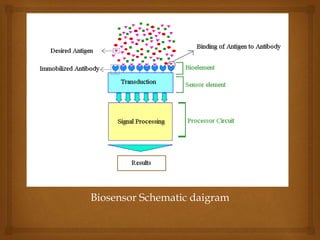
 Analytical device use for analysis reaction of
biochemical molecule .
 Detecting target analyte and converts a biological
response.
 Process the response and generate result.
(measureable signals)
Processing
Biosensor Schematic daigram

 The first 'true' biosensor was
developed by Leland C. Clark,
Jr in 1956 for oxygen detection.
 He is known as the 'father
of biosensors' and his
invention of the oxygen
electrode bears his name: 'Clark
electrode
History
Professor Leland C
Clark Jnr 1918–2005

 1916:
Immobilization of proteins: adsorption of invertase on
activated charcoal.
 1972:
First commercial biosensor: Yellow Springs Instruments
glucose biosensor.
 1980 :
First fiber optic pH sensor for in vivo blood gases.
 1987:
MediSense Launched blood glucose biosensor
Cont .

 High selectivity and sensitivity
 Reliability
 Short Assay time
 Stability
 Simplicity
 Low cost for operation and storage
Characteristics

 Industry -- process monitoring and control,
particularly food and drinks
 „Medicine -- diagnostics, metabolites,
hormones
 Military -- battlefield monitoring of poison
gases, nerve agents & people.
 „Domestic -- home monitoring of non acute
conditions
Why & Where

 Glucometer
 HCG test
 Benzene biosensor
 Nitrosamine biosensors
 Hydrogen peroxide biosensors
 DNA probe based biosensors
Examples
 Consist of two distinct components.
which include
 Biological component: enzyme, Cells etc.
 Physical component: transducer, amplifier etc.
Component of Biosensors


 Analyte (feed)
 Bioreception
 Transduction
 Display (Detection)
Process

 Biosensors works on basis of process/reaction
 Heat detection
 Distribution of charge
 Movement of electrons
 Light output
 Effects on mass
Principle
Detector

 Biosensors are categorized in five types according to
the principles follows,
 Calorimetric Biosensor
 Potentiometric Biosensor
 Amperometric Biosensor
 Optical Biosensor
 Piezo-electric Biosensor

 Calorimetric biosensors measure the temperature
change of the solution containing the analyte.
 Immobilized enzyme are used.
 Thermistors are used as detectors.
 Maintaining temperature is its disadvantage.
 Applied in case of exothermic process
Calorimetric biosensors

 These biosensors use ion-selective electrodes.
 Works where catalyze reaction generates Hydrogen
ions .
 Convert the biological reaction into electronic signal.
 Detected by pH meters
Potentiometric Biosensor

Potentiometric Biosensor

 Piezoelectric biosensors are based on the principle of
acoustics (sound vibrations), so also known as
acoustic biosensors.
 Piezo-electric devices use gold to detect the specific
angle at which electron waves are emitted .
 resonance frequencies which can be measured by
electronic devices.
Piezoelectric biosensors

 Functions on basis of
oscillations.
 Disadvantage in case of
crystals cease to
oscillate

 These electrodes function by the production of a
current .
 When potential is applied between two electrodes,
the magnitude of current being proportional to the
substrate concentration.
 Applicable in redox reactions.
Amperometric Biosensor

Amperometric Biosensor

 Optical biosensors are the devices that utilize the
principle of optical measurements.
 (absorbance, fluorescence, chemiluminescence etc.).
 Optical biosensors allow a safe non-electrical remote
sensing of materials.
Optical Biosensor

 Colorimetric
Color detection
 Photometric
light intensity
Examples
Electrochemical DNA
sensors

Applications

 Nutritional component
 Epidemiological research
 Nutritional fact
 Microbial Content
 Food Additives
Food Quality Analysis

 In the doctor's office as point of care devices. Like
glucose sensor.
 HCG strips for pregnancy tests.
 Diagnosis of diseases
 Cancer, microbial counts
Electrochemical (potentiometric and
amperometric)

 Electrochemical biosensors offer the capability of
detecting damage DNA as well as carcinogens that caused
the damage
 Environmental applications e.g. the detection of pesticides
and river water contaminants such as heavy metal ions.
 Determining levels of toxic substances before and after
bioremediation
 Detection of pathogens
Application

 Food quality control Hydrogen peroxide Biosensors
 Soft drinks (Benzene Biosensors)
 DNA probes
 Acetyl choline biosensors for soil analysis.
 Analysis of purification.
 Fermentation process and Microbial counts.
Down stream and
Biosensing
If any. Feel free to ask.
Biosensors

Biosensors

  • 1.
  • 2.
      Definitions  History Characteristics  Components  Principles  Types  Applications Contents
  • 3.
  • 4.
     Biosensors. aredevices which are used to sense or detect the biological activity.  E.g. Glucometer  A device that utilizes biological components e.g. enzymes to indicate the amount of a biomaterial or processes.
  • 5.
      IUPAC definition Biosensorsare devices which use a biological recognition element retained in direct spatial contact with transduction system.  Are devices use to sense or monitor the reactions/processes.  devices that convert a physical or biological event into a measurable signal. Biosensors
  • 6.
      Analytical deviceuse for analysis reaction of biochemical molecule .  Detecting target analyte and converts a biological response.  Process the response and generate result. (measureable signals) Processing
  • 7.
  • 8.
      The first'true' biosensor was developed by Leland C. Clark, Jr in 1956 for oxygen detection.  He is known as the 'father of biosensors' and his invention of the oxygen electrode bears his name: 'Clark electrode History Professor Leland C Clark Jnr 1918–2005
  • 9.
      1916: Immobilization ofproteins: adsorption of invertase on activated charcoal.  1972: First commercial biosensor: Yellow Springs Instruments glucose biosensor.  1980 : First fiber optic pH sensor for in vivo blood gases.  1987: MediSense Launched blood glucose biosensor Cont .
  • 10.
      High selectivityand sensitivity  Reliability  Short Assay time  Stability  Simplicity  Low cost for operation and storage Characteristics
  • 11.
      Industry --process monitoring and control, particularly food and drinks  „Medicine -- diagnostics, metabolites, hormones  Military -- battlefield monitoring of poison gases, nerve agents & people.  „Domestic -- home monitoring of non acute conditions Why & Where
  • 12.
      Glucometer  HCGtest  Benzene biosensor  Nitrosamine biosensors  Hydrogen peroxide biosensors  DNA probe based biosensors Examples
  • 13.
     Consist oftwo distinct components. which include  Biological component: enzyme, Cells etc.  Physical component: transducer, amplifier etc. Component of Biosensors
  • 14.
  • 15.
      Analyte (feed) Bioreception  Transduction  Display (Detection) Process
  • 16.
      Biosensors workson basis of process/reaction  Heat detection  Distribution of charge  Movement of electrons  Light output  Effects on mass Principle
  • 17.
  • 19.
      Biosensors arecategorized in five types according to the principles follows,  Calorimetric Biosensor  Potentiometric Biosensor  Amperometric Biosensor  Optical Biosensor  Piezo-electric Biosensor
  • 20.
      Calorimetric biosensorsmeasure the temperature change of the solution containing the analyte.  Immobilized enzyme are used.  Thermistors are used as detectors.  Maintaining temperature is its disadvantage.  Applied in case of exothermic process Calorimetric biosensors
  • 21.
      These biosensorsuse ion-selective electrodes.  Works where catalyze reaction generates Hydrogen ions .  Convert the biological reaction into electronic signal.  Detected by pH meters Potentiometric Biosensor
  • 22.
  • 23.
      Piezoelectric biosensorsare based on the principle of acoustics (sound vibrations), so also known as acoustic biosensors.  Piezo-electric devices use gold to detect the specific angle at which electron waves are emitted .  resonance frequencies which can be measured by electronic devices. Piezoelectric biosensors
  • 24.
      Functions onbasis of oscillations.  Disadvantage in case of crystals cease to oscillate
  • 25.
      These electrodesfunction by the production of a current .  When potential is applied between two electrodes, the magnitude of current being proportional to the substrate concentration.  Applicable in redox reactions. Amperometric Biosensor
  • 26.
  • 27.
      Optical biosensorsare the devices that utilize the principle of optical measurements.  (absorbance, fluorescence, chemiluminescence etc.).  Optical biosensors allow a safe non-electrical remote sensing of materials. Optical Biosensor
  • 28.
      Colorimetric Color detection Photometric light intensity Examples Electrochemical DNA sensors
  • 30.
  • 31.
      Nutritional component Epidemiological research  Nutritional fact  Microbial Content  Food Additives Food Quality Analysis
  • 32.
      In thedoctor's office as point of care devices. Like glucose sensor.  HCG strips for pregnancy tests.  Diagnosis of diseases  Cancer, microbial counts Electrochemical (potentiometric and amperometric)
  • 33.
      Electrochemical biosensorsoffer the capability of detecting damage DNA as well as carcinogens that caused the damage  Environmental applications e.g. the detection of pesticides and river water contaminants such as heavy metal ions.  Determining levels of toxic substances before and after bioremediation  Detection of pathogens Application
  • 34.
      Food qualitycontrol Hydrogen peroxide Biosensors  Soft drinks (Benzene Biosensors)  DNA probes  Acetyl choline biosensors for soil analysis.  Analysis of purification.  Fermentation process and Microbial counts. Down stream and Biosensing
  • 35.
    If any. Feelfree to ask.