



Drying Process
Drying:
Drying is an essential component of product formulation. It
basically involves the transfer of heat to a wet product for
removal of moisture.
Most of the biological products of fermentation are sensitive
to heat, and therefore require gentle drying methods.
There are numerous benefits of utilizing drying.
The cost of transport is lowered as redundant weight like
water and solvent weight is removed.
The handling and packaging of the material is simpler and
storage is also more convenient in a dry state.
Some of the dryers used nowadays are as follows:
1. Vacuum Tray Dryer
2. Freeze Drying
3. Rotary-Drum Dryers
4. Spray Dryers
5. Pneumatic Conveyor Dryers
Vacuum tray dryer:
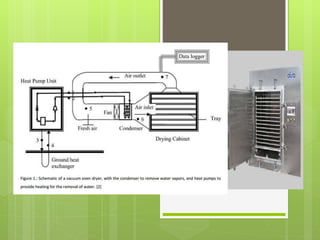
I. Vacuum tray dryer Vacuum tray dryer works by removing
moisture through a vacuum created .
II. An air tight environment is then created, with the oven
connected to a vacuum pump for the creation of a pressure
free environment.
III. The product to be dried is kept in a tray, which is then put
in the oven for the drying process.
IV.The water vapor that is produced from the drying process
is sent into the condenser of the vacuum oven and the dried
product is then removed from the trays.
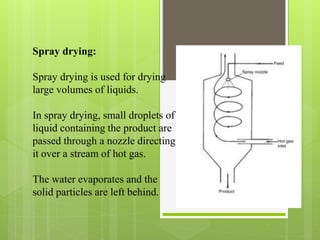
Spray drying:
Spray drying is used for drying
large volumes of liquids.
In spray drying, small droplets of
liquid containing the product are
passed through a nozzle directing
it over a stream of hot gas.
The water evaporates and the
solid particles are left behind.
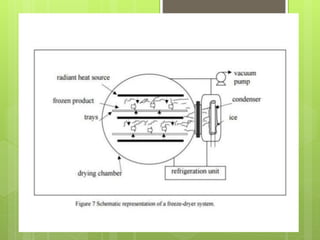
Freeze-drying:
Freeze-drying or lyophilization is the most preferred
method for drying and formulation of a wide-range of
products—pharmaceuticals, foodstuffs, diagnostics,
bacteria, viruses. This is mainly because freeze-drying
usually does not cause loss of biological activity of the
desired product.
Basically it is constituted of four steps:
1. Pretreatment
2. Freezing
3. Primary Drying
4. Secondary Drying
Rotary Drum Dryer
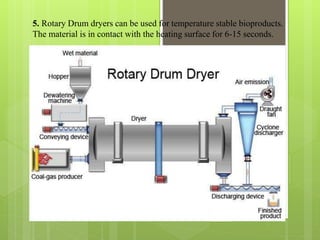
1. Rotary Drum Dryers are made up of large rotating
cylindrical tube with a slight slope using the gravity force
for material transfer.
2.The water is removed by the steam-heated surface of the
rotating drum.
3. The inner wall of the dryer is usually equipped with a
series of internal fins lining.
4. A dryer can also consist of multiple shells to be utilized
in a more compact space.
5. Rotary Drum dryers can be used for temperature stable bioproducts.
The material is in contact with the heating surface for 6-15 seconds.
Pneumatic Conveyor Dryers
The idea of pneumatic drying is dry reasonably solid feed
(moisture level below 35-40 %) even further.
Powders or granular materials are dried while suspended in
a stream of heated air
Pneumatic drying requires reasonable solid feed as
particles. Heated air is conveyed to particles and removes
moisture.
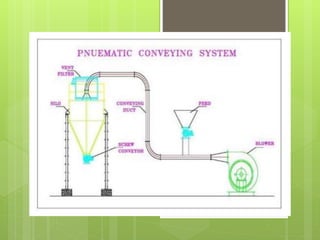
The blower blows the air which transports feed particles
into the silo. Temperature is adjusted by heater.
Drying process
Drying process

Drying process

  • 1.
  • 2.
    Drying: Drying is anessential component of product formulation. It basically involves the transfer of heat to a wet product for removal of moisture. Most of the biological products of fermentation are sensitive to heat, and therefore require gentle drying methods.
  • 3.
    There are numerousbenefits of utilizing drying. The cost of transport is lowered as redundant weight like water and solvent weight is removed. The handling and packaging of the material is simpler and storage is also more convenient in a dry state.
  • 4.
    Some of thedryers used nowadays are as follows: 1. Vacuum Tray Dryer 2. Freeze Drying 3. Rotary-Drum Dryers 4. Spray Dryers 5. Pneumatic Conveyor Dryers
  • 5.
    Vacuum tray dryer: I.Vacuum tray dryer Vacuum tray dryer works by removing moisture through a vacuum created . II. An air tight environment is then created, with the oven connected to a vacuum pump for the creation of a pressure free environment. III. The product to be dried is kept in a tray, which is then put in the oven for the drying process. IV.The water vapor that is produced from the drying process is sent into the condenser of the vacuum oven and the dried product is then removed from the trays.
  • 7.
    Spray drying: Spray dryingis used for drying large volumes of liquids. In spray drying, small droplets of liquid containing the product are passed through a nozzle directing it over a stream of hot gas. The water evaporates and the solid particles are left behind.
  • 8.
    Freeze-drying: Freeze-drying or lyophilizationis the most preferred method for drying and formulation of a wide-range of products—pharmaceuticals, foodstuffs, diagnostics, bacteria, viruses. This is mainly because freeze-drying usually does not cause loss of biological activity of the desired product. Basically it is constituted of four steps: 1. Pretreatment 2. Freezing 3. Primary Drying 4. Secondary Drying
  • 10.
    Rotary Drum Dryer 1.Rotary Drum Dryers are made up of large rotating cylindrical tube with a slight slope using the gravity force for material transfer. 2.The water is removed by the steam-heated surface of the rotating drum. 3. The inner wall of the dryer is usually equipped with a series of internal fins lining. 4. A dryer can also consist of multiple shells to be utilized in a more compact space.
  • 11.
    5. Rotary Drumdryers can be used for temperature stable bioproducts. The material is in contact with the heating surface for 6-15 seconds.
  • 12.
    Pneumatic Conveyor Dryers Theidea of pneumatic drying is dry reasonably solid feed (moisture level below 35-40 %) even further. Powders or granular materials are dried while suspended in a stream of heated air Pneumatic drying requires reasonable solid feed as particles. Heated air is conveyed to particles and removes moisture. The blower blows the air which transports feed particles into the silo. Temperature is adjusted by heater.