SEMINAR
ANKUSH MEENA
B100974CH
DEPATMENT OF CHEMICAL ENGINEERING
NATIONAL INSTITUTE OF TECHNOLOGY CALICUT
12/03/2014
 The Product recovery operation are also known as
downstream processing steps.
 Product recovery in bioprocessing plays a vital role.
 Downstream- ‘After the fermentation process’.
 Primary ‘unit operations’ of Downstream
Processing
 Cell recovery /removal
 Dewatering
 Secondary ‘unit operations’
 Protein purification
 Adsorption chromatography
 Protein processing
 Immobilisation
 Prilling
 Protein packaging
 Sterilisation etc
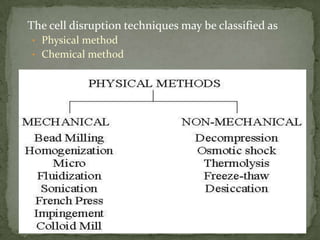
The cell disruption techniques may be classified as
• Physical method
• Chemical method
The following unit operations are used for the separation
of solids :
• Filtration
• Sedimentation
• Centrifugation
• Foam Separation
• Precipitation
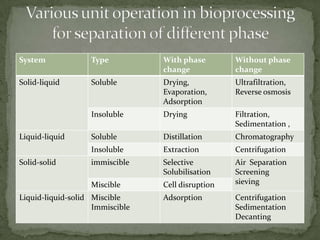
System Type With phase
change
Without phase
change
Solid-liquid Soluble Drying,
Evaporation,
Adsorption
Ultrafiltration,
Reverse osmosis
Insoluble Drying Filtration,
Sedimentation ,
Liquid-liquid Soluble Distillation Chromatography
Insoluble Extraction Centrifugation
Solid-solid immiscible Selective
Solubilisation
Air Separation
Screening
sievingMiscible Cell disruption
Liquid-liquid-solid Miscible
Immiscible
Adsorption Centrifugation
Sedimentation
Decanting
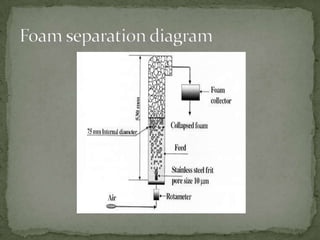
 It is based on the differences in the surface activity.
 It is chemical process of removing a component of a
liquid mixture using a bubbled gas and a surfactant to
collect the material.
 Wastewater treatment systems often use foam
separation steps to remove solids from the water
stream.
 It is also a very useful method for product recovery by
adding the precipitation agent .
 The compounds from the corresponding salts or the
suspending solids which would settle down to the
bottom.
 This method is extensively used for product recovery
of protein isolates or protein concentrates from oil
seeds
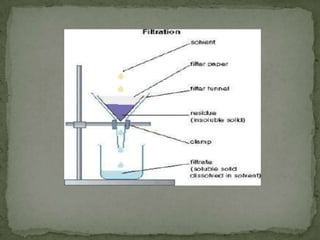
 Filtration is a physical or mechanical process to
separate solids particle from fluids.
 Filtration is a technique used for two main purposes.
 The first is to remove solid impurities from a liquid.
 The second is to collect a desired solid from the
solution.
 It is a very effective and convenient method of
separating the suspending solids from the slurries .
 The fluid that pass through is called a filtrate.
 Filtration is used to separate particles and fluid in a
suspension, where the fluid can be a liquid, a gas or
a supercritical fluid.
 Filtration, as a physical operation is very important in
chemistry for the separation of materials of different
chemical composition.
 Filtration is also important and widely used as one of
the unit operations of chemical engineering.
 pressure drop
Viscosity of filtrate
Area of filtering surface
Resistance of filtrate cake
Resistance of filtrate surface
Properties of slurry
Filters are divided into three main categories
1. Cake filters
2. Clarifying filters
3. Cross-flow filters
 Slurries with high solid concentration are operated in
cake filters.
 Very dilute liquids are passed through the clarifying
filters.
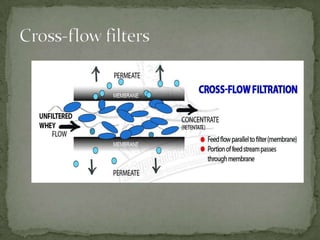
 The cross-flow filters are used for concentrating the
solutions by using filtration technique.
Thank you

Product recovery

  • 1.
    SEMINAR ANKUSH MEENA B100974CH DEPATMENT OFCHEMICAL ENGINEERING NATIONAL INSTITUTE OF TECHNOLOGY CALICUT 12/03/2014
  • 2.
     The Productrecovery operation are also known as downstream processing steps.  Product recovery in bioprocessing plays a vital role.
  • 3.
     Downstream- ‘Afterthe fermentation process’.  Primary ‘unit operations’ of Downstream Processing  Cell recovery /removal  Dewatering
  • 4.
     Secondary ‘unitoperations’  Protein purification  Adsorption chromatography  Protein processing  Immobilisation  Prilling  Protein packaging  Sterilisation etc
  • 5.
    The cell disruptiontechniques may be classified as • Physical method • Chemical method
  • 6.
    The following unitoperations are used for the separation of solids : • Filtration • Sedimentation • Centrifugation • Foam Separation • Precipitation
  • 7.
    System Type Withphase change Without phase change Solid-liquid Soluble Drying, Evaporation, Adsorption Ultrafiltration, Reverse osmosis Insoluble Drying Filtration, Sedimentation , Liquid-liquid Soluble Distillation Chromatography Insoluble Extraction Centrifugation Solid-solid immiscible Selective Solubilisation Air Separation Screening sievingMiscible Cell disruption Liquid-liquid-solid Miscible Immiscible Adsorption Centrifugation Sedimentation Decanting
  • 8.
     It isbased on the differences in the surface activity.  It is chemical process of removing a component of a liquid mixture using a bubbled gas and a surfactant to collect the material.  Wastewater treatment systems often use foam separation steps to remove solids from the water stream.
  • 10.
     It isalso a very useful method for product recovery by adding the precipitation agent .  The compounds from the corresponding salts or the suspending solids which would settle down to the bottom.  This method is extensively used for product recovery of protein isolates or protein concentrates from oil seeds
  • 11.
     Filtration isa physical or mechanical process to separate solids particle from fluids.  Filtration is a technique used for two main purposes.  The first is to remove solid impurities from a liquid.  The second is to collect a desired solid from the solution.  It is a very effective and convenient method of separating the suspending solids from the slurries .  The fluid that pass through is called a filtrate.
  • 13.
     Filtration isused to separate particles and fluid in a suspension, where the fluid can be a liquid, a gas or a supercritical fluid.  Filtration, as a physical operation is very important in chemistry for the separation of materials of different chemical composition.  Filtration is also important and widely used as one of the unit operations of chemical engineering.
  • 14.
     pressure drop Viscosityof filtrate Area of filtering surface Resistance of filtrate cake Resistance of filtrate surface Properties of slurry
  • 15.
    Filters are dividedinto three main categories 1. Cake filters 2. Clarifying filters 3. Cross-flow filters
  • 16.
     Slurries withhigh solid concentration are operated in cake filters.  Very dilute liquids are passed through the clarifying filters.  The cross-flow filters are used for concentrating the solutions by using filtration technique.
  • 18.