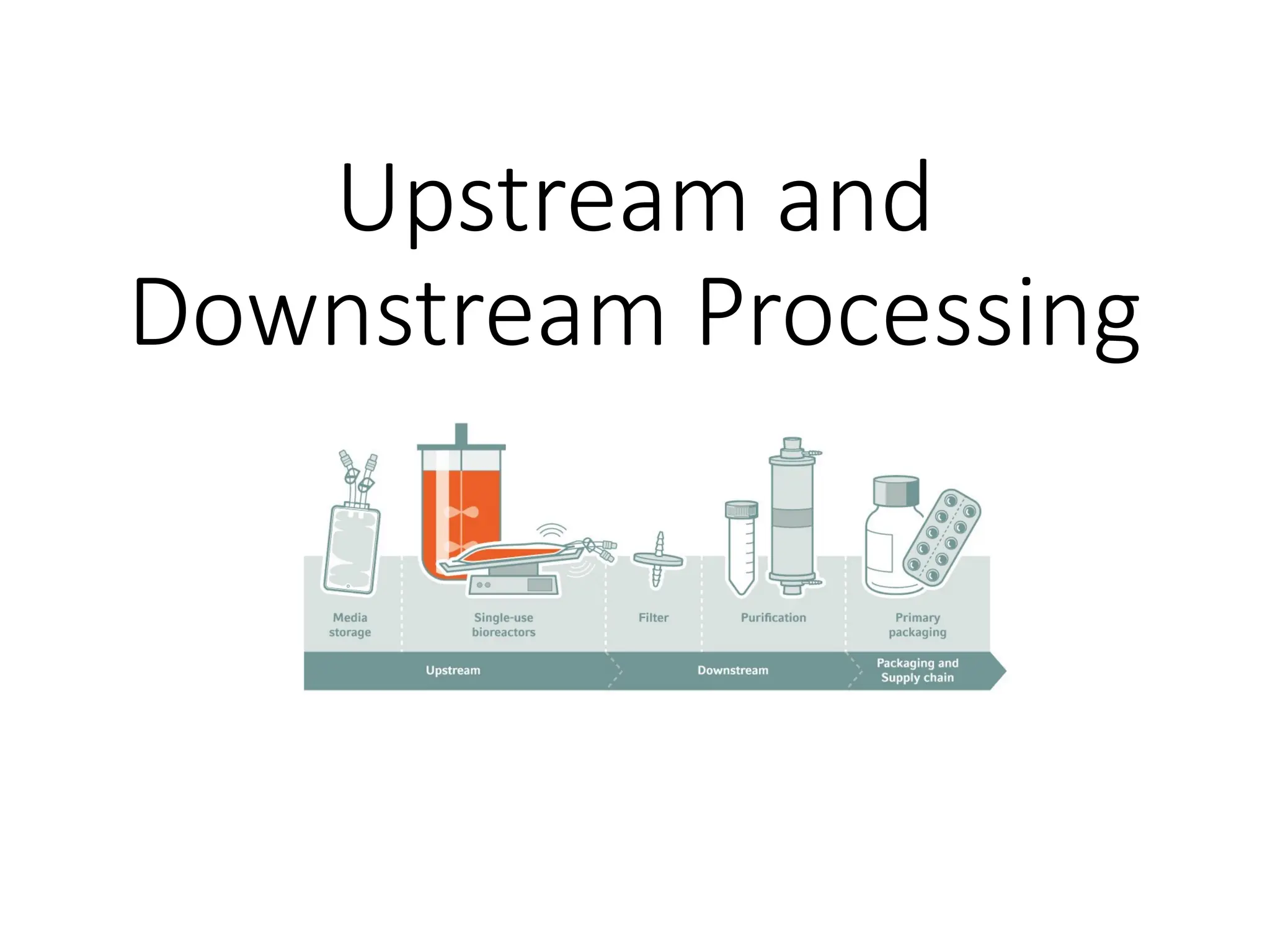
Upstream and
Downstream Processing
Contents
• Upstream processing
• Downstream processing
• Bioprocessing involves two main segments:
Upstream bioprocessing and downstream bioproce
ssing
.
• The upstream part involves the early stages of
bioprocessing,
identification of the organism to be produced
optimizing the conditions it requires to grow
growing and collecting this organism.
• With biopharmaceuticals specifically, the upstream
process includes
isolating the cell line to be produced, growing
those cells at the scale required for the final
product, and then harvesting those cells.
• Downstream bioprocesses include the later stages
of production and involve purifying the cells or
other organisms collected at the end of the
upstream stage to create a final product that meets
stringent safety and quality standards.
Upstream Bioprocessing
• The process of converting raw materials into a form that
can be used in a biological manufacturing process is
known as upstream bioprocessing.
• Harvesting and purifying natural products, culturing cells,
and producing recombinant proteins are all examples of
this.
• Upstream bioprocessing's goal is to create a high-quality
starting material for downstream bioprocessing.
• The upstream part of a bioprocess refers to the first
step in which microbes/cells are grown, eg
bacterial or mammalian cell lines (see Cell culture),
in bioreactors.
• Basically upstream processing involve all those
steps related with inoculum development, media
development, improvement of inoculum by genetic
engineering process, optimization of growth
kinetics so that product development can improve
tremendously.
• After product development the next step is the
purification of the product for desired quality.
• When they reach the desired density (for batch and
fed-batch cultures) they are harvested and moved
to the downstream section of the bioprocess
Downstream Bioprocessing
• The term "downstream bioprocessing" refers to the
steps that take place after the initial bioprocessing
steps, which involve the production of a biological
agent.
• There are three main steps involved in downstream
processing-
Purification
Formulation
Storage of the agent
The downstream process involves the following
steps-
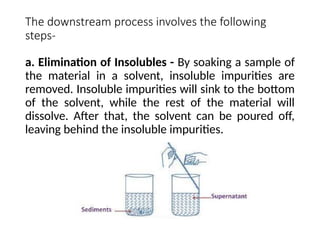
a. Elimination of Insolubles - By soaking a sample of
the material in a solvent, insoluble impurities are
removed. Insoluble impurities will sink to the bottom
of the solvent, while the rest of the material will
dissolve. After that, the solvent can be poured off,
leaving behind the insoluble impurities.
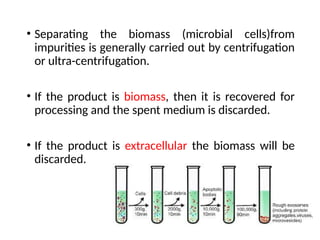
• Separating the biomass (microbial cells)from
impurities is generally carried out by centrifugation
or ultra-centrifugation.
• If the product is biomass, then it is recovered for
processing and the spent medium is discarded.
• If the product is extracellular the biomass will be
discarded.
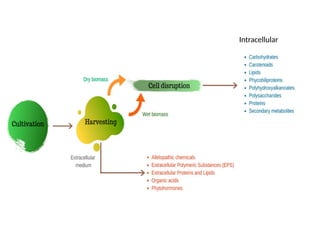
Intracellular
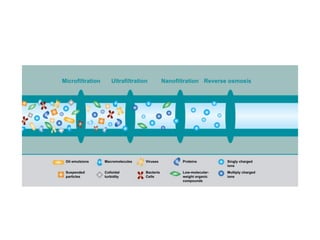
• Ultra filtration is an alternative to centrifugation.
• If the desired product is intra-cellular the cell
biomass can be disrupted so that the product
should be released.
• The solid-liquid is separated by centrifugation or
filtration and cell debris is discarded.
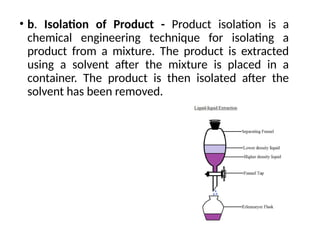
• b. Isolation of Product - Product isolation is a
chemical engineering technique for isolating a
product from a mixture. The product is extracted
using a solvent after the mixture is placed in a
container. The product is then isolated after the
solvent has been removed.
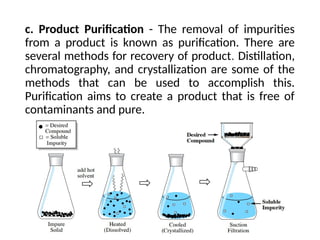
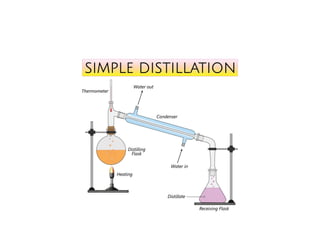
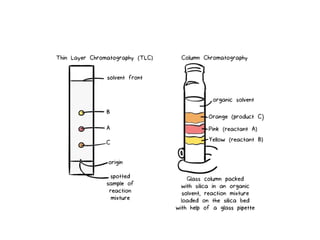
c. Product Purification - The removal of impurities
from a product is known as purification. There are
several methods for recovery of product. Distillation,
chromatography, and crystallization are some of the
methods that can be used to accomplish this.
Purification aims to create a product that is free of
contaminants and pure.
• d. Polishing of metabolites- this is the final step of
making the product 98 to 100% pure.
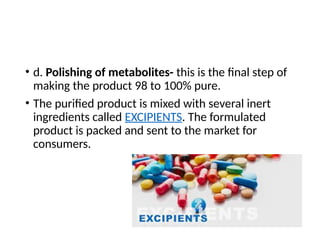
• The purified product is mixed with several inert
ingredients called EXCIPIENTS. The formulated
product is packed and sent to the market for
consumers.
Similarities Between Upstream and
Downstream Bioprocessing
• Both processes involve living organisms, particularly
microorganisms.
• These processes are carried out on bioproducts that are
both industrially and medicinally important.
• When it comes to making bioproducts, both processes are
crucial.
• During both processes, contamination should be avoided.
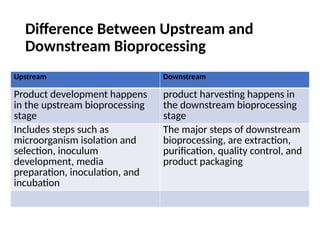
Difference Between Upstream and
Downstream Bioprocessing
Upstream Downstream
Product development happens
in the upstream bioprocessing
stage
product harvesting happens in
the downstream bioprocessing
stage
Includes steps such as
microorganism isolation and
selection, inoculum
development, media
preparation, inoculation, and
incubation
The major steps of downstream
bioprocessing, are extraction,
purification, quality control, and
product packaging
Important Points to Remember
• Upstream and downstream bioprocessing are the two
main stages of a bioprocess or fermentation.
• Microbes are screened, cultured, and grown inside a
bioreactor in upstream bioprocessing, which provides
the necessary nutrients and growth conditions.
• When the fermentation is finished at the end of the
inoculation period, downstream bioprocessing begins.
• Extraction, purification, and proper packaging of the
product are all done in downstream bioprocessing.
References
• https://www.vedantu.com/biology/bioprocessing

Lesson 03-Upstream and Downstream Processing-.pptx

  • 1.
  • 2.
  • 3.
    • Bioprocessing involvestwo main segments: Upstream bioprocessing and downstream bioproce ssing . • The upstream part involves the early stages of bioprocessing, identification of the organism to be produced optimizing the conditions it requires to grow growing and collecting this organism. • With biopharmaceuticals specifically, the upstream process includes isolating the cell line to be produced, growing those cells at the scale required for the final product, and then harvesting those cells.
  • 4.
    • Downstream bioprocessesinclude the later stages of production and involve purifying the cells or other organisms collected at the end of the upstream stage to create a final product that meets stringent safety and quality standards.
  • 5.
    Upstream Bioprocessing • Theprocess of converting raw materials into a form that can be used in a biological manufacturing process is known as upstream bioprocessing. • Harvesting and purifying natural products, culturing cells, and producing recombinant proteins are all examples of this. • Upstream bioprocessing's goal is to create a high-quality starting material for downstream bioprocessing.
  • 6.
    • The upstreampart of a bioprocess refers to the first step in which microbes/cells are grown, eg bacterial or mammalian cell lines (see Cell culture), in bioreactors. • Basically upstream processing involve all those steps related with inoculum development, media development, improvement of inoculum by genetic engineering process, optimization of growth kinetics so that product development can improve tremendously.
  • 7.
    • After productdevelopment the next step is the purification of the product for desired quality. • When they reach the desired density (for batch and fed-batch cultures) they are harvested and moved to the downstream section of the bioprocess
  • 8.
    Downstream Bioprocessing • Theterm "downstream bioprocessing" refers to the steps that take place after the initial bioprocessing steps, which involve the production of a biological agent. • There are three main steps involved in downstream processing- Purification Formulation Storage of the agent
  • 9.
    The downstream processinvolves the following steps- a. Elimination of Insolubles - By soaking a sample of the material in a solvent, insoluble impurities are removed. Insoluble impurities will sink to the bottom of the solvent, while the rest of the material will dissolve. After that, the solvent can be poured off, leaving behind the insoluble impurities.
  • 10.
    • Separating thebiomass (microbial cells)from impurities is generally carried out by centrifugation or ultra-centrifugation. • If the product is biomass, then it is recovered for processing and the spent medium is discarded. • If the product is extracellular the biomass will be discarded.
  • 11.
  • 12.
    • Ultra filtrationis an alternative to centrifugation. • If the desired product is intra-cellular the cell biomass can be disrupted so that the product should be released. • The solid-liquid is separated by centrifugation or filtration and cell debris is discarded.
  • 14.
    • b. Isolationof Product - Product isolation is a chemical engineering technique for isolating a product from a mixture. The product is extracted using a solvent after the mixture is placed in a container. The product is then isolated after the solvent has been removed.
  • 15.
    c. Product Purification- The removal of impurities from a product is known as purification. There are several methods for recovery of product. Distillation, chromatography, and crystallization are some of the methods that can be used to accomplish this. Purification aims to create a product that is free of contaminants and pure.
  • 18.
    • d. Polishingof metabolites- this is the final step of making the product 98 to 100% pure. • The purified product is mixed with several inert ingredients called EXCIPIENTS. The formulated product is packed and sent to the market for consumers.
  • 19.
    Similarities Between Upstreamand Downstream Bioprocessing • Both processes involve living organisms, particularly microorganisms. • These processes are carried out on bioproducts that are both industrially and medicinally important. • When it comes to making bioproducts, both processes are crucial. • During both processes, contamination should be avoided.
  • 20.
    Difference Between Upstreamand Downstream Bioprocessing Upstream Downstream Product development happens in the upstream bioprocessing stage product harvesting happens in the downstream bioprocessing stage Includes steps such as microorganism isolation and selection, inoculum development, media preparation, inoculation, and incubation The major steps of downstream bioprocessing, are extraction, purification, quality control, and product packaging
  • 21.
    Important Points toRemember • Upstream and downstream bioprocessing are the two main stages of a bioprocess or fermentation. • Microbes are screened, cultured, and grown inside a bioreactor in upstream bioprocessing, which provides the necessary nutrients and growth conditions. • When the fermentation is finished at the end of the inoculation period, downstream bioprocessing begins. • Extraction, purification, and proper packaging of the product are all done in downstream bioprocessing.
  • 22.