Therapeutic Hormones
Introduction
Harmones
•Most Important group among regulatory
molecules produce by the body.
•Synthesized and released from a specific glands.
•Interacting with a receptor present in/on a
distant sensitive cell brought about a change in
that target cell.
•Hormones travel to the target cell via the
circulatory system.
Hormone to be any regulatory substance that
carries a signal to generate some alteration at a
cellular level.
Under such a broad definition all cytokines for
example could be considered hormones.
Examples
• Insulin
• Glucagon
• Somatotrophins
• Gonadotrophins
• Adrenaline
Insulin
•Insulin is a polypeptide hormone
• Produced by the beta cells of the pancreatic
islets of Langerhans.
•It plays a central role in regulating blood
glucose levels.
.
Other examples
• Glucagon maintain blood glucose level.
• Somatotrophin stimulates growth.
• Gonadotrophins control secondary sexual
characters
Therapeutic Hormones
• Hormones administered as drug.
• Synthesize in lab /industries.
• Nowaday genetic manipulation techniques are
used to generate therapeutic hormones.
• E.g. rHGH, rInsulin
Insulin
• Insulin is a polypeptide hormone
• Produced by the beta cells of the pancreatic islets of
Langerhans.
• Islets of Langerhans: Known as the insulin-producing
tissue
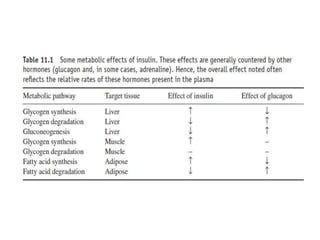
• It stimulates glucose transport
• It stimulates intracellular biosynthetic
pathways
• It inhibits catabolic pathways, such as
glycogenolysis
Diabetes mellitus
• Failure of the body to synthesize sufficient insulin
results in the development of insulin-dependent
diabetes mellitus (IDDM).
• Also known as type-1 diabetes.
• IDDM is caused by T-cell-mediated autoimmune
destruction of the insulin-producing β-pancreatic
islet cells in genetically predisposed individuals.
• genetic predisposition sometimes also
called genetic susceptibility.
Dosage of insulin:
1. Rapid-acting insulin
2. Short-acting insulin
3. Intermediate-acting insulin
4. Long-acting insulin
The insulin molecule
• First identified as an anti-diabetic factor in 1921
• Its complete amino acid sequence was determined in
1951.
• The insulin receptor is a tetrameric integral
membrane glycoprotein consisting of two 735 amino
acid α-chains and two 620 amino acid β-chains.
• These are held together by disulfide linkages.
Insulin Production
Traditionally insulin preparations
• Animal insulin was the first type of insulin to
control diabetes.
• Until the 1980s, animal insulin was the only
treatment for insulin dependent diabetes.
• Animal insulin is derived from cows and pigs.
• Direct extraction from pancreatic tissue of
slaughterhouse pigs and cattle.
Disadvantages
• Slight structural difference of 1-3 amino acids
between the animal insulin and human insulin.
• Diabetic patient developed antibodies against the
animal insulin thereby causing allergic reactions.
• large number of animals were to be sacrificed for
extracting the insulin from their pancreas.
• For example: To obtain 5 kgs. Of pancreatic juice
about 75 pigs have to be killed to get insulin for
treating only a single diabetic patient just for one
year.
By recombinant DNA technology
• First approved for general medical use in
1982.
• First product approved for therapeutic use in
humans.
• Insulin consist of two polypeptide chains A
and B.
• inserting the A and B chains into two different
E. coli cells.
• Chain A and B separately synthesized.
• The A- and B-chains are then incubated under
required parameters.
• Bond formation.
Formulation of insulin
• Insulin are formulating in number of way to
alert the order of pharmacokinetic profile
• There are two types pharmacokinetic profiling
• Fast (short)-acting insulins
• Slow-acting insulins
• In healthy individuals In healthy individuals, insulin is
typically secreted continuously into the bloodstream at
low basal level
• With rapid increases evident in response to elevated
blood sugar levels
• low-acting insulin preparation, however, accurately
reproduces
normal serum insulin baseline level
• fast-acting insulin will not produce
• a plasma hormone peak for 1.5–2 h post injection, and
levels then remain elevated for up to 5 h.
Prolong the duration of insulin action
• This is generally achieved in one of two
ways:
• Addition of zinc in order to promote Zn–
insulin crystal growth
• Addition of a protein to which the insulin will
complex
• The proteins normally used are
protamine's
Engineered insulins
• Recombinant DNA technology facilitates not only production
of human insulin in microbial systems, but also facilitates
generation of insulins of modified amino acid sequences
• The major aims of generating such engineered insulin
analogues include:
• Identification of insulins with altered pharmacokinetic
properties
• Identification of super-potent insulin forms
• The insulin amino acid residues that interact with the insulin
receptor have been identifi ed (A1,
• A5, A19, A21, B10, B16, B23-25), and a number of analogues
containing amino acid substitutions at several of these points
have been manufactured.
Modified insulins
• modified insulins have now been approved for medical
injected at mealtimes rather than1 h before
• Several Engineered insulins are inliste
• Insulin lispro’ (tradename ‘Humalog’) was the first
such engineered short-acting insulin to come to
market
• ‘Insulin Aspart’ is a second fast-acting engineered
human insulin
• It differs from native human insulin in that the prolineB28
residue has been replaced by aspartic acid
• This single amino acid substitution
• Optisulin or Lantus are the tradenames given to one such
analogue that gained general marketing approval in 2000
• It differs from native human insulin in that the C-terminal
aspargine
residue of the A-chain has been replaced by a glycine residue
and the β -chain has been elongated(again from its C-terminus)
by two arginine residues
• Levemir (tradename) is an alternative engineered long-
acting insulin product that gained approval for general medical
use in 2004
• This differs from native insulin in that it is devoid of the
threonine B30 residue and (more importantly from a
pharmacokinetic perspective)contains a 14-carbon fatty acid
residue covalently attached to the side chain of lysine residue
B29
Glucagon
Glucagon
• Polypeptide
• Single chain (29 amino acids)
• Its function is contradictory to insulin.
• Secretes in response to hypoglycemia.
• Promotes catabolic activity.
i.e.
• Break down of stored energy
• stimulates gluconeogenesis.
Glucagon
• Source: Pancreas
• Extract from bovine & porcine pancreatic
tissues.
• Used as freeze dried hormone.
• Dosage routes : Subcutaneous &
Intramuscular
• Now Recombinant products are available.
• E.g . Glucagen
Human Growth Hormone
• Somatotrophin.
• Hormone : Stimulates growth
• 191 amino acid
• Released by pituitary glands.
• Traditionally extracted from bovine /porcine
source.
Therapeutic Uses
• Wide range of applications
• Treatment of dwarfism (1958).
• Stimulation of lactation.
• rhGH was produce in 1980 .
• rhGH was first purified (on a laboratory scale)
by Genentech
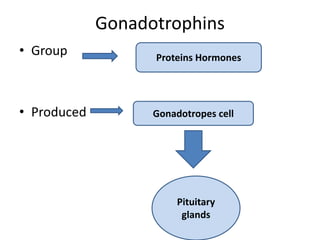
Gonadotrophins
• Group
• Produced
Proteins Hormones
Gonadotropes cell
Pituitary
glands
They directly and indirectly regulate ;
• Reproductive function
• secondary sexual characteristics
Hypothalamus
Pituitary glands
GnRH
FSH LH
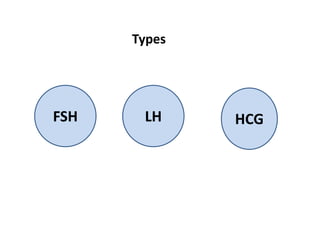
Types
FSH LH HCG
Follicle stimulating Hormone
Females
• Helps ovarian follicle to
develop.
• Promotes estrogen
secretion.
Males
• Promotes sperm
development
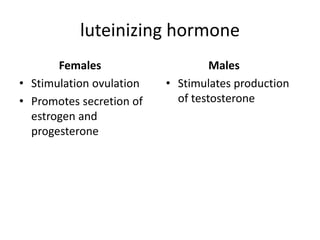
luteinizing hormone
Females
• Stimulation ovulation
• Promotes secretion of
estrogen and
progesterone
Males
• Stimulates production
of testosterone
Human Chorionic Hormones
• It is a hormones produced naturally by the
pregnant women to ensure the correct
nourishment of the baby
Medical Applications of
Gonadotrophin Hormones
• The therapeutic potential of gonadotrophins in
treating subfertility/some forms of infertility.
• Gonadotrophins are also used to induce a
superovulatory response in various animal specie.
• The human pituitary is the obvious source of
human gonadotrophins.
• The urine of post-menopausal women does
contain both FSH and LH activity.
• Menotrophin (human menopausal
gonadotrophin) is the name given to FSH-
enriched extracts from human urine.
• Such preparations contain variable levels of LH
activity, as well as various other proteins normally
present in urine.
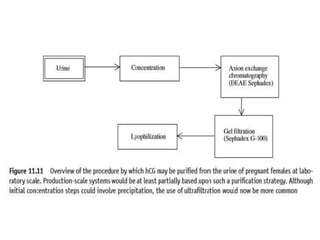
• hCG exhibits similar biological activities to hLH
and is excreted in the urine of pregnant women
Applications:
• Treatment of anovulatory infertility.
• Treatment of females with blocked fallopian
tube.
• Treatment of male subfertility or related
conditions.
• Future additional clinical applications.
1. Treatment of anovulatory infertility.
• In females, menotrophins and hCG are used
for the treatment of infertility.
• Menotrophin is administered to stimulate
follicular maturation, along with hCG to
promote ovulation and corpus luteum
formation.
Dosage:
• Gonadotrophin, often given for 12 days or
more, followed by a single dose of hCG.
• Three equal larger doses of menotrophin are
given on alternate days.
• Followed by hCG administration 1–2 days.
Dosage Level:
• Dosage of both hormones is given same as the
amount of them produced normally during
the reproductive cycle of fertile females.
• Depending upon the basal hormonal status of
the female, calculation of the optimal dosage
levels can be tricky.
• Overdosage can result in risk of multiple
pregnancy.
2. Treatment of Female Infertility:
• FSH given in more quantity than normal to allow
the female to stimulate multiple follicular growth.
• Often employed when a woman has a blocked
fallopian tube.
• After treatment, the resultant eggs are
collected, incubated in vitro with partner’s
sperm.
• Cultured and incubated untill blastocyts formed
and implanted back.
3. Treatment of Male Subfertility:
• FSH and hCG are also involved in treatment of
male infertility.
• Given to males having hypogonadotrophic
hypogonadism (HH) to stimulate sperm
synthesis.
• hCG has also application in the treatment of
cryptorchidism condition.
4. Clinical Applications:
• Cell surface receptor of LH & hGC is found in a
number of non-gonadal tissue.
• These hormones may possess other than
reproductive functions.
• It is expressed by a number of tissues before
birth, hinting at a potential developmental
role.
• Receptor levels in non-gonadal tissues are
generally much lower than in gonadal tissue.
Recombinant gonadotrophins
 Recombinant DNA technology
 rhFSH produced in CHO cells has proven
clinically effective
 When administered to humans, the
preparation is well tolerated and yields no
unexpected side effects
 hypogonadotrophic hypogonadism
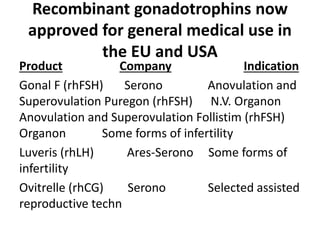
Recombinant gonadotrophins now
approved for general medical use in
the EU and USA
Product Company Indication
Gonal F (rhFSH) Serono Anovulation and
Superovulation Puregon (rhFSH) N.V. Organon
Anovulation and Superovulation Follistim (rhFSH)
Organon Some forms of infertility
Luveris (rhLH) Ares-Serono Some forms of
infertility
Ovitrelle (rhCG) Serono Selected assisted
reproductive techn
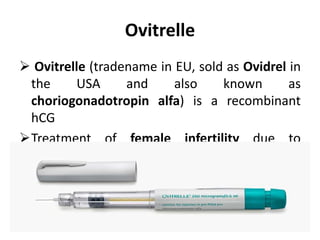
Ovitrelle
 Ovitrelle (tradename in EU, sold as Ovidrel in
the USA and also known as
choriogonadotropin alfa) is a recombinant
hCG
Treatment of female infertility due to
anovulation
 It is used to trigger final follicle maturation
and luteinization after follicle stimulation.
Veterinary uses of gonadotrophins
 Treat subfertility in animals
 Horses and cattle
 FSH is administered to the animal such that multiple
follicles develop simultaneously
 After administration of LH to help promote ovulation,
the animal is mated, thus fertilizing the released egg
cells
 Embryos are recovered and maintained in cell culture
for a short period of time.
 Single embryo is then usually reimplanted into the
donor female, while the remaining embryos are
implanted into the surrogate mothers
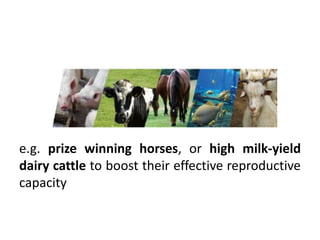
e.g. prize winning horses, or high milk-yield
dairy cattle to boost their effective reproductive
capacity
Porcine FSH (p-FSH) and Porcine LH
(p-LH)
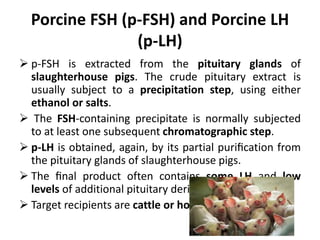
 p-FSH is extracted from the pituitary glands of
slaughterhouse pigs. The crude pituitary extract is
usually subject to a precipitation step, using either
ethanol or salts.
 The FSH-containing precipitate is normally subjected
to at least one subsequent chromatographic step.
 p-LH is obtained, again, by its partial purification from
the pituitary glands of slaughterhouse pigs.
 The final product often contains some LH and low
levels of additional pituitary derived proteins
 Target recipients are cattle or horses
Additional recombinant
hormones now approved
• Three additional recombinant
hormones have recently gained
marketing approval:
• Thyroid-stimulating hormone
• Parathyroid hormone
• Calcitonin.
Thyroid stimulating harmone
• Structurally, thyroid-stimulating hormone (TSH or
thyrotrophin) is classified as a member of the
gonadotrophin family, although functionally it
targets the thyroid gland as opposed to the
gonads.
• TSH is synthesized by a distinct pituitary cell type:
the thyrotroph. Its synthesis and release are
promoted by thyrotrophin-releasing hormone.
• TSH exerts its characteristic effects by binding
specific receptors found primarily, but not
exclusively, on the surface of thyroid gland cells.
Human parathyroid hormone
• Human parathyroid hormone (hPTH) is an 84
amino acid polypeptide that functions as a
primary regulator of calcium and phosphate
metabolism in bones. It stimulates bone
formation by osteoblasts, which display high-
affinity cell surface receptors for the hormone.
• PTH also increases intestinal absorption of
calcium.
Calcitonin
• Calcitonin is a polypeptide hormone that plays
a central role in regulating serum ionized
calcium (Ca2) and inorganic phosphate (Pi)
levels.
• The adult human body contains up to 2 kg of
calcium, of which 98 per cent is present in the
skeleton (i.e. bone). Up to 85 percent of the 1
kg of phosphorus present in the body is also
found in the skeleton.
• Calcitonin lowers serum Ca2 and Pi levels,
primarily by inhibiting the process of bone
resorption, but also by decreasing resorption
of Pi and Ca2 in the kidney.
• Calcitonin receptors are predictably found
primarily on bone cells (osteoclasts) and renal
cells.
• Calcitonin is used clinically to treat
hypercalcaemia associated with some forms of
malignancy and Paget’s disease. The latter
condition is a chronic disorder of the skeleton
in which bone grows abnormally in some
regions.
Conclusion
• Several hormone preparations have a long history of use as
therapeutic agents.
• Usually these are administered when the patients are not
producing enough quantities of endogenous hormones.
• Insulin has saved or prolonged the lives of millions of
diabetic patients.
• Gonadotrophins have allowed thousands of sub-fertile
individuals to conceive.
• GH has improved the quality of life of thousands of people
of short stature.
• Recombinant hormonal preparations, however, are now
gaining greater favour, mainly on safety grounds.
Questions ?
If any. Feel free to ask!

Therapeutic hormones

  • 1.
  • 2.
    Introduction Harmones •Most Important groupamong regulatory molecules produce by the body. •Synthesized and released from a specific glands. •Interacting with a receptor present in/on a distant sensitive cell brought about a change in that target cell. •Hormones travel to the target cell via the circulatory system.
  • 3.
    Hormone to beany regulatory substance that carries a signal to generate some alteration at a cellular level. Under such a broad definition all cytokines for example could be considered hormones.
  • 4.
    Examples • Insulin • Glucagon •Somatotrophins • Gonadotrophins • Adrenaline
  • 5.
    Insulin •Insulin is apolypeptide hormone • Produced by the beta cells of the pancreatic islets of Langerhans. •It plays a central role in regulating blood glucose levels. .
  • 7.
    Other examples • Glucagonmaintain blood glucose level. • Somatotrophin stimulates growth. • Gonadotrophins control secondary sexual characters
  • 8.
    Therapeutic Hormones • Hormonesadministered as drug. • Synthesize in lab /industries. • Nowaday genetic manipulation techniques are used to generate therapeutic hormones. • E.g. rHGH, rInsulin
  • 9.
    Insulin • Insulin isa polypeptide hormone • Produced by the beta cells of the pancreatic islets of Langerhans. • Islets of Langerhans: Known as the insulin-producing tissue
  • 10.
    • It stimulatesglucose transport • It stimulates intracellular biosynthetic pathways • It inhibits catabolic pathways, such as glycogenolysis
  • 11.
    Diabetes mellitus • Failureof the body to synthesize sufficient insulin results in the development of insulin-dependent diabetes mellitus (IDDM). • Also known as type-1 diabetes. • IDDM is caused by T-cell-mediated autoimmune destruction of the insulin-producing β-pancreatic islet cells in genetically predisposed individuals.
  • 12.
    • genetic predispositionsometimes also called genetic susceptibility. Dosage of insulin: 1. Rapid-acting insulin 2. Short-acting insulin 3. Intermediate-acting insulin 4. Long-acting insulin
  • 13.
    The insulin molecule •First identified as an anti-diabetic factor in 1921 • Its complete amino acid sequence was determined in 1951. • The insulin receptor is a tetrameric integral membrane glycoprotein consisting of two 735 amino acid α-chains and two 620 amino acid β-chains. • These are held together by disulfide linkages.
  • 14.
  • 15.
    Traditionally insulin preparations •Animal insulin was the first type of insulin to control diabetes. • Until the 1980s, animal insulin was the only treatment for insulin dependent diabetes. • Animal insulin is derived from cows and pigs. • Direct extraction from pancreatic tissue of slaughterhouse pigs and cattle.
  • 16.
    Disadvantages • Slight structuraldifference of 1-3 amino acids between the animal insulin and human insulin. • Diabetic patient developed antibodies against the animal insulin thereby causing allergic reactions. • large number of animals were to be sacrificed for extracting the insulin from their pancreas. • For example: To obtain 5 kgs. Of pancreatic juice about 75 pigs have to be killed to get insulin for treating only a single diabetic patient just for one year.
  • 17.
    By recombinant DNAtechnology • First approved for general medical use in 1982. • First product approved for therapeutic use in humans. • Insulin consist of two polypeptide chains A and B. • inserting the A and B chains into two different E. coli cells. • Chain A and B separately synthesized.
  • 18.
    • The A-and B-chains are then incubated under required parameters. • Bond formation.
  • 20.
  • 21.
    • Insulin areformulating in number of way to alert the order of pharmacokinetic profile • There are two types pharmacokinetic profiling • Fast (short)-acting insulins • Slow-acting insulins
  • 22.
    • In healthyindividuals In healthy individuals, insulin is typically secreted continuously into the bloodstream at low basal level • With rapid increases evident in response to elevated blood sugar levels • low-acting insulin preparation, however, accurately reproduces normal serum insulin baseline level • fast-acting insulin will not produce • a plasma hormone peak for 1.5–2 h post injection, and levels then remain elevated for up to 5 h.
  • 23.
    Prolong the durationof insulin action • This is generally achieved in one of two ways: • Addition of zinc in order to promote Zn– insulin crystal growth • Addition of a protein to which the insulin will complex • The proteins normally used are protamine's
  • 24.
    Engineered insulins • RecombinantDNA technology facilitates not only production of human insulin in microbial systems, but also facilitates generation of insulins of modified amino acid sequences • The major aims of generating such engineered insulin analogues include: • Identification of insulins with altered pharmacokinetic properties • Identification of super-potent insulin forms • The insulin amino acid residues that interact with the insulin receptor have been identifi ed (A1, • A5, A19, A21, B10, B16, B23-25), and a number of analogues containing amino acid substitutions at several of these points have been manufactured.
  • 25.
    Modified insulins • modifiedinsulins have now been approved for medical injected at mealtimes rather than1 h before • Several Engineered insulins are inliste • Insulin lispro’ (tradename ‘Humalog’) was the first such engineered short-acting insulin to come to market • ‘Insulin Aspart’ is a second fast-acting engineered human insulin • It differs from native human insulin in that the prolineB28 residue has been replaced by aspartic acid • This single amino acid substitution
  • 26.
    • Optisulin orLantus are the tradenames given to one such analogue that gained general marketing approval in 2000 • It differs from native human insulin in that the C-terminal aspargine residue of the A-chain has been replaced by a glycine residue and the β -chain has been elongated(again from its C-terminus) by two arginine residues • Levemir (tradename) is an alternative engineered long- acting insulin product that gained approval for general medical use in 2004 • This differs from native insulin in that it is devoid of the threonine B30 residue and (more importantly from a pharmacokinetic perspective)contains a 14-carbon fatty acid residue covalently attached to the side chain of lysine residue B29
  • 27.
  • 28.
    Glucagon • Polypeptide • Singlechain (29 amino acids) • Its function is contradictory to insulin. • Secretes in response to hypoglycemia. • Promotes catabolic activity. i.e. • Break down of stored energy • stimulates gluconeogenesis.
  • 29.
    Glucagon • Source: Pancreas •Extract from bovine & porcine pancreatic tissues. • Used as freeze dried hormone. • Dosage routes : Subcutaneous & Intramuscular • Now Recombinant products are available. • E.g . Glucagen
  • 31.
    Human Growth Hormone •Somatotrophin. • Hormone : Stimulates growth • 191 amino acid • Released by pituitary glands. • Traditionally extracted from bovine /porcine source.
  • 32.
    Therapeutic Uses • Widerange of applications • Treatment of dwarfism (1958). • Stimulation of lactation. • rhGH was produce in 1980 . • rhGH was first purified (on a laboratory scale) by Genentech
  • 33.
    Gonadotrophins • Group • Produced ProteinsHormones Gonadotropes cell Pituitary glands
  • 34.
    They directly andindirectly regulate ; • Reproductive function • secondary sexual characteristics
  • 35.
  • 36.
  • 37.
    Follicle stimulating Hormone Females •Helps ovarian follicle to develop. • Promotes estrogen secretion. Males • Promotes sperm development
  • 38.
    luteinizing hormone Females • Stimulationovulation • Promotes secretion of estrogen and progesterone Males • Stimulates production of testosterone
  • 39.
    Human Chorionic Hormones •It is a hormones produced naturally by the pregnant women to ensure the correct nourishment of the baby
  • 40.
  • 41.
    • The therapeuticpotential of gonadotrophins in treating subfertility/some forms of infertility. • Gonadotrophins are also used to induce a superovulatory response in various animal specie. • The human pituitary is the obvious source of human gonadotrophins. • The urine of post-menopausal women does contain both FSH and LH activity.
  • 42.
    • Menotrophin (humanmenopausal gonadotrophin) is the name given to FSH- enriched extracts from human urine. • Such preparations contain variable levels of LH activity, as well as various other proteins normally present in urine. • hCG exhibits similar biological activities to hLH and is excreted in the urine of pregnant women
  • 44.
    Applications: • Treatment ofanovulatory infertility. • Treatment of females with blocked fallopian tube. • Treatment of male subfertility or related conditions. • Future additional clinical applications.
  • 45.
    1. Treatment ofanovulatory infertility. • In females, menotrophins and hCG are used for the treatment of infertility. • Menotrophin is administered to stimulate follicular maturation, along with hCG to promote ovulation and corpus luteum formation.
  • 46.
    Dosage: • Gonadotrophin, oftengiven for 12 days or more, followed by a single dose of hCG. • Three equal larger doses of menotrophin are given on alternate days. • Followed by hCG administration 1–2 days.
  • 47.
    Dosage Level: • Dosageof both hormones is given same as the amount of them produced normally during the reproductive cycle of fertile females. • Depending upon the basal hormonal status of the female, calculation of the optimal dosage levels can be tricky. • Overdosage can result in risk of multiple pregnancy.
  • 48.
    2. Treatment ofFemale Infertility: • FSH given in more quantity than normal to allow the female to stimulate multiple follicular growth. • Often employed when a woman has a blocked fallopian tube. • After treatment, the resultant eggs are collected, incubated in vitro with partner’s sperm. • Cultured and incubated untill blastocyts formed and implanted back.
  • 49.
    3. Treatment ofMale Subfertility: • FSH and hCG are also involved in treatment of male infertility. • Given to males having hypogonadotrophic hypogonadism (HH) to stimulate sperm synthesis. • hCG has also application in the treatment of cryptorchidism condition.
  • 50.
    4. Clinical Applications: •Cell surface receptor of LH & hGC is found in a number of non-gonadal tissue. • These hormones may possess other than reproductive functions. • It is expressed by a number of tissues before birth, hinting at a potential developmental role. • Receptor levels in non-gonadal tissues are generally much lower than in gonadal tissue.
  • 51.
    Recombinant gonadotrophins  RecombinantDNA technology  rhFSH produced in CHO cells has proven clinically effective  When administered to humans, the preparation is well tolerated and yields no unexpected side effects  hypogonadotrophic hypogonadism
  • 52.
    Recombinant gonadotrophins now approvedfor general medical use in the EU and USA Product Company Indication Gonal F (rhFSH) Serono Anovulation and Superovulation Puregon (rhFSH) N.V. Organon Anovulation and Superovulation Follistim (rhFSH) Organon Some forms of infertility Luveris (rhLH) Ares-Serono Some forms of infertility Ovitrelle (rhCG) Serono Selected assisted reproductive techn
  • 53.
    Ovitrelle  Ovitrelle (tradenamein EU, sold as Ovidrel in the USA and also known as choriogonadotropin alfa) is a recombinant hCG Treatment of female infertility due to anovulation  It is used to trigger final follicle maturation and luteinization after follicle stimulation.
  • 54.
    Veterinary uses ofgonadotrophins  Treat subfertility in animals  Horses and cattle  FSH is administered to the animal such that multiple follicles develop simultaneously  After administration of LH to help promote ovulation, the animal is mated, thus fertilizing the released egg cells  Embryos are recovered and maintained in cell culture for a short period of time.  Single embryo is then usually reimplanted into the donor female, while the remaining embryos are implanted into the surrogate mothers
  • 55.
    e.g. prize winninghorses, or high milk-yield dairy cattle to boost their effective reproductive capacity
  • 56.
    Porcine FSH (p-FSH)and Porcine LH (p-LH)  p-FSH is extracted from the pituitary glands of slaughterhouse pigs. The crude pituitary extract is usually subject to a precipitation step, using either ethanol or salts.  The FSH-containing precipitate is normally subjected to at least one subsequent chromatographic step.  p-LH is obtained, again, by its partial purification from the pituitary glands of slaughterhouse pigs.  The final product often contains some LH and low levels of additional pituitary derived proteins  Target recipients are cattle or horses
  • 57.
    Additional recombinant hormones nowapproved • Three additional recombinant hormones have recently gained marketing approval: • Thyroid-stimulating hormone • Parathyroid hormone • Calcitonin.
  • 58.
    Thyroid stimulating harmone •Structurally, thyroid-stimulating hormone (TSH or thyrotrophin) is classified as a member of the gonadotrophin family, although functionally it targets the thyroid gland as opposed to the gonads. • TSH is synthesized by a distinct pituitary cell type: the thyrotroph. Its synthesis and release are promoted by thyrotrophin-releasing hormone. • TSH exerts its characteristic effects by binding specific receptors found primarily, but not exclusively, on the surface of thyroid gland cells.
  • 59.
    Human parathyroid hormone •Human parathyroid hormone (hPTH) is an 84 amino acid polypeptide that functions as a primary regulator of calcium and phosphate metabolism in bones. It stimulates bone formation by osteoblasts, which display high- affinity cell surface receptors for the hormone. • PTH also increases intestinal absorption of calcium.
  • 60.
    Calcitonin • Calcitonin isa polypeptide hormone that plays a central role in regulating serum ionized calcium (Ca2) and inorganic phosphate (Pi) levels. • The adult human body contains up to 2 kg of calcium, of which 98 per cent is present in the skeleton (i.e. bone). Up to 85 percent of the 1 kg of phosphorus present in the body is also found in the skeleton.
  • 61.
    • Calcitonin lowersserum Ca2 and Pi levels, primarily by inhibiting the process of bone resorption, but also by decreasing resorption of Pi and Ca2 in the kidney. • Calcitonin receptors are predictably found primarily on bone cells (osteoclasts) and renal cells.
  • 62.
    • Calcitonin isused clinically to treat hypercalcaemia associated with some forms of malignancy and Paget’s disease. The latter condition is a chronic disorder of the skeleton in which bone grows abnormally in some regions.
  • 63.
    Conclusion • Several hormonepreparations have a long history of use as therapeutic agents. • Usually these are administered when the patients are not producing enough quantities of endogenous hormones. • Insulin has saved or prolonged the lives of millions of diabetic patients. • Gonadotrophins have allowed thousands of sub-fertile individuals to conceive. • GH has improved the quality of life of thousands of people of short stature. • Recombinant hormonal preparations, however, are now gaining greater favour, mainly on safety grounds.
  • 64.
    Questions ? If any.Feel free to ask!