

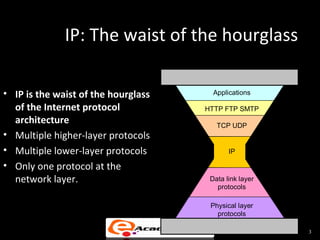

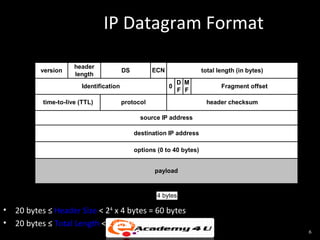


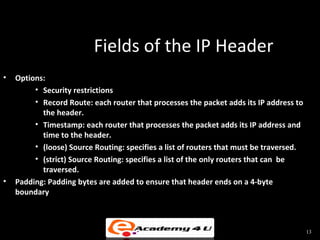
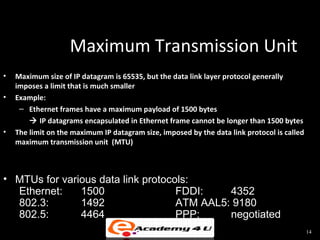
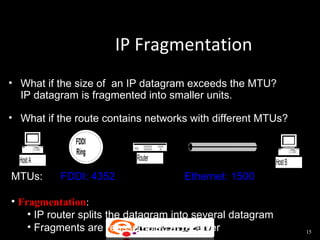
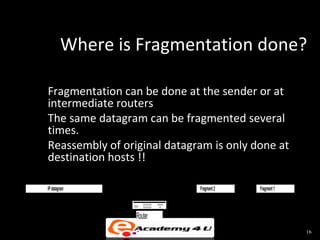
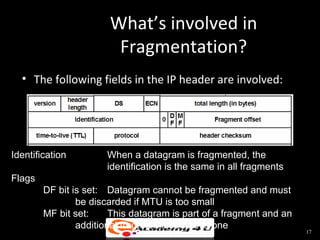
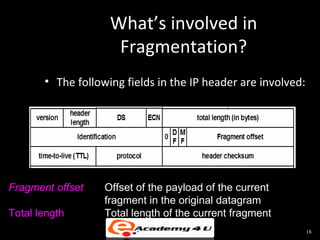

1. IP (Internet Protocol) is the network layer protocol that defines how data should be packaged and transmitted across networks. It provides an unreliable, connectionless best-effort delivery service. 2. IP sits at the center of the Internet protocol stack architecture. It interfaces with higher-level protocols like TCP and UDP above it and lower-level data link protocols below it. 3. The IP datagram header contains fields for source/destination addresses, identification, flags, fragment offset, time-to-live, and more. It uses network byte ordering in transmission. IP datagrams can be fragmented into smaller pieces if their size exceeds the maximum transmission unit of a network.


