







What is protocol
Requirements of protocol
Functions of protocols
Need of protocols
Types of protocols
Protocol architecture


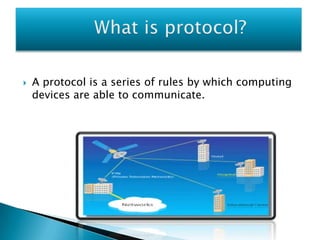
A protocol is a series of rules by which computing
devices are able to communicate.








Data formats for data exchange
Flow control
Routing
Acknowledgements
Loss of information
Sequence control





Identifies errors
Applies compression techniques.
Decides on :
How to announce sent data .
How to announce receive data
How to address data.
How data is to be sent.




Protocols are needed for predetermined
understandings for communications.
It helps the smooth functioning of a
system, such contribution to a system may
benefit or offend you from where you stand.


TCP: Transmission Control Protocol



HTTP: Hypertext Transfer Protocol



FTP: File Transfer Protocol



SMTP: Simple Mail Transfer Protocol


UDP : User Datagram protocols



ICMP: Internet Control Message Protocol



SCTP: Stream Control Transmission Protocol



ARP: Address Resolution Protocol




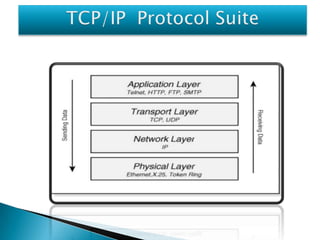
The TCP/IP protocol suite was first defined in
1974
TCP/IP represents a set of public
standards that satisfy how packets of
information are exchanged between
computers over one and more networks.




IP, which stands for Internet Protocol , is a
Network layer protocol that is responsible for
delivering packets to network devices.
Each packet is treated as an independent
unit of data without any relation to any other
unit of data.




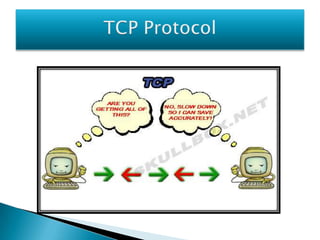
Ensures a sent message is sent without any
loss of data or any mix up of the order of
the data

Will request re-transmission of lost or
damaged packets




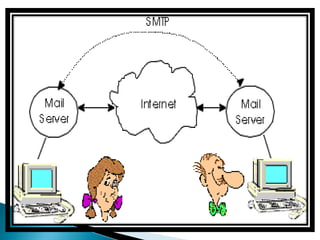
Smtp is the most popular protocol for
transferring electronic mail on internet.
Smtp specifies the format for the electronic
message along with its route from source
computer to destination computer through
e-mail servers.




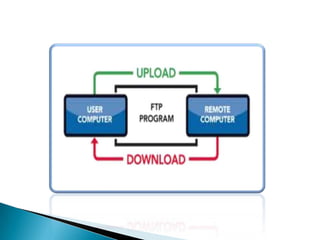
It is used to transfer files from a server to a
client computer.

example of an FTP service is when you visit
a site to download software--you click on
download, and it contacts the FTP server
which then downloads the file to your
computer.


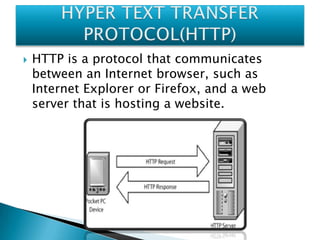
HTTP is a protocol that communicates
between an Internet browser, such as
Internet Explorer or Firefox, and a web
server that is hosting a website.




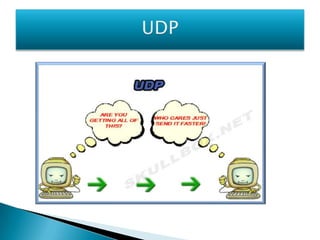
Controls traffic between network devices, but does
not attempt any error correction.
It is used for protocols where speed is more
important than accuracy or error correction is
handled by the client.
Protocols
Protocols

Protocols

  • 2.
          What is protocol Requirementsof protocol Functions of protocols Need of protocols Types of protocols Protocol architecture
  • 3.
     A protocol isa series of rules by which computing devices are able to communicate.
  • 4.
          Data formats fordata exchange Flow control Routing Acknowledgements Loss of information Sequence control
  • 5.
       Identifies errors Applies compressiontechniques. Decides on : How to announce sent data . How to announce receive data How to address data. How data is to be sent.
  • 6.
      Protocols are neededfor predetermined understandings for communications. It helps the smooth functioning of a system, such contribution to a system may benefit or offend you from where you stand.
  • 7.
     TCP: Transmission ControlProtocol  HTTP: Hypertext Transfer Protocol  FTP: File Transfer Protocol  SMTP: Simple Mail Transfer Protocol
  • 8.
     UDP : UserDatagram protocols  ICMP: Internet Control Message Protocol  SCTP: Stream Control Transmission Protocol  ARP: Address Resolution Protocol
  • 9.
      The TCP/IP protocolsuite was first defined in 1974 TCP/IP represents a set of public standards that satisfy how packets of information are exchanged between computers over one and more networks.
  • 11.
      IP, which standsfor Internet Protocol , is a Network layer protocol that is responsible for delivering packets to network devices. Each packet is treated as an independent unit of data without any relation to any other unit of data.
  • 12.
      Ensures a sentmessage is sent without any loss of data or any mix up of the order of the data Will request re-transmission of lost or damaged packets
  • 14.
      Smtp is themost popular protocol for transferring electronic mail on internet. Smtp specifies the format for the electronic message along with its route from source computer to destination computer through e-mail servers.
  • 16.
      It is usedto transfer files from a server to a client computer. example of an FTP service is when you visit a site to download software--you click on download, and it contacts the FTP server which then downloads the file to your computer.
  • 18.
     HTTP is aprotocol that communicates between an Internet browser, such as Internet Explorer or Firefox, and a web server that is hosting a website.
  • 19.
      Controls traffic betweennetwork devices, but does not attempt any error correction. It is used for protocols where speed is more important than accuracy or error correction is handled by the client.