Downloaded 687 times

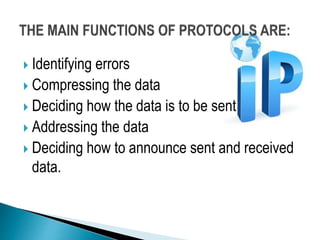
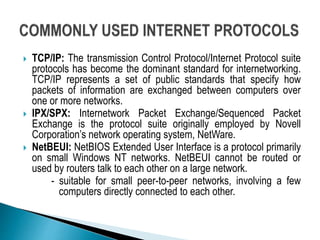
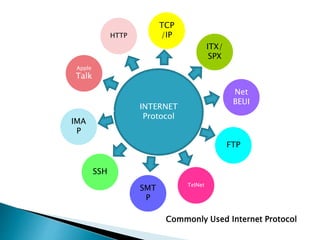
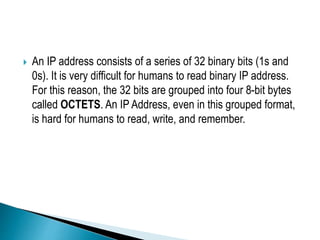
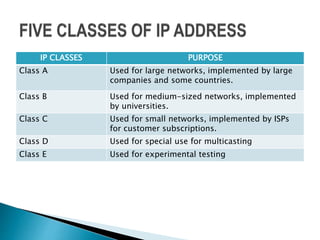

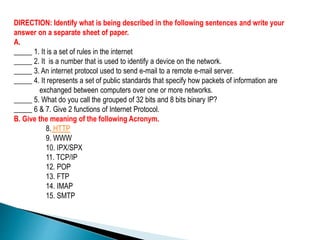
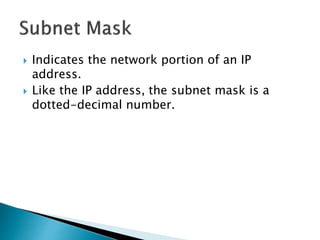
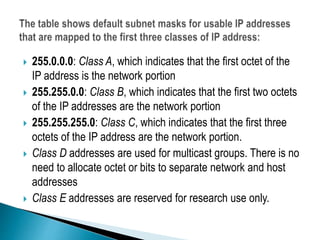
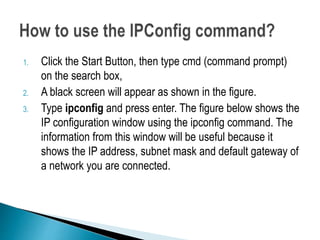
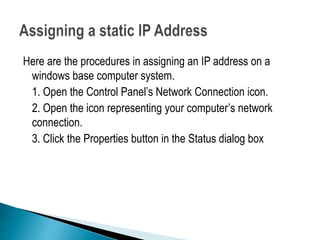

1. A protocol is a set of rules that govern communication between computers on a network. Internet protocols specify how data is addressed, transmitted, and acknowledged. 2. An IP address is a unique number assigned to each device on a network to identify it. An IP address consists of 32 binary bits grouped into four octets for human readability. 3. Common internet protocols include TCP/IP for exchanging data packets, HTTP for web content, SMTP for sending email, and FTP for file transfer.


![How Big Brands are Taking Your Traffic in Alberta [Data Inside].pptx](https://cdn.slidesharecdn.com/ss_thumbnails/howbigbrandsaretakingyourtrafficinalbertadatainside-260123180142-42d276f3-thumbnail.jpg?width=640&height=640&fit=bounds)


