
INTELLEGENT TRAFFIC
MANAGEMENT SYSTEM
FOR METRO CITIES
CONTENT
 INTRODUCTION TO EMBEDED SYSTEM
 MICRO CONTOLLER
 BLOCK DIAGARM
 POWER SUPPLY
 LED
 SENSORS
 ADVANTAGES
 RESULT
EMBEDED SYSTEM
 Embeded system is a combination of hardware
and software
 An embedded system is a special-purpose
computer system designed to perform one or a
few dedicated functions, often with real-time
computing constraints.
 It is usually embedded as part of a complete
device including hardware and mechanical
parts.
 Physically, embedded systems range from
portable devices such as digital watches and
MP3 players, to large stationary installations like
traffic lights
AT89C52 MICROCONTROLLER
 The AT89C52 is a low-power, high-performance CMOS
8-bit microcomputer with 4 Kbytes of Flash
Programmable and Erasable Read Only Memory
(PEROM)
 The device is manufactured using Atmel’s high-density
non-volatile memory technology and is compatible with
the industry standard MCS-51Ô instruction set and pin
out.
FEATURES OF
MICROCONTROLLER
 32 Programmable I/O Lines
 Three 16-Bit Timer/Counters
 Eight Interrupt Sources
 4.0V to 5.5V Operating Range
 Full Duplex UART Serial Channel
 Watchdog Timer
 Dual Data Pointer
 Power-off Flag
 Fast Programming Time
 Flexible ISP Programming (Byte
BLOCK DIAGRAM
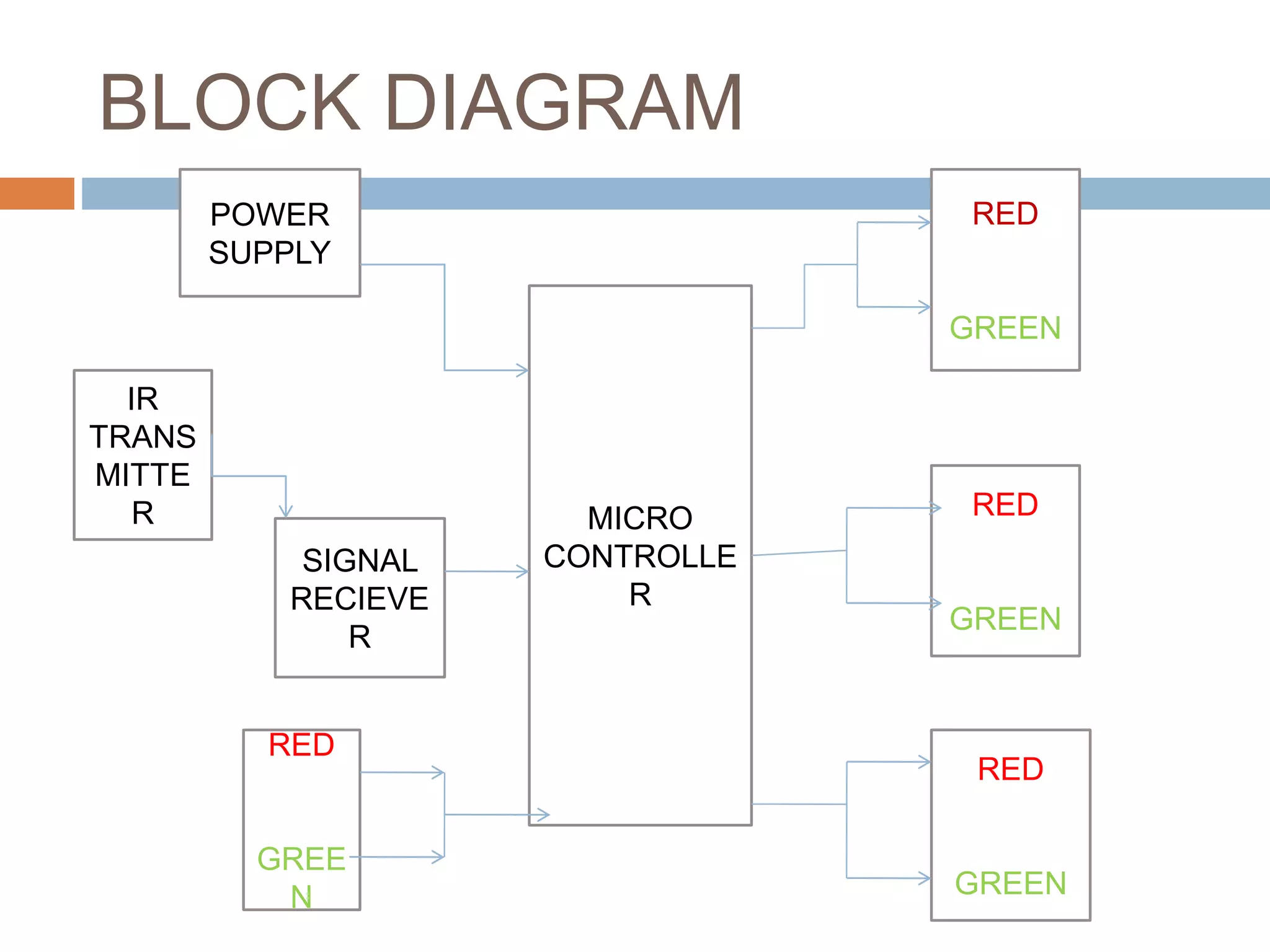
MICRO
CONTROLLE
R
POWER
SUPPLY
IR
TRANS
MITTE
R
SIGNAL
RECIEVE
R
RED
GREEN
RED
GREEN
RED
GREEN
RED
GREE
N
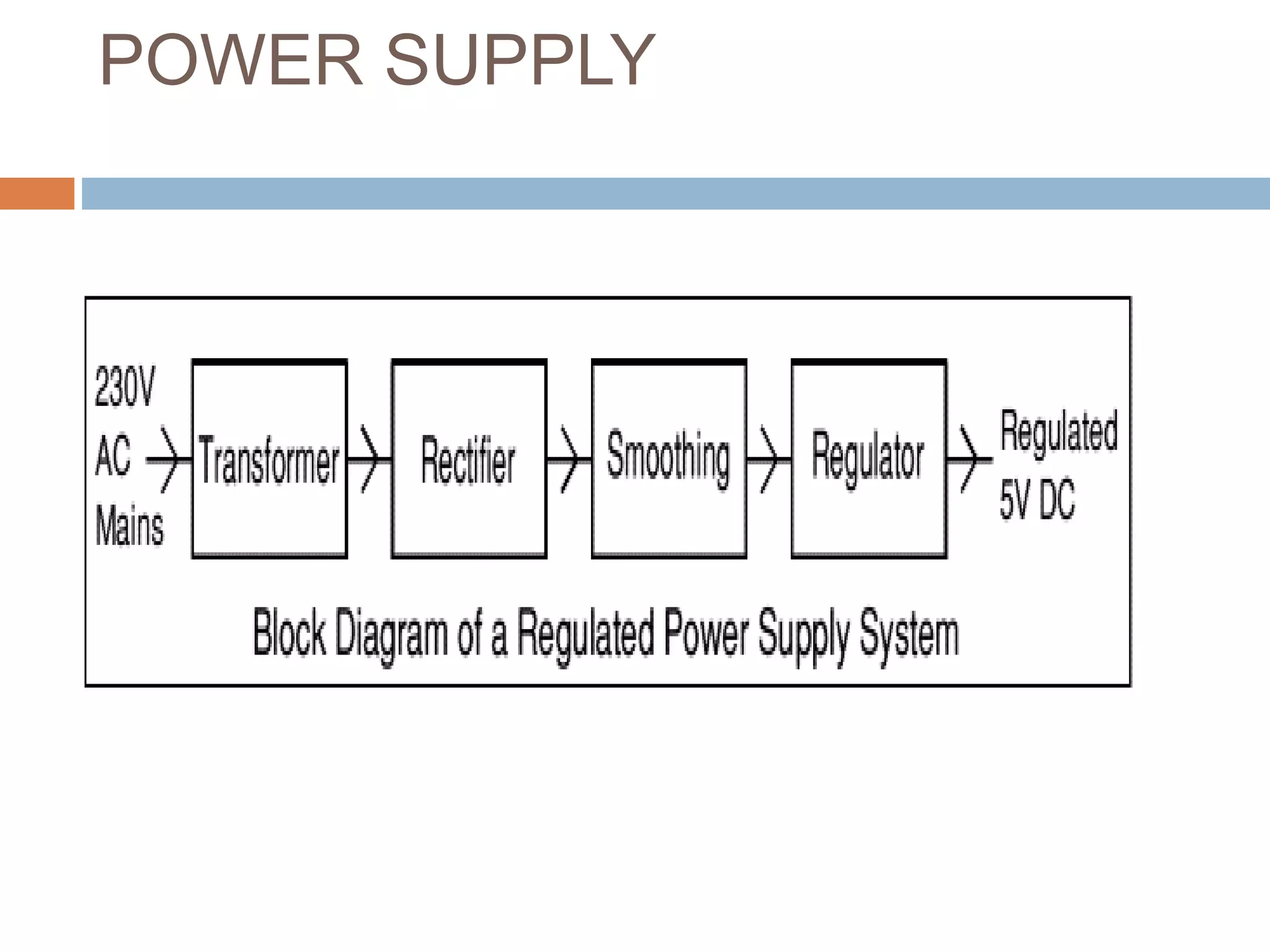
POWER SUPPLY
LIGHT EMMITING DIODE
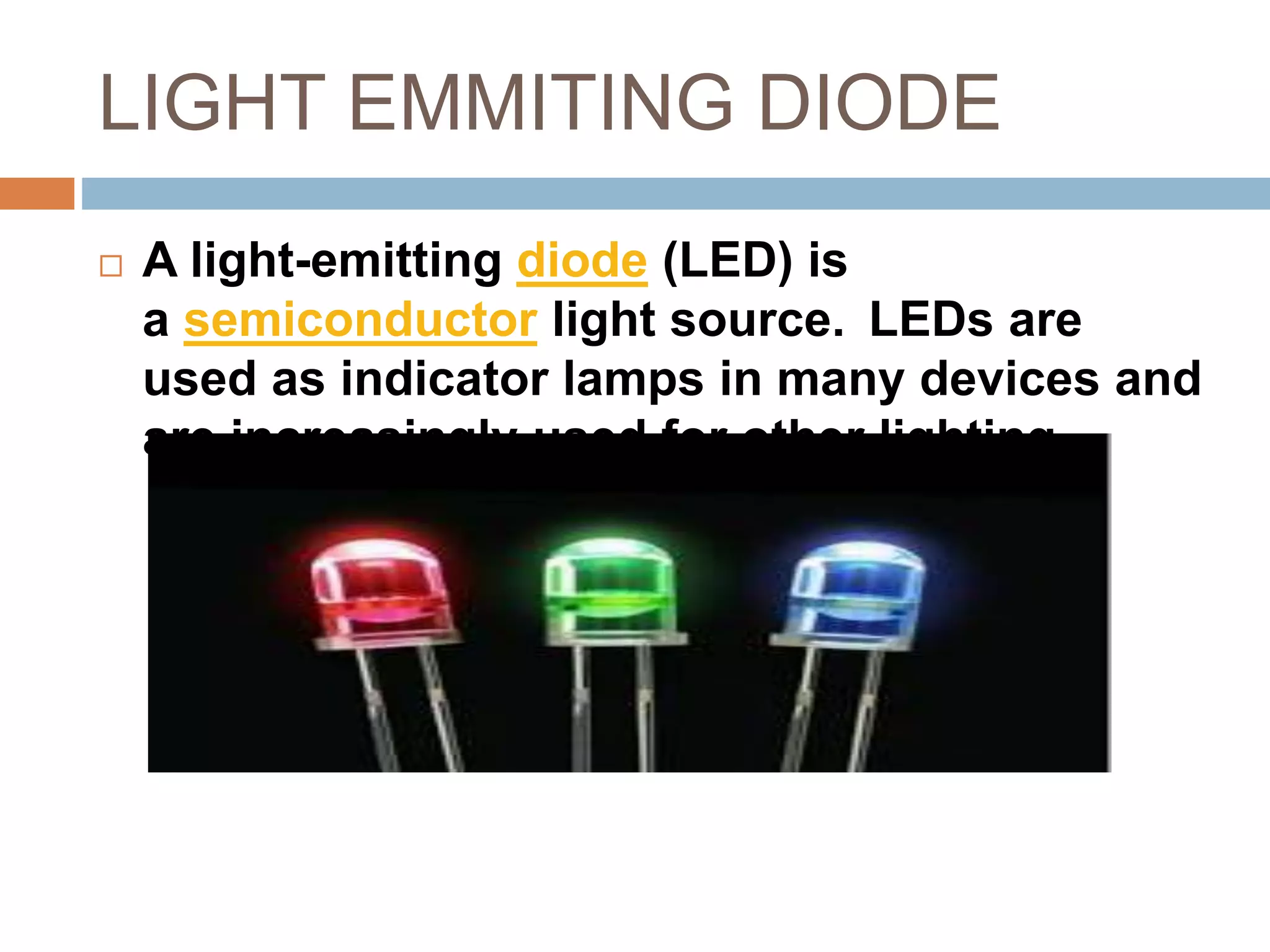
 A light-emitting diode (LED) is
a semiconductor light source. LEDs are
used as indicator lamps in many devices and
are increasingly used for other lighting
IR-SENSORS
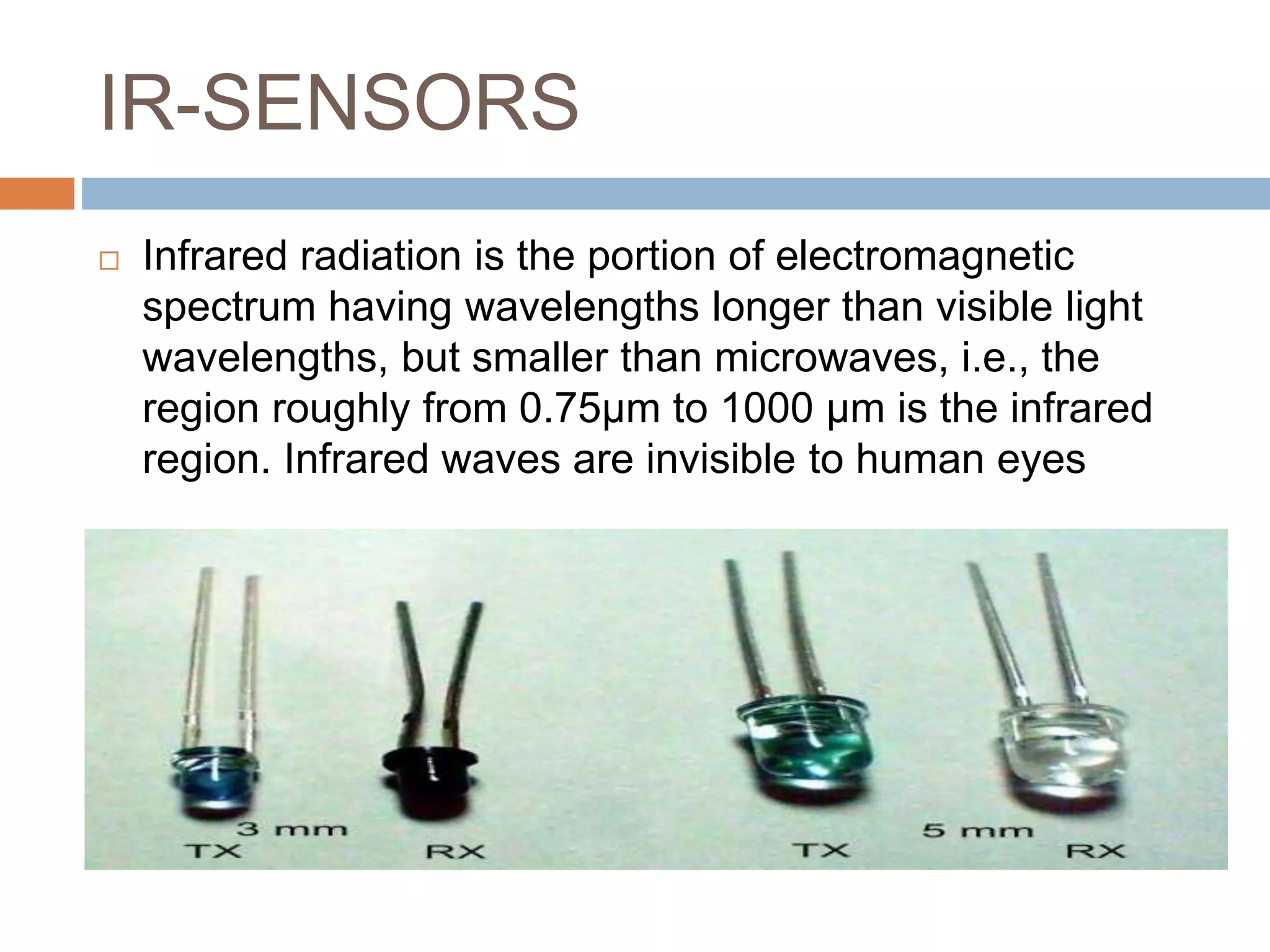
 Infrared radiation is the portion of electromagnetic
spectrum having wavelengths longer than visible light
wavelengths, but smaller than microwaves, i.e., the
region roughly from 0.75µm to 1000 µm is the infrared
region. Infrared waves are invisible to human eyes
TYPES
 IR sensors are two types
1) IR transmitter
2) IR reciever
 Infrared (IR) transmitters and receivers are present
in many different devices, though they are most
commonly found in consumer electronics. The way
this technology works is that one component flashes
an infrared light in a particular pattern, which
another component can pick up and translate into
an instruction.
advantage
 Increasing the traffic handling capacity of
roads.
 Reducing collisions, both vehicular and
pedestrian. Encourages travel within the
speed limit to meet green lights.
 Reducing unnecessary stopping and starting
of traffic - this in turn reduces fuel
consumption, air pollution, noise and vehicle
wear and tear.
 Improve journey time.
 Reducing driver frustration and 'road rage'.
Dis advantages
 Excessive delay may caused
 These unnecessary delay results in significant
fuel waste and higher motority costs
 Disobediance of signal
THANK YOU
QUARIES

Intelligence traffic management system for metrocities

  • 1.
  • 2.
    CONTENT  INTRODUCTION TOEMBEDED SYSTEM  MICRO CONTOLLER  BLOCK DIAGARM  POWER SUPPLY  LED  SENSORS  ADVANTAGES  RESULT
  • 3.
    EMBEDED SYSTEM  Embededsystem is a combination of hardware and software  An embedded system is a special-purpose computer system designed to perform one or a few dedicated functions, often with real-time computing constraints.  It is usually embedded as part of a complete device including hardware and mechanical parts.  Physically, embedded systems range from portable devices such as digital watches and MP3 players, to large stationary installations like traffic lights
  • 4.
    AT89C52 MICROCONTROLLER  TheAT89C52 is a low-power, high-performance CMOS 8-bit microcomputer with 4 Kbytes of Flash Programmable and Erasable Read Only Memory (PEROM)  The device is manufactured using Atmel’s high-density non-volatile memory technology and is compatible with the industry standard MCS-51Ô instruction set and pin out.
  • 5.
    FEATURES OF MICROCONTROLLER  32Programmable I/O Lines  Three 16-Bit Timer/Counters  Eight Interrupt Sources  4.0V to 5.5V Operating Range  Full Duplex UART Serial Channel  Watchdog Timer  Dual Data Pointer  Power-off Flag  Fast Programming Time  Flexible ISP Programming (Byte
  • 6.
  • 7.
  • 8.
    LIGHT EMMITING DIODE A light-emitting diode (LED) is a semiconductor light source. LEDs are used as indicator lamps in many devices and are increasingly used for other lighting
  • 9.
    IR-SENSORS  Infrared radiationis the portion of electromagnetic spectrum having wavelengths longer than visible light wavelengths, but smaller than microwaves, i.e., the region roughly from 0.75µm to 1000 µm is the infrared region. Infrared waves are invisible to human eyes
  • 10.
    TYPES  IR sensorsare two types 1) IR transmitter 2) IR reciever  Infrared (IR) transmitters and receivers are present in many different devices, though they are most commonly found in consumer electronics. The way this technology works is that one component flashes an infrared light in a particular pattern, which another component can pick up and translate into an instruction.
  • 11.
    advantage  Increasing thetraffic handling capacity of roads.  Reducing collisions, both vehicular and pedestrian. Encourages travel within the speed limit to meet green lights.  Reducing unnecessary stopping and starting of traffic - this in turn reduces fuel consumption, air pollution, noise and vehicle wear and tear.  Improve journey time.  Reducing driver frustration and 'road rage'.
  • 12.
    Dis advantages  Excessivedelay may caused  These unnecessary delay results in significant fuel waste and higher motority costs  Disobediance of signal
  • 13.
  • 14.