
-Neha Reddy.A
11S11A0122
INTELLIGENT TRANSPORTATION
SYSTEM
Content
 What is Intelligent Transportation System?
 Necessity of ITS
 Types of ITS
 Parts of ITS
 ATIS and ATCMS
 Applications of ITS
 Implementing ATIS system
 Merits and Demerits of ITS
 Conclusion
Introduction
 Intelligent Transportation system are advanced
applications aim to provide innovative services related
to different modes of transport and trafficmanagement.
 ITS enables various users to be better informed, make
safer, more coordinated and smarter use of transport
networks.
 ITS systems in which information and communication
technologies are applied in the field of road transport,
including infrastructure, vehicles and users, and in
traffic management and mobility management, as well
as for interfaces with other modes of transport.
Necessity of ITS:
India is going through a period of drastic change in the
transportation area due to:
 Rapidly growing economy.
 Insufficient and inadequate public transportation
system.
 Rising vehicle ownership levels
 Traffic congestion, insufficient road development
growing number of vehicles.
 Low speed, increased accident rates, increased fuel
consumption and increased pollution.
 Impossible to build enough new roads or to meet the
demand.
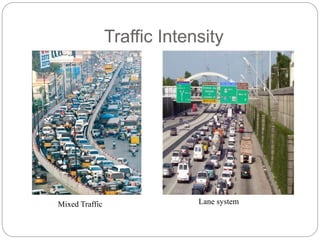
Traffic Intensity
Mixed Traffic Lane system
Parts of ITS
 I T S ARCHITECTURE:
Framework for planning, defining, and
integrating intelligent transportation systems.
 Benefits of Architecture:
Reduces time and resources required to
integrate the technologies to local needs
Helps identify agencies and jurisdictions & seeks
their participation
Framework
multi model transportation Electronic
Fare
Payment
Freeway
Management
Transit
Management
Traffic
Signal
Control
Electronic
Toll
RR Grade
Crossing Safety
Emergency
Response
Management
Incident
Management
National ITS
Architecture
Communication Systems
 Effective and efficient operation of transit systems
relies on a communications infrastructure and vehicle-
based communications technologies.
 Communications systems are used to transmit voice
and data between transit vehicles and operation
centers, and to transmit commands between operators
and technologies.
 Transit communications systems are comprised mostly
of wireless technologies and applications.
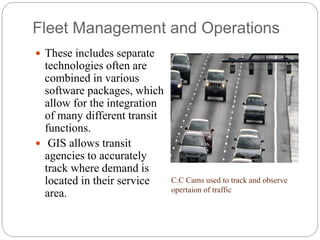
Fleet Management and Operations
 These includes separate
technologies often are
combined in various
software packages, which
allow for the integration
of many different transit
functions.
 GIS allows transit
agencies to accurately
track where demand is
located in their service
area.
C.C Cams used to track and observe
opertaion of traffic
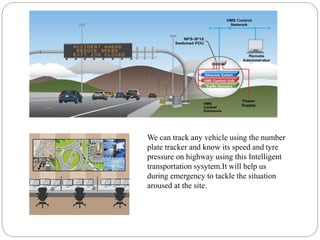
We can track any vehicle using the number
plate tracker and know its speed and tyre
pressure on highway using this Intelligent
transportation sysytem.It will help us
during emergency to tackle the situation
aroused at the site.
Applications of ITS
 Electronic toll collection(ETC)
 Global positioning system(GPS)
 Advanced traveler information system(ATIS)
 In-vehicle transit information system
 Automatic passenger counter
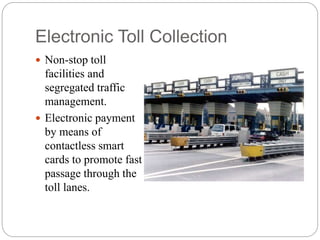
Electronic Toll Collection
 Non-stop toll
facilities and
segregated traffic
management.
 Electronic payment
by means of
contactless smart
cards to promote fast
passage through the
toll lanes.
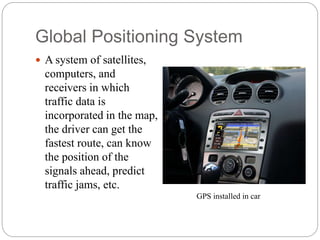
Global Positioning System
 A system of satellites,
computers, and
receivers in which
traffic data is
incorporated in the map,
the driver can get the
fastest route, can know
the position of the
signals ahead, predict
traffic jams, etc.
GPS installed in car
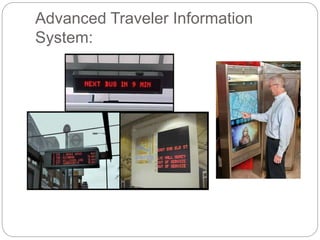
Advanced Traveler Information
System
 It helps to save the travel time, Reduce cost reliability,
more comfort to travelers, gives safety and security.
 The information which the travelers want are of both
static and dynamic. Static information includes routes
and schedules. Whereas dynamic information includes,
traffic conditions, real-time transit schedules,
incidents, weather, parking etc.
 Transportation Management Centers respond to real-
time traffic conditions, control which lanes may be
used, traffic signal timing.
Advanced Traveler Information
System:
Automatic Passenger Counter
 The APC automatically records the number of
passengers, time and location of each stop as
passengers get on and off the bus.
 The APC can collect data, with a reduction in time,
cost, and effort by means of infrared beams at the
doors or pressure sensitive mats on the steps.
 With the information provided by the APCs, transit
planners can make changes to routes and schedules
that better serve the transportation needs of their
community.
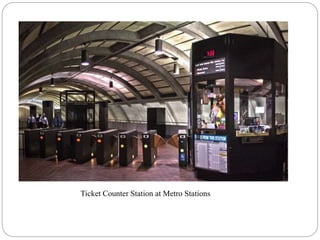
Ticket Counter Station at Metro Stations
Implementing ITS
ITS Technology
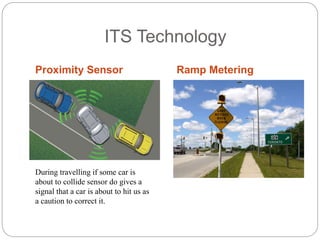
Proximity Sensor Ramp Metering
During travelling if some car is
about to collide sensor do gives a
signal that a car is about to hit us as
a caution to correct it.
Advantages of ITS
 Improved safety
 Better traffic flow
 Lower travel cost
 Better environmental quality
 Increased business activity
 Greater user acceptance
 Better travel information
 Better planning information
Disadvantages
 Difficult to use in mixed traffic
 Preliminary difficulties in understanding
 ITS equipments costly
 The control system software could be hacked by
hackers
Conclusion
 The use of I T S in some developed countries like America, Japan and
England has given them high progress in the field of transportation and
helped them in their economic Progress.
 The traffic congestions, rate of road accidents, wastage of fuels will
decreased to a large extend.
 This gives the people of the country a more economic mean of
transportation with advance information of transits.
 Hence with much more interest and advanced research in the field of
I T S, it can be implemented in our country and can prove to be the
solution of the traffic problems including traffic congestion, air
pollution and traffic accidents.
THANK YOU

Intelligent transportation system

  • 1.
  • 2.
    Content  What isIntelligent Transportation System?  Necessity of ITS  Types of ITS  Parts of ITS  ATIS and ATCMS  Applications of ITS  Implementing ATIS system  Merits and Demerits of ITS  Conclusion
  • 3.
    Introduction  Intelligent Transportationsystem are advanced applications aim to provide innovative services related to different modes of transport and trafficmanagement.  ITS enables various users to be better informed, make safer, more coordinated and smarter use of transport networks.  ITS systems in which information and communication technologies are applied in the field of road transport, including infrastructure, vehicles and users, and in traffic management and mobility management, as well as for interfaces with other modes of transport.
  • 4.
    Necessity of ITS: Indiais going through a period of drastic change in the transportation area due to:  Rapidly growing economy.  Insufficient and inadequate public transportation system.  Rising vehicle ownership levels  Traffic congestion, insufficient road development growing number of vehicles.  Low speed, increased accident rates, increased fuel consumption and increased pollution.  Impossible to build enough new roads or to meet the demand.
  • 5.
  • 6.
    Parts of ITS I T S ARCHITECTURE: Framework for planning, defining, and integrating intelligent transportation systems.  Benefits of Architecture: Reduces time and resources required to integrate the technologies to local needs Helps identify agencies and jurisdictions & seeks their participation
  • 7.
    Framework multi model transportationElectronic Fare Payment Freeway Management Transit Management Traffic Signal Control Electronic Toll RR Grade Crossing Safety Emergency Response Management Incident Management National ITS Architecture
  • 8.
    Communication Systems  Effectiveand efficient operation of transit systems relies on a communications infrastructure and vehicle- based communications technologies.  Communications systems are used to transmit voice and data between transit vehicles and operation centers, and to transmit commands between operators and technologies.  Transit communications systems are comprised mostly of wireless technologies and applications.
  • 9.
    Fleet Management andOperations  These includes separate technologies often are combined in various software packages, which allow for the integration of many different transit functions.  GIS allows transit agencies to accurately track where demand is located in their service area. C.C Cams used to track and observe opertaion of traffic
  • 10.
    We can trackany vehicle using the number plate tracker and know its speed and tyre pressure on highway using this Intelligent transportation sysytem.It will help us during emergency to tackle the situation aroused at the site.
  • 11.
    Applications of ITS Electronic toll collection(ETC)  Global positioning system(GPS)  Advanced traveler information system(ATIS)  In-vehicle transit information system  Automatic passenger counter
  • 12.
    Electronic Toll Collection Non-stop toll facilities and segregated traffic management.  Electronic payment by means of contactless smart cards to promote fast passage through the toll lanes.
  • 13.
    Global Positioning System A system of satellites, computers, and receivers in which traffic data is incorporated in the map, the driver can get the fastest route, can know the position of the signals ahead, predict traffic jams, etc. GPS installed in car
  • 14.
    Advanced Traveler Information System It helps to save the travel time, Reduce cost reliability, more comfort to travelers, gives safety and security.  The information which the travelers want are of both static and dynamic. Static information includes routes and schedules. Whereas dynamic information includes, traffic conditions, real-time transit schedules, incidents, weather, parking etc.  Transportation Management Centers respond to real- time traffic conditions, control which lanes may be used, traffic signal timing.
  • 15.
  • 16.
    Automatic Passenger Counter The APC automatically records the number of passengers, time and location of each stop as passengers get on and off the bus.  The APC can collect data, with a reduction in time, cost, and effort by means of infrared beams at the doors or pressure sensitive mats on the steps.  With the information provided by the APCs, transit planners can make changes to routes and schedules that better serve the transportation needs of their community.
  • 17.
    Ticket Counter Stationat Metro Stations
  • 18.
  • 19.
    ITS Technology Proximity SensorRamp Metering During travelling if some car is about to collide sensor do gives a signal that a car is about to hit us as a caution to correct it.
  • 20.
    Advantages of ITS Improved safety  Better traffic flow  Lower travel cost  Better environmental quality  Increased business activity  Greater user acceptance  Better travel information  Better planning information
  • 21.
    Disadvantages  Difficult touse in mixed traffic  Preliminary difficulties in understanding  ITS equipments costly  The control system software could be hacked by hackers
  • 22.
    Conclusion  The useof I T S in some developed countries like America, Japan and England has given them high progress in the field of transportation and helped them in their economic Progress.  The traffic congestions, rate of road accidents, wastage of fuels will decreased to a large extend.  This gives the people of the country a more economic mean of transportation with advance information of transits.  Hence with much more interest and advanced research in the field of I T S, it can be implemented in our country and can prove to be the solution of the traffic problems including traffic congestion, air pollution and traffic accidents.
  • 23.