Definitions 
 Hypersensitivity - injurious consequences in the 
sensitized host, following contact with specific 
antigens. 
 Allergy "altered state of reactivity" to common 
environmental antigens.(von Pirquet) 
 Atopy - "out of place," and often used to describe 
patients with IgE-mediated diseases.
 Allergen refers to an antigen that triggers an IgE response 
in genetically predisposed individuals 
 Proteins 
 10 – 70 kd size 
 Priming/ sensitizing dose – initial contact with the 
antigen sensitizes the immune system, leading to the 
priming of the appropriate B or T lymphocytes 
 Shocking dose – subsequent contact with the allergen 
causes manifestations of hypersensitivity.
Classification 
 Based on time required for a sensitised host to 
develop clinical reactions on re – exposure 
Immediate 
Delayed 
 Based on different mechanisms of pathogenesis 
Type 1 ( IgE mediated) 
Type 2 (cytotoxic or cell stimulating) 
Type 3 (immune complex) 
Type 4 ( cell mediated)
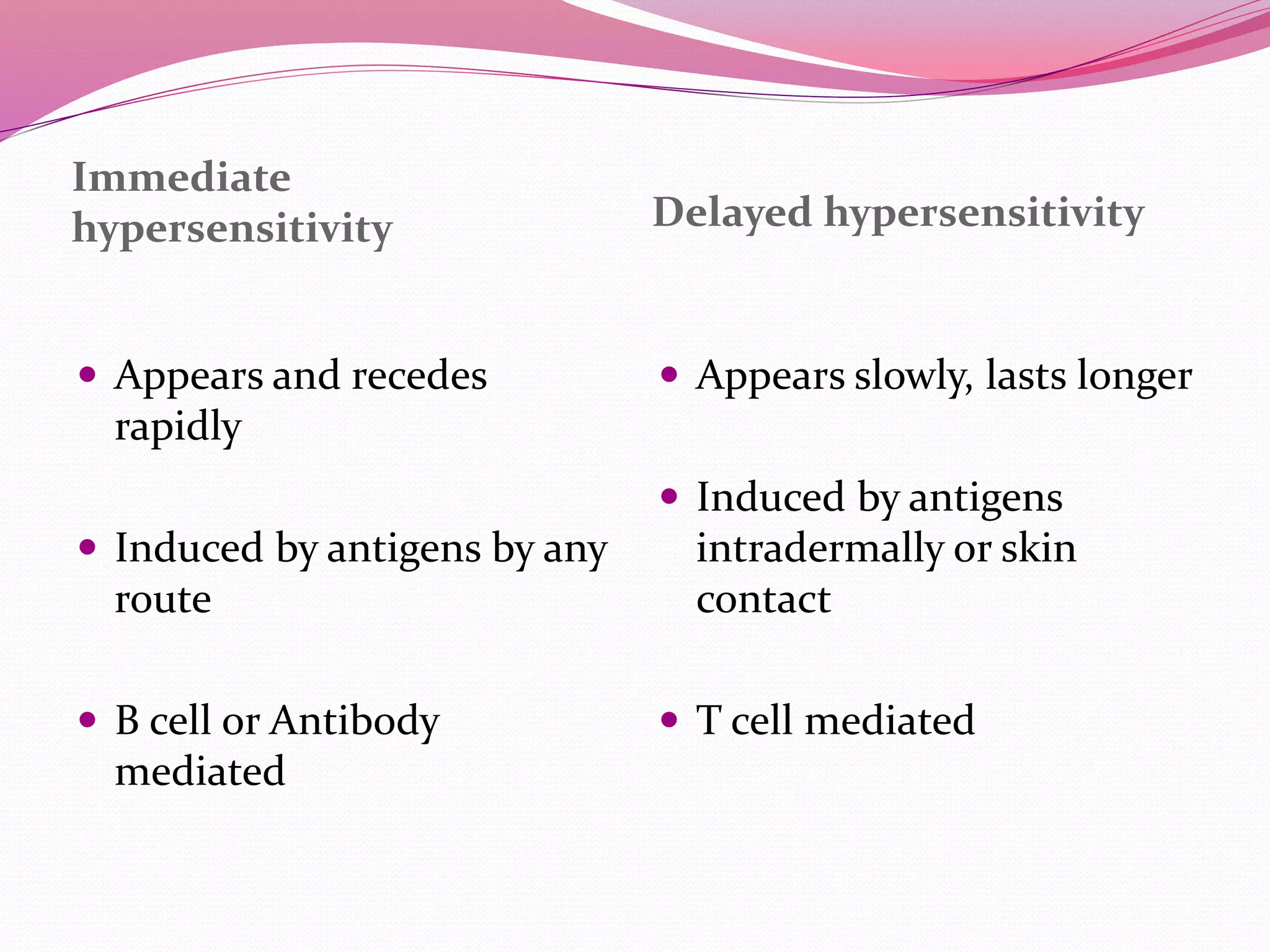
Immediate 
hypersensitivity Delayed hypersensitivity 
 Appears and recedes 
rapidly 
 Induced by antigens by any 
route 
 B cell or Antibody 
mediated 
 Appears slowly, lasts longer 
 Induced by antigens 
intradermally or skin 
contact 
 T cell mediated
Type 1 reactions (IgE dependent) 
 Anaphylaxis – acute, potentially fatal, systemic 
 Atopy - chronic, nonfatal, localized
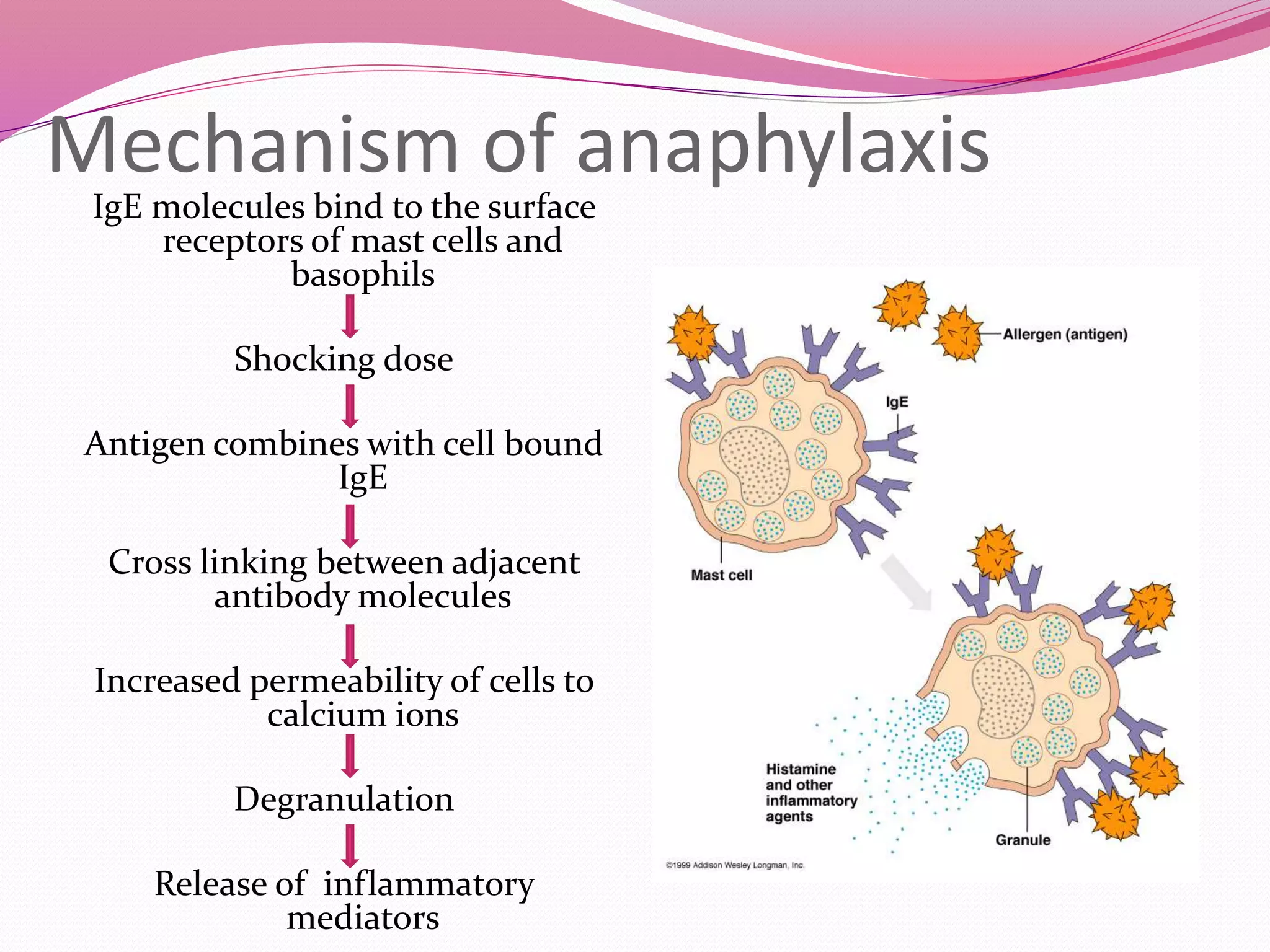
Mechanism of anaphylaxis 
IgE molecules bind to the surface 
receptors of mast cells and 
basophils 
Shocking dose 
Antigen combines with cell bound 
IgE 
Cross linking between adjacent 
antibody molecules 
Increased permeability of cells to 
calcium ions 
Degranulation 
Release of inflammatory 
mediators
Mechanism of atopy 
 Predisposition genetically determined 
 Tendency to produce IgE antibodies in unusually large 
quantities
Type 2 Reaction: cytolytic and 
cytotoxic 
Ig G and rarely Ig M antibodies 
Bind to antigenic cell 
Lysis of cell 
 Cell surface antigens 
(autoimmune anemias) 
 Adsorption of antigens on cell 
surface (drugs) 
 Cell surface receptor and 
disrupts normal function ( LATS 
– Graves disease)
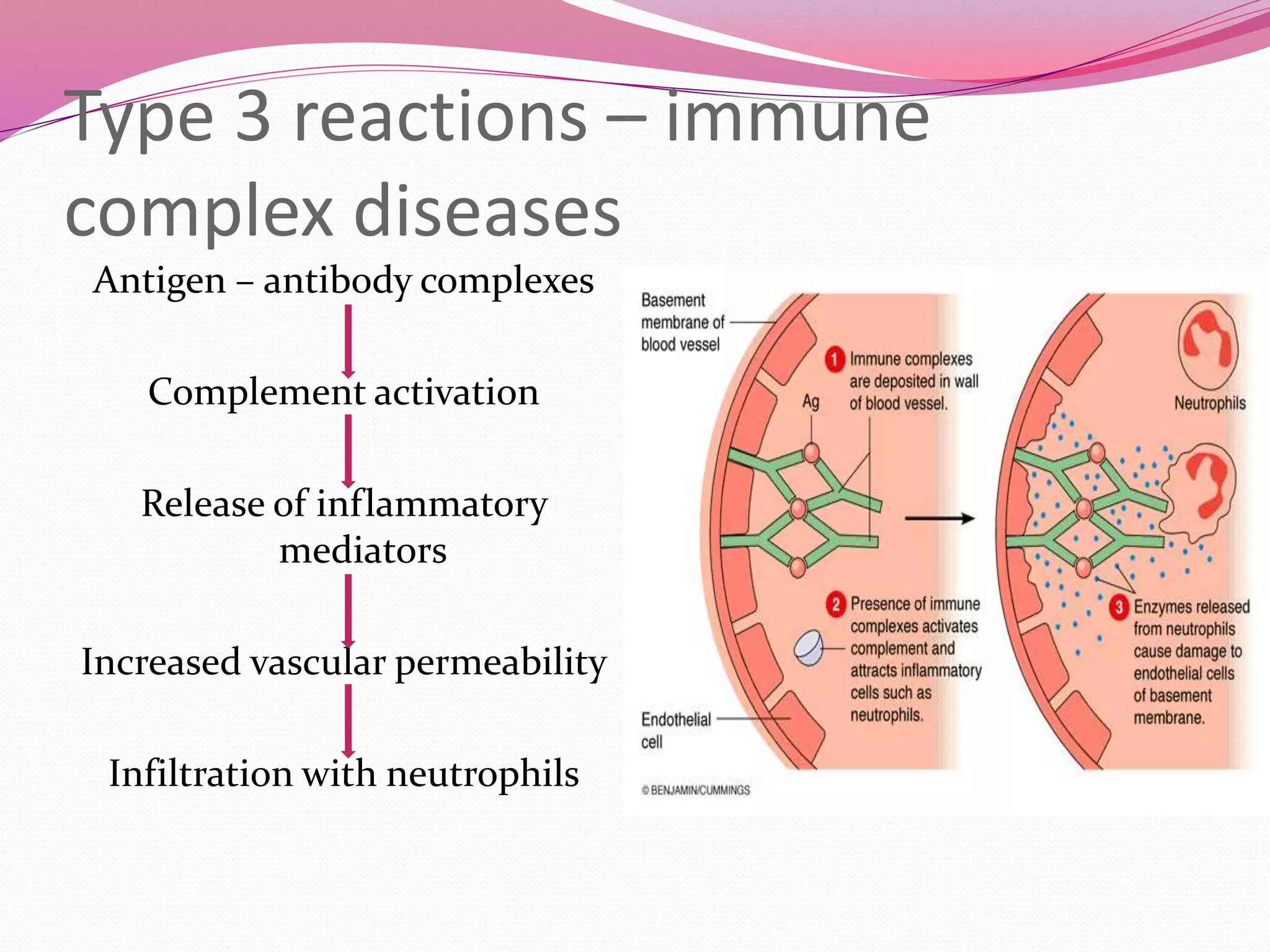
Type 3 reactions – immune 
complex diseases 
Antigen – antibody complexes 
Complement activation 
Release of inflammatory 
mediators 
Increased vascular permeability 
Infiltration with neutrophils
Type 4 –Delayed hypersensitivity 
Sensitized T cells 
Contact with specific antigen 
Release cytokines 
Effects on leucocytes, 
macrophages and tissue cells
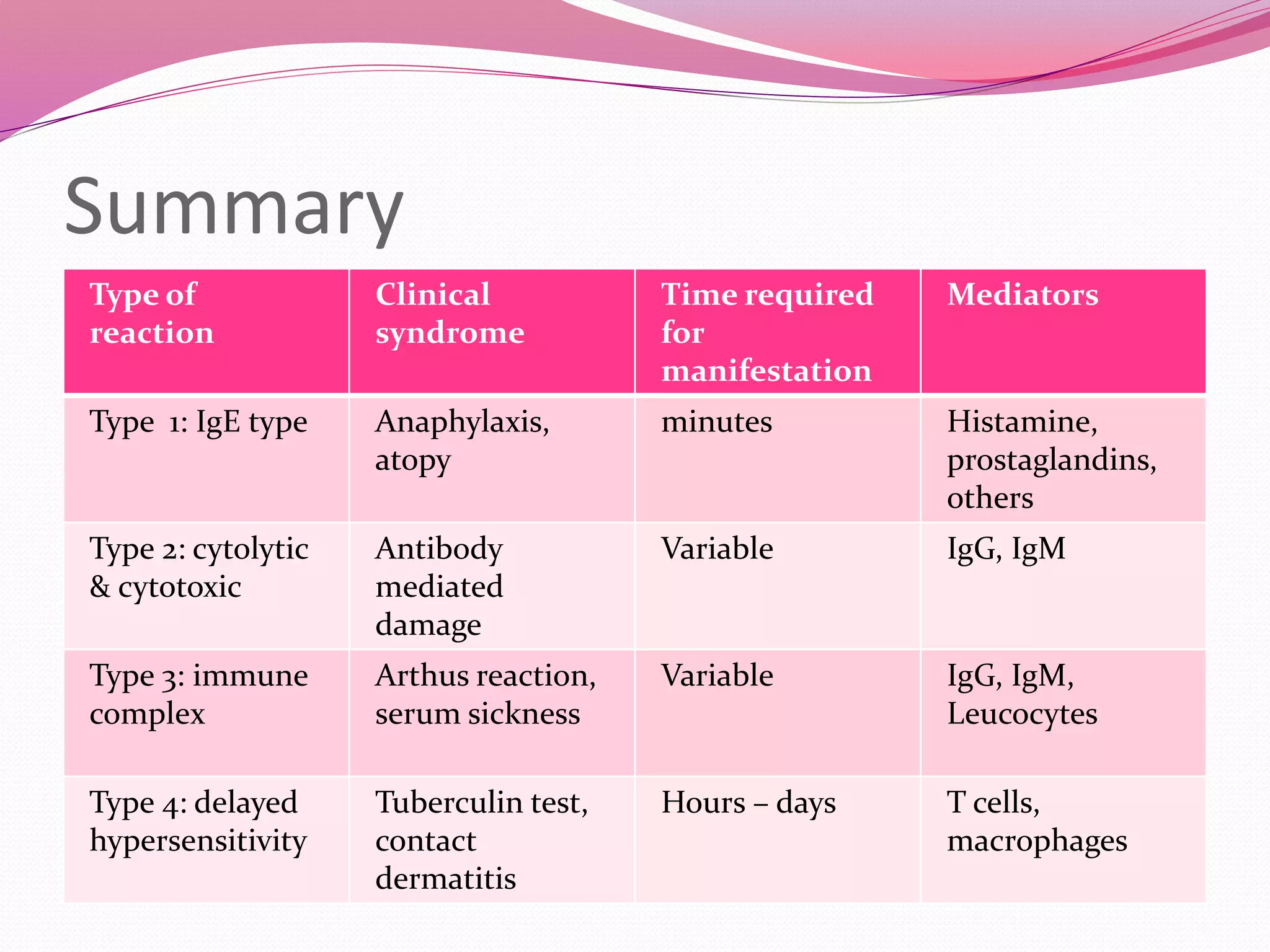
Summary 
Type of 
reaction 
Clinical 
syndrome 
Time required 
for 
manifestation 
Mediators 
Type 1: IgE type Anaphylaxis, 
atopy 
minutes Histamine, 
prostaglandins, 
others 
Type 2: cytolytic 
& cytotoxic 
Antibody 
mediated 
damage 
Variable IgG, IgM 
Type 3: immune 
complex 
Arthus reaction, 
serum sickness 
Variable IgG, IgM, 
Leucocytes 
Type 4: delayed 
hypersensitivity 
Tuberculin test, 
contact 
dermatitis 
Hours – days T cells, 
macrophages

Hypersensitivity

  • 2.
    Definitions  Hypersensitivity- injurious consequences in the sensitized host, following contact with specific antigens.  Allergy "altered state of reactivity" to common environmental antigens.(von Pirquet)  Atopy - "out of place," and often used to describe patients with IgE-mediated diseases.
  • 3.
     Allergen refersto an antigen that triggers an IgE response in genetically predisposed individuals  Proteins  10 – 70 kd size  Priming/ sensitizing dose – initial contact with the antigen sensitizes the immune system, leading to the priming of the appropriate B or T lymphocytes  Shocking dose – subsequent contact with the allergen causes manifestations of hypersensitivity.
  • 4.
    Classification  Basedon time required for a sensitised host to develop clinical reactions on re – exposure Immediate Delayed  Based on different mechanisms of pathogenesis Type 1 ( IgE mediated) Type 2 (cytotoxic or cell stimulating) Type 3 (immune complex) Type 4 ( cell mediated)
  • 5.
    Immediate hypersensitivity Delayedhypersensitivity  Appears and recedes rapidly  Induced by antigens by any route  B cell or Antibody mediated  Appears slowly, lasts longer  Induced by antigens intradermally or skin contact  T cell mediated
  • 6.
    Type 1 reactions(IgE dependent)  Anaphylaxis – acute, potentially fatal, systemic  Atopy - chronic, nonfatal, localized
  • 7.
    Mechanism of anaphylaxis IgE molecules bind to the surface receptors of mast cells and basophils Shocking dose Antigen combines with cell bound IgE Cross linking between adjacent antibody molecules Increased permeability of cells to calcium ions Degranulation Release of inflammatory mediators
  • 8.
    Mechanism of atopy  Predisposition genetically determined  Tendency to produce IgE antibodies in unusually large quantities
  • 9.
    Type 2 Reaction:cytolytic and cytotoxic Ig G and rarely Ig M antibodies Bind to antigenic cell Lysis of cell  Cell surface antigens (autoimmune anemias)  Adsorption of antigens on cell surface (drugs)  Cell surface receptor and disrupts normal function ( LATS – Graves disease)
  • 10.
    Type 3 reactions– immune complex diseases Antigen – antibody complexes Complement activation Release of inflammatory mediators Increased vascular permeability Infiltration with neutrophils
  • 11.
    Type 4 –Delayedhypersensitivity Sensitized T cells Contact with specific antigen Release cytokines Effects on leucocytes, macrophages and tissue cells
  • 12.
    Summary Type of reaction Clinical syndrome Time required for manifestation Mediators Type 1: IgE type Anaphylaxis, atopy minutes Histamine, prostaglandins, others Type 2: cytolytic & cytotoxic Antibody mediated damage Variable IgG, IgM Type 3: immune complex Arthus reaction, serum sickness Variable IgG, IgM, Leucocytes Type 4: delayed hypersensitivity Tuberculin test, contact dermatitis Hours – days T cells, macrophages