ECTHYMA 
Dr. Vijay
ETIOLOGY 
 Psudomonas 
 Streptococcus pyogenes 
 Staphylococcus aureus
PREDISPOSING FACTOR 
 High temperature and humidity 
 Crowded living conditions 
 Poor hygiene 
 previously sustained tissue injury 
(e.g.excoriations, insect bites, dermatitis) 
 immunocompromised (e.g., diabetes, 
neutropenia, HIV infection)
PATHOPHYSIOLOGY 
 Ecthyma is similarly to superficial impetigo 
 Difference - impetigo the erosion at the 
stratum corneum 
in ecthyma the ulcer is full thickness and thus 
heals with scarring.
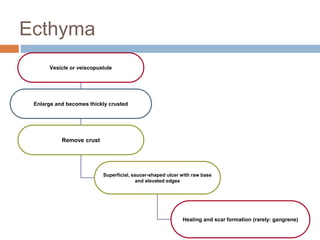
Ecthyma 
Vesicle or veiscopustule 
Enlarge and becomes thickly crusted 
Remove crust 
Superficial, saucer-shaped ulcer with raw base 
and elevated edges 
Healing and scar formation (rarely: gangrene)
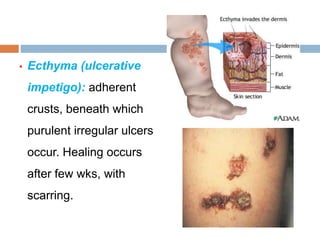
• Ecthyma (ulcerative 
impetigo): adherent 
crusts, beneath which 
purulent irregular ulcers 
occur. Healing occurs 
after few wks, with 
scarring.
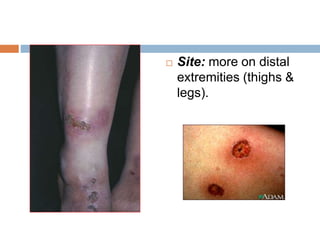
 Site: more on distal 
extremities (thighs & 
legs).
TREATMENT 
 Cleansing with soap and water 
Application of Mupirocin or Bacitracin 
ointment twice a day 
 Oral Dicloxacillin or first-generation 
Cephalosporin 
 Proper hygiene and nutrition

Ecthyma

  • 1.
  • 2.
    ETIOLOGY  Psudomonas  Streptococcus pyogenes  Staphylococcus aureus
  • 3.
    PREDISPOSING FACTOR High temperature and humidity  Crowded living conditions  Poor hygiene  previously sustained tissue injury (e.g.excoriations, insect bites, dermatitis)  immunocompromised (e.g., diabetes, neutropenia, HIV infection)
  • 4.
    PATHOPHYSIOLOGY  Ecthymais similarly to superficial impetigo  Difference - impetigo the erosion at the stratum corneum in ecthyma the ulcer is full thickness and thus heals with scarring.
  • 5.
    Ecthyma Vesicle orveiscopustule Enlarge and becomes thickly crusted Remove crust Superficial, saucer-shaped ulcer with raw base and elevated edges Healing and scar formation (rarely: gangrene)
  • 6.
    • Ecthyma (ulcerative impetigo): adherent crusts, beneath which purulent irregular ulcers occur. Healing occurs after few wks, with scarring.
  • 7.
     Site: moreon distal extremities (thighs & legs).
  • 8.
    TREATMENT  Cleansingwith soap and water Application of Mupirocin or Bacitracin ointment twice a day  Oral Dicloxacillin or first-generation Cephalosporin  Proper hygiene and nutrition