It is a fat soluble vitamin. 
Resembles sterols in structure and functions 
like a hormone. 
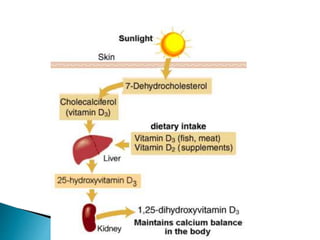
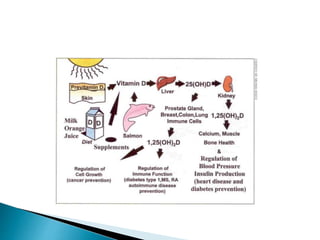
Synthesized by the body after exposure to UV 
rays or obtained from food sources
 Fortified foods 
Milk, cheese, yogurt, orange juice 
 Ready to eat cereals 
 Sun exposure 
Rays from the sun trigger synthesis in the skin
Ergocalciferol (vitamin D2) is formed from 
ergosterol and present in plants. 
Cholecalciferol (vitamin D3) is found in 
animals. 
Ergocalciferol and cholecalciferol are sources 
for vitamin D activity and are referred as 
provitamins.
Both ergocalciferol and cholecalciferol are 
similar in structure expect that ergocalciferol 
has an additional methyl group and double 
bond. 
25 hydroxy vit D3 (calcidiol) 
1,25 dihydroxy vit D3 (calcitriol).
Absorption 
â—¦ Vitamin D is absorbed from the small intestine 
for which bile is essential. 
Distribution 
â—¦ Stored in adipose tissue 
Metabolism 
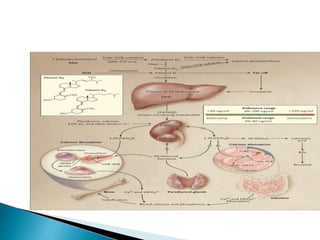
â—¦ Transported to the liver, then kidneys, where 
it is activated
Excreted in bile 
Metabolized to water soluble metabolites 
and then excreted in urine as well.
Calcitriol is biologically active form of 
vitaminD. 
It regulates the plasma levels of calcium and 
phosphate. 
It acts at 3 different levels: 
1. Action of calcitriol on intestine. 
2. Action of calcitriol on bone. 
3. Action of calcitriol on kidney.
It is an another metabolite of vitamin D. 
Synthesized in kidney by 24 hydroxylase. 
Exact function is not known. 
It is believed that when calcitriol 
concentration is adequate 24 hydroxylase 
leading to formation of less imp compound 
24,25 DHCC. 
In this way to maintain homeostasis of 
calcium synthesis of 24,25 DHCC is also 
important.
 Cell differentiation 
inhibits proliferation and stimulates the 
normal differentiation of cells 
 Immunity 
The inactive form of vitamin D aids in the 
formation of active vitamin D which enhances 
immunity and inhibits the development of 
autoimmune disease.
Calcium balance 
â—¦ With decreased dietary calcium, PTH is 
secreted and causes increased production of 
calcitriol, a hormone 
â—¦ Calcitriol restores normal calcium levels by 
increased absorption of dietary calcium, 
increased mobilization of calcium from bone, 
and increased reabsorption from kidneys
Heart disease 
â—¦ Renin, important in regulation of blood 
pressure and heart health, is associated with 
vitamin D levels 
Maintaining normal phosphorus levels 
â—¦ Bone cannot be properly mineralized without 
phosphorus
During vitamin D deficiency, calcium 
absorption cannot be increased to meet 
body's needs 
Therefore, calcium is taken from bones 
to maintain normal serum levels
Higher melanin content (darker skin) 
Breast-fed infants 
Elderly 
Body covering/use of sunscreen 
Fat malabsorption syndrome 
Obesity 
Inadequate dietary intake 
Increased excretion 
Genetic susceptibility
Rickets 
Infantile tetany 
Poor growth 
Osteomalacia.
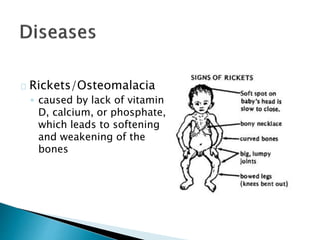
Rickets/Osteomalacia 
â—¦ caused by lack of vitamin 
D, calcium, or phosphate, 
which leads to softening 
and weakening of the 
bones
THANK YOU….

Vitamin d metabolism

  • 2.
    It is afat soluble vitamin. Resembles sterols in structure and functions like a hormone. Synthesized by the body after exposure to UV rays or obtained from food sources
  • 3.
     Fortified foods Milk, cheese, yogurt, orange juice  Ready to eat cereals  Sun exposure Rays from the sun trigger synthesis in the skin
  • 4.
    Ergocalciferol (vitamin D2)is formed from ergosterol and present in plants. Cholecalciferol (vitamin D3) is found in animals. Ergocalciferol and cholecalciferol are sources for vitamin D activity and are referred as provitamins.
  • 6.
    Both ergocalciferol andcholecalciferol are similar in structure expect that ergocalciferol has an additional methyl group and double bond. 25 hydroxy vit D3 (calcidiol) 1,25 dihydroxy vit D3 (calcitriol).
  • 7.
    Absorption â—¦ VitaminD is absorbed from the small intestine for which bile is essential. Distribution â—¦ Stored in adipose tissue Metabolism â—¦ Transported to the liver, then kidneys, where it is activated
  • 8.
    Excreted in bile Metabolized to water soluble metabolites and then excreted in urine as well.
  • 9.
    Calcitriol is biologicallyactive form of vitaminD. It regulates the plasma levels of calcium and phosphate. It acts at 3 different levels: 1. Action of calcitriol on intestine. 2. Action of calcitriol on bone. 3. Action of calcitriol on kidney.
  • 11.
    It is ananother metabolite of vitamin D. Synthesized in kidney by 24 hydroxylase. Exact function is not known. It is believed that when calcitriol concentration is adequate 24 hydroxylase leading to formation of less imp compound 24,25 DHCC. In this way to maintain homeostasis of calcium synthesis of 24,25 DHCC is also important.
  • 12.
     Cell differentiation inhibits proliferation and stimulates the normal differentiation of cells  Immunity The inactive form of vitamin D aids in the formation of active vitamin D which enhances immunity and inhibits the development of autoimmune disease.
  • 13.
    Calcium balance â—¦With decreased dietary calcium, PTH is secreted and causes increased production of calcitriol, a hormone â—¦ Calcitriol restores normal calcium levels by increased absorption of dietary calcium, increased mobilization of calcium from bone, and increased reabsorption from kidneys
  • 14.
    Heart disease â—¦Renin, important in regulation of blood pressure and heart health, is associated with vitamin D levels Maintaining normal phosphorus levels â—¦ Bone cannot be properly mineralized without phosphorus
  • 16.
    During vitamin Ddeficiency, calcium absorption cannot be increased to meet body's needs Therefore, calcium is taken from bones to maintain normal serum levels
  • 17.
    Higher melanin content(darker skin) Breast-fed infants Elderly Body covering/use of sunscreen Fat malabsorption syndrome Obesity Inadequate dietary intake Increased excretion Genetic susceptibility
  • 18.
    Rickets Infantile tetany Poor growth Osteomalacia.
  • 19.
    Rickets/Osteomalacia â—¦ causedby lack of vitamin D, calcium, or phosphate, which leads to softening and weakening of the bones
  • 20.