
“Acute anaphylaxis”
and
“anaphylactic reactions”
“Acute anaphylaxis”
and
“anaphylactic reactions”
By: Dr.Dani MamoBy: Dr.Dani MamoBy: Dr.Dani Mamo
Definition
• Anaphylaxis is an acute, potentially fatal,
multiorgan system reaction caused by the release
of chemical mediators from mast cells and
basophils.
• Anaphylactic reactions often begin with a feeling
of uneasiness, followed by tingling sensations and
dizziness.
• Then rapidly develop severe symptoms, including
generalized itching and hives, swelling, wheezing
and difficulty breathing, fainting, and/or other
allergy symptoms.
Common causes
1) bee stings
2) wasp stings
3) other bites (e.g. imported red fire
ants, jack jumper ants)
4) parenteral antibiotics, especially
penicillin
5) food reactions (e.g. peanuts,
fish).
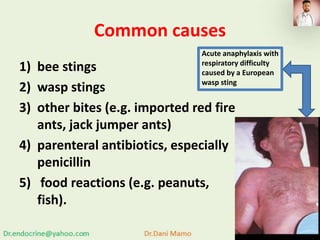
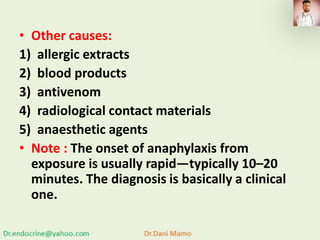
Acute anaphylaxis with
respiratory difficulty
caused by a European
wasp sting
• Other causes:
1) allergic extracts
2) blood products
3) antivenom
4) radiological contact materials
5) anaesthetic agents
• Note : The onset of anaphylaxis from
exposure is usually rapid—typically 10–20
minutes. The diagnosis is basically a clinical
one.
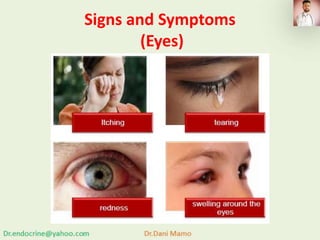
Signs and Symptoms
(Eyes)
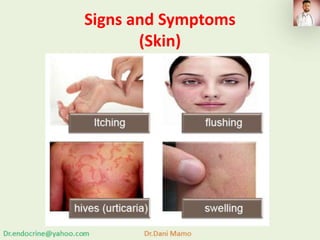
Signs and Symptoms
(Skin)
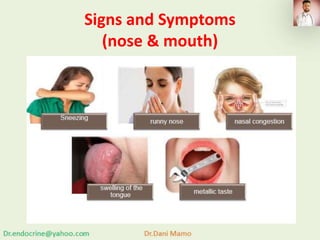
Signs and Symptoms
(nose & mouth)
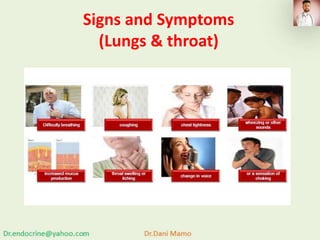
Signs and Symptoms
(Lungs & throat)
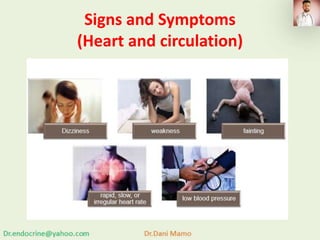
Signs and Symptoms
(Heart and circulation)
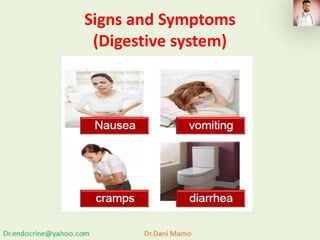
Signs and Symptoms
(Digestive system)
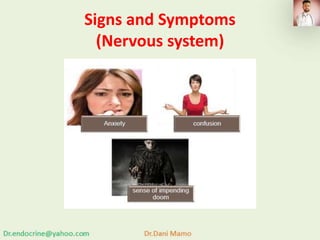
Signs and Symptoms
(Nervous system)
Diagnosis
• The diagnosis of anaphylaxis is based upon
symptoms that occur suddenly after being
exposed to a potential trigger.
• An increased amount of tryptase protein can
be measured in a blood sample collected
during the first three hours after anaphylaxis
symptoms have begun.
• tryptase levels are seldom elevated in food-
induced anaphylaxis
Differential diagnosis
• severe asthma attack
• heart attack
• panic attack
• food poisoning
First-line treatment (adults)
• Oxygen 8 L/min (by face mask)
• Adrenaline 0.3–0.5 mg (1:1000) IM best given
in mid antero-lateral thigh (mg = mL of
1:1000 adrenaline)
• Remove cause (e.g. bee sting) if possible.
• Set up IV access.
• If no rapid improvement:
repeat IM adrenaline every 3–5 minutes
set up adrenaline infusion: 1 mg adrenaline
to 1000 mL N saline (i.e. 1 mL = 1 mcg
adrenaline) bolus of 50 mcg ( = 50 mL) can be
given as required (best with ECG monitor)
• Set up additional IV line (preferably two
‘wide bore’ lines) and infuse crystalloid
solution (e.g. N saline 1–2 L) with bolus (20
mL/kg) over 1–2 min
• Salbutamol aerosol inhalation (or
nebulisation if severe), especially if
wheeze/stridor
• If very severe add glucagon 1 mg IM or IV
• Admit to hospital (observe at least 4 hours)
• Discharge on diphenhydramine 25 mg qid or
promethazine 25 mg tds + prednisolone 50
mg/ day for 3 days.
• Provide an adrenaline autoinjector
Angioedema and acute urticaria
• Acute urticaria and angioedema are
essentially anaphylaxis limited to the skin,
subcutaneous tissues and other specific
organs.
• They can occur together.
Treatment
• Uncomplicated cutaneous swelling—
Antihistamines e.g. diphenhydramine or
promethazine 50 mg (o) or 25 mg IM if more
severe or prednisolone 25–50 mg (o) as a
single dose
• Upper respiratory involvement adrenaline 0.3
mg SC or IM or 5 mg nebulised
Prevention of anaphylaxis
• Avoid the responsible allergen (e.g. food,
drug, latex, etc.).
• Keep an adrenaline kit (e.g. Epipen) and
Benadryl on hand at all times.
• Medic Alert bracelets should be worn.
• Venom immunotherapy is highly effective in
protecting insect-allergic individuals.
Use of epinephrine in
Food Allergy
• Epinephrine should be used immediately after
accidental ingestion of foods that have caused
anaphylactic reactions in the past.
• An individual who is allergic to peanut, nuts,
shellfish, and fish should immediately take
epinephrine if they consume one of these foods.
• A mild allergic reaction to other foods (e.g.
minor hives,vomiting) may be treated with an
antihistamine
Exercise induced anaphylaxis
• Exercise induces warmth, pruritus, urticaria.
• Hypotension and upper airway obstruction
may follow.
• Some types: associated with food allergies
(e.g. celery, nuts, shellfish, wheat)
• In other patients, anaphylaxis may occur
after eating any meal (mechanism has not
been identified)
Cold induced anaphylaxis
• Cold exposure leads to urticaria.
• Drastic lowering of the whole body
temperature (e.g. swimming in a cold lake):
hypotensive event in addition to urticaria
• mechanism: unknown
What to do ??
First Aid
• Place patient in Trendelenburg position.
• Establish and maintain airway.
• Give oxygen via nasal cannula as needed.
• Place a tourniquet above the reaction site.
• Epinephrine at the site of antigen injection.
• Start IV to rise BP.
References
• Davidson’s , principle & practice of medicine
• John Murtagh’s General Practice
• The_Merck_Manual_of_Diagnosis
Thank youThank youThank you

Acute anaphylaxis and anaphylactic reactions

  • 1.
    “Acute anaphylaxis” and “anaphylactic reactions” “Acuteanaphylaxis” and “anaphylactic reactions” By: Dr.Dani MamoBy: Dr.Dani MamoBy: Dr.Dani Mamo
  • 2.
    Definition • Anaphylaxis isan acute, potentially fatal, multiorgan system reaction caused by the release of chemical mediators from mast cells and basophils. • Anaphylactic reactions often begin with a feeling of uneasiness, followed by tingling sensations and dizziness. • Then rapidly develop severe symptoms, including generalized itching and hives, swelling, wheezing and difficulty breathing, fainting, and/or other allergy symptoms.
  • 3.
    Common causes 1) beestings 2) wasp stings 3) other bites (e.g. imported red fire ants, jack jumper ants) 4) parenteral antibiotics, especially penicillin 5) food reactions (e.g. peanuts, fish). Acute anaphylaxis with respiratory difficulty caused by a European wasp sting
  • 4.
    • Other causes: 1)allergic extracts 2) blood products 3) antivenom 4) radiological contact materials 5) anaesthetic agents • Note : The onset of anaphylaxis from exposure is usually rapid—typically 10–20 minutes. The diagnosis is basically a clinical one.
  • 5.
  • 6.
  • 7.
  • 8.
  • 9.
    Signs and Symptoms (Heartand circulation)
  • 10.
  • 11.
  • 12.
    Diagnosis • The diagnosisof anaphylaxis is based upon symptoms that occur suddenly after being exposed to a potential trigger. • An increased amount of tryptase protein can be measured in a blood sample collected during the first three hours after anaphylaxis symptoms have begun. • tryptase levels are seldom elevated in food- induced anaphylaxis
  • 13.
    Differential diagnosis • severeasthma attack • heart attack • panic attack • food poisoning
  • 14.
    First-line treatment (adults) •Oxygen 8 L/min (by face mask) • Adrenaline 0.3–0.5 mg (1:1000) IM best given in mid antero-lateral thigh (mg = mL of 1:1000 adrenaline) • Remove cause (e.g. bee sting) if possible. • Set up IV access.
  • 15.
    • If norapid improvement: repeat IM adrenaline every 3–5 minutes set up adrenaline infusion: 1 mg adrenaline to 1000 mL N saline (i.e. 1 mL = 1 mcg adrenaline) bolus of 50 mcg ( = 50 mL) can be given as required (best with ECG monitor) • Set up additional IV line (preferably two ‘wide bore’ lines) and infuse crystalloid solution (e.g. N saline 1–2 L) with bolus (20 mL/kg) over 1–2 min
  • 16.
    • Salbutamol aerosolinhalation (or nebulisation if severe), especially if wheeze/stridor • If very severe add glucagon 1 mg IM or IV • Admit to hospital (observe at least 4 hours) • Discharge on diphenhydramine 25 mg qid or promethazine 25 mg tds + prednisolone 50 mg/ day for 3 days. • Provide an adrenaline autoinjector
  • 17.
    Angioedema and acuteurticaria • Acute urticaria and angioedema are essentially anaphylaxis limited to the skin, subcutaneous tissues and other specific organs. • They can occur together.
  • 18.
    Treatment • Uncomplicated cutaneousswelling— Antihistamines e.g. diphenhydramine or promethazine 50 mg (o) or 25 mg IM if more severe or prednisolone 25–50 mg (o) as a single dose • Upper respiratory involvement adrenaline 0.3 mg SC or IM or 5 mg nebulised
  • 19.
    Prevention of anaphylaxis •Avoid the responsible allergen (e.g. food, drug, latex, etc.). • Keep an adrenaline kit (e.g. Epipen) and Benadryl on hand at all times. • Medic Alert bracelets should be worn. • Venom immunotherapy is highly effective in protecting insect-allergic individuals.
  • 20.
    Use of epinephrinein Food Allergy • Epinephrine should be used immediately after accidental ingestion of foods that have caused anaphylactic reactions in the past. • An individual who is allergic to peanut, nuts, shellfish, and fish should immediately take epinephrine if they consume one of these foods. • A mild allergic reaction to other foods (e.g. minor hives,vomiting) may be treated with an antihistamine
  • 21.
    Exercise induced anaphylaxis •Exercise induces warmth, pruritus, urticaria. • Hypotension and upper airway obstruction may follow. • Some types: associated with food allergies (e.g. celery, nuts, shellfish, wheat) • In other patients, anaphylaxis may occur after eating any meal (mechanism has not been identified)
  • 22.
    Cold induced anaphylaxis •Cold exposure leads to urticaria. • Drastic lowering of the whole body temperature (e.g. swimming in a cold lake): hypotensive event in addition to urticaria • mechanism: unknown
  • 23.
    What to do?? First Aid • Place patient in Trendelenburg position. • Establish and maintain airway. • Give oxygen via nasal cannula as needed. • Place a tourniquet above the reaction site. • Epinephrine at the site of antigen injection. • Start IV to rise BP.
  • 24.
    References • Davidson’s ,principle & practice of medicine • John Murtagh’s General Practice • The_Merck_Manual_of_Diagnosis
  • 25.