An increase in the number of cells or
proliferation of cells.
Fatima Saif
Mariya Anjum
Reema Bibi
Abdullah
Hyperplasia:
An increase in the number of cells.
Hypertrophy:
An increase in the size
of cells.
Normal hyperplastic response would be
the growth and multiplication of milk
secreting glandular cells as a response to
pregnancy.
1.Prostatic Hyperplasia
2.Cushing Disease
3.Congenital Adrenal Hyperplasia
4.Hemihyperplasia
5.Endometrial Hyperplasia
An enlarged prostatic means the Gland
has grown bigger.
An enlarged prostate is often called
Benign Prostatic Hyper.(BPH).
A condition in which Pituitary gland
release too much adrenocortricotropic
hormone ACTH.
Cushing Disease is a form of Cushing
Syndrome.
It is a collection of genetic conditions
that limits adrenal glands,ability to
make certain vital hormone.
Formerly called Hemihypertrophy.
It is a rare disorder in which one side
of the body grows more than other.
It is a thickening of the lining of the
womb,caused by the overgrowth of the
cells that line the womb.
It is not cancer.
But in some women it can develop into
womb cancer.
 Increase the organ size.
 Is the increase in the volume of an organ or
tissue due to the enlargement of its
component cells.
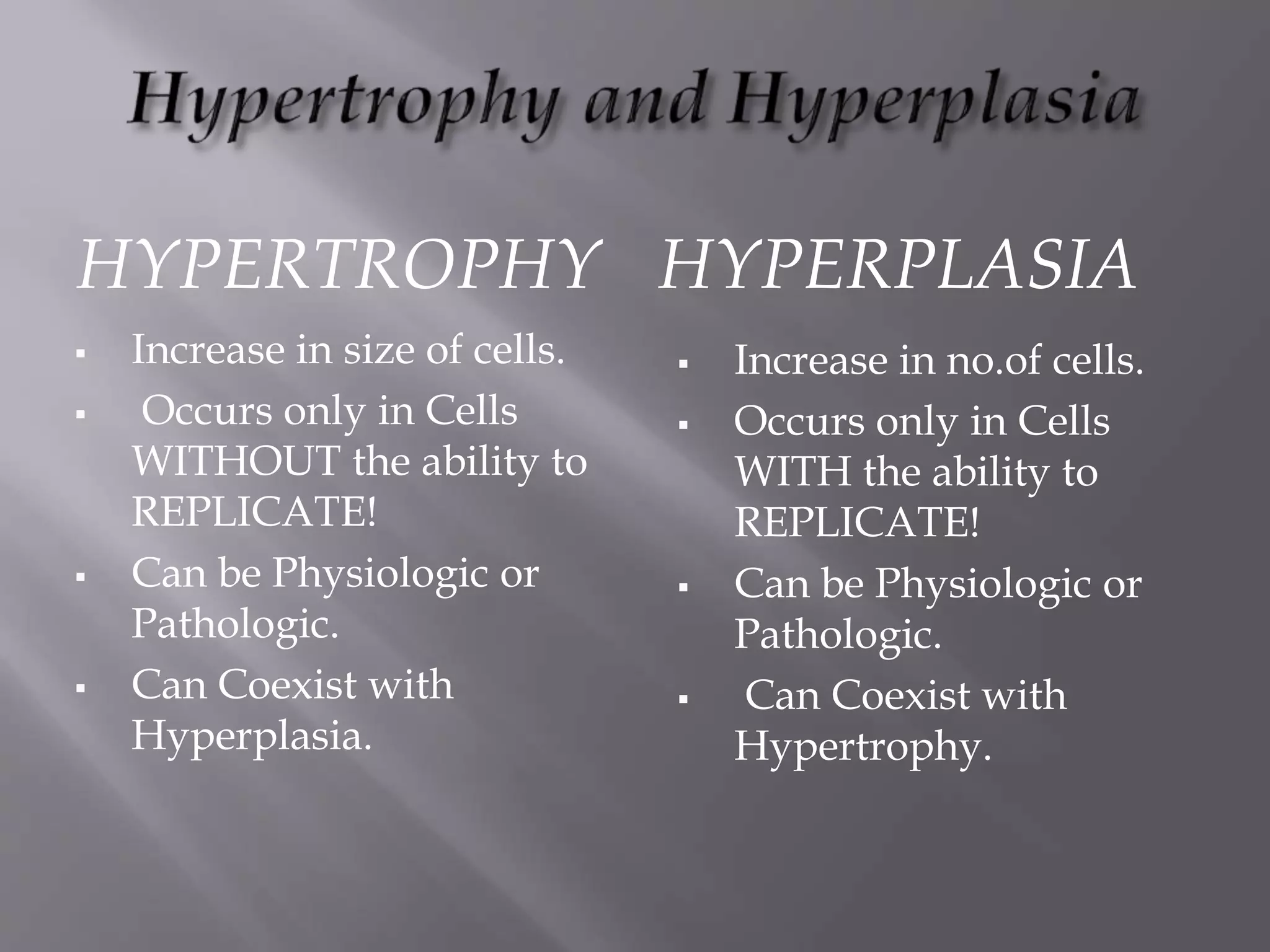
HYPERTROPHY HYPERPLASIA
 Increase in size of cells.
 Occurs only in Cells
WITHOUT the ability to
REPLICATE!
 Can be Physiologic or
Pathologic.
 Can Coexist with
Hyperplasia.
 Increase in no.of cells.
 Occurs only in Cells
WITH the ability to
REPLICATE!
 Can be Physiologic or
Pathologic.
 Can Coexist with
Hypertrophy.
 Puberty
 Pregnancy
 Drugs: Phenytoin sodium,Anti
seizure/Epilepsy drug Niphedipine:Anti
Hypertensive drug
Cyclosporine/sandimmune:Anti-rejection
drug.
1. Hypertrophy caused by an increase
in energy substances in the muscle
cell (such as creatine and glycogen).
2. Hypertrophy caused by an increase
in the diameter of the muscle fiber.
PHYSIOLOGIC PATHOLOGIC
 Hormone Induced:
Hypertrophy of
Smooth Muscles .
 Disease Inflicted:
Hypertrophy of
Cardiac Muscles
due to
“Hypertension”.
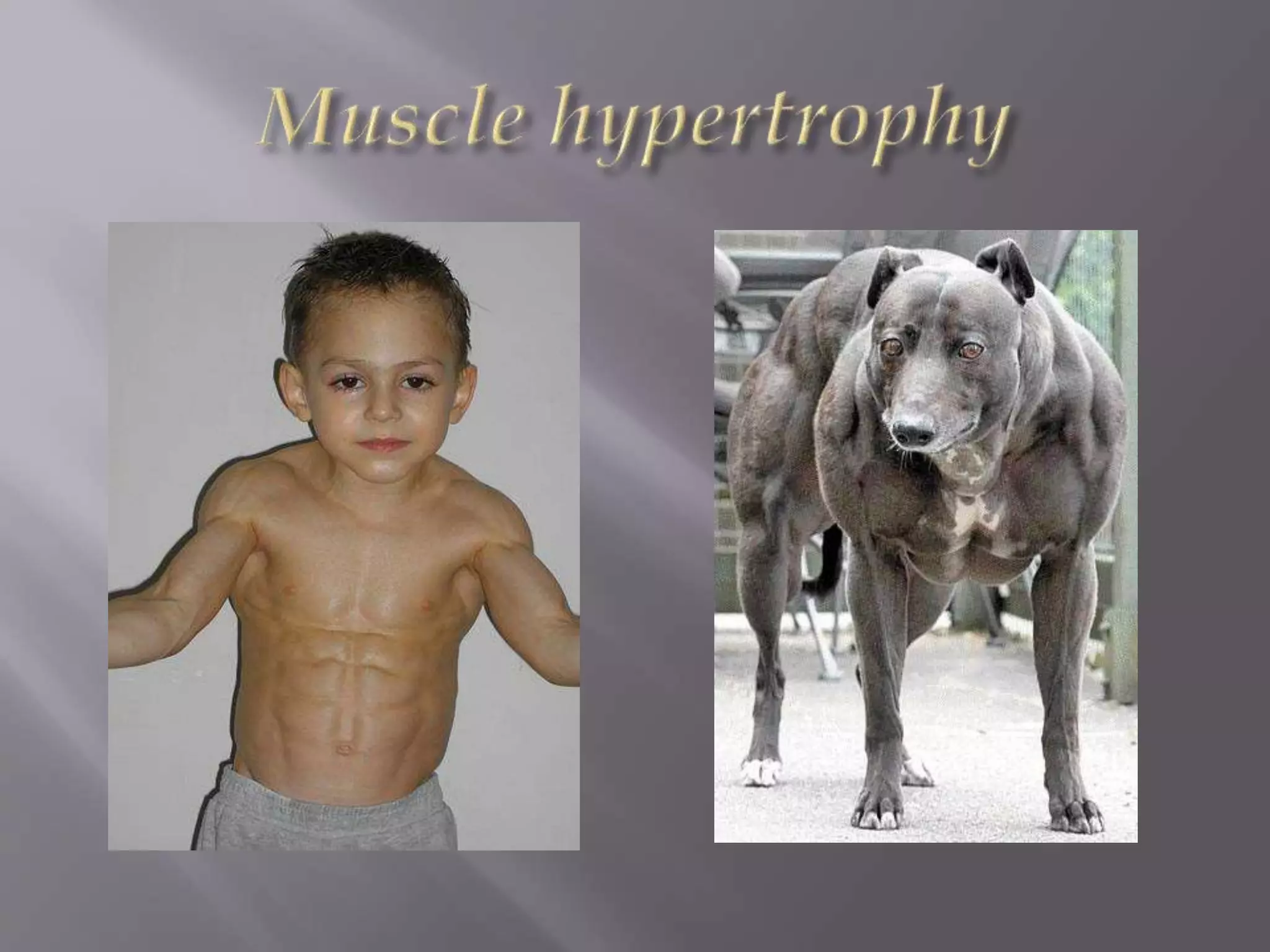
Muscle Hypertrophy
Muscle hypertrophy involves an increase in size
of skeletal muscle through an increase in the size
of its component cells.
 Cardiac hypertrophy: is a thickening of the
heart muscle (myocardium) which results in a
decrease in size of the chamber of the heart,
including the left and right ventricles.
 Cause of cardiac hypertrophy:
 is high blood pressure (hypertension) .
 extra work of pumping blood.
 physiological process
 reabsorption and breakdown of
 tissues, involving apoptosis
 .pathological atrophy
 loss of trophic support due to other
disease,
 it is, although it can be a part of normal body
development and homeostasis as well.
. Causes of atrophy include
mutations
(which can destroy the gene to build
up
the organ),
1 poor nourishment,
2 poor circulation,
3 loss of hormonal support,
4 loss of nerve supply to the target organ,
5 excessive amount of apoptosis of cells,
 Gland atrophy
 Vaginal atrophy
 The adrenal glands atrophy
 during prolonged use of
exogenous glucocorticoids like prednisone.
 Atrophy of the breasts
 can occur with prolonged
estrogen reduction, as with anorexia nervosa
or menopause.
 Testicular atrophy with prolonged use
of enough exogenous sex steroid (either
androgen or estrogen) to reduce
gonadotropin secretion
 Vaginal atrophy,
 also called atrophic vaginitis,
is thinning, drying and inflammation of the
vaginal walls due to your body having less
estrogen
 Vaginal atrophy occurs after menopause,
but it can also develop during breast-feeding
or at any other time your body's estrogen
production declines
 Simple, effective treatments for vaginal
atrophy are available
 Reduced estrogen levels result in changes to
your body, but it doesn't mean you have to
live with the discomfort of vaginal atrophy.
Hyperplasia

Hyperplasia

  • 1.
    An increase inthe number of cells or proliferation of cells.
  • 2.
  • 5.
    Hyperplasia: An increase inthe number of cells. Hypertrophy: An increase in the size of cells.
  • 6.
    Normal hyperplastic responsewould be the growth and multiplication of milk secreting glandular cells as a response to pregnancy.
  • 7.
    1.Prostatic Hyperplasia 2.Cushing Disease 3.CongenitalAdrenal Hyperplasia 4.Hemihyperplasia 5.Endometrial Hyperplasia
  • 8.
    An enlarged prostaticmeans the Gland has grown bigger. An enlarged prostate is often called Benign Prostatic Hyper.(BPH).
  • 10.
    A condition inwhich Pituitary gland release too much adrenocortricotropic hormone ACTH. Cushing Disease is a form of Cushing Syndrome.
  • 13.
    It is acollection of genetic conditions that limits adrenal glands,ability to make certain vital hormone.
  • 14.
    Formerly called Hemihypertrophy. Itis a rare disorder in which one side of the body grows more than other.
  • 16.
    It is athickening of the lining of the womb,caused by the overgrowth of the cells that line the womb. It is not cancer. But in some women it can develop into womb cancer.
  • 18.
     Increase theorgan size.  Is the increase in the volume of an organ or tissue due to the enlargement of its component cells.
  • 19.
    HYPERTROPHY HYPERPLASIA  Increasein size of cells.  Occurs only in Cells WITHOUT the ability to REPLICATE!  Can be Physiologic or Pathologic.  Can Coexist with Hyperplasia.  Increase in no.of cells.  Occurs only in Cells WITH the ability to REPLICATE!  Can be Physiologic or Pathologic.  Can Coexist with Hypertrophy.
  • 20.
     Puberty  Pregnancy Drugs: Phenytoin sodium,Anti seizure/Epilepsy drug Niphedipine:Anti Hypertensive drug Cyclosporine/sandimmune:Anti-rejection drug.
  • 22.
    1. Hypertrophy causedby an increase in energy substances in the muscle cell (such as creatine and glycogen). 2. Hypertrophy caused by an increase in the diameter of the muscle fiber.
  • 23.
    PHYSIOLOGIC PATHOLOGIC  HormoneInduced: Hypertrophy of Smooth Muscles .  Disease Inflicted: Hypertrophy of Cardiac Muscles due to “Hypertension”.
  • 24.
    Muscle Hypertrophy Muscle hypertrophyinvolves an increase in size of skeletal muscle through an increase in the size of its component cells.
  • 26.
     Cardiac hypertrophy:is a thickening of the heart muscle (myocardium) which results in a decrease in size of the chamber of the heart, including the left and right ventricles.  Cause of cardiac hypertrophy:  is high blood pressure (hypertension) .  extra work of pumping blood.
  • 29.
     physiological process reabsorption and breakdown of  tissues, involving apoptosis  .pathological atrophy  loss of trophic support due to other disease,  it is, although it can be a part of normal body development and homeostasis as well.
  • 30.
    . Causes ofatrophy include mutations (which can destroy the gene to build up the organ), 1 poor nourishment, 2 poor circulation, 3 loss of hormonal support, 4 loss of nerve supply to the target organ, 5 excessive amount of apoptosis of cells,
  • 31.
     Gland atrophy Vaginal atrophy
  • 32.
     The adrenalglands atrophy  during prolonged use of exogenous glucocorticoids like prednisone.  Atrophy of the breasts  can occur with prolonged estrogen reduction, as with anorexia nervosa or menopause.  Testicular atrophy with prolonged use of enough exogenous sex steroid (either androgen or estrogen) to reduce gonadotropin secretion
  • 33.
     Vaginal atrophy, also called atrophic vaginitis, is thinning, drying and inflammation of the vaginal walls due to your body having less estrogen  Vaginal atrophy occurs after menopause, but it can also develop during breast-feeding or at any other time your body's estrogen production declines
  • 34.
     Simple, effectivetreatments for vaginal atrophy are available  Reduced estrogen levels result in changes to your body, but it doesn't mean you have to live with the discomfort of vaginal atrophy.