How to Translate
E-learning Courses Effectively
1. What is Translation?
2. Difference between Translation and Localization
3. Need for Translating and Localizing Training
4. What Type of Trainings Need to be Translated?
5. Strategies to Design Effective Global Courses
6. The E-learning Course Translation Process
7. Tips to Lower Translation Costs
Table of Contents
What is Translation?
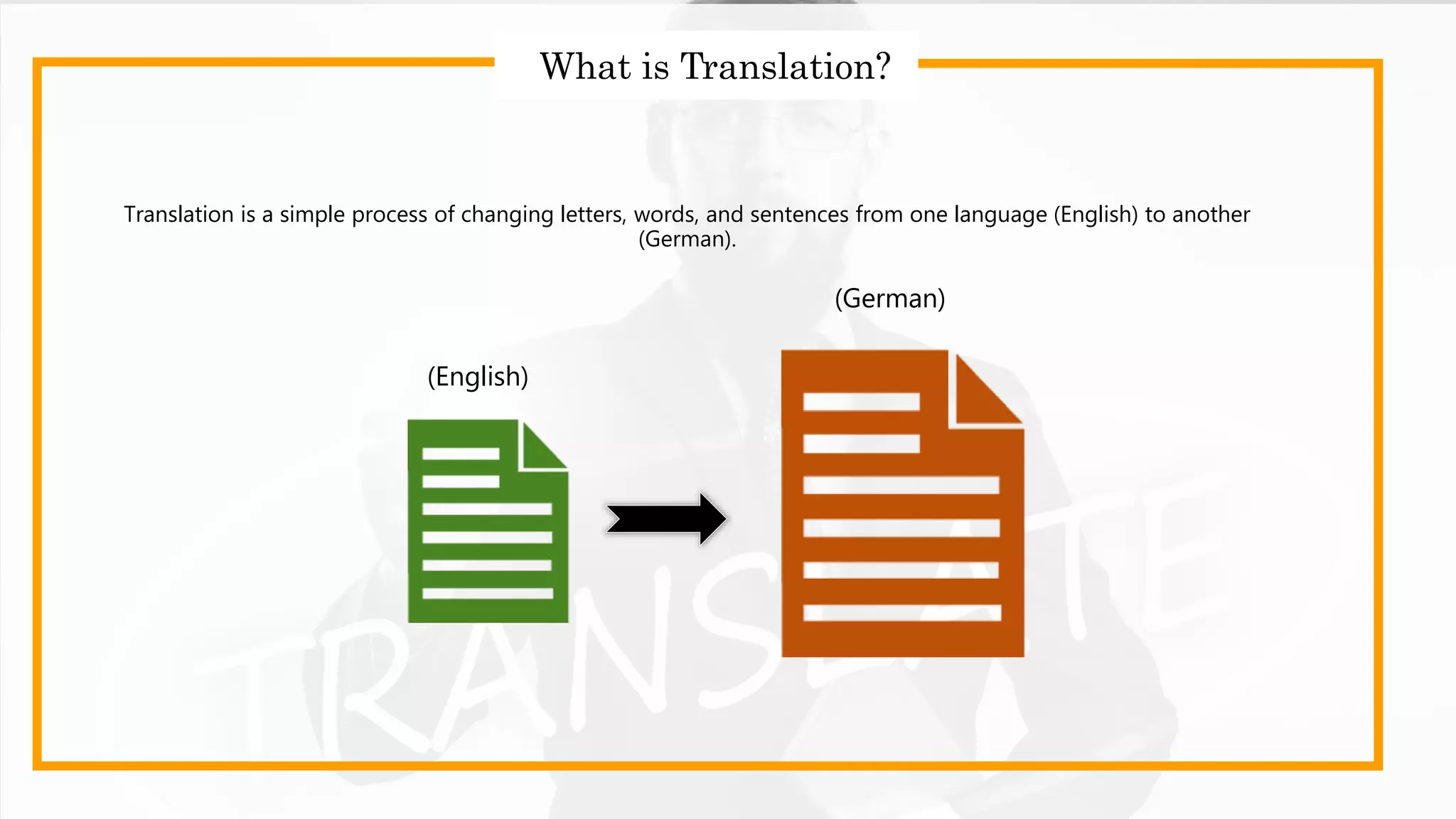
Translation is a simple process of changing letters, words, and sentences from one language (English) to another
(German).
(English)
(German)
What is Translation?
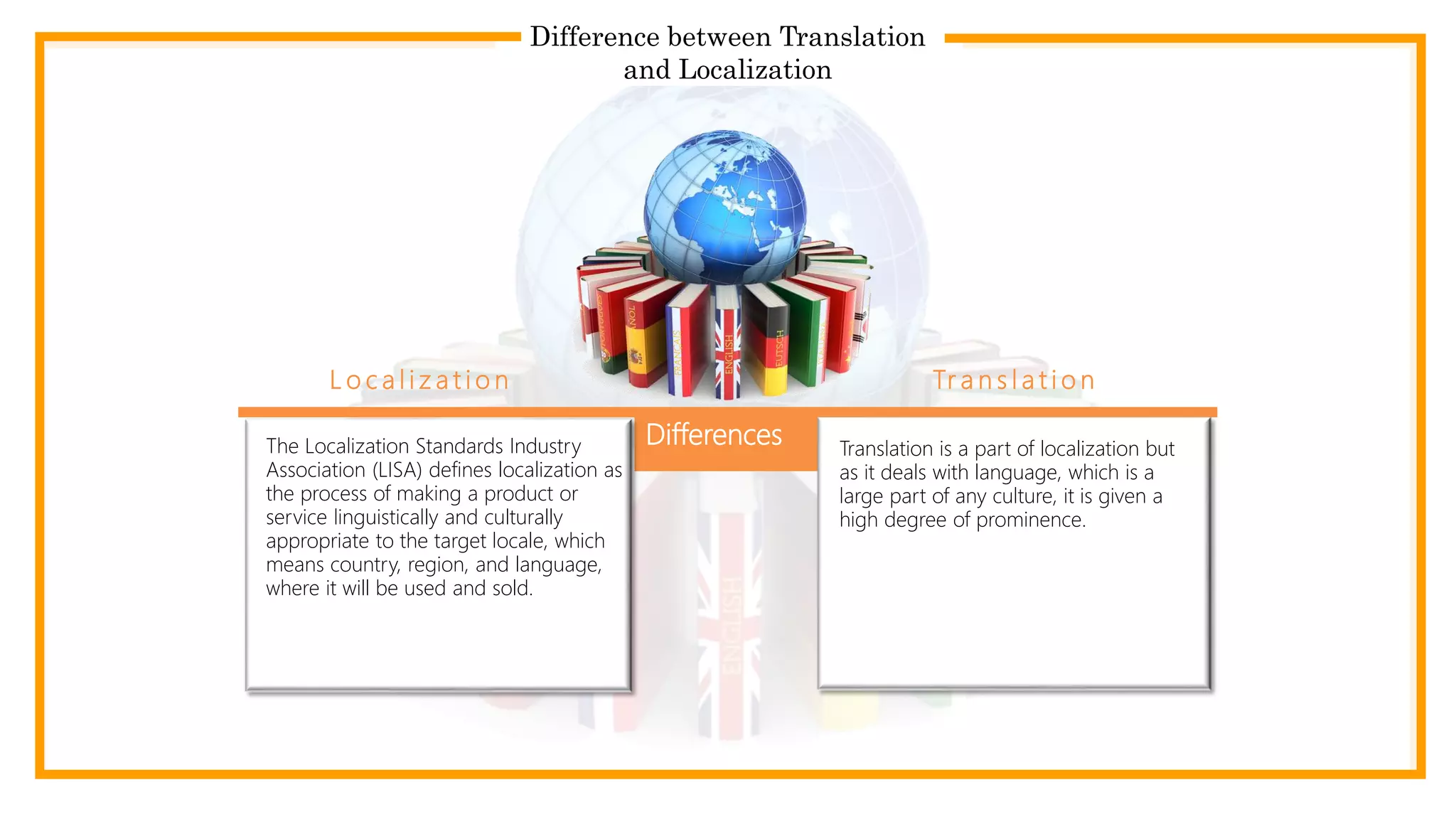
Difference between Translation and Localization
Difference between Translation
and Localization
DifferencesThe Localization Standards Industry
Association (LISA) defines localization as
the process of making a product or
service linguistically and culturally
appropriate to the target locale, which
means country, region, and language,
where it will be used and sold.
Translation is a part of localization but
as it deals with language, which is a
large part of any culture, it is given a
high degree of prominence.
L o c a l i z a t i o n Tr a n s l a t i o n
Need for Translating and Localizing Training
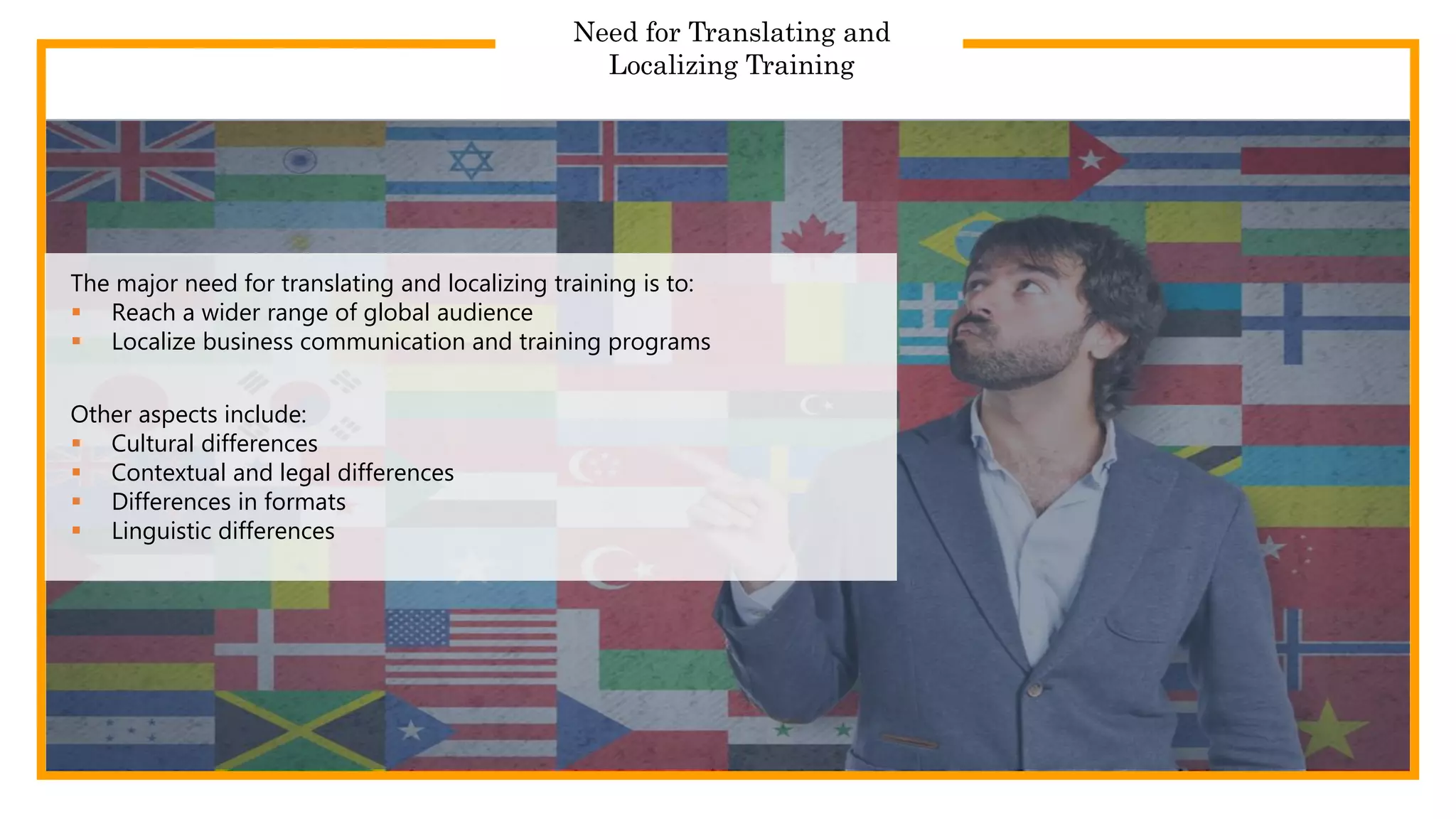
Need for Translating and
Localizing Training
The major need for translating and localizing training is to:
 Reach a wider range of global audience
 Localize business communication and training programs
Other aspects include:
 Cultural differences
 Contextual and legal differences
 Differences in formats
 Linguistic differences
What Type of Trainings Need to be Translated?
What Type of Trainings Need
to be Translated?
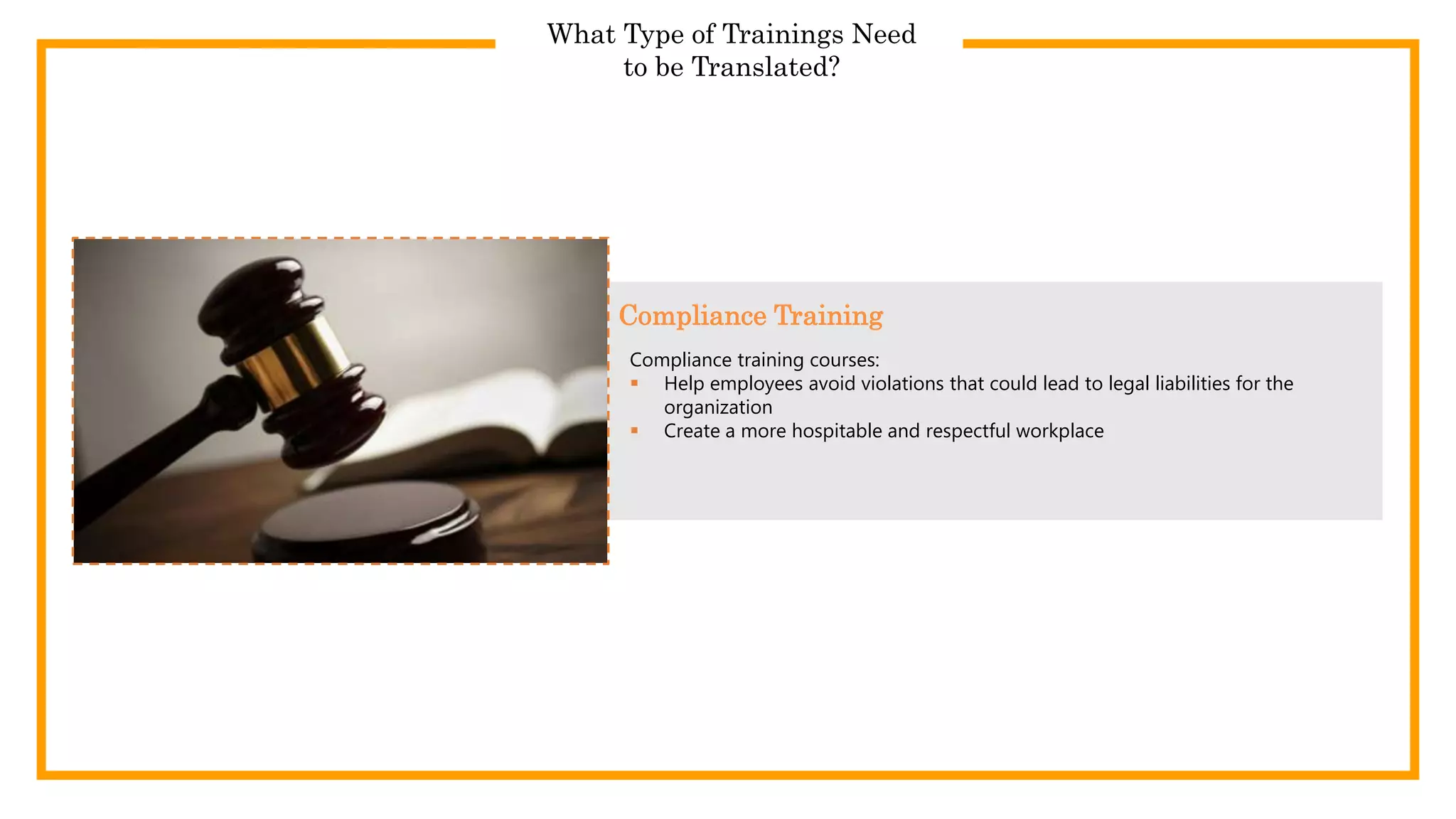
Compliance training courses:
 Help employees avoid violations that could lead to legal liabilities for the
organization
 Create a more hospitable and respectful workplace
Compliance Training
What Type of Trainings Need
to be Translated?
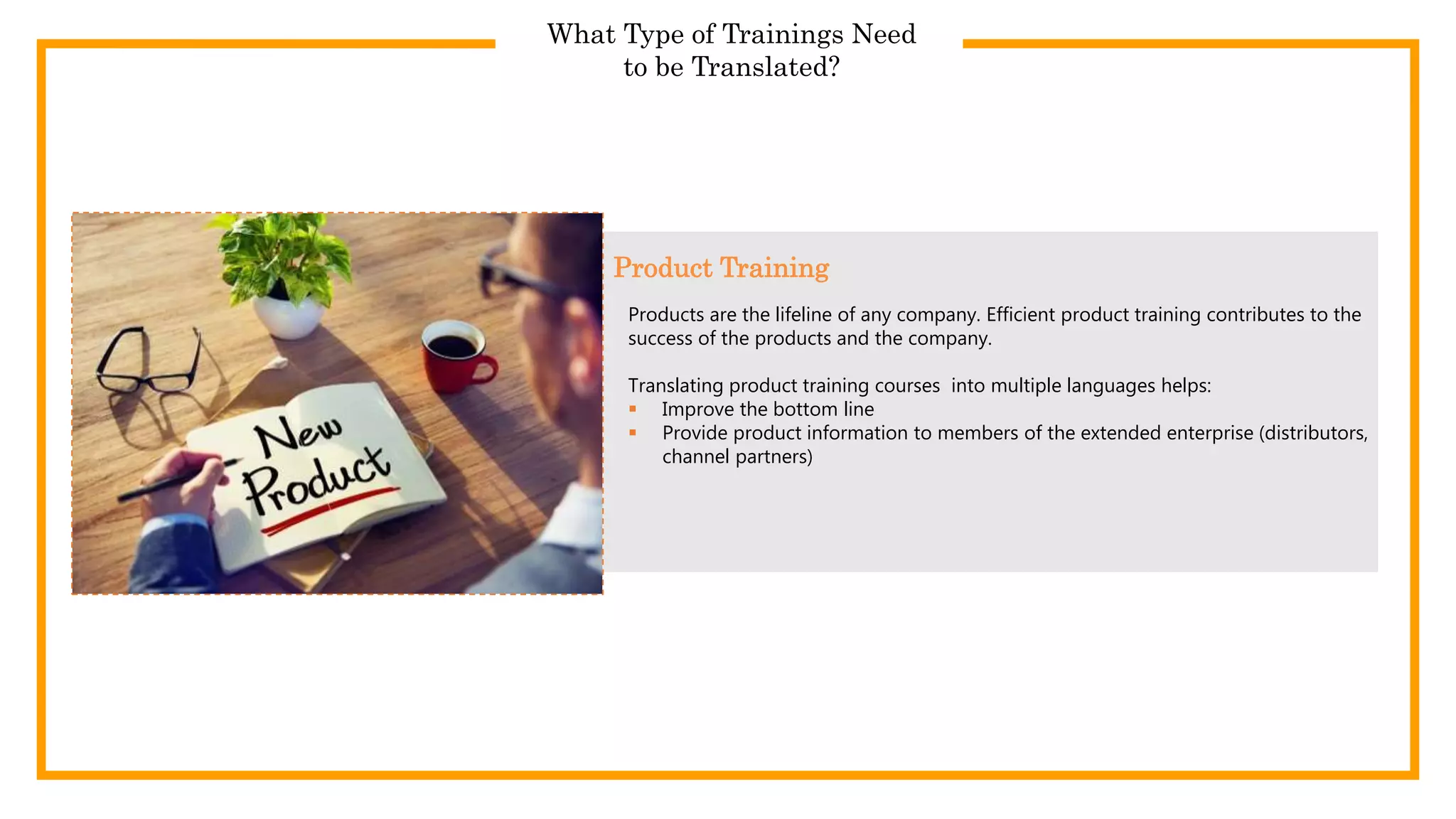
Products are the lifeline of any company. Efficient product training contributes to the
success of the products and the company.
Translating product training courses into multiple languages helps:
 Improve the bottom line
 Provide product information to members of the extended enterprise (distributors,
channel partners)
Product Training
What Type of Trainings Need
to be Translated?
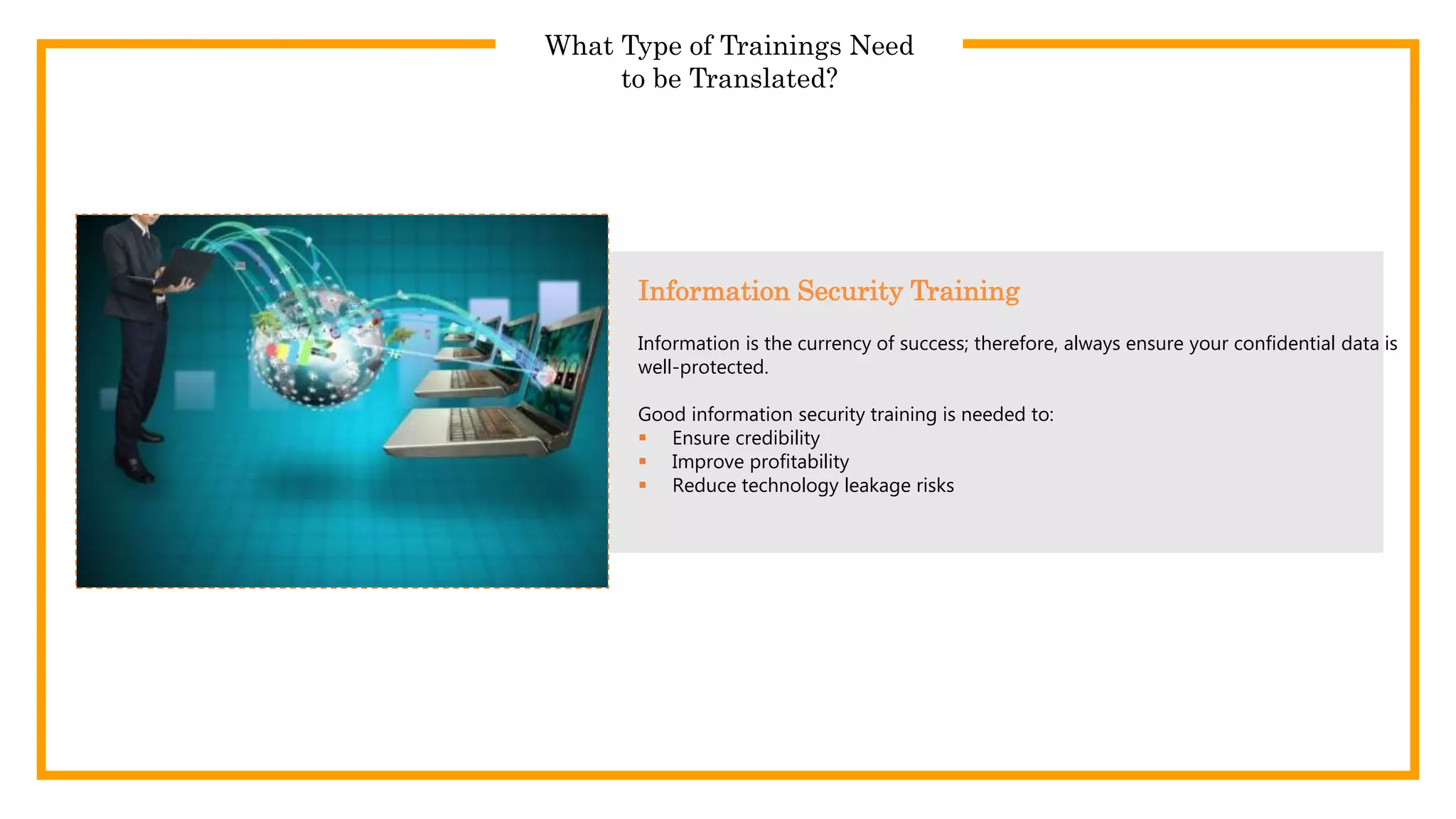
Information is the currency of success; therefore, always ensure your confidential data is
well-protected.
Good information security training is needed to:
 Ensure credibility
 Improve profitability
 Reduce technology leakage risks
Information Security Training
Strategies to Design Effective Global Courses
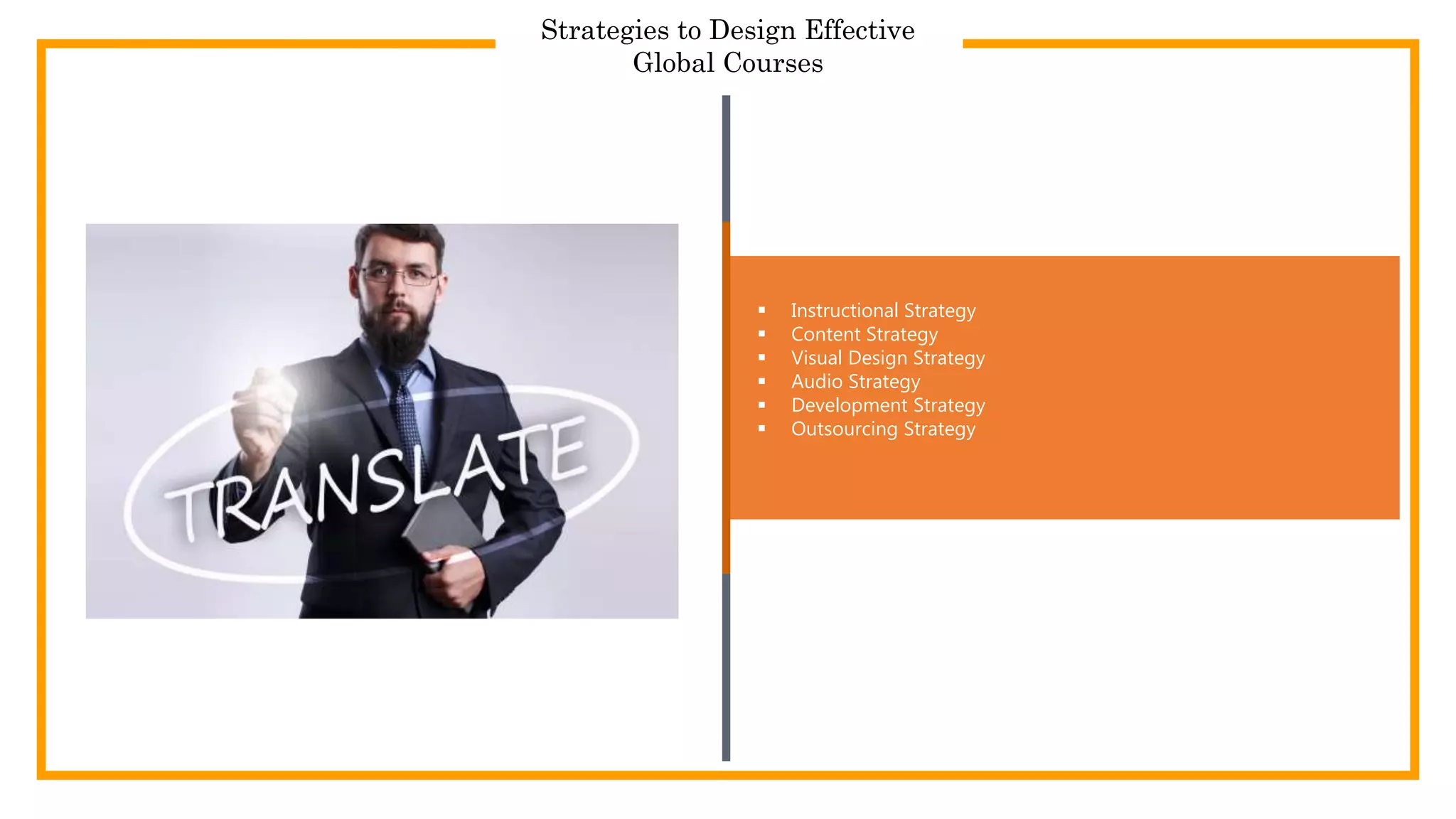
 Instructional Strategy
 Content Strategy
 Visual Design Strategy
 Audio Strategy
 Development Strategy
 Outsourcing Strategy
Strategies to Design Effective
Global Courses
The E-learning Course Translation Process
Strategies to Design Effective
Global Courses
Strategies to Design Effective Global Courses
 Choose the right translator
 Prepare and send the English templates for translation
 Use a translation memory tool
 Follow a robust quality assurance process
 Get translated templates
 Choose the right translator
 Prepare and send the English templates
for translation
 Use a translation memory tool
 Follow a robust quality assurance process
 Get the translated templates
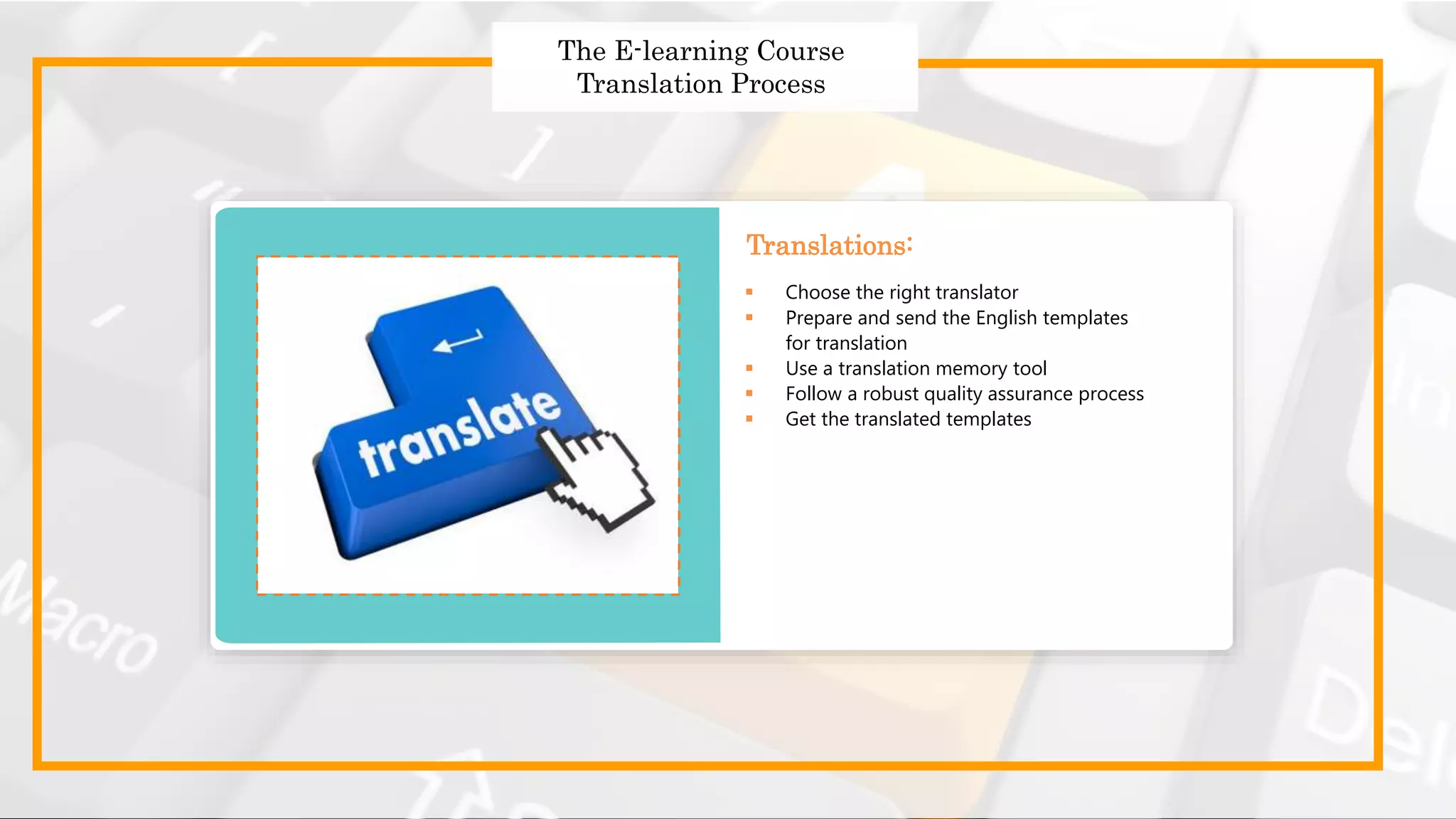
Translations:
The E-learning Course
Translation Process
Strategies to Design Effective
Global Courses
Strategies to Design Effective Global Courses
 Choose the right translator
 Prepare and send the English templates for translation
 Use a translation memory tool
 Follow a robust quality assurance process
 Get translated templates
The E-learning Course
Translation Process
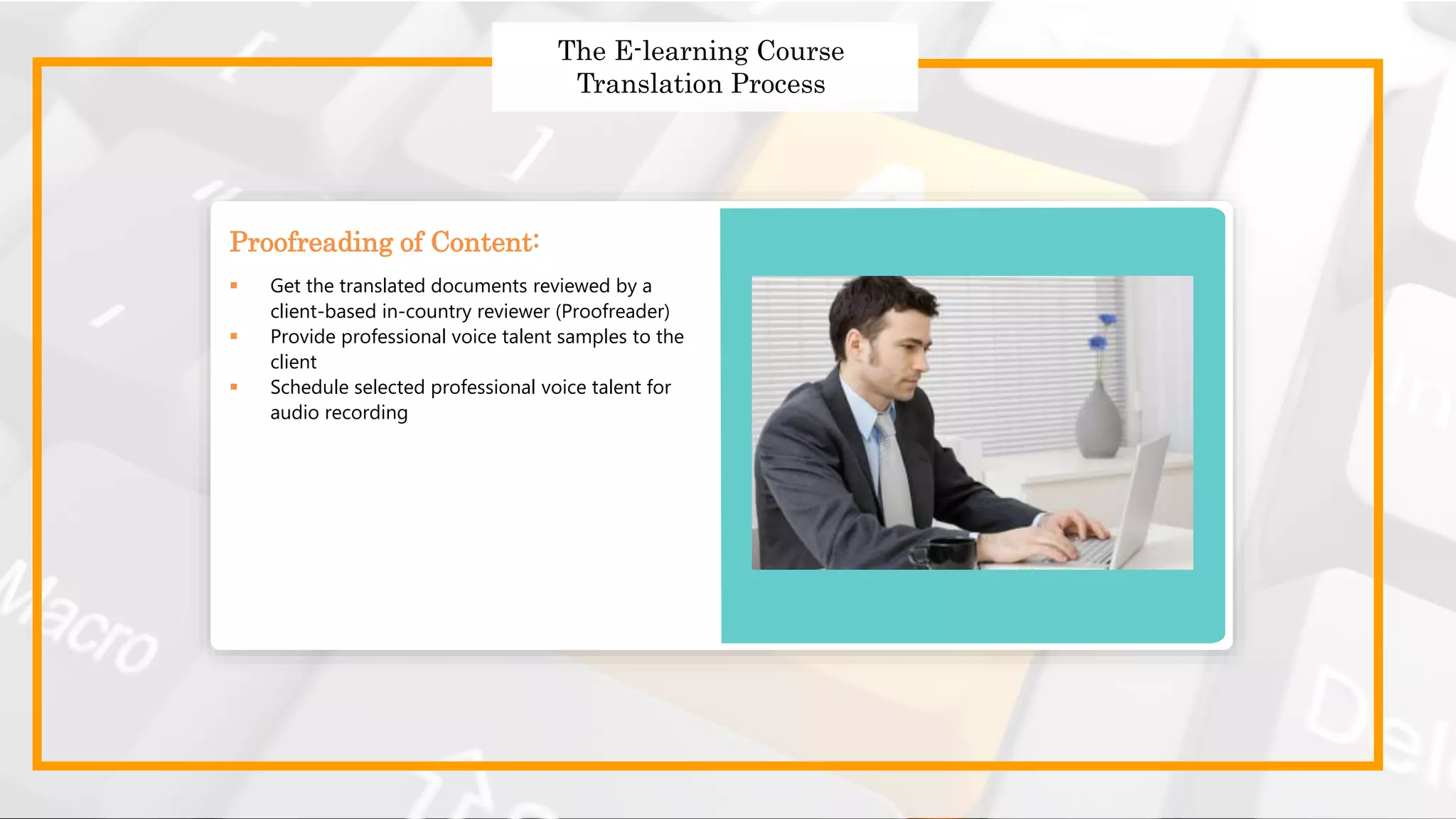
 Get the translated documents reviewed by a
client-based in-country reviewer (Proofreader)
 Provide professional voice talent samples to the
client
 Schedule selected professional voice talent for
audio recording
Proofreading of Content:
Strategies to Design Effective
Global Courses
Strategies to Design Effective Global Courses
 Choose the right translator
 Prepare and send the English templates for translation
 Use a translation memory tool
 Follow a robust quality assurance process
 Get translated templates
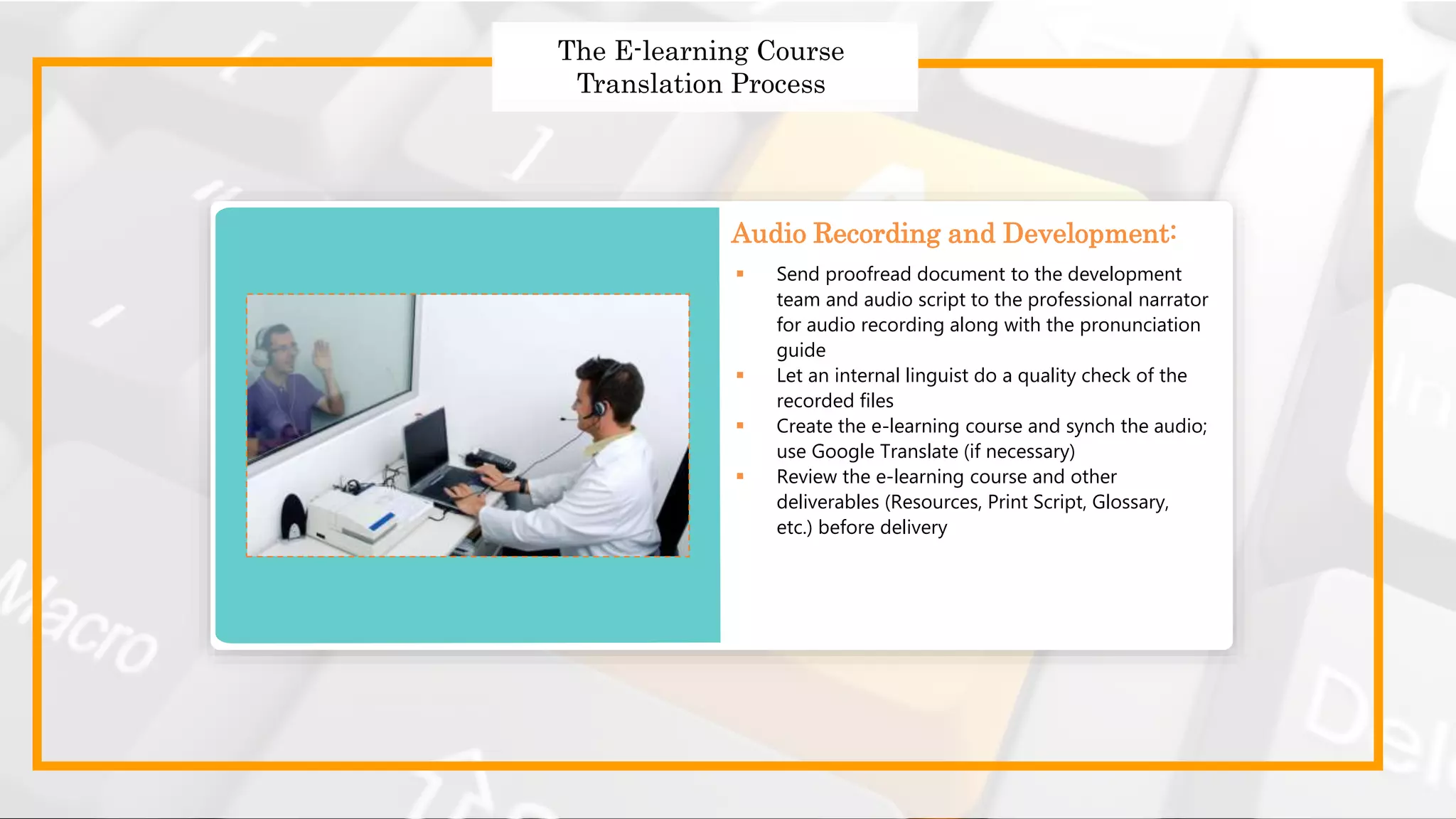
 Send proofread document to the development
team and audio script to the professional narrator
for audio recording along with the pronunciation
guide
 Let an internal linguist do a quality check of the
recorded files
 Create the e-learning course and synch the audio;
use Google Translate (if necessary)
 Review the e-learning course and other
deliverables (Resources, Print Script, Glossary,
etc.) before delivery
Audio Recording and Development:
The E-learning Course
Translation Process
Strategies to Design Effective
Global Courses
Strategies to Design Effective Global Courses
 Choose the right translator
 Prepare and send the English templates for translation
 Use a translation memory tool
 Follow a robust quality assurance process
 Get translated templates
The E-learning Course
Translation Process
 Release the e-learning “alpha” version and other
deliverables for proofreader’s review
 Update e-learning alpha version and other
deliverables, clarify with linguists where needed
 Release the final version for approval
Course Review:
Strategies to Design Effective
Global Courses
Strategies to Design Effective Global Courses
 Choose the right translator
 Prepare and send the English templates for translation
 Use a translation memory tool
 Follow a robust quality assurance process
 Get translated templates
 Provide a switchable interface for easy learner
access (on client request) with a single GUI from
where the learner can choose his language
 This avoids the clutter of having a course in each
language hosted on the LMS
 Click Publish if it’s an authoring tool
 Quality check the course before sending it to the
customer
Final Delivery for LMS:
The E-learning Course
Translation Process
10 Tips to Lower Translation Costs
r
10 Tips to Lower Translation
Costs
1. Internationalize the content
2. Simplify content
3. Cut down on audio
4. Use videos prudently
5. Avoid textual content on images
6. Translate the navigational elements only once
7. Wherever possible, include images instead of words
8. Let professionals handle the entire translation of the course
9. Ensure that the translation provider follows the standard
documented process
10. Make sure the right authoring tools and translation memory tools
are used for translation
THANK YOU

How to Get Online Course Translations of the Highest Quality

  • 1.
    How to Translate E-learningCourses Effectively
  • 2.
    1. What isTranslation? 2. Difference between Translation and Localization 3. Need for Translating and Localizing Training 4. What Type of Trainings Need to be Translated? 5. Strategies to Design Effective Global Courses 6. The E-learning Course Translation Process 7. Tips to Lower Translation Costs Table of Contents
  • 3.
  • 4.
    Translation is asimple process of changing letters, words, and sentences from one language (English) to another (German). (English) (German) What is Translation?
  • 5.
  • 6.
    Difference between Translation andLocalization DifferencesThe Localization Standards Industry Association (LISA) defines localization as the process of making a product or service linguistically and culturally appropriate to the target locale, which means country, region, and language, where it will be used and sold. Translation is a part of localization but as it deals with language, which is a large part of any culture, it is given a high degree of prominence. L o c a l i z a t i o n Tr a n s l a t i o n
  • 7.
    Need for Translatingand Localizing Training
  • 8.
    Need for Translatingand Localizing Training The major need for translating and localizing training is to:  Reach a wider range of global audience  Localize business communication and training programs Other aspects include:  Cultural differences  Contextual and legal differences  Differences in formats  Linguistic differences
  • 9.
    What Type ofTrainings Need to be Translated?
  • 10.
    What Type ofTrainings Need to be Translated? Compliance training courses:  Help employees avoid violations that could lead to legal liabilities for the organization  Create a more hospitable and respectful workplace Compliance Training
  • 11.
    What Type ofTrainings Need to be Translated? Products are the lifeline of any company. Efficient product training contributes to the success of the products and the company. Translating product training courses into multiple languages helps:  Improve the bottom line  Provide product information to members of the extended enterprise (distributors, channel partners) Product Training
  • 12.
    What Type ofTrainings Need to be Translated? Information is the currency of success; therefore, always ensure your confidential data is well-protected. Good information security training is needed to:  Ensure credibility  Improve profitability  Reduce technology leakage risks Information Security Training
  • 13.
    Strategies to DesignEffective Global Courses
  • 14.
     Instructional Strategy Content Strategy  Visual Design Strategy  Audio Strategy  Development Strategy  Outsourcing Strategy Strategies to Design Effective Global Courses
  • 15.
    The E-learning CourseTranslation Process
  • 16.
    Strategies to DesignEffective Global Courses Strategies to Design Effective Global Courses  Choose the right translator  Prepare and send the English templates for translation  Use a translation memory tool  Follow a robust quality assurance process  Get translated templates  Choose the right translator  Prepare and send the English templates for translation  Use a translation memory tool  Follow a robust quality assurance process  Get the translated templates Translations: The E-learning Course Translation Process
  • 17.
    Strategies to DesignEffective Global Courses Strategies to Design Effective Global Courses  Choose the right translator  Prepare and send the English templates for translation  Use a translation memory tool  Follow a robust quality assurance process  Get translated templates The E-learning Course Translation Process  Get the translated documents reviewed by a client-based in-country reviewer (Proofreader)  Provide professional voice talent samples to the client  Schedule selected professional voice talent for audio recording Proofreading of Content:
  • 18.
    Strategies to DesignEffective Global Courses Strategies to Design Effective Global Courses  Choose the right translator  Prepare and send the English templates for translation  Use a translation memory tool  Follow a robust quality assurance process  Get translated templates  Send proofread document to the development team and audio script to the professional narrator for audio recording along with the pronunciation guide  Let an internal linguist do a quality check of the recorded files  Create the e-learning course and synch the audio; use Google Translate (if necessary)  Review the e-learning course and other deliverables (Resources, Print Script, Glossary, etc.) before delivery Audio Recording and Development: The E-learning Course Translation Process
  • 19.
    Strategies to DesignEffective Global Courses Strategies to Design Effective Global Courses  Choose the right translator  Prepare and send the English templates for translation  Use a translation memory tool  Follow a robust quality assurance process  Get translated templates The E-learning Course Translation Process  Release the e-learning “alpha” version and other deliverables for proofreader’s review  Update e-learning alpha version and other deliverables, clarify with linguists where needed  Release the final version for approval Course Review:
  • 20.
    Strategies to DesignEffective Global Courses Strategies to Design Effective Global Courses  Choose the right translator  Prepare and send the English templates for translation  Use a translation memory tool  Follow a robust quality assurance process  Get translated templates  Provide a switchable interface for easy learner access (on client request) with a single GUI from where the learner can choose his language  This avoids the clutter of having a course in each language hosted on the LMS  Click Publish if it’s an authoring tool  Quality check the course before sending it to the customer Final Delivery for LMS: The E-learning Course Translation Process
  • 21.
    10 Tips toLower Translation Costs
  • 22.
    r 10 Tips toLower Translation Costs 1. Internationalize the content 2. Simplify content 3. Cut down on audio 4. Use videos prudently 5. Avoid textual content on images 6. Translate the navigational elements only once 7. Wherever possible, include images instead of words 8. Let professionals handle the entire translation of the course 9. Ensure that the translation provider follows the standard documented process 10. Make sure the right authoring tools and translation memory tools are used for translation
  • 23.