6 Stakeholders Involved
in Classroom to
eLearning Migration
Whether you are planning to convert ILT material to eLearning in-house or outsource to your
eLearning partner, you need to involve a few stakeholders to make the project a success.
Who are these stakeholders?
Why is their involvement crucial to the ILT to
eLearning conversion process?
Let’s find out!
Senior management can help:
• Link learning outcomes to
business objectives
• Influence other leaders to champion
the cause of eLearning
• Procure resources – people/budget
• Communicate the eLearning initiative
across the organization
Senior Management
1.
Instructors
Classroom instructors can help:
• Make eLearning effective by adding real-life examples from their experience
• Decide whether to convert:
• The whole classroom training to eLearning
• Only part of ILT to eLearning with a blended approach
2.
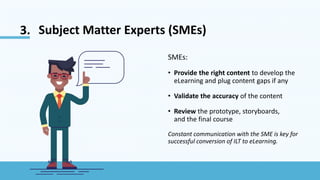
Subject Matter Experts (SMEs)
SMEs:
• Provide the right content to develop the
eLearning and plug content gaps if any
• Validate the accuracy of the content
• Review the prototype, storyboards,
and the final course
Constant communication with the SME is key for
successful conversion of ILT to eLearning.
3.
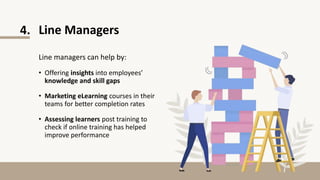
4. Line Managers
Line managers can help by:
• Offering insights into employees’
knowledge and skill gaps
• Marketing eLearning courses in their
teams for better completion rates
• Assessing learners post training to
check if online training has helped
improve performance
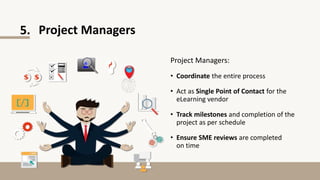
5. Project Managers
Project Managers:
• Coordinate the entire process
• Act as Single Point of Contact for the
eLearning vendor
• Track milestones and completion of the
project as per schedule
• Ensure SME reviews are completed
on time
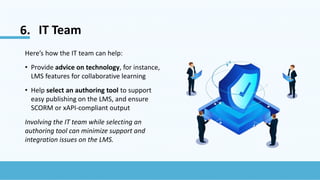
6. IT Team
Here’s how the IT team can help:
• Provide advice on technology, for instance,
LMS features for collaborative learning
• Help select an authoring tool to support
easy publishing on the LMS, and ensure
SCORM or xAPI-compliant output
Involving the IT team while selecting an
authoring tool can minimize support and
integration issues on the LMS.
Thank you!
Visit www.commlabindia.com

Are You Involving these 6 Stakeholders when Converting Classroom Material to eLearning?

  • 1.
    6 Stakeholders Involved inClassroom to eLearning Migration
  • 2.
    Whether you areplanning to convert ILT material to eLearning in-house or outsource to your eLearning partner, you need to involve a few stakeholders to make the project a success. Who are these stakeholders? Why is their involvement crucial to the ILT to eLearning conversion process? Let’s find out!
  • 3.
    Senior management canhelp: • Link learning outcomes to business objectives • Influence other leaders to champion the cause of eLearning • Procure resources – people/budget • Communicate the eLearning initiative across the organization Senior Management 1.
  • 4.
    Instructors Classroom instructors canhelp: • Make eLearning effective by adding real-life examples from their experience • Decide whether to convert: • The whole classroom training to eLearning • Only part of ILT to eLearning with a blended approach 2.
  • 5.
    Subject Matter Experts(SMEs) SMEs: • Provide the right content to develop the eLearning and plug content gaps if any • Validate the accuracy of the content • Review the prototype, storyboards, and the final course Constant communication with the SME is key for successful conversion of ILT to eLearning. 3.
  • 6.
    4. Line Managers Linemanagers can help by: • Offering insights into employees’ knowledge and skill gaps • Marketing eLearning courses in their teams for better completion rates • Assessing learners post training to check if online training has helped improve performance
  • 7.
    5. Project Managers ProjectManagers: • Coordinate the entire process • Act as Single Point of Contact for the eLearning vendor • Track milestones and completion of the project as per schedule • Ensure SME reviews are completed on time
  • 8.
    6. IT Team Here’show the IT team can help: • Provide advice on technology, for instance, LMS features for collaborative learning • Help select an authoring tool to support easy publishing on the LMS, and ensure SCORM or xAPI-compliant output Involving the IT team while selecting an authoring tool can minimize support and integration issues on the LMS.
  • 9.