HONEY POT IN CLOUD COMPUTING
Introduction
      Cloud Security
           Honey Pot
    Implementation
        Components
 Types of Honey pots
Honey Pots as Service
Over Dependency on Cloud Services:


Age Old Methods
Cloud Security
 Issues faced by Customers :
Low info about products
Host source unknown and Re-access

 Issues faced by Cloud providers:
Segregation
Firewalls
Honey Pot as a Solution
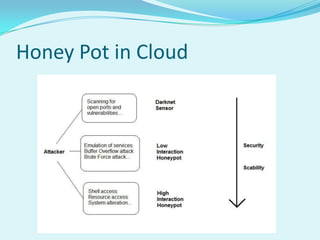
Honey Pot in Cloud
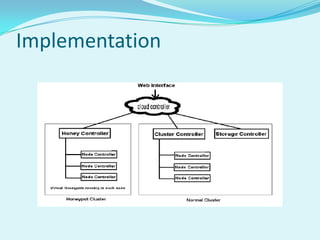
Implementation
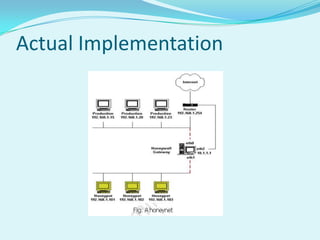
Actual Implementation
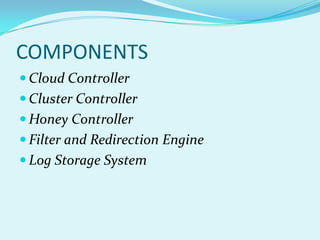
COMPONENTS
 Cloud Controller
 Cluster Controller
 Honey Controller
 Filter and Redirection Engine
 Log Storage System
TYPES OF HONEYPOT
 low-interaction honeypots
 Honeyd is a low-interaction honeypot. Developed by Niels
  Provos, Honeyd is OpenSource and designed to run primarily on Unix
  systems (though it has been ported to Windows). Honeyd works on the
  concept of monitoring unused IP space. Anytime it sees a connection
  attempt to an unused IP, it intercepts the connection and then interacts
  with the attacker, pretending to be the victim. By default, Honeyd
  detects and logs any connection to any UDP or TCP port. When an
  attacker connects to the emulated service, not only does the honeypot
  detect and log the activity, but it captures all of the attacker's
  interaction with the emulated service. In the case of the emulated FTP
  server, we can potentially capture the attacker's login and
  password, the commands they issue, and perhaps even learn what they
  are looking for or their identity. It all depends on the level of emulation
  by the honeypot.
TYPES OF HONEYPOT
 High-interaction honeypots
 Honeynets are a prime example of high-interaction honeypot. Honeynets
 are not a product, they are not a software solution that you install on a
 computer. Honeyents are an architecture, an entire network of computers
 designed to attacked. The idea is to have an architecture that creates a
 highly controlled network, one where all activity is controlled and
 captured. The bad guys find, attack, and break into these systems on their
 own initiative. When they do, they do not realize they are within a
 Honeynet. All of their activity, like emails , files uploads, are captured
 without them knowing it. Honeynet controls the attacker's activity.
 Honeynets do this using a Honeywall gateway. This gateway allows
 inbound traffic to the victim systems, but controls the outbound traffic
 using intrusion prevention technologies. This gives the attacker the
 flexibility to interact with the victim systems, but prevents the attacker
 from harming other non-Honeynet computers.
HONEYPOT AS A SERVICE
 To make business profit out of it the customer should be
  provided with an option to buy Honeypot when purchasing
  the instances as Honeypots are mostly needed for large
  networks where security and data reliability is of great
  concern . The customer must be given the logs containing
  information about the attackers and also the statistics
  about the attacks. This will help them to safeguard their
  resources against future attacks. The customer then will
  take necessary actions against the attackers.
CONCLUSION
 Honeypots can be used for production purposes by
 preventing, detecting, or responding to attacks.

 Honeypots can also be used for research, gathering
 information on threats so we can better understand
 and defend against them.

Honey pot in cloud computing

  • 1.
    HONEY POT INCLOUD COMPUTING
  • 2.
    Introduction Cloud Security Honey Pot Implementation Components Types of Honey pots Honey Pots as Service
  • 3.
    Over Dependency onCloud Services: Age Old Methods
  • 4.
    Cloud Security  Issuesfaced by Customers : Low info about products Host source unknown and Re-access  Issues faced by Cloud providers: Segregation Firewalls
  • 5.
    Honey Pot asa Solution
  • 6.
  • 7.
  • 8.
  • 9.
    COMPONENTS  Cloud Controller Cluster Controller  Honey Controller  Filter and Redirection Engine  Log Storage System
  • 10.
    TYPES OF HONEYPOT low-interaction honeypots Honeyd is a low-interaction honeypot. Developed by Niels Provos, Honeyd is OpenSource and designed to run primarily on Unix systems (though it has been ported to Windows). Honeyd works on the concept of monitoring unused IP space. Anytime it sees a connection attempt to an unused IP, it intercepts the connection and then interacts with the attacker, pretending to be the victim. By default, Honeyd detects and logs any connection to any UDP or TCP port. When an attacker connects to the emulated service, not only does the honeypot detect and log the activity, but it captures all of the attacker's interaction with the emulated service. In the case of the emulated FTP server, we can potentially capture the attacker's login and password, the commands they issue, and perhaps even learn what they are looking for or their identity. It all depends on the level of emulation by the honeypot.
  • 11.
    TYPES OF HONEYPOT High-interaction honeypots Honeynets are a prime example of high-interaction honeypot. Honeynets are not a product, they are not a software solution that you install on a computer. Honeyents are an architecture, an entire network of computers designed to attacked. The idea is to have an architecture that creates a highly controlled network, one where all activity is controlled and captured. The bad guys find, attack, and break into these systems on their own initiative. When they do, they do not realize they are within a Honeynet. All of their activity, like emails , files uploads, are captured without them knowing it. Honeynet controls the attacker's activity. Honeynets do this using a Honeywall gateway. This gateway allows inbound traffic to the victim systems, but controls the outbound traffic using intrusion prevention technologies. This gives the attacker the flexibility to interact with the victim systems, but prevents the attacker from harming other non-Honeynet computers.
  • 12.
    HONEYPOT AS ASERVICE  To make business profit out of it the customer should be provided with an option to buy Honeypot when purchasing the instances as Honeypots are mostly needed for large networks where security and data reliability is of great concern . The customer must be given the logs containing information about the attackers and also the statistics about the attacks. This will help them to safeguard their resources against future attacks. The customer then will take necessary actions against the attackers.
  • 13.
    CONCLUSION  Honeypots canbe used for production purposes by preventing, detecting, or responding to attacks.  Honeypots can also be used for research, gathering information on threats so we can better understand and defend against them.