Version 1.4 
1
Halogenoalkanes are compounds in which one 
or more hydrogen atoms in an alkane have 
been replaced by halogen atoms (fluorine, 
chlorine, bromine or iodine).
The different kinds of halogenoalkanes 
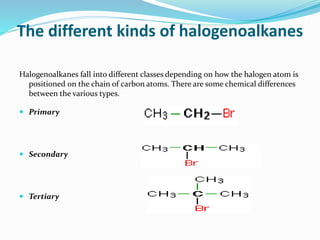
Halogenoalkanes fall into different classes depending on how the halogen atom is 
positioned on the chain of carbon atoms. There are some chemical differences 
between the various types. 
 Primary 
 Secondary 
 Tertiary
Reactions of the halogenoalkanes 
Nucleophilic substitution 
Elimenation reaction
Nucleophilic Substitution 
 In a substitution reaction, one atom or group of atoms, 
takes the place of another in a molecule. 
 A nucleophile is a molecule or ion that has a high 
electron density. It is attracted to atoms in molecules 
with a lower electron density. 
 The general form for the reaction is 
Nuc: + R-LG → R-Nuc + LG: 
5
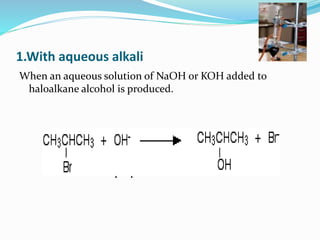
1.With aqueous alkali 
When an aqueous solution of NaOH or KOH added to 
haloalkane alcohol is produced. 
propan-2-ol
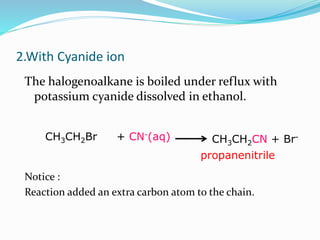
2.With Cyanide ion 
The halogenoalkane is boiled under reflux with 
potassium cyanide dissolved in ethanol. 
+ CN-(aq) 
CH3CH2 CH CN + Br- 3CH2Br 
propanenitrile 
Notice : 
Reaction added an extra carbon atom to the chain.
3.With alcoholic ammonia (NH3 ) 
The nitrogen atom carries a partial negative charge and has alone 
pair of electrons. This makes it nucleophile. 
concentrated ammonia (in excess) in ethanol solution.heat in a sealed 
tube.
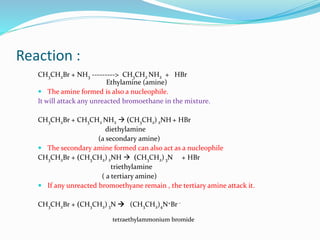
Reaction : 
CH3CH2Br + NH3 ---------> CH3CH2NH2 + HBr 
Ethylamine (amine) 
 The amine formed is also a nucleophile. 
It will attack any unreacted bromoethane in the mixture. 
CH3CH2Br + CH3CH2NH2 
 (CH3CH2) 2NH+ HBr 
diethylamine 
(a secondary amine) 
 The secondary amine formed can also act as a nucleophile 
CH3CH2Br + (CH3CH2) 2NH  (CH3CH2) 3N + HBr 
triethylamine 
( a tertiary amine) 
 If any unreacted bromoethyane remain , the tertiary amine attack it. 
CH3CH2Br + (CH3CH2) 3N  (CH3CH2)4N+Br - 
tetraethylammonium bromide
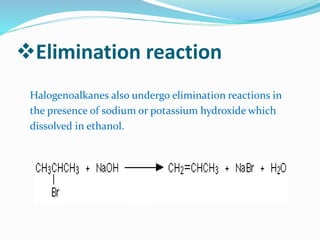
Elimination reaction 
Halogenoalkanes also undergo elimination reactions in 
the presence of sodium or potassium hydroxide which 
dissolved in ethanol.
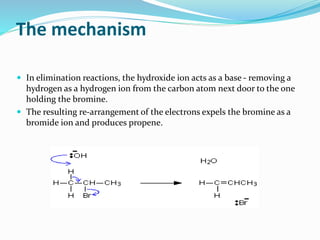
The mechanism 
 In elimination reactions, the hydroxide ion acts as a base - removing a 
hydrogen as a hydrogen ion from the carbon atom next door to the one 
holding the bromine. 
 The resulting re-arrangement of the electrons expels the bromine as a 
bromide ion and produces propene.
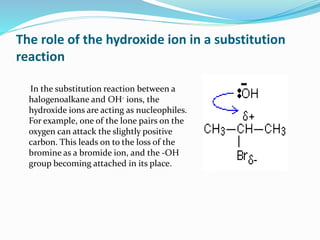
The role of the hydroxide ion in a substitution 
reaction 
In the substitution reaction between a 
halogenoalkane and OH- ions, the 
hydroxide ions are acting as nucleophiles. 
For example, one of the lone pairs on the 
oxygen can attack the slightly positive 
carbon. This leads on to the loss of the 
bromine as a bromide ion, and the -OH 
group becoming attached in its place.
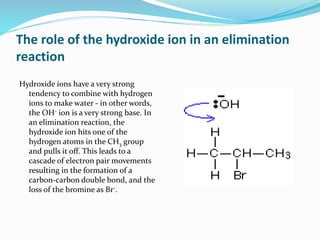
The role of the hydroxide ion in an elimination 
reaction 
Hydroxide ions have a very strong 
tendency to combine with hydrogen 
ions to make water - in other words, 
the OH- ion is a very strong base. In 
an elimination reaction, the 
hydroxide ion hits one of the 
hydrogen atoms in the CH3 group 
and pulls it off. This leads to a 
cascade of electron pair movements 
resulting in the formation of a 
carbon-carbon double bond, and the 
loss of the bromine as Br-.
Thank You For Watching 
Bibliography - 
http://www.yteach.com/page.php/resources/view_all 
?id=hydrocarbon_haloalkanes_nomenclature_isomeris 
m_primary_secondary_tertiary_page_10 
https://www.google.com

Halogenoalkanes as level chemistry

  • 1.
  • 2.
    Halogenoalkanes are compoundsin which one or more hydrogen atoms in an alkane have been replaced by halogen atoms (fluorine, chlorine, bromine or iodine).
  • 3.
    The different kindsof halogenoalkanes Halogenoalkanes fall into different classes depending on how the halogen atom is positioned on the chain of carbon atoms. There are some chemical differences between the various types.  Primary  Secondary  Tertiary
  • 4.
    Reactions of thehalogenoalkanes Nucleophilic substitution Elimenation reaction
  • 5.
    Nucleophilic Substitution In a substitution reaction, one atom or group of atoms, takes the place of another in a molecule.  A nucleophile is a molecule or ion that has a high electron density. It is attracted to atoms in molecules with a lower electron density.  The general form for the reaction is Nuc: + R-LG → R-Nuc + LG: 5
  • 6.
    1.With aqueous alkali When an aqueous solution of NaOH or KOH added to haloalkane alcohol is produced. propan-2-ol
  • 7.
    2.With Cyanide ion The halogenoalkane is boiled under reflux with potassium cyanide dissolved in ethanol. + CN-(aq) CH3CH2 CH CN + Br- 3CH2Br propanenitrile Notice : Reaction added an extra carbon atom to the chain.
  • 8.
    3.With alcoholic ammonia(NH3 ) The nitrogen atom carries a partial negative charge and has alone pair of electrons. This makes it nucleophile. concentrated ammonia (in excess) in ethanol solution.heat in a sealed tube.
  • 9.
    Reaction : CH3CH2Br+ NH3 ---------> CH3CH2NH2 + HBr Ethylamine (amine)  The amine formed is also a nucleophile. It will attack any unreacted bromoethane in the mixture. CH3CH2Br + CH3CH2NH2  (CH3CH2) 2NH+ HBr diethylamine (a secondary amine)  The secondary amine formed can also act as a nucleophile CH3CH2Br + (CH3CH2) 2NH  (CH3CH2) 3N + HBr triethylamine ( a tertiary amine)  If any unreacted bromoethyane remain , the tertiary amine attack it. CH3CH2Br + (CH3CH2) 3N  (CH3CH2)4N+Br - tetraethylammonium bromide
  • 10.
    Elimination reaction Halogenoalkanesalso undergo elimination reactions in the presence of sodium or potassium hydroxide which dissolved in ethanol.
  • 11.
    The mechanism In elimination reactions, the hydroxide ion acts as a base - removing a hydrogen as a hydrogen ion from the carbon atom next door to the one holding the bromine.  The resulting re-arrangement of the electrons expels the bromine as a bromide ion and produces propene.
  • 12.
    The role ofthe hydroxide ion in a substitution reaction In the substitution reaction between a halogenoalkane and OH- ions, the hydroxide ions are acting as nucleophiles. For example, one of the lone pairs on the oxygen can attack the slightly positive carbon. This leads on to the loss of the bromine as a bromide ion, and the -OH group becoming attached in its place.
  • 13.
    The role ofthe hydroxide ion in an elimination reaction Hydroxide ions have a very strong tendency to combine with hydrogen ions to make water - in other words, the OH- ion is a very strong base. In an elimination reaction, the hydroxide ion hits one of the hydrogen atoms in the CH3 group and pulls it off. This leads to a cascade of electron pair movements resulting in the formation of a carbon-carbon double bond, and the loss of the bromine as Br-.
  • 14.
    Thank You ForWatching Bibliography - http://www.yteach.com/page.php/resources/view_all ?id=hydrocarbon_haloalkanes_nomenclature_isomeris m_primary_secondary_tertiary_page_10 https://www.google.com