
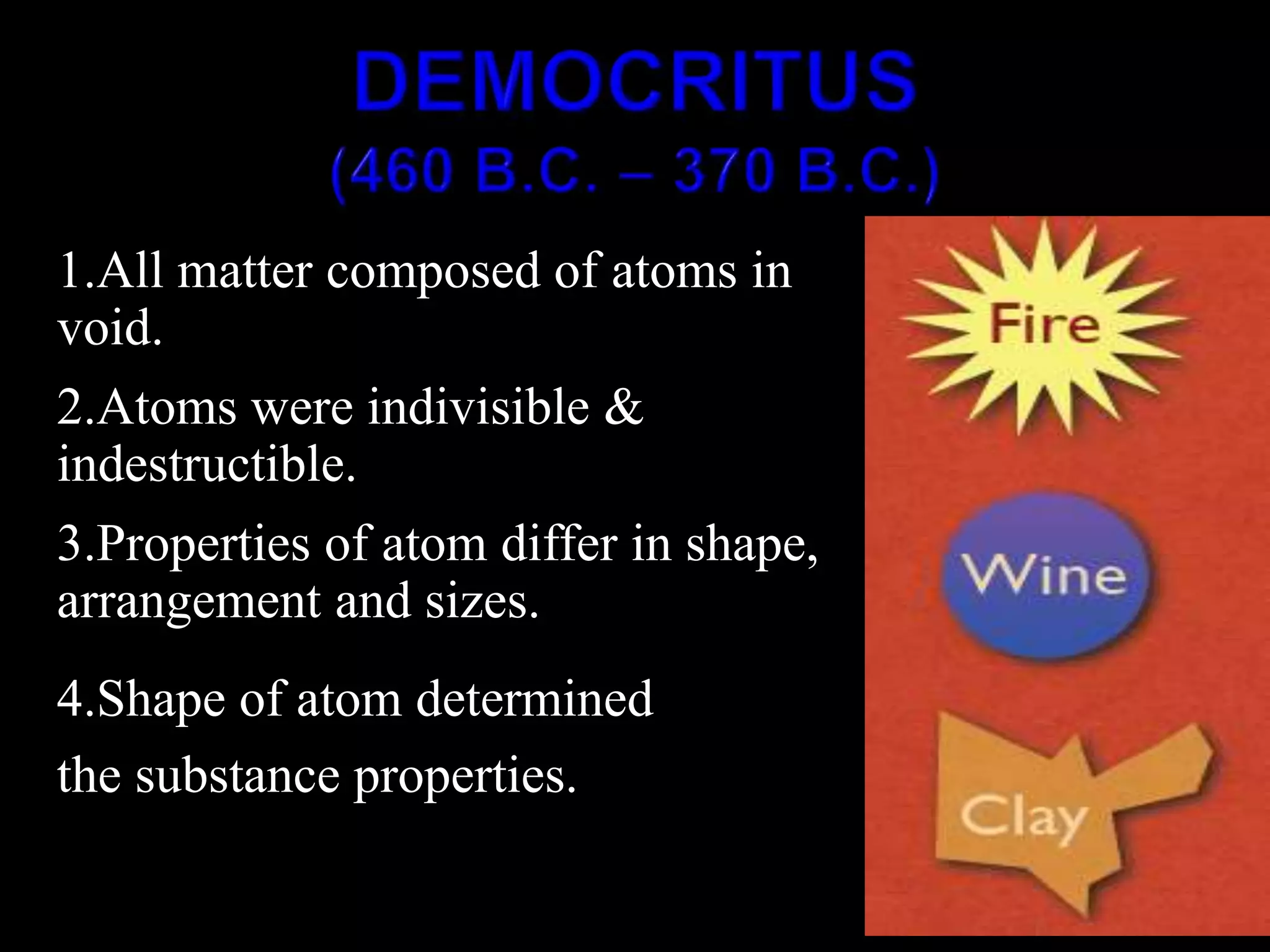
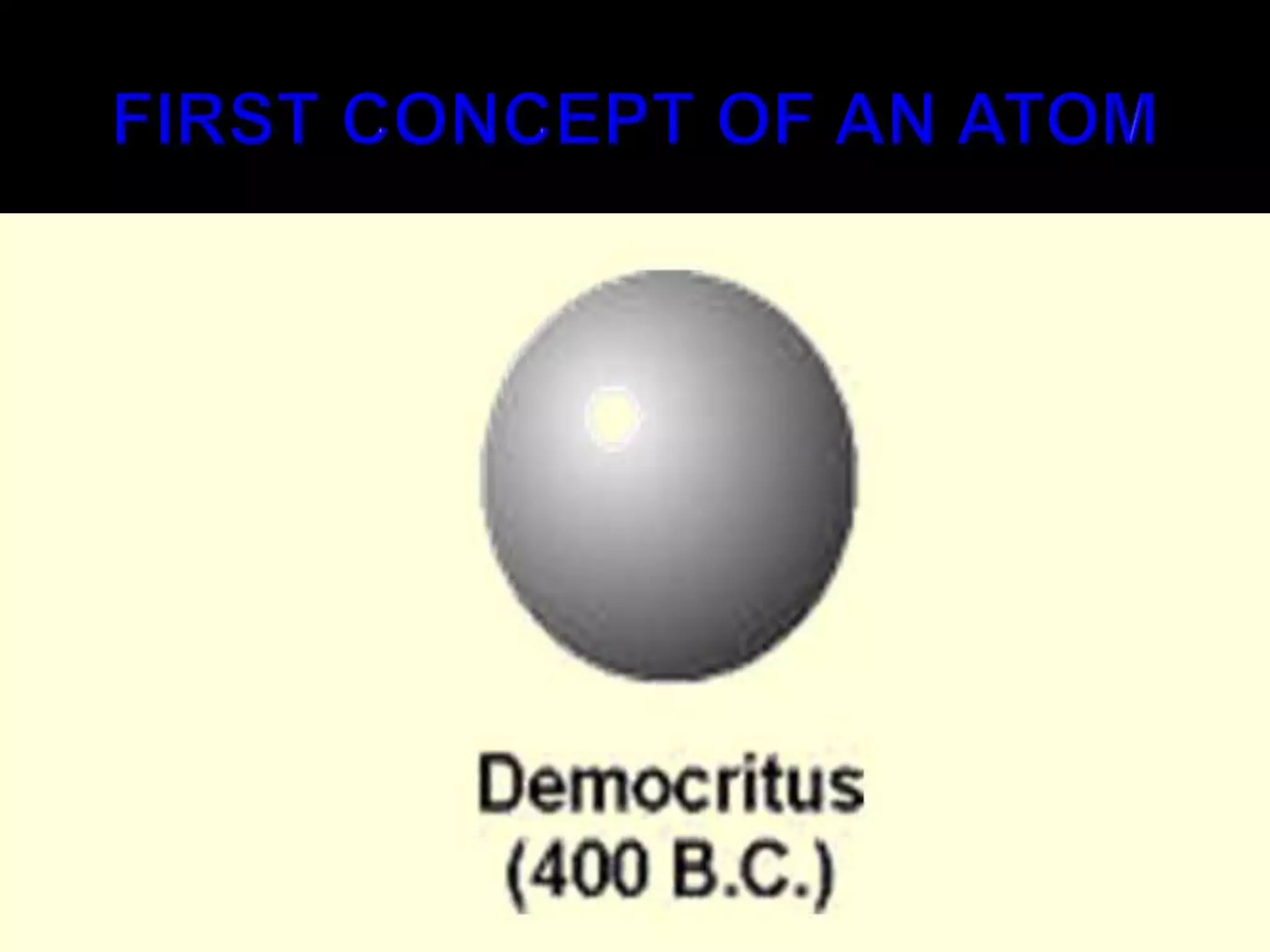

1.All matter composed of atoms in
void.
2.Atoms were indivisible &
indestructible.
3.Properties of atom differ in shape,
arrangement and sizes.
4.Shape of atom determined
the substance properties.
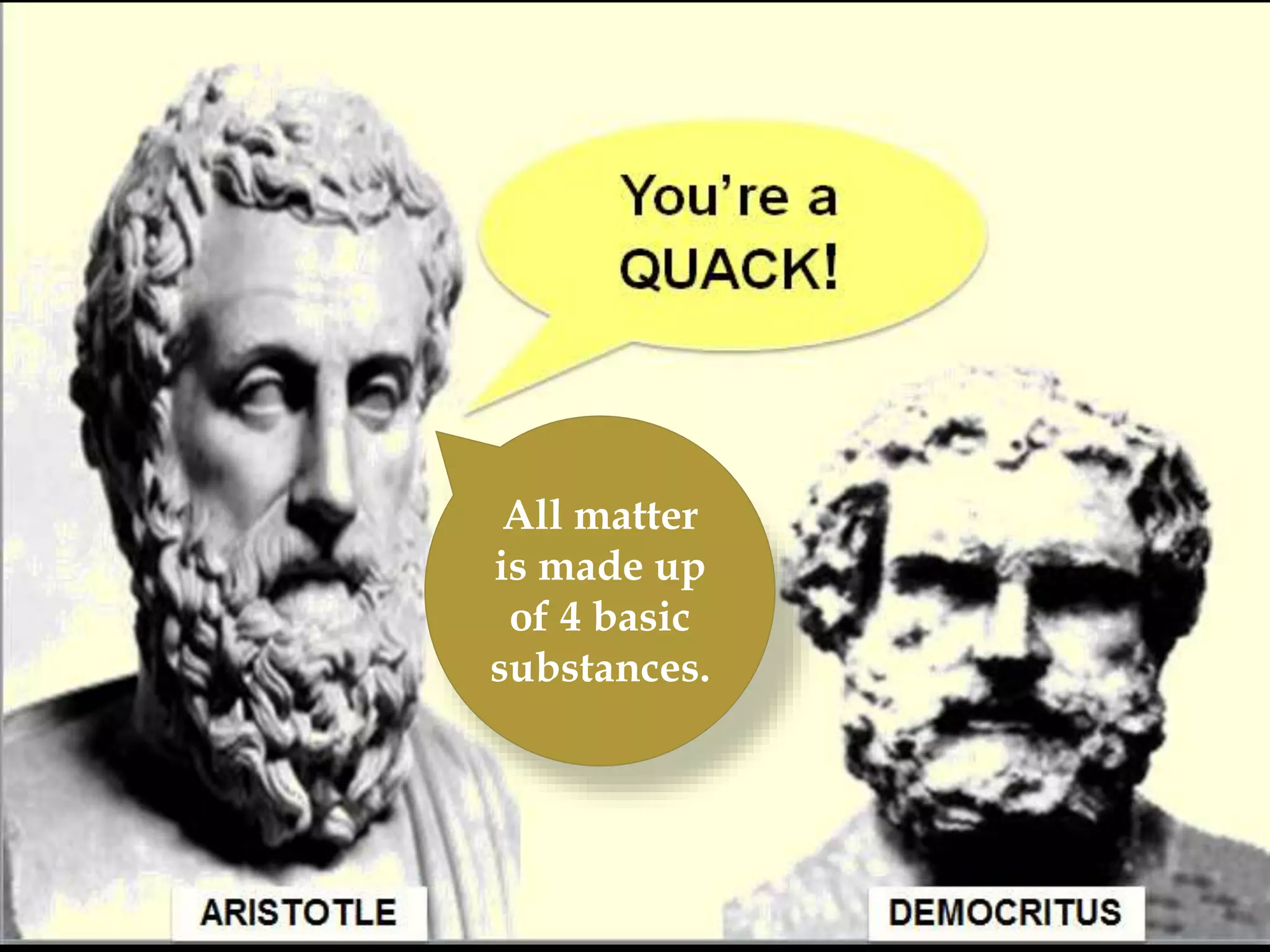
All matter
is made up
of 4 basic
substances.
 He developed a theory to explain why the elements
in a compound always join in the same way.
 He proposed explanations for many of the known
laws describing the behaviour of matter.
 Dalton’s theory states “All matter is made up of
individual particles called atoms, which cannot be
divided”.
The main points of Dalton’s theory are as
follows.
 All matter is composed of tiny, indivisible
particles called ATOM.
 All atoms of an element have identical
properties.
 Atoms of two or more elements can combine
in constant ratios to form new substances.
 In chemical reactions, atom join together or
separate from each other but not destroyed.
 Law of Conservation of Matter
“Atoms are neither created nor destroyed in any
chemical reaction”.
 Law of Conservation of Mass
“Atoms are separate, join or rearrange during a
chemical reaction but remain unchanged. Therefore, there
will be no change in mass. “
 Law of Definite Composition
“Atoms of different elements can physically mix
together of chemically combine with one another in single
whole number ratios to form compounds”.
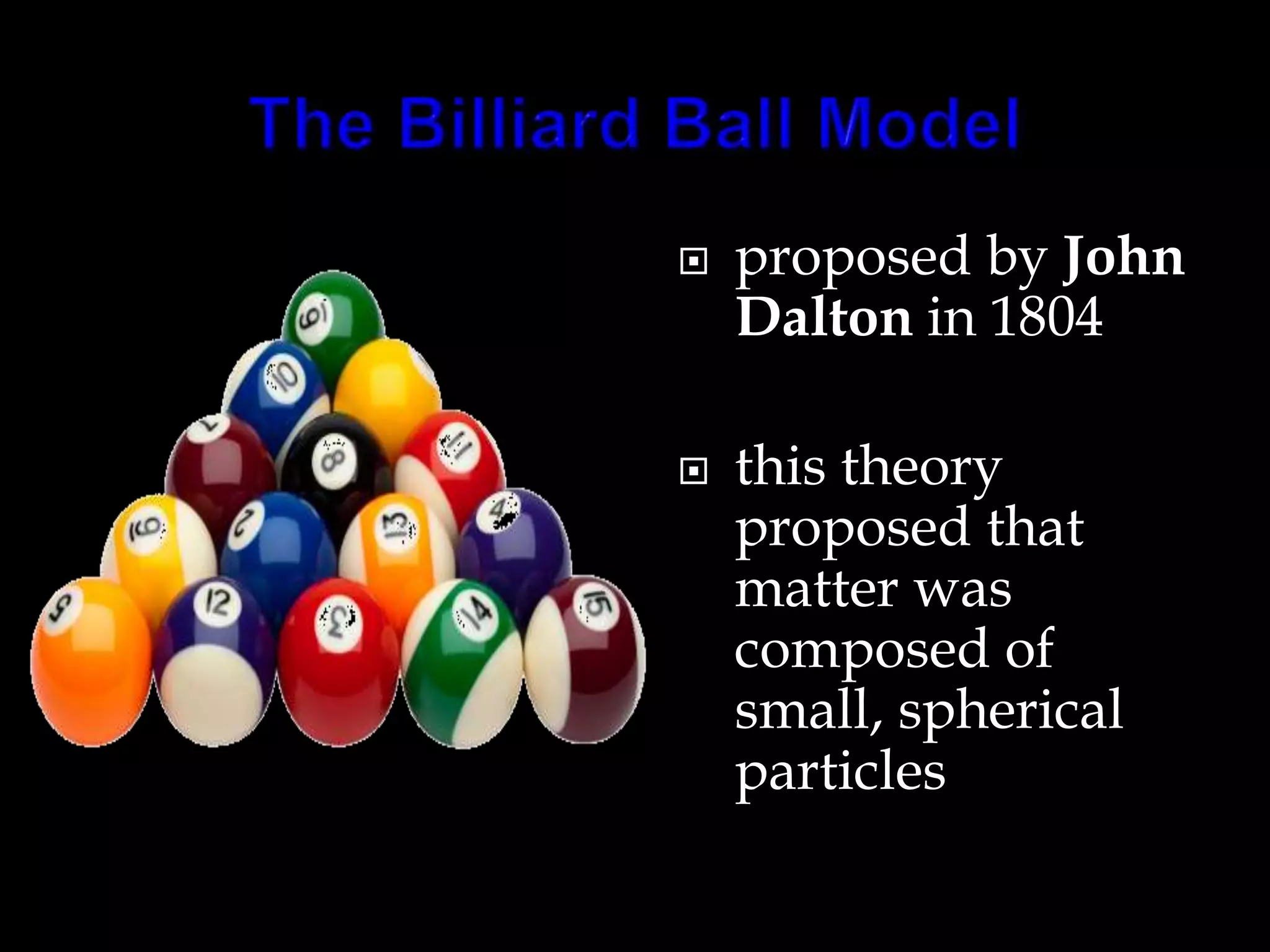
 proposed by John
Dalton in 1804
 this theory
proposed that
matter was
composed of
small, spherical
particles
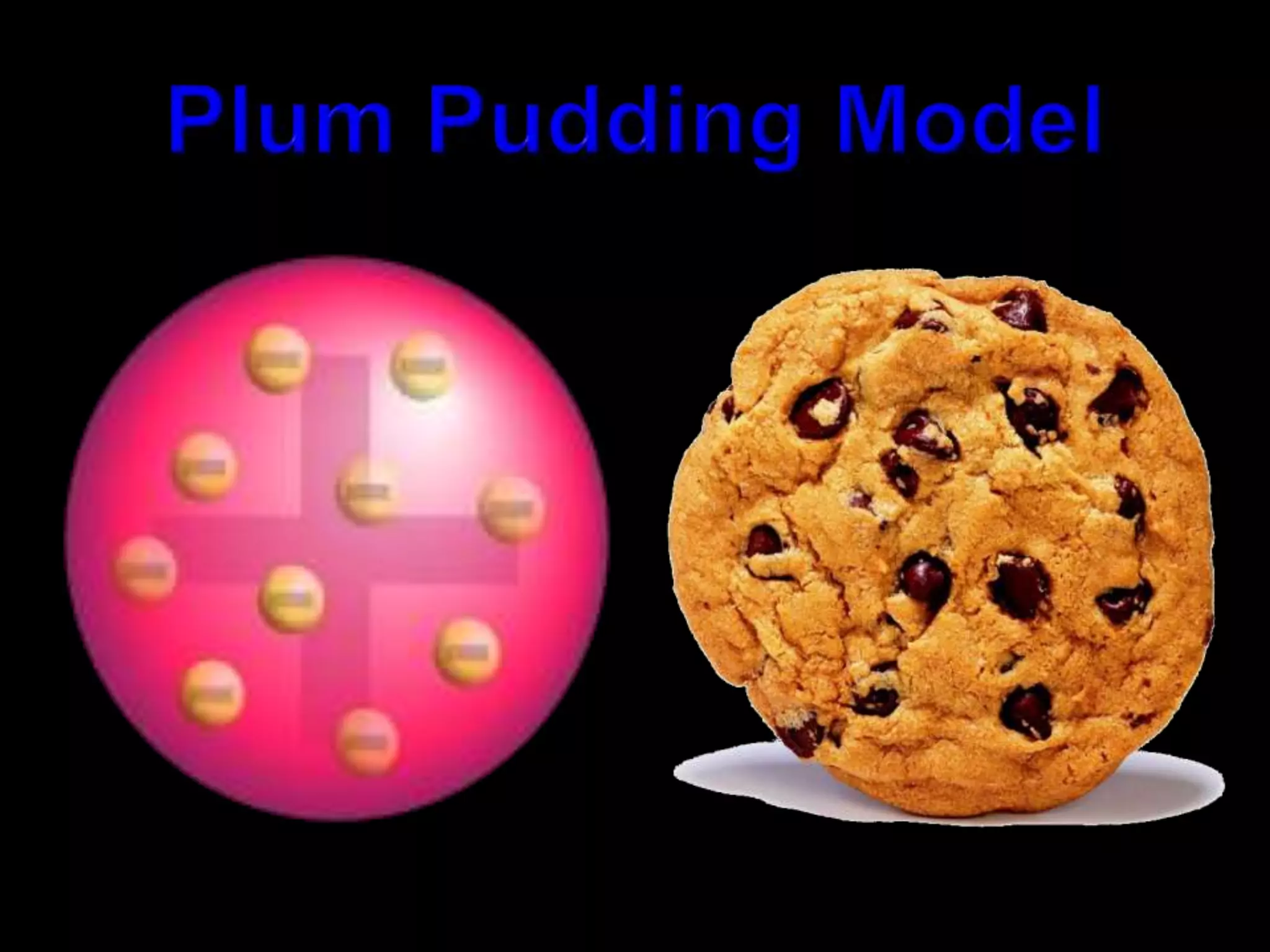
 Discovered electron 1897 – Cathode Ray
Experiment
 “Plum Pudding” model 1904
 Electrons in a soup of positive charges
 Discovered isotopes 1913.
 Thomson’s experiments provided the
first evidence that atoms are made of
even smaller particles.
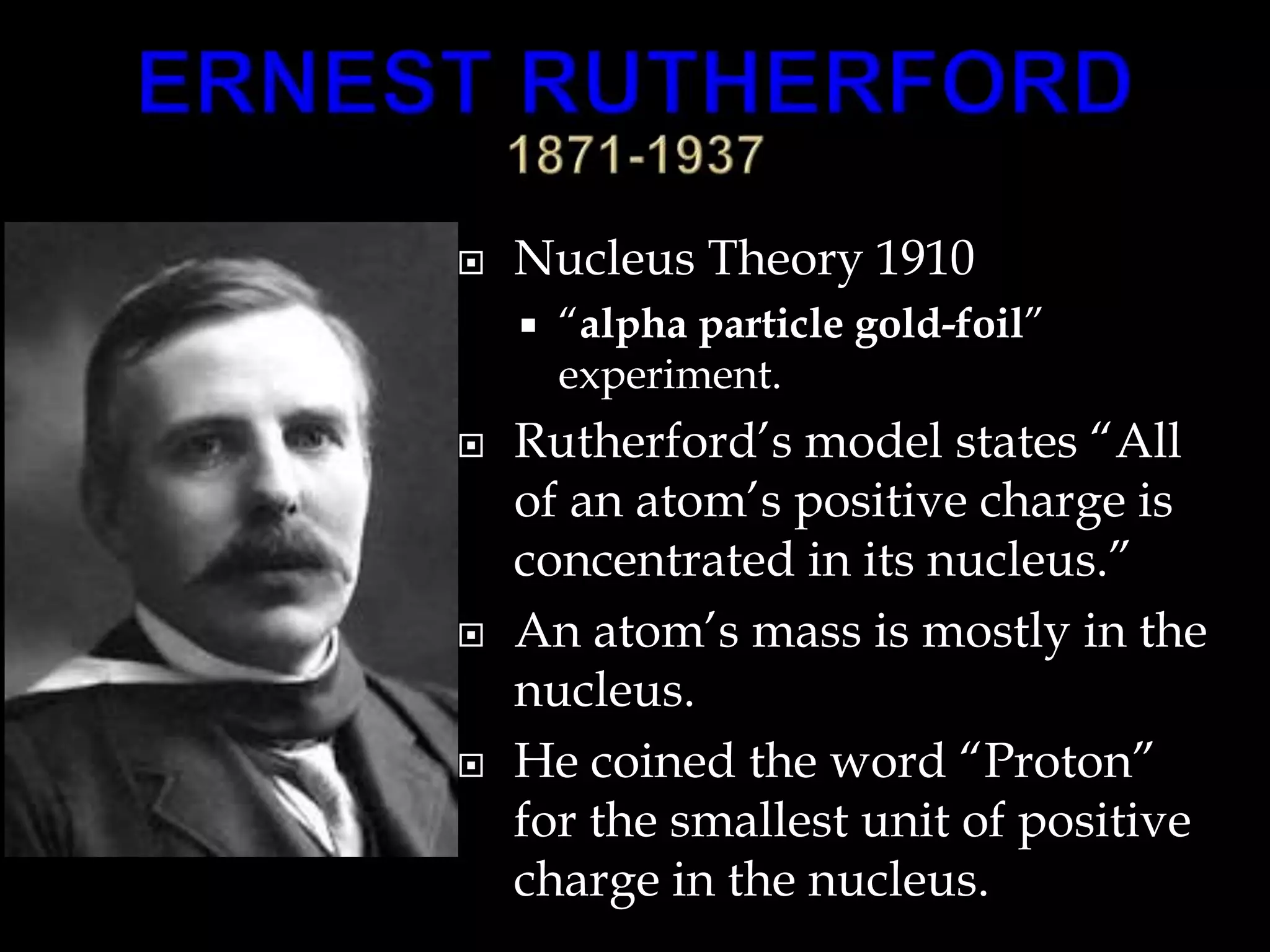
 Nucleus Theory 1910
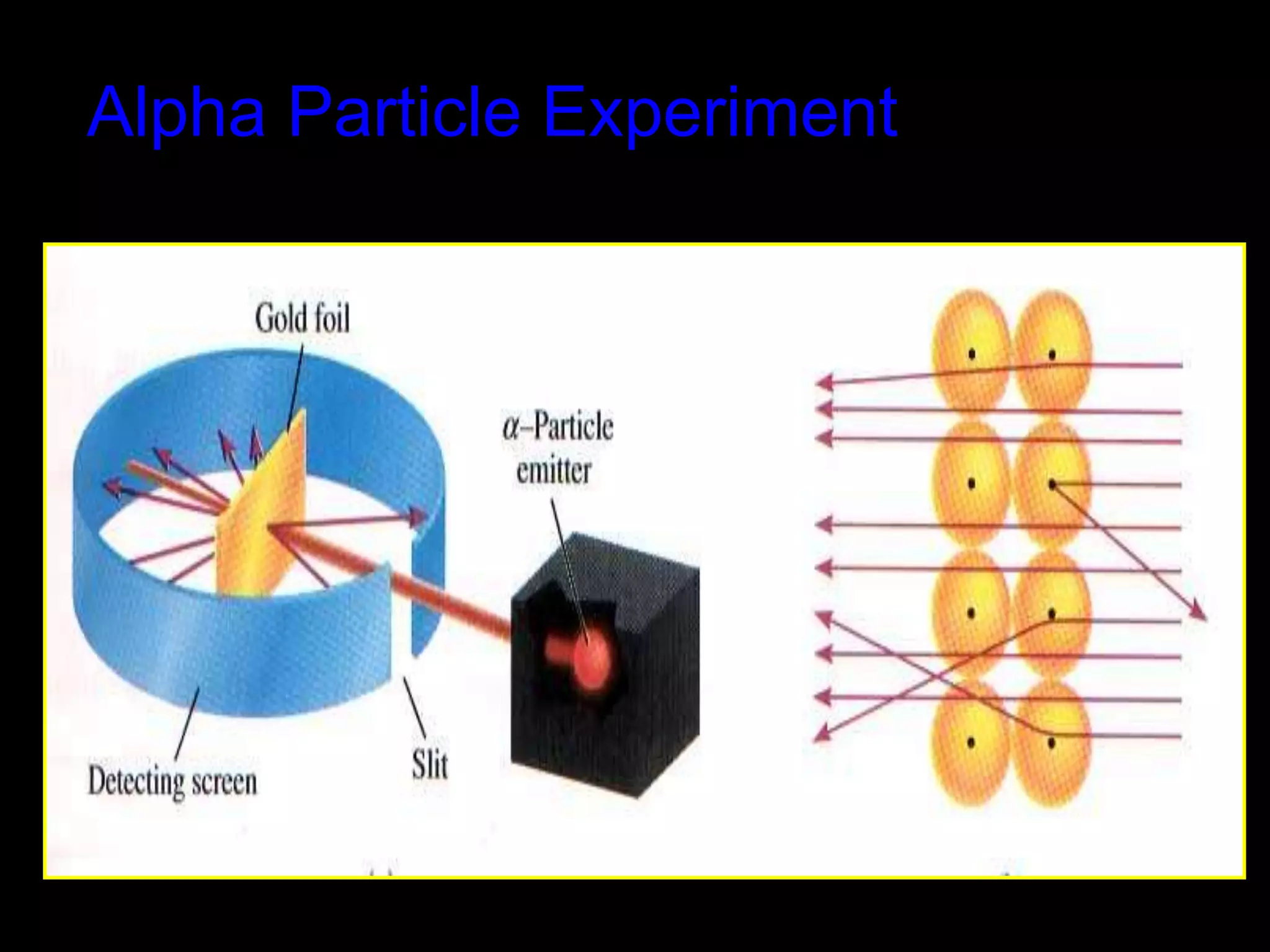
 “alpha particle gold-foil”
experiment.
 Rutherford’s model states “All
of an atom’s positive charge is
concentrated in its nucleus.”
 An atom’s mass is mostly in the
nucleus.
 He coined the word “Proton”
for the smallest unit of positive
charge in the nucleus.
Alpha Particle Experiment
 If the nucleus of an atom contained
several protons that repelled each
other, how did it stay together?
 Why didn’t the negatively charged
electrons rush toward and crash into
the positively charged nucleus?
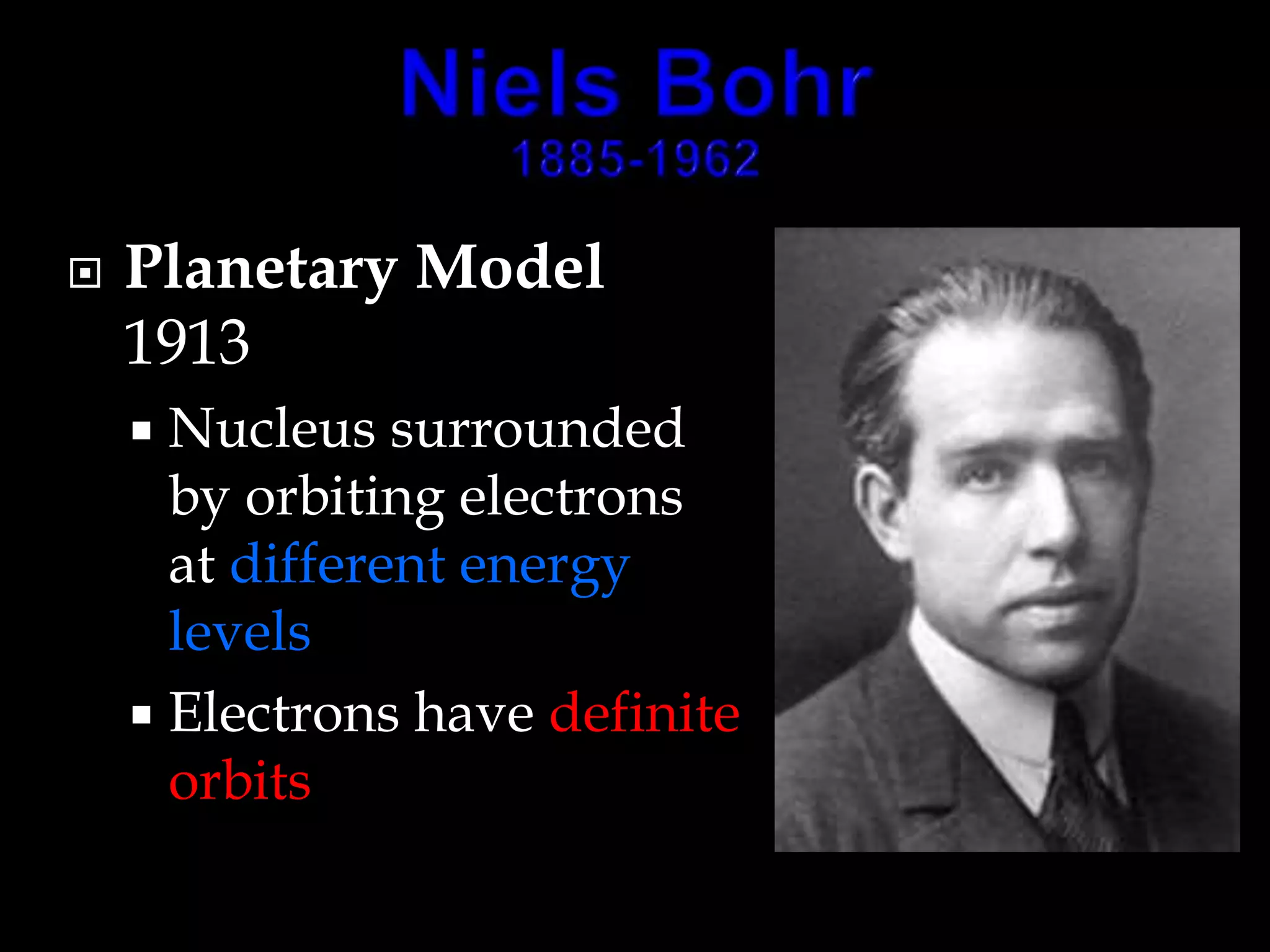
 Planetary Model
1913
 Nucleus surrounded
by orbiting electrons
at different energy
levels
 Electrons have definite
orbits
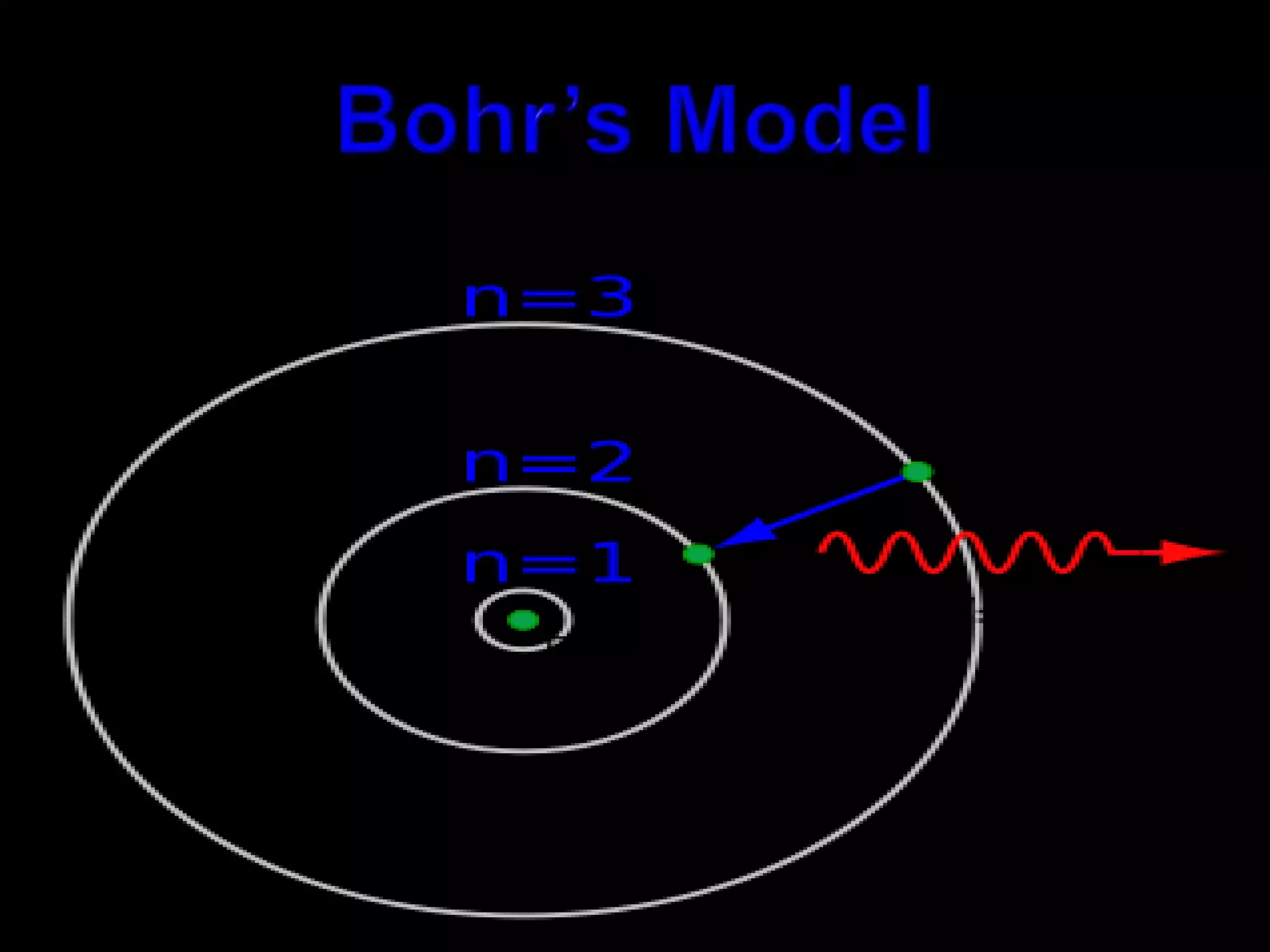
Bohr’s Model
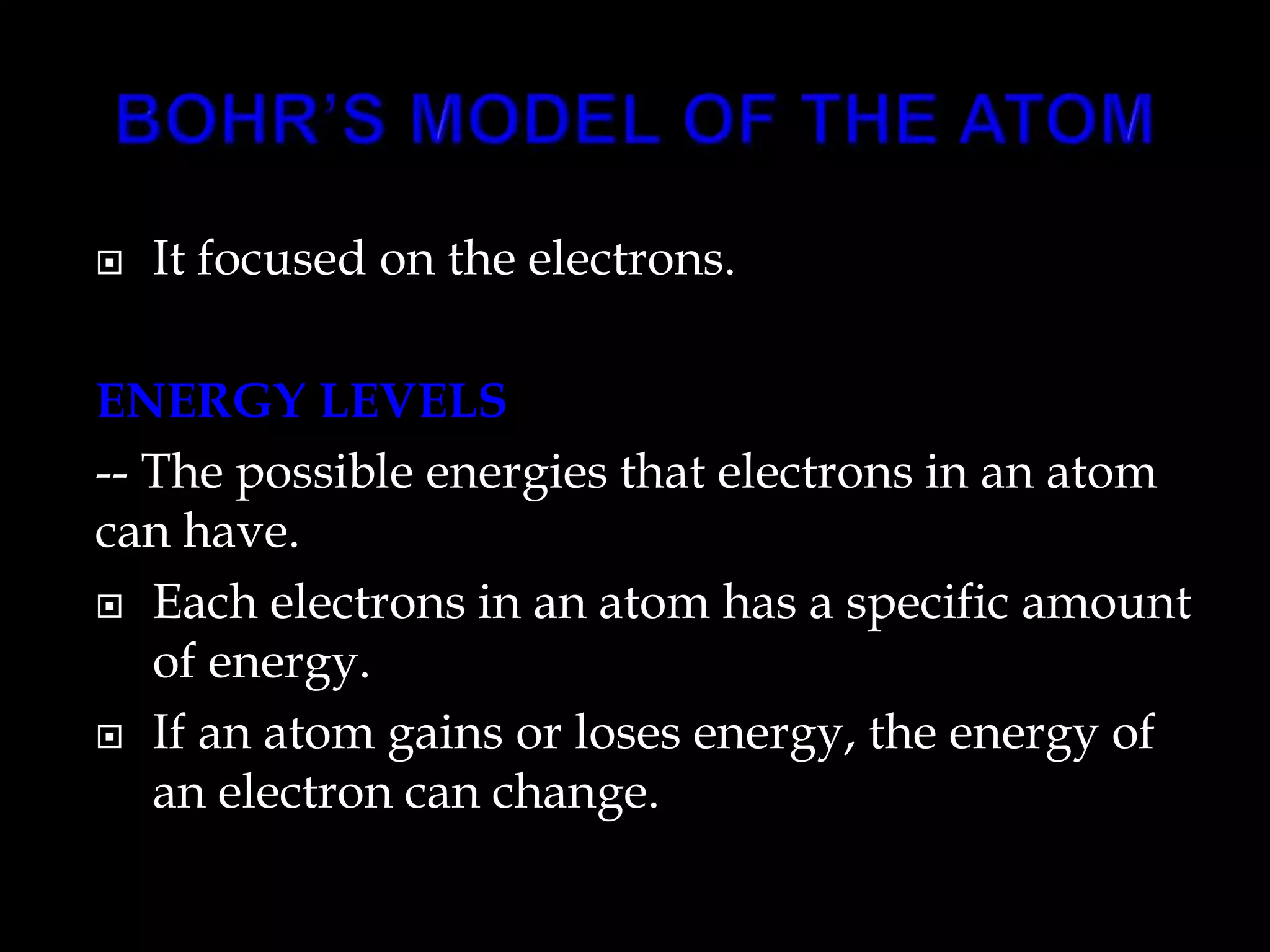
 It focused on the electrons.
ENERGY LEVELS
-- The possible energies that electrons in an atom
can have.
 Each electrons in an atom has a specific amount
of energy.
 If an atom gains or loses energy, the energy of
an electron can change.
LOUIE DE BROGLIE
ERNST SCHRÖDINGER
WERNER HEISENBERG
 DE BROGLIE proposed that electron could
also be thought of as a wave.
 SCHRODINGER used this idea to develop
a mathematical equation to describe the
hydrogen atom.
 HEISENBERG discovered that for a very
small particle like the electron, its location
cannot be exactly known and how it is
moving.
LOUIE DE BROGLIE
ERNST SCHRÖDINGER
WERNER HEISENBERG
 Quantum Mechanical Model 1926
 Electrons are in probability zones called
“orbitals”, not orbits and the location cannot be
pinpointed
 Electrons are particles and waves at the same
time
 Developed quantum numbers based on
theories of Einstein and Planck
ELECTRON CLOUD
- Is a visual model of the most likely
locations for electrons in an atom.
 The cloud is denser at those locations
where the probability of finding an
electron is high.
 Scientists use the electron cloud model to
describe the possible locations of
electrons around the nucleus.
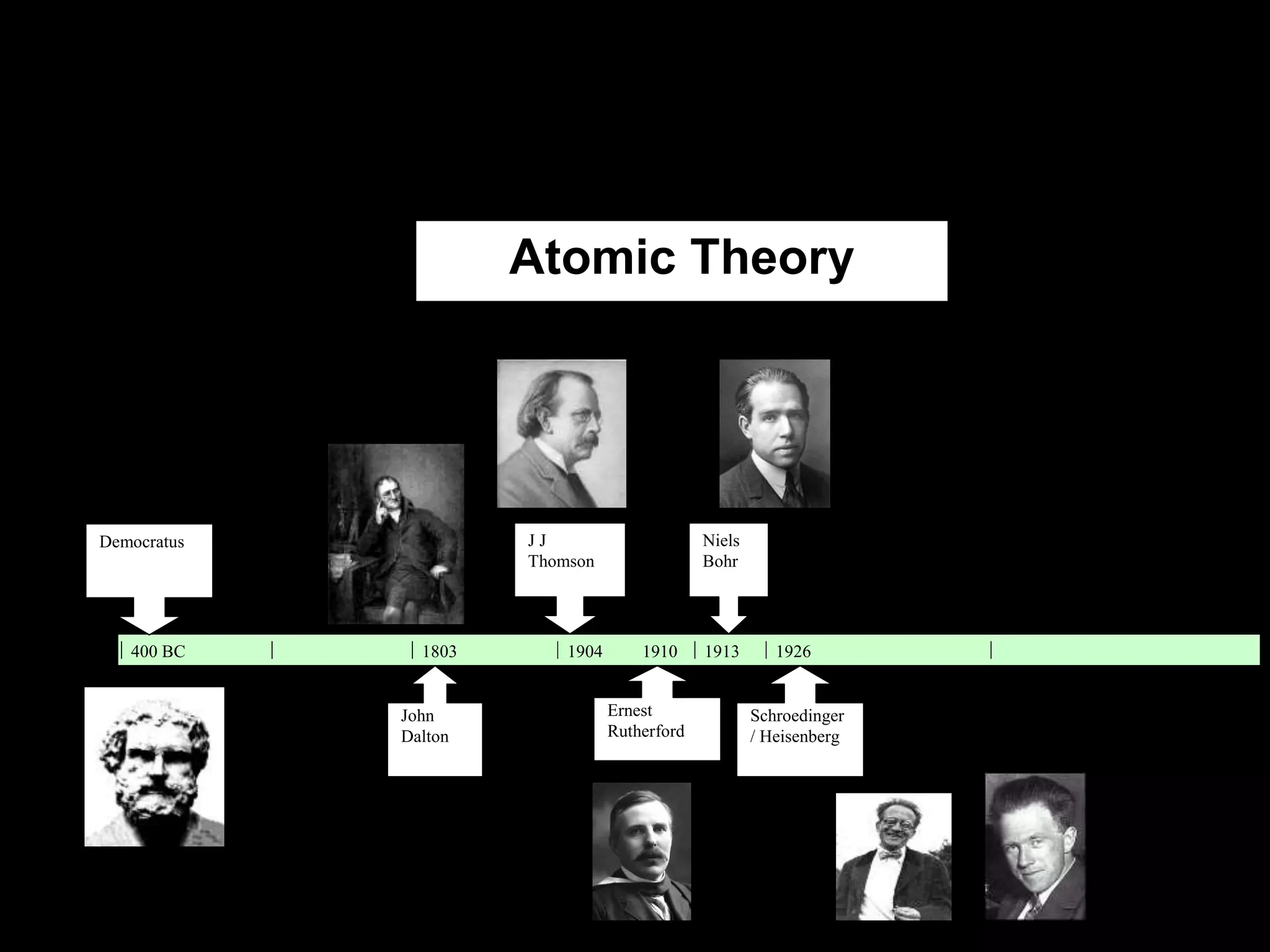
400 BC 1803 1904 1910 1913 1926
Niels
Bohr
J J
Thomson
Democratus
John
Dalton
Schroedinger
/ Heisenberg
Ernest
Rutherford
Atomic Theory

HISTORY OF ATOMIC THEORY

  • 7.
    1.All matter composedof atoms in void. 2.Atoms were indivisible & indestructible. 3.Properties of atom differ in shape, arrangement and sizes. 4.Shape of atom determined the substance properties.
  • 9.
    All matter is madeup of 4 basic substances.
  • 11.
     He developeda theory to explain why the elements in a compound always join in the same way.  He proposed explanations for many of the known laws describing the behaviour of matter.  Dalton’s theory states “All matter is made up of individual particles called atoms, which cannot be divided”.
  • 12.
    The main pointsof Dalton’s theory are as follows.  All matter is composed of tiny, indivisible particles called ATOM.  All atoms of an element have identical properties.  Atoms of two or more elements can combine in constant ratios to form new substances.  In chemical reactions, atom join together or separate from each other but not destroyed.
  • 13.
     Law ofConservation of Matter “Atoms are neither created nor destroyed in any chemical reaction”.  Law of Conservation of Mass “Atoms are separate, join or rearrange during a chemical reaction but remain unchanged. Therefore, there will be no change in mass. “  Law of Definite Composition “Atoms of different elements can physically mix together of chemically combine with one another in single whole number ratios to form compounds”.
  • 14.
     proposed byJohn Dalton in 1804  this theory proposed that matter was composed of small, spherical particles
  • 16.
     Discovered electron1897 – Cathode Ray Experiment  “Plum Pudding” model 1904  Electrons in a soup of positive charges  Discovered isotopes 1913.  Thomson’s experiments provided the first evidence that atoms are made of even smaller particles.
  • 19.
     Nucleus Theory1910  “alpha particle gold-foil” experiment.  Rutherford’s model states “All of an atom’s positive charge is concentrated in its nucleus.”  An atom’s mass is mostly in the nucleus.  He coined the word “Proton” for the smallest unit of positive charge in the nucleus.
  • 20.
  • 21.
     If thenucleus of an atom contained several protons that repelled each other, how did it stay together?  Why didn’t the negatively charged electrons rush toward and crash into the positively charged nucleus?
  • 24.
     Planetary Model 1913 Nucleus surrounded by orbiting electrons at different energy levels  Electrons have definite orbits
  • 25.
  • 26.
     It focusedon the electrons. ENERGY LEVELS -- The possible energies that electrons in an atom can have.  Each electrons in an atom has a specific amount of energy.  If an atom gains or loses energy, the energy of an electron can change.
  • 28.
    LOUIE DE BROGLIE ERNSTSCHRÖDINGER WERNER HEISENBERG  DE BROGLIE proposed that electron could also be thought of as a wave.  SCHRODINGER used this idea to develop a mathematical equation to describe the hydrogen atom.  HEISENBERG discovered that for a very small particle like the electron, its location cannot be exactly known and how it is moving.
  • 29.
    LOUIE DE BROGLIE ERNSTSCHRÖDINGER WERNER HEISENBERG  Quantum Mechanical Model 1926  Electrons are in probability zones called “orbitals”, not orbits and the location cannot be pinpointed  Electrons are particles and waves at the same time  Developed quantum numbers based on theories of Einstein and Planck
  • 30.
    ELECTRON CLOUD - Isa visual model of the most likely locations for electrons in an atom.  The cloud is denser at those locations where the probability of finding an electron is high.  Scientists use the electron cloud model to describe the possible locations of electrons around the nucleus.
  • 32.
    400 BC 18031904 1910 1913 1926 Niels Bohr J J Thomson Democratus John Dalton Schroedinger / Heisenberg Ernest Rutherford Atomic Theory

Editor's Notes

  • #12 Evidence of Atoms
  • #17 Atom is neutral, meaning it has neither a negative nor a positive charge.
  • #21 Discovery of the nucleus
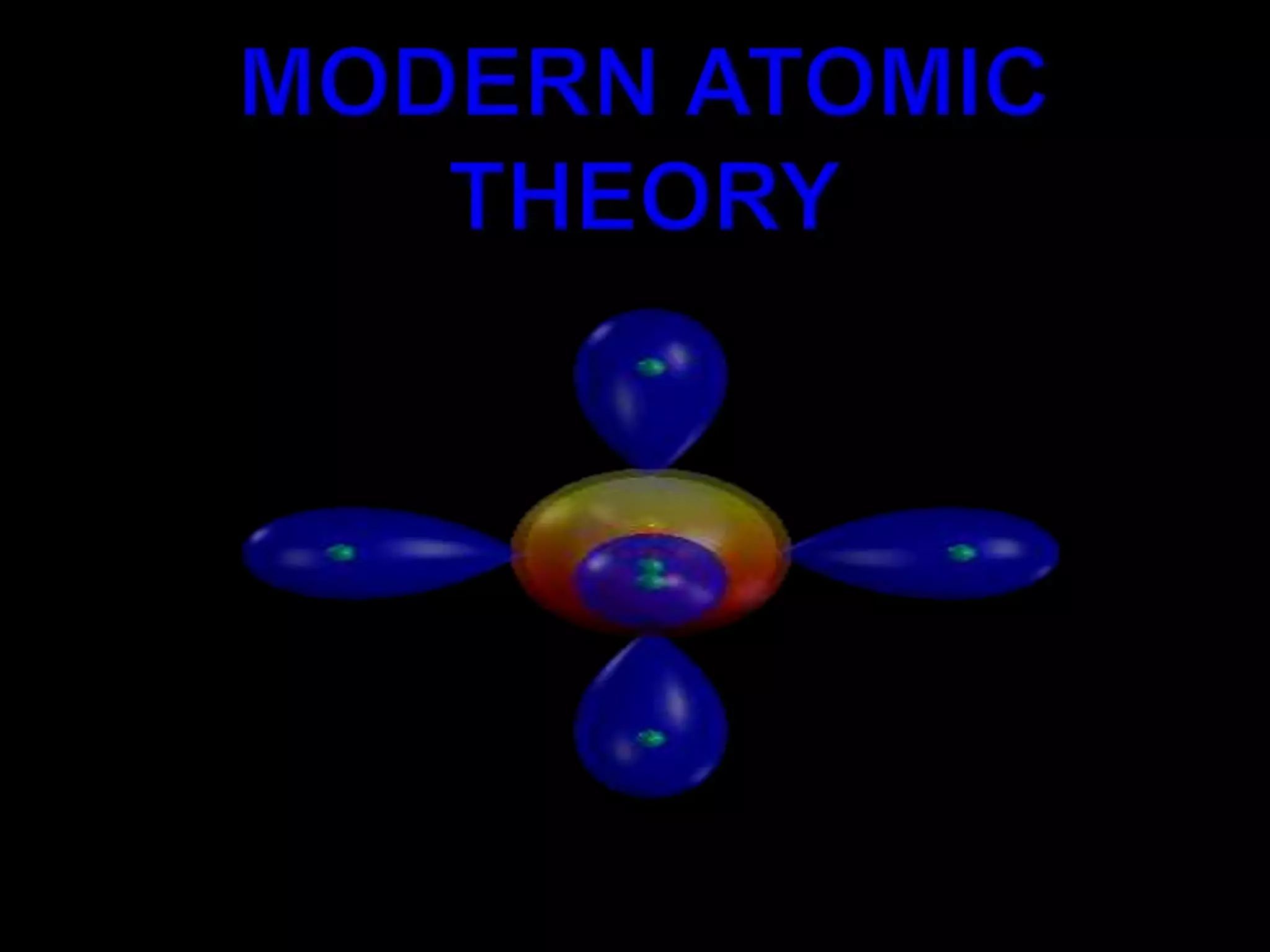
  • #23 A description of the arrangement of electrons in an atoms is the centerpiece of the modern atomic theory.
  • #25 Bohr considered the electrons as particles moving around the nucleus in fixed circular orbits. These orbits are found at definite distances from the nucleus. The orbits are known as the ENERGY LEVELS.
  • #26 Electrons move with constant speed in fixed orbits around the nucleus, like planets around a sun.
  • #29 These scientists believed that there is only a probability that the electron can be found in a certain volume in space around the nucleus.—ATOMIC ORBITAL
  • #30 BOHR’S idea that electrons are found in definite orbits around the nucleus was rejected.