GROUP # 3
Muhammad waseem
Saim khalid
Zafar iqbal
Muhammad imran

1
Agenda
•
•
•
•
•
•

Manufacturing of connecting rod
Forging Vs Casting
Defects of forging
Designing and manufacturing processes
Limitation of forging
Economics limitation

2
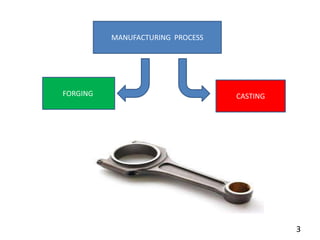
MANUFACTURING PROCESS

FORGING

CASTING

3
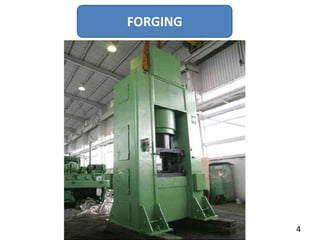
FORGING

4
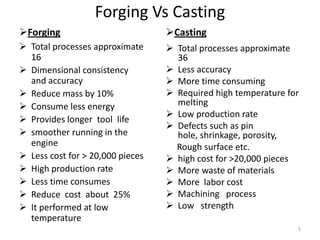
Forging Vs Casting
Forging

Casting

 Total processes approximate
16
 Dimensional consistency
and accuracy
 Reduce mass by 10%
 Consume less energy
 Provides longer tool life
 smoother running in the
engine
 Less cost for > 20,000 pieces
 High production rate
 Less time consumes
 Reduce cost about 25%
 It performed at low
temperature

 Total processes approximate
36
 Less accuracy
 More time consuming
 Required high temperature for
melting
 Low production rate
 Defects such as pin
hole, shrinkage, porosity,
Rough surface etc.
 high cost for >20,000 pieces
 More waste of materials
 More labor cost
 Machining process
 Low strength
5
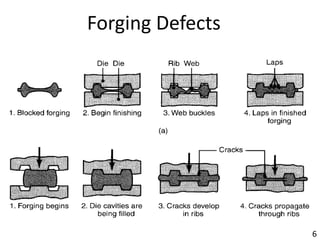
Forging Defects

6
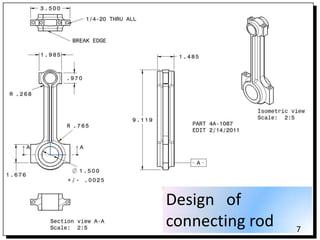
Design of
connecting rod

7
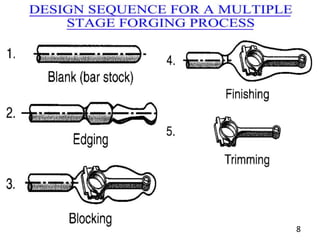
8
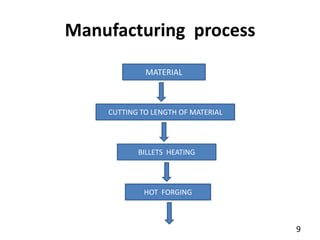
Manufacturing process
MATERIAL

CUTTING TO LENGTH OF MATERIAL

BILLETS HEATING

HOT FORGING

9
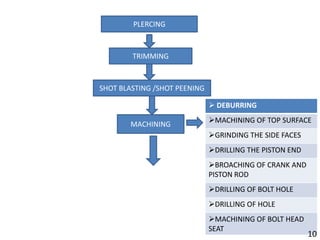
PLERCING

TRIMMING

SHOT BLASTING /SHOT PEENING
 DEBURRING
MACHINING

MACHINING OF TOP SURFACE

GRINDING THE SIDE FACES
DRILLING THE PISTON END
BROACHING OF CRANK AND
PISTON ROD
DRILLING OF BOLT HOLE

DRILLING OF HOLE
MACHINING OF BOLT HEAD
SEAT

10
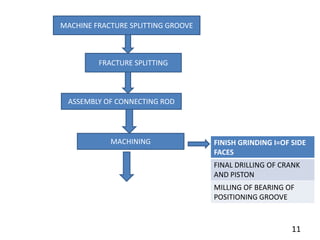
MACHINE FRACTURE SPLITTING GROOVE

FRACTURE SPLITTING

ASSEMBLY OF CONNECTING ROD

MACHINING

FINISH GRINDING I=OF SIDE
FACES
FINAL DRILLING OF CRANK
AND PISTON

MILLING OF BEARING OF
POSITIONING GROOVE

11
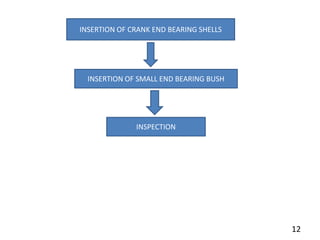
INSERTION OF CRANK END BEARING SHELLS

INSERTION OF SMALL END BEARING BUSH

INSPECTION

12
Selection of material
 the connecting rods are most usually made
of steel (for lightness and the ability to absorb high
impact at the expense of durability)
 titanium (for a combination of lightness with
strength, at higher cost) for high performance
engines, or of cast iron for applications such as
motor scooters.

13
Cutting of material
• Cut the material a little greater than the required due to
further process

heating billets
• Billet is heated in the furnace
at 500-600 ⁰C

Hot forging
• Hot forging is defined as working a metal above its
recrystallization temperature.
• The main advantage of hot forging is that as
14
the metal is deformed the strain-hardening effects are
negated by the recrystallization process.

piercing:

15
Trimming:

Shot peening:

Machining:
16
• Fracture splitting

• Assembly

• Insertion of bearing shell

17
• Insertion of bering bushes

• Inspection

18
Limitation of forging
• It must be enviourment friendly
• It finished product cost must be moderate
• Limitation of the mass deviation along the
longitudinal axis
• materials are generally less expensive than the
materials required for casting. Limited scrap
and rework. Reduced labor costs and lower
tooling equipment expenses than casting
19
Economic limitation

20
21

manufacturing of connecting rod

  • 1.
    GROUP # 3 Muhammadwaseem Saim khalid Zafar iqbal Muhammad imran 1
  • 2.
    Agenda • • • • • • Manufacturing of connectingrod Forging Vs Casting Defects of forging Designing and manufacturing processes Limitation of forging Economics limitation 2
  • 3.
  • 4.
  • 5.
    Forging Vs Casting Forging Casting Total processes approximate 16  Dimensional consistency and accuracy  Reduce mass by 10%  Consume less energy  Provides longer tool life  smoother running in the engine  Less cost for > 20,000 pieces  High production rate  Less time consumes  Reduce cost about 25%  It performed at low temperature  Total processes approximate 36  Less accuracy  More time consuming  Required high temperature for melting  Low production rate  Defects such as pin hole, shrinkage, porosity, Rough surface etc.  high cost for >20,000 pieces  More waste of materials  More labor cost  Machining process  Low strength 5
  • 6.
  • 7.
  • 8.
  • 9.
    Manufacturing process MATERIAL CUTTING TOLENGTH OF MATERIAL BILLETS HEATING HOT FORGING 9
  • 10.
    PLERCING TRIMMING SHOT BLASTING /SHOTPEENING  DEBURRING MACHINING MACHINING OF TOP SURFACE GRINDING THE SIDE FACES DRILLING THE PISTON END BROACHING OF CRANK AND PISTON ROD DRILLING OF BOLT HOLE DRILLING OF HOLE MACHINING OF BOLT HEAD SEAT 10
  • 11.
    MACHINE FRACTURE SPLITTINGGROOVE FRACTURE SPLITTING ASSEMBLY OF CONNECTING ROD MACHINING FINISH GRINDING I=OF SIDE FACES FINAL DRILLING OF CRANK AND PISTON MILLING OF BEARING OF POSITIONING GROOVE 11
  • 12.
    INSERTION OF CRANKEND BEARING SHELLS INSERTION OF SMALL END BEARING BUSH INSPECTION 12
  • 13.
    Selection of material the connecting rods are most usually made of steel (for lightness and the ability to absorb high impact at the expense of durability)  titanium (for a combination of lightness with strength, at higher cost) for high performance engines, or of cast iron for applications such as motor scooters. 13
  • 14.
    Cutting of material •Cut the material a little greater than the required due to further process heating billets • Billet is heated in the furnace at 500-600 ⁰C Hot forging • Hot forging is defined as working a metal above its recrystallization temperature. • The main advantage of hot forging is that as 14
  • 15.
    the metal isdeformed the strain-hardening effects are negated by the recrystallization process. piercing: 15
  • 16.
  • 17.
    • Fracture splitting •Assembly • Insertion of bearing shell 17
  • 18.
    • Insertion ofbering bushes • Inspection 18
  • 19.
    Limitation of forging •It must be enviourment friendly • It finished product cost must be moderate • Limitation of the mass deviation along the longitudinal axis • materials are generally less expensive than the materials required for casting. Limited scrap and rework. Reduced labor costs and lower tooling equipment expenses than casting 19
  • 20.
  • 21.