GRAM NEGATIVE RODS
LECTURE NINE
PART ONE
BY
DR . HUMAIRA AMAN ALI
OBJECTIVES
 At the end of lecture student should :
 Define and describe GRAM NEGATIVE RODS.
 Know the various human pathogens of gram
negative rods.
 Understand etiology , pathogenicity , clinical
features , laboratory diagnosis , treatment , and
prevention of diseases cause by gram negative
rods.
GRAM NEGATIVE RODS
 L;arge group of diverse organisms .
 Subdivided into three clinically relevant
categories.
 Gram negative rods related to enteric ytact
divided again into thre groups.
 Pathogen within and outside the enteric tract
 Pathogen primarily within enteric tract
 Pathogen outside the enteric tract
 Collectively called ENTEROBACTERIACEAE.
ENTEROBACTERIACEAE
 They all share same four metabolic processes :
I. They all are facultative anaerobes
II. They all ferment glucose
III.They are oxidase negative
IV.They reduce nitrates to nitrites as part of their
energy generating processes.
SHIGELLA
 CHARACTERISTICS :
 Facultative gram negative rods
 Non-lactose fermenting
 Non – motile
 Donot produce gas from fermentation of glucose
 O antigens in their cell wall.
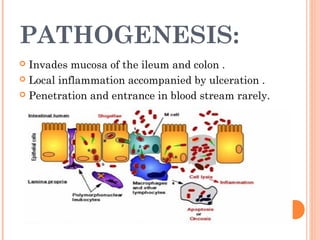
PATHOGENESIS:
 Invades mucosa of the ileum and colon .
 Local inflammation accompanied by ulceration .
 Penetration and entrance in blood stream rarely.
DISEASE
 Shiegellosis: syn : Enterocolitis , bacillary
dysentery.
 Clinical findings:
 Dysentery( bloody diarrhea)
 Fever
 Abdominal cramps (are unpleasant, often
painful sensations caused by muscle contraction
or overshortening)
LABORATORY DIAGNOSIS
 Gram stained smear
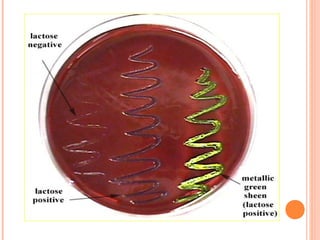
 Culture : non lactose fermenting ( colorless) colonies on
MacConkey agar(is a culture medium designed to
grow Gram-negative bacteria and stain them for
lactose fermentation.)
It contains bile salts (to inhibit most Gram-positive
bacteria, except Enterococcus and some species of
Staphylococcus i.e. Staphylococcus aureus),
crystal violet dye (which also inhibits certain Gram-
positive bacteria), neutral red dye (which stains
microbes fermenting lactose), lactose and peptone.
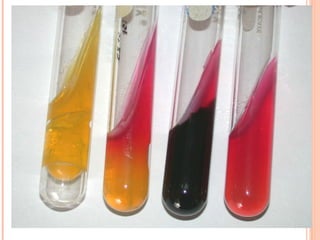
On Triple Sugar Iron Agar: no gas.
TRIPLE SUGAR IRON
 The Triple Sugar Iron or TSI test is a
microbiological test roughly named for its ability
to test microorganism's ability to ferment sugars
and to produce hydrogen sulfide.[1]
It is often used
in the selective identification of enteric bacteria
including but not limited to Salmonella and
Shigella.
 The TSI slant is a test tube that contains agar, a
pH-sensitive dye (phenol red), 1% lactose, 1%
sucrose, 0.1% glucose,[2]
as well as sodium
thiosulfate and ferrous sulfate or ferrous
ammonium sulfate.
 TREATMENT :
 Main treatment is fluid and electrolyte replacement .
 Severe cases antibiotics shud be given .
CIPROFLOXACIN
TRIMETHORPRIM –SULFAMETHOXAZOLE .
 PREVENTION:
Proper sewrage disposal , chlorination of water ,
personal hygeine.
THANK
YOU

Gram negative rods

  • 1.
    GRAM NEGATIVE RODS LECTURENINE PART ONE BY DR . HUMAIRA AMAN ALI
  • 2.
    OBJECTIVES  At theend of lecture student should :  Define and describe GRAM NEGATIVE RODS.  Know the various human pathogens of gram negative rods.  Understand etiology , pathogenicity , clinical features , laboratory diagnosis , treatment , and prevention of diseases cause by gram negative rods.
  • 3.
    GRAM NEGATIVE RODS L;arge group of diverse organisms .  Subdivided into three clinically relevant categories.  Gram negative rods related to enteric ytact divided again into thre groups.  Pathogen within and outside the enteric tract  Pathogen primarily within enteric tract  Pathogen outside the enteric tract  Collectively called ENTEROBACTERIACEAE.
  • 4.
    ENTEROBACTERIACEAE  They allshare same four metabolic processes : I. They all are facultative anaerobes II. They all ferment glucose III.They are oxidase negative IV.They reduce nitrates to nitrites as part of their energy generating processes.
  • 5.
    SHIGELLA  CHARACTERISTICS : Facultative gram negative rods  Non-lactose fermenting  Non – motile  Donot produce gas from fermentation of glucose  O antigens in their cell wall.
  • 6.
    PATHOGENESIS:  Invades mucosaof the ileum and colon .  Local inflammation accompanied by ulceration .  Penetration and entrance in blood stream rarely.
  • 7.
    DISEASE  Shiegellosis: syn: Enterocolitis , bacillary dysentery.  Clinical findings:  Dysentery( bloody diarrhea)  Fever  Abdominal cramps (are unpleasant, often painful sensations caused by muscle contraction or overshortening)
  • 8.
    LABORATORY DIAGNOSIS  Gramstained smear  Culture : non lactose fermenting ( colorless) colonies on MacConkey agar(is a culture medium designed to grow Gram-negative bacteria and stain them for lactose fermentation.) It contains bile salts (to inhibit most Gram-positive bacteria, except Enterococcus and some species of Staphylococcus i.e. Staphylococcus aureus), crystal violet dye (which also inhibits certain Gram- positive bacteria), neutral red dye (which stains microbes fermenting lactose), lactose and peptone. On Triple Sugar Iron Agar: no gas.
  • 10.
    TRIPLE SUGAR IRON The Triple Sugar Iron or TSI test is a microbiological test roughly named for its ability to test microorganism's ability to ferment sugars and to produce hydrogen sulfide.[1] It is often used in the selective identification of enteric bacteria including but not limited to Salmonella and Shigella.  The TSI slant is a test tube that contains agar, a pH-sensitive dye (phenol red), 1% lactose, 1% sucrose, 0.1% glucose,[2] as well as sodium thiosulfate and ferrous sulfate or ferrous ammonium sulfate.
  • 12.
     TREATMENT : Main treatment is fluid and electrolyte replacement .  Severe cases antibiotics shud be given . CIPROFLOXACIN TRIMETHORPRIM –SULFAMETHOXAZOLE .  PREVENTION: Proper sewrage disposal , chlorination of water , personal hygeine.
  • 13.