Group: Future Legends 
Members: 
1.Nigah Shah 0042 
2.M. Jahangir 0138 
3.Habib Ur Rehma0128 
4.Nabeel 0139
Systems Development 
Life Cycle 
Topic:
What is the System 
Development Cycle? 
 The systems development life 
cycle(SDLC), is a term used in 
systems engineering, information systems 
and software engineering to describe a 
process for planning, creating, testing, and 
deploying an information system.
What is an information system 
(IS)? 
System—Set of components 
that interact to achieve 
Next 
Hardware, software, data, 
people, and procedures that 
work together to produce 
Hardware, software, data, 
people, and procedures that 
work together to produce 
quality information 
quality information 
System—Set of components 
that interact to achieve 
common goal 
common goal 
Businesses use many types of 
systems 
systems
What Initiates the System 
Development Cycle? 
What are some reasons to create or modify an 
information system? 
Next 
To improve 
existing system 
Competition can 
lead to change 
To correct problem 
in existing system 
Outside group may 
mandate change
Participants of SDLC: 
1. Systems analyst? 
Next 
RReessppoonnssiibbllee ffoorr ddeessiiggnniinngg 
aanndd ddeevveellooppiinngg 
iinnffoorrmmaattiioonn ssyysstteemm 
LLiiaaiissoonn bbeettwweeeenn uusseerrss 
aanndd IITT pprrooffeessssiioonnaallss
Participants of SDLC: (Cont…) 
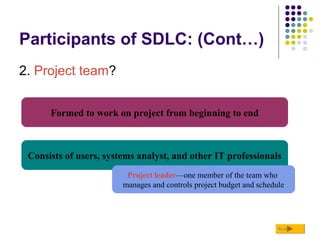
2. Project team? 
Consists of users, systems analyst, and other IT professionals 
Next 
Formed to work on project from beginning to end 
Project leader—one member of the team who 
manages and controls project budget and schedule
What are the phases of the 
system development cycle?
1. Planning Phase 
What is the planning phase? 
Next 
Begins when steering committee receives project request 
SStteeeerriinngg 
ccoommmmiitttteeee—— 
ddeecciissiioonn--mmaakkiinngg 
bbooddyy ffoorr tthhee 
ccoommppaannyy 
Function of committee: 
RReevviieeww aanndd 
aapppprroovvee pprroojjeecctt 
rreeqquueessttss 
AAllllooccaattee 
rreessoouurrcceess 
FFoorrmm pprroojjeecctt 
ddeevveellooppmmeenntt 
tteeaamm ffoorr eeaacchh 
aapppprroovveedd 
pprroojjeecctt 
PPrriioorriittiizzee 
pprroojjeecctt rreeqquueessttss
What is feasibility? 
Next 
Measure of 
how suitable 
system 
development 
will be to the 
company 
Operational 
feasibility 
Schedule 
feasibility 
Four feasibility 
tests: 
Technical 
feasibility 
Economic 
feasibility 
(also called 
cost/benefit 
feasibility)
2. Analysis Phase 
What is the analysis phase? 
Next 
CCoonndduucctt pprreelliimmiinnaarryy 
iinnvveessttiiggaattiioonn,, aallssoo 
ccaalllleedd ffeeaassiibbiilliittyy 
ssttuuddyy 
PPeerrffoorrmm 
ddeettaaiilleedd 
aannaallyyssiiss
Analysis Phase (cont..) 
What is the preliminary investigation? 
 Determine exact nature of problem or improvement 
and whether it is worth pursuing 
 Findings are presented in feasibility report, also known as a feasibility study 
Next
Analysis Phase (cont….) 
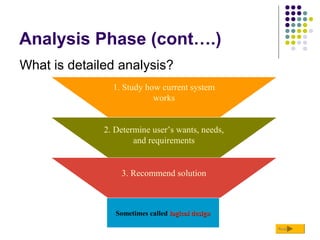
What is detailed analysis? 
Next 
1. Study how current system 
works 
2. Determine user’s wants, needs, 
and requirements 
3. Recommend solution 
Sometimes called llooggiiccaall ddeessiiggnn
Analysis Phase (cont…) 
Presented to 
steering 
committee, 
which decides 
how system will 
be developed 
What is the 
system proposal? 
Next 
Assesses 
feasibility 
of each 
alternative 
solution 
Recommends 
the most 
feasible 
solution for 
the project
3. Designing Phase: 
At this stage you design the User 
Interface 
1. Identify all necessary inputs, outputs 
and processes. 
2. Design internal and external controls 
3. Show programmers how to 
transform the logical design into 
program modules and code. 
(application architecture)
4. Implementation Phase: 
Programs are written, tested and 
documented. 
The system is installed. 
Final preparations are made to 
convert data to the new system’s 
files, and to train users). 
A system evaluation is conducted
5. Maintenance: 
During this stage; 
Maintenance corrects errors, and 
adapts to changes in the environment 
such as new tax rates. 
Enhancement gives new features and 
benefits. 
Security controls safeguard the 
system.
System development life cycle

System development life cycle

  • 2.
    Group: Future Legends Members: 1.Nigah Shah 0042 2.M. Jahangir 0138 3.Habib Ur Rehma0128 4.Nabeel 0139
  • 3.
  • 4.
    What is theSystem Development Cycle?  The systems development life cycle(SDLC), is a term used in systems engineering, information systems and software engineering to describe a process for planning, creating, testing, and deploying an information system.
  • 5.
    What is aninformation system (IS)? System—Set of components that interact to achieve Next Hardware, software, data, people, and procedures that work together to produce Hardware, software, data, people, and procedures that work together to produce quality information quality information System—Set of components that interact to achieve common goal common goal Businesses use many types of Businesses use many types of systems systems
  • 6.
    What Initiates theSystem Development Cycle? What are some reasons to create or modify an information system? Next To improve existing system Competition can lead to change To correct problem in existing system Outside group may mandate change
  • 7.
    Participants of SDLC: 1. Systems analyst? Next RReessppoonnssiibbllee ffoorr ddeessiiggnniinngg aanndd ddeevveellooppiinngg iinnffoorrmmaattiioonn ssyysstteemm LLiiaaiissoonn bbeettwweeeenn uusseerrss aanndd IITT pprrooffeessssiioonnaallss
  • 8.
    Participants of SDLC:(Cont…) 2. Project team? Consists of users, systems analyst, and other IT professionals Next Formed to work on project from beginning to end Project leader—one member of the team who manages and controls project budget and schedule
  • 9.
    What are thephases of the system development cycle?
  • 10.
    1. Planning Phase What is the planning phase? Next Begins when steering committee receives project request SStteeeerriinngg ccoommmmiitttteeee—— ddeecciissiioonn--mmaakkiinngg bbooddyy ffoorr tthhee ccoommppaannyy Function of committee: RReevviieeww aanndd aapppprroovvee pprroojjeecctt rreeqquueessttss AAllllooccaattee rreessoouurrcceess FFoorrmm pprroojjeecctt ddeevveellooppmmeenntt tteeaamm ffoorr eeaacchh aapppprroovveedd pprroojjeecctt PPrriioorriittiizzee pprroojjeecctt rreeqquueessttss
  • 11.
    What is feasibility? Next Measure of how suitable system development will be to the company Operational feasibility Schedule feasibility Four feasibility tests: Technical feasibility Economic feasibility (also called cost/benefit feasibility)
  • 12.
    2. Analysis Phase What is the analysis phase? Next CCoonndduucctt pprreelliimmiinnaarryy iinnvveessttiiggaattiioonn,, aallssoo ccaalllleedd ffeeaassiibbiilliittyy ssttuuddyy PPeerrffoorrmm ddeettaaiilleedd aannaallyyssiiss
  • 13.
    Analysis Phase (cont..) What is the preliminary investigation?  Determine exact nature of problem or improvement and whether it is worth pursuing  Findings are presented in feasibility report, also known as a feasibility study Next
  • 14.
    Analysis Phase (cont….) What is detailed analysis? Next 1. Study how current system works 2. Determine user’s wants, needs, and requirements 3. Recommend solution Sometimes called llooggiiccaall ddeessiiggnn
  • 15.
    Analysis Phase (cont…) Presented to steering committee, which decides how system will be developed What is the system proposal? Next Assesses feasibility of each alternative solution Recommends the most feasible solution for the project
  • 16.
    3. Designing Phase: At this stage you design the User Interface 1. Identify all necessary inputs, outputs and processes. 2. Design internal and external controls 3. Show programmers how to transform the logical design into program modules and code. (application architecture)
  • 17.
    4. Implementation Phase: Programs are written, tested and documented. The system is installed. Final preparations are made to convert data to the new system’s files, and to train users). A system evaluation is conducted
  • 18.
    5. Maintenance: Duringthis stage; Maintenance corrects errors, and adapts to changes in the environment such as new tax rates. Enhancement gives new features and benefits. Security controls safeguard the system.

Editor's Notes

  • #11 In this first stage a preliminary investigation will take place to identify the nature and scope of the problem (or business opportunity)
  • #13 The purpose of the Systems Analysis phase is to build a logical model of the new system
  • #17 The result of the Design stage is documented in the System Design Specification. This is presented to Managers and users for review and approval.