1. Gram – negative rods
2. uncapsulated (except S. typhi)
3. unsporulatedsporulaţi
4. Peritrichous flagella (ensure
motility)
5. live in the intestinal tracts of
warm and cold blooded animals.
6. Some species are ubiquitous.
7. Other species are specifically adaptedto a particular host.
8. In humans, Salmonella are the cause of two diseasescalled salmonellosis:
 enteric fever (typhoid), resulting from bacterial invasion of the bloodstream
 acute gastroenteritis, resulting from a foodborne infection/intoxication
9. Aerobe-anaerobe facultative.
10. Grow easily on simple culture media.
11. Onto selective and differential media that contain biliary salts and lactose grow like
lactose-negative “S” colonies.
12. produce de H2S, colonies have a “cat-eye” appearance.
Characteristics
Growth on M.A Growth on S.S.A Growth on CLED agar
Peg .1
(1) Bacterial products involved in virulence:
 Salmonellae owe their pathogenicity largely to their ability to invade tissue and to
survive within macrophages.
 The Vi antigen is a capsule that affords salmonellae some protection from
phagocytosis.
 Once phagocytosed, S. typhi inhibits generation of oxidative free radicals and
intraphagosomal killing.
 Additionally, salmonellae have endotoxic lipopolysaccharide, which is responsible for
septic shock in patients with bacteriemia.
 Salmonellae that cause enteritis produce at least two enterotoxins that are
responsible for many of the clinical signs of enteritis.
 The first of these is a small (25-30kD) protein that binds to GM1 gangliosides and
cause hypersecretion of fluids and electrolytes by elevating levels of c AMP.
 It appears that both proteinkinase C and prostaglandin E2 are involved in this
process.
 The second enterotoxin is larger (about 100 kD) and is unrelated in structure and
mechanism of activity to the first enterotoxin
 Salmonella strains that produce enterotoxins have been reported to invade the
intestinal wall more effectively and to be more virulent than their nontoxigenic
counterparts.
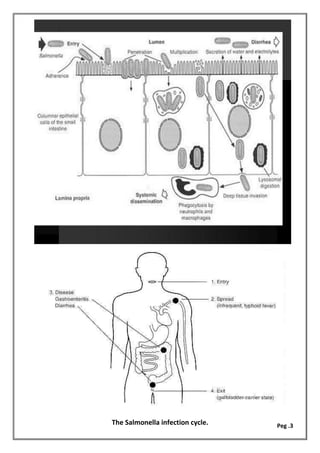
 Intestinal infection with salmonellae can follow one of two infection cycle. One cycle
causes enteritis, other causes typhoid.
Mechanisms of Pathogenicity
Peg .2
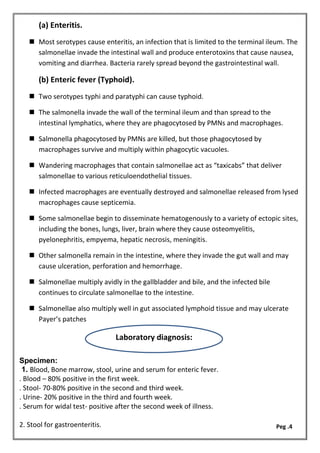
The Salmonella infection cycle. Peg .3
(a) Enteritis.
 Most serotypes cause enteritis, an infection that is limited to the terminal ileum. The
salmonellae invade the intestinal wall and produce enterotoxins that cause nausea,
vomiting and diarrhea. Bacteria rarely spread beyond the gastrointestinal wall.
(b) Enteric fever (Typhoid).
 Two serotypes typhi and paratyphi can cause typhoid.
 The salmonella invade the wall of the terminal ileum and than spread to the
intestinal lymphatics, where they are phagocytosed by PMNs and macrophages.
 Salmonella phagocytosed by PMNs are killed, but those phagocytosed by
macrophages survive and multiply within phagocytic vacuoles.
 Wandering macrophages that contain salmonellae act as “taxicabs” that deliver
salmonellae to various reticuloendothelial tissues.
 Infected macrophages are eventually destroyed and salmonellae released from lysed
macrophages cause septicemia.
 Some salmonellae begin to disseminate hematogenously to a variety of ectopic sites,
including the bones, lungs, liver, brain where they cause osteomyelitis,
pyelonephritis, empyema, hepatic necrosis, meningitis.
 Other salmonella remain in the intestine, where they invade the gut wall and may
cause ulceration, perforation and hemorrhage.
 Salmonellae multiply avidly in the gallbladder and bile, and the infected bile
continues to circulate salmonellae to the intestine.
 Salmonellae also multiply well in gut associated lymphoid tissue and may ulcerate
Payer’s patches
Specimen:
1. Blood, Bone marrow, stool, urine and serum for enteric fever.
. Blood – 80% positive in the first week.
. Stool- 70-80% positive in the second and third week.
. Urine- 20% positive in the third and fourth week.
. Serum for widal test- positive after the second week of illness.
2. Stool for gastroenteritis.
Laboratory diagnosis:
Peg .4
 The diagnosis of salmonellosis requires bacteriologic isolation of the organisms from
appropriate clinical specimens.
 Laboratory identification of the genus Salmonella is done by biochemical tests; the
serologic type is confirmed by serologic testing.
 Feces, blood, or other specimens should be plated on several nonselective and
selective agar media (blood, MacConkey, eosin-methylene blue, bismuth sulfite,
Salmonella-Shigella, Hektoen agars) as well as intoenrichment broth such as selenite
or tetrathionate.
 The biochemical reactions of suspicious colonies are then determined on triple sugar
iron agar and lysine-iron agar, and a presumptive identification is made.
 Biochemical identification of salmonellae has been simplified by systems that permit
the rapid testing of 10-20 different biochemical parameters simultaneously.
 The presumptive biochemical identification of Salmonella then can be confirmed by
antigenic analysis of O and H antigens using polyvalent and specific antisera.
 Salmonella isolates then should be sent to a central or reference laboratory for more
comprehensive serologic testing and confirmation.
 Biochemical properties:
1. Motile,
2. Lactose negative;
3. acid and gas from glucose, mannitol, maltose, and sorbitol;
4. no Acid from adonitol,
5. Indole test negative
6. Methyl red test positive
7. Citrate positive (growth on Simmon's citrate agar)
8. Urease negative
 Using media:
Culture: Bacteriologic methods for salmonella isolation
1. Differential medium
. For rapid isolation of lactose non-fermenters Egs. EMB agar -Mac Conkey agar
2. Selective medium
. favor growth of salmonella and shigella over other enterobacteriaceae Egs. SS agar-
Hekton Enteric agar -XLD agar
DDr:Towfeeq AL-Khudri Peg .5
 Coliform bacilli (enteric rods)
 Nonmotile gram-negative facultative anaerobes- Non-encapsulated
 Four species
 Shigella sonnei (most common in industrial world)
 Shigella flexneri (most common in developing countries)
 Shigella boydii
 Shigella dysenteriae
 Non-lactose fermenting
 Resistant to bile salts
 Low infectious dose (102-104 CFU)
 Humans are only reservoir
 Transmission by fecal-oral route
 Incubation period = 1-3 days
 Watery diarrhea with fever; changing to dysentery
 Major cause of bacillary dysentery (severe 2nd stage) in pediatric age group
(1-10 yrs) via fecal-oral route
 Outbreaks in daycare centers, nurseries, institutions
 Estimated 15% of pediatric diarrhea in U.S.
 Leading cause of infant diarrhea and mortality (death) in developing
countries
 Non-mannitol-fermenters: Shigella dysenteria
 Mannitol-fermenters: Shigella flexneri- Shigella boydii- Shigella sonnei
Characteristics
Peg .1
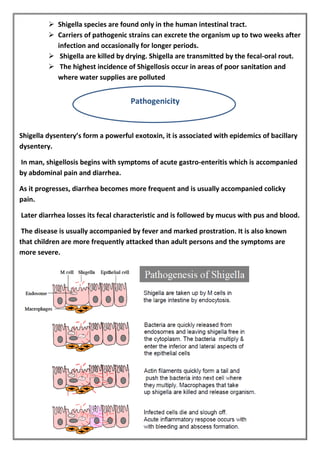
 Shigella species are found only in the human intestinal tract.
 Carriers of pathogenic strains can excrete the organism up to two weeks after
infection and occasionally for longer periods.
 Shigella are killed by drying. Shigella are transmitted by the fecal-oral rout.
 The highest incidence of Shigellosis occur in areas of poor sanitation and
where water supplies are polluted
Shigella dysentery’s form a powerful exotoxin, it is associated with epidemics of bacillary
dysentery.
In man, shigellosis begins with symptoms of acute gastro-enteritis which is accompanied
by abdominal pain and diarrhea.
As it progresses, diarrhea becomes more frequent and is usually accompanied colicky
pain.
Later diarrhea losses its fecal characteristic and is followed by mucus with pus and blood.
The disease is usually accompanied by fever and marked prostration. It is also known
that children are more frequently attacked than adult persons and the symptoms are
more severe.
Pathogenicity
 Specimen: stool,
 Smears: Gram-negative, facultatively anaerobic, nonsporulating, nonmotile
rods in the family Enterobacteriaceae.
• They do not decarboxylate lysine or ferment lactose within 2 days.
Non-lactose fermenting, morphologically different, and well-isolated Colony from
SS and/ or Mac.
1. Inoculate the Kliger’s Iron Agar (KIA) agar tube by touching the top of a
colony using sterilized inculcation needle and stabbing to the bottom of the KIA.
After stabbing, immediately streak the slanted surface of the agar.
2. Inoculate the Motility-Indole-Ornithine (MIO) tube by stabbing, in a single up-
and-down needle.
3. Inoculate the Lysine-Iron agar (LIA) by stabbing the butt to the bottom once
and streaking the slant.
4. Inoculate the urea broth tube by placing the needle in the tube and shaking the
needle.
5. Incubate all tubes overnight at 35-37 Co
Laboratory diagnosis:
Non-lactose
fermenting
non- motile
organisms
Mannitol
negative
Shigella
dysenteria
Mannitol
positive
Non lactose
fermenter
Indole
negative
Shigella boydii
Indole
positive
ٍ
Shigella flexneri
Lactose
fermenter
Shigella
sonnei
1. Water and electrolytes replacement.
2. Antibiotic therapy is required to eliminate the organism. Due to the
emergence of resistant strains of shigella, antibiotic sensitivity, must be
performed on any shigella
isolate to determine suitable antibiotics:
Sulfonamides, tetracycline, Chloramphenicol, ampicillin and streptomycin are
known to be effective against shigella.
TREATMENT
DDr:Towfeeq AL-Khudri
Peg .4
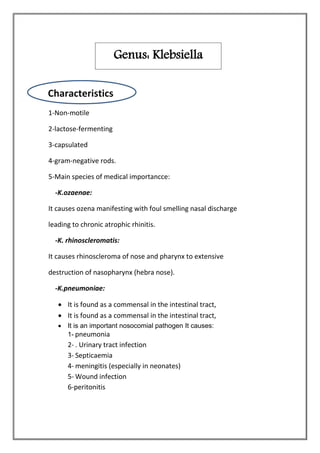
1-Non-motile
2-lactose-fermenting
3-capsulated
4-gram-negative rods.
5-Main species of medical importancce:
-K.ozaenae:
It causes ozena manifesting with foul smelling nasal discharge
leading to chronic atrophic rhinitis.
-K. rhinoscleromatis:
It causes rhinoscleroma of nose and pharynx to extensive
destruction of nasopharynx (hebra nose).
-K.pneumoniae:
 It is found as a commensal in the intestinal tract,
 It is an important nosocomial pathogen It causes:
1- pneumonia
2- . Urinary tract infection
3- Septicaemia
4- meningitis (especially in neonates)
5- Wound infection
6-peritonitis
Genus: Klebsiella
Characteristics
 Specimen: Sputum, urine, pus, CSF, body fluid
 Smear: Gram-negative rods
 Culture: Large, mucoid, lactose-fermenting colonies
on mac conkey agar and shows stringy type
growth when cultured in broth medium.
 Serology: Capsular polysaccharide serotyping
More than 80 serotypes of K. pneumoniae recognized.
 Treatment: Based on sensitivity testing
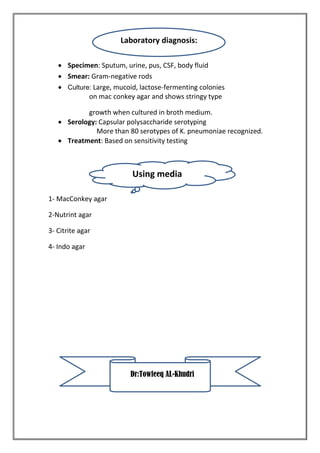
1- MacConkey agar
2-Nutrint agar
3- Citrite agar
4- Indo agar
Laboratory diagnosis:
Using media
DDr:Towfeeq AL-Khudri
1
General characteristics:
1- Obligate intracellular
2- Pleomorphic
3- gram-negative coccobacilli occurrin
g in single, pairs, short rods and
filaments.
4- Poorly stained in gram reaction.
5- The organism stains red in macchiavello’s stain
6- The organism stains blue in giemsa’s stain
Antigenic structure:
 Group-specific antigens
 Species-specific antig
 clinical features:
fever, headache, malaise, skin rash and
enlargement of liver and spleen.
Organism Disease Hosts Vectors
1. Typhus group
R. prowazeckii
R. typhi
Louse-borne typhus
Murine typhus
Man
Rat
Body louse
Rat flea
2. Scrub typhus
R. tsutsugamushi scrub typhus Rodents Mite
3.Spotted fever group
R. conorii African tick typhus rodents, dogs tick
R. rickettsi Rocky mountain
Spotted fever
Rodents, dogs Tick
R. akari Rickettsial pox Mice Mite
Laboratory diagnosis:
Specimen: Serum for serological tests
The serological tests to diagnose typhus are:
1. Indirect fluorescent antibody test
2. Complement fixation test
Treatment:
 Tetracycline
 Chlorampheni
RICKETTSIAE
2
General characteristics:
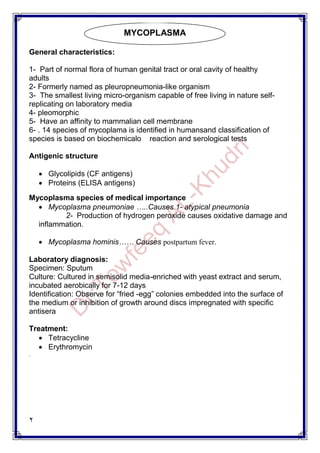
1- Part of normal flora of human genital tract or oral cavity of healthy
adults
2- Formerly named as pleuropneumonia-like organism
3- The smallest living micro-organism capable of free living in nature self-
replicating on laboratory media
4- pleomorphic
5- Have an affinity to mammalian cell membrane
6- . 14 species of mycoplama is identified in humansand classification of
species is based on biochemicalo reaction and serological tests
Antigenic structure
 Glycolipids (CF antigens)
 Proteins (ELISA antigens)
Mycoplasma species of medical importance
 Mycoplasma pneumoniae …..Causes 1- atypical pneumonia
2- Production of hydrogen peroxide causes oxidative damage and
inflammation.
 Mycoplasma hominis…… Causes postpartum fever.
Laboratory diagnosis:
Specimen: Sputum
Culture: Cultured in semisolid media-enriched with yeast extract and serum,
incubated aerobically for 7-12 days
Identification: Observe for “fried -egg” colonies embedded into the surface of
the medium or inhibition of growth around discs impregnated with specific
antisera
Treatment:
 Tetracycline
 Erythromycin
.
MYCOPLASMA
3
Dr:Towfeeq Al-Khudri
1
2-
Serratia spp
Characteristics:
1- Proteus species are found in the
intestinal tract of humans and
animals, soil, sewage and water.
2- They are gram-negative, motile
non-capsulated , pleomorphic rods
3- Species of medical importance:
P. mirabilis
P. vulgar
4- Clinical features:
P. mirabilis
. Urinary tract infection
. Septicemia
. Abdominal and wound
infection
. Secondary invader of ulcer,
burn, pressure sores and chronic
discharging ear.
P. vulgaris
. Important nosocomial
pathogen.
.Isolated in wound infection
and urinary tract infection.
Characteristics:
1- Found in fresh water, shellfish and
other sea food.
2- Man is the major reservoir of V.
cholerae-01, which causes
epidemic cholera.
3- Readily killed by heat and drying;
dies in polluted water
but may survive in clean stagnant
water, esp. if alkaline, or
sea water for 1-2 weeks.
4- Antigenic structure:
. O antigen
. H antigen
5- Clinical features:
Route of infection is fecal-oral route.
After ingestion of the V.cholerae-01,
the bacteria adheres to the intestinal
wall with out invasion then produces
an exotoxin causing excessive fluid
secretion and diminished fluid
absorption resulting in diarrhea (rice
water stool) which is characterized by
passage of
voluminous watery diarrhea
containing vibrios, epithelial cells and
mucus; and result in severe
dehydration
6- Oxidase-positive.
7- Ferment sucrose and maltose
(acid; no gas).
Vibrio choler spp
2
5- Laboratory diagnosis:
Specimen: Urine, pus, blood, ear
discharge
Smear: Gram-negative rods
Culture: Produce characteristic
swarming growth over the surface of
blood agar. On EMB, Endo and
MacConkey Agar
The colonies usually exhibit swarming.
Non-lactose fermenting (Colorless).
- Proteus species have a characteristic
smell.
Biochemical reaction:
Proteus spp........... Urease positive
P. vulgaris............ Indole positive
P. mirabilis........... Indole negative
Treatment: Based on sensitivity
testing.
8- Laboratory diagnosis:
Specimen: Stool flecks
Smear: Gram-negative motile
curved rods Motility of vibrios is
best seen using dark-field
microscopy. Presumptive
diagnosis: Inactivation of vibrios in
a wet preparation after adding
vibrio antiserum.
9- Cultur:
1. TCBS (thiosulphate citrate bile
salt sucrose agar)
media Selective media for primary
isolation of V.cholerae. Observe
for large yellow sucrose-fermenting
colonies after 18-24 hours of
incubation.
2. Alkaline peptone
water:Enrichment media for
V.cholerae-01 Growth on and just
below the surface of peptone water
with in 4-6 hours at room
temperature as well as 37 c
10- Treatment:
Sensitive to tetracycline and
chloramphenicol.
Fluid and electrolyte replacement
are the first line of management for
cholera.
Dr:Towfeeq AL-Khudri
1
General characteristics:
1. Gram-negative
2. non-motile,
3. non-sporulating,
4. zoonotic,
5. obligate intracellular
6. aerobic coccobacilli
7. 3 major human pathogenic species
Species Primary animal host
B.abortus Cattle
B. melitensis Goat / Sheep
B. suis Swins
B.canis Dogs
Antigenic structure:
 Lipopolysaccharide
 Superficial L antigen
clinical features:
Brucellosis/ Undulant fever
Pathogenesis:
a. Acute stage: Fever, malaise,
sweating,
hepatosplenomegally,
lymphadenopathy
Associated with 80% spontaneous
Recovery
b. Chronic stage: Generally as
sociated with hypersensitivity
manifestations like fever, chest pain,
and arthritis
- High agglutinin titier
- Complication: Brucella spondy litis(
Vertebral brucellosis)
Lab. Diagnosis:
Specimen: Blood, Biopsy material (Bone
marrow, Lymphnodes),
serum Culture: Grow in blood agar,
chocolate agar, or brucella agar
incubated in 10% CO2 at 35-37 0C for 3
wks
Biochemical reaction:
 Non-hemolytic
 Catalase positive
 Oxidase positive
 Urease test positive
Treatment:
 Doxycycline + rifampin
 Tetracycline + streptomycin
Characteristics:
1. Obligate intracellular gram-
negative bacteria.
2. Reproduce by binary fission.
3. Posses both DNA and RNA.
4. Have cell wall and ribosomes.
5.Sensitive to anti-microbial agents.
6. Have enzyme systems and make
their own proteins, lipids, nucleic
acids and vitamins.
7. Three species of medical
importance
 C. trachomatis
 C. pneumoniae
 C. psittaci
8. Antigenic structure:
 Group-specific antigen
 Species-specific antigen
9- clinical features:
Species Disease Route of
Infection
C. psittaci interstitial
pneumonia
respiratory
(from birds)
C.pneumon
iae
interstitial
pneumonia
respiratory
(from other
humans
C.trachoma
tis
1.nongonoco
ccal urethritis
cervicitis
2-epididymytis,
3-salpingitis
4-proctitis
5-trachoma
STD,
mechanial
contact
10. Laboratory diagnosis:
Specimen: Conjunctival scraping
from upper tarsal conjunctivae.
Smear: Giemsa’s stain during early
disease stage.
Culture: Mac coy cells or
embryonated eggs
11. Treatment:
 Erythromycin
 Tetracycline
Chlamydia spp
Brucella spp
1
Characteristics
1- small Gram-negative cocobacilli.,
2- non-spore forming,
3- non-motile,
4- pleomorphic bacteria that require
enriched media for growth.
5-Growth is enhanced in CO2 enriched
atmosphere.
6-Present in upper respiratory tract as a
normal microbial flora in healthy people
7-The group is fastidious require ng
growth factors for isolation.
8- The growth factors are X-factor
(Hematin) and V-factor
(Diphosphopyridine nucleotide)
Antigenic Structure
capsular polysaccha-rides
Clinical features
The bacteria causes disease most
commonly in young children. :
 Acute pyogenic meningitis
 Acute epiglottis
 Pneumonia
 Otitis media
 Siusitis
 Cellulitis
 Acute pyogenic arthritis
Laboratory diagnosis
1- Specimen: Cerebrospinal fluid,
sputum, blood, pus
2- Smear: Gram-negative short rods.
3- Culture: Chocolate agar contain both
X and V factor; blood agar contain only X
factor
Treatment
 Ampicillin
 Chloramphenicol
 Cotrimoxazole
Characteristics
1- aerobic
2- non-motile
3- gram-negative rods.
4- Bordetella species of medical
importance:
 B. pertussis
Antigenic structure
 Pili
 Filamentous haemagglutinin:
 Pertussis toxin:
Laboratory diagnosis
1-Specimen:Saline nasal wash
(Preferredspecimen)
Nasopharyngeal swab or cough
droplets on cough plate
2- Smear: Small, non-motile,
capsulated, gram-negative
cocobacilli singly or in pair, and
may show bipolar staining.
3- Culture: Inoculate the primary
specimen on Bordet-Gengue agar
medium and incubate for 2-6 days
at 37c in a moist aerobic
atmosphere which produces small,
raised, shiny, mucoid colonies.
4-Biochemical reaction:
 No growth on blood agar
 Oxidase positive
 Most of them are catalase
positive
5- Serology: Direct fluorescent anti
body test is most helpful, in
identifying B. pertussis after culture
on solid media.
Treatment
 Erythromycin
 Adminstration of erythromycin
Bordetella spp
Haemophilus influenzae
1
1- Gram-negative rods.
2- Motile with polar flagella.
3- Obligate aerobe.
4- Oxidase-positive.
5- Do not ferment carbohydrates.
6- Resistant to multiple drugs
7-Forms round colonies with a
fluorescent greenish color, sweet
odor, and b-hemolysis.
Pyocyanin nonfluorescent
-
bluish pigment;
- fluorescent greenish pigment;
pyoverdin
, and
pyorubin pyomelanin
Some strains have a prominent capsule (alginate).
8- Identification of P. aeruginosa is usually based on oxidase test and its colonial
morphology: b-hemolysis, the presence of characteristic pigments and sweet odor, and
growth at 42 o
C
This organism is widely distributed in nature and is commonly present in moist
in hospitals. It is pathogenic only when introduced into areas devoid of
environments
normal defenses, e.g.,
1. Disruption of mucous membrane and skin.
2. Usage of intravenous or urinary catheters.
3. Neutropenia (as in cancer therapy).
P. aeruginosa can .
infect almost any external site or organ
P
Ps
se
eu
ud
do
om
mo
on
na
as
s a
ae
er
ru
ug
gi
in
no
os
sa
a
Characteristics:
Pathogenesis and Immunity
2
P. aeruginosa is invasive and toxigenic. It attaches to and colonizes the mucous
membrane or skin, invade locally, and produces systemic diseases and septicemia.
P. aeruginosa is . It becomes dominant when more
resistant to many antibiotics
susceptible bacteria of the normal flora are suppressed.
Pathogenesis:
Clinical Diseases:
Infection of wounds and burns: (blue-green pus). Patients with severe burns
may develop into bacteriemia.
Skin and nail infections.
Meningitis: (when introduced by lumbar puncture).
Pulmonary infection.:
Tracheobronchitis
Necrotizing pneumonia in CF patients: diffuse, bilateral
bronchopneumonia with microabscess and necrosis.
Eye infections: corneal ulcer.
Ear infections: Otitis externa: mild in swimmers; malignant (invasive) in
diabetic patients.
Chronic otitis media
Osteochondritis; of the foot.
Urinary tract infection.
Antigenic structure, enzymes, and
toxins:
Pili and nonpilus adhesins.
Capsule (alginate, glycocalyx): seen in
cultures from patients with cystic
fibrosis.
LPS- endotoxin, multiple immunotypes.
Pyocyanin: catalyzes production of
toxic forms of oxygen that cause tissue
damage. It also induces IL-8 production.
Pyoverdin: a siderophore
Proteases:
Serine protease,
metalloprotease and alkaline
protease cause tissue damage and
help bacteria spread.
Phospholipase C: a hemolysin
Exotoxin A: causes tissue necrosis and
is lethal for animals (disrupts protein
synthesis); immunosuppressive.
Exoenzyme S and T: cytotoxic to host
cells.
3
Sepsis: most cases originate from infections of lower RT, UT, and skin and
soft tissue. Ecthyma gangrenosum (hemorrhagic necrosis of skinmay be
seen in some patients.
Specimen: skin lesions, pus, urine, blood, spinal fluid, sputum.
Culture: blood agar plate and differential media. Identification of P. aeruginosa
is described above.
Several subtyping methods, including phage typing and molecular typing,
are available for epidemiologic purposes.
Combined antibiotic therapy is generally required to avoid resistance that
develops rapidly when single drugs are employed. Avoid using inappropriate
broad-spectrum antibiotics, which can suppress the normal flora and permit
overgrowth of resistant pseudomonads.
Biochemical properties:
1. Motile,
2. Lactose negative; on MacConkey’s agar
3. catalase positive
4. Oxidase (usually) positive
Laboratory Diagnosis
Treatment
Dr:Towfeeq AL-Khudri
1- Named, as well coliforms
2- Found as normal flora in intestinal tract of humans and
animals.
3- Gram-negative, non-spore forming , aerobic and facultative
anaerobic
bacteria
4- Most are motile.
5- Grow over a wide range of temperature in ordinary media
6- All ferment glucose with acid production.
7- Oxidase negative.
8- Release endotoxin from their cell wall.
9- Some release exotoxin.
10- Most of them have possessed
11-three types of antigenes These are :
 . H antigen-. Flagellar protein Found in the flagella.
. Possessed by motile enterobacteriaceae.
. Heat labile and sensitive to alcohol
. May interfere with agglutination by O antisera
 K antigen- .Capsular polysaccharide or protein
. Surroundes the cell wall.
. Heat labile and may be associated with virulence
. May interfere with agglutination by O antisera
 O antigen- .Outer membrane lipopolysaccharide.
Characteristics
ENTEROBACTERIACEAE
. Found in the cell wall of enterobacteriaceae
. Resistant to heat and alcohol, and usually detected by
bacterialn agglutination
. Antibodies to O ags are usually IgM
Characteristics:
. Normal flora in human and animal gastrointestinal tract.
. Found in soil, water and vegetation.
. Most are motile; some are capsulated.
. E. coli can cause:
a) Gastrointestinal infections
b) Urinary tract infections (UTI)
c) Bacteremia
d) Bacteremia
e) Cystitis: is the term used to describe the syndrome involving
dysuria (burning feeling during urination) frequency , urgency,
and occasionally suprapubic tenderness It typically involves
infection of the lower urinary tract but may include upper
urinary tract infections ction as.
f) Acute pylenophritis results from a urinary tract infection
that has disseminated to the kidney Results in a clinical syndrome
haracterized by flank pain,tenderness and fever, dysuria
frequency and urgency.
 Overview of E. coli epidemiology relating to intestinal disease:
 (2-4) billion episodes of diarrhea in developing countries
 (3-5) million deaths
 (25-50 %)of cases are due to E.coli
Clinical features:
. Urinary tract infection cystitis, pyelonephritis
. Wound infection- appendicitis, peritonitis
. Neonatal septicemia and meningitis
. E.coli-associated diarrheal disease
1. Enteropathogenic E.coli(EPEC)
. causes outbreaks ofself-limiting infantile diarrhea
. they also cause severe diarrhea in adults
Escherichia coli
. antibiotic tretment shorten the duratin of illness and cure
diarrhea
2. Enteroinvasive E.coli(EIEC)
. Non-motile, non-lactose
fermenting E.coli invade
the mucosa of the ileum and colon, and causes
shigellosis-like dysentery in children in developing
countries and travellers to these countries
3. Enterotoxigenic E.coli(ETEC)
. Colonization factor of the organism promote
adherence to epithelial cells of small intestine
followed by release of enterotoxin which causes
toxin-mediated watery diarrhea in infants and young
adults.
. It is an important cause of traveller’s diarrhea
. Antibiotic prophylaxis can be effective but may
increase drug resistance (Should not be uniformly
recommended)
 Sources of infection
1- Food (undercooked, co ntaminated ground beef, leafy vegetables
unpasteurized apple juice, raw milk/dairy products
2- Petting zoos
3- Person- to-person contact is also an important mode of
transmission
4- Very low infectious dose
 Clinical Syndrome:
1-Abdominal pain
2-Bloody diarrhea
3-The toxins can spread leading to hemolytic uremic syndrome
(HUS)
 Virulence Determinants and Pathogenicity:
1- Pili- mediate attachment
2- Shiglla- like toxin
3- Hemolysin
4- Capsule
4. Entero haemorrhagic E.coli( EHEC)
Cytotoxic verotoxin producing E.coli serotype
O157:H7 causes haemorrhagic colitis (severe
form of diarrhea), and hemolytic uremic
syndrome characterized by acute renal failure,
hemolytic anemia and low platelet count
5. Enteroaggressive E.coli( EAEC)
.Adhere to human intestinal mucosal cells and
produce ST-like toxin and hemolysin, and
causes acute and chronic diarrhea in persons in
developing countries
. Produce food-borne illness in developed
countries
1- Specimen: Urine, pus, blood, stool, body fluid
2- Smear: Gram-negative rods
3- Culture: Lactose-fermenting mucoid colonies on mac conkey
agar and some strains are hemolytic on blood agar .
4- Biochemical reaction: Produce indole from tryptophan-
containing peptone water.
Reduce nitrate to nitrite.
5- Serology: For serotyping (Epidemiologic information)
1- MacConkey agar
2- Sorbitol MacConkey Agar E.coli (EHEC)O157:H7
3- EMBa
4-Blood agar
5-Citrite agar
6-Indo agar
Laboratory diagnosis:
Using media
DDr:Towfeeq AL-Khudri
1
Characteristics:
1- Gram-negative
2- Helical
3- motile by polar flagella
4- Most species microaerophilic
5- Thermophilic (42-43C) (except C. fetus)
6- 25 species and 11 subspecies
 C.jejuni : gastroenteritis
 C.coli : gastroenteritis
 C.upsalensis: gastroenteritis
 C.fetus: systemic infections
(bacteremia, septic thrombophlebitis,
arthritis, septic abortion, meningitis)
1- Characteristics:
 Thin ,gram (-) rods with comma
 motile with a single polar flagellum
2- Virulence Factors:
 Endotoxin
 Flagellum: Motility
 Adhesins: Mediate attachment to
mucosa
 Enterotoxins
 Cytopathic toxins
3- Culture:
 Charcoal or blood
 with antibiotic added media
 required grows at 37-42°C in a
microaerophilic conditions ( 5% -7%
oxygen) and 5% - 10%CO2
 selective Skirrow`s medium contains
vancomycin ,polymyxin B , and
trimethoprim .
 Colonies are colorless to gray
4- Growth characteristics :
 oxidase (+),
 catalase)+(
 SIM
5- Treatment:
 azithromycin (drugs of choice)
 , tetracycline,
 clindamycin
Campylobacter jejuni
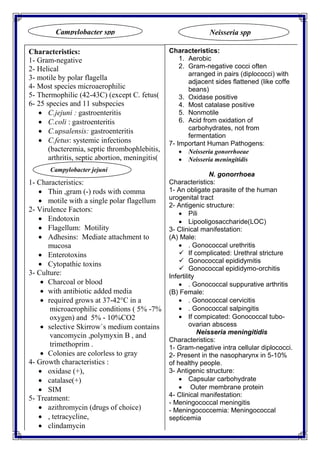
Characteristics:
1. Aerobic
2. Gram-negative cocci often
arranged in pairs (diplococci) with
adjacent sides flattened (like coffe
beans)
3. Oxidase positive
4. Most catalase positive
5. Nonmotile
6. Acid from oxidation of
carbohydrates, not from
fermentation
7- Important Human Pathogens:
 Neisseria gonorrhoeae
 Neisseria meningitidis
N. gonorrhoea
Characteristics:
1- An obligate parasite of the human
urogenital tract
2- Antigenic structure:
 Pili
 Lipooligosaccharide(LOC)
3- Clinical manifestation:
(A) Male:
 . Gonococcal urethritis
 If complicated: Urethral stricture
 Gonococcal epididymitis
 Gonococcal epididymo-orchitis
Infertility
 . Gonococcal suppurative arthritis
(B) Female:
 . Gonococcal cervicitis
 . Gonococcal salpingitis
 If compicated: Gonococcal tubo-
ovarian abscess
Neisseria meningitidis
Characteristics:
1- Gram-negative intra cellular diplococci.
2- Present in the nasopharynx in 5-10%
of healthy people.
3- Antigenic structure:
 Capsular carbohydrate
 Outer membrane protein
4- Clinical manifestation:
- Meningococcal meningitis
- Meningococcemia: Meningococcal
septicemia
Neisseria spp
Campylobacter spp
2
Helicobacter pylori
General characteristics:
1- Spiral-shaped
2- gram negative
3- microaerophilic
4- motile with polar flagella
Antigenic structure:
 Pili
 Protease
 Ureas
Pathogenesis and clinical features:
Route of entry: Ingestion of contaminated
food and drinks
Familial clustering of H. pylori infection
occurs
.- Type B chronic antral gastritis
. -Peptic ulcer disease (gastric and
duodenal ulcer)
.- Gastric carcinoma
.- Gastric lymphoma
Lab. Diadnosis:
 Specimen: Gatric biopsy, serum
 Smear: Giemsa or silver stain
 Culture: Skirrow’s media
Tanslucent colonies after 7 days of incubation
 Biochemical reaction:
. - Catalase positive
. - Oxidase positive
. - Urease positive
 Serology:
.- Detection of antibodies in the serum
specific for H. pylori
.- Detection of H. pylori antigen in stool
specimen
 Treatment:
Triple or
.Metronidazole + Bismuth subsalicylate/
Bismuth
subcitrate + Amoxicillin / Tetracycline +
PPI
Laboratory diagnosis of Neisseria
gonorrhoea:
1- Specimen: Urethral swab, cervical
swab, eye swab
2- Smear: Gram-negative intracellular
diplococci
More than five polymorphs per high
power field.
3- Culture: Requires an enriched media
like chocolate agar or thayer-martin
agar.
.- Small glistening colonies.
.- Culture of urethral exudate from men
are not necessary when the gram
stain is positive but culture should be
done for women
4- Biochemical reaction:
Oxidase positive.
Ferment only glucose in carbohydrate
utilization test
5- Treatment:
Drug of choice:
Ceftriaxone
Ciprofloxacin
Laboratory diagnosis of Neisseria a
.meningitides
1- Specimen: Cerebrospinal fluid, blood
2- Smear: Gram-negative intracellular
diplococci
3- Culture: Transparent or grey, shiny,
mucoid colonies in chocolate
Agar
4- Biochemical reaction:
- Oxidase positive.
- Ferment glucose and maltose in
carbohydrate utilization test
5- Treatment: Penicillin
Dr:Towfeeq Al-Khudri

البكتيريا السالبه لجرام محاضرات سنه ثانية مختبرات .pdf

  • 1.
    1. Gram –negative rods 2. uncapsulated (except S. typhi) 3. unsporulatedsporulaţi 4. Peritrichous flagella (ensure motility) 5. live in the intestinal tracts of warm and cold blooded animals. 6. Some species are ubiquitous. 7. Other species are specifically adaptedto a particular host. 8. In humans, Salmonella are the cause of two diseasescalled salmonellosis:  enteric fever (typhoid), resulting from bacterial invasion of the bloodstream  acute gastroenteritis, resulting from a foodborne infection/intoxication 9. Aerobe-anaerobe facultative. 10. Grow easily on simple culture media. 11. Onto selective and differential media that contain biliary salts and lactose grow like lactose-negative “S” colonies. 12. produce de H2S, colonies have a “cat-eye” appearance. Characteristics Growth on M.A Growth on S.S.A Growth on CLED agar Peg .1
  • 2.
    (1) Bacterial productsinvolved in virulence:  Salmonellae owe their pathogenicity largely to their ability to invade tissue and to survive within macrophages.  The Vi antigen is a capsule that affords salmonellae some protection from phagocytosis.  Once phagocytosed, S. typhi inhibits generation of oxidative free radicals and intraphagosomal killing.  Additionally, salmonellae have endotoxic lipopolysaccharide, which is responsible for septic shock in patients with bacteriemia.  Salmonellae that cause enteritis produce at least two enterotoxins that are responsible for many of the clinical signs of enteritis.  The first of these is a small (25-30kD) protein that binds to GM1 gangliosides and cause hypersecretion of fluids and electrolytes by elevating levels of c AMP.  It appears that both proteinkinase C and prostaglandin E2 are involved in this process.  The second enterotoxin is larger (about 100 kD) and is unrelated in structure and mechanism of activity to the first enterotoxin  Salmonella strains that produce enterotoxins have been reported to invade the intestinal wall more effectively and to be more virulent than their nontoxigenic counterparts.  Intestinal infection with salmonellae can follow one of two infection cycle. One cycle causes enteritis, other causes typhoid. Mechanisms of Pathogenicity Peg .2
  • 3.
  • 4.
    (a) Enteritis.  Mostserotypes cause enteritis, an infection that is limited to the terminal ileum. The salmonellae invade the intestinal wall and produce enterotoxins that cause nausea, vomiting and diarrhea. Bacteria rarely spread beyond the gastrointestinal wall. (b) Enteric fever (Typhoid).  Two serotypes typhi and paratyphi can cause typhoid.  The salmonella invade the wall of the terminal ileum and than spread to the intestinal lymphatics, where they are phagocytosed by PMNs and macrophages.  Salmonella phagocytosed by PMNs are killed, but those phagocytosed by macrophages survive and multiply within phagocytic vacuoles.  Wandering macrophages that contain salmonellae act as “taxicabs” that deliver salmonellae to various reticuloendothelial tissues.  Infected macrophages are eventually destroyed and salmonellae released from lysed macrophages cause septicemia.  Some salmonellae begin to disseminate hematogenously to a variety of ectopic sites, including the bones, lungs, liver, brain where they cause osteomyelitis, pyelonephritis, empyema, hepatic necrosis, meningitis.  Other salmonella remain in the intestine, where they invade the gut wall and may cause ulceration, perforation and hemorrhage.  Salmonellae multiply avidly in the gallbladder and bile, and the infected bile continues to circulate salmonellae to the intestine.  Salmonellae also multiply well in gut associated lymphoid tissue and may ulcerate Payer’s patches Specimen: 1. Blood, Bone marrow, stool, urine and serum for enteric fever. . Blood – 80% positive in the first week. . Stool- 70-80% positive in the second and third week. . Urine- 20% positive in the third and fourth week. . Serum for widal test- positive after the second week of illness. 2. Stool for gastroenteritis. Laboratory diagnosis: Peg .4
  • 5.
     The diagnosisof salmonellosis requires bacteriologic isolation of the organisms from appropriate clinical specimens.  Laboratory identification of the genus Salmonella is done by biochemical tests; the serologic type is confirmed by serologic testing.  Feces, blood, or other specimens should be plated on several nonselective and selective agar media (blood, MacConkey, eosin-methylene blue, bismuth sulfite, Salmonella-Shigella, Hektoen agars) as well as intoenrichment broth such as selenite or tetrathionate.  The biochemical reactions of suspicious colonies are then determined on triple sugar iron agar and lysine-iron agar, and a presumptive identification is made.  Biochemical identification of salmonellae has been simplified by systems that permit the rapid testing of 10-20 different biochemical parameters simultaneously.  The presumptive biochemical identification of Salmonella then can be confirmed by antigenic analysis of O and H antigens using polyvalent and specific antisera.  Salmonella isolates then should be sent to a central or reference laboratory for more comprehensive serologic testing and confirmation.  Biochemical properties: 1. Motile, 2. Lactose negative; 3. acid and gas from glucose, mannitol, maltose, and sorbitol; 4. no Acid from adonitol, 5. Indole test negative 6. Methyl red test positive 7. Citrate positive (growth on Simmon's citrate agar) 8. Urease negative  Using media: Culture: Bacteriologic methods for salmonella isolation 1. Differential medium . For rapid isolation of lactose non-fermenters Egs. EMB agar -Mac Conkey agar 2. Selective medium . favor growth of salmonella and shigella over other enterobacteriaceae Egs. SS agar- Hekton Enteric agar -XLD agar DDr:Towfeeq AL-Khudri Peg .5
  • 6.
     Coliform bacilli(enteric rods)  Nonmotile gram-negative facultative anaerobes- Non-encapsulated  Four species  Shigella sonnei (most common in industrial world)  Shigella flexneri (most common in developing countries)  Shigella boydii  Shigella dysenteriae  Non-lactose fermenting  Resistant to bile salts  Low infectious dose (102-104 CFU)  Humans are only reservoir  Transmission by fecal-oral route  Incubation period = 1-3 days  Watery diarrhea with fever; changing to dysentery  Major cause of bacillary dysentery (severe 2nd stage) in pediatric age group (1-10 yrs) via fecal-oral route  Outbreaks in daycare centers, nurseries, institutions  Estimated 15% of pediatric diarrhea in U.S.  Leading cause of infant diarrhea and mortality (death) in developing countries  Non-mannitol-fermenters: Shigella dysenteria  Mannitol-fermenters: Shigella flexneri- Shigella boydii- Shigella sonnei Characteristics Peg .1
  • 7.
     Shigella speciesare found only in the human intestinal tract.  Carriers of pathogenic strains can excrete the organism up to two weeks after infection and occasionally for longer periods.  Shigella are killed by drying. Shigella are transmitted by the fecal-oral rout.  The highest incidence of Shigellosis occur in areas of poor sanitation and where water supplies are polluted Shigella dysentery’s form a powerful exotoxin, it is associated with epidemics of bacillary dysentery. In man, shigellosis begins with symptoms of acute gastro-enteritis which is accompanied by abdominal pain and diarrhea. As it progresses, diarrhea becomes more frequent and is usually accompanied colicky pain. Later diarrhea losses its fecal characteristic and is followed by mucus with pus and blood. The disease is usually accompanied by fever and marked prostration. It is also known that children are more frequently attacked than adult persons and the symptoms are more severe. Pathogenicity
  • 8.
     Specimen: stool, Smears: Gram-negative, facultatively anaerobic, nonsporulating, nonmotile rods in the family Enterobacteriaceae. • They do not decarboxylate lysine or ferment lactose within 2 days. Non-lactose fermenting, morphologically different, and well-isolated Colony from SS and/ or Mac. 1. Inoculate the Kliger’s Iron Agar (KIA) agar tube by touching the top of a colony using sterilized inculcation needle and stabbing to the bottom of the KIA. After stabbing, immediately streak the slanted surface of the agar. 2. Inoculate the Motility-Indole-Ornithine (MIO) tube by stabbing, in a single up- and-down needle. 3. Inoculate the Lysine-Iron agar (LIA) by stabbing the butt to the bottom once and streaking the slant. 4. Inoculate the urea broth tube by placing the needle in the tube and shaking the needle. 5. Incubate all tubes overnight at 35-37 Co Laboratory diagnosis: Non-lactose fermenting non- motile organisms Mannitol negative Shigella dysenteria Mannitol positive Non lactose fermenter Indole negative Shigella boydii Indole positive ٍ Shigella flexneri Lactose fermenter Shigella sonnei
  • 9.
    1. Water andelectrolytes replacement. 2. Antibiotic therapy is required to eliminate the organism. Due to the emergence of resistant strains of shigella, antibiotic sensitivity, must be performed on any shigella isolate to determine suitable antibiotics: Sulfonamides, tetracycline, Chloramphenicol, ampicillin and streptomycin are known to be effective against shigella. TREATMENT DDr:Towfeeq AL-Khudri Peg .4
  • 10.
    1-Non-motile 2-lactose-fermenting 3-capsulated 4-gram-negative rods. 5-Main speciesof medical importancce: -K.ozaenae: It causes ozena manifesting with foul smelling nasal discharge leading to chronic atrophic rhinitis. -K. rhinoscleromatis: It causes rhinoscleroma of nose and pharynx to extensive destruction of nasopharynx (hebra nose). -K.pneumoniae:  It is found as a commensal in the intestinal tract,  It is found as a commensal in the intestinal tract,  It is an important nosocomial pathogen It causes: 1- pneumonia 2- . Urinary tract infection 3- Septicaemia 4- meningitis (especially in neonates) 5- Wound infection 6-peritonitis Genus: Klebsiella Characteristics
  • 11.
     Specimen: Sputum,urine, pus, CSF, body fluid  Smear: Gram-negative rods  Culture: Large, mucoid, lactose-fermenting colonies on mac conkey agar and shows stringy type growth when cultured in broth medium.  Serology: Capsular polysaccharide serotyping More than 80 serotypes of K. pneumoniae recognized.  Treatment: Based on sensitivity testing 1- MacConkey agar 2-Nutrint agar 3- Citrite agar 4- Indo agar Laboratory diagnosis: Using media DDr:Towfeeq AL-Khudri
  • 12.
    1 General characteristics: 1- Obligateintracellular 2- Pleomorphic 3- gram-negative coccobacilli occurrin g in single, pairs, short rods and filaments. 4- Poorly stained in gram reaction. 5- The organism stains red in macchiavello’s stain 6- The organism stains blue in giemsa’s stain Antigenic structure:  Group-specific antigens  Species-specific antig  clinical features: fever, headache, malaise, skin rash and enlargement of liver and spleen. Organism Disease Hosts Vectors 1. Typhus group R. prowazeckii R. typhi Louse-borne typhus Murine typhus Man Rat Body louse Rat flea 2. Scrub typhus R. tsutsugamushi scrub typhus Rodents Mite 3.Spotted fever group R. conorii African tick typhus rodents, dogs tick R. rickettsi Rocky mountain Spotted fever Rodents, dogs Tick R. akari Rickettsial pox Mice Mite Laboratory diagnosis: Specimen: Serum for serological tests The serological tests to diagnose typhus are: 1. Indirect fluorescent antibody test 2. Complement fixation test Treatment:  Tetracycline  Chlorampheni RICKETTSIAE
  • 13.
    2 General characteristics: 1- Partof normal flora of human genital tract or oral cavity of healthy adults 2- Formerly named as pleuropneumonia-like organism 3- The smallest living micro-organism capable of free living in nature self- replicating on laboratory media 4- pleomorphic 5- Have an affinity to mammalian cell membrane 6- . 14 species of mycoplama is identified in humansand classification of species is based on biochemicalo reaction and serological tests Antigenic structure  Glycolipids (CF antigens)  Proteins (ELISA antigens) Mycoplasma species of medical importance  Mycoplasma pneumoniae …..Causes 1- atypical pneumonia 2- Production of hydrogen peroxide causes oxidative damage and inflammation.  Mycoplasma hominis…… Causes postpartum fever. Laboratory diagnosis: Specimen: Sputum Culture: Cultured in semisolid media-enriched with yeast extract and serum, incubated aerobically for 7-12 days Identification: Observe for “fried -egg” colonies embedded into the surface of the medium or inhibition of growth around discs impregnated with specific antisera Treatment:  Tetracycline  Erythromycin . MYCOPLASMA
  • 14.
  • 15.
    1 2- Serratia spp Characteristics: 1- Proteusspecies are found in the intestinal tract of humans and animals, soil, sewage and water. 2- They are gram-negative, motile non-capsulated , pleomorphic rods 3- Species of medical importance: P. mirabilis P. vulgar 4- Clinical features: P. mirabilis . Urinary tract infection . Septicemia . Abdominal and wound infection . Secondary invader of ulcer, burn, pressure sores and chronic discharging ear. P. vulgaris . Important nosocomial pathogen. .Isolated in wound infection and urinary tract infection. Characteristics: 1- Found in fresh water, shellfish and other sea food. 2- Man is the major reservoir of V. cholerae-01, which causes epidemic cholera. 3- Readily killed by heat and drying; dies in polluted water but may survive in clean stagnant water, esp. if alkaline, or sea water for 1-2 weeks. 4- Antigenic structure: . O antigen . H antigen 5- Clinical features: Route of infection is fecal-oral route. After ingestion of the V.cholerae-01, the bacteria adheres to the intestinal wall with out invasion then produces an exotoxin causing excessive fluid secretion and diminished fluid absorption resulting in diarrhea (rice water stool) which is characterized by passage of voluminous watery diarrhea containing vibrios, epithelial cells and mucus; and result in severe dehydration 6- Oxidase-positive. 7- Ferment sucrose and maltose (acid; no gas). Vibrio choler spp
  • 16.
    2 5- Laboratory diagnosis: Specimen:Urine, pus, blood, ear discharge Smear: Gram-negative rods Culture: Produce characteristic swarming growth over the surface of blood agar. On EMB, Endo and MacConkey Agar The colonies usually exhibit swarming. Non-lactose fermenting (Colorless). - Proteus species have a characteristic smell. Biochemical reaction: Proteus spp........... Urease positive P. vulgaris............ Indole positive P. mirabilis........... Indole negative Treatment: Based on sensitivity testing. 8- Laboratory diagnosis: Specimen: Stool flecks Smear: Gram-negative motile curved rods Motility of vibrios is best seen using dark-field microscopy. Presumptive diagnosis: Inactivation of vibrios in a wet preparation after adding vibrio antiserum. 9- Cultur: 1. TCBS (thiosulphate citrate bile salt sucrose agar) media Selective media for primary isolation of V.cholerae. Observe for large yellow sucrose-fermenting colonies after 18-24 hours of incubation. 2. Alkaline peptone water:Enrichment media for V.cholerae-01 Growth on and just below the surface of peptone water with in 4-6 hours at room temperature as well as 37 c 10- Treatment: Sensitive to tetracycline and chloramphenicol. Fluid and electrolyte replacement are the first line of management for cholera. Dr:Towfeeq AL-Khudri
  • 17.
    1 General characteristics: 1. Gram-negative 2.non-motile, 3. non-sporulating, 4. zoonotic, 5. obligate intracellular 6. aerobic coccobacilli 7. 3 major human pathogenic species Species Primary animal host B.abortus Cattle B. melitensis Goat / Sheep B. suis Swins B.canis Dogs Antigenic structure:  Lipopolysaccharide  Superficial L antigen clinical features: Brucellosis/ Undulant fever Pathogenesis: a. Acute stage: Fever, malaise, sweating, hepatosplenomegally, lymphadenopathy Associated with 80% spontaneous Recovery b. Chronic stage: Generally as sociated with hypersensitivity manifestations like fever, chest pain, and arthritis - High agglutinin titier - Complication: Brucella spondy litis( Vertebral brucellosis) Lab. Diagnosis: Specimen: Blood, Biopsy material (Bone marrow, Lymphnodes), serum Culture: Grow in blood agar, chocolate agar, or brucella agar incubated in 10% CO2 at 35-37 0C for 3 wks Biochemical reaction:  Non-hemolytic  Catalase positive  Oxidase positive  Urease test positive Treatment:  Doxycycline + rifampin  Tetracycline + streptomycin Characteristics: 1. Obligate intracellular gram- negative bacteria. 2. Reproduce by binary fission. 3. Posses both DNA and RNA. 4. Have cell wall and ribosomes. 5.Sensitive to anti-microbial agents. 6. Have enzyme systems and make their own proteins, lipids, nucleic acids and vitamins. 7. Three species of medical importance  C. trachomatis  C. pneumoniae  C. psittaci 8. Antigenic structure:  Group-specific antigen  Species-specific antigen 9- clinical features: Species Disease Route of Infection C. psittaci interstitial pneumonia respiratory (from birds) C.pneumon iae interstitial pneumonia respiratory (from other humans C.trachoma tis 1.nongonoco ccal urethritis cervicitis 2-epididymytis, 3-salpingitis 4-proctitis 5-trachoma STD, mechanial contact 10. Laboratory diagnosis: Specimen: Conjunctival scraping from upper tarsal conjunctivae. Smear: Giemsa’s stain during early disease stage. Culture: Mac coy cells or embryonated eggs 11. Treatment:  Erythromycin  Tetracycline Chlamydia spp Brucella spp
  • 18.
    1 Characteristics 1- small Gram-negativecocobacilli., 2- non-spore forming, 3- non-motile, 4- pleomorphic bacteria that require enriched media for growth. 5-Growth is enhanced in CO2 enriched atmosphere. 6-Present in upper respiratory tract as a normal microbial flora in healthy people 7-The group is fastidious require ng growth factors for isolation. 8- The growth factors are X-factor (Hematin) and V-factor (Diphosphopyridine nucleotide) Antigenic Structure capsular polysaccha-rides Clinical features The bacteria causes disease most commonly in young children. :  Acute pyogenic meningitis  Acute epiglottis  Pneumonia  Otitis media  Siusitis  Cellulitis  Acute pyogenic arthritis Laboratory diagnosis 1- Specimen: Cerebrospinal fluid, sputum, blood, pus 2- Smear: Gram-negative short rods. 3- Culture: Chocolate agar contain both X and V factor; blood agar contain only X factor Treatment  Ampicillin  Chloramphenicol  Cotrimoxazole Characteristics 1- aerobic 2- non-motile 3- gram-negative rods. 4- Bordetella species of medical importance:  B. pertussis Antigenic structure  Pili  Filamentous haemagglutinin:  Pertussis toxin: Laboratory diagnosis 1-Specimen:Saline nasal wash (Preferredspecimen) Nasopharyngeal swab or cough droplets on cough plate 2- Smear: Small, non-motile, capsulated, gram-negative cocobacilli singly or in pair, and may show bipolar staining. 3- Culture: Inoculate the primary specimen on Bordet-Gengue agar medium and incubate for 2-6 days at 37c in a moist aerobic atmosphere which produces small, raised, shiny, mucoid colonies. 4-Biochemical reaction:  No growth on blood agar  Oxidase positive  Most of them are catalase positive 5- Serology: Direct fluorescent anti body test is most helpful, in identifying B. pertussis after culture on solid media. Treatment  Erythromycin  Adminstration of erythromycin Bordetella spp Haemophilus influenzae
  • 19.
    1 1- Gram-negative rods. 2-Motile with polar flagella. 3- Obligate aerobe. 4- Oxidase-positive. 5- Do not ferment carbohydrates. 6- Resistant to multiple drugs 7-Forms round colonies with a fluorescent greenish color, sweet odor, and b-hemolysis. Pyocyanin nonfluorescent - bluish pigment; - fluorescent greenish pigment; pyoverdin , and pyorubin pyomelanin Some strains have a prominent capsule (alginate). 8- Identification of P. aeruginosa is usually based on oxidase test and its colonial morphology: b-hemolysis, the presence of characteristic pigments and sweet odor, and growth at 42 o C This organism is widely distributed in nature and is commonly present in moist in hospitals. It is pathogenic only when introduced into areas devoid of environments normal defenses, e.g., 1. Disruption of mucous membrane and skin. 2. Usage of intravenous or urinary catheters. 3. Neutropenia (as in cancer therapy). P. aeruginosa can . infect almost any external site or organ P Ps se eu ud do om mo on na as s a ae er ru ug gi in no os sa a Characteristics: Pathogenesis and Immunity
  • 20.
    2 P. aeruginosa isinvasive and toxigenic. It attaches to and colonizes the mucous membrane or skin, invade locally, and produces systemic diseases and septicemia. P. aeruginosa is . It becomes dominant when more resistant to many antibiotics susceptible bacteria of the normal flora are suppressed. Pathogenesis: Clinical Diseases: Infection of wounds and burns: (blue-green pus). Patients with severe burns may develop into bacteriemia. Skin and nail infections. Meningitis: (when introduced by lumbar puncture). Pulmonary infection.: Tracheobronchitis Necrotizing pneumonia in CF patients: diffuse, bilateral bronchopneumonia with microabscess and necrosis. Eye infections: corneal ulcer. Ear infections: Otitis externa: mild in swimmers; malignant (invasive) in diabetic patients. Chronic otitis media Osteochondritis; of the foot. Urinary tract infection. Antigenic structure, enzymes, and toxins: Pili and nonpilus adhesins. Capsule (alginate, glycocalyx): seen in cultures from patients with cystic fibrosis. LPS- endotoxin, multiple immunotypes. Pyocyanin: catalyzes production of toxic forms of oxygen that cause tissue damage. It also induces IL-8 production. Pyoverdin: a siderophore Proteases: Serine protease, metalloprotease and alkaline protease cause tissue damage and help bacteria spread. Phospholipase C: a hemolysin Exotoxin A: causes tissue necrosis and is lethal for animals (disrupts protein synthesis); immunosuppressive. Exoenzyme S and T: cytotoxic to host cells.
  • 21.
    3 Sepsis: most casesoriginate from infections of lower RT, UT, and skin and soft tissue. Ecthyma gangrenosum (hemorrhagic necrosis of skinmay be seen in some patients. Specimen: skin lesions, pus, urine, blood, spinal fluid, sputum. Culture: blood agar plate and differential media. Identification of P. aeruginosa is described above. Several subtyping methods, including phage typing and molecular typing, are available for epidemiologic purposes. Combined antibiotic therapy is generally required to avoid resistance that develops rapidly when single drugs are employed. Avoid using inappropriate broad-spectrum antibiotics, which can suppress the normal flora and permit overgrowth of resistant pseudomonads. Biochemical properties: 1. Motile, 2. Lactose negative; on MacConkey’s agar 3. catalase positive 4. Oxidase (usually) positive Laboratory Diagnosis Treatment Dr:Towfeeq AL-Khudri
  • 22.
    1- Named, aswell coliforms 2- Found as normal flora in intestinal tract of humans and animals. 3- Gram-negative, non-spore forming , aerobic and facultative anaerobic bacteria 4- Most are motile. 5- Grow over a wide range of temperature in ordinary media 6- All ferment glucose with acid production. 7- Oxidase negative. 8- Release endotoxin from their cell wall. 9- Some release exotoxin. 10- Most of them have possessed 11-three types of antigenes These are :  . H antigen-. Flagellar protein Found in the flagella. . Possessed by motile enterobacteriaceae. . Heat labile and sensitive to alcohol . May interfere with agglutination by O antisera  K antigen- .Capsular polysaccharide or protein . Surroundes the cell wall. . Heat labile and may be associated with virulence . May interfere with agglutination by O antisera  O antigen- .Outer membrane lipopolysaccharide. Characteristics ENTEROBACTERIACEAE
  • 23.
    . Found inthe cell wall of enterobacteriaceae . Resistant to heat and alcohol, and usually detected by bacterialn agglutination . Antibodies to O ags are usually IgM Characteristics: . Normal flora in human and animal gastrointestinal tract. . Found in soil, water and vegetation. . Most are motile; some are capsulated. . E. coli can cause: a) Gastrointestinal infections b) Urinary tract infections (UTI) c) Bacteremia d) Bacteremia e) Cystitis: is the term used to describe the syndrome involving dysuria (burning feeling during urination) frequency , urgency, and occasionally suprapubic tenderness It typically involves infection of the lower urinary tract but may include upper urinary tract infections ction as. f) Acute pylenophritis results from a urinary tract infection that has disseminated to the kidney Results in a clinical syndrome haracterized by flank pain,tenderness and fever, dysuria frequency and urgency.  Overview of E. coli epidemiology relating to intestinal disease:  (2-4) billion episodes of diarrhea in developing countries  (3-5) million deaths  (25-50 %)of cases are due to E.coli Clinical features: . Urinary tract infection cystitis, pyelonephritis . Wound infection- appendicitis, peritonitis . Neonatal septicemia and meningitis . E.coli-associated diarrheal disease 1. Enteropathogenic E.coli(EPEC) . causes outbreaks ofself-limiting infantile diarrhea . they also cause severe diarrhea in adults Escherichia coli
  • 24.
    . antibiotic tretmentshorten the duratin of illness and cure diarrhea 2. Enteroinvasive E.coli(EIEC) . Non-motile, non-lactose fermenting E.coli invade the mucosa of the ileum and colon, and causes shigellosis-like dysentery in children in developing countries and travellers to these countries 3. Enterotoxigenic E.coli(ETEC) . Colonization factor of the organism promote adherence to epithelial cells of small intestine followed by release of enterotoxin which causes toxin-mediated watery diarrhea in infants and young adults. . It is an important cause of traveller’s diarrhea . Antibiotic prophylaxis can be effective but may increase drug resistance (Should not be uniformly recommended)  Sources of infection 1- Food (undercooked, co ntaminated ground beef, leafy vegetables unpasteurized apple juice, raw milk/dairy products 2- Petting zoos 3- Person- to-person contact is also an important mode of transmission 4- Very low infectious dose  Clinical Syndrome: 1-Abdominal pain 2-Bloody diarrhea 3-The toxins can spread leading to hemolytic uremic syndrome (HUS)  Virulence Determinants and Pathogenicity: 1- Pili- mediate attachment 2- Shiglla- like toxin 3- Hemolysin 4- Capsule 4. Entero haemorrhagic E.coli( EHEC) Cytotoxic verotoxin producing E.coli serotype O157:H7 causes haemorrhagic colitis (severe
  • 25.
    form of diarrhea),and hemolytic uremic syndrome characterized by acute renal failure, hemolytic anemia and low platelet count 5. Enteroaggressive E.coli( EAEC) .Adhere to human intestinal mucosal cells and produce ST-like toxin and hemolysin, and causes acute and chronic diarrhea in persons in developing countries . Produce food-borne illness in developed countries 1- Specimen: Urine, pus, blood, stool, body fluid 2- Smear: Gram-negative rods 3- Culture: Lactose-fermenting mucoid colonies on mac conkey agar and some strains are hemolytic on blood agar . 4- Biochemical reaction: Produce indole from tryptophan- containing peptone water. Reduce nitrate to nitrite. 5- Serology: For serotyping (Epidemiologic information) 1- MacConkey agar 2- Sorbitol MacConkey Agar E.coli (EHEC)O157:H7 3- EMBa 4-Blood agar 5-Citrite agar 6-Indo agar Laboratory diagnosis: Using media DDr:Towfeeq AL-Khudri
  • 26.
    1 Characteristics: 1- Gram-negative 2- Helical 3-motile by polar flagella 4- Most species microaerophilic 5- Thermophilic (42-43C) (except C. fetus) 6- 25 species and 11 subspecies  C.jejuni : gastroenteritis  C.coli : gastroenteritis  C.upsalensis: gastroenteritis  C.fetus: systemic infections (bacteremia, septic thrombophlebitis, arthritis, septic abortion, meningitis) 1- Characteristics:  Thin ,gram (-) rods with comma  motile with a single polar flagellum 2- Virulence Factors:  Endotoxin  Flagellum: Motility  Adhesins: Mediate attachment to mucosa  Enterotoxins  Cytopathic toxins 3- Culture:  Charcoal or blood  with antibiotic added media  required grows at 37-42°C in a microaerophilic conditions ( 5% -7% oxygen) and 5% - 10%CO2  selective Skirrow`s medium contains vancomycin ,polymyxin B , and trimethoprim .  Colonies are colorless to gray 4- Growth characteristics :  oxidase (+),  catalase)+(  SIM 5- Treatment:  azithromycin (drugs of choice)  , tetracycline,  clindamycin Campylobacter jejuni Characteristics: 1. Aerobic 2. Gram-negative cocci often arranged in pairs (diplococci) with adjacent sides flattened (like coffe beans) 3. Oxidase positive 4. Most catalase positive 5. Nonmotile 6. Acid from oxidation of carbohydrates, not from fermentation 7- Important Human Pathogens:  Neisseria gonorrhoeae  Neisseria meningitidis N. gonorrhoea Characteristics: 1- An obligate parasite of the human urogenital tract 2- Antigenic structure:  Pili  Lipooligosaccharide(LOC) 3- Clinical manifestation: (A) Male:  . Gonococcal urethritis  If complicated: Urethral stricture  Gonococcal epididymitis  Gonococcal epididymo-orchitis Infertility  . Gonococcal suppurative arthritis (B) Female:  . Gonococcal cervicitis  . Gonococcal salpingitis  If compicated: Gonococcal tubo- ovarian abscess Neisseria meningitidis Characteristics: 1- Gram-negative intra cellular diplococci. 2- Present in the nasopharynx in 5-10% of healthy people. 3- Antigenic structure:  Capsular carbohydrate  Outer membrane protein 4- Clinical manifestation: - Meningococcal meningitis - Meningococcemia: Meningococcal septicemia Neisseria spp Campylobacter spp
  • 27.
    2 Helicobacter pylori General characteristics: 1-Spiral-shaped 2- gram negative 3- microaerophilic 4- motile with polar flagella Antigenic structure:  Pili  Protease  Ureas Pathogenesis and clinical features: Route of entry: Ingestion of contaminated food and drinks Familial clustering of H. pylori infection occurs .- Type B chronic antral gastritis . -Peptic ulcer disease (gastric and duodenal ulcer) .- Gastric carcinoma .- Gastric lymphoma Lab. Diadnosis:  Specimen: Gatric biopsy, serum  Smear: Giemsa or silver stain  Culture: Skirrow’s media Tanslucent colonies after 7 days of incubation  Biochemical reaction: . - Catalase positive . - Oxidase positive . - Urease positive  Serology: .- Detection of antibodies in the serum specific for H. pylori .- Detection of H. pylori antigen in stool specimen  Treatment: Triple or .Metronidazole + Bismuth subsalicylate/ Bismuth subcitrate + Amoxicillin / Tetracycline + PPI Laboratory diagnosis of Neisseria gonorrhoea: 1- Specimen: Urethral swab, cervical swab, eye swab 2- Smear: Gram-negative intracellular diplococci More than five polymorphs per high power field. 3- Culture: Requires an enriched media like chocolate agar or thayer-martin agar. .- Small glistening colonies. .- Culture of urethral exudate from men are not necessary when the gram stain is positive but culture should be done for women 4- Biochemical reaction: Oxidase positive. Ferment only glucose in carbohydrate utilization test 5- Treatment: Drug of choice: Ceftriaxone Ciprofloxacin Laboratory diagnosis of Neisseria a .meningitides 1- Specimen: Cerebrospinal fluid, blood 2- Smear: Gram-negative intracellular diplococci 3- Culture: Transparent or grey, shiny, mucoid colonies in chocolate Agar 4- Biochemical reaction: - Oxidase positive. - Ferment glucose and maltose in carbohydrate utilization test 5- Treatment: Penicillin Dr:Towfeeq Al-Khudri