ENTEROBACTERIA &
Pathogenic E. coli
Lecture 5
Prof. Abbas Hayat 9-5-2014
Gram negative bacteria which belong
to the family Enterbacteriaceae.
Also called coli forms.
MacConkey Medium :
Rapid presumptive
identification
of Gram negative bacteria
Lactose fermenters
Pink colonies on Mac Conkeys media
1. Escherichia coli Metallic sheen on EMB,
Motile No viscous colonies
2. Enterobacter species Raised colonies .Non
viscous colonies
3. Klebseilla species Very viscous mucoid Non
motile
Slow lactose fermenters on Mac Conkeys
media 48 hours .
•Citrobacter
•Serratia
•Providencia
• Arizona. etc.
``opportunist pathogens``
Non Lactose fermenters
Colorless colonies on Mac Conkeys
• Shigella species: Non motile
• Salmonella species: Motile
• Proteus species: Swarming, urea
hydrolyzed.
• Pseudomonas species: Green pigment
sweetish smell.
1. Morphology and staining
Gram negative rods , motile or non motile,
peritrichous flagella, non sporing.
2. Culture:
a. Mac Conkeys medium
b. EMB (Eosin Methylene Blue agar)
c. Blood agar
d. CLED (Cystien Lactose Electrolyte
Deficient Medium)
3. Biochemical characteristics:
• a. Lactose fermentation
• b. Reduce nitrates to nitrites
• c. Ferment glucose
• d. Oxidase negative
• 1. Indole test: E. coli produces indole
• 2. Methyl red: indicates pH of culture if
below 4.5 positive.
• 3. Voges –Proskere reaction:
Depends on production of
acetylmethylcarbinol from dextrose gives
pink color positive in Enterobacter.
• 4. Citrate test: Utilization of sodium citrate
as sole source of carbon Klebseilla positive.
MNEMONIC FORMULA:
• IMViC for E. coli is ++--,
• Enterobacter is --++.
Other tests:
1. Triple Sugar Iron or TSI medium
2. Urease production
TRIPLE SUGAR IRON (TSI ) AGAR REACTION
• Medium contains 0.1 % glucose 1 % sucrose 1 % lactose,
Ferrous sulphate ( for detection of H2S, production ) and a pH
indicator ( phenol red ).
• Poured into test tube to produce a slant and a deep butt.
• If only glucose is fermented , the slant and butt initially turn
yellow from the small amount of acid produced ;
as the fermented products are subsequently oxidized the
slant turns Alkaline ( RED).
• If lactose or sucrose is fermented so much acid is produced
that slant and butt remain Acid (YELLOW).
E. coli Shigella sonnei Salmonella typhi Pseudomonoas
TSI - ACIDIC TO ALKALINE REVERSION
• Reversion in Glucose Fermenters (<24hrs):
– Glucose 0.1%  Early utilization with production of
Acid (YELLOW COLOUR)
– Glucose gets depleted soon  Amino Acids broken
down for energy  NH3 produced  pH turns
Alkaline (RED/PINK COLOUR)
• Reversion in Lactose Fermenters (>48hrs):
– Lactose 1%  Utilization with production of Acid
(YELLOW COLOUR) in 24 - 48 hrs
– Incubation of >48 hrs  Lactose gets depleted
 Amino Acids broken down for energy  NH3
produced  pH turns Alkaline (RED/PINK COLOUR)
TSI(Medium reactions) Escherichia coli - a facultative
anaerobe, ferments both glucose and lactose as a carbon
source, produce gas, but does not produce hydrogen
sulfide
Salmonella enteritidis (serotype typhimurium) can
ferment glucose but not lactose as carbon source
and produces both hydrogen sulfide and gas.
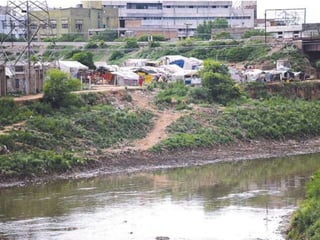
Coliforms and Public Health:
• Contamination of Public water by
sewerage is detected by presence of
E. coli Klebsiella and Enterobacter
• Mainly E. coli is used as an indicator
of unaccepted faecal contamination.
Colony count > 4 dL.
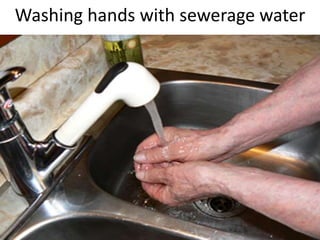
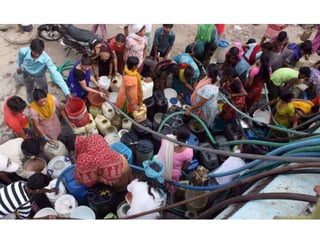
Washing hands with sewerage water
End of Introduction to
Enterobacteracaie.
SMS sent by someone
“A perfect lecture should be like a
girls skirt. Which iz long enough to
cover the subject and short enough
2 create interest”
Should we continue
with E. coli ?
Yes today 45 minutes only then we
promise to listen and understand
Rest can leave after marking
attendance.
Diseases Caused
by
E. COLI
• Habitat: E. coli is the head of the
large bacterial family the
Enterbacteriacae.
Which consists of enteric bacteria,
which are facultative anaerobic
Gram-negative rods that live in the
intestinal tracts of animals in health
and disease.
Pathogenesis of E. coli
Over 700 antigenic types or serotypes of E. coli have
been recognized based on O, H, and K antigens.
E. coli is responsible for three types of infections in
humans:
• 1. Urinary tract infections (UTI).
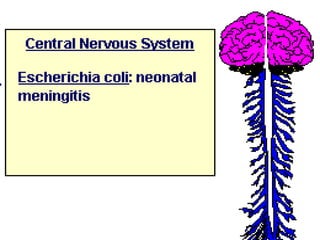
• 2. Neonatal meningitis.
• 3. Intestinal diseases (gastroenteritis) and Sepsis.
These diseases depend on a specific array of
pathogenic (virulence) determinants
Urinary tract infections
• Uropathogenic E. coli causes 90% of the
urinary tract infections (UTI) in
anatomically-normal, unobstructed urinary
tracts.
• Bladder infections are 30-times more
common in females of child bearing age
than males by virtue of the shortened
urethra.
• The typical patient with uncomplicated
cystitis is a sexually-active first colonized in
the intestine with an
Uropathogenic E.
coli strain.
• Organisms propelled into
the bladder from the peri urethral
region during sexual intercourse.
With the aid of specific adhesins they are
able to colonize the bladder.
• Neonatal meningitis affects1/2,000-4,000
infants. Eighty percent of E. coli strains
involved synthesize K-1 capsular antigens
(K-1 is only present 20-40% of the time in
intestinal isolates).
• E. coli strains invade the blood stream of
infants from the nasopharynx or GI tract
and are carried to the meninges.
E. coli strains invade blood stream of infants from the
nasopharynx or GI tract and carried to the meninges.
• Epidemiologic studies show that pregnancy is
associated with increased rates of colonization
by K-1 strains involved in the subsequent
cases of meningitis in the newborn. GI tract is
the portal of entry into the bloodstream.
• Colonization fairly common, invasion and the
catastrophic sequelae rare.
• Neonatal meningitis requires antibiotic
therapy including ampicillin and a third-
generation cephalosporin
Gastrointestinal
Disease
Intestinal diseases caused by E. coli
As a pathogen, E. coli, of course, is best known for its
ability to cause intestinal diseases.
Five classes of E. coli that cause diarrhea are now
recognized:
• Enterotoxigenic E. coli (ETEC),
• Enteroinvasive E. coli (EIEC),
• Enterohemorrhagic E. coli (EHEC),
• Enteropathogenic E. coli (EPEC), and
• (EAggEC).
Each class falls within a serological subgroup
and manifests distinct features in
pathogenesis.
• ETEC an imp. cause of diarrhea in infants and travelers in
underdeveloped countries.
• EIEC resemble Shigella in their pathogenic mechanisms and
illness they produce.
• EPEC induce watery diarrhea similar to ETEC.
• The distinguishing feature of EAggEC strains is their ability
to attach to tissue culture cells in an aggregative manner.
These strains are associated with persistent diarrhea in
young children.
• EHEC causes a diarrheal syndrome, there is copious
bloody discharge and no fever. Frequent life-threatening
situation is its toxic effects on the kidneys (hemolytic
uremia).
EHEC has recently been recognized as a cause of serious
disease (e.g. the Jack-in-the-Box outbreak in the
Northwest).Pediatric diarrhea caused by this strain can be
fatal due to acute kidney failure
(hemolytic uremic syndrome [HUS])
Treatment:
• Depends on site of disease and resistance pattern.
• Uncomplicated UTI 1-3 days with oral Trimethoprim-
Sulfamethaxazole or an oral Penicillin, Amoxil /Ampicillin.
• E. coli sepsis: Parental antibiotics e.g. Amino glycoside
gentamicin or a cephalosporin.
• Neonatal meningitis: Combination of ampicillin and
gentamicin or a third or fourth generation cephalosporin.
• E. coli diarrheal disease: Antibiotics usually not indicated.
Timethoprim – Sulfamethaxazole may shorten duration.
• Rehaydration more imp. Self limiting.
Lab Diagnosis:
• Specimens: Stool, Urine, Blood, Pus, C.S.F.
Food, and Water.
• Culture: Blood agar and a differential
medium like Mac Conkeys medium
• Biochemical Tests; IMViC,. T.S.I reactions
Citrate utilization, Sugar fermentations etc.
Prevention and Control.
1. No specific prevention
2. No active or Passive Vaccination.
2. General measures:
Removal of catheters, Prophylaxis with urinary
antiseptics like Nitrofurantoin.
3. Caution regarding food and water.
Hey diddle diddle,
The cat and the fiddle,
The cow jumped over the moon,
The little dog laughed to see such sport,
And the dish ran away with the spoon.

Enterobacteriacae

  • 1.
    ENTEROBACTERIA & Pathogenic E.coli Lecture 5 Prof. Abbas Hayat 9-5-2014 Gram negative bacteria which belong to the family Enterbacteriaceae. Also called coli forms.
  • 5.
  • 6.
    Rapid presumptive identification of Gramnegative bacteria Lactose fermenters Pink colonies on Mac Conkeys media 1. Escherichia coli Metallic sheen on EMB, Motile No viscous colonies 2. Enterobacter species Raised colonies .Non viscous colonies 3. Klebseilla species Very viscous mucoid Non motile
  • 7.
    Slow lactose fermenterson Mac Conkeys media 48 hours . •Citrobacter •Serratia •Providencia • Arizona. etc. ``opportunist pathogens``
  • 9.
    Non Lactose fermenters Colorlesscolonies on Mac Conkeys • Shigella species: Non motile • Salmonella species: Motile • Proteus species: Swarming, urea hydrolyzed. • Pseudomonas species: Green pigment sweetish smell.
  • 10.
    1. Morphology andstaining Gram negative rods , motile or non motile, peritrichous flagella, non sporing. 2. Culture: a. Mac Conkeys medium b. EMB (Eosin Methylene Blue agar) c. Blood agar d. CLED (Cystien Lactose Electrolyte Deficient Medium)
  • 11.
    3. Biochemical characteristics: •a. Lactose fermentation • b. Reduce nitrates to nitrites • c. Ferment glucose • d. Oxidase negative
  • 12.
    • 1. Indoletest: E. coli produces indole • 2. Methyl red: indicates pH of culture if below 4.5 positive. • 3. Voges –Proskere reaction: Depends on production of acetylmethylcarbinol from dextrose gives pink color positive in Enterobacter. • 4. Citrate test: Utilization of sodium citrate as sole source of carbon Klebseilla positive.
  • 13.
    MNEMONIC FORMULA: • IMViCfor E. coli is ++--, • Enterobacter is --++. Other tests: 1. Triple Sugar Iron or TSI medium 2. Urease production
  • 14.
    TRIPLE SUGAR IRON(TSI ) AGAR REACTION • Medium contains 0.1 % glucose 1 % sucrose 1 % lactose, Ferrous sulphate ( for detection of H2S, production ) and a pH indicator ( phenol red ). • Poured into test tube to produce a slant and a deep butt. • If only glucose is fermented , the slant and butt initially turn yellow from the small amount of acid produced ; as the fermented products are subsequently oxidized the slant turns Alkaline ( RED). • If lactose or sucrose is fermented so much acid is produced that slant and butt remain Acid (YELLOW).
  • 15.
    E. coli Shigellasonnei Salmonella typhi Pseudomonoas
  • 16.
    TSI - ACIDICTO ALKALINE REVERSION • Reversion in Glucose Fermenters (<24hrs): – Glucose 0.1%  Early utilization with production of Acid (YELLOW COLOUR) – Glucose gets depleted soon  Amino Acids broken down for energy  NH3 produced  pH turns Alkaline (RED/PINK COLOUR) • Reversion in Lactose Fermenters (>48hrs): – Lactose 1%  Utilization with production of Acid (YELLOW COLOUR) in 24 - 48 hrs – Incubation of >48 hrs  Lactose gets depleted  Amino Acids broken down for energy  NH3 produced  pH turns Alkaline (RED/PINK COLOUR)
  • 17.
    TSI(Medium reactions) Escherichiacoli - a facultative anaerobe, ferments both glucose and lactose as a carbon source, produce gas, but does not produce hydrogen sulfide
  • 18.
    Salmonella enteritidis (serotypetyphimurium) can ferment glucose but not lactose as carbon source and produces both hydrogen sulfide and gas.
  • 19.
    Coliforms and PublicHealth: • Contamination of Public water by sewerage is detected by presence of E. coli Klebsiella and Enterobacter • Mainly E. coli is used as an indicator of unaccepted faecal contamination. Colony count > 4 dL.
  • 24.
    Washing hands withsewerage water
  • 39.
    End of Introductionto Enterobacteracaie. SMS sent by someone “A perfect lecture should be like a girls skirt. Which iz long enough to cover the subject and short enough 2 create interest”
  • 40.
    Should we continue withE. coli ? Yes today 45 minutes only then we promise to listen and understand Rest can leave after marking attendance.
  • 41.
  • 42.
    • Habitat: E.coli is the head of the large bacterial family the Enterbacteriacae. Which consists of enteric bacteria, which are facultative anaerobic Gram-negative rods that live in the intestinal tracts of animals in health and disease.
  • 43.
    Pathogenesis of E.coli Over 700 antigenic types or serotypes of E. coli have been recognized based on O, H, and K antigens. E. coli is responsible for three types of infections in humans: • 1. Urinary tract infections (UTI). • 2. Neonatal meningitis. • 3. Intestinal diseases (gastroenteritis) and Sepsis. These diseases depend on a specific array of pathogenic (virulence) determinants
  • 44.
    Urinary tract infections •Uropathogenic E. coli causes 90% of the urinary tract infections (UTI) in anatomically-normal, unobstructed urinary tracts. • Bladder infections are 30-times more common in females of child bearing age than males by virtue of the shortened urethra.
  • 46.
    • The typicalpatient with uncomplicated cystitis is a sexually-active first colonized in the intestine with an Uropathogenic E. coli strain. • Organisms propelled into the bladder from the peri urethral region during sexual intercourse. With the aid of specific adhesins they are able to colonize the bladder.
  • 47.
    • Neonatal meningitisaffects1/2,000-4,000 infants. Eighty percent of E. coli strains involved synthesize K-1 capsular antigens (K-1 is only present 20-40% of the time in intestinal isolates). • E. coli strains invade the blood stream of infants from the nasopharynx or GI tract and are carried to the meninges.
  • 48.
    E. coli strainsinvade blood stream of infants from the nasopharynx or GI tract and carried to the meninges.
  • 49.
    • Epidemiologic studiesshow that pregnancy is associated with increased rates of colonization by K-1 strains involved in the subsequent cases of meningitis in the newborn. GI tract is the portal of entry into the bloodstream. • Colonization fairly common, invasion and the catastrophic sequelae rare. • Neonatal meningitis requires antibiotic therapy including ampicillin and a third- generation cephalosporin
  • 50.
  • 51.
    Intestinal diseases causedby E. coli As a pathogen, E. coli, of course, is best known for its ability to cause intestinal diseases. Five classes of E. coli that cause diarrhea are now recognized: • Enterotoxigenic E. coli (ETEC), • Enteroinvasive E. coli (EIEC), • Enterohemorrhagic E. coli (EHEC), • Enteropathogenic E. coli (EPEC), and • (EAggEC). Each class falls within a serological subgroup and manifests distinct features in pathogenesis.
  • 52.
    • ETEC animp. cause of diarrhea in infants and travelers in underdeveloped countries. • EIEC resemble Shigella in their pathogenic mechanisms and illness they produce. • EPEC induce watery diarrhea similar to ETEC. • The distinguishing feature of EAggEC strains is their ability to attach to tissue culture cells in an aggregative manner. These strains are associated with persistent diarrhea in young children. • EHEC causes a diarrheal syndrome, there is copious bloody discharge and no fever. Frequent life-threatening situation is its toxic effects on the kidneys (hemolytic uremia). EHEC has recently been recognized as a cause of serious disease (e.g. the Jack-in-the-Box outbreak in the Northwest).Pediatric diarrhea caused by this strain can be fatal due to acute kidney failure (hemolytic uremic syndrome [HUS])
  • 54.
    Treatment: • Depends onsite of disease and resistance pattern. • Uncomplicated UTI 1-3 days with oral Trimethoprim- Sulfamethaxazole or an oral Penicillin, Amoxil /Ampicillin. • E. coli sepsis: Parental antibiotics e.g. Amino glycoside gentamicin or a cephalosporin. • Neonatal meningitis: Combination of ampicillin and gentamicin or a third or fourth generation cephalosporin. • E. coli diarrheal disease: Antibiotics usually not indicated. Timethoprim – Sulfamethaxazole may shorten duration. • Rehaydration more imp. Self limiting.
  • 55.
    Lab Diagnosis: • Specimens:Stool, Urine, Blood, Pus, C.S.F. Food, and Water. • Culture: Blood agar and a differential medium like Mac Conkeys medium • Biochemical Tests; IMViC,. T.S.I reactions Citrate utilization, Sugar fermentations etc.
  • 56.
    Prevention and Control. 1.No specific prevention 2. No active or Passive Vaccination. 2. General measures: Removal of catheters, Prophylaxis with urinary antiseptics like Nitrofurantoin. 3. Caution regarding food and water.
  • 57.
    Hey diddle diddle, Thecat and the fiddle, The cow jumped over the moon, The little dog laughed to see such sport, And the dish ran away with the spoon.