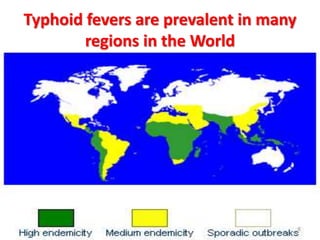
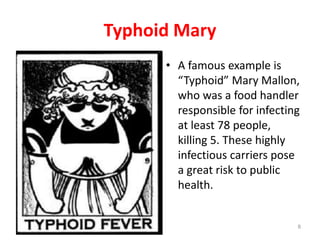
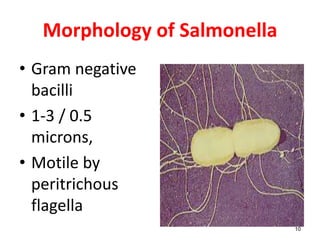
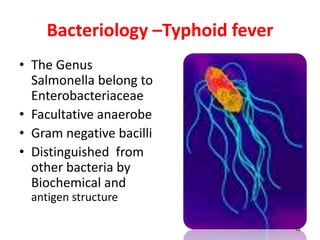
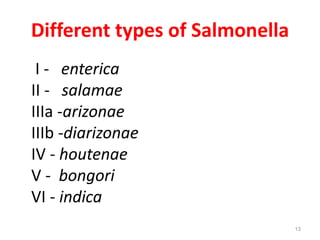
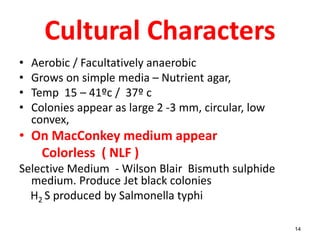
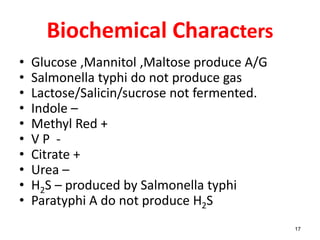
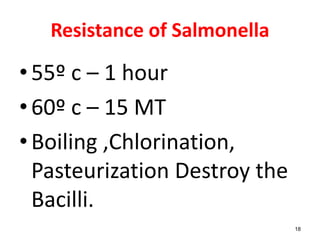
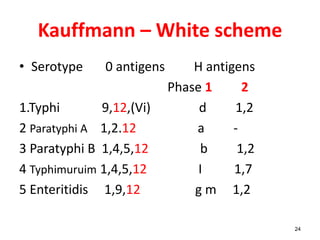
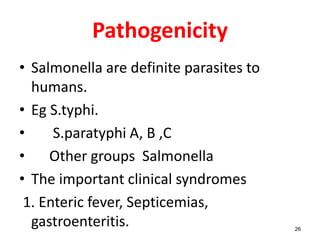
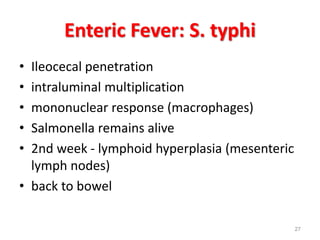
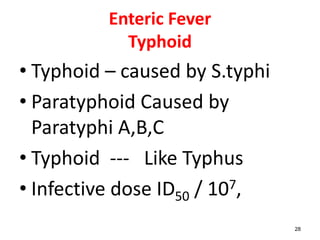
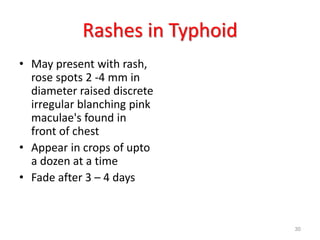
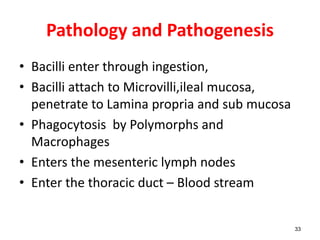
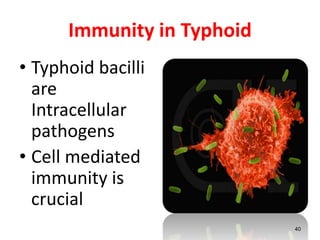
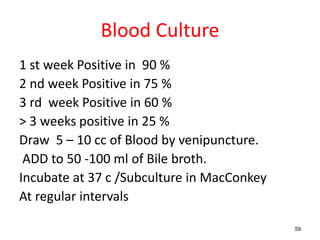
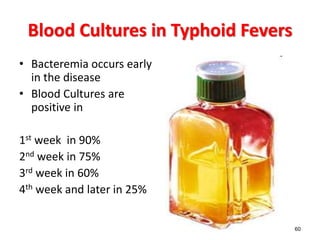
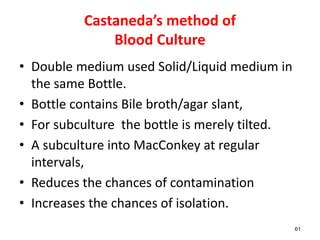
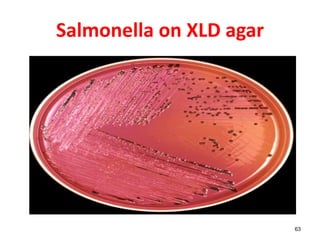
Salmonella is a genus of bacteria that can cause infections in humans and other animals. There are over 2000 serotypes of Salmonella, with some causing typhoid fever and paratyphoid fever through consumption of contaminated food or water. S. Typhi specifically causes typhoid fever, a systemic illness involving the gastrointestinal tract and bloodstream. The disease progresses as the bacteria penetrate the intestines, spread to internal organs, and multiply before reentering the bloodstream and causing symptoms like sustained fever and abdominal pain. Carriers of S. Typhi pose a public health risk by potentially spreading the infection through food preparation.