Role Of Glyoxysome In
Glyoxylate Cyclic
Presented By
Hina Tabassum (7519)
Maryam Riasat (7545)
BS Zoology (5th Semester – Morning)
Glyoxysome
Introduction:-
 Micro-Bodies
 Specialized form of peroxisome
 Present in plant cells (Germinating seeds)
 Not found in animal cells except some
lower animals (Nematodes )
 Contain the enzymes of the Glyoxylate
Cycle
Enzymes
Citrate synthase, isocitrate lyase, malate
synthase etc
They contain all the enzymes necessary
for fatty acid oxidation in Glyoxylate
Cycle and Gluconeogenesis.
Discovery:-
 R.W Breidenbach and H. Beevers In
1961
 Microbodies of the fat-storing cells of
germinating seeds contain enzymes
 Enzyme were found in the organelle
other than mitochondria
(Glyoxysomes)
Role Of Glyoxysomes In
Glyoxylate Cycle
Main Aim:-
 Convert acetyl CoA into succinate for the
synthesis of carbohydrates.
 Fatty acid → Carbohydrates
 In Microorganisms in the absence of
glucose this cycle allows cells to utilize carbon
compounds as a carbon source.
Absent in lipid-poor seed such as the
pea
Role In Glyoxylate Cyclic
Present in plants e.g (Oil rich seeds)
Soya beans, Castor beans, Sunflower beans
 Present at the time of Germination (Plant
seedling)
 Removed in living plants when they become
able to produce their own food from
photosynthesis
 Energy comes from the stored fatty acids
Fatty acid → Carbohydrates
 Glyoxysomes undergo catabolism &
anabolism of lipids
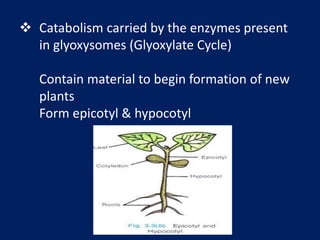
 Catabolism carried by the enzymes present
in glyoxysomes (Glyoxylate Cycle)
Contain material to begin formation of new
plants
Form epicotyl & hypocotyl
Temporary structures
• When body sustain itself (roots & shoots are
developed) they are removed
• Seeds → Germination → Plant body
Enzymes involve in Glyoxylate Cycle
The glyoxylate cycle utilizes five enzymes that
are following:-
 Citrate synthase
 Aconitase
 Isocitrate lyase
 Malate synthase
 Malate dehydrogenase
Glyoxylate Cycle
Steps Involved In Glyoxylate Cycle:-
Various steps of this cycle are as follows:-
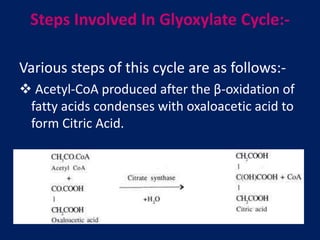
 Acetyl-CoA produced after the β-oxidation of
fatty acids condenses with oxaloacetic acid to
form Citric Acid.
 Citric acid is dehydrated to produce Cis-
aconitic Acid in the presence of Aconitase.
 Cis-aconitic acid reacts with one molecule of
H2O to form Iso-citric acid.
 Iso-citric acid is broken down into glyoxylic
acid and succinic acid by the enzyme
Isocitratase.
 Glyoxylic acid combines with acetyl CoA
(produced after the β-oxidation of fatty acids)
in the presence of Malate synthetase to
produce Malic acid.
 Malic acid is oxidised into oxaloacetic acid in
the presence of Malic dehydrogenase and the
coenzyme NAD.
 Oxaloacetic acid thus produced combines
with acetyl-CoA to regenerate citric acid.
Role Of Glyoxylate Cycle In
Pathogenic Fungi
Main enzymes Isocitrate Lyase and malate
synthase are increased upon contact with the
human host. Mutant of particular fungi that
lacked Isocitrate Lyase are less virulant.
Glyoxylate Cycle is a significant factor for the
pathogenesis of these microbes.
Role Of Glyoxylate Cycle In Gluco-
neo-genesis
Fatty acid from lipids are used as an energy
source.
 Fatty acid is converted into acetate molecule
by beta oxidation.
Acetate +active thiol group (coenzyme A) >
TCA cycle > CO2
This pathway allows cells to obtain energy
from fats.
Glyoxysome

Glyoxysome

  • 2.
    Role Of GlyoxysomeIn Glyoxylate Cyclic Presented By Hina Tabassum (7519) Maryam Riasat (7545) BS Zoology (5th Semester – Morning)
  • 3.
  • 4.
    Introduction:-  Micro-Bodies  Specializedform of peroxisome  Present in plant cells (Germinating seeds)  Not found in animal cells except some lower animals (Nematodes )
  • 5.
     Contain theenzymes of the Glyoxylate Cycle Enzymes Citrate synthase, isocitrate lyase, malate synthase etc They contain all the enzymes necessary for fatty acid oxidation in Glyoxylate Cycle and Gluconeogenesis.
  • 7.
    Discovery:-  R.W Breidenbachand H. Beevers In 1961  Microbodies of the fat-storing cells of germinating seeds contain enzymes  Enzyme were found in the organelle other than mitochondria (Glyoxysomes)
  • 8.
    Role Of GlyoxysomesIn Glyoxylate Cycle Main Aim:-  Convert acetyl CoA into succinate for the synthesis of carbohydrates.  Fatty acid → Carbohydrates  In Microorganisms in the absence of glucose this cycle allows cells to utilize carbon compounds as a carbon source.
  • 9.
    Absent in lipid-poorseed such as the pea
  • 10.
    Role In GlyoxylateCyclic Present in plants e.g (Oil rich seeds) Soya beans, Castor beans, Sunflower beans
  • 11.
     Present atthe time of Germination (Plant seedling)  Removed in living plants when they become able to produce their own food from photosynthesis  Energy comes from the stored fatty acids Fatty acid → Carbohydrates  Glyoxysomes undergo catabolism & anabolism of lipids
  • 12.
     Catabolism carriedby the enzymes present in glyoxysomes (Glyoxylate Cycle) Contain material to begin formation of new plants Form epicotyl & hypocotyl
  • 13.
    Temporary structures • Whenbody sustain itself (roots & shoots are developed) they are removed • Seeds → Germination → Plant body
  • 14.
    Enzymes involve inGlyoxylate Cycle The glyoxylate cycle utilizes five enzymes that are following:-  Citrate synthase  Aconitase  Isocitrate lyase  Malate synthase  Malate dehydrogenase
  • 15.
  • 16.
    Steps Involved InGlyoxylate Cycle:- Various steps of this cycle are as follows:-  Acetyl-CoA produced after the β-oxidation of fatty acids condenses with oxaloacetic acid to form Citric Acid.
  • 17.
     Citric acidis dehydrated to produce Cis- aconitic Acid in the presence of Aconitase.
  • 18.
     Cis-aconitic acidreacts with one molecule of H2O to form Iso-citric acid.
  • 19.
     Iso-citric acidis broken down into glyoxylic acid and succinic acid by the enzyme Isocitratase.
  • 20.
     Glyoxylic acidcombines with acetyl CoA (produced after the β-oxidation of fatty acids) in the presence of Malate synthetase to produce Malic acid.
  • 21.
     Malic acidis oxidised into oxaloacetic acid in the presence of Malic dehydrogenase and the coenzyme NAD.  Oxaloacetic acid thus produced combines with acetyl-CoA to regenerate citric acid.
  • 23.
    Role Of GlyoxylateCycle In Pathogenic Fungi Main enzymes Isocitrate Lyase and malate synthase are increased upon contact with the human host. Mutant of particular fungi that lacked Isocitrate Lyase are less virulant. Glyoxylate Cycle is a significant factor for the pathogenesis of these microbes.
  • 24.
    Role Of GlyoxylateCycle In Gluco- neo-genesis Fatty acid from lipids are used as an energy source.  Fatty acid is converted into acetate molecule by beta oxidation. Acetate +active thiol group (coenzyme A) > TCA cycle > CO2 This pathway allows cells to obtain energy from fats.