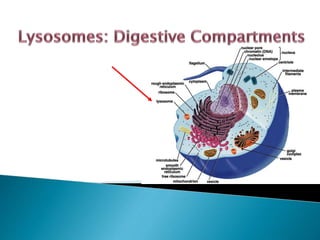
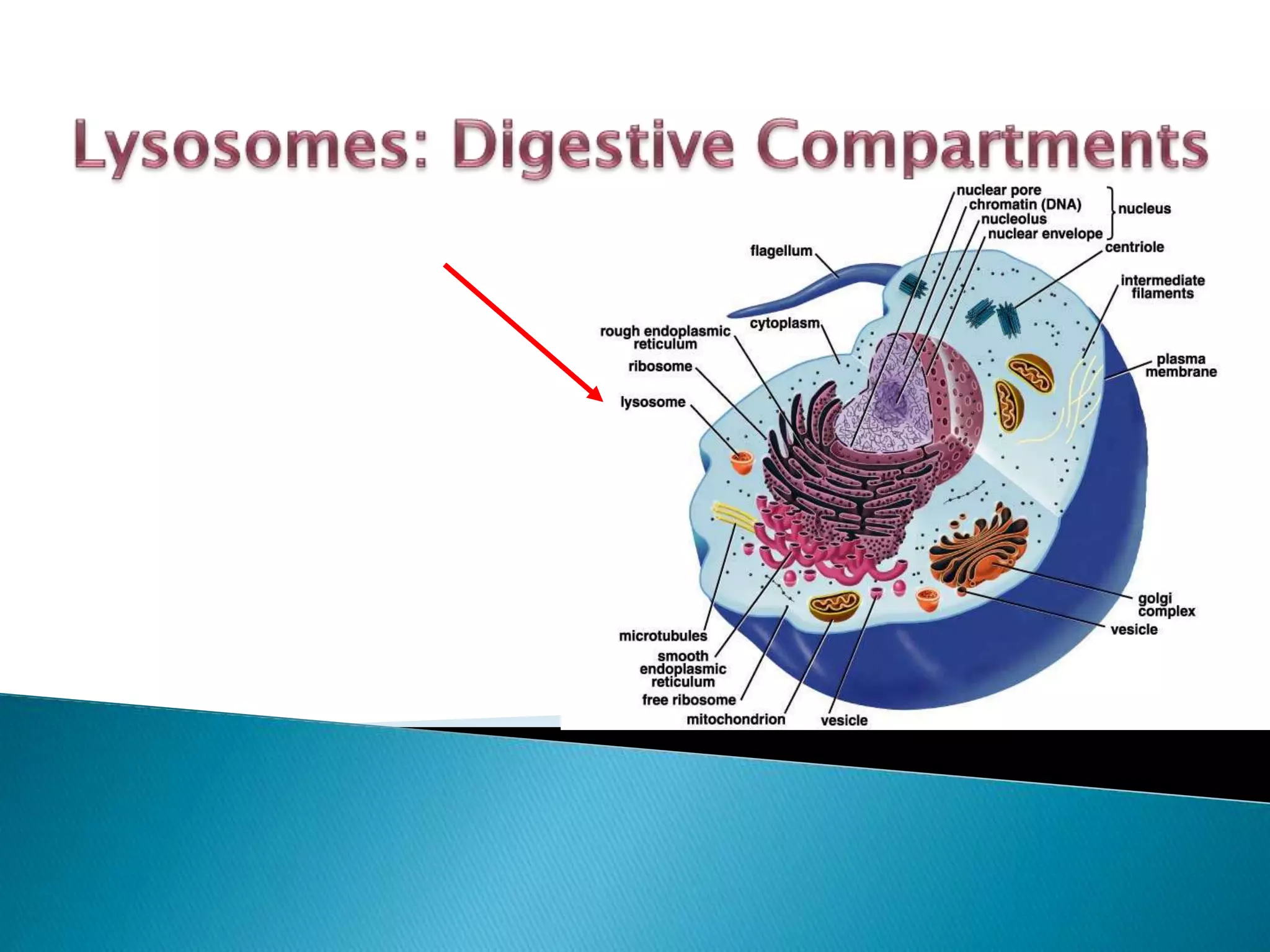
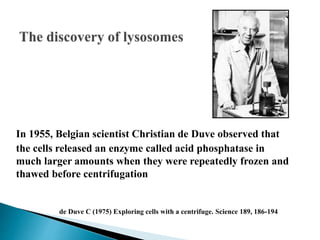
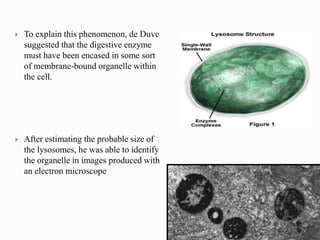
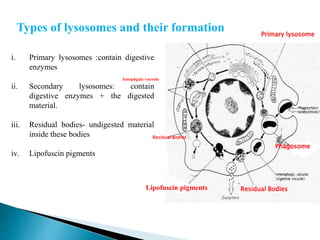
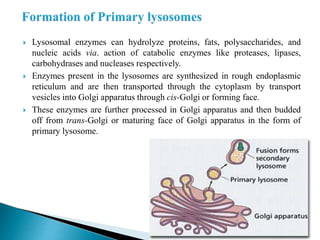
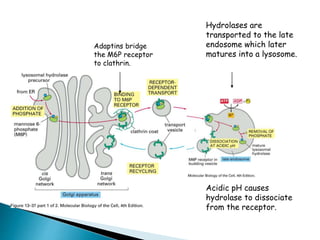
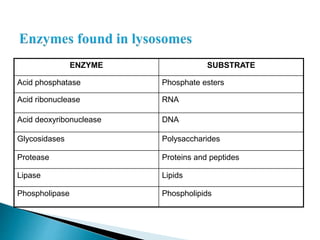
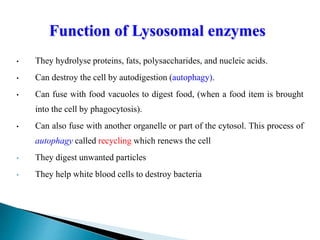
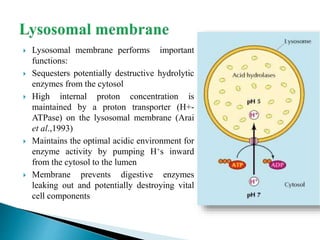
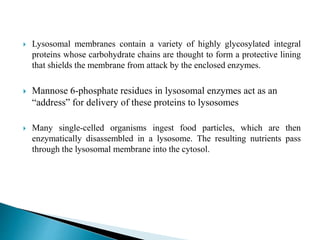
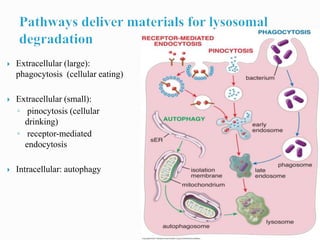
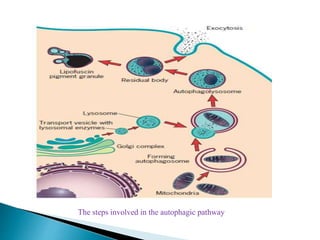
Christian de Duve observed in 1955 that cells released the enzyme acid phosphatase in larger amounts when frozen and thawed before centrifugation. To explain this, de Duve suggested the enzyme must be enclosed in a membrane-bound organelle. After estimating the organelle's probable size, he was able to identify it as lysosomes in electron microscope images. Lysosomes are membrane-bound sacs containing digestive enzymes that can break down macromolecules and are involved in intracellular digestion, defense against pathogens, and cellular waste disposal. De Duve's discovery of lysosomes established them as an important cellular organelle.