GlyoxYLate
cycle
Shylesh Murthy I A
Follow for More Biological Slides ( LIFE-Sciences).
The Glyoxylate Cycle
Another Process Involving Glycolytic
Enzymes and Metabolites
A series of metabolic reactions by which many
different organism utilise fats for the synthesis of
carbohydrate
 Anabolic metabolic pathway occurring in plants, and several
microorganisms , fungi not animals.
 Occurs in glyoxysome
 The enzymes common to the TCA cycle and the
glyoxysomes are isoenzymes, one specific to mitochondria
and the other to glyoxysomes.
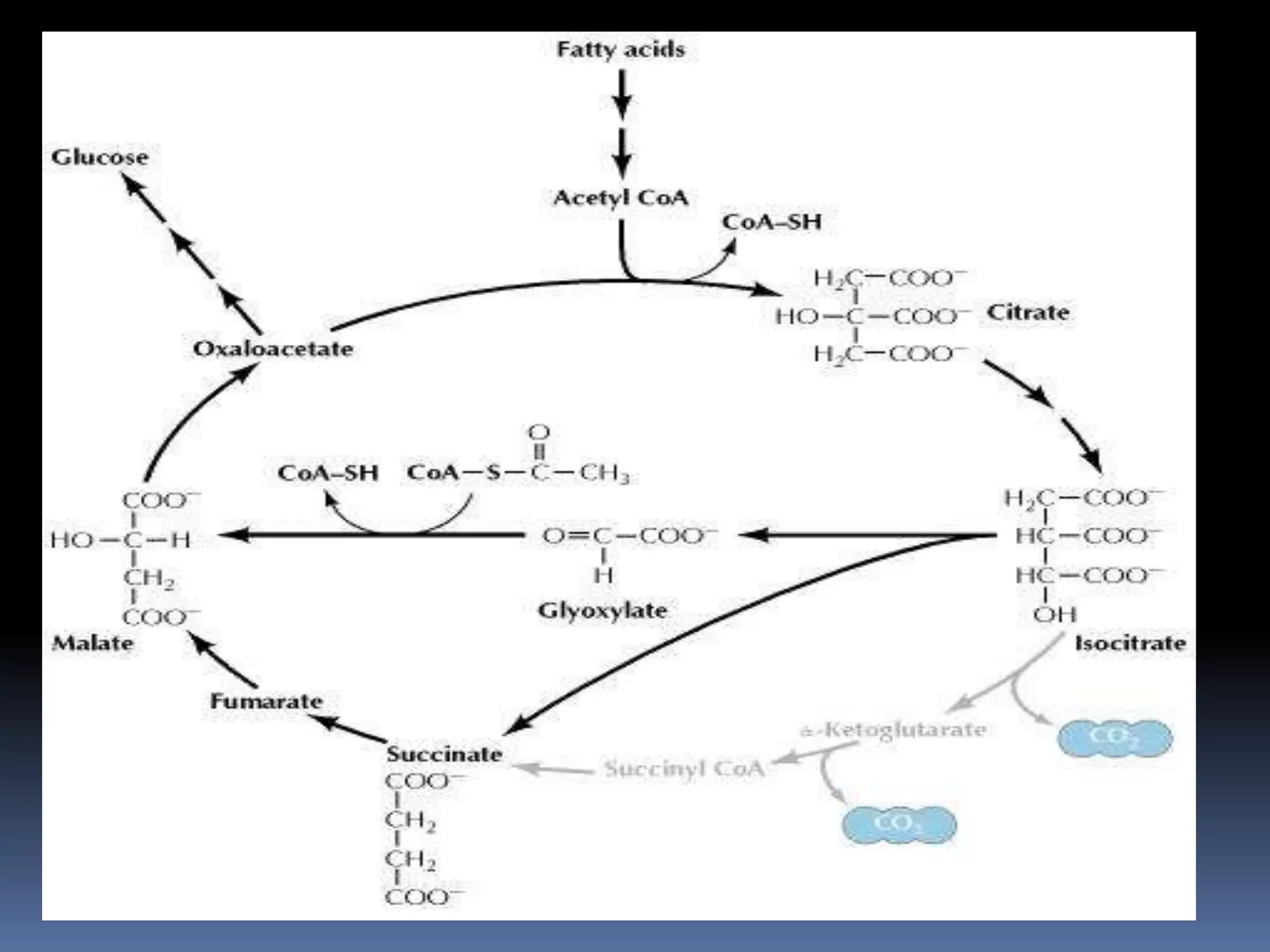
 The glyoxylate cycle allows plants to use acetyl-CoA
derived from β-oxidation of fatty acids for carbohydrate
synthesis (use fats for the synthesis of carbohydrates).
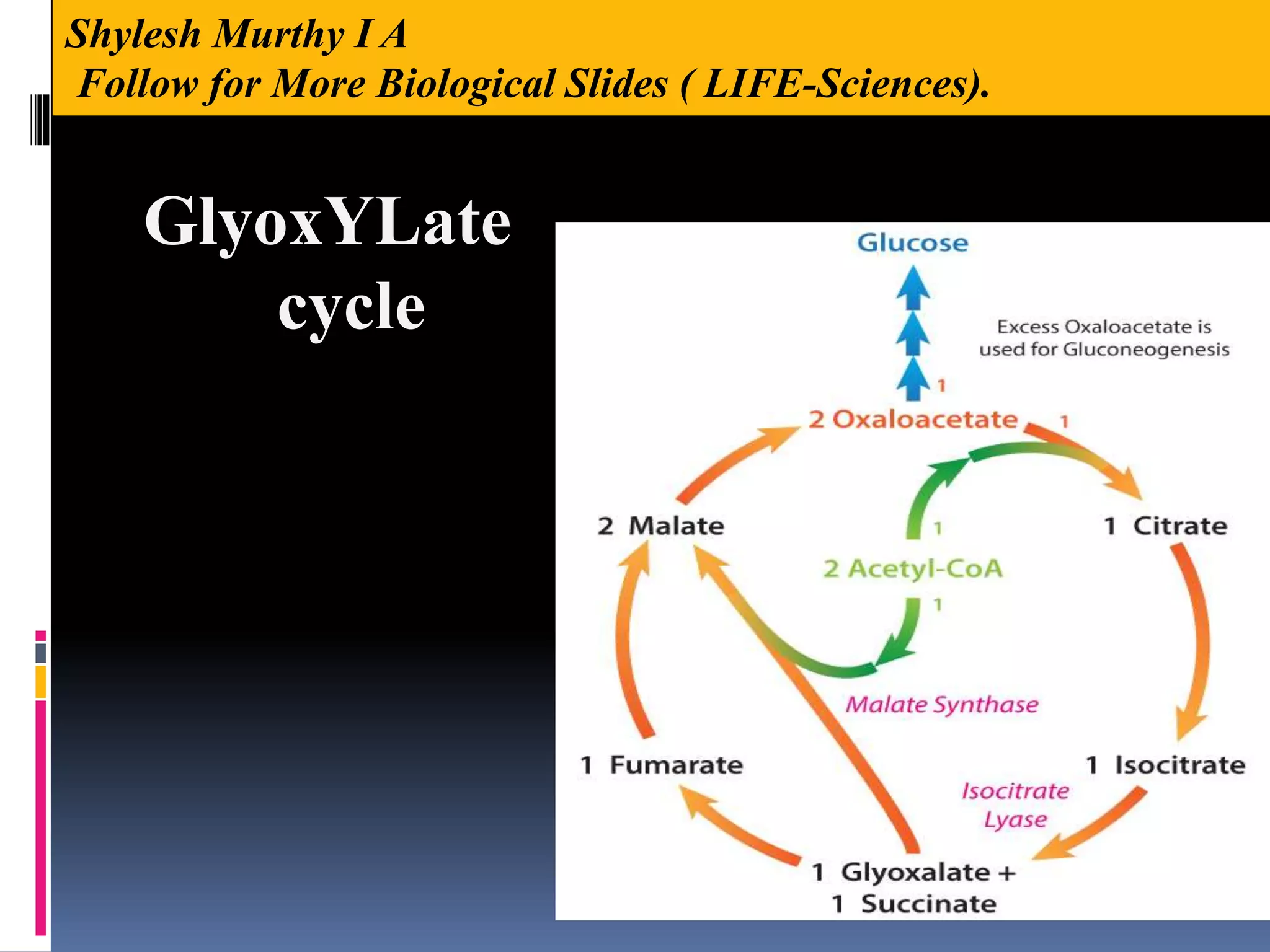
 The glyoxalate cycle is regarded as an anabolic varient of
citric acid cycle .
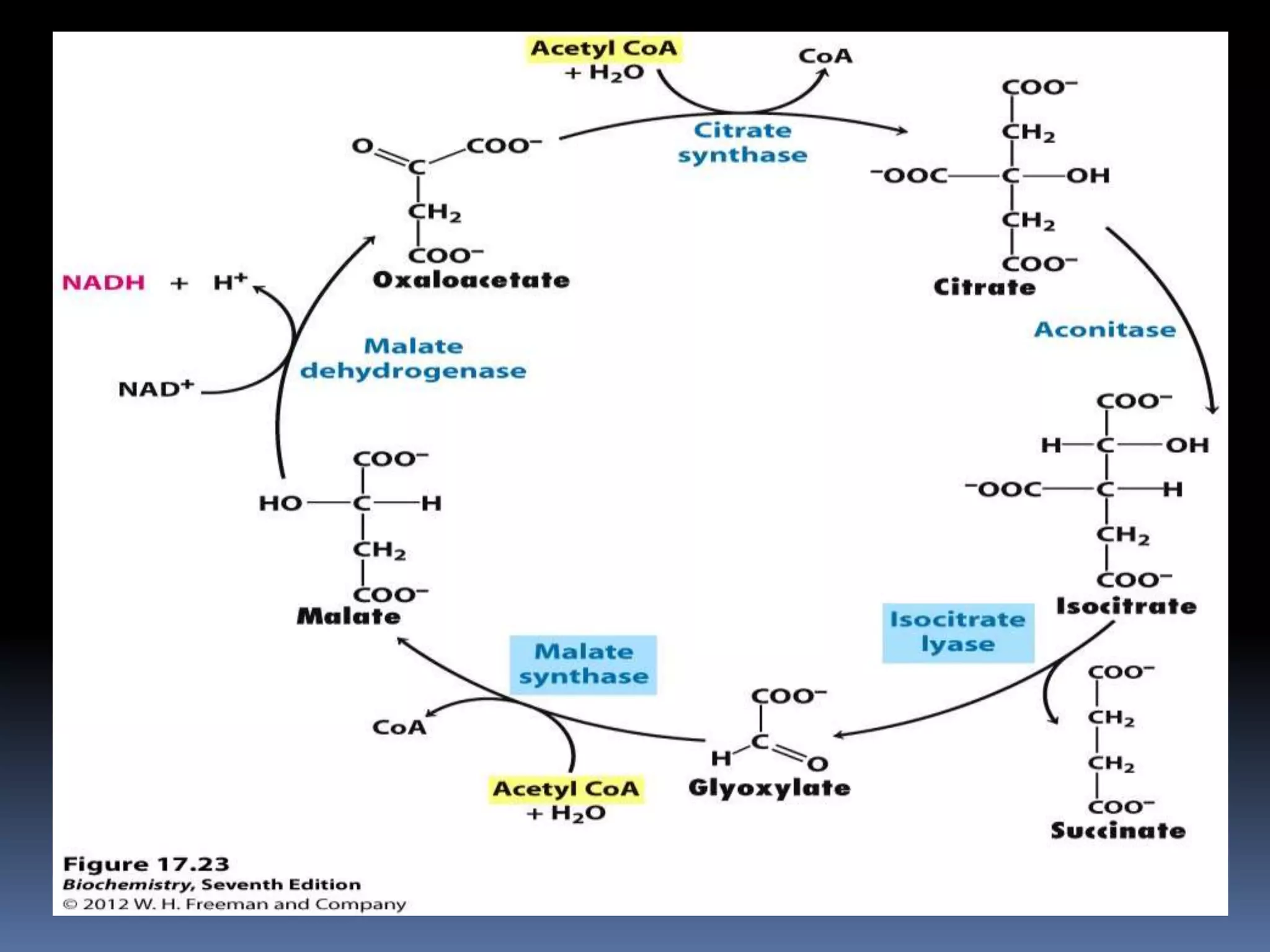
 Acetyl coa produced from fatty acid oxidation condenses
with oxaloacetate to give citrate , which is then convert to iso
citrate .
 At this stage isocitrate lyase to succinate and glyoxalate.
 Another molecule of acetyl CoA Is now utilized to
combine with glyoolate to form malate synthase and the
malate so formed enters citric cycle
The glyoxylate cycle is a cyclic pathway that result
in conversion of 2 carbon fragment of Acetyl CoA TO 4
carbon compound succinate then succinate is covert to
oxaloacetate and then glucose involving the reaction of
gluconeogenesis
References ; Biochemistry book by
U sathyanarayana
U. Chakrapani
page no.- 244
INTERNET SOURCES
https://bio.libretexts.org/Bookshelves/Biochemistry/Book%3A_Biochemistry_Free_and_Easy
_(Ahern_and_Rajagopal)/06%3A_Metabolism_I/6.06%3A_Glyoxylate_Pathway
.Thankyou ……….

Glyoxylate cycle PATHWAYS REACTION

  • 1.
    GlyoxYLate cycle Shylesh Murthy IA Follow for More Biological Slides ( LIFE-Sciences).
  • 2.
    The Glyoxylate Cycle AnotherProcess Involving Glycolytic Enzymes and Metabolites
  • 3.
    A series ofmetabolic reactions by which many different organism utilise fats for the synthesis of carbohydrate
  • 4.
     Anabolic metabolicpathway occurring in plants, and several microorganisms , fungi not animals.  Occurs in glyoxysome  The enzymes common to the TCA cycle and the glyoxysomes are isoenzymes, one specific to mitochondria and the other to glyoxysomes.  The glyoxylate cycle allows plants to use acetyl-CoA derived from β-oxidation of fatty acids for carbohydrate synthesis (use fats for the synthesis of carbohydrates).
  • 7.
     The glyoxalatecycle is regarded as an anabolic varient of citric acid cycle .  Acetyl coa produced from fatty acid oxidation condenses with oxaloacetate to give citrate , which is then convert to iso citrate .  At this stage isocitrate lyase to succinate and glyoxalate.  Another molecule of acetyl CoA Is now utilized to combine with glyoolate to form malate synthase and the malate so formed enters citric cycle
  • 8.
    The glyoxylate cycleis a cyclic pathway that result in conversion of 2 carbon fragment of Acetyl CoA TO 4 carbon compound succinate then succinate is covert to oxaloacetate and then glucose involving the reaction of gluconeogenesis
  • 9.
    References ; Biochemistrybook by U sathyanarayana U. Chakrapani page no.- 244 INTERNET SOURCES https://bio.libretexts.org/Bookshelves/Biochemistry/Book%3A_Biochemistry_Free_and_Easy _(Ahern_and_Rajagopal)/06%3A_Metabolism_I/6.06%3A_Glyoxylate_Pathway
  • 10.