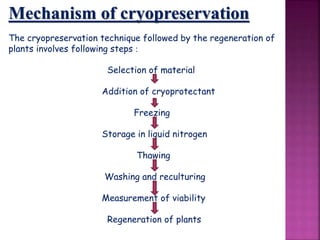
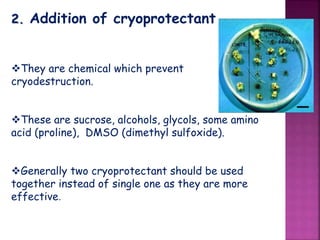
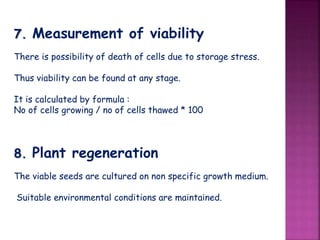
Cryopreservation is a process where tissues, cells, or organs are preserved at very low temperatures, typically -80°C or -196°C, to bring metabolism to zero and prevent damage. It involves selecting plant material, adding cryoprotectants like sucrose or glycols, freezing the material slowly or rapidly in liquid nitrogen, storing it in liquid nitrogen, thawing it, washing away cryoprotectants, and attempting to regenerate plants from the preserved material. Cryopreservation allows for indefinite storage of plant genetic resources and has major advantages like minimal space and labor requirements.