TRANSGENIC ANIMALS
PRESENTED BY : ANAND SAGAR TIWARI
M. PHARM (FIRST SEMSTER)
DEPT. OF PHARMACOLOGY
GUIDED BY : Dr. NITIN MAHURKAR
PROFESSOR & H.O.D
DEPT. OF PHARMACOLOGY
Brief overview
Introduction
Production
Maintenance
Application
Introduction
The advent of modern biotechnology has now made it
possible to carry out manipulations at the genetic level to get
the desired characteristics in animals.
Transgenesis refers to the phenomenon of introduction of
exogeneous DNA into the genome to create and maintain a
stable heritable character.
The foreign DNA that is introduced is called transgene and
the animal whose genome is altered by the addition of one
or more transgenes is called transgenic.
Thus transgenic animals are also called Genetically Modified
Organisms(GMOs).
PRODUCTION
There are different methods of producing transgenic
animals:
DNA microinjection
Embryonic stem cell mediated gene transfer
Retrovirus mediated gene transfer
Testis cell transplantation method
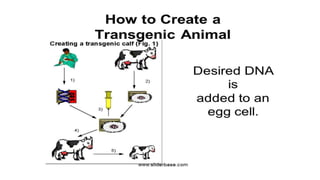
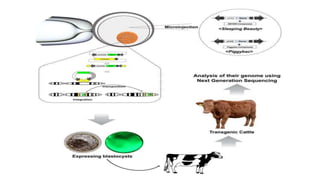
DNA microinjection
Method involves the direct microinjection of a
chosen gene construct from another member of the
same species or from a different species into the pro-
nucleus of a fertilized ovum.
The introduced DNA may lead to the over or under
expression of certain genes or to the expression of
genes to the entirely new to the animal species.
The manipulated fertilized ovum is transferred into
the oviduct of a recipient female or foster mother that
has been induced to act as a recipient by mating with
a vasectomized male.
Embryonic stem cell culture
1. Embryonic stem cells are cultured from mouse
blastocyst [ES cell culture].
2. Genetic manipulation
i. Construction of targeting vector or CRI SPR(Cas9
system).
ii. Transfection or transduction of targeting vector into
ES cell or microinjecting zygote directly.
iii. Homologous recombination.
iv. Selection of targeted cell.
3. Mouse embryo handling and culture:
i. Targeted ES cells are injected into the blastocysts.
ii. Blastocyst is injected into the mouse which acts as a
surrogate mother.
4. Mouse birth and breeding
i. Chimeric mice are produced and mated with normal mice.
ii. Gene targeted mice are born.
5. Genotyping: Embryonic stem cells are harvested from gthe
inner cell mass of mouse blastocysts. They can be grown in
culture and retain their full potential to produce all the cells of
the mature animal including its gametes.
Retrovirus mediated gene transfer
Gene transfer is mediated by means of a carrier or
vector generally a plasmid or a virus.
Retrovirus are commonly used as vectors to transfer
genetic material into the cell.
This is due to their ability to infect host cells in this
way off spring derived from this process are chimeric
i.e. not all the cells carry the retrovirus.
Transmission of transgene is possible only if the
retrovirus integrates into some of the host cells.
Testis cell transplantation method
• A single cell suspension is produced from the fertile donor
testis.
• Cells are cultured and microinjected into the lumen of
seminiferous tubules of an infertile recipient mice.
• A spermatogonial stem cell can generate a colony of
spermatogenesis in the testis . When testis cells carry a
reporter transgene that allows the cells to be stained blue.
• Thus colonies of donor cell-derived spermatogenesis are
identified easily in recipient testes as blue stretches of
tubule.
• Mating of male and female and production of progeny which
carry donor genes.
Transgenic mice
I. The Human Mouse
II. The Alzheimer’s Mouse
III.The Oncomouse
IV.The Prostate Mouse
V. The Knockout Mouse
The Oncomouse
• The animal model for cancer is the Oncomouse.
• It was first developed for understanding of cancer and
evolving modalities for cancer therapy.
• The oncogene c-myc in association with MMT (mouse
mammary tumor) virus was responsible for breast cancer in
animals.
• Chimeric DNA was introduced into fertilized mouse egg cells.
• Breast cancer developed in adult female mice and trait was
transferred to the offspring.
• First animal to be patented.
Transgenesis in large animals
1)Transgenic Sheep and goat
2)Transgenic Cattle
3)Transgenic pigs
Transgenic Sheep
• Dolly the first ever mammal clone was developed by
Wilmut and Campbell in 1997.
• It is a sheep with a mother but no father.
• The technique primarily involves nuclear transfer and
the phenomenon and the phenomenon of
totipotency.
• The mammary gland cells from a donor ewe and
ovum from another ewe was taken and implanted in a
foster mother to develop Dolly.
Application
A. Agriculture (breeding, quality and disease
resistant)
B. Medical applications (xenotransplantation,
nutritional supplements and pharmaceuticals).
C. Human Gene Therapy
D.Industrial applications
Welfare of transgenic animals
• It is likely that transgenic animals should enjoy a quality of
life equivalent to ordinary member of their species.
• Qualities of transgenic animals must be compared to that of
ordinary animals in all aspects including the level of
transgenic product.
• The following parameters are important for monitoring:
I. Survival rate and Growth rate
II. Development of eyes, hair etc.
III. Body posture
IV. Coat condition
V. Organ weights and histopathological condition
Keeping of transgenic animals
1) A proper record should be maintained about the use and
monitoring of animals.
2) Unexpected or adverse effects if any should be recorded timely.
3) The animals should be cared by persons familiar with the
species and abnormal behavior should be noticed.
4) Clinical signs of pain or distress should be observed with proper
care.
5) Death of animals while keeping of them should be strictly
avoided and proper breeding must be given.
6) Movement of animal within location should be recorded.
7) The genetic constitution of the animal should be studied and
defined carefully.
Reference
Biotechnology by V. Kumaresan
Biotechnology by U. Satyanarayan
Internet
Review Articles
TRANSGENIC ANIMALS

TRANSGENIC ANIMALS

  • 1.
    TRANSGENIC ANIMALS PRESENTED BY: ANAND SAGAR TIWARI M. PHARM (FIRST SEMSTER) DEPT. OF PHARMACOLOGY GUIDED BY : Dr. NITIN MAHURKAR PROFESSOR & H.O.D DEPT. OF PHARMACOLOGY
  • 2.
  • 6.
    Introduction The advent ofmodern biotechnology has now made it possible to carry out manipulations at the genetic level to get the desired characteristics in animals. Transgenesis refers to the phenomenon of introduction of exogeneous DNA into the genome to create and maintain a stable heritable character. The foreign DNA that is introduced is called transgene and the animal whose genome is altered by the addition of one or more transgenes is called transgenic. Thus transgenic animals are also called Genetically Modified Organisms(GMOs).
  • 8.
    PRODUCTION There are differentmethods of producing transgenic animals: DNA microinjection Embryonic stem cell mediated gene transfer Retrovirus mediated gene transfer Testis cell transplantation method
  • 9.
    DNA microinjection Method involvesthe direct microinjection of a chosen gene construct from another member of the same species or from a different species into the pro- nucleus of a fertilized ovum. The introduced DNA may lead to the over or under expression of certain genes or to the expression of genes to the entirely new to the animal species. The manipulated fertilized ovum is transferred into the oviduct of a recipient female or foster mother that has been induced to act as a recipient by mating with a vasectomized male.
  • 13.
    Embryonic stem cellculture 1. Embryonic stem cells are cultured from mouse blastocyst [ES cell culture]. 2. Genetic manipulation i. Construction of targeting vector or CRI SPR(Cas9 system). ii. Transfection or transduction of targeting vector into ES cell or microinjecting zygote directly. iii. Homologous recombination. iv. Selection of targeted cell.
  • 14.
    3. Mouse embryohandling and culture: i. Targeted ES cells are injected into the blastocysts. ii. Blastocyst is injected into the mouse which acts as a surrogate mother. 4. Mouse birth and breeding i. Chimeric mice are produced and mated with normal mice. ii. Gene targeted mice are born. 5. Genotyping: Embryonic stem cells are harvested from gthe inner cell mass of mouse blastocysts. They can be grown in culture and retain their full potential to produce all the cells of the mature animal including its gametes.
  • 16.
    Retrovirus mediated genetransfer Gene transfer is mediated by means of a carrier or vector generally a plasmid or a virus. Retrovirus are commonly used as vectors to transfer genetic material into the cell. This is due to their ability to infect host cells in this way off spring derived from this process are chimeric i.e. not all the cells carry the retrovirus. Transmission of transgene is possible only if the retrovirus integrates into some of the host cells.
  • 18.
    Testis cell transplantationmethod • A single cell suspension is produced from the fertile donor testis. • Cells are cultured and microinjected into the lumen of seminiferous tubules of an infertile recipient mice. • A spermatogonial stem cell can generate a colony of spermatogenesis in the testis . When testis cells carry a reporter transgene that allows the cells to be stained blue. • Thus colonies of donor cell-derived spermatogenesis are identified easily in recipient testes as blue stretches of tubule. • Mating of male and female and production of progeny which carry donor genes.
  • 20.
    Transgenic mice I. TheHuman Mouse II. The Alzheimer’s Mouse III.The Oncomouse IV.The Prostate Mouse V. The Knockout Mouse
  • 22.
    The Oncomouse • Theanimal model for cancer is the Oncomouse. • It was first developed for understanding of cancer and evolving modalities for cancer therapy. • The oncogene c-myc in association with MMT (mouse mammary tumor) virus was responsible for breast cancer in animals. • Chimeric DNA was introduced into fertilized mouse egg cells. • Breast cancer developed in adult female mice and trait was transferred to the offspring. • First animal to be patented.
  • 25.
    Transgenesis in largeanimals 1)Transgenic Sheep and goat 2)Transgenic Cattle 3)Transgenic pigs
  • 26.
    Transgenic Sheep • Dollythe first ever mammal clone was developed by Wilmut and Campbell in 1997. • It is a sheep with a mother but no father. • The technique primarily involves nuclear transfer and the phenomenon and the phenomenon of totipotency. • The mammary gland cells from a donor ewe and ovum from another ewe was taken and implanted in a foster mother to develop Dolly.
  • 28.
    Application A. Agriculture (breeding,quality and disease resistant) B. Medical applications (xenotransplantation, nutritional supplements and pharmaceuticals). C. Human Gene Therapy D.Industrial applications
  • 29.
    Welfare of transgenicanimals • It is likely that transgenic animals should enjoy a quality of life equivalent to ordinary member of their species. • Qualities of transgenic animals must be compared to that of ordinary animals in all aspects including the level of transgenic product. • The following parameters are important for monitoring: I. Survival rate and Growth rate II. Development of eyes, hair etc. III. Body posture IV. Coat condition V. Organ weights and histopathological condition
  • 30.
    Keeping of transgenicanimals 1) A proper record should be maintained about the use and monitoring of animals. 2) Unexpected or adverse effects if any should be recorded timely. 3) The animals should be cared by persons familiar with the species and abnormal behavior should be noticed. 4) Clinical signs of pain or distress should be observed with proper care. 5) Death of animals while keeping of them should be strictly avoided and proper breeding must be given. 6) Movement of animal within location should be recorded. 7) The genetic constitution of the animal should be studied and defined carefully.
  • 31.
    Reference Biotechnology by V.Kumaresan Biotechnology by U. Satyanarayan Internet Review Articles