Drug delivery systems: realistic or optimistic
attitudes
Seyedmohammad Motevalli
Prof. Nie
Spring 2016
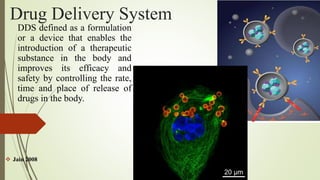
Drug Delivery System
DDS defined as a formulation
or a device that enables the
introduction of a therapeutic
substance in the body and
improves its efficacy and
safety by controlling the rate,
time and place of release of
drugs in the body.
 Jain 2008
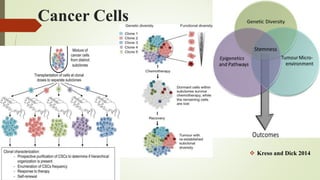
Cancer Cells
 Kreso and Dick 2014
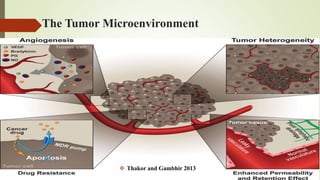
The Tumor Microenvironment
 Thakor and Gambhir 2013
The primary goals for research of Nano-
biotechnology in drug delivery include:
More specific drug targeting and delivery
Reduction in toxicity while maintaining therapeutic
effects
Greater safety and biocompatibility
Faster development of new safe medicines
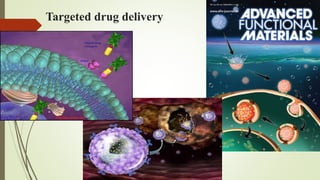
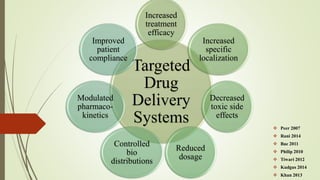
Targeted drug delivery
Targeted
Drug
Delivery
Systems
Increased
treatment
efficacy
Increased
specific
localization
Decreased
toxic side
effects
Reduced
dosage
Controlled
bio
distributions
Modulated
pharmaco-
kinetics
Improved
patient
compliance
 Peer 2007
 Rani 2014
 Bae 2011
 Philip 2010
 Tiwari 2012
 Kudgus 2014
 Khan 2013
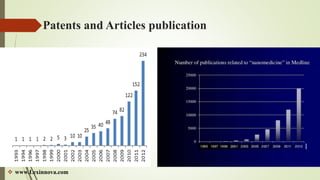
Patents and Articles publication
 www.Lexinnova.com
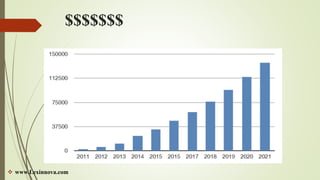
$$$$$$$
 www.Lexinnova.com
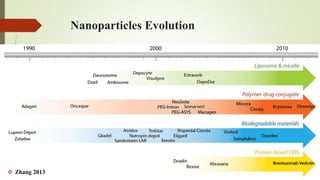
Nanoparticles Evolution
 Zhang 2013
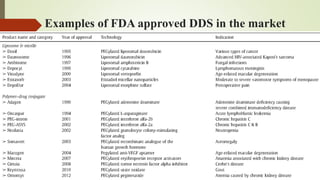
Examples of FDA approved DDS in the market
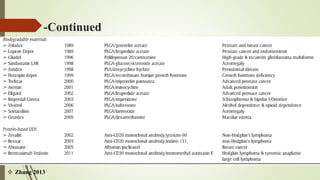
-Continued
 Zhang 2013
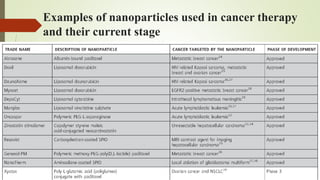
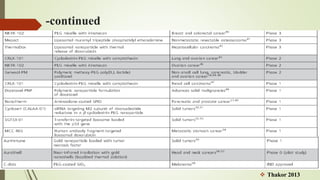
Examples of nanoparticles used in cancer therapy
and their current stage
-continued
 Thakor 2013
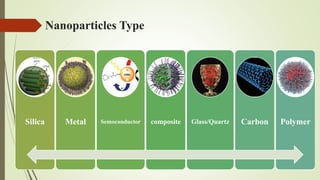
Nanoparticles Type
Silica Metal Semoconductor composite Glass/Quartz Carbon Polymer
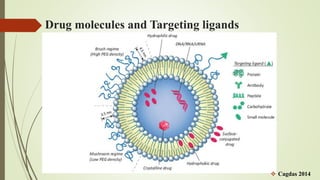
Drug molecules and Targeting ligands
 Cagdas 2014
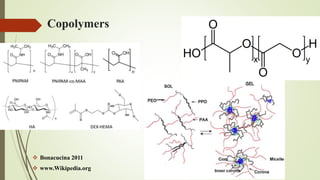
Copolymers
 Bonacucina 2011
 www.Wikipedia.org
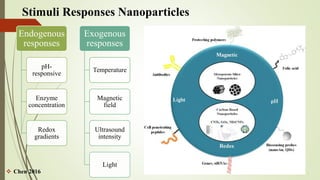
Stimuli Responses Nanoparticles
Endogenous
responses
pH-
responsive
Enzyme
concentration
Redox
gradients
Exogenous
responses
Temperature
Magnetic
field
Ultrasound
intensity
Light
 Chen 2016
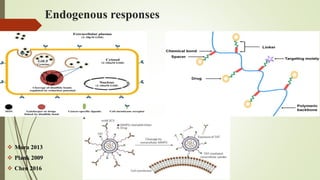
Endogenous responses
 Mura 2013
 Plank 2009
 Chen 2016
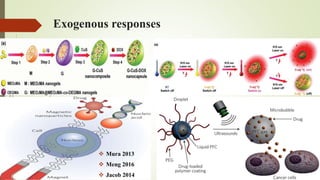
Exogenous responses
 Mura 2013
 Meng 2016
 Jacob 2014
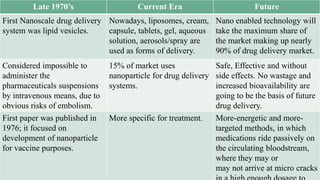
Late 1970’s Current Era Future
First Nanoscale drug delivery
system was lipid vesicles.
Nowadays, liposomes, cream,
capsule, tablets, gel, aqueous
solution, aerosols/spray are
used as forms of delivery.
Nano enabled technology will
take the maximum share of
the market making up nearly
90% of drug delivery market.
Considered impossible to
administer the
pharmaceuticals suspensions
by intravenous means, due to
obvious risks of embolism.
15% of market uses
nanoparticle for drug delivery
systems.
Safe, Effective and without
side effects. No wastage and
increased bioavailability are
going to be the basis of future
drug delivery.
First paper was published in
1976; it focused on
development of nanoparticle
for vaccine purposes.
More specific for treatment. More-energetic and more-
targeted methods, in which
medications ride passively on
the circulating bloodstream,
where they may or
may not arrive at micro cracks
References
 Bae, Y. H. and K. Park (2011). "Targeted drug delivery to tumors: myths, reality and possibility."
Journal of Controlled Release 153(3): 198.
 Bonacucina, G., et al. (2011). "Thermosensitive self-assembling block copolymers as drug delivery
systems." Polymers 3(2): 779-811.
 Çağdaş, M., et al. (2014). Liposomes as Potential Drug Carrier Systems for Drug Delivery, INTECH.
 Chen, Y.-C., et al. (2016). "Non-metallic nanomaterials in cancer theranostics: a review of silica-and
carbon-based drug delivery systems." Science and Technology of Advanced Materials.
 Jain, K. K. (2008). "Drug delivery systems-an overview." Drug delivery systems: 1-50.
 Khan, I. U., et al. (2013). "Microfluidics: a focus on improved cancer targeted drug delivery
systems." Journal of Controlled Release 172(3): 1065-1074.
 Kreso, A. and J. E. Dick (2014). "Evolution of the cancer stem cell model." Cell stem cell 14(3): 275-
291.
 Kudgus, R. A., et al. (2014). "Tuning pharmacokinetics and biodistribution of a targeted drug
delivery system through incorporation of a passive targeting component." Scientific reports 4.
 Meng, Z., et al. (2016). "NIR‐Laser‐Switched In Vivo Smart Nanocapsules for Synergic Photothermal and
Chemotherapy of Tumors." Advanced Materials 28(2): 245-253.
 Mura, S., et al. (2013). "Stimuli-responsive nanocarriers for drug delivery." Nature materials 12(11): 991-
1003.
 Peer, D., et al. (2007). "Nanocarriers as an emerging platform for cancer therapy." Nature nanotechnology
2(12): 751-760.
 Philip, A. K. and B. Philip (2010). "Colon targeted drug delivery systems: a review on primary and novel
approaches." Oman Med J 25(2): 79-87.
 Plank, C. (2009). "Nanomedicine: silence the target." Nature nanotechnology 4(9): 544-545.
 Rani, K. and S. Paliwal (2014). "A review on targeted durg delivery: its entire focus on advanced
therapeutics and diagnostics." Sch. J. App. Med. Sci 2(1C): 328-331.
 Thakor, A. S. and S. S. Gambhir (2013). "Nanooncology: the future of cancer diagnosis and therapy." CA: a
cancer journal for clinicians 63(6): 395-418.
 Tiwari, G., et al. (2012). "Drug delivery systems: An updated review." International journal of
pharmaceutical investigation 2(1): 2.
 Zhang, Y., et al. (2013). "Advanced materials and processing for drug delivery: the past and the future."
Advanced drug delivery reviews 65(1): 104-120.
References
Thank you for your kindly attention

Drug delivery system

  • 1.
    Drug delivery systems:realistic or optimistic attitudes Seyedmohammad Motevalli Prof. Nie Spring 2016
  • 2.
    Drug Delivery System DDSdefined as a formulation or a device that enables the introduction of a therapeutic substance in the body and improves its efficacy and safety by controlling the rate, time and place of release of drugs in the body.  Jain 2008
  • 3.
  • 5.
    The Tumor Microenvironment Thakor and Gambhir 2013
  • 6.
    The primary goalsfor research of Nano- biotechnology in drug delivery include: More specific drug targeting and delivery Reduction in toxicity while maintaining therapeutic effects Greater safety and biocompatibility Faster development of new safe medicines
  • 8.
  • 9.
  • 10.
    Patents and Articlespublication  www.Lexinnova.com
  • 11.
  • 12.
  • 13.
    Examples of FDAapproved DDS in the market
  • 14.
  • 15.
    Examples of nanoparticlesused in cancer therapy and their current stage
  • 16.
  • 17.
    Nanoparticles Type Silica MetalSemoconductor composite Glass/Quartz Carbon Polymer
  • 18.
    Drug molecules andTargeting ligands  Cagdas 2014
  • 19.
  • 20.
  • 21.
    Endogenous responses  Mura2013  Plank 2009  Chen 2016
  • 22.
    Exogenous responses  Mura2013  Meng 2016  Jacob 2014
  • 23.
    Late 1970’s CurrentEra Future First Nanoscale drug delivery system was lipid vesicles. Nowadays, liposomes, cream, capsule, tablets, gel, aqueous solution, aerosols/spray are used as forms of delivery. Nano enabled technology will take the maximum share of the market making up nearly 90% of drug delivery market. Considered impossible to administer the pharmaceuticals suspensions by intravenous means, due to obvious risks of embolism. 15% of market uses nanoparticle for drug delivery systems. Safe, Effective and without side effects. No wastage and increased bioavailability are going to be the basis of future drug delivery. First paper was published in 1976; it focused on development of nanoparticle for vaccine purposes. More specific for treatment. More-energetic and more- targeted methods, in which medications ride passively on the circulating bloodstream, where they may or may not arrive at micro cracks
  • 24.
    References  Bae, Y.H. and K. Park (2011). "Targeted drug delivery to tumors: myths, reality and possibility." Journal of Controlled Release 153(3): 198.  Bonacucina, G., et al. (2011). "Thermosensitive self-assembling block copolymers as drug delivery systems." Polymers 3(2): 779-811.  Çağdaş, M., et al. (2014). Liposomes as Potential Drug Carrier Systems for Drug Delivery, INTECH.  Chen, Y.-C., et al. (2016). "Non-metallic nanomaterials in cancer theranostics: a review of silica-and carbon-based drug delivery systems." Science and Technology of Advanced Materials.  Jain, K. K. (2008). "Drug delivery systems-an overview." Drug delivery systems: 1-50.  Khan, I. U., et al. (2013). "Microfluidics: a focus on improved cancer targeted drug delivery systems." Journal of Controlled Release 172(3): 1065-1074.  Kreso, A. and J. E. Dick (2014). "Evolution of the cancer stem cell model." Cell stem cell 14(3): 275- 291.  Kudgus, R. A., et al. (2014). "Tuning pharmacokinetics and biodistribution of a targeted drug delivery system through incorporation of a passive targeting component." Scientific reports 4.
  • 25.
     Meng, Z.,et al. (2016). "NIR‐Laser‐Switched In Vivo Smart Nanocapsules for Synergic Photothermal and Chemotherapy of Tumors." Advanced Materials 28(2): 245-253.  Mura, S., et al. (2013). "Stimuli-responsive nanocarriers for drug delivery." Nature materials 12(11): 991- 1003.  Peer, D., et al. (2007). "Nanocarriers as an emerging platform for cancer therapy." Nature nanotechnology 2(12): 751-760.  Philip, A. K. and B. Philip (2010). "Colon targeted drug delivery systems: a review on primary and novel approaches." Oman Med J 25(2): 79-87.  Plank, C. (2009). "Nanomedicine: silence the target." Nature nanotechnology 4(9): 544-545.  Rani, K. and S. Paliwal (2014). "A review on targeted durg delivery: its entire focus on advanced therapeutics and diagnostics." Sch. J. App. Med. Sci 2(1C): 328-331.  Thakor, A. S. and S. S. Gambhir (2013). "Nanooncology: the future of cancer diagnosis and therapy." CA: a cancer journal for clinicians 63(6): 395-418.  Tiwari, G., et al. (2012). "Drug delivery systems: An updated review." International journal of pharmaceutical investigation 2(1): 2.  Zhang, Y., et al. (2013). "Advanced materials and processing for drug delivery: the past and the future." Advanced drug delivery reviews 65(1): 104-120. References
  • 26.
    Thank you foryour kindly attention