
Generations of Computer 
-Rashi Wadhwa
What is a computer? 
 An electronic device for storing 
and processing data, typically in 
binary form, according to 
instructions given to it in a 
variable program. 
 Basic form a computer is any 
device which aids humans in 
performing various kinds of 
computations or calculations. 
 Every computer supports some 
form of input, processing, and 
output.
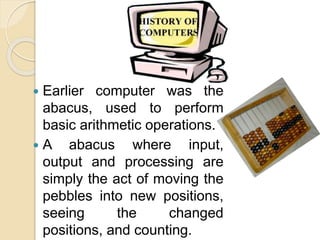
 Earlier computer was the 
abacus, used to perform 
basic arithmetic operations. 
 A abacus where input, 
output and processing are 
simply the act of moving the 
pebbles into new positions, 
seeing the changed 
positions, and counting.
Generations of Computer 
 First Generation Computers (1940s – 
1950s) 
 Second Generation Computers (1955 
– 1960) 
 Third Generation Computers (1960s) 
 Fourth Generation Computers (1971 – 
present) 
 Fifth Generation (Present and 
Beyond) Artificial Intelligence
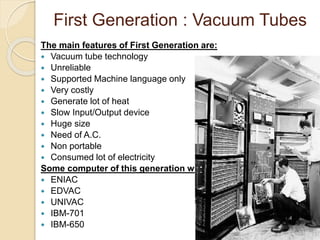
First Generation : Vacuum Tubes 
The main features of First Generation are: 
 Vacuum tube technology 
 Unreliable 
 Supported Machine language only 
 Very costly 
 Generate lot of heat 
 Slow Input/Output device 
 Huge size 
 Need of A.C. 
 Non portable 
 Consumed lot of electricity 
Some computer of this generation were: 
 ENIAC 
 EDVAC 
 UNIVAC 
 IBM-701 
 IBM-650
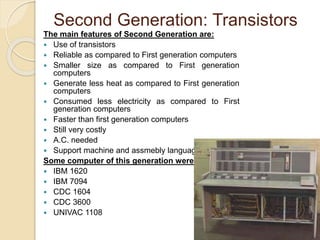
Second Generation: Transistors 
The main features of Second Generation are: 
 Use of transistors 
 Reliable as compared to First generation computers 
 Smaller size as compared to First generation 
computers 
 Generate less heat as compared to First generation 
computers 
 Consumed less electricity as compared to First 
generation computers 
 Faster than first generation computers 
 Still very costly 
 A.C. needed 
 Support machine and assmebly languages 
Some computer of this generation were: 
 IBM 1620 
 IBM 7094 
 CDC 1604 
 CDC 3600 
 UNIVAC 1108
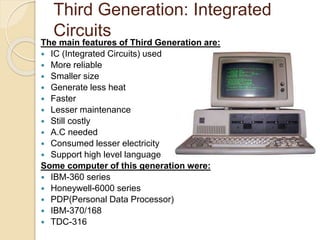
Third Generation: Integrated 
Circuits 
The main features of Third Generation are: 
 IC (Integrated Circuits) used 
 More reliable 
 Smaller size 
 Generate less heat 
 Faster 
 Lesser maintenance 
 Still costly 
 A.C needed 
 Consumed lesser electricity 
 Support high level language 
Some computer of this generation were: 
 IBM-360 series 
 Honeywell-6000 series 
 PDP(Personal Data Processor) 
 IBM-370/168 
 TDC-316
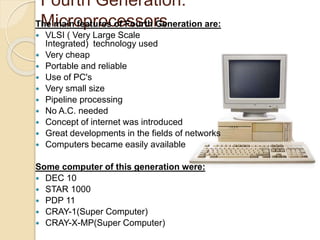
Fourth Generation: 
TMhe micairno fepatruroesc oef Fsosuroth rGseneration are: 
 VLSI ( Very Large Scale 
Integrated) technology used 
 Very cheap 
 Portable and reliable 
 Use of PC's 
 Very small size 
 Pipeline processing 
 No A.C. needed 
 Concept of internet was introduced 
 Great developments in the fields of networks 
 Computers became easily available 
Some computer of this generation were: 
 DEC 10 
 STAR 1000 
 PDP 11 
 CRAY-1(Super Computer) 
 CRAY-X-MP(Super Computer)
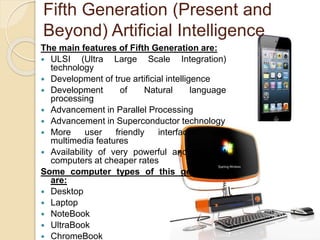
Fifth Generation (Present and 
Beyond) Artificial Intelligence 
The main features of Fifth Generation are: 
 ULSI (Ultra Large Scale Integration) 
technology 
 Development of true artificial intelligence 
 Development of Natural language 
processing 
 Advancement in Parallel Processing 
 Advancement in Superconductor technology 
 More user friendly interfaces with 
multimedia features 
 Availability of very powerful and compact 
computers at cheaper rates 
Some computer types of this generation 
are: 
 Desktop 
 Laptop 
 NoteBook 
 UltraBook 
 ChromeBook
Generation of Compensation

Generation of Compensation

  • 1.
  • 2.
    What is acomputer?  An electronic device for storing and processing data, typically in binary form, according to instructions given to it in a variable program.  Basic form a computer is any device which aids humans in performing various kinds of computations or calculations.  Every computer supports some form of input, processing, and output.
  • 3.
     Earlier computerwas the abacus, used to perform basic arithmetic operations.  A abacus where input, output and processing are simply the act of moving the pebbles into new positions, seeing the changed positions, and counting.
  • 4.
    Generations of Computer  First Generation Computers (1940s – 1950s)  Second Generation Computers (1955 – 1960)  Third Generation Computers (1960s)  Fourth Generation Computers (1971 – present)  Fifth Generation (Present and Beyond) Artificial Intelligence
  • 5.
    First Generation :Vacuum Tubes The main features of First Generation are:  Vacuum tube technology  Unreliable  Supported Machine language only  Very costly  Generate lot of heat  Slow Input/Output device  Huge size  Need of A.C.  Non portable  Consumed lot of electricity Some computer of this generation were:  ENIAC  EDVAC  UNIVAC  IBM-701  IBM-650
  • 6.
    Second Generation: Transistors The main features of Second Generation are:  Use of transistors  Reliable as compared to First generation computers  Smaller size as compared to First generation computers  Generate less heat as compared to First generation computers  Consumed less electricity as compared to First generation computers  Faster than first generation computers  Still very costly  A.C. needed  Support machine and assmebly languages Some computer of this generation were:  IBM 1620  IBM 7094  CDC 1604  CDC 3600  UNIVAC 1108
  • 7.
    Third Generation: Integrated Circuits The main features of Third Generation are:  IC (Integrated Circuits) used  More reliable  Smaller size  Generate less heat  Faster  Lesser maintenance  Still costly  A.C needed  Consumed lesser electricity  Support high level language Some computer of this generation were:  IBM-360 series  Honeywell-6000 series  PDP(Personal Data Processor)  IBM-370/168  TDC-316
  • 8.
    Fourth Generation: TMhemicairno fepatruroesc oef Fsosuroth rGseneration are:  VLSI ( Very Large Scale Integrated) technology used  Very cheap  Portable and reliable  Use of PC's  Very small size  Pipeline processing  No A.C. needed  Concept of internet was introduced  Great developments in the fields of networks  Computers became easily available Some computer of this generation were:  DEC 10  STAR 1000  PDP 11  CRAY-1(Super Computer)  CRAY-X-MP(Super Computer)
  • 9.
    Fifth Generation (Presentand Beyond) Artificial Intelligence The main features of Fifth Generation are:  ULSI (Ultra Large Scale Integration) technology  Development of true artificial intelligence  Development of Natural language processing  Advancement in Parallel Processing  Advancement in Superconductor technology  More user friendly interfaces with multimedia features  Availability of very powerful and compact computers at cheaper rates Some computer types of this generation are:  Desktop  Laptop  NoteBook  UltraBook  ChromeBook

Editor's Notes

  • #7  assembly, languages, which allowed programmers to specify instructions in words
  • #8 users interacted with third generation computers through keyboards and monitorsand interfaced with an operating system, which allowed the device to run many different applications at one time with a central program that monitored the memory.