Table of Contents: 
First Generation 
Second Generation 
Third Generation 
Fourth Generation 
Fifth Generation
Introduction 
The computer has evolved from 
a large-sized simple calculating 
machine to a smaller but much 
more powerful machine.
Generation of computer is designed 
based on a new technological 
development, resulting in better, 
cheaper and smaller computers that 
are more powerful, faster and 
efficient than their predecessors.
Currently, there are five 
generations of computer. In the 
following subsections, we will 
discuss the generations of 
computer.
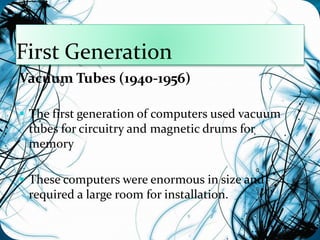
First Generation 
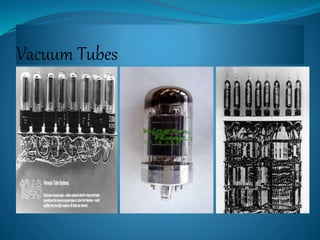
Vacuum Tubes (1940-1956) 
 The first generation of computers used vacuum 
tubes for circuitry and magnetic drums for 
memory 
 These computers were enormous in size and 
required a large room for installation.
Vacuum Tubes
Second Generation 
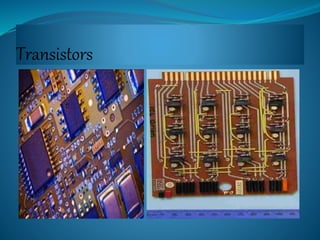
Transistors (1956-1963) 
 Transistors allowed computers to become smaller, 
faster, cheaper, energy efficient and reliable. 
 Transistors are smaller in size compared to vacuum 
tubes, thus, the size of the computer was also 
reduced.
Transistors
Third Generation 
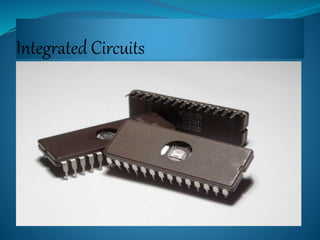
 Integrated Circuits (1964-1971) 
 The third generation computers used less 
power and generated less heat than the 
second generation computers.
Integrated Circuits
Fourth Generation 
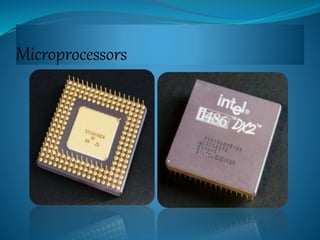
 Microprocessors (1971-present) 
 They are smaller than the computers of the 
previous generation. Some can even fit into the 
palm of the hand.
Microprocessors
Fifth Generation 
 Artificial Intelligence (present and beyond) 
 The fifth generation computers are based 
on Artificial Intelligence (AI). They try to simulate 
the human way of thinking and reasoning.
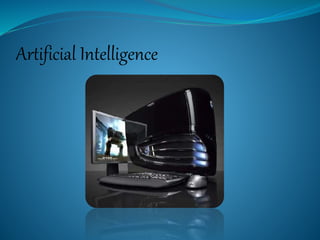
Artificial Intelligence
 1-3 Give the three vacuum tubes computer 
example ? 
 4 When does the Transistors invented? 
 5 -7 Give the meaning of UNIVAC , ENIAC , 
EDVAC 
 8 It is smaller in size compared to vacuum tubes. 
 9 It is resulted in the fourth generation computers 
being smaller and cheaper than their predecessors. 
 10 The fifth generation computers are based on 
__________________?

Generations of computer

  • 2.
    Table of Contents: First Generation Second Generation Third Generation Fourth Generation Fifth Generation
  • 3.
    Introduction The computerhas evolved from a large-sized simple calculating machine to a smaller but much more powerful machine.
  • 4.
    Generation of computeris designed based on a new technological development, resulting in better, cheaper and smaller computers that are more powerful, faster and efficient than their predecessors.
  • 5.
    Currently, there arefive generations of computer. In the following subsections, we will discuss the generations of computer.
  • 6.
    First Generation VacuumTubes (1940-1956)  The first generation of computers used vacuum tubes for circuitry and magnetic drums for memory  These computers were enormous in size and required a large room for installation.
  • 7.
  • 8.
    Second Generation Transistors(1956-1963)  Transistors allowed computers to become smaller, faster, cheaper, energy efficient and reliable.  Transistors are smaller in size compared to vacuum tubes, thus, the size of the computer was also reduced.
  • 9.
  • 10.
    Third Generation Integrated Circuits (1964-1971)  The third generation computers used less power and generated less heat than the second generation computers.
  • 11.
  • 12.
    Fourth Generation Microprocessors (1971-present)  They are smaller than the computers of the previous generation. Some can even fit into the palm of the hand.
  • 13.
  • 14.
    Fifth Generation Artificial Intelligence (present and beyond)  The fifth generation computers are based on Artificial Intelligence (AI). They try to simulate the human way of thinking and reasoning.
  • 15.
  • 17.
     1-3 Givethe three vacuum tubes computer example ?  4 When does the Transistors invented?  5 -7 Give the meaning of UNIVAC , ENIAC , EDVAC  8 It is smaller in size compared to vacuum tubes.  9 It is resulted in the fourth generation computers being smaller and cheaper than their predecessors.  10 The fifth generation computers are based on __________________?